In This Guide
- Can You Drive an RV in Central North US? License & Age Rules
- Road Conditions & Terrain in Central North US
- RV Size Limits, Bridges & Restricted Zones
- Fuel: Diesel vs. Petrol & Cost per 100 km
- Tolls, Vignettes & Border Rules
- Driving Tips for long term rv rental Travelers
- Recommended RV Class for Central North US Roads
- Should I Choose a Compact Van Instead of a Large RV in Central North US?
- Can I Park Anywhere? Free & Wild Camping Rules in Central North US
- Can I Drive an RV Into the City Center? Heights, Tunnels & Local Signage
- What is the 3-3-3 rule for RV living?
- Do you need a special license to drive a long RV?
- What states can I live in RV full time?
- What states have banned RVs?
- Where can I live in my RV year round in NC?
- What is the longest RV you can take into a national park?
- What is the best RV insurance for full timers?
- How much is insurance on a $200,000 RV?
- Does Good Sam insurance cover full-time RVers?
- Top Cities for RV Rental in Central North US
- Country-Wide Practical Information for RV Travel in Central North US
- What You Shouldn't Miss
- Why Book with Bandana Caravan
- Final Thoughts
- Frequently Asked Questions
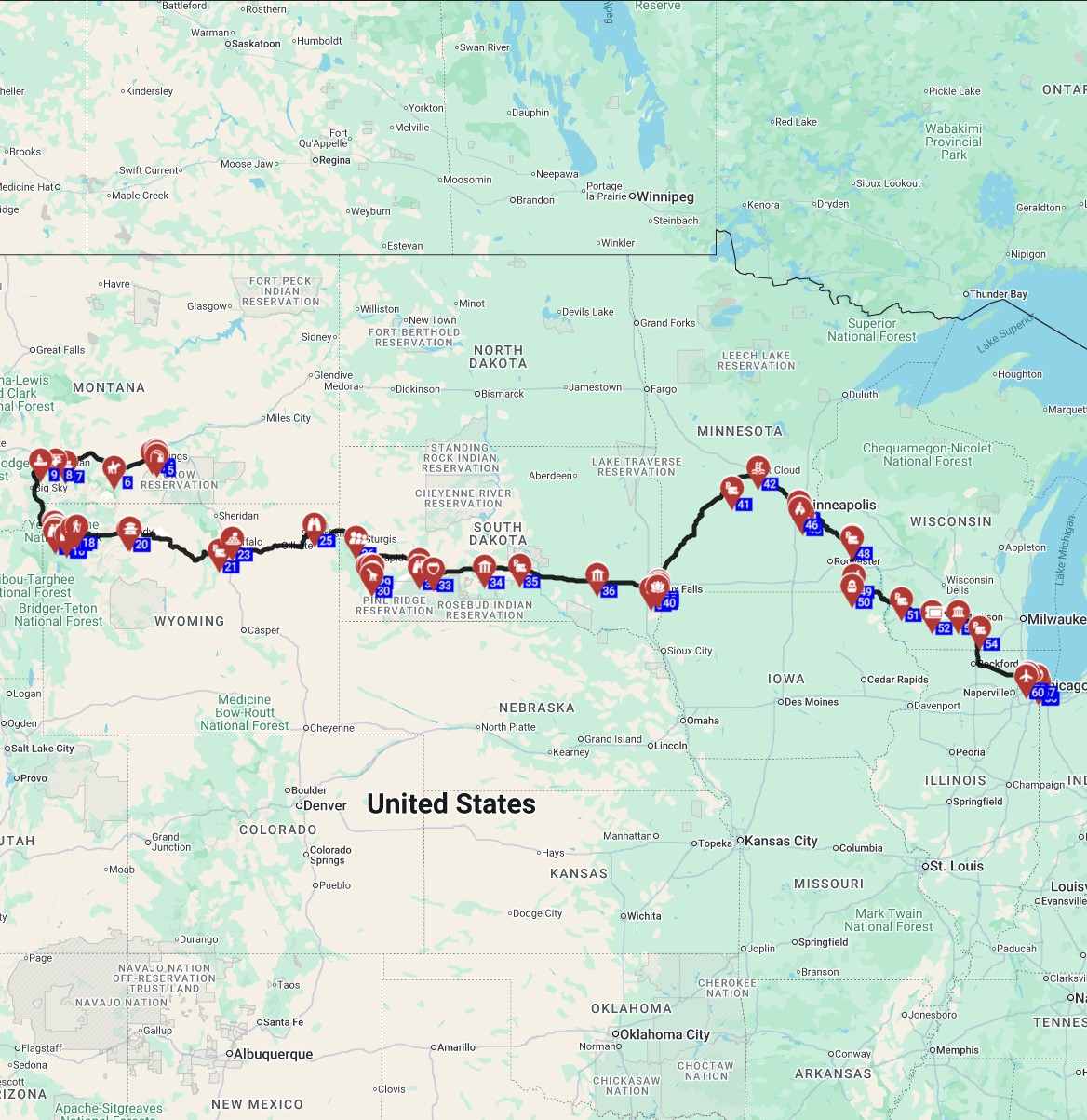
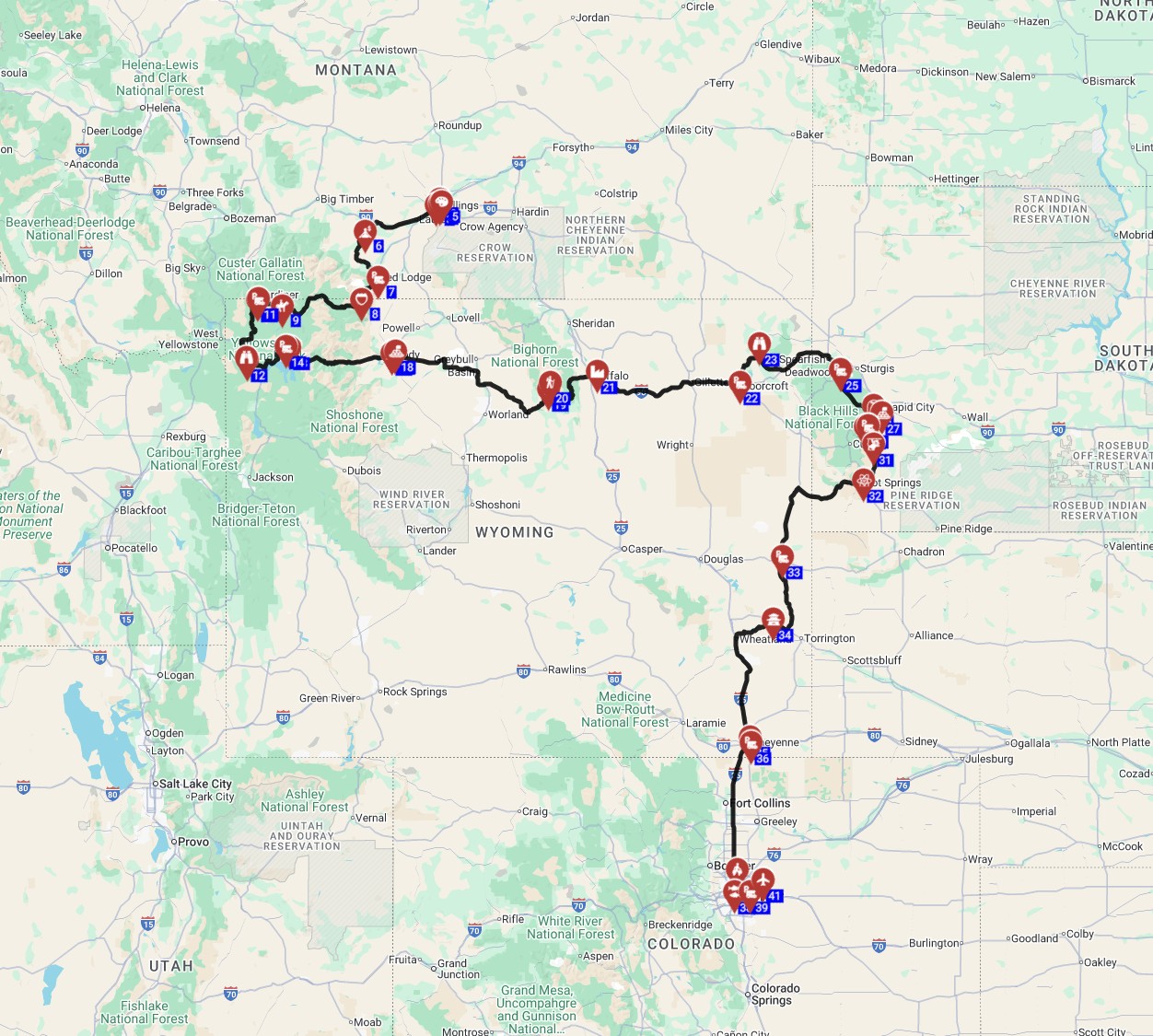
Embarking on a long-term RV rental adventure in the Central North US offers an incredible opportunity to explore the heartland's vast landscapes, from rolling prairies to majestic badlands and shimmering Great Lakes shorelines. This extensive region, encompassing states like North Dakota, South Dakota, Nebraska, Kansas, Minnesota, Iowa, Missouri, Wisconsin, Illinois, Indiana, Ohio, and Michigan, is perfectly suited for extended journeys by motorhome or campervan. With a rented RV as your comfortable home on wheels, you can immerse yourself in diverse cultures, savor local cuisine, and witness breathtaking scenery at your own pace. For live availability and current prices, start with our RV Rental Central North US - Complete Guide 2026 guide.
Can You Drive an RV in Central North US? License & Age Rules
A standard Class D driver's license is sufficient for most rental RVs under 26,000 lbs in the Central North US, which includes the vast majority of Class B campervans, Class C motorhomes, and even many Class A models. You won't need a special commercial driver's license (CDL) for these vehicles. If you're considering a very large Class A motorhome with a Gross Vehicle Weight Rating (GVWR) exceeding 26,000 lbs, it's always wise to double-check with your specific rental supplier, though such specialized licenses are rarely required for recreational rentals. The minimum rental age for a motorhome or campervan in Central North US is 21 years old across all Bandana RV partner suppliers, with no young driver surcharges or vehicle class restrictions based on age. International visitors should carry a valid driver's license from their home country, and while not strictly mandatory in all cases, an International Driving Permit (IDP) is highly recommended for clarity and ease of communication with local authorities.
Road Conditions & Terrain in Central North US
Road conditions in the Central North US offer a diverse driving experience, ranging from meticulously maintained interstate highways to charming rural two-lane roads and occasional gravel surfaces in natural recreational areas. The terrain itself provides a rich tapestry of landscapes, evolving from the expansive, flat plains of the Dakotas and Nebraska to the gentle, rolling hills of Missouri and Wisconsin, and eventually the dense, inviting forests of Minnesota and Michigan's scenic Upper Peninsula. For long-term RV renters, this means you should be prepared for varying driving conditions and embrace a slower, more immersive pace, especially when venturing off major arteries onto scenic secondary routes. While cell service is generally reliable in populated areas and along major highways, be aware that remote regions, particularly within national forests or state parks, may have intermittent or no coverage, so consider offline maps or satellite communication for peace of mind.
RV Size Limits, Bridges & Restricted Zones
Most U.S. states within the Central North US, such as Illinois and Ohio, generally enforce a maximum RV length limit of 40-45 feet, with common height restrictions around 13.5-14 feet. Low bridges are not a widespread concern on major interstate highways throughout the region but can occasionally be encountered on older secondary roads or in smaller, historic towns; using an RV-specific GPS navigation system is strongly recommended to identify and avoid such obstacles. Unlike some parts of Europe, environmental zones are not typically implemented for RVs in the Central North US, allowing for greater freedom of movement. However, it is always wise to research specific National Parks, State Parks, and local attractions within your Central North US itinerary, as they may have their own unique RV length restrictions or accessibility limitations for certain areas or campgrounds. Always check park websites in advance to ensure your rented motorhome or campervan is suitable for your planned destinations.
Fuel: Diesel vs. Petrol & Cost per 100 km
Fuel type for rented RVs in Central North US primarily depends on the vehicle class, with larger motorhome categories like Class C (Alcove) and Class A (Integrated) commonly utilizing diesel, while Class B campervans and some smaller models often run on petrol (gasoline). Bandana's diverse global fleet provides general averages for fuel consumption: a typical Class B campervan might achieve 8-10 Liters/100 km, while a Class C motorhome like the "cruise america rv rental example Explorer" with its 2.5 Liter Turbo diesel engine, averaging 11 Liter / 100 Km, generally sees 10-12 Liters/100 km. Larger Class A motorhomes might range from 8-12 Liters/100 km. Fuel availability is widespread for both diesel and petrol across the Central North US, though prices will fluctuate based on state, local taxes, and current market conditions. When planning your budget, remember that you can itemize and track every expense along the way with RV PLANET routes for easy budgeting. On the routes offered through RV PLANET routes, you can itemize and track every expense along the way for easy budgeting.
Tolls, Vignettes & Border Rules
The Central North US primarily uses traditional toll roads, such as the Illinois Tollway or the Ohio Turnpike, instead of the vignette systems found in some other countries. Payment options for tolls typically include cash, electronic transponders like E-ZPass or I-Pass, or mail-by-plate systems which photograph your license plate and send a bill. When renting an RV, it's wise to ask your supplier about included transponders or options for managing tolls to avoid potential fines and streamline your journey. You should anticipate tolls on major routes, especially in states like Illinois, Ohio, Indiana, and parts of Kansas. There are no specific international border rules directly within the Central North US region itself, but if your extended road trip involves traveling to neighboring Canada, you will need to ensure all travelers have valid passports and necessary vehicle documentation for crossing. Be sure to check the specific requirements for both countries well in advance of your trip for a smooth border experience.
Driving Tips for long term rv rental Travelers
For long-term RV rental travelers exploring the Central North US, planning shorter daily driving distances is key to a truly enjoyable and relaxed adventure. We at Bandana RV always recommend slow travel, aiming for a maximum of 100-150 km per day on average. This allows ample time to feel the place, connect to the local culture, savor the food, and immerse yourself in the stunning scenery without rushing. Regularly performing pre-trip inspections of your rented motorhome or campervan, including tire pressure checks and fluid levels, is crucial for extended journeys through the diverse conditions of Central North US. Be prepared for seasonal weather challenges specific to the region, such as summer thunderstorms, strong winds on the open plains, and early or late season cold fronts, which might necessitate checking road conditions and campground availability. Utilizing an RV-specific GPS or mapping application can be invaluable for navigation, helping you avoid low bridges, weight-restricted roads, and ensuring efficient routing to your destinations. Additionally, budgeting carefully for variable costs like fuel, campground fees, and groceries is important for a stress-free long-term trip.
🎬 Video coming soon
Recommended RV Class for Central North US Roads
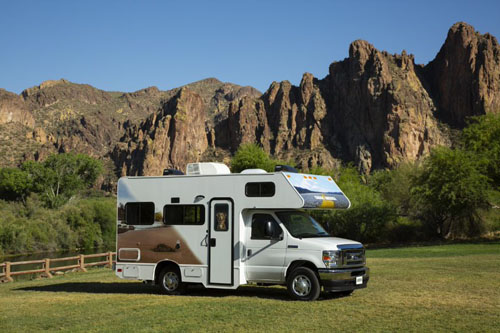
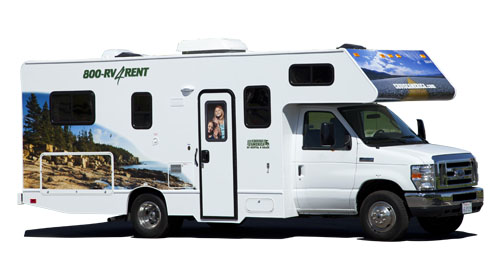
For navigating the diverse roads and expansive terrains of the Central North US on a long-term rental, Class C (Alcove) and Class SI (Semi-integrated) motorhomes are highly recommended. These classes offer an excellent balance of comfort, amenities, and maneuverability, making them ideal for extended adventures. A Class C RV, like the "cruise america rv rental example Explorer" with its rear double bed (163/210cm) and spacious bed over the cab (160/220cm), typically averages 7.1 meters (23.3 ft) in length and can comfortably sleep 4-6 adults, providing ample living space and convenience for families. Class SI RVs, such as a "2 Berth Tamar" which averages 6.9 meters (22.6 ft) and accommodates 3-4 adults, offer a more streamlined profile for easier handling on highways and in many state parks. Both of these classes are well-suited for the region's well-maintained interstates and can capably handle secondary roads, providing a comfortable home base without being excessively large or challenging to drive. Ultimately, the choice depends on your group size and desired level of interior space for your adventure.
Should I Choose a Compact Van Instead of a Large RV in Central North US?
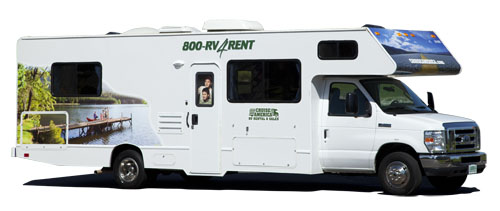
For a long-term RV rental in the Central North US, opting for a larger motorhome over a compact van is generally recommended, as the region's expansive infrastructure readily accommodates them, prioritizing comfort and indoor space over extreme maneuverability. Larger Class C or Class A motorhomes, like the "MHC28" with its 7.3-meter length and sleeping capacity for 7, or the "C-30" which is 9.1 meters long and sleeps 7, offer significant advantages for extended trips, including more living space, enhanced amenities, and greater storage capacity. While a compact campervan (Class B), such as a "Juliette 2-3" with a length of 5-6 meters, does offer superior ease in parking within smaller towns and navigating tighter campgrounds, the overall trade-off for extended comfort and onboard facilities usually favors a larger RV for a long-term journey through this region. Drive slowly and carefully, and you can drive almost anywhere without issues, regardless of size. No need to stress-just use common sense and pay attention to road signs, especially regarding bridge clearances.
Can I Park Anywhere? Free & Wild Camping Rules in Central North US
Free and wild camping, often referred to as boondocking, rules in the Central North US vary significantly across states, local municipalities, and types of land ownership. Generally, boondocking is frequently permitted on designated public lands managed by the U.S. Forest Service (National Forests) or, less commonly in this region, the Bureau of Land Management (BLM), but specific local regulations and stay limits must always be verified. Many retail parking lots, particularly large chains like Walmart Supercenters, may allow overnight RV parking at the manager's discretion; however, this is never guaranteed, and local ordinances often prohibit it, so always ask permission first. State parks, county parks, and local campgrounds almost universally require rented RVs to park in designated spots for overnight stays, which typically involve fees. Always check local regulations, pay attention to signage, and adhere to any fire bans or parking restrictions before parking your motorhome or campervan overnight to ensure a hassle-free experience.
Can I Drive an RV Into the City Center? Heights, Tunnels & Local Signage
Yes, most rented RVs can generally be driven into city centers across the Central North US, particularly in the smaller to mid-sized urban areas like those found in Iowa or Nebraska, though navigating can be more challenging in larger metropolitan hubs like Chicago. Drivers must pay vigilant attention to local signage, which will indicate posted height limits for tunnels, low bridges, and parking garages, as well as any weight restrictions that might apply. While true environmental zones or "residents-only" streets are rare for RVs in the Central North US, some cities might have local ordinances restricting access for larger vehicles, information that would be clearly displayed on signage. Planning your routes into city centers in advance and utilizing RV-specific navigation tools can significantly help in avoiding potential hazards and ensuring smooth passage, allowing you to enjoy urban attractions with your motorhome or campervan. For example, a larger Class C motorhome such as the "Denali Searcher 30 - Gold" with its length and sleeping capacity for 7 could be comfortably driven into most city centers with prior route planning.
What is the 3-3-3 rule for RV living?
The 3-3-3 rule for RV travel is a widely adopted guideline that recommends driving no more than 300 miles (approximately 480 km) in a single day, arriving at your chosen destination by 3 PM, and staying for a minimum of 3 nights. This framework is specifically designed to encourage a more relaxed and enjoyable pace, significantly reduce driver fatigue, and provide ample time for setting up your rented motorhome or campervan, exploring the local surroundings, and truly immersing yourself in the RV experience. Embracing the 3-3-3 rule is particularly beneficial for long-term RV rentals in the Central North US, enabling travelers to fully appreciate the region's scenic routes, charming towns, and natural attractions without feeling rushed or overwhelmed by continuous driving. It’s about making the journey as much a part of the vacation as the destination.
Do you need a special license to drive a long RV?
In most U.S. states, including those throughout the Central North US, a standard Class D driver's license is entirely sufficient for operating the vast majority of RVs, particularly those commonly available for rental, like a Class C "MH23 Medium - Economy" with a length of 7.21 meters or a Class B "Deuce" campervan. A special non-commercial Class A or B license is generally only required if the rented RV's Gross Vehicle Weight Rating (GVWR) exceeds 26,000 pounds (approximately 11,793 kg). While some very large Class A motorhomes might fall into this heavier category, most rental fleet vehicles, including Class C and Semi-integrated models, are specifically designed to be driven with a regular driver's license, eliminating the need for additional permits. Always confirm the specific weight of your chosen RV and your state's Department of Motor Vehicles (DMV) requirements, although this is rarely an issue for recreational renters.
What states can I live in RV full time?
You can legally maintain residency as a full-time RVer in all U.S. states, though the process of establishing domicile, managing mail, vehicle registration, and fulfilling specific residency requirements varies significantly by state. States like Texas, Florida, and South Dakota are notably popular among full-time RVers due to their favorable residency laws, absence of state income tax, and robust mail forwarding services. Within the Central North US, South Dakota is a common and welcoming choice for individuals looking to establish residency as full-time RVers, known for its minimal requirements. While Bandana specializes in RV rentals for vacation travel, understanding these broader considerations is helpful for anyone considering an extended road trip. Key aspects for full-time RVers include securing a permanent mailing address (often through a mail forwarding service), voter registration, acquiring appropriate vehicle and RV insurance, and complying with local parking or occupancy ordinances.
What states have banned RVs?
No U.S. state has implemented a blanket ban on RVs; all 50 states, including those in the Central North US like Wisconsin and Michigan, permit the operation and ownership of recreational vehicles on their public roads. Restrictions on RVs are typically enacted at the local level, where specific cities, counties, or municipalities may establish ordinances regarding overnight RV parking in certain areas, full-time occupancy limits in particular zones, or restrictions in residential neighborhoods. In the Central North US, while you might encounter local regulations affecting where you can park or boondock, these are site-specific rules rather than state-wide prohibitions. Travelers with a rented motorhome or campervan should always consult local rules and pay close attention to posted signage to avoid fines or conflicts, particularly when searching for free overnight parking or exploring dense urban environments.
Where can I live in my RV year round in NC?
While the question specifically asks about North Carolina (NC), a state outside the Central North US region, the core principles for year-round RV living involve locating areas with suitable climates and access to long-term amenities. For those considering year-round RVing within the Central North US, the severe winter conditions in states such as Minnesota, North Dakota, or Wisconsin necessitate a well-winterized rented RV and access to long-term campgrounds that remain open and offer heated facilities or full hookups. The harsh winters make year-round RV living in the Central North US exceptionally challenging, often requiring travelers to relocate to warmer climates further south or in the southwestern U.S. for part of the year. If year-round warmth is a priority for your extended RV journey, regions beyond the Central North US are generally more accommodating for continuous travel.
What is the longest RV you can take into a national park?
The maximum RV length permitted in U.S. National Parks varies significantly by individual park, and often by specific campground, loop, or even certain scenic roads within a park, requiring diligent research for each intended destination. Many National Parks and their campgrounds have length restrictions typically ranging from 25 to 35 feet for rented motorhomes or campervans, primarily due to tight turns, steep grades, or limited parking spaces, although some parks can accommodate RVs up to 40 feet or more in designated areas. For Central North US National Parks like Badlands National Park in South Dakota, Isle Royale National Park in Michigan, or Theodore Roosevelt National Park in North Dakota, checking the official park website for their precise RV length and height limitations before your arrival is absolutely essential. Always cross-reference your rented RV's actual length (including any potential bike racks) with the specific park and campground advisories to ensure accessibility and prevent any issues, ensuring a smooth RV Rental USA - Complete Guide 2026 experience.
What is the best RV insurance for full timers?
For individuals who choose to live in their RV full-time, the best insurance solutions combine comprehensive auto coverage with specialized "full-timer's" liability, which effectively treats the RV as a primary residence, similar to a homeowners' insurance policy. Leading providers in the full-timer RV insurance market often include companies like Progressive, National General, and Good Sam, recognized for offering policies specifically tailored to the unique and comprehensive needs of those living in their RVs year-round. Full-timer's insurance typically provides higher liability limits, comprehensive personal effects coverage for belongings stored inside the RV, and often includes valuable add-ons like roadside assistance and emergency expense coverage. It is critically important for those considering a long-term RV lifestyle to openly disclose full-time RV usage to their insurer, as standard recreational RV policies do not offer adequate protection for an RV serving as a permanent home, unlike a short-term rented RV for vacation travel.
How much is insurance on a $200,000 RV?
Insurance premiums for a $200,000 RV can vary significantly, typically ranging from $1,000 to over $4,000 annually, influenced by a multitude of factors specific to the RV, the policyholder, and the coverage chosen. Key elements impacting the cost include the RV's class (e.g., Class A motorhome versus a Class C "C-MEDIUM" or "C-LARGE" model), its primary use (full-time versus recreational travel), the driver's history and location, the chosen deductible amount, and the overall coverage limits selected. A full-time RV insurance policy, which extends homeowners-like protections for an RV used as a primary residence, will generally incur higher costs than a policy for a recreational-use rented RV due to the increased risks and broader coverage required. To secure the most competitive rates for a $200,000 RV, it is advisable to obtain multiple quotes from various specialized RV insurance providers and thoroughly compare the coverage options, ensuring full transparency in your decision-making.
Does Good Sam insurance cover full-time RVers?
Yes, Good Sam Insurance offers specialized policies explicitly designed to cover full-time RVers, recognizing their recreational vehicle as their primary residence. Their comprehensive full-timer coverage extends beyond a standard recreational policy, providing protection akin to homeowners' insurance, including personal liability and coverage for personal belongings inside the RV. Good Sam's full-timer RV insurance is a widely recognized and popular choice for individuals who live permanently in their RVs, owing to its tailored benefits and deep understanding of the RV lifestyle. While Bandana RV specializes in temporary RV rentals for vacation travel, travelers considering an RV purchase for full-time living should certainly explore Good Sam's options to ensure they have adequate and appropriate coverage for their mobile home.
Top Cities for RV Rental in Central North US
Exploring the Central North US by motorhome or campervan opens up a world of adventure, and starting your journey from key cities can make planning much easier. Here are some of the top cities for long-term RV rental in Central North US, each offering unique opportunities for exploration:
- Chicago, Illinois: A vibrant metropolis with world-class museums and architecture. From here, you can easily head west to the plains or east toward the Great Lakes.
- Minneapolis-St. Paul, Minnesota: Known for its beautiful lakes, parks, and vibrant arts scene. It's a perfect starting point for exploring Minnesota's "Land of 10,000 Lakes."
- Kansas City, Missouri: Famous for its barbecue and jazz heritage, offering a rich cultural experience before you hit the open road towards the Ozarks or western prairies.
- Detroit, Michigan: The Motor City offers a fascinating dive into automotive history, music, and revitalized urban areas, serving as a gateway to Michigan's stunning Upper Peninsula.
- Omaha, Nebraska: A friendly city with a thriving food scene and the renowned Henry Doorly Zoo and Aquarium, ideal for launching an RV trip through the Nebraska Sandhills.
- Cleveland, Ohio: Home to the Rock & Roll Hall of Fame, offering access to Lake Erie's coastline and routes towards the Appalachian foothills.
- Milwaukee, Wisconsin: Known for its brewing heritage and scenic Lake Michigan shoreline, perfect for embarking on a Wisconsin Dells adventure or exploring Door County.
- St. Louis, Missouri: Home to the iconic Gateway Arch, marking the historic starting point for westward expansion, making it a symbolic place to begin your Central North US RV journey.
Each of these cities offers a variety of rental motorhome and campervan options, from compact models ideal for couples to larger Class C vehicles perfect for families. Remember, our "RV Travel Guide to Central North US - Tips and Top Spots 2026" can provide even more tailored recommendations for your journey.
Country-Wide Practical Information for RV Travel in Central North US
Preparing for your long-term RV rental adventure in the Central North US involves understanding some practical aspects to ensure a smooth journey. Driving is on the right-hand side of the road throughout the United States, and speed limits vary but are generally 65-75 mph (105-120 km/h) on interstates, lower on state highways and in urban areas. Familiarize yourself with basic road rules for each state you plan to visit, as regulations can differ slightly. For emergencies, dial 911 anywhere in the US for police, fire, or ambulance services. Connectivity is generally good in major towns and along interstates, but signal can be spotty in remote areas, particularly in national forests or parks. Consider purchasing a local SIM card for reliable data, or a mobile hotspot for better connectivity. Bandana, with over two decades of experience, has helped tens of thousands of travelers explore the world by RV since our founding in 2001, providing invaluable pre-booking comparison and post-booking coordination. Our direct partnerships with 50+ leading RV suppliers worldwide, including trusted names like El Monte and Cruise America, ensure you have a wide selection of motorhomes and campervans across 50+ countries. And for those looking to fine-tune their itinerary, check out the RV PLANET routes for pre-planned options. You can also explore our "RV Rental USA - Complete Guide 2026" for broader tips on RV travel across the country.
What You Shouldn't Miss
- Badlands National Park, South Dakota: Witness incredible geological formations and diverse wildlife, including bison and prairie dogs, from scenic overlooks easily accessible by your rented RV.
- Lake of the Ozarks, Missouri: Enjoy a sprawling lake playground with numerous RV-friendly campgrounds, offering boating, fishing, and watersports for a relaxing break.
- Door County, Wisconsin: Explore charming lakeside towns, lighthouses, and cherry orchards along a stunning peninsula, perfect for a slow-paced motorhome tour.
- Theodore Roosevelt National Park, North Dakota: Immerse yourself in the rugged beauty of the Badlands, home to wild horses and bison, with scenic drives that are perfect for a rented camper.
- Mackinac Island, Michigan: Park your RV at a nearby campground and take a ferry to this car-free island, offering a step back in time with horse-drawn carriages and Victorian architecture.
- Starved Rock State Park, Illinois: Hike through magnificent canyons and past seasonal waterfalls, an unexpected natural gem easily reachable with your motorhome, offering many scenic views.
Looking for expert insights from Avi Bandana? Top 5 Adventures - recommendations from Avi Bandana
For truly unique experiences, Avi Bandana recommends seeking out local festivals and events in smaller towns across the Central North US. "These regions are rich in authentic American culture, and often, the best memories are made stumbling upon a local fair or a small-town parade. It's where you genuinely connect with the spirit of the place," he advises. Additionally, always make time for the unexpected roadside attractions – they often lead to the most memorable stories!
Final Thoughts
A long-term RV rental in the Central North US is more than just a vacation; it's an immersive journey into the heart of America's diverse landscapes and welcoming communities. Imagine waking up to the vastness of the prairie, exploring a bustling city, and then retreating to the tranquility of a lakeside campground, all within the span of a few weeks or months. With Bandana RV, you're not just booking a vehicle; you're gaining a partner who values full transparency, provides comprehensive support before and after your booking, and offers top-level deductible reimbursement for ultimate peace of mind. We handle the details, so you can truly live the journey.
Remember to travel slowly, allowing yourself the luxury of time to truly connect with the culture, the food, and the breathtaking scenery that makes the Central North US so special. Whether you're a meticulous planner or prefer to embrace spontaneity, a long-term motorhome or campervan trip through this region promises unforgettable memories and unparalleled freedom. Get inspired for your next trip and discover top destinations and planning tips all in one place!
Check Central North US RV Rental Prices Now and begin planning your extended adventure today!