In This Guide
- Where to Camp in Japan - Top Options
- Campground Types in Japan (National, Private, Wild)
- Featured RV Park or Campground in Japan
- Hookups & Amenities - What to Expect
- Booking Windows & Reservations in Japan
- Nearby Supermarkets & Resupply Points
- Best RV Class for Camping in Japan
- Cultural Etiquette for RVers in Japan
- Logistics for Non-Japanese Speakers
- Navigating Japan's Roads, Parking, and Fuel Stations
- How to Save on Campgrounds in Japan
Embarking on a long-term RV rental in Japan offers an unparalleled journey into a land of ancient traditions and cutting-edge modernity. Imagine waking up to views of Mount Fuji, exploring serene temples, or unwinding in a natural hot spring, all from the comfort of your rented motorhome. With Bandana Caravan, your long-term adventure is made simple and transparent, comparing final prices across over 50 leading RV suppliers worldwide, including trusted names like El Monte, Cruise America, Apollo, and Britz. For live availability and current prices, start with our RV Rental Japan - Complete Guide 2026 guide.
Where to Camp in Japan - Top Options
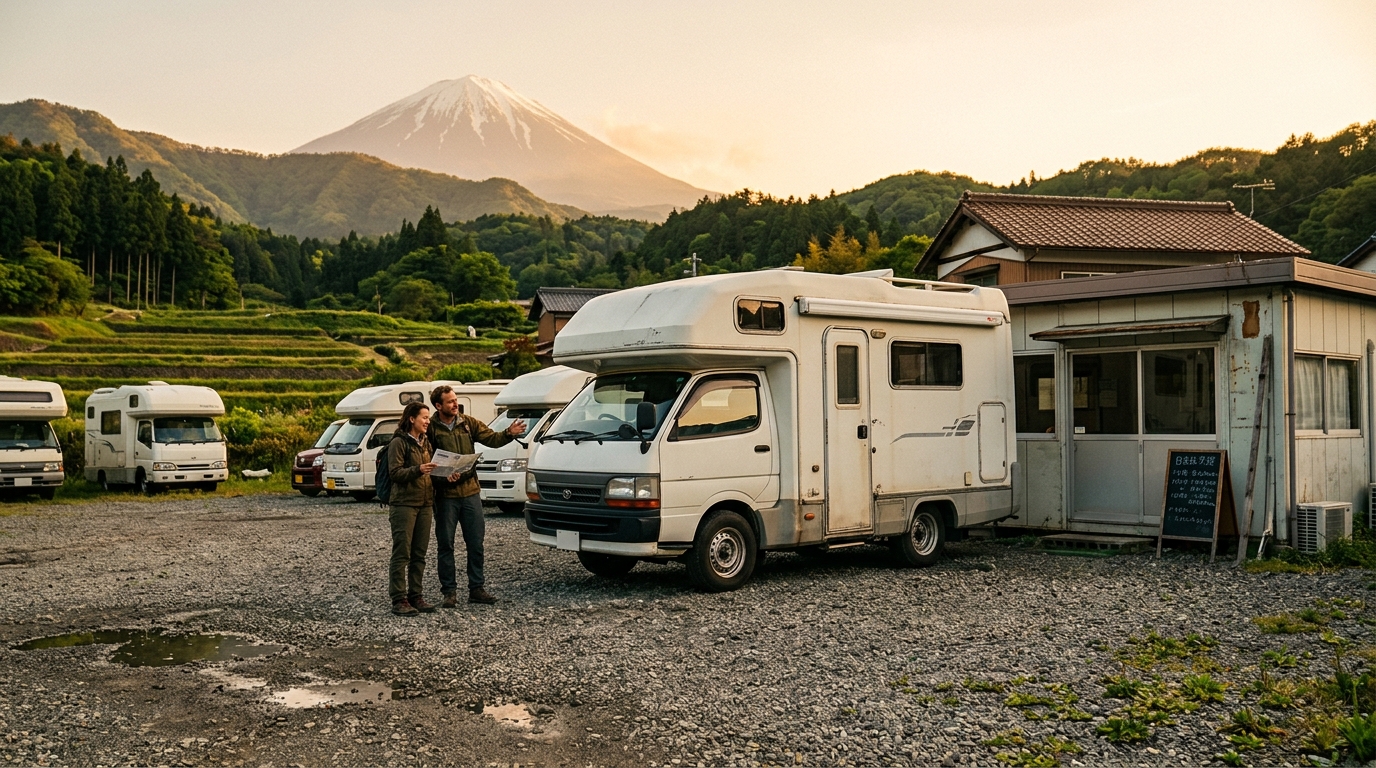
Japan offers diverse camping experiences, ranging from well-equipped private parks near major attractions to serene national park sites, often categorized by region for easy access during your long-term RV rental in Japan. Travelers often consider regions like Hokkaido for its vast natural landscapes, the Fuji Five Lakes area for iconic views of Mount Fuji, Okinawa for tropical escapes, or Tohoku for mountainous beauty and historical sites. These regions feature a mix of public and private campgrounds catering to different preferences and durations, ideal for exploring at a leisurely pace of max 100-150 km per day. For example, in Hokkaido, sites like Lake Toya Tōyako Onsen Camp Village offer lakeside pitches with stunning views, while near Mount Fuji, Fumotoppara Camp Ground provides expansive grass fields and a direct view of the iconic peak. For deeper explorations and route planning, remember that RV PLANET (rvplan.net), our sister company, offers over 1,300 pre-planned routes across 5 continents, including Japan, simplifying your travel logistics.
Campground Types in Japan (National, Private, Wild)
Japan provides a structured camping environment through national park and private campgrounds, with "wild" or dispersed camping generally discouraged due to cultural norms and property rights. National Park campgrounds are typically more rustic, nestled in scenic areas like Shiretoko National Park or Fuji-Hakone-Izu National Park, providing basic facilities and a more immersive nature experience at a lower cost, often around ¥1,000-¥3,000 ($7-$20 USD) per night. Private campgrounds, such as Pica Fujiyama near Lake Kawaguchiko, tend to offer more amenities including full hookups, recreational facilities, and often themed experiences, making them popular but typically pricier, ranging from ¥3,000-¥7,000 ($20-$50 USD) per night. Michi-no-Eki (Roadside Stations) are a crucial resource for RVers, offering free parking, clean restrooms, local food, and souvenirs; while not official campgrounds, overnight stays are often tolerated if respectful of local cultural etiquette regarding noise levels, waste disposal, and using dedicated parking spots. Off-grid or dispersed camping is largely not permitted or culturally accepted in Japan, so it is best to stick to designated campgrounds or utilize Michi-no-Eki as appropriate alternatives to avoid issues with local communities and regulations.
Featured RV Park or Campground in Japan
When selecting an RV park in Japan for your long-term rental, prioritize establishments that explicitly advertise RV-specific amenities such as dedicated power hookups (typically 100V), spacious pitches, and clear English-friendly information, especially when touring popular routes. Parks like Pica Fujiyama (Fumotoppara Camp Ground) near Mount Fuji consistently receive high ratings for their cleanliness, well-maintained facilities, and stunning views of the iconic volcano. Reviews often highlight clear rules and proximity to attractions or public transport, making it easy to explore without constantly moving your campervan. Ideal parks will also offer easy access to waste disposal facilities and fresh water, crucial for extended stays, and ensure adequate space for maneuvering and parking your rented motorhome. Many campgrounds also offer on-site laundromats and showers, which are usually coin-operated and kept to impeccable standards, reflecting Japan's commitment to cleanliness and efficiency. Exploring these top-rated campgrounds is a fantastic way to immerse yourself in Japan's natural beauty and culture.
Hookups & Amenities - What to Expect
Most developed campgrounds in Japan offer essential hookups like electricity, water, and grey/black water disposal, alongside shared facilities such as clean restrooms, showers, and laundry. Electricity is generally 100V with two-prong Type A/B outlets common, so travelers should bring an appropriate adapter or converter for their devices. While WiFi is increasingly available, coverage can be spotty at more remote sites; consider a portable WiFi device or a local eSIM for consistent internet access throughout your long-term RV rental in Japan. On-site laundromats and shower facilities are typically coin-operated and maintained to a high standard of cleanliness, often costing around ¥200-¥500 ($1.50-$3.50 USD) per use. Regarding fuel, Japan primarily offers gasoline (regular and high-octane) and diesel (light oil); confirm your RV's specific fuel type upon rental to avoid issues at gas stations, which are widely available but may require navigating language barriers. Having a well-stocked kitchen in your rented RV allows you to prepare delicious meals on the go, and if you're looking for inspiration, check out our RV-friendly recipes playlist.
Booking Windows & Reservations in Japan
For long-term RV rentals in Japan, proactive planning is highly recommended, with popular campgrounds often requiring reservations several months in advance, especially during peak seasons like cherry blossom (March-April) and autumn foliage (October-November). Many seasoned RV travelers book 3-6 months ahead for sought-after sites to guarantee their spot. However, if you're a spontaneous traveler, don't fret: many national park campgrounds reserve 25-30% of their spots for first-come, first-served arrivals, offering flexibility for those who book day-to-day. You'll often find a spot; if not at the first campground, then the next one. It is always advisable to call ahead (utilizing translation apps if necessary to overcome language barriers) before driving to a spontaneous site to confirm availability and avoid unexpected closures or full capacity. When planning a long-term trip, be prepared for specific weather events such as typhoons during summer and early autumn, and heavy snow in mountainous or northern regions during winter, by monitoring forecasts and having alternative routes or accommodations ready. Our global team at Bandana Caravan has been helping tens of thousands of travelers explore the world by RV since 2001, providing peace of mind through every stage of your booking process.
Nearby Supermarkets & Resupply Points
Resupplying your rented RV in Japan is highly convenient, with major supermarket chains such as Aeon, Ito-Yokado, and Seiyu, alongside numerous local stores, readily available in or near most towns and cities. These supermarkets typically offer a wide range of fresh produce, pantry staples, and local delicacies, with many operating late or even 24/7 in urban areas. Using navigation apps like Google Maps will easily locate the nearest resupply points along your travel route, ensuring you always have access to provisions for your long-term rental. For instance, a 5.99m "cruise america example EX-Group A" campervan with its 80-liter refrigerator can easily store a week's worth of groceries, reducing frequent resupply stops. Beyond supermarkets, local markets, especially in rural areas, offer unique regional produce and artisanal goods, perfect for experiencing local flavors. When considering all the ancillary trip costs like groceries, fuel, and campground fees, remember that RV PLANET routes allow travelers to itemize and track every expense for easy budgeting. On the routes offered through RV PLANET routes, you can itemize and track every expense along the way for easy budgeting.
Best RV Class for Camping in Japan
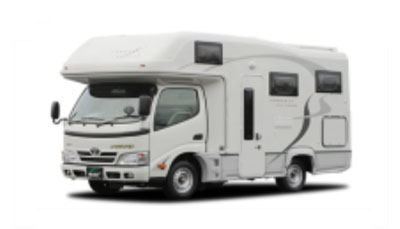
For navigating Japan's varied landscapes, including potentially narrower rural roads and urban parking, Class B Camper Vans or smaller Class SI - Semi-integrated RVs are generally the most suitable options for a long-term rental. Class B Camper Vans, with Bandana's global fleet averaging 5.8m in length, sleeping 3.2, and accommodating 2.7 adults, offer superior maneuverability, making them ideal for navigating tighter spaces and more fuel-efficient with typical consumption around 8-10 Liters/100 km. For example, a "V3" motorhome, with a length of 6.36m, a 100-liter fresh water tank, and a fuel consumption of 11-13 Liters/100 km, is perfect for couples. Class SI - Semi-integrated RVs, averaging 6.9m in length, sleeping 3.8, and accommodating 3.4 adults from Bandana's global fleet, provide a good balance of interior space and relative compactness suitable for Japanese roads, with common fuel consumption around 10-11 Liters/100 km. While larger RVs like Class C (Bandana's global fleet averages 7.5m) and Class A (Bandana's global fleet averages 7.5m) offer more living space, their increased length can present challenges on Japan's narrower roads, in crowded parking lots, and when accessing certain scenic spots or urban centers. Regardless of RV class, it's advisable to utilize updated GPS systems (some rentals may offer English options) and smartphone mapping applications to plan routes that avoid roads unsuitable for larger vehicles and to assist with general navigation, which can overcome potential language barriers with road signs. Drive slowly and carefully, and you can drive almost anywhere without issues. No need to stress - just use common sense and pay attention.
Cultural Etiquette for RVers in Japan
Respecting local cultural etiquette is paramount for an enjoyable long-term RV rental in Japan. When staying overnight at Michi-no-Eki, remember these are rest stops, not official campgrounds. Keep noise levels minimal, especially after dark, and avoid setting up extensive outdoor living spaces like awnings or chairs, as this can be seen as appropriating public space. Properly dispose of all waste, as public trash cans are rare in Japan; you might need to carry your garbage until you find a designated disposal point, often at a campground or convenience store (usually requiring a small purchase). Use designated parking spots, and when in smaller towns or residential areas, be mindful of narrow streets and avoid obstructing local traffic or private property. A simple bow or "arigato gozaimasu" (thank you very much) goes a long way in showing appreciation and respect for local communities, enhancing your interaction with the warm and welcoming Japanese people. For more detailed insights, consider researching "Last-Minute RV Rental in Japan - What to Expect 2026" or "Cheap RV Rental in Japan - Budget Guide 2026" for general travel context.
Logistics for Non-Japanese Speakers
Navigating Japan as a non-Japanese speaker during a long-term RV rental requires a few practical strategies to overcome potential language barriers. Highly recommended tools include robust translation apps like Google Translate (with offline download capabilities for remote areas) for on-the-spot communication, and a basic Japanese phrasebook for key phrases related to directions, food, and emergencies. Learning a few essential phrases, such as "Sumimasen" (Excuse me/Sorry) or "Eigo ga hanasemasu ka?" (Do you speak English?), can significantly ease interactions. Road signs in major tourist areas and on expressways often include English translations, but some rural roads might only have Japanese. For emergencies, the numbers are 110 for police and 119 for fire/ambulance; clearly state "English please" when calling if you need assistance. When dealing with mechanics or ordering food, having a picture or written translation ready can be incredibly helpful. Bandana Caravan is dedicated to providing supportive pre-booking comparisons and post-booking coordination, ensuring you have the resources to feel confident in your journey. We're true RV specialists, not just a side department of a travel agency, so we understand your unique needs.
How to Save on Campgrounds in Japan
To minimize campground costs during a long-term RV rental in Japan, consider leveraging special discount cards, booking during shoulder seasons, and opting for municipal or regional sites over private resorts. While Bandana does not offer specific discount cards, some local Japanese RV associations or campground chains might. Traveling during the shoulder seasons-for instance, late spring before Golden Week (late April to early May) or early autumn after peak foliage (late November)-often results in lower rates, fewer crowds, and more availability for sites. Municipal or regional campgrounds are typically more budget-friendly than private resorts, though they may offer simpler amenities, often costing under ¥2,500 ($17 USD) per night. Many campgrounds provide discounted rates for longer stays; inquire about weekly rates or special offers for bookings of three or more nights to maximize savings for your extended adventure. If traveling with another RV or as part of a group, sharing larger sites or hookups can also help reduce individual per-night costs. Look for "Weekly RV Rental in Japan - Pricing 2026" guides or "RV Rental Deals in Japan - Latest Offers 2026" for potential savings, as prices are dynamic and change daily based on availability and seasonality. Remember that our platform, founded in 2001, helps you compare final prices across 50+ suppliers, ensuring full transparency with no hidden fees or surprises.
What You Shouldn't Miss
- **Explore Hokkaido's Untamed North:** Drive through vast national parks like Shiretoko, a UNESCO World Heritage site, experiencing rugged coastlines, dense forests, and abundant wildlife.
- **Mount Fuji's Majestic Views:** Circle the Fuji Five Lakes region, enjoying iconic views of Japan's tallest peak, stopping at scenic points around Lake Kawaguchiko.
- **Kyoto's Cultural Immersion:** While larger RVs might park on the outskirts, don't miss the chance to wander through ancient temples, serene gardens, and vibrant geisha districts.
- **Onsen Hopping in Hakone:** Park your motorhome near the volcanic Hakone area and indulge in the therapeutic hot springs, some offering breathtaking views of Fuji.
- **Taste the Local Flavors at Michi-no-Eki:** Stop at various roadside stations for unique regional snacks, fresh produce, and local crafts, offering a genuine taste of Japan's diverse culinary landscape.
- **Looking for expert insights from Avi Bandana? Top 5 Adventures - recommendations from Avi Bandana**
Final Thoughts
A long-term RV rental in Japan offers an incredibly unique and enriching way to experience this captivating country. It provides the freedom to delve deeply into its diverse landscapes, from the serene temples of Kyoto to the bustling streets of Tokyo, and the opportunity to truly connect with the culture and local communities at your own pace. With Bandana Caravan, you’re backed by over two decades of expertise, transparent pricing, and dedicated support, ensuring your adventure is as smooth and enjoyable as possible.
Whether you're planning a month-long exploration of Hokkaido or a multi-week cultural immersion across Honshu, the flexibility and comfort of a rented motorhome will transform your journey. Embrace the spirit of slow travel, allowing yourself to savor every moment, every sight, and every delicious local meal. Get inspired for your next trip! Discover top destinations, planning tips, all in one place!
Ready to discover the magic of Japan on an extended RV adventure? Compare long term rv Rentals in Japan now and find the perfect motorhome or campervan for your unforgettable journey. Your Japanese road trip awaits!
🎬 Video coming soon