For live availability and current prices, start with our RV Rental Norway - Complete Guide 2026 guide.
In This Guide
- The 4 RV Families Compared for Norway
- Class A (Integrated) - Best For
- Class SI (Semi-Integrated) - Best For
- Class C (Alcove) - Best For
- Class B (Campervan) - Best For
- Side-by-Side Comparison Table
- Our Recommendation for rv rental beginners Travelers in Norway
- Price Comparison by RV Class in Norway
- What are the specific costs of an RV trip in Norway beyond rental fees?
- Can you wild camp with an RV in Norway, and what are the rules?
- How do different RV sizes navigate Norway's roads?
- Where can you dispose of waste and refill water for an RV in Norway?
- What are the seasonal considerations for RVing in Norway?
- What essential health and safety information do I need for RVing in Norway?
- What should I pack for an RV adventure in Norway?
- How can I stay connected while RVing in Norway?
Embarking on your first RV rental adventure in Norway promises breathtaking fjords, majestic mountains, and the freedom of the open road. At Bandana Caravan, we've helped tens of thousands of travelers explore the world by RV since 2001, offering direct partnerships with over 50 leading RV suppliers worldwide. Our goal is to make your first journey seamless and stress-free, with full transparency and no hidden fees.
For live availability and current prices, start with our RV Rental Norway - Complete Guide 2024 guide. We understand that choosing the right motorhome or campervan is critical for a great experience, especially in a country as diverse and stunning as Norway. That's why we're dedicated to being true RV Specialists, not just a side department of a general travel agency, ensuring you get expert advice every step of the way.
The 4 RV Families Compared for Norway
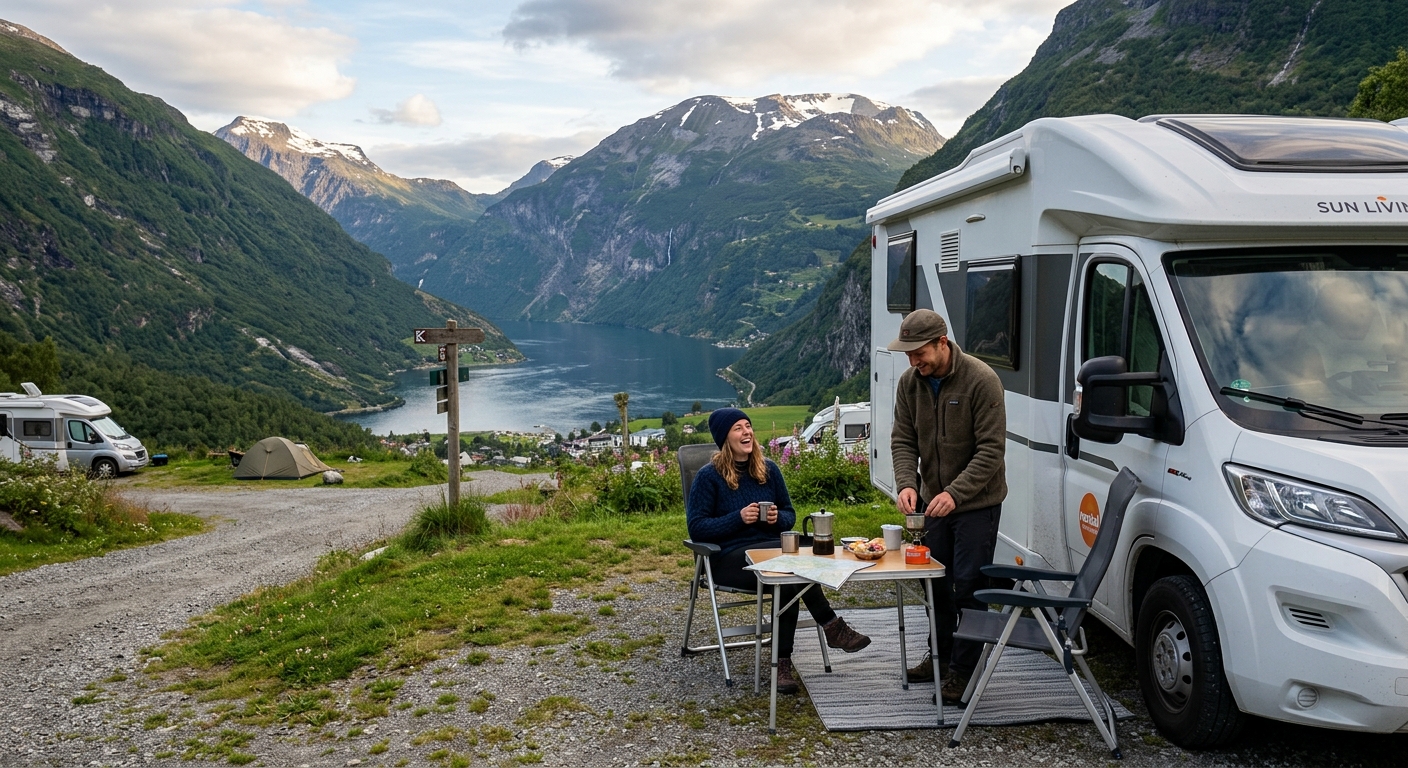
Choosing the right RV family significantly impacts navigation, comfort, and your overall experience on Norway's diverse terrain and climate. For beginners, understanding the differences between Class A (Integrated), Class SI (Semi-Integrated), Class C (Alcove), and Class B (Campervan) motorhomes helps align the rented RV with your specific Norwegian adventure, whether you're a couple seeking agility or a family needing ample space.
Beginners should consider vehicle size, sleeping capacity, and fuel efficiency relative to their trip length and group size. Norway's roads can vary from wide highways to narrow, winding fjord routes, making vehicle choice a key decision. Our 24/7 support team is here to help you compare pre-booking to ensure you select the perfect mobile home for your journey.
Class A (Integrated) - Best For
Class A integrated motorhomes offer the most spacious and luxurious experience, ideal for families or groups seeking comfort on longer trips, but require careful navigation on Norway's often narrow roads. Bandana's global fleet average for Class A motorhomes indicates an average length of 7.5 meters, sleeping 4.4 people, and offering substantial load capacity (avg 209.5 kg).
Fuel consumption typically ranges from 8-12 Liters/100 km, reflecting their size and amenities. These large motorhomes are best suited for large families, groups prioritizing luxury and space, longer trips, or those accustomed to driving larger vehicles. Trade-offs include less agility on narrow fjord roads, higher fuel costs, and potentially limited access to smaller campsites. Drive slowly and carefully, and you can drive almost anywhere without issues. No need to stress - just use common sense and pay attention. On the routes offered through RV PLANET routes, you can itemize and track every expense along the way for easy budgeting.
Class SI (Semi-Integrated) - Best For
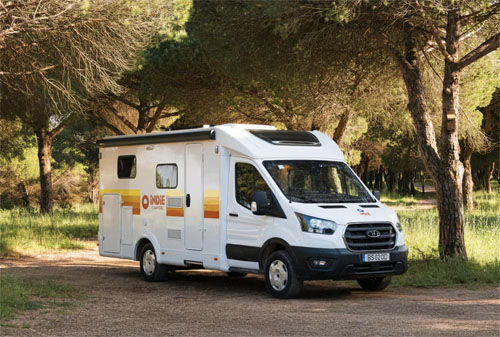
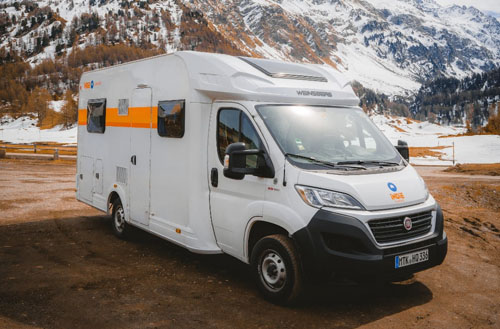
Semi-integrated motorhomes strike an excellent balance between comfort and maneuverability, making them a versatile choice for couples or small families exploring Norway's diverse landscapes. Bandana's global fleet average for Class SI vehicles shows an average length of 6.9 meters, sleeping 3.8 people, with an average load capacity of 72.2 kg.
Fuel efficiency is typically around 10-11 Liters/100 km, offering a good compromise between size and running costs. These rented RVs are best suited for couples or small families (2-4 people), first-time RVers looking for ease of driving combined with home comforts, and exploring both main roads and some narrower routes. They are easier to drive and park than Class A motorhomes, generally more fuel-efficient, and provide a good amount of living space, making them a popular choice for a week-long trip.
Class C (Alcove) - Best For
Alcove motorhomes are a fantastic option for families with children or larger groups due to their dedicated sleeping area over the cabin, offering ample space and often a more budget-friendly rental. Bandana's global fleet average for Class C motorhomes indicates an average length of 7.5 meters, sleeping an impressive 5.8 people, and with an average load capacity of 42.4 kg.
Fuel consumption typically ranges from 10-12 Liters/100 km. These motorhomes are best suited for larger families (4-6 people), groups prioritizing separate sleeping areas, and budget-conscious travelers seeking maximum space. While they have a taller profile which can be affected by strong winds, and may have height restrictions in some tunnels or ferries, their length is similar to Class A but they are often perceived as easier to drive. Remember, drive slowly and carefully, and you can drive almost anywhere without issues. No need to stress - just use common sense and pay attention.
Class B (Campervan) - Best For
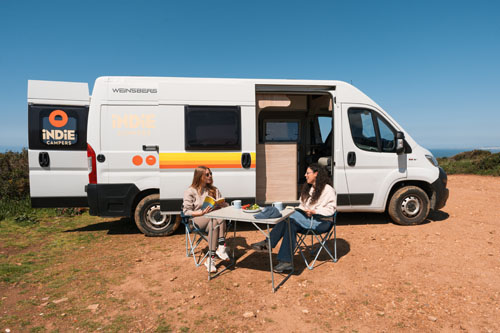
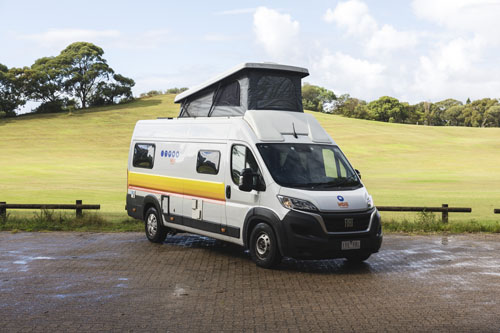
Campervans are ideal for adventurous couples or solo travelers prioritizing agility, ease of parking, and fuel efficiency, perfect for navigating Norway's scenic but sometimes challenging routes. Bandana's global fleet average for Class B campervans shows an average length of 5.8 meters, sleeping 3.2 people, with an average load capacity of 37 kg.
Fuel economy is notably better, typically around 8-10 Liters/100 km, making them a cost-effective choice for longer journeys. Campervans are best suited for solo travelers, couples, or small groups (2-3 people) who value maneuverability, plan to visit cities, or tackle very narrow roads and off-the-beaten-path destinations. They drive much like a large car, are easier to park, offer better fuel economy, and are less intimidating for first-time RVers on challenging Norwegian roads.
Side-by-Side Comparison Table
A side-by-side comparison reveals the key distinctions between RV families, assisting beginners in selecting the ideal vehicle for their Norwegian adventure based on size, sleeping capacity, and typical use. This table simplifies the choice for your first RV rental in Norway.
| Family | Avg Length (m) | Sleeps | Avg Fuel Use (L/100 km) | Best Use Case in Norway |
|---|---|---|---|---|
| Class A (Integrated) | 7.5 | 4.4 | 8-12 | Luxury, spacious trips for large groups, comfortable touring. |
| Class SI (Semi-Integrated) | 6.9 | 3.8 | 10-11 | Balanced comfort and maneuverability for couples/small families. |
| Class C (Alcove) | 7.5 | 5.8 | 10-12 | Family-friendly, maximum sleeping capacity, cost-effective space. |
| Class B (Campervan) | 5.8 | 3.2 | 8-10 | Agility, fuel economy, ideal for couples/solo travelers and narrow roads. |
Our Recommendation for rv rental beginners Travelers in Norway
For most RV rental beginners in Norway, a Class SI (Semi-Integrated) motorhome offers the best balance of comfort, amenities, and manageable size, making it a strong primary recommendation. This motorhome provides sufficient living space and facilities without being overly cumbersome on Norway's varied road network, from wider routes to winding fjord roads, ensuring a comfortable yet navigable experience.
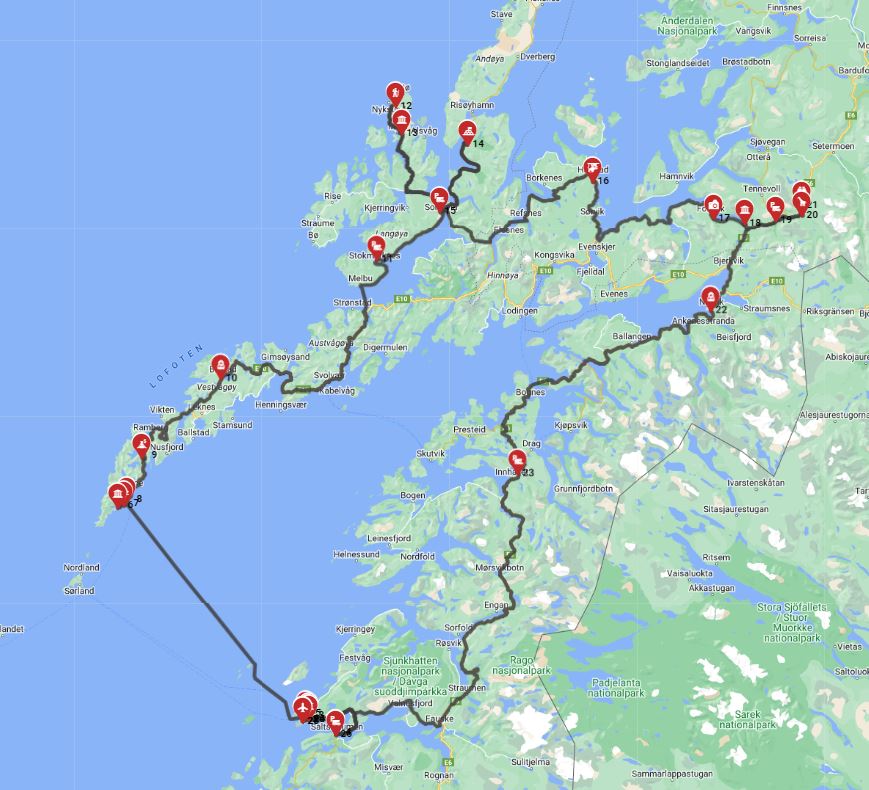
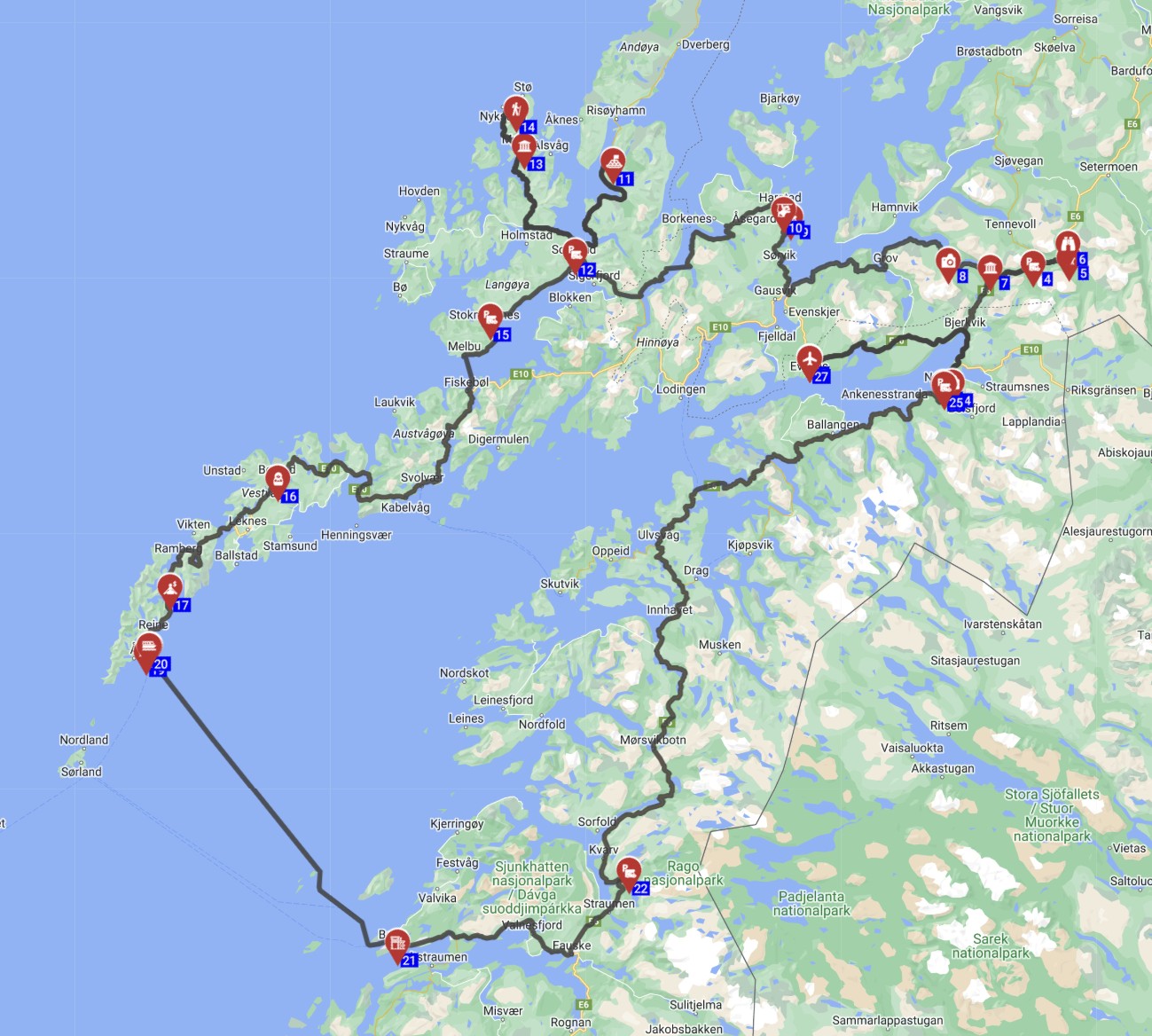
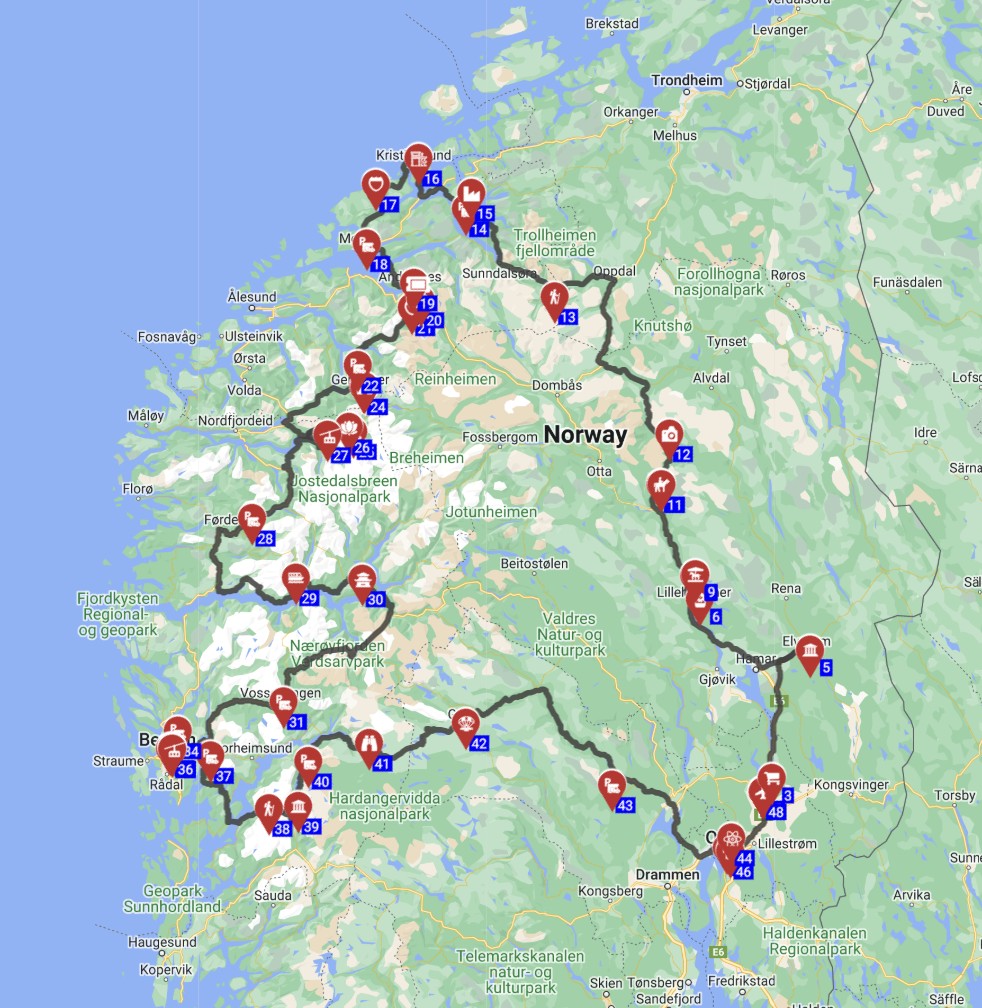
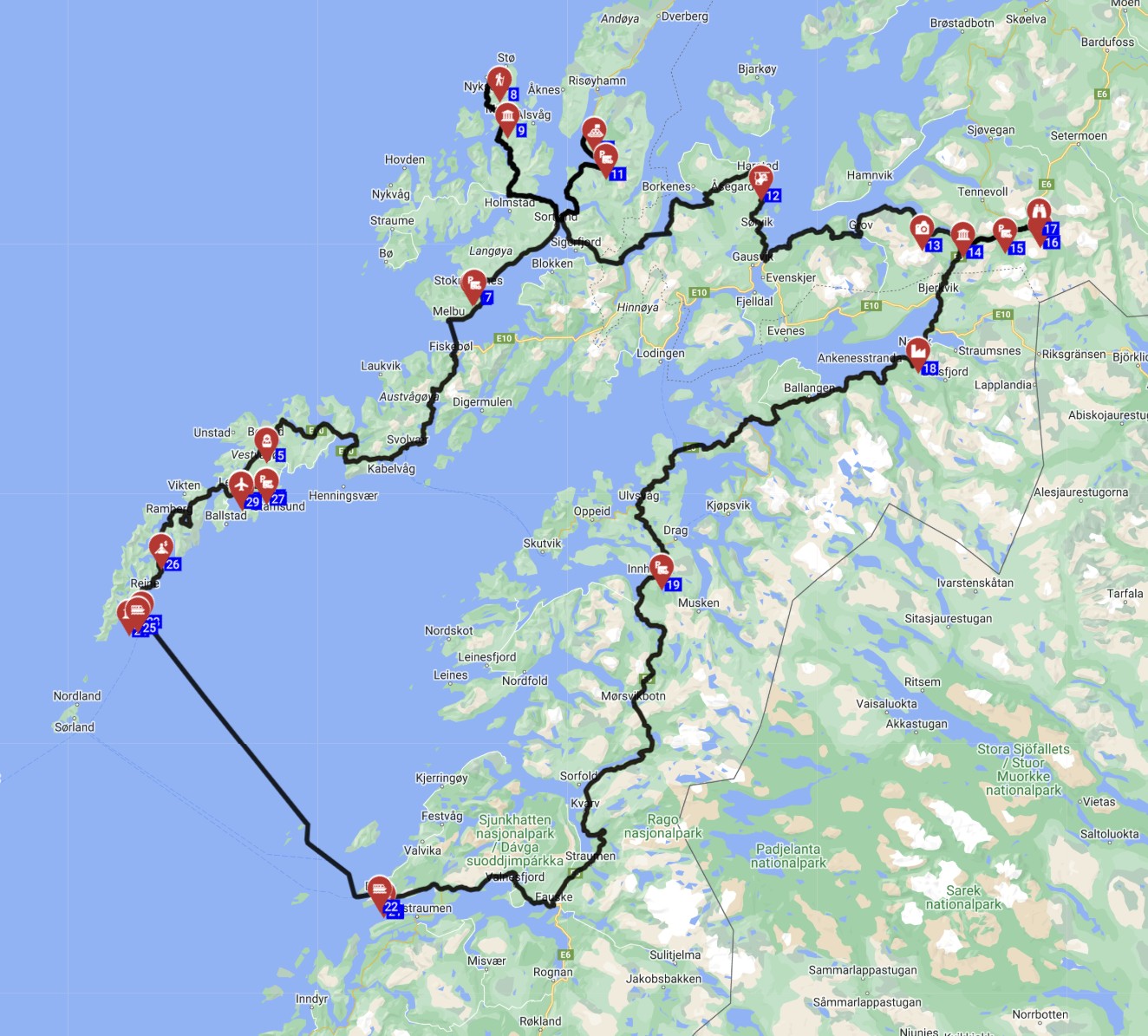
A Class B (Campervan) is an excellent runner-up for more adventurous or budget-conscious travelers. This option is ideal for those prioritizing maximum maneuverability, fuel efficiency, and ease of parking, especially when navigating city centers or particularly tight scenic routes, though it offers less interior space and amenities. When planning your route, remember our advice: travel slowly, max 100-150 km per day on average. Take time to feel the place, connect to the culture, the food, and the scenery. Explore a route like "Bergen Round trip - Norway’s Coastal Wonders", an 8-day, 782.9 km itinerary starting and ending in Bergen, featuring 2 hiking areas and 2 traditional visits.
Price Comparison by RV Class in Norway
RV rental prices in Norway fluctuate based on class, season, and duration, as well as supplier marketing decisions; Bandana's flex-rate system provides dynamic pricing insights for 2024 travels. The final price for your rented motorhome or campervan is always set at the actual booking time, similar to flight tickets, so early comparison can be beneficial.
Because pricing is flex-rate, the table below pulls real example prices from Bandana's live search:
Live April Price Comparison — RV Class × Trip Length
| Trip length | Class A | Class B | Class C | Class SI | Class TC |
|---|---|---|---|---|---|
| 1 week 15/04 → 22/04 | 940.66 € EUR | 643.71 € EUR | 833.41 € EUR | 715.51 € EUR | Check prices |
| 2 weeks 15/04 → 29/04 | 1,483.46 € EUR | 985.26 € EUR | 1,287.66 € EUR | 1,089.26 € EUR | Check prices |
| 1 month 01/04 → 30/04 | 2,501.30 € EUR | 1,575.04 € EUR | 2,116.37 € EUR | 1,746.72 € EUR | Check prices |
Estimates only — flex-rate prices change daily based on availability and season.
These prices are estimates and may change daily due to demand and availability. For the most current numbers, check the live search box at the top of the page. You can often find a wide range of RV Rental in Norway - Prices and Best Deals 2024 across different suppliers. Flexible dates and off-peak travel can often yield the cheapest RV rental in Norway - Budget Guide 2024. For those planning an extended road trip, consider checking out available "RV Rental Deals in Norway - Latest Offers 2024" to maximize savings.
What are the specific costs of an RV trip in Norway beyond rental fees?
Beyond the rental fee, an RV trip in Norway involves significant costs for fuel, tolls, ferries, and campsite fees, which can substantially impact the overall budget for beginners. Fuel prices in Norway are among the highest in Europe; anticipate average diesel costs around 20-25 NOK per liter (approx. 1.8-2.3 EUR/liter) in 2024, varying by region and station.
Norway's extensive toll system (AutoPASS) is primarily electronic, with charges depending on vehicle class and road segment; ensure your rental RV is registered or that you understand how tolls will be managed and billed (often post-trip by the rental company). Ferry costs are frequent for crossing fjords and can be significant for RVs, as prices are based on vehicle length and number of passengers; research specific ferry routes and prices in advance for different RV lengths to budget accurately. Campsite fees typically range from 250-500 NOK per night for an RV pitch with electricity, though prices vary by location, amenities, and season. Other potential costs include parking fees (especially in popular tourist areas), propane refills, and any additional insurance beyond the basic rental package. For easy budgeting and tracking every expense along the way, we recommend checking out RV PLANET routes.
Can you wild camp with an RV in Norway, and what are the rules?
Yes, wild camping with an RV is generally permitted in Norway thanks to "Allemannsretten" (the right to roam), provided you adhere to specific rules regarding distance from dwellings, duration, waste disposal, and environmental respect. Allemannsretten allows you to camp for up to two nights in uncultivated land, provided you are at least 150 meters from the nearest inhabited house or cabin.
For RVs, wild camping typically applies to designated rest areas, uncultivated public land, or specific parking spots, but *not* on private cultivated land (e.g., farmland) without explicit permission. Strict etiquette is essential: leave no trace, carry out all waste (including gray and black water, which must never be emptied into nature), and respect local signage. Limitations for RVs often include size restrictions in certain areas (especially narrow roads or national parks), prohibitions in protected zones, and the need to ensure your vehicle does not block access or cause environmental damage. Culturally, Norwegians highly value their pristine nature; showing respect by leaving your spot cleaner than you found it, minimizing noise, and being considerate of locals ensures this privilege remains available for all. For finding campsites and campgrounds during your trip, we recommend using rvplan.net — a great resource for locating available spots along your route.
How do different RV sizes navigate Norway's roads?
Navigating Norway's diverse road network, from wide highways to narrow fjord routes and mountain passes, demands consideration of your RV's size, with smaller campervans offering greater agility while larger motorhomes require more caution and planning. Campervans (Class B) excel on Norway's roads, particularly the famed scenic routes and smaller country lanes, due to their car-like maneuverability and compact size, making tight turns and parking significantly easier.
Semi-integrated (Class SI) and Alcove (Class C) motorhomes offer a good balance; their longer lengths (around 7 meters) require more attention on hairpin bends and narrow tunnels, but they are still manageable for attentive drivers. Integrated (Class A) motorhomes, with their large footprint, pose the greatest challenge, often struggling on very narrow fjord roads, steep inclines, and through small villages, necessitating careful route planning and avoiding roads marked as unsuitable for large vehicles. Drive slowly and carefully, and you can drive almost anywhere without issues. No need to stress - just use common sense and pay attention. Always be aware of local signage indicating maximum vehicle dimensions (height, width, length) and avoid attempting routes that feel too challenging for your RV's size; many popular tourist routes are well-suited for RVs, but secondary roads can be tricky. Longer RVs also incur higher ferry costs and may face more limited parking options in towns or at popular attractions. Our expert advice for RV Driving Deals in Norway - Routes and Savings 2024 will help you plan wisely.
Where can you dispose of waste and refill water for an RV in Norway?
In Norway, RV waste disposal (gray and black water) and fresh water refills are primarily available at designated campsites, some petrol stations, and specialized RV service points, requiring planning to avoid overfilling or running dry. Campsites are the most common and reliable locations for both gray water (sink/shower) and black water (toilet) disposal, often called 'tømmestasjon' (emptying station) or 'servicehus'. They also provide fresh water refill points.
Many larger petrol stations, especially those along main tourist routes, offer dedicated RV service points for waste disposal and water refills, though availability can vary. Look for specific RV service points (often indicated by a caravan or wastewater symbol) found in some towns or along popular routes; apps like Campercontact or Park4Night are invaluable for locating these. It is strictly forbidden and environmentally harmful to empty gray or black water into nature; ensure proper disposal to protect Norway's pristine environment and adhere to local regulations. Plan your route to include regular stops at these facilities, typically every 2-3 days depending on your RV's tank capacities and usage, to avoid inconvenience. Imagine yourself setting up a cozy dinner inside your campervan after a day of exploring, knowing you'll find proper disposal tomorrow. Check out our RV-friendly recipes playlist for meal ideas!
What are the seasonal considerations for RVing in Norway?
Seasonal considerations for RVing in Norway are critical, impacting road accessibility, daylight hours, weather conditions, and necessary equipment, with summer offering the widest access and winter demanding specialized preparation like winter tires and adequate heating. Summer (June-August) is the peak season, offering long daylight hours (midnight sun in the north), mild temperatures, and maximum road accessibility, with most scenic routes and mountain passes open.
Spring (April-May) and Autumn (September-October) provide fewer crowds, potentially lower prices, and stunning landscapes (blossoms or fall colors), but expect changeable weather, shorter daylight, and some mountain roads/ferries may still be closed or start closing. Winter (November-March) RVing is for experienced travelers: many mountain roads are closed, snow and ice are prevalent, and specialized equipment is mandatory (e.g., studded tires, snow chains, powerful heating, good insulation). Ensure your rental RV is fully winterized. Regardless of season, pack layers; even summer evenings can be cool, and mountain weather changes rapidly. For winter, verify your RV has adequate heating and insulation, and inquire about winter tire requirements; studded tires are often mandatory or highly recommended from November to April, depending on the region. For comprehensive tips, see our "Winter RV Rental in Norway - Pricing Guide 2024".
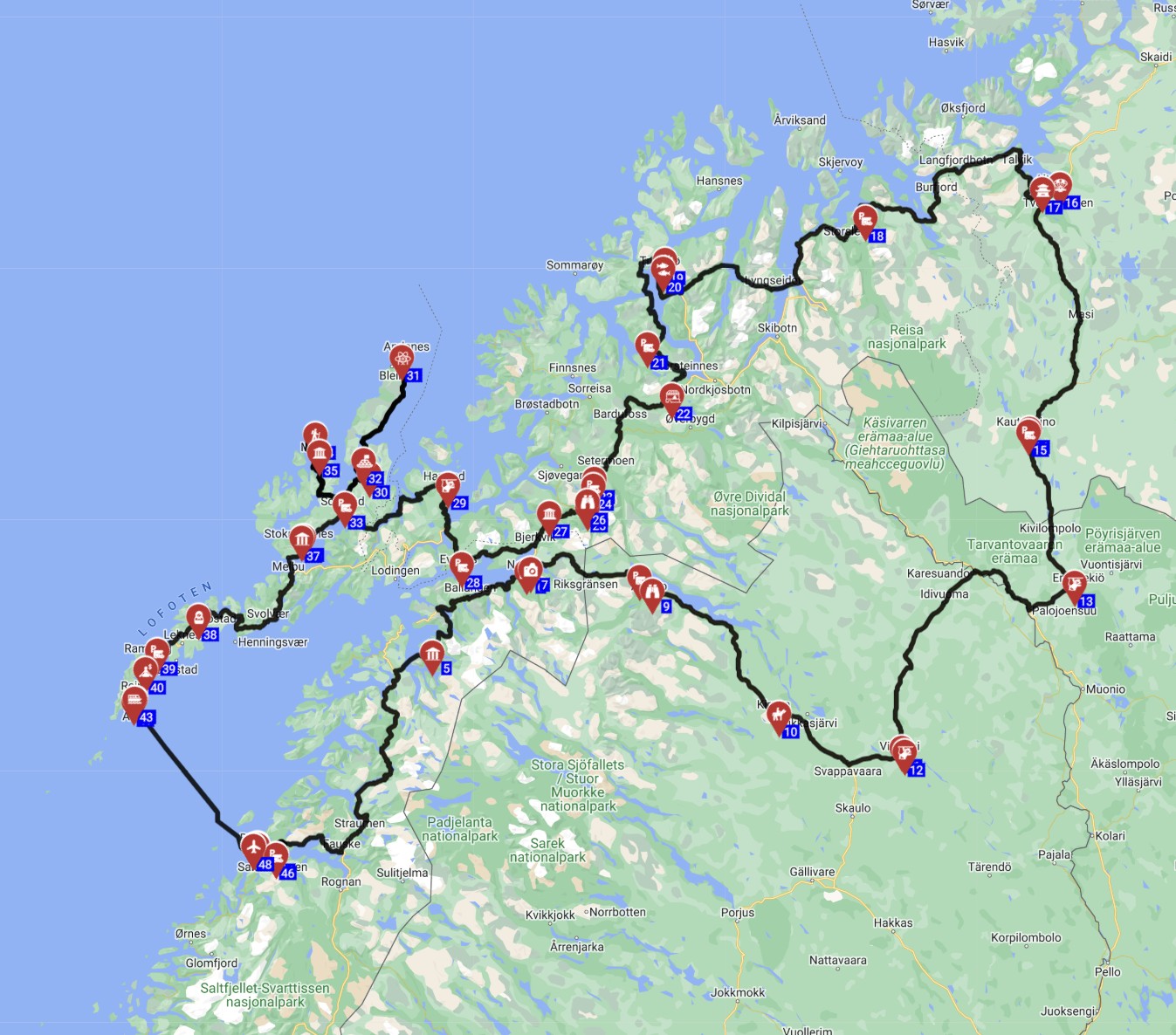
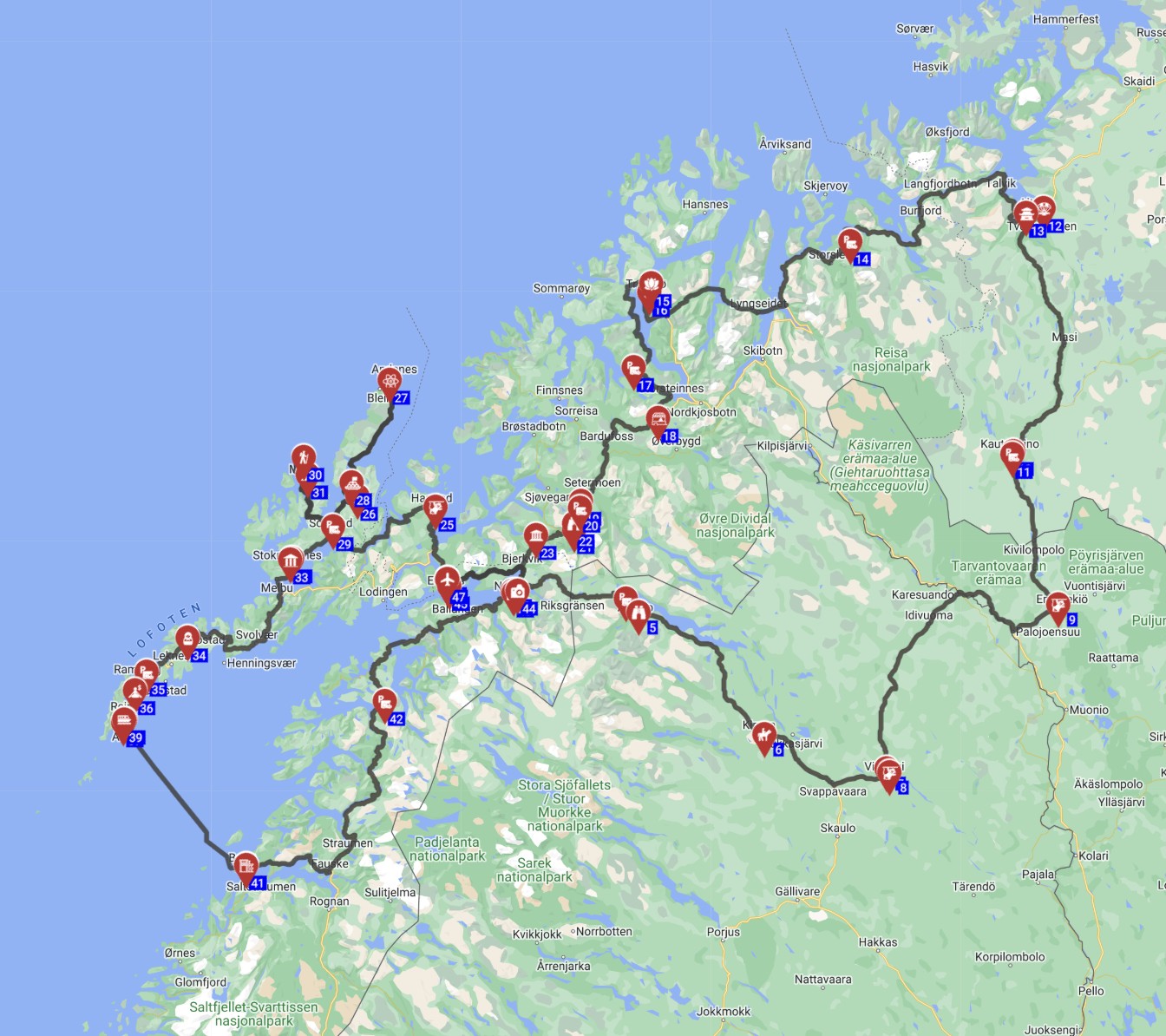
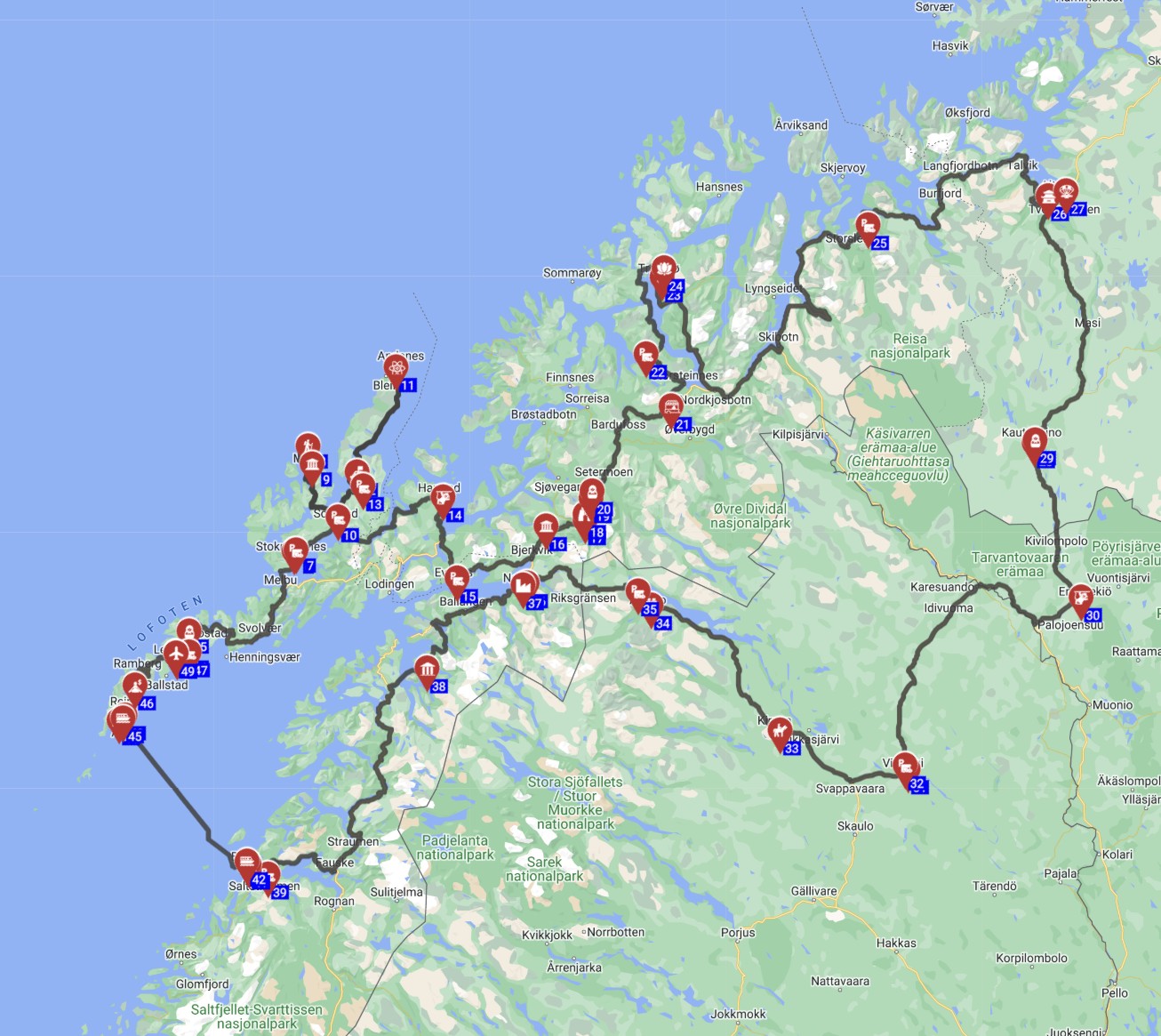
Consider an incredible "Tromsø Round Trip - Arctic Wonders: Northern Norway Family Road Trip", a 15-day, 2402.5 km journey that includes 3 wildlife watches and 4 museums, perfect for experiencing the extremes of Norwegian seasons.
What essential health and safety information do I need for RVing in Norway?
Essential health and safety information for RVing in Norway includes knowing emergency numbers (113 for ambulance, 110 for fire, 112 for police), understanding local road assistance options, and considering specific travel insurance for RV rentals to ensure a secure trip. Norway's emergency services are highly efficient: **113 for ambulance**, **110 for fire**, and **112 for police**; program these into your phone and know your exact location if calling.
Familiarize yourself with road assistance options provided by your rental company or through European services like Viking Assistance or NAF (Norwegian Automobile Federation), crucial for breakdowns in remote areas. Travel insurance should specifically cover RV rentals, including collision damage waiver (CDW) specifics, liability, and personal belongings; some standard travel policies may not fully cover recreational vehicles. You can upgrade to a top-level deductible for extra peace of mind. Be prepared for changing weather conditions, especially in mountains; carry appropriate clothing, a first-aid kit, and enough food/water. Driving safety: be aware of wildlife (moose, reindeer) especially at dawn/dusk, respect speed limits, and understand local road rules, including tunnel safety procedures. Ensure all passengers wear seatbelts while the RV is in motion, and avoid leaving valuables visible inside the vehicle.
What should I pack for an RV adventure in Norway?
Packing for an RV adventure in Norway should prioritize layers of clothing, waterproof gear, sturdy hiking shoes, and specific items for cooking and sleeping suitable for various weather conditions and potential wild camping scenarios. Layering is key: thermal base layers, fleece or wool mid-layers, and a waterproof and windproof outer shell are essential, even in summer. Include warm socks, a hat, and gloves.
Waterproof hiking boots are a must for exploring Norway's trails and wet conditions; also pack comfortable shoes for driving and lighter walking. While rental RVs come with basic kitchens, consider bringing your favorite spices, coffee, a sharp knife, and reusable bags/containers to enhance your RV-friendly recipes playlist. For sleeping, although bedding is often provided, consider bringing a favorite blanket or pillow for extra comfort. For wild camping, a headlamp or flashlight is indispensable. For navigation and connectivity, download offline maps (e.g., Google Maps, Maps.me), a power bank for devices, and consider a local SIM card (if not covered by your plan) or portable Wi-Fi device. Miscellaneous items might include sunscreen and insect repellent (especially for summer), a small first-aid kit, binoculars for wildlife spotting, a camera, and a good book for downtime.
How can I stay connected while RVing in Norway?
Staying connected while RVing in Norway is generally achievable through local SIM cards for mobile data and Wi-Fi at campsites or public hotspots, though coverage can be spotty in remote fjord and mountain areas. Purchasing a Norwegian SIM card from providers like Telenor or Telia upon arrival (available at airports, convenience stores) offers the most reliable and often cost-effective mobile data and calling within the country.
If you're from an EU/EEA country, your mobile plan's roaming might work in Norway under 'Roam Like At Home' regulations, but always verify limits and potential fair usage policies with your provider before traveling. Most organized campsites offer Wi-Fi, often included in the pitch fee or available for a small charge; quality and speed can vary significantly. Consider renting a portable Wi-Fi hotspot (MiFi) from your rental company or a specialized provider for consistent access, though these are an additional cost. Always download maps, important documents, and entertainment (movies, music) for offline access, as signal can be intermittent or nonexistent in very remote regions and deep fjords. Even with a local SIM, be prepared for occasional loss of signal when venturing into Norway's stunning but isolated natural areas.
🎬 Video coming soon
What You Shouldn't Miss
- **Drive the Atlantic Ocean Road:** Experience the surreal feeling of driving over the ocean on a series of eight bridges connecting islands.
- **Cruise the Geirangerfjord:** Take a ferry through this UNESCO World Heritage site, marveling at towering cliffs and cascading waterfalls like the 'Seven Sisters'.
- **Hike to Pulpit Rock (Preikestolen):** Embark on a moderate 4-hour hike to one of Norway's most iconic viewpoints, offering panoramic views over the Lysefjord.
- **Explore the Lofoten Islands:** Drive through picturesque fishing villages, dramatic peaks, and stunning beaches, especially under the Midnight Sun.
- **Visit Nordkapp (North Cape):** Journey to Europe's northernmost point, experiencing the vastness of the Arctic and the possibility of seeing the Midnight Sun or Northern Lights.
- **Experience the Flam Railway:** Take one of the world's steepest railway journeys, a stunning trip through waterfalls and dramatic valleys from Myrdal to Flam.
Looking for expert insights from Avi Bandana? Top 5 Adventures - recommendations from Avi Bandana
Final Thoughts
Embarking on an RV rental adventure in Norway as a beginner is an exciting prospect, full of freedom and discovery. With the right preparation, choosing the ideal vehicle, and understanding local nuances, you're set for an incredible journey through one of the world's most stunning landscapes. Remember, the journey is just as important as the destination, so take your time, embrace the unexpected, and immerse yourself in Norway's unique charm.
At Bandana Caravan, we are here to support you every step of the way, from comparing options to ensuring a smooth booking and post-booking coordination. Our commitment to full transparency and personalized service means you can plan your trip with confidence. So, get ready to create unforgettable memories, whether it's under the midnight sun or the dancing Northern Lights.
Discover top destinations, planning tips, all in one place! Plan a trip itinerary in advance with minimal effort and maximum enjoyment. Get inspired for your next trip!