In This Guide
- Can You Drive an RV in Miami? License & Age Rules
- Road Conditions & Terrain in Miami
- RV Size Limits, Bridges & Restricted Zones
- Fuel: Diesel vs. Petrol & Cost per 100 km
- Tolls, Vignettes & Border Rules
- Driving Tips for family rv rental Travelers
- Recommended RV Class for Miami Roads
- Should I Choose a Compact Van Instead of a Large RV in Miami?
- Can I Park Anywhere? Free & Wild Camping Rules in Miami
- Can I Drive an RV Into the City Center? Heights, Tunnels & Local Signage
- Can your family ride in a RV while it drives?
- Is it legal to live in a camper with kids in Florida?
- How much is insurance on a $200,000 RV?
- Does American Family Insurance cover RV?
Exploring Miami and its vibrant surroundings in a family RV offers unparalleled freedom and comfort, allowing you to discover South Florida's unique blend of city life, stunning beaches, and natural wonders at your own pace. With Bandana Caravan, you're not just renting a motorhome; you're gaining a partner who understands RV travel inside and out. We are true RV specialists, dedicated to ensuring your adventure runs smoothly from the moment you start comparing prices to the last day of your trip. For live availability and current prices, start with our RV Rental Miami - Complete Guide 2026 guide.
Can You Drive an RV in Miami? License & Age Rules
Most motorhomes with a Gross Vehicle Weight Rating (GVWR) under 26,001 pounds can be legally driven in Florida with a standard Class E driver's license, which is the same license required for a regular car. This means that a special commercial driver's license (CDL) is rarely necessary for the Class A, B, or C rental RVs you'll typically find. Bandana Caravan partners with over 50 leading RV suppliers worldwide, including trusted names like El Monte and Cruise America, all of whom typically require a minimum driver age of 21 for their rentals, with no young driver surcharges or vehicle class restrictions based on age. International visitors to Miami should carry their valid home country driver's license; an International Driving Permit (IDP) is recommended for those from non-English speaking countries for ease of translation, though it is not strictly mandatory in most cases.
Road Conditions & Terrain in Miami
Miami and the broader South Florida region feature exceptionally flat terrain and generally well-maintained urban roads and expansive highways, making RV driving straightforward. You can expect typical dense city traffic, especially during peak hours on major arteries like I-95 or US-1, which will require patience and careful, defensive driving. All major roads are paved, so there's no need to worry about challenging gravel or mountainous terrain with your rented RV in this coastal area. While most routes are accommodating, navigating narrower streets in specific urban neighborhoods, such as parts of South Beach or Little Havana, will require extra vigilance and slow, cautious driving due to the larger size of a motorhome. Remember, drive slowly and carefully, and you can drive almost anywhere without issues. No need to stress - just use common sense and pay attention.
RV Size Limits, Bridges & Restricted Zones
While major Miami highways like the Florida Turnpike and I-95 comfortably accommodate all standard RV sizes, local height restrictions are common in specific urban areas, particularly when approaching parking garages and some older overpasses. Drivers must remain vigilant for clearly posted overhead clearance signs, which typically range from 8-12 feet at gas station canopies, drive-thrus, and parking entrances. Miami-Dade County does not generally have broad environmental zones that restrict RVs, but be aware that local ordinances in specific neighborhoods, such as residential areas near South Beach, might limit oversized vehicle access or impose parking restrictions. For instance, navigating your rented motorhome or campervan to a fuel station along the Venetian Causeway or accessing certain parking facilities in Brickell will require careful planning and attention to signage.
Fuel: Diesel vs. Petrol & Cost per 100 km
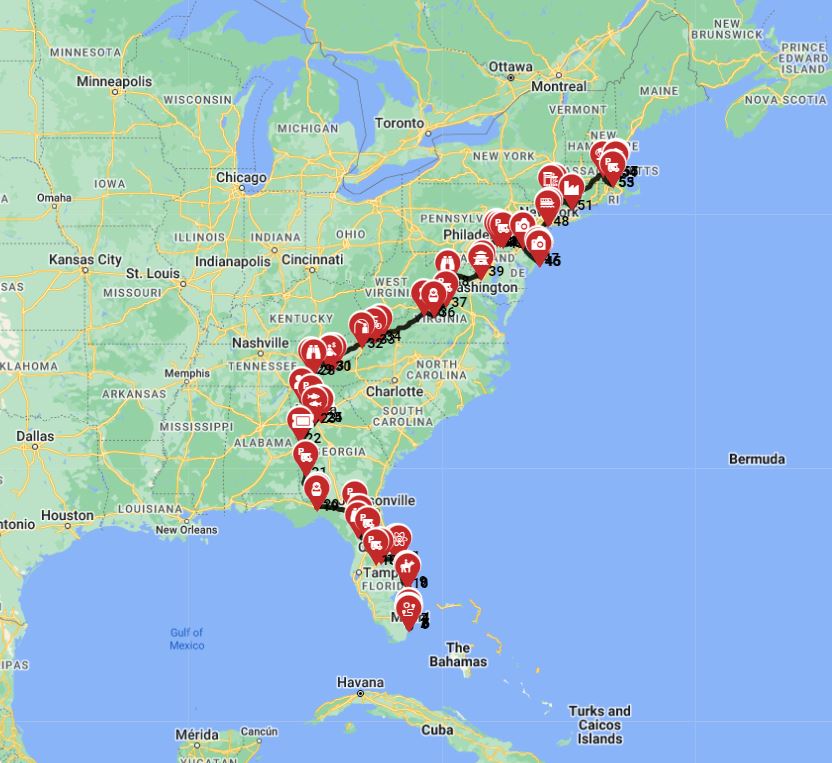
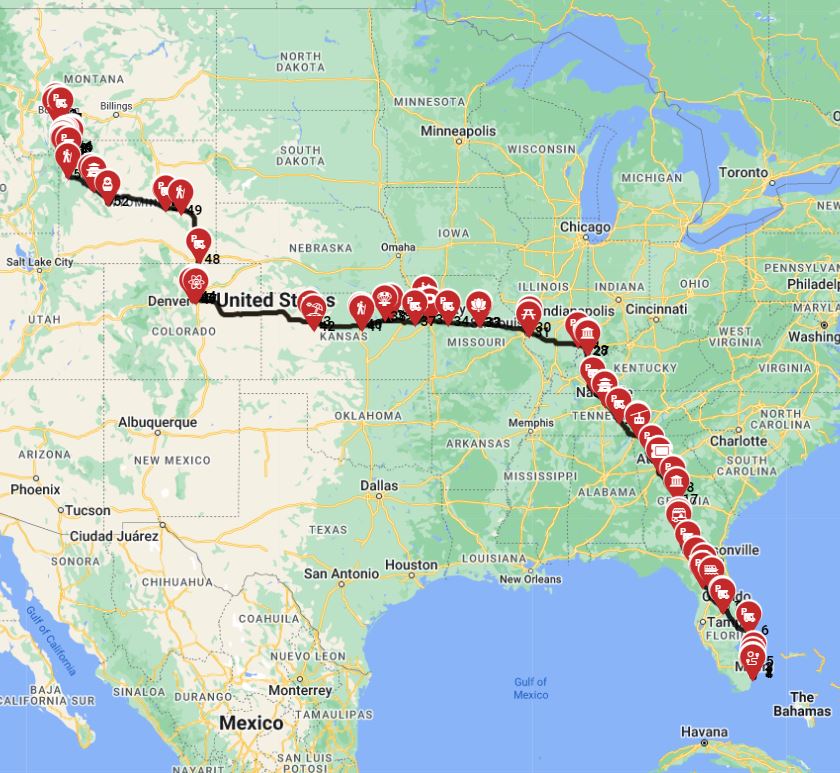
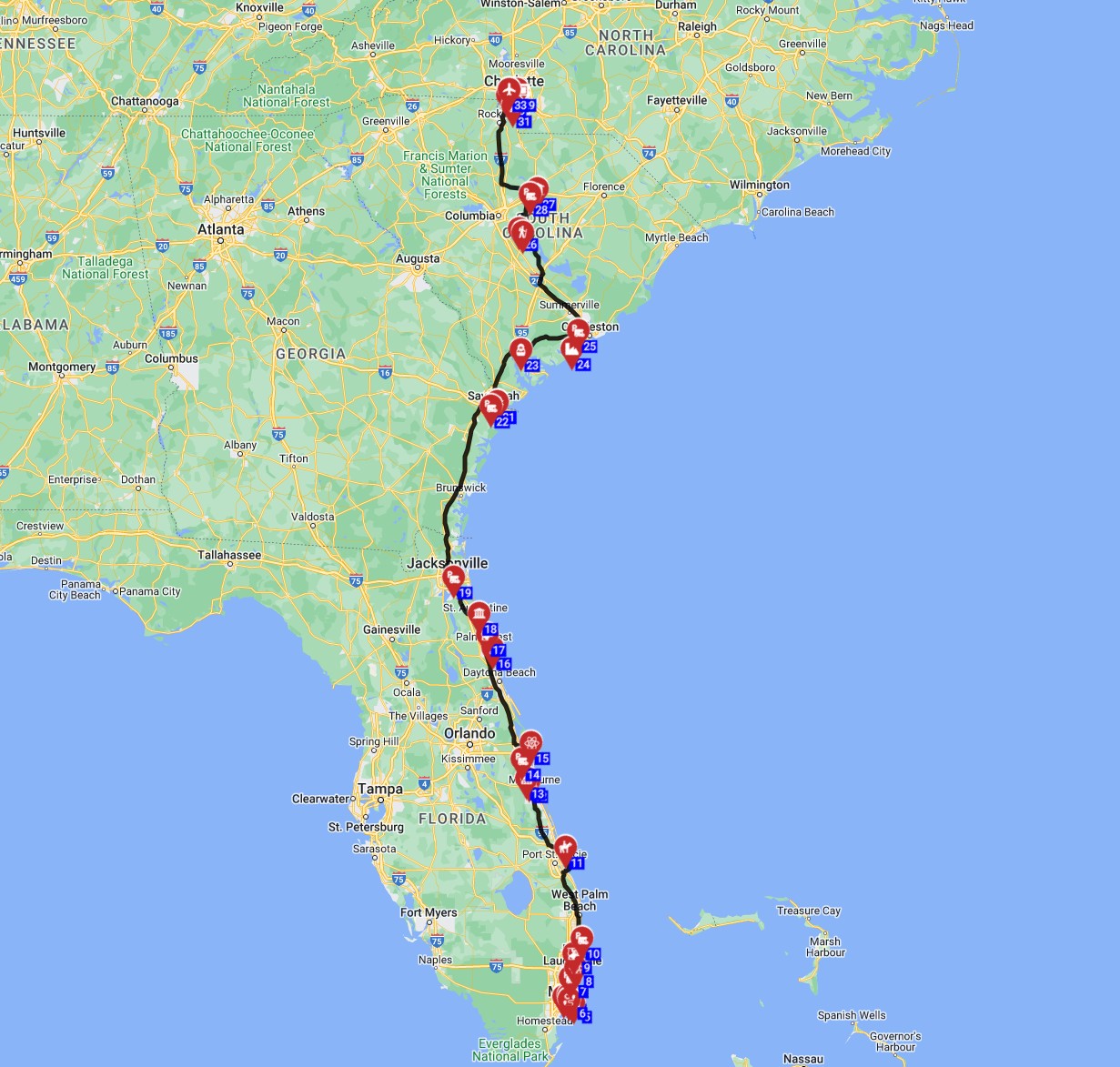
RVs available for rent in Miami typically run on either petrol (gasoline) or diesel, both of which are widely available at service stations across the city and surrounding areas. Based on Bandana's fleet data, a Class C - Alcove RV, averaging 8 meters in length, usually consumes between 23-35 liters of fuel per 100 km (or 7-10 miles per gallon). In 2026, budgeting for fuel costs means anticipating prices generally around $0.80-$1.20 per liter, though these prices can fluctuate daily. When planning your route and estimating total trip expenses, remember that on RV PLANET routes, you can itemize and track every expense along the way, making budgeting for fuel and other ancillary costs much easier. On the routes offered through RV PLANET routes, you can itemize and track every expense along the way for easy budgeting.
Tolls, Vignettes & Border Rules
Miami's extensive network of highways and expressways, including Florida's Turnpike, the Palmetto Expressway (SR 826), and the Dolphin Expressway (SR 836), primarily utilizes electronic tolls via the SunPass system; cash toll booths are now exceedingly rare. Most rental RVs provided by Bandana's direct partners, such as Apollo and Britz, will offer options for pre-purchased toll passes or transponders like SunPass to help you avoid potentially higher 'Toll-by-Plate' fees and any associated administrative fines. There are no vignettes (pre-paid road taxes) required for RV travel within Florida or its neighboring states. Additionally, for an RV trip focusing on Miami and the Sunshine State, there are no international border crossings or associated rules to consider, ensuring a seamless domestic travel experience.
Driving Tips for family rv rental Travelers
When traveling in a rented family RV through Miami, planning frequent stops every 2-3 hours for comfort is wise, especially when journeying with children in our spacious Class C motorhomes, which accommodate 4-8 adults. Practicing defensive driving is crucial in Miami's dense urban traffic, and always utilize all your mirrors to compensate for your RV's size. For accessing popular city attractions like the Art Deco district in South Beach or the vibrant Wynwood Walls, consider parking your RV at an outlying RV-friendly campground, such as Miami Everglades RV Resort, and then using local public transport (Metromover, Metrobus) or ride-sharing services to navigate these congested areas. Before hitting the road, always secure all loose items inside your motorhome to prevent shifting hazards, and employ basic safety measures like locking doors and closing windows when parked in urban settings. For a broader Florida trip, our guide "RV Rental Florida - Complete Guide 2026" offers extensive state-wide tips.
Recommended RV Class for Miami Roads
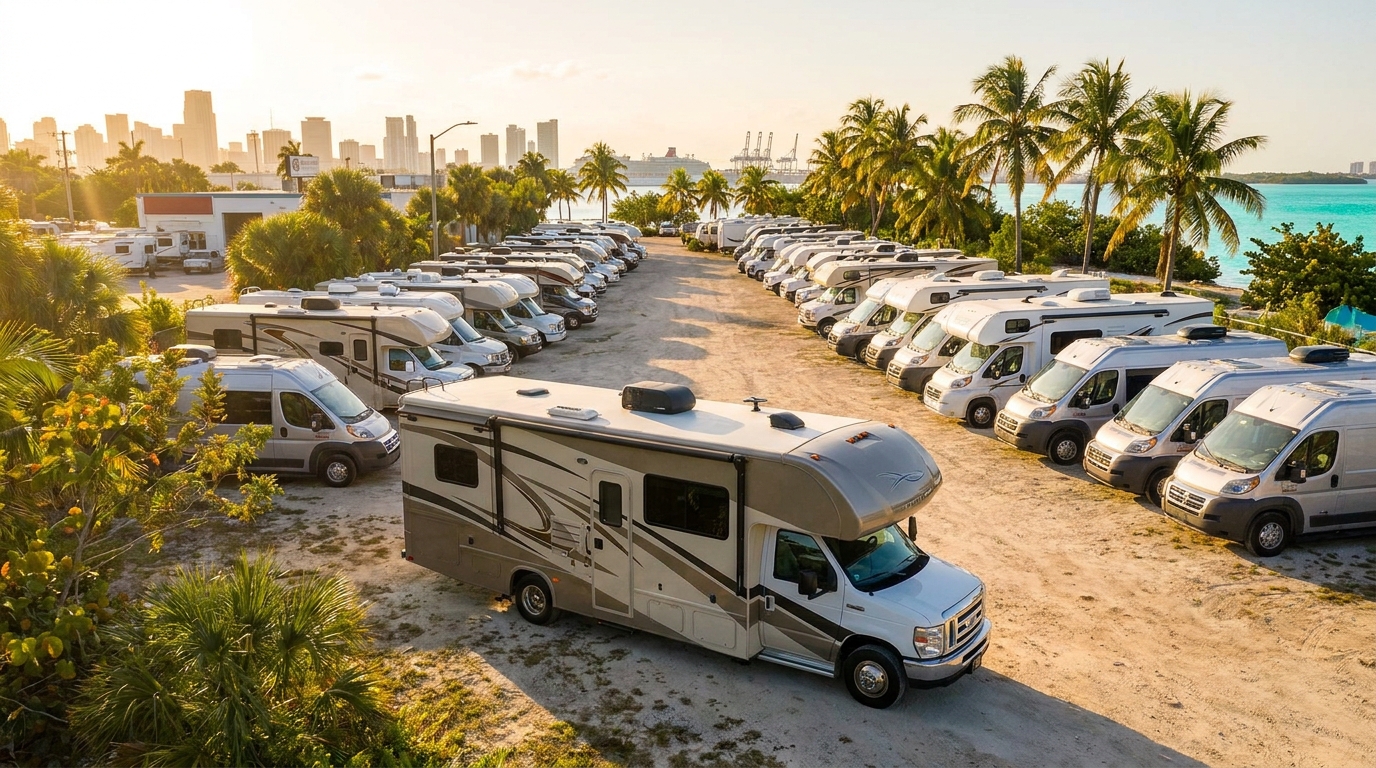
For families seeking a balance of comfort and maneuverability on Miami's roads, Class C - Alcove RVs, averaging 7-8 meters long and sleeping around 5-6 people, are an excellent choice from Bandana's fleet. These motorhomes provide ample living space, a well-equipped kitchen for preparing meals (check out our RV-friendly recipes playlist), and sufficient amenities for a comfortable extended road trip. Class B - Camper Vans, averaging 6 meters long and sleeping 2-4 people, offer superior agility and easier parking, making them ideal for accessing denser city attractions or smaller beachfront access points. Larger Class A - Integrated RVs (averaging 9-10 meters and sleeping up to 8) are best suited for experienced drivers who are confident navigating larger vehicles in urban environments, often opting to park at dedicated RV parks and use alternative transportation for city excursions. Ultimately, the best choice depends on your family's size, comfort preferences, and driving experience.
Should I Choose a Compact Van Instead of a Large RV in Miami?
A compact campervan, like a Class B model offered by Bandana, typically provides easier maneuverability and parking in Miami's busiest areas, such as the bustling streets of South Beach or the art-filled alleys of Wynwood. For instance, a campervan like a "Van - Economy" is 6.5 meters long, offering agility. In contrast, a larger motorhome like a Class C "24 Class C Motorhome" (7.46m long, sleeps 5) or Class A "Class A - Thor ACE 30" (9.37m long, sleeps 6) offers superior family comfort, significantly more living space, a full kitchen, and larger bathroom facilities, which are highly beneficial for week-long or extended road trips. While compact vans excel in navigating tight urban centers, larger motorhomes are perfectly comfortable on Miami's main highways and are often best parked at dedicated RV parks, allowing travelers to use ride-sharing or public transit for specific city attractions. For families, the increased comfort and amenities of a larger rented RV often outweigh minor parking inconveniences in Miami, as many RV parks with easy access to public transportation are readily available.
Can I Park Anywhere? Free & Wild Camping Rules in Miami
Free or 'wild camping' (boondocking) is generally prohibited throughout Miami-Dade County due to local ordinances that restrict overnight parking of oversized vehicles in public spaces, on residential streets, and in most retail parking lots. The safest and most legal option for overnight RV stays in the Miami area is always to book a spot at a dedicated RV park or campground, such as the popular Miami Everglades RV Resort in Homestead or Larry and Penny Thompson Memorial Park & Campground near Zoo Miami. Always inquire directly with management before attempting overnight parking at any retail locations (e.g., Walmart), as policies vary significantly by store and are typically restricted in urban areas. Remember, local regulations always supersede general advice, so doing your homework is essential for a smooth RV trip to Miami.
Can I Drive an RV Into the City Center? Heights, Tunnels & Local Signage
Yes, RVs can generally access Miami's city center via major roadways, but drivers must pay extremely close attention to all local signage. Specifically, watch carefully for posted height restrictions, which are prevalent at low bridges, multi-story parking garages (many in areas like Downtown Miami have limits of 7-8 feet), and certain tunnels. For instance, the PortMiami Tunnel is generally safe for RVs, but always verify current signage. You must also heed local signs indicating 'No RV Parking,' 'No Overnight Parking,' or 'Permit Parking Only' in dense urban neighborhoods like the historic Art Deco District in South Beach or the bustling streets of Little Havana. For a stress-free experience, many experienced RVers choose to park their motorhome at an outlying RV park and utilize ride-sharing services or Miami's public transit (Metromover, Metrobus) to explore the immediate city center, Wynwood Walls, or other highly congested attractions. This is a great tip if you are looking for RV Rental in Miami for Couples - Pricing 2026 where maneuverability is key.
Can your family ride in a RV while it drives?
Yes, in Florida, it is perfectly legal and common for passengers to ride in the living area of a rented RV while it is in motion, offering a unique family travel experience. All passengers, including children, must be secured with seatbelts in designated seating positions if the RV is equipped with them, in compliance with Florida law. For children, this means using appropriate car seats or booster seats as required by Florida's safety regulations, which should be properly secured to designated seating areas. Prior to driving, always ensure all loose items within the motorhome are properly secured to prevent them from shifting, falling, or becoming hazards during turns or sudden stops, ensuring a safe and comfortable journey for everyone on board.
Is it legal to live in a camper with kids in Florida?
Yes, it is legal to reside in a camper or motorhome with children in Florida, provided the RV meets all habitability standards and adheres to local ordinances. However, local zoning regulations, particularly in urbanized areas like Miami-Dade County, often restrict long-term RV parking and residency to approved RV parks or designated campgrounds. For rental travelers, this means focusing on booking established campgrounds for your extended stay. Families must also meet Florida's educational requirements for children, whether through enrollment in public/private schools or by adhering to the state's homeschooling regulations. While Bandana Caravan specializes in RV rentals for vacation travel, ensuring you understand local rules will make your extended family trip to Miami enjoyable and compliant.
How much is insurance on a $200,000 RV?
Insurance costs for a $200,000 RV rental can vary widely, typically ranging from $1,000 to $3,000 annually if you were purchasing a policy, but for rentals, specific considerations apply. Key factors influencing insurance expenses include the type and extent of coverage (e.g., comprehensive, collision, liability), the chosen deductible amount, the driver's history, and the geographic location like Miami with its hurricane risk. A $200,000 RV likely corresponds to a larger, more luxurious model such as a Class A - Integrated RV from Bandana's premium fleet, which might average 8.9 meters and sleep up to 8 people. For all our rental motorhomes, insurance is typically provided by the rental company as part of your booking, but we always recommend reviewing policy details thoroughly; you can often upgrade to a top-level deductible for extra peace of mind, which is an optional add-on.
Does American Family Insurance cover RV?
Yes, American Family Insurance generally offers specialized RV insurance policies designed to cover various motorhome classes, including Class A, B, and C motorhomes. These comprehensive policies typically provide protection for physical damage, liability, personal effects within the RV, and often include features like roadside assistance, which is invaluable on an extended road trip. It is always recommended to consult directly with an American Family Insurance agent to discuss your specific needs and tailor a policy that aligns with your planned RV trip to Miami, especially concerning how rental RVs are covered. When you book through Bandana Caravan, our direct partnerships with suppliers like El Monte and Cruise America mean that essential insurance coverage is included, with options to enhance your protection, such as purchasing a top-level deductible for peace of mind.
🎬 Video coming soon
What You Shouldn't Miss
- Everglades National Park: Just a short drive from Miami, explore this unique ecosystem with an airboat tour or hike a scenic trail. Several RV-friendly campgrounds, such as Flamingo Campground, are located within the park.
- South Beach & Art Deco District: Immerse yourself in Miami's iconic Art Deco architecture. Park your RV on the outskirts and use a rideshare to explore Ocean Drive's colorful buildings and vibrant atmosphere.
- Vizcaya Museum & Gardens: Discover this stunning Gilded Age estate in Coconut Grove, boasting beautiful European-inspired gardens and intricate architecture. RV parking is available nearby, though it requires careful navigation.
- Wynwood Walls: Wander through the outdoor street art museum in Wynwood, a must-see for art lovers. Large RVs might need to park several blocks away and walk, but the vibrant murals are worth the effort.
- Little Havana (Calle Ocho): Experience Cuban culture with lively music, delicious food, and hand-rolled cigars. Parking can be challenging for RVs on Calle Ocho itself, so consider parking further out and enjoying a scenic stroll.
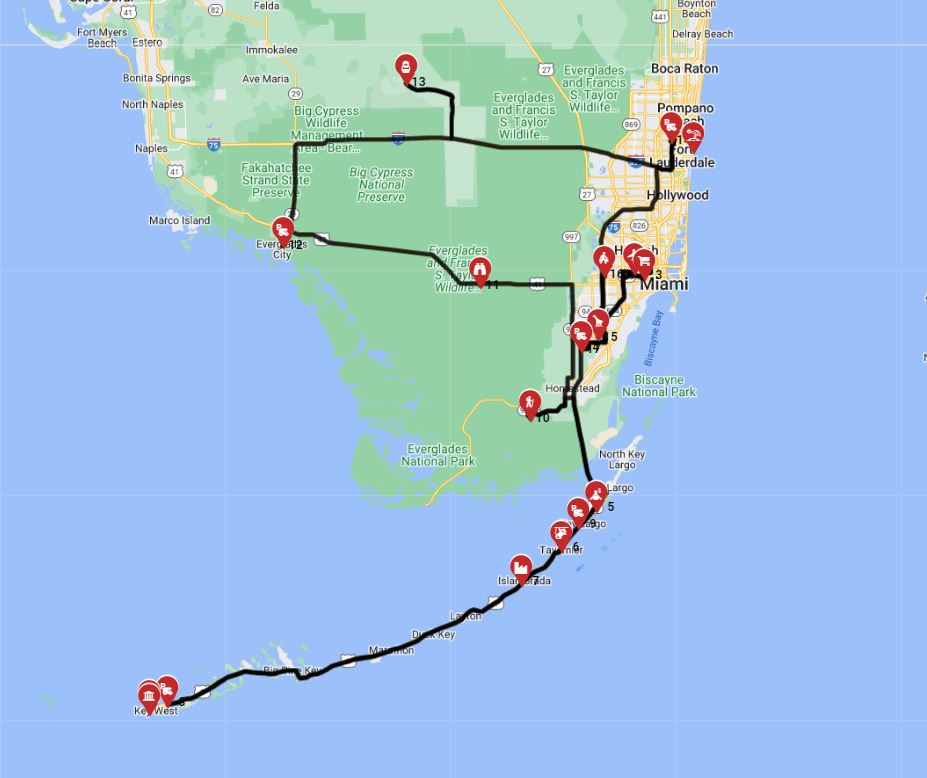
- Key West Road Trip: Embark on an unforgettable journey down US-1 to Key West, traversing 42 bridges and enjoying breathtaking ocean views. This 1043.2 km roundtrip offers numerous RV-friendly stops and campgrounds along the way.
Looking for expert insights from Avi Bandana? Top 5 Adventures - recommendations from Avi Bandana
Final Thoughts
Navigating Miami in a family RV is an adventure waiting to happen, full of vibrant culture, stunning beaches, and natural beauty. By understanding the local driving nuances, from license requirements for your Class C motorhome to managing tolls and finding RV-friendly parking, you're well-prepared for an incredible week-long journey or extended road trip. Remember to embrace slow travel, averaging 100-150 km per day, allowing your family to truly connect with the sights, sounds, and flavors of Miami.
At Bandana Caravan, we are committed to making your RV rental experience as seamless and enjoyable as possible. Our expertise and transparent pricing mean you can book with confidence, knowing you have a dedicated team supporting you. So, gather your loved ones, choose your ideal motorhome or campervan, and get ready to create lasting memories in the Magic City.
Find Motorhome Rentals in Miami