For live availability and current prices, start with our RV Rental Chile - Complete Guide 2026 guide.
In This Guide
- Can You Drive an RV in Chile? License & Age Rules
- Road Conditions & Terrain in Chile
- RV Size Limits, Bridges & Restricted Zones
- Fuel: Diesel vs. Petrol & Cost per 100 km
- Tolls, Vignettes & Border Rules
- Driving Tips for Family RV Rental Travelers
- Recommended RV Class for Chile Roads
- Should I Choose a Compact Van Instead of a Large RV in Chile?
- Can I Park Anywhere? Free & Wild Camping Rules in Chile
- Can I Drive an RV Into the City Center? Heights, Tunnels & Local Signage
- What are the best RV routes and itineraries in Chile?
- How to ensure safety and security while RVing in Chile?
- What are the specific logistics for RV border crossings in Chile?
- Where can I find RV services like dump stations and propane refills in Chile?
- How to practice responsible and culturally immersive RV travel in Chile?
Embarking on a family RV adventure through Chile is an incredible way to experience its diverse landscapes, from the stark beauty of the Atacama Desert to the majestic glaciers of Patagonia. Driving a rented motorhome offers unparalleled freedom, allowing you to craft your own itinerary and truly immerse yourselves in the local culture at your own pace. With Bandana RV, a true RV specialist founded in 2001 with over 20 years of experience, you'll benefit from full transparency and 24/7 support (pre-booking, booking, and post-booking coordination), ensuring a smooth journey from start to finish. For live availability and current prices, start with our RV Rental Chile - Complete Guide 2024 guide.
Can You Drive an RV in Chile? License & Age Rules
Foreign drivers can legally operate most RVs in Chile with their valid national driving license, and an International Driving Permit (IDP) is highly recommended for translation purposes, though not always strictly mandatory by law. For common family RVs, including Class A, Class B, and Class C motorhomes up to 3,500 kg (7,716 lbs) gross vehicle weight (GVW), a regular Class B car license is sufficient for all renters. Drivers typically need to be at least 21 years old to rent a motorhome in Chile, as Bandana RV offers no young driver surcharges or vehicle class restrictions based on age. It is always wise to confirm the specific GVW of your chosen rental unit with your supplier if you have concerns about higher license categories, though these are rarely required for standard rental models.Road Conditions & Terrain in Chile
Chile’s road network varies considerably, presenting diverse driving conditions that RV travelers should anticipate. The Ruta 5 (Pan-American Highway) offers excellent paved surfaces, connecting much of the country, while many other regions feature challenging unpaved "ripio" (gravel) roads. Driving a rented RV, whether a Class C Alcove or a nimble campervan, in Chile requires paying careful attention to the terrain, including winding coastal routes, steep mountain passes in the Andes, and the potential for dust or washboard surfaces on gravel roads, especially in Patagonia. Family RV travelers should plan for slower speeds, particularly on *ripio* and unpaved sections, allowing ample time for the captivating scenery and any unexpected delays. While major urban areas boast good roads, expect traffic congestion and narrow streets in historic city centers; remember, drive slowly and carefully, and you can drive almost anywhere without issues. No need to stress - just use common sense and pay attention. If you're looking for different types of journeys, consider comparing "Luxury RV Rental in Chile - Premium Prices 2026" for more comfortable options on varied terrain.RV Size Limits, Bridges & Restricted Zones
Most standard rental motorhomes comfortably fit within Chile's general road infrastructure, but it's always prudent for drivers to be mindful of specific height and weight restrictions, which might be encountered in older towns or tunnels. Unlike some European nations, Chile does not widely use national environmental zones or 'vignettes,' though local regulations should always be checked for specific urban centers or protected areas. Planning is essential for ferry crossings, especially for destinations like Chiloé or the remote Aysén region, as these often have strict length and weight limits, and booking your RV passage well in advance is highly advisable. Always observe local signage for low bridges, narrow roads, or weight limits before proceeding, particularly when venturing off major highways with your rented camper.Fuel: Diesel vs. Petrol & Cost per 100 km
Most motorhomes and campervans available for rental in Chile, particularly larger models found in Bandana’s fleet, operate on diesel fuel, which is readily available at service stations across the country. A common Class C Alcove motorhome like the "MHC24" (with a 200L fuel tank) or a semi-integrated model like the "K125" (with a 75L fuel tank) typically sees a fuel consumption rate of 10-12 Liters per 100 km. Based on current fuel prices and typical RV consumption rates, budgeting approximately USD $10-15 per 100 km for fuel is a reasonable estimate for your family RV trip in Chile. Remember, prices are dynamic and change daily, so factor this into your overall trip cost. On RV PLANET routes, travelers can itemize and track every expense along the way for easy budgeting, ensuring no surprises.Tolls, Vignettes & Border Rules
Chile operates a modern toll road system, predominantly found on its main highways, with electronic tolling (known as the TAG system) widely used around Santiago and other major cities. Rental RVs often come equipped with transponders (TAG devices) provided by the rental company, which will automatically deduct tolls; otherwise, drivers may need to pay tolls manually at designated booths. There are no national vignettes required for driving in Chile itself. For international border crossings, such as into Argentina, specific and extensive documentation for the rented RV is mandatory. This typically includes the rental agreement, a notarized permission letter from the rental company authorizing international travel, and vehicle registration, along with your passports and vehicle insurance valid for both countries. Ensure all these documents are arranged well in advance, as processing can take several weeks. If you're planning a trip focusing on costs, consider "RV Rental in Chile - Prices and Best Deals 2026".Driving Tips for Family RV Rental Travelers
Planning frequent stops every 2-3 hours allows children and adults to stretch, explore, and refresh, making the entire journey much more enjoyable for the whole family. Prioritize safety by ensuring all loose items inside your rented motorhome are securely stowed before driving, especially when navigating mountainous or gravel sections. It is wise to consider pre-purchasing electronic toll passes or TAG devices through your rental company to avoid fines and streamline travel on Chile's toll roads. Always drive defensively, adhere to local speed limits, which are often lower for larger vehicles like RVs, especially on winding mountain roads. We recommend slow travel, averaging a maximum of 100-150 km per day, to truly connect with the culture, food, and scenery. Ensure your rented RV is equipped with essential gear for various terrains and weather, including spare tires, basic tools, and emergency communication devices for remote areas. If you’re preparing for your first trip, our "Cheap RV Rental in Chile - Budget Guide 2026" offers useful insights.Recommended RV Class for Chile Roads
For families planning a motorhome adventure in Chile, a Class SI (Semi-integrated) or Class C (Alcove) RV is highly recommended, as they offer an optimal balance of comfort, spaciousness, and maneuverability. Bandana’s Class SI models, such as the "Active Standard Auto", typically average 6.5-7 meters in length with sleeping for 3-4 adults, providing ample space without being excessively large for narrower routes. Class C Alcove RVs, like the "MHC24" (with a length of 7.3m, sleeping up to 6 people) or a typical "cruise america rv rental example Explorer" (7.1m length, sleeping 4), offer even more living space, often including a dedicated over-cab bed, which is ideal for larger families seeking extra comfort and distinct sleeping zones. These vehicles come equipped with kitchens and dining areas, perfect for preparing family meals; check out our RV-friendly recipes playlist for inspiration.Should I Choose a Compact Van Instead of a Large RV in Chile?
While a compact campervan (Class B) offers superior maneuverability and easier parking in urban settings or on very narrow tracks, a larger RV generally provides significantly more comfort and amenities essential for family travel in Chile. Class SI or Class C motorhomes, with lengths up to 7.5 meters, offer generous indoor space, separate sleeping areas, full kitchens, and larger bathrooms, which greatly enhance comfort on longer trips with children. For instance, a "Category Van" is ideal for a couple and small in size, whereas a "Family Plus" motorhome can sleep up to 6. For most of Chile's primary roads and popular tourist routes, larger RVs present no significant driving challenges, making the extra comfort a worthwhile trade-off for a family adventure. A compact van might only offer genuine advantages if your itinerary heavily involves extremely tight historic city centers or exceptionally remote, unmaintained roads requiring maximum agility, which are less common for typical family RV itineraries. Consider "Find family rv Rentals in Chile" to explore options.Can I Park Anywhere? Free & Wild Camping Rules in Chile
Wild camping or boondocking with a rented RV in Chile is generally tolerated in many remote and unpopulated areas, particularly throughout Patagonia, though it is not universally permitted and requires careful discretion. It is strictly illegal to wild camp within national parks, on private property without express permission, or within city limits. Look for designated free camping spots, which are often marked or well-known locally, and may offer basic amenities or simply a safe, quiet place to park overnight. Always adhere to Leave No Trace principles, respect local communities and their environment, and properly dispose of all waste when considering wild camping. Rules and local laws can vary by region, so always check specific regulations and communicate with locals before parking your motorhome overnight. For finding campsites and campgrounds during your trip, we recommend using RV PLANET (rvplan.net) — a great resource for locating available spots along your route. You can also explore options with our "RV Camping in Chile - Best Campgrounds 2026" guide.Can I Drive an RV Into the City Center? Heights, Tunnels & Local Signage
Most motorhomes can generally be driven into city centers across Chile, including major hubs like Santiago, though navigating these areas requires careful attention due to traffic, narrow streets, and limited parking. You should always pay close attention to local signage that indicates height limits for tunnels and underpasses, warnings for low bridges, and potential environmental zones or residents-only streets. Parking a larger rented RV directly in city centers can often be challenging due to its size; consider parking on the outskirts of the city and utilizing public transportation or smaller local vehicles to explore urban attractions. Drive slowly and carefully, and you can drive almost anywhere without issues. No need to stress - just use common sense and pay attention.What are the best RV routes and itineraries in Chile?
Beyond the world-renowned Patagonia region, Chile offers diverse and spectacular RV routes suitable for every family, including the stargazing and ancient cultures of the Atacama Desert in the North, the picturesque wine routes and historical towns of the Central Valley, and the stunning volcanoes and hot springs of the Lakes District in South-Central Chile. One excellent itinerary for a week-long trip could explore the Atacama Desert, starting from Calama (near the airport) and visiting San Pedro de Atacama, Valle de la Luna, various geysers, and high-altitude lagoons. For a blend of nature and culture, a two-week Lakes District route might include Pucón (with views of Villarrica Volcano), Puerto Varas (Osorno Volcano), and excursions to national parks with relaxing hot springs. The Central Valley offers a more relaxed pace, ideal for exploring numerous vineyards, charming colonial towns, and enjoying local gastronomy with your rented RV. Detailed route plans for each region are crucial, including checking road conditions and ensuring availability of RV services for longer stretches. RV PLANET offers over 1,300 pre-planned routes across 5 continents designed by professionals to simplify your planning.How to ensure safety and security while RVing in Chile?
To ensure optimal safety and security while RVing in Chile, always secure your rented vehicle and all personal belongings, especially when parked overnight or when you are away exploring towns, by locking doors and utilizing internal blinds. Be consistently aware of your surroundings, avoid openly displaying valuables, and choose well-lit, populated areas or designated campgrounds for overnight stays whenever possible. Prepare thoroughly for Chile's extreme and varied weather conditions by checking forecasts for Andean snow, intense desert heat, or heavy rains in the south, and ensure your RV is adequately equipped for such conditions. Carrying emergency communication devices, such as a satellite phone or a personal locator beacon (PLB), is highly advisable when traveling in remote areas with no cellular service. Finally, familiarize yourself with local emergency numbers and keep a basic first-aid kit, extra water, and food supplies readily accessible within your rented motorhome.What are the specific logistics for RV border crossings in Chile?
Crossing borders from Chile with an RV, particularly into Argentina, necessitates comprehensive documentation including your passports, the rented vehicle's registration, and a specific notarized permit from your RV rental company explicitly authorizing international travel. You should plan for border crossings to be time-consuming, often involving multiple stops for customs and immigration procedures on both sides of the frontier. It is vital to ensure all vehicle papers are in perfect order and easily accessible. Familiarize yourself with customs regulations regarding food and agricultural products, as strict biosecurity rules are enforced when entering both Chile and Argentina. Additionally, confirm that your RV insurance policy provides coverage for international travel in the destination country, and if it doesn't, purchase supplementary coverage. Some rental companies, like Bandana's partners, can facilitate these border crossing permits, but it is essential to arrange this service well in advance, as processing can take several weeks. If you're considering "One-Way RV Rental in Chile - Price Guide 2026", these logistics are even more important.Where can I find RV services like dump stations and propane refills in Chile?
Finding specialized RV services such as dump stations (for grey and black water) and propane refills in Chile can sometimes be challenging outside of major cities and well-established campgrounds. Many larger gas stations located on main highways may offer fresh water refills, but dedicated dump stations are less common and typically found at larger, private RV parks or campgrounds. Propane (LPG) refills are generally available at specialized gas suppliers or certain larger service stations, but it is always advisable to check availability in advance, especially when planning to travel through remote regions. Utilizing community-driven apps like iOverlander or local RV forums can be invaluable resources for locating specific service points and planning your route accordingly to avoid running low on essential supplies in your rented motorhome. Consider carrying adapters for different propane tank connections and a portable grey water tank for extended stays in areas without direct dump access.How to practice responsible and culturally immersive RV travel in Chile?
To truly practice responsible and culturally immersive RV travel in Chile, actively engage with local communities by visiting regional markets, trying authentic local eateries, and participating in genuine cultural experiences such as artisan workshops or local festivals. Always seek permission before photographing people, respect local customs and traditions, and learn a few basic Spanish phrases to facilitate communication and show genuine respect for the local population. Minimize your environmental footprint by consistently adhering to Leave No Trace principles: properly disposing of all waste, conserving water and energy, and utilizing designated campsites whenever possible. Support local economies by purchasing goods and services from small, independent businesses rather than large chains. Educate yourself about Chile's incredibly diverse ecosystems and its rich indigenous cultures, such as the Mapuche people, before your trip to enhance your understanding and ensure respectful interactions. Bandana is committed to helping you explore the world responsibly.What You Shouldn't Miss
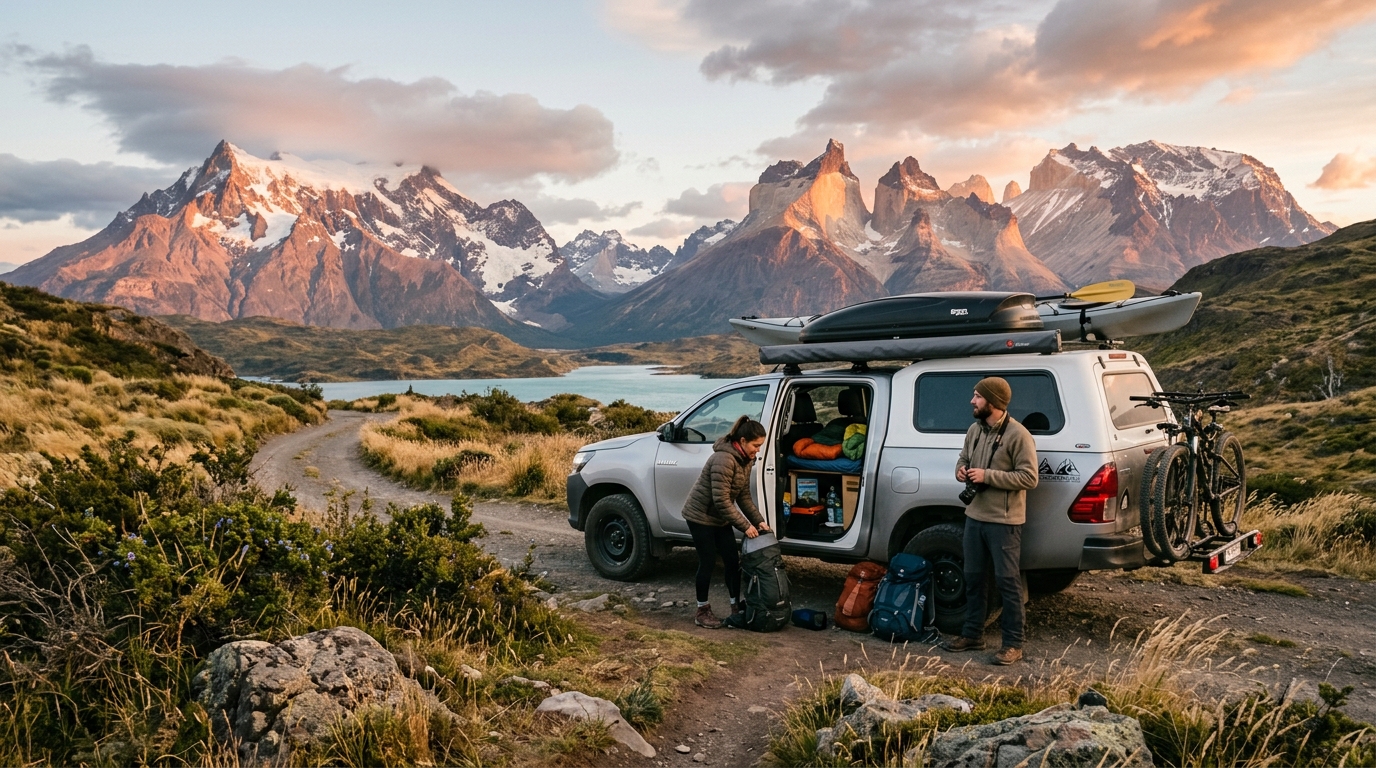
- Explore Torres del Paine National Park: Witness the iconic granite towers, vibrant blue icebergs, and abundant wildlife of Chilean Patagonia with your rented motorhome. Book your campsites early, as spaces fill up quickly.
- Stargaze in the Atacama Desert: Head to San Pedro de Atacama for an unparalleled celestial show under the world’s clearest night skies. Consider an astronomy tour for an even deeper experience.
- Drive the Carretera Austral: Experience one of the world's most epic road trips, a 1,240 km journey through remote Patagonian wilderness, glaciers, and fjords. Be prepared for unpaved sections and ferry crossings.
- Sip Wine in the Central Valley: Tour the vineyards of the Maipo, Colchagua, or Casablanca Valleys, sampling world-class Chilean wines right from your mobile home. Many wineries offer RV-friendly parking.
- Relax in the Lakes District Hot Springs: Discover the stunning volcanoes and serene lakes around Pucón and Puerto Varas, then unwind in natural hot springs after a day of hiking or exploring.
- Visit the Penguins of Magdalena Island: Take a boat trip from Punta Arenas to observe thousands of Magellanic penguins in their natural habitat – an unforgettable wildlife encounter for the whole family.
Final Thoughts
An RV journey through Chile is more than just a vacation; it's an immersive experience that allows your family to connect deeply with breathtaking landscapes and vibrant cultures. With the right preparation and a comfortable rented motorhome from Bandana, you're set for an unforgettable adventure. Remember our advice: travel slowly, maximize your stops, and embrace the unexpected joys of the open road. From navigating Chile’s varied terrain to understanding local customs and ensuring your family’s safety, we’ve covered the essentials to empower you for a fantastic trip. We're here to help you find the easiest, safest, and most affordable way to rent an RV, comparing final prices across 50+ suppliers so you don't have to. Ready to start your Chilean family RV adventure? It’s time to discover top destinations, planning tips, all in one place!On the routes offered through RV PLANET routes, you can itemize and track every expense along the way for easy budgeting.