In This Guide
- Where to Camp in Chile — Top Options
- Campground Types in Chile (National, Private, Wild)
- Featured RV Park or Campground in Chile
- Hookups & Amenities — What to Expect
- Booking Windows & Reservations in Chile
- Nearby Supermarkets & Resupply Points
- Best RV Class for Camping in Chile
- How to Save on Campgrounds in Chile
- How much does it cost to rent an RV in Chile?
- Do I need a special license to drive an RV in Chile?
- What is the best time to rent an RV in Chile?
- Is it safe to travel in an RV in Chile?
- Can you wild camp in Chile?
- What are the road conditions like in Chile for RVs?
- Where can I pick up and drop off an RV in Chile?
- How can I prepare for an RV trip in Chile?
- Can I bring my own RV to Chile?
- Which regions are best for RV travel in Chile?
- Top Cities for RV Rental in Chile
- What You Shouldn't Miss
- Why Book with Bandana Caravan
- Final Thoughts
- Frequently Asked Questions
Where to Camp in Chile — Top Options
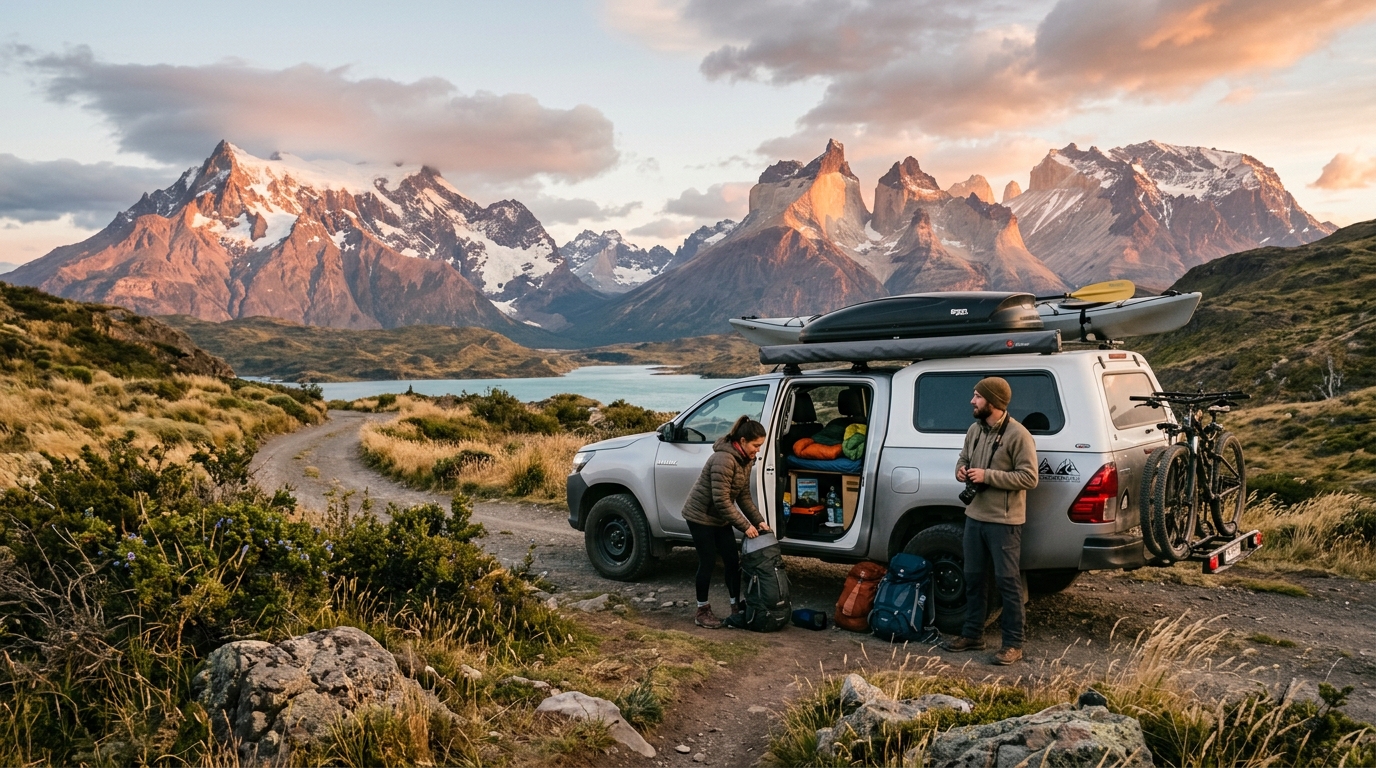
Chile offers diverse RV camping experiences, from the dramatic landscapes of Patagonia in the south to the northern deserts and central valleys, providing hundreds of potential campsites. Key regions for camping include the Carretera Austral in Patagonia, known for its pristine natural beauty and over 1,240 kilometers of mostly gravel road, the scenic Lake District with its numerous volcanoes and lakes, and the fertile wine regions of Central Chile. Specific campgrounds vary by region, but generally offer access to stunning natural attractions like national parks, lakes, and coastal areas, often with basic amenities. Consider destinations like Torres del Paine National Park for iconic Patagonian views, or Vicente Pérez Rosales National Park in the Lake District for lush forests and waterfalls. Along the central coast, many private campgrounds are situated near charming beach towns, perfect for a relaxing week-long trip.
Campground Types in Chile (National, Private, Wild)
Chile presents three main campground types for RVers: national park sites, private campgrounds, and opportunities for wild camping, each offering a distinct experience. National park campgrounds, often operated by CONAF (Corporación Nacional Forestal), typically provide basic facilities like pit toilets and water access in stunning natural settings, with fees usually ranging from $10-$25 USD per night. Reservations are highly recommended for national park sites, particularly in peak season from December to February, but many parks still offer first-come, first-served spots for spontaneous travelers. Private campgrounds, scattered throughout the country, vary significantly from rustic sites to full-service RV parks, offering more amenities like hot showers, electricity (usually 220-240V), and sometimes Wi-Fi for around $20-$40 USD per night. Wild camping (boondocking) is generally tolerated in remote, non-private areas across Chile, but it's crucial to practice 'Leave No Trace' principles and always respect local property rights, especially outside of designated areas.
Featured RV Park or Campground in Chile
While specific RV parks vary by region, a typical Chilean campground offers a blend of natural beauty and essential services for RV travelers, catering to a range of preferences. For unparalleled scenic access, look for campgrounds near national parks such as Torres del Paine in Patagonia or Vicente Pérez Rosales in the Lake District. These featured spots often provide picnic tables, fire pits, and basic sanitary facilities, while many private options further north in Central Chile and the Atacama Desert add amenities like hot showers and electric hookups. For example, in the Lake District, a site like Camping Playa Maqui near Puerto Varas might offer direct lake access and basic services for around $25 USD per night, making it an excellent base for exploring the region. Always check ahead for specific amenities and current pricing, as services can vary widely.
Hookups & Amenities — What to Expect
RV camping in Chile typically offers a range of hookups and amenities, though availability varies significantly between urban centers and remote locations. At serviced sites, expect 220-240V electricity with European Type C or L plugs, meaning an adapter may be necessary for vehicles not designed for European standards. Water hookups and dump stations are common in private RV parks and some larger national park campgrounds, but can be scarce in remote areas, especially along routes like the Carretera Austral. Wi-Fi is often available at private campgrounds, while laundry facilities and hot showers are standard in most mid-to-high-tier sites. For those planning a week-long trip, having a kitchen with a gas stove and refrigerator, like in a 'Paradise Family 5' motorhome (5 sleepers), is a key feature for preparing meals on the go. Check our RV-friendly recipes playlist for inspiration! On the routes offered through RV PLANET routes, you can itemize and track every expense along the way for easy budgeting.
Booking Windows & Reservations in Chile
For RV camping in Chile, proactive planners should reserve spots well in advance, especially during peak season (December-February), while spontaneous travelers can often find options with same-day or next-day bookings. Many national park campgrounds operated by CONAF only release 25%-30% of spots for reservations online, leaving the majority available on a first-come, first-served basis, even during busy periods. It's highly recommended to call ahead to campgrounds before driving long distances, particularly in remote areas or during shoulder seasons like November or March, to confirm availability. This common-sense practice ensures you won't stress about finding a spot; if not at the first campground, then the next one along your route will likely have space.
Nearby Supermarkets & Resupply Points
Resupplying your rented RV in Chile is straightforward in most towns and cities, with major supermarket chains providing ample options for groceries and essentials. Look for popular chains like Jumbo, Lider, and Santa Isabel in urban areas such as Santiago, Puerto Montt, or Punta Arenas, which offer a wide range of local and international products, often at competitive prices. Smaller towns, particularly along the Carretera Austral or in the Atacama Desert, will have local markets and almacenes (small convenience stores) for basic provisions, though selection may be limited and prices slightly higher. Planning your route to include stops in larger towns every few days ensures you can replenish your pantry and water tanks, keeping your journey smooth and enjoyable.
Best RV Class for Camping in Chile
The ideal RV class for camping in Chile depends heavily on your planned itinerary, favoring more rugged options for remote routes like the Carretera Austral and larger models for paved, accessible areas. Class B Camper Vans, such as the 'Active Bunk Auto' or 'Combi Van' (averaging 5-6 meters in length and sleeping 2-4 people), are excellent for maneuverability on winding roads and offer better fuel consumption (typically 8-10 Liter/100 Km), suiting boondocking and smaller, more rustic sites. For adventurous travelers aiming for challenging unpaved roads and remote wilderness access, Class TC Truck Campers like the 'Patagonia Camper 4x4 double cab' or 'rv rental usa example T17 Truck Camper' (averaging 4.7-5.5 meters, sleeping 2-3 people, and consuming 12-17 Liter/100 km) provide essential 4x4 capabilities. For more comfort on paved routes and for families, Class SI Semi-integrated motorhomes like the '2 Berth Rover' or 'Active Compact Select' (avg. 6.9m, 2-4 sleepers, 10-11 Liter/100 km) and Class C Alcove models such as the '24' Class C Motorhome' or 'Group G' (avg. 7.5m, 5-7 sleepers, 10-12 Liter/100 km) offer more space and amenities. Larger Class A Integrated motorhomes, like the 'Class A - Thor ACE 30' (avg. 9.37m, 6 sleepers), are best suited for well-maintained roads and offer the most luxurious camping experience, but can be challenging on narrow or rough terrain. Always prioritize a vehicle that matches the accessibility of your chosen route plans.
🎬 Video coming soon
How to Save on Campgrounds in Chile
Saving money on RV campgrounds in Chile can be achieved through various strategies, including leveraging discount cards, timing your trip, and choosing economical campground types. First, inquire with your RV rental provider if they offer any campground discount cards or partnerships that can provide significant savings at participating sites. Traveling during the shoulder seasons (spring, September-November, or autumn, March-May) will often result in lower rates and fewer crowds compared to the peak summer months of December-February. Opting for municipal or regional campgrounds, which typically charge $10-$20 USD per night, over more amenity-rich private resorts (often $30-$40 USD+) can also be budget-friendly. Additionally, always inquire about weekly rates if planning a stay of three or more nights, as many campgrounds offer discounts for extended visits, further reducing your daily camping expenses.
How much does it cost to rent an RV in Chile?
RV rental costs in Chile vary significantly based on vehicle type, rental duration, season, and inclusions, typically ranging from $100 to $300+ USD per day. For a 1-week trip in Chile, a compact campervan like the '2 Berth Hi Top' might start around $700-$1000 USD, while a 2-week adventure in a '4 Berth Deluxe' motorhome could cost $1,800-$3,000 USD. A month-long extended road trip in a larger family RV like the '6 Berth Discovery' could range from $3,500-$7,000+ USD. Couples often opt for smaller Class B campervans (e.g., 'rv rental denver example Category Van' at approximately $100-$150/day), while families with kids tend to prefer Class C motorhomes (e.g., 'Category Large 5 AT' around $180-$250/day) for more space. Last-minute RV rental deals in Chile can sometimes be found due to dynamic pricing based on availability, though booking earlier generally offers more choices and competitive rates. If you're flexible with your travel dates and destination, you can find the cheapest RV rental by using comparison tools to search for off-peak travel periods. Beyond the rental fee, expect additional costs for fuel (e.g., a 'Class C Alcove' motorhome consumes 10-12 Liter/100 km), campground fees (ranging from $10-$40 USD per night), activities, and permits. Insurance, one-way rental fees (if applicable, typically $200-$700 USD), and optional add-ons like kitchen kits or extra bedding will also impact the total budget. For easy budgeting and tracking every expense along the way, we highly recommend using RV PLANET routes to itemize your trip costs.
Do I need a special license to drive an RV in Chile?
To drive an RV in Chile, most foreign visitors will need a valid driver's license from their home country, often accompanied by an International Driving Permit (IDP). A standard car driver's license is sufficient for all motorhome classes (Class A, Class B, and Class C) rented in Chile, with no special license or CDL required. An IDP translates your domestic license into multiple languages and is highly recommended by Chilean authorities, often required by rental companies and for interactions with local police, although it is not mandatory in all cases. Drivers must typically be at least 21 years old, regardless of RV class, and have held their license for a minimum specified period (e.g., 2 years) as per some supplier policies.
What is the best time to rent an RV in Chile?
The best time to rent an RV in Chile largely depends on your desired region and activities, with the peak summer months (December to February) offering the warmest weather but also higher prices and more crowds. For Patagonia and the Lake District, the austral summer (December-February) is ideal for hiking and outdoor activities, though roads can be busy and campsites often require advance booking. Shoulder seasons (September-November for spring and March-May for autumn) offer pleasant weather, fewer tourists, and potentially lower rental rates, making them excellent times for exploring Central Chile's wine regions or the Atacama Desert. RVers planning an extended road trip should consider these seasons for a more relaxed experience and better availability. Avoid certain regions during specific seasons; for example, heavy winter snows can close mountain passes, and extreme weather, including seismic activity, can occur year-round, requiring vigilance and flexible route plans.
Is it safe to travel in an RV in Chile?
Traveling in a rented RV in Chile is generally safe, provided travelers exercise standard precautions and are aware of local conditions and potential hazards. Basic safety measures include always locking your RV, securing valuables out of sight, and avoiding parking in isolated or poorly lit areas overnight, especially in major cities like Santiago. Familiarize yourself with local emergency services: 131 for ambulance, 132 for fire, and 133 for police, and keep roadside assistance contacts readily available from your rental provider. Be prepared for potential natural hazards like seismic activity, as earthquakes are common in Chile, and extreme weather conditions depending on the region and season, such as heavy rains in the south or desert heat in the north. With common sense and attention to your surroundings, you can enjoy a safe and memorable RV adventure.
Can you wild camp in Chile?
While explicit laws regarding wild camping (boondocking) in Chile can be ambiguous, it is generally tolerated in many remote, non-private, and non-designated areas, though always with respect for local regulations and property. Always seek permission from landowners if you are considering camping on private land, and strictly avoid areas clearly marked 'no trespassing' or 'private property'. For safety, choose well-trafficked or visible spots rather than overly secluded ones, and inform someone of your itinerary, especially when venturing into very remote regions. Adhere strictly to 'Leave No Trace' principles: pack out all trash, dispose of human waste properly, and leave your campsite cleaner than you found it, preserving Chile's natural beauty for all.
What are the road conditions like in Chile for RVs?
Road conditions in Chile for RVs are highly variable, ranging from well-maintained paved highways in central regions to challenging gravel and unpaved roads, particularly in Patagonia and mountainous areas. Major routes like Ruta 5 (Pan-American Highway) are generally paved and in good condition, suitable for all RV types, including larger Class C motorhomes. However, iconic routes like the Carretera Austral (Ruta 7) in Patagonia are largely gravel, requiring slower speeds and careful driving; for these, 4x4-capable RVs or smaller, more rugged campervans like the 'Patagonia Camper 4x4 single cab' are highly recommended. Drive slowly and carefully, and you can drive almost anywhere without issues. No need to stress - just use common sense and pay attention. Expect tolls on many paved highways, which can add to your ancillary costs, and be mindful of local driving culture, which can be assertive. Mountain passes, especially in the Andes, require caution due to winding roads and significant elevation changes.
Where can I pick up and drop off an RV in Chile?
RV rental pick-up and drop-off locations in Chile are typically concentrated in major cities and tourist hubs, with Santiago being the primary gateway for most international travelers. Other popular locations include Puerto Montt, serving as a convenient gateway to the Lake District and northern Patagonia, and Punta Arenas, for those exploring the southern reaches of Patagonia and Tierra del Fuego. One-way rentals between these cities, such as picking up in Santiago and dropping off in Puerto Montt, are often possible with most Bandana partner suppliers but usually incur additional fees, which should be factored into your total trip cost. This flexibility allows for diverse and scenic one-way routes, such as explored in our One-Way RV Rental in Chile - Price Guide 2026.
How can I prepare for an RV trip in Chile?
Preparing for a rented RV trip in Chile involves meticulous planning, including understanding local regulations, packing appropriately for diverse climates, and ensuring your vehicle is suited for the terrain. Plan your route carefully, considering road conditions and available camping, particularly for extended road trips where connectivity can be sparse. Pack versatile clothing layers, as temperatures can fluctuate dramatically, especially when traversing different regions or altitudes from the Atacama Desert to Patagonia. Ensure you have reliable navigation (GPS, offline maps) and understand local communication options; cell service can be spotty in remote areas, so consider a local SIM card or satellite device for emergencies. Familiarize yourself with basic Spanish phrases and Chilean cultural etiquette, which can enhance unique food experiences in local markets and restaurants. Crucially, information on availability of water, dump stations, and propane/gas refills should be researched for your specific route to avoid unexpected shortages, as these resources are less frequent in remote parts of Chile.
Can I bring my own RV to Chile?
Yes, it is possible to bring your own RV to Chile, but the process involves navigating specific customs regulations, obtaining temporary import permits, and arranging international shipping logistics, which can be complex. Research shipping companies specializing in vehicle transport to Chile, understanding costs, timelines, and necessary documentation well in advance. You will need a temporary import permit (Permiso de Internación Temporal) from Chilean customs, typically valid for up to 90 days, which can often be extended. Ensure your vehicle meets Chilean safety and emissions standards, and acquire specific international insurance coverage that is valid for driving in Chile, as your home country policy may not suffice. This process usually entails significant planning and expense, making renting a motorhome a more straightforward option for many travelers.
Which regions are best for RV travel in Chile?
Chile offers diverse regions ideal for RV travel, from the stunning fjords and glaciers of Patagonia in the south to the arid beauty of the Atacama Desert in the north, and the scenic Lake District in between. Patagonia, particularly the Carretera Austral, is world-renowned for its dramatic landscapes, offering unparalleled adventure for those with capable RVs like a 4x4 truck camper. The Lake District, with its volcanoes, national parks, and numerous lakes (e.g., Lago Llanquihue), is excellent for family-friendly RV trips on generally well-maintained paved roads, perfect for a Class C motorhome. Central Chile's wine regions (e.g., Maipo Valley) provide a different experience, combining cultural immersion with picturesque vineyards, easily accessible with most RV types for a more leisurely pace. The Atacama Desert in the north offers unique celestial observations and lunar landscapes, though planning for water and fuel is critical due to its arid and remote nature. Each region promises distinct attractions and experiences for your RV adventure.
Top Cities for RV Rental in Chile
Chile offers several key cities where you can begin or end your unforgettable RV rental journey, each serving as a gateway to different parts of this diverse country. Santiago, with its major international airports, including Santiago - Airport, is the primary hub for most travelers, offering the widest selection of motorhomes and campervans. From here, you can head north to the Atacama or south towards the central valleys and beyond. Further south, Puerto Montt is an ideal starting point for exploring the enchanting Lake District and the northern stretches of the Carretera Austral, making it a popular choice for adventurers. For those dreaming of Patagonia's rugged beauty, Punta Arenas serves as the southernmost major rental location, providing access to Torres del Paine and Tierra del Fuego. Even smaller cities like Arica, located in the far north, and Calama - Airport, serving the Atacama Desert, offer convenient pickup options, allowing you to tailor your RV trip to your desired region.
What You Shouldn't Miss
- **Drive the Carretera Austral:** Embark on an epic adventure along Chile's Ruta 7, a mostly gravel road stretching over 1,240 km through pristine Patagonian wilderness, past glaciers, fjords, and national parks.
- **Explore Torres del Paine National Park:** Hike iconic trails and marvel at the granite towers, glaciers, and turquoise lakes of Patagonia's crown jewel. Many campgrounds inside or near the park cater to RVs.
- **Stargaze in the Elqui Valley:** Head north to one of the world's best stargazing destinations, where clear desert skies reveal breathtaking celestial views. Pair it with a visit to a Pisco distillery.
- **Relax in the Hot Springs of the Lake District:** Discover numerous natural hot springs (termas) nestled amidst volcanic landscapes, offering a perfect way to unwind after a day of exploration.
- **Ferry to Chiloé Island:** Take your rented RV on a ferry to this enchanting island, famous for its colorful wooden churches, stilt houses, and unique culture, offering a different kind of coastal RV adventure.
- **Savor Chilean Cuisine:** From fresh seafood in coastal towns to Patagonian lamb and diverse empanadas, taste the local flavors. Remember, with your RV kitchen, you can enjoy these ingredients in your own way.
Looking for expert insights from Avi Bandana? Top 5 Adventures — recommendations from Avi Bandana
Final Thoughts
An RV adventure through Chile promises incredible scenery, cultural immersion, and the freedom to explore at your own pace. Whether you're navigating the majestic peaks of Patagonia, the serene lakes of the Lake District, or the otherworldly landscapes of the Atacama Desert, a rented motorhome or campervan is your ideal companion. Remember to travel slowly, averaging a maximum of 100-150 km per day, allowing yourself time to truly feel the place, connect to its culture, savor the food, and soak in the breathtaking scenery.
With Bandana Caravan, you’re not just booking an RV; you’re gaining a partner who handles the details from day one, ensuring you live the journey without stress. Our commitment to full transparency, dedicated support, and expert knowledge means you can embark on your Chilean road trip with complete confidence. So, what are you waiting for? Your Chilean RV adventure awaits.
Discover top destinations, planning tips, all in one place! Plan a trip itinerary in advance with minimal effort and maximum enjoyment. Find rv Rentals in Chile today!