In This Guide
- Can You Drive an RV in North West US? License & Age Rules
- Road Conditions & Terrain in North West US
- RV Size Limits, Bridges & Restricted Zones
- Fuel: Diesel vs. Petrol & Cost per 100 km
- Tolls, Vignettes & Border Rules
- Driving Tips for RV Rental Travelers
- Recommended RV Class for North West US Roads
- Should I Choose a Compact Van Instead of a Large RV in North West US?
- Can I Park Anywhere? Free & Wild Camping Rules in North West US
- Can I Drive an RV Into the City Center? Heights, Tunnels & Local Signage
- What is the 3-3-3 rule for RV driving?
- Which states require CDL for RV?
- What states have banned RVs?
- What is the largest RV you can drive without a special license?
- Which state is the most RV friendly?
- What is the new RV law in Washington state?
- Can you drive an RV through the mountains?
- What is the 3-3-3 rule for RV living?
The North West US offers an unparalleled RV adventure, inviting travelers to explore its majestic mountains, rugged coastlines, and vast national parks with the freedom of a motorhome rental. From the lush forests of Washington and Oregon to the dramatic peaks of Idaho and Montana, this region is a dream for road trips. For live availability and current prices, start with our RV Rental North West US - Complete Guide 2026 guide. At Bandana RV, we’re true RV specialists, dedicated to ensuring your journey is as smooth and enjoyable as possible, providing full transparency and 24/7 support throughout your booking process.
Can You Drive an RV in North West US? License & Age Rules
Yes, you can confidently drive most standard RVs in the North West US with a regular Class D driver's license, provided the vehicle's Gross Vehicle Weight Rating (GVWR) is under 26,000 pounds. This covers the vast majority of rental motorhomes, including popular Class B campervans and Class C alcove models. RV rental companies typically require drivers to be at least 21 years old, and Bandana RV adheres to this minimum age requirement without any young driver surcharges across all vehicle classes. Foreign drivers generally need a valid driver's license from their home country, often accompanied by an International Driving Permit (IDP) for translation, especially for non-English licenses, though it is not mandatory in most cases. Always carry your valid home country license, as this is the primary document recognized by law enforcement. We ensure full transparency regarding all licensing and age requirements, so there are no surprises when you pick up your rental motorhome.
Road Conditions & Terrain in North West US
The North West US features diverse road conditions and terrain, ranging from meticulously maintained interstates to winding mountain passes, scenic coastal routes, and high desert plains. Travelers should anticipate challenging climbs and descents in mountainous areas like the Cascades or the Rockies, which require careful driving and a slower pace to ensure safety. Road quality is generally excellent on major routes, allowing for comfortable travel in your rented RV, but smaller, rural roads or those leading to remote attractions may be rougher or unpaved. We always recommend driving slowly and carefully, and you can drive almost anywhere without issues. No need to stress - just use common sense and pay attention. Take your time to truly appreciate the varied landscapes and adapt your driving to changing conditions. Our goal is to support you before and during your booking, providing the best information for a seamless adventure.
RV Size Limits, Bridges & Restricted Zones
While North West US states generally accommodate a wide range of RV sizes, drivers must be aware of state-specific length, width, and height limits. Washington, Oregon, Idaho, and Montana typically allow motorhomes up to 40-45 feet (approximately 12-13.7 meters) in length, with total combination lengths up to 60-65 feet (about 18.3-19.8 meters). Standard width and height limits apply, usually 8.5 feet (2.6 meters) wide and 13.5-14 feet (4.1-4.3 meters) high. It is crucial to always pay attention to signage for low bridges, tunnels, and underpasses, particularly in older towns or along less-traveled routes where clearances might be tighter. Be aware of potential restrictions on large vehicles in some urban centers or environmentally sensitive zones, though these are less common in the US than in European cities. If your route includes ferry travel, such as the Washington State Ferries, be sure to check their specific length and height limits and pricing structures for RVs in advance, as these can impact your travel plans.
Fuel: Diesel vs. Petrol & Cost per 100 km
RVs in the North West US commonly use both diesel and petrol (gasoline), with excellent availability in most towns and along major highways. Fuel costs can vary significantly by state, season, and specific location, making smart budgeting essential for your journey. For instance, Bandana's Class SI (Semi-integrated) RVs typically consume 10-11 liters per 100 km (around 21-24 MPG for diesel), while Class C (Alcove) RVs average 10-12 liters per 100 km (approximately 19-21 MPG for petrol). More fuel-efficient Class B (Camper Van) RVs in Bandana's fleet often achieve 8-10 liters per 100 km (24-29 MPG). Larger Class A (Integrated) motorhomes typically consume 8-12 liters per 100 km (19-29 MPG), and Class TC (Truck Camper) RVs range from 12-17 liters per 100 km (14-19 MPG). To help you plan for these ancillary trip costs, know that on the RV PLANET routes, travelers can itemize and track every expense along the way for easy budgeting. Some rental RVs may include fuel discount cards, which can further help mitigate your overall expenses. On the routes offered through RV PLANET routes, you can itemize and track every expense along the way for easy budgeting.
Tolls, Vignettes & Border Rules
The North West US primarily utilizes electronic tolling systems on select roads and bridges, particularly in states like Washington (e.g., the SR 520 bridge in Seattle or the Tacoma Narrows Bridge near Tacoma) and Oregon (e.g., I-5 at the Columbia River), rather than requiring pre-purchased vignettes common in some other countries. Tolls are typically collected via electronic transponders or pay-by-plate systems, where a bill is mailed to the registered owner (the rental company) if no pass is detected. It's often possible to arrange for a toll pass through your rental supplier, like a 'Good To Go!' pass in Washington, to avoid unexpected fines or higher pay-by-mail rates. When planning your route, be mindful of these potential costs, which can be tracked with RV PLANET routes. If you plan to travel into neighboring countries like Canada, valid passports are required for all travelers, along with your vehicle registration and proof of insurance for the RV. Always carry necessary vehicle documentation when crossing international borders to ensure a smooth transition. Our dedicated team is with you before and after your booking to clarify any documentation needed.
Driving Tips for RV Rental Travelers
Driving a rented RV in the North West US is a fantastic experience, and a few key tips will make it even more enjoyable. First, always plan your route carefully using RV-specific navigation apps to account for your vehicle's height and weight, helping you avoid challenging roads or low clearances. Secondly, remember to take frequent breaks, especially with family aboard; plan stops every 2-3 hours to stretch, refuel, and let everyone refresh, preventing driver fatigue. Thirdly, master mountain driving by utilizing lower gears for both ascents and descents to protect your brakes and maintain control on the steep grades common in the North West. Fourthly, closely monitor weather conditions, as mountain weather can change rapidly from sun to snow, potentially requiring chains or detours in winter months. Finally, before hitting the road, spend some time in a large, empty parking lot to practice maneuvering and parking your specific RV model. This builds confidence for parking in campgrounds and navigating unfamiliar city streets. Remember, travel slowly, max 100-150 km per day on average, and take time to feel the place, connect to the culture, the food, and the scenery. For expert insights, consider our "RV Travel Guide to North West US - Tips and Top Spots 2026" video guide.
Recommended RV Class for North West US Roads
For navigating the diverse and stunning roads of the North West US, Class SI (Semi-integrated) and Class C (Alcove) motorhomes are highly recommended. These classes offer an excellent balance of spacious living amenities and manageable driving characteristics for varied terrain, from bustling cities to winding mountain paths. Bandana's Class SI RVs, with an average length of 6.9 meters (22.6 feet), provide comfortable interiors without being excessively large for national park roads or smaller towns. They often come equipped with front air conditioning, a shower, and a toilet, making them ideal for couples or small families. Class C (Alcove) RVs, averaging 7.5 meters (24.6 feet) in length from Bandana's fleet, offer even more sleeping capacity (often 5-6 places) and interior space, making them perfect for families with kids while still being relatively easy to navigate. Both classes typically have sufficient ground clearance for most paved and well-maintained unpaved roads leading to attractions. For instance, a cruise america rv rental example Explorer with 4 sleeping places and a 82-liter fresh water tank is a popular choice for families seeking comfort and reliability. You can view our wide selection and compare vehicle types when looking for your ideal North West US RV rental.
Should I Choose a Compact Van Instead of a Large RV in North West US?
While a compact van, such as a Class B Camper Van (average length 5.8m from Bandana's fleet), offers superior maneuverability and potentially better fuel economy for tight urban settings or very narrow, winding mountain passes, most roads and infrastructure in the North West US are accommodating to larger RVs. For an extended trip or travel with a family, the enhanced comfort, living space, and comprehensive amenities of a larger motorhome (Class C or SI) often outweigh the minor challenges of maneuverability. A compact van genuinely shines if your itinerary focuses heavily on historic city centers with limited parking or if you plan to explore very remote, unpaved backroads not suitable for larger vehicles. However, for typical scenic routes, popular national parks, and established campgrounds across the North West, opting for a larger RV is usually the better trade-off for overall comfort and enjoyment during your journey. Our team can help you compare Class A, Class B, and Class C motorhome options to find the perfect fit for your North West US adventure.
Can I Park Anywhere? Free & Wild Camping Rules in North West US
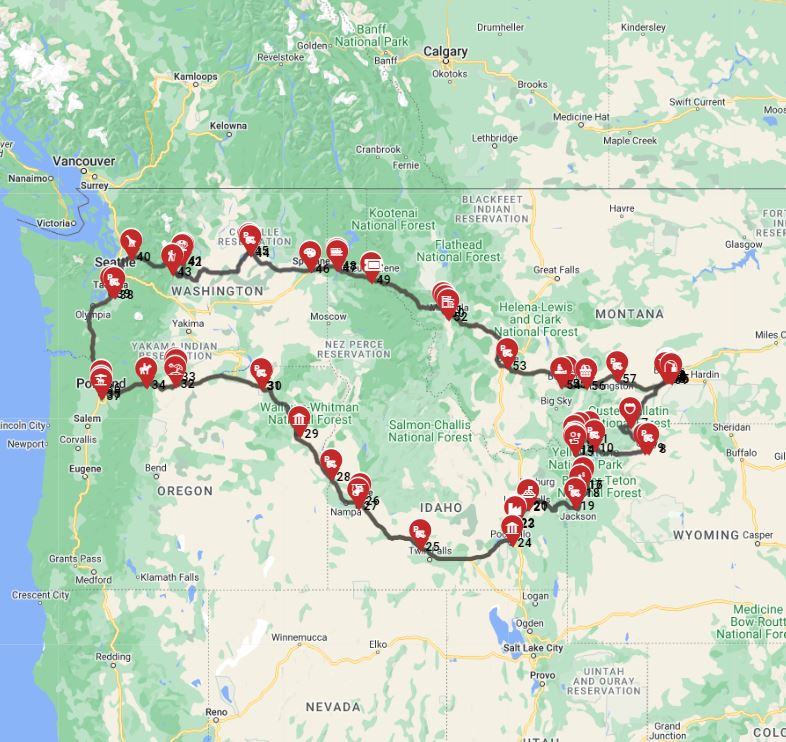
Free and wild camping (often called boondocking or dispersed camping) in the North West US is generally permitted on designated public lands managed by agencies like the Bureau of Land Management (BLM) and National Forests. These lands often offer vast opportunities for RVers to park overnight outside of developed campgrounds, providing a true sense of freedom and immersion in nature. However, it's crucial to understand that rules vary significantly by state (Washington, Oregon, Idaho, Montana, Wyoming), specific land management agency (e.g., National Park Service, State Parks), and local jurisdiction (cities, counties). Always check local regulations regarding length of stay (often 14 days maximum in one spot), fire restrictions, and strict "leave no trace" principles before parking overnight. Look for signs indicating prohibited parking or overnight stays, especially near trailheads or popular scenic spots. For finding campsites and campgrounds during your trip, we recommend using RV PLANET (rvplan.net) - a great resource for locating available spots along your route, including many free options.
🎬 Video coming soon
Can I Drive an RV Into the City Center? Heights, Tunnels & Local Signage
Yes, you can typically drive a rented RV into most city centers in the North West US, including major cities like Seattle, Portland, and Boise, as primary routes are generally designed to accommodate various vehicle sizes. Unlike some European cities, strict low-emission zones for RVs are uncommon in the US. However, it is crucial to pay close attention to local signage regarding height restrictions for tunnels, underpasses, and low bridges, which are more prevalent in older urban areas. Be mindful of weight limits on certain bridges or streets, and always research parking options in advance. Finding suitable RV parking in city centers can be challenging due to limited space and specific parking regulations; look for designated RV parking lots or peripheral parking with convenient public transport options into the heart of the city. Always review your route beforehand and use RV-specific navigation if you're navigating unfamiliar city streets to avoid any potential issues. Drive slowly and carefully, and you can drive almost anywhere without issues. No need to stress - just use common sense and pay attention.
What is the 3-3-3 rule for RV driving?
The 3-3-3 rule for RV driving is a popular guideline designed to promote relaxed travel and avoid driver fatigue, especially for new or long-distance RVers. It recommends driving no more than 300 miles (approximately 480 km) in a single day, which helps prevent exhaustion and allows for more spontaneous stops. The rule also advises arriving at your chosen campground or destination by 3 PM, allowing ample time for setting up your rented motorhome and relaxing before dark. Finally, it suggests staying for a minimum of 3 nights at each location, providing a chance to fully explore the area, engage with local culture and food, and reduce the stress of constant packing and moving. This approach is highly recommended for RV travel in the North West US, encouraging slow travel and deep exploration.
Which states require CDL for RV?
In the United States, including the North West, a Commercial Driver's License (CDL) is generally not required for recreational vehicles (RVs) when they are used for personal, non-commercial purposes. This means your standard Class D driver's license is sufficient for most rental motorhomes. However, a CDL may be necessary if the RV's Gross Vehicle Weight Rating (GVWR) is 26,001 pounds or more *and* it is used for commercial activities, or if it is a combination vehicle designed to transport 16 or more passengers. For personal use, some states (outside the North West, like California or New York) may require a non-commercial 'special license' or 'Class B/A non-commercial' license for RVs exceeding 26,000 pounds GVWR. States within the North West (Washington, Oregon, Idaho, Montana, Wyoming) primarily align with the federal guideline, meaning a standard Class D license is sufficient for personal RVs under 26,000 lbs GVWR. Always check specific state DMV regulations for precise requirements based on your rental RV's weight, though most rental fleet units fall below the 26,000 lbs threshold.
What states have banned RVs?
No states in the North West US, or anywhere in the United States, have enacted a statewide ban on RVs. This is a common misconception, as RVs are a popular mode of travel across the country. However, specific cities, counties, or private entities (like HOAs or certain campgrounds) may have local ordinances or rules that restrict RV parking, limit overnight stays, or impose size limitations within their specific jurisdictions. These restrictions are often related to concerns about residential street parking, public safety, or managing traffic, rather than an outright ban on the vehicle type itself. When planning your North West US itinerary, always check local parking laws and campground regulations for the areas you plan to visit to avoid any unexpected issues. Our extensive network of suppliers, including leading RV rental companies like El Monte and Cruise America, ensures a wide array of options for your trip.
What is the largest RV you can drive without a special license?
In most North West US states, and generally across the country, you can typically drive a rented RV with a Gross Vehicle Weight Rating (GVWR) up to 26,000 pounds (approximately 11,793 kg) using a standard Class D driver's license. This 26,000-pound threshold encompasses the vast majority of popular recreational vehicles, including many Class A, B, and C motorhomes, providing ample choice for your adventure. For example, Bandana offers many Class C motorhomes with sleeping capacities of up to 7 people, like the C-30 or MHC30, all drivable with a standard license. If an RV's GVWR exceeds 26,000 pounds, a non-commercial special license might be required, depending on the specific state of residency or travel, though this is rare for rental fleets. Always verify the exact GVWR of your chosen rental motorhome and consult the DMV regulations for the specific states you plan to visit to ensure full compliance. This clear guidance is part of our full transparency promise.
Which state is the most RV friendly?
While 'RV friendly' can be subjective and depend heavily on individual travel preferences, states like Oregon and Washington in the North West US are consistently highly regarded. These states are lauded for their extensive public lands, including vast national forests and numerous state parks that offer diverse camping experiences, from primitive boondocking to full-hookup sites. They feature well-developed RV infrastructure, including dump stations, water refills, and propane services, along with a wide array of accessible campgrounds. Idaho and Montana also offer significant appeal for RVers seeking vast wilderness, national parks (like Glacier National Park), and abundant outdoor recreation opportunities, making the entire North West a strong contender for RV friendliness. When planning a trip through this region, consider exploring our "RV Rental USA - Complete Guide 2026" for broader insights into RVing across the country.
What is the new RV law in Washington state?
As of 2026, there isn't one single, overarching 'new RV law' that significantly alters RV driving or licensing statewide in Washington. Most 'new RV laws' in Washington State typically refer to local ordinances enacted by cities or counties concerning issues such as RV parking on public streets (often restricting overnight parking), regulations around homeless encampments in RVs, or changes in vehicle registration and taxation. For example, cities like Seattle and Portland have frequently debated and adjusted local laws regarding vehicle occupancy and overnight parking on city streets. These local regulations are usually aimed at managing urban spaces rather than imposing restrictions on recreational travel. Travelers should always check the specific municipal codes of cities and counties they plan to visit for any relevant parking or overnight stay restrictions, ensuring a hassle-free trip in their rented campervan. This is part of our supportive approach to help you plan effectively.
Can you drive an RV through the mountains?
Yes, you can absolutely drive a rented RV through the mountains in the North West US, including the impressive Cascade and Rocky Mountain ranges, but it requires careful planning, specific driving techniques, and an awareness of conditions. Always use lower gears (engine braking) on both ascents and descents to maintain control, prevent overheating the engine on climbs, and avoid excessive brake wear on descents. Be prepared for slower speeds on steep grades and allow plenty of following distance, especially behind commercial trucks. Monitor weather conditions closely, as mountain weather can change rapidly; snow and ice can make passes impassable during winter, potentially requiring chains or detours. Ensure your RV's brakes are in good condition and that you have sufficient power for the climbs. This preparation ensures a safe and enjoyable journey through the breathtaking mountain landscapes. Our RV specialists are here to offer advice and coordinate your booking, making sure you're well-prepared.
What is the 3-3-3 rule for RV living?
While the original '3-3-3 rule' primarily applies to RV *driving* (300 miles, arrive by 3 PM, stay 3 nights), a derived concept for RV *living* suggests embracing a slower travel pace to truly experience each destination. This adaptation often focuses on the 'stay 3 nights' aspect, encouraging RVers to spend at least three full days in each location to fully explore, relax, and immerse themselves in the local culture or natural environment. This approach is perfectly suited for a region like the North West US, which is rich in diverse experiences, from hiking in national parks to exploring quaint coastal towns. The underlying principle is to avoid the rush of constantly moving, promoting a more leisurely and enjoyable RV vacation experience. It encourages deep exploration of an area rather than simply passing through, differentiating it from the pure safety-focused driving rule. For those who love cooking onboard, planning longer stays gives more time to experiment with local produce; check out our RV-friendly recipes playlist for inspiration!
What You Shouldn't Miss
- Explore Olympic National Park's Diverse Ecosystems: Drive your RV to access temperate rainforests, rugged coastlines, and alpine peaks all within one park.
- Crater Lake National Park's Azure Beauty: Witness the deepest lake in the US from your motorhome, a stunning caldera formed by a volcanic collapse.
- Drive the Columbia River Gorge Scenic Byway: Experience waterfalls, dramatic cliffs, and historical sites, with plenty of RV-friendly pull-offs.
- Visit Seattle's Iconic Pike Place Market: Park your RV outside the city and use public transport to explore this vibrant market, the Space Needle, and waterfront.
- Discover the Geothermal Wonders of Yellowstone National Park (Eastern Edge): While primarily in Wyoming, the eastern entrances are accessible from Montana and Idaho, offering RVers unique access to geysers and hot springs.
- Wallowa Mountains, Oregon's "Little Switzerland": Journey into this stunning range for hiking, fishing, and spectacular scenery, with remote campgrounds accessible by RV.
Looking for expert insights from Avi Bandana? Top 5 Adventures - recommendations from Avi Bandana
As an RV enthusiast with decades of travel under my belt, I've seen the world from behind the wheel of many motorhomes. The North West US truly holds a special place, combining unparalleled natural beauty with excellent infrastructure for RVers. From the quiet majesty of the redwood forests to the vibrant energy of coastal cities, every turn offers a new discovery. My top recommendation for the North West US is to embrace the unexpected. Let a scenic pull-off or a local market tempt you off your planned route. Some of the most memorable experiences come from those spontaneous detours.
Final Thoughts
Driving a rented RV in the North West US is more than just a vacation; it's an opportunity to embrace unparalleled freedom and discover some of America's most breathtaking landscapes at your own pace. With Bandana RV, you're not just getting a vehicle; you're gaining a partner dedicated to full transparency, expert advice, and unwavering support from the moment you start planning until your booking is complete. We handle the details, you live the journey, ensuring every mile is filled with comfort and discovery.
Imagine yourself waking up to the sound of waves on the Oregon coast, or having breakfast with a view of the towering Cascade mountains. This dream can become your reality. Whether you're a first-timer or a seasoned RVer, the North West US offers an abundance of experiences waiting to be explored. Let us help you find the perfect campervan or motorhome for your next great adventure. God is in the small details, and we take care of them. That's what makes the big difference.
Ready to hit the road? Discover top destinations, planning tips, all in one place! Plan a trip itinerary in advance with minimal effort and maximum enjoyment. Get inspired for your next trip!