In This Guide
- Where to Camp in North Canada — Top Options
- Campground Types in North Canada (National, Private, Wild)
- Featured RV Park or Campground in North Canada
- Hookups & Amenities — What to Expect
- Booking Windows & Reservations in North Canada
- Nearby Supermarkets & Resupply Points
- Best RV Class for Camping in North Canada
- How to Save on Campgrounds in North Canada
- Where can I park my RV for free in Canada?
- How much does it cost to park an RV in Canada?
- What is the 3-3-3 rule for RV travel?
- Can you park up anywhere in an RV in Canada?
- Can US citizens camp in Canada?
- Do you need to book campsites in Canada?
- What is the best camping app in Canada?
Exploring North Canada by RV is an unparalleled adventure, offering breathtaking landscapes, abundant wildlife, and a sense of true freedom. For those seeking cheap RV camping in North Canada - Budget Sites 2026, planning is key to maximizing your experience without breaking the bank. From the rugged Yukon to the vast Northwest Territories and the northern reaches of Canada's provinces, the opportunities for an unforgettable motorhome trip are endless. With a rented RV, you have a mobile headquarters to venture out to national parks, charming small towns, and remote wilderness areas, making every day a new discovery. To start planning your itinerary and compare motorhome rental options, our RV Rental North Canada - Complete Guide 2026 provides a comprehensive overview.
Where to Camp in North Canada — Top Options
North Canada offers diverse RV camping experiences, from serviced sites in territorial capitals to remote wilderness boondocking. Key regions for RV camping include the Yukon, with popular areas near Whitehorse and within Kluane National Park, and the Northwest Territories, particularly around Yellowknife and its numerous territorial parks. Travelers can also explore the northern stretches of British Columbia, Alberta, Saskatchewan, Manitoba, Ontario, and Quebec, especially along major routes like the Alaska Highway. For a truly unique Arctic experience, consider the Dempster Highway, or for stunning mountainous scenery, the Stewart-Cassiar Highway in Northern BC. Many locations provide direct access to pristine lakes, dramatic mountainous landscapes, and unparalleled wildlife viewing opportunities, where you might spot moose, caribou, or even bears.
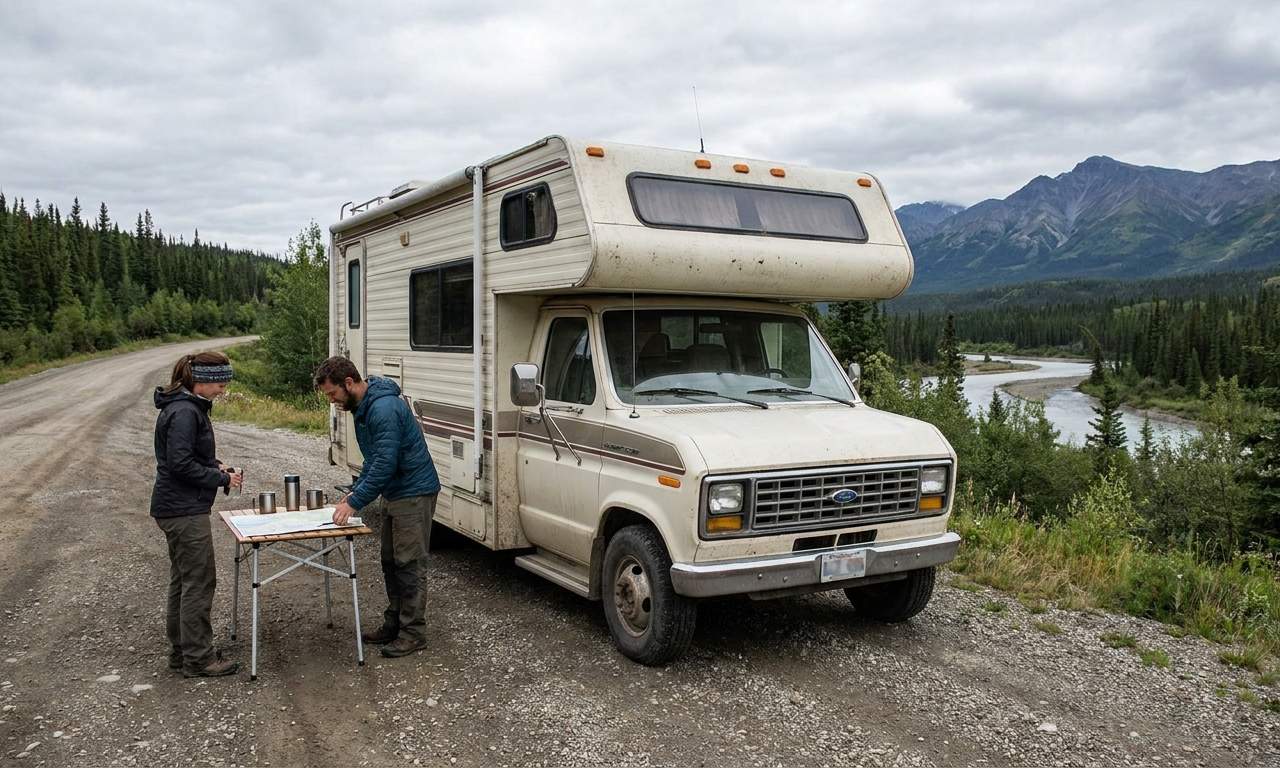
When planning your route, remember to travel slowly, aiming for a maximum of 100-150 km per day on average. This allows you ample time to truly feel the place, connect to the local culture, savor the food, and immerse yourself in the stunning scenery. For instance, a week-long trip focused on a specific region, such as the areas covered in our "RV Driving in North Canada for Seniors - Comfort Routes 2026" guide, can be far more rewarding than rushing through. For detailed route plans and to help you budget for ancillary costs like fuel and campground fees, we recommend exploring RV PLANET routes, where you can itemize and track every expense along the way. On the routes offered through RV PLANET routes, you can itemize and track every expense along the way for easy budgeting.
Campground Types in North Canada (National, Private, Wild)
RV camping in North Canada spans three main types: National Parks, Provincial/Territorial Parks or private campgrounds, and wild camping (boondocking) on vast Crown Land. National Parks, such as Kluane in Yukon, provide breathtaking scenery and a range of sites from basic dry camping to semi-serviced options, typically requiring advance reservations and adherence to strict environmental regulations. These parks offer a structured yet wild experience, often with interpretive programs and ranger services.
Provincial and Territorial Parks, along with private campgrounds, offer a broader spectrum of amenities. You'll find everything from basic dry sites to full hookups, commonly located near communities or along major highways like those mentioned in our "First-Time RV Driving in North Canada - Beginners Guide 2026" resource. Private campgrounds often provide additional amenities like showers, laundry facilities, and sometimes even Wi-Fi, making them a comfortable option after a long day of driving your rented motorhome. Many also offer discount cards or loyalty programs, which can help in finding cheap RV camping in North Canada.
Wild camping, often referred to as boondocking, is extensively available on Canada's immense Crown Land throughout the North, offering free, unserviced stays for self-sufficient travelers. When opting for wild camping, always adhere to 'leave no trace' principles, ensure you are not on private property, and respect any local regulations or signage. This option is perfect for experienced RVers looking for solitude and the most budget-friendly way to explore the remote northern wilderness.
Featured RV Park or Campground in North Canada
When planning your North Canada RV adventure, choosing campgrounds that offer a balance of convenience and authentic wilderness access is paramount. An ideal northern campground, like the territorial campgrounds found along the Alaska Highway, would typically provide a mix of full-service sites (offering electric, water, and sewer hookups) and rustic dry camping options, catering to different preferences and budgets. For example, some sites in Tombstone Territorial Park in Yukon offer basic amenities while providing stunning views of the Ogilvie Mountains.
Prioritize campgrounds that offer essential amenities like potable water access and dump stations, which are crucial for extended stays in a rented motorhome. Many of these facilities are typically available at larger territorial campgrounds or designated municipal facilities. Even in remote areas, some smaller campgrounds might offer a communal fire pit, perfect for unwinding under the vast northern sky. Always call ahead to confirm availability and amenities, especially in shoulder seasons or less-traveled routes, as services can be limited.
Hookups & Amenities — What to Expect
In North Canada, hookup availability varies significantly across different camping options, so it's important to set your expectations. Expect full hookups (electricity, water, and sewer) primarily at private RV parks and some larger territorial or municipal campgrounds, especially those near communities like Yellowknife or Whitehorse. Electricity typically operates on the North American standard 120V system, with services commonly available in 15, 30, or 50 amp configurations. Water hookups provide potable water directly to your rented motorhome, while dump stations for grey and black water are widely found at serviced campgrounds, as well as at designated municipal facilities or gas stations in larger northern towns. For an idea of different amenity levels and prices, consider our "RV Rental in North Canada - Prices and Best Deals 2026" resource.
It's crucial to remember that WiFi and cellular service can be unreliable or completely non-existent in the more remote northern areas, particularly along routes like the Dempster Highway. For safety and communication, a satellite communication device is a prudent measure for extended trips into the wilderness. Laundry facilities and showers are generally found only at private or larger territorial campgrounds, so plan your stays accordingly if these amenities are important for your comfort. When planning meals in your RV kitchen, remember to check out our RV-friendly recipes playlist for easy and delicious ideas.
Booking Windows & Reservations in North Canada
For popular national and territorial parks in North Canada during peak season (June-August), booking your RV campsite well in advance, often 3-6 months prior, is highly recommended for 2026. Many national park campgrounds, including those in Kluane National Park, release only 25-30% of their spots for advance reservations, allocating the remainder on a first-come, first-served (FCFS) basis. This system provides a fair chance for both meticulous pre-planners and more spontaneous travelers.
Spontaneous travelers can often find spots at private campgrounds or less-trafficked provincial/territorial parks, especially by calling ahead before driving long distances. While specific sites in high-demand areas may fill quickly, you will almost certainly find a place to stay in the vast Canadian North-if not at your first choice, then at a nearby alternative. Flexibility is key for a cheap RV rental trip, and a willingness to adjust your route can open up many fantastic camping opportunities. Our "Family RV Rental in North Canada - Pricing Guide 2026" covers how flexibility can impact your overall travel budget.
Nearby Supermarkets & Resupply Points
When RVing in North Canada, meticulous planning for your resupply stops is crucial due to the vast distances between services and communities. Major hubs such as Whitehorse in Yukon, Yellowknife in the Northwest Territories, and larger towns strategically located along major routes like the Alaska Highway (e.g., Fort Nelson and Dawson Creek in British Columbia) are your primary and most reliable bets for comprehensive supermarket options. You'll typically find national chains like IGA or Save-On-Foods, alongside smaller independent grocers, offering a range of supplies, though prices may be noticeably higher than in more southern Canadian cities due to transportation costs.
Always make it a priority to stock up on essentials such as fuel, fresh potable water, and non-perishable food items whenever you have the opportunity. Smaller communities in North Canada may have very limited selections or irregular operating hours, especially on weekends or during holidays. Planning your menu with shelf-stable ingredients and utilizing your RV's refrigerator, like the 90-liter unit in a cruise america rv rental example Explorer Class C motorhome, will help ensure you're well-provisioned for stretches between major towns. For tracking these and other ancillary costs during your journey, remember that RV PLANET routes allow you to itemize every expense for easy budgeting.
Best RV Class for Camping in North Canada
For a cheap RV rental in North Canada, a Class B Camper Van or a Class C motorhome often provides the best balance of efficiency, maneuverability, and comfort for exploring the region. Class B Camper Vans, like the "rv rental denver example Category Van" which is ideal for a couple and features a toilet and shower, average around 5.8 meters in length with 3.2 sleeping places. These vehicles are highly fuel-efficient, typically achieving 8-10 Liters/100 km, and their compact size makes them easy to handle on narrower gravel roads or for discreet boondocking in remote areas.
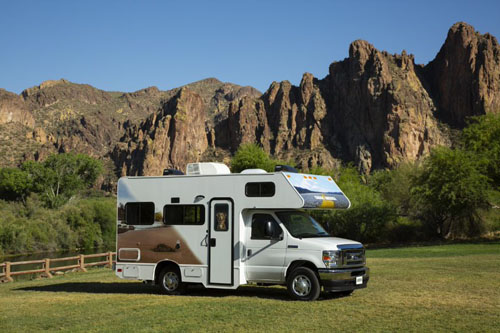
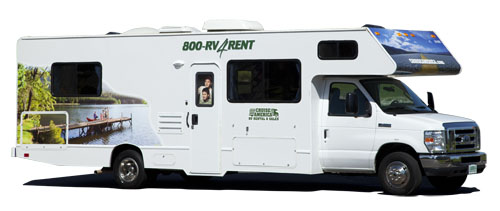
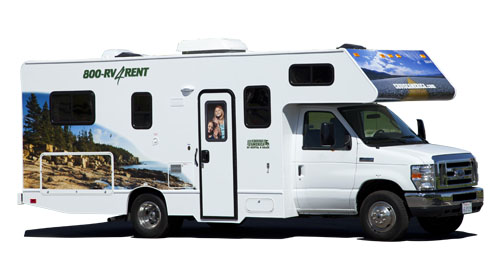
Class C motorhomes, while slightly larger, still offer excellent flexibility for northern travel. For example, a "24' Class C Motorhome" is ideal for families of 2+2, offering a generator, shower, and toilet, making it self-sufficient. These vehicles average around 6.9 meters in length with 3.8 sleeping places and generally maintain good fuel economy, typically 10-11 Liters/100 km, especially compared to larger Class A options. Smaller motorhome classes are generally more adept at navigating northern gravel roads and accessing less developed campgrounds, aligning well with a 'cheap RV rental' budget by saving on fuel and offering more boondocking opportunities. For couples, consider models like the "alaska rv rental example Paradise S/T" which offers automatic transmission and is suitable for two people.
How to Save on Campgrounds in North Canada
To significantly save on campground costs in North Canada, leveraging discount cards, such as those sometimes offered through Bandana's rental partners or national camping associations, can provide valuable savings on nightly rates. Many RV rental companies, like our partners El Monte and Cruise America, offer perks or packages that include camping discounts. Another effective strategy is to consider traveling during the shoulder seasons-typically May and early June or September and early October-when campground rates are often lower and popular sites are less crowded, offering a more peaceful experience.
Opting for municipal or regional campgrounds over private resorts can also lead to substantial savings, as they typically offer more budget-friendly rates, albeit with potentially fewer amenities. Maximizing value by staying 3 or more nights at a single location often qualifies you for weekly rates, which are usually cheaper per night. Additionally, exploring legal opportunities for free wild camping (boondocking) on Crown Land whenever possible is the most effective way to eliminate campground fees entirely. Just ensure you are prepared for self-sufficiency and always follow 'leave no trace' principles. For a detailed breakdown of costs, check out "RV Rental in North Canada - Prices and Best Deals 2026".
Where can I park my RV for free in Canada?
In North Canada, the most extensive option for free RV parking is on vast tracts of Crown Land, which is public land available for recreational use, often without permits for short stays. It's an excellent way to experience the solitude of the northern wilderness with a rented RV. Always remember to practice 'leave no trace' principles, pack out everything you pack in, avoid long-term settlements, and confirm you are not on private property or within prohibited zones such as protected park boundaries or Indigenous lands.
Other potential free parking spots include designated rest stops along highways, some big-box store parking lots (like Walmart, though always confirm with management first), and informal pull-offs, especially in very remote areas where services are few and far between. Always be mindful of local bylaws, particularly when near communities, and prioritize safety and respect for the environment when seeking free overnight parking. The sheer vastness of North Canada means that opportunities for free camping are more abundant than in densely populated regions, offering truly cheap RV camping in North Canada.
How much does it cost to park an RV in Canada?
The cost to park a rented RV in Canada, particularly in the northern regions, varies widely from free to over $70 CAD per night, depending on the type of campground and the amenities offered. Free options primarily involve boondocking on Crown Land where legal; however, these spots offer no services and demand full self-sufficiency from the traveler. For a detailed breakdown of other trip costs, our "RV Rental in North Canada for Couples - Pricing 2026" guide can be very helpful.
Basic provincial or territorial parks with minimal services, such as dry camping sites and pit toilets, typically cost between $15-30 CAD per night. These offer a rustic experience, often in beautiful natural settings. Private campgrounds, which provide full hookups (electricity, water, sewer), showers, laundry facilities, and sometimes Wi-Fi, generally range from $30-70+ CAD per night. Prices will be higher near popular tourist destinations, major cities like Whitehorse or Yellowknife, or during the peak summer season (June-August). Always budget for these varying costs when planning your extended road trip.
What is the 3-3-3 rule for RV travel?
The '3-3-3 rule' for RV travel is a widely adopted guideline that promotes safety and enjoyment, especially beneficial for navigating the expansive and often remote highways of North Canada: drive no more than 300 miles (approximately 480 km) per day, arrive at your destination by 3 PM, and stay at least 3 nights. Adhering to the '300 miles' limit is essential for preventing driver fatigue, a critical consideration on the long, potentially challenging roads of the North where services can be sparse. It encourages a slower, more immersive pace, which we highly recommend.
Arriving by '3 PM' provides ample time to locate and set up your campsite before dark, which is particularly crucial in northern regions where twilight can be short or days long depending on the season, affecting visibility and comfort. Staying '3 nights' or more at each stop offers invaluable opportunities to fully explore the local area, engage with its culture, relax, and avoid the constant rush of packing and unpacking. This approach significantly enhances the overall northern wilderness experience, allowing you to connect deeper with your surroundings, whether you are in a small campervan or a larger Class C motorhome like the "MHC24".
Can you park up anywhere in an RV in Canada?
No, you cannot legally park up anywhere in a rented RV in Canada; parking is generally restricted to designated campgrounds, private property with explicit permission, or legal Crown Land. Overnight parking on public roadsides, in municipal parks, or on private land without explicit permission is typically illegal throughout Canada and can result in fines or towing. Drive slowly and carefully, and you can drive almost anywhere without issues. No need to stress - just use common sense and pay attention.
While Crown Land offers extensive opportunities for free camping in northern Canada, specific rules apply regarding the duration of stay, minimizing environmental impact, and avoiding prohibited areas like active mining claims or Indigenous settlement lands. Always consult local bylaws and look for clear signage, especially when near communities or in protected areas such as national or provincial parks, to ensure you are parking your RV legally and safely. For finding campsites and campgrounds during your trip, we recommend using RV PLANET (rvplan.net) - a great resource for locating available spots along your route.
Can US citizens camp in Canada?
Yes, US citizens are most welcome to camp in Canada and explore its vast northern regions, provided they meet standard entry requirements. To cross the border into Canada, US citizens need a valid passport, and their rented RV must have up-to-date registration, proof of insurance (confirming Canadian coverage), and the driver must hold a valid driver's license. An International Driving Permit (IDP) is recommended for visitors from non-English-speaking countries but is not mandatory for US citizens in most cases, as a standard car license is sufficient for all motorhome classes.
While no special camping permits are required for entry into Canada, visitors should be aware of specific booking requirements for national and territorial parks within Canada, as discussed in our "Booking Windows & Reservations in North Canada" section. Always declare all goods upon entry at the border, and be mindful of restrictions on certain food items, firearms, and other regulated products. Staying informed will ensure a smooth and enjoyable cross-border RV adventure. For broader Canadian travel information, you might find our "RV Rental USA - Complete Guide 2026" helpful as well, particularly for routes connecting to the Canadian North.
Do you need to book campsites in Canada?
Yes, booking campsites in Canada is highly recommended, particularly for popular national and territorial parks during the peak summer season (June to August) in North Canada. Many sought-after campgrounds, especially those managed by Parks Canada like in Nahanni National Park Reserve, can be fully booked months in advance for 2026 due to their stunning locations and limited capacity. This is a crucial step for pre-planners to secure their preferred spots and ensure a stress-free experience.
For spontaneous travelers, private campgrounds or less-visited municipal/territorial parks often have same-day availability, though it's always wise to call ahead before driving long distances. Even during peak season, many parks reserve a portion of their sites for first-come, first-served arrivals, providing flexibility. If planning to boondock on Crown Land, no reservations are needed, but thorough planning for self-sufficiency-including sufficient fuel, water, and waste management-and awareness of local regulations is essential for this type of cheap RV camping in North Canada. Our "RV Travel Guide to North Canada - Tips and Top Spots 2026" video guide offers further planning insights.
What is the best camping app in Canada?
For RV camping in North Canada, several apps are highly beneficial for navigation, finding sites, and planning: iOverlander is an excellent choice for locating boondocking spots, campgrounds, potable water sources, dump stations, and various services, featuring extensive user-generated content and reviews. Another valuable app is Campendium, which provides detailed reviews and information on campgrounds across Canada, including specifics on amenities, cell service availability, and pricing, useful for both paid and free sites. This can greatly assist in finding cheap RV camping in North Canada.
🎬 Video coming soon
For booking national parks, the official Parks Canada Reservation Service (reservation.pc.gc.ca) is indispensable, and many provincial/territorial park systems also have their own dedicated online booking platforms. Always download offline maps, such as those available through Google Maps or Gaia GPS, for areas in North Canada with limited or no cellular service. This ensures reliable navigation and access to points of interest, even without connectivity. Having these tools ready in your rented campervan or motorhome is key to a smooth and safe journey through the vast northern landscapes.
What You Shouldn't Miss
- Drive a segment of the legendary Alaska Highway, witnessing its historical significance and stunning scenery.
- Embark on the Dempster Highway to cross the Arctic Circle, a truly remote and iconic northern experience.
- Explore Kluane National Park in Yukon, home to Canada's highest peak, Mount Logan, and vast wilderness.
- Experience the Midnight Sun in summer above the Arctic Circle, enjoying nearly 24 hours of daylight for exploration.
- Seek out opportunities to view the mesmerizing Aurora Borealis (Northern Lights) during late summer or early fall.
- Visit Dawson City, Yukon, a preserved Gold Rush town with wooden boardwalks and rich history.
- Looking for expert insights from Avi Bandana? Top 5 Adventures - recommendations from Avi Bandana.
Final Thoughts
Renting an RV for your North Canada adventure opens up a world of unparalleled beauty and unforgettable experiences. Whether you're seeking the solitude of wild camping under the Midnight Sun or the comfort of a fully serviced campground near a bustling northern town, the region offers something for every traveler. Remember our advice: drive slowly, plan your resupply stops, and embrace the vastness of the Canadian North.
At Bandana RV, we're dedicated to making your journey smooth and enjoyable, from your initial comparison to your safe return. We're true RV specialists, here to support you with full transparency every step of the way. Don't let the details overwhelm you-God is in the small details, and we take care of them. That's what makes the big difference.
Ready to discover the magic of North Canada? Compare Motorhome Prices for North Canada now and begin planning your extraordinary week-long RV adventure!