For live availability and current prices, start with our RV Rental Norway - Complete Guide 2026 guide.
In This Guide
- Can You Drive an RV in Norway? License & Age Rules
- Road Conditions & Terrain in Norway
- RV Size Limits, Bridges & Restricted Zones
- Fuel: Diesel vs. Petrol & Cost per 100 km
- Tolls, Vignettes & Border Rules
- Driving Tips for cheap rv rental Travelers
- Recommended RV Class for Norway Roads
- Should I Choose a Compact Van Instead of a Large RV in Norway?
- Can I Park Anywhere? Free & Wild Camping Rules in Norway
- Can I Drive an RV Into the City Center? Heights, Tunnels & Local Signage
- How Much Does an RV Trip in Norway Cost? A Detailed Breakdown and Budget Hacks
- How Can Digital Nomads Stay Connected While RVing in Norway?
- Where Can I Find Off-the-Beaten-Path RV Destinations in Norway?
- What Emergency Preparedness and Safety Tips Do I Need for RVing in Norway?
- Driving Class SI - Semi-integrated RV in Norway: Specs & Tips
- Driving Class C - Alcove RV in Norway: Specs & Tips
- Driving Class B - Camper Van in Norway: Specs & Tips
- Driving Class A - Integrated RV in Norway: Specs & Tips
- Driving Class TC - Truck Camper in Norway: Specs & Tips
Can You Drive an RV in Norway? License & Age Rules
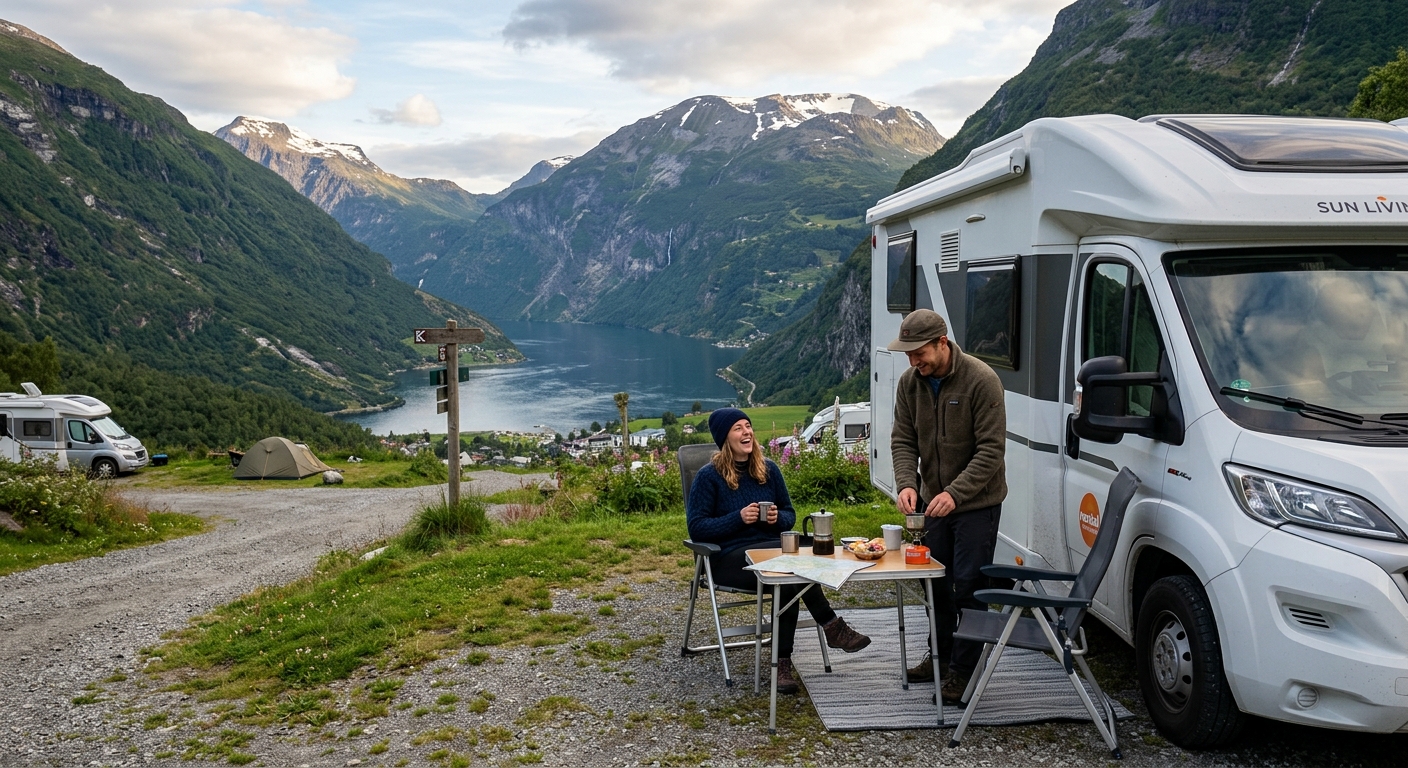
Yes, you can absolutely drive an RV in Norway with the right documentation and adherence to local regulations. For RVs up to 3,500 kg (7,700 lbs) Maximum Authorized Mass (MAM), a standard Class B car driver's license is sufficient for drivers aged 18 or older. If you're considering a larger motorhome, which typically exceeds 3,500 kg MAM, you might require a Class C1 license, often necessitating a minimum age of 21 and potentially additional driving qualifications, depending on the specific rental supplier's policy. Bandana Caravan ensures that all rental motorhomes can be driven on a standard car license for renters aged 21 and above, eliminating the need for special permits for any of our vehicles. For foreign drivers, it is crucial to carry your national driver's license; an International Driving Permit (IDP) is highly recommended, and may be required if your license isn't in a Latin alphabet or if it's from outside the EU/EEA.
Road Conditions & Terrain in Norway
Norway's road network is generally excellent, offering a gateway to its dramatic landscapes. However, the terrain is highly varied, characterized by winding mountain passes, narrow roads hugging fjord sides, and occasional gravel sections in more remote areas. Expect numerous tunnels, bridges, and steep gradients, particularly when exploring the Western Fjords. Driving an RV, even a compact campervan, allows for a slower, more immersive journey, perfectly suited for appreciating Norway's breathtaking scenery. Remember that weather conditions can change rapidly, especially in mountainous regions, impacting road surfaces and visibility, so always drive cautiously and be prepared for anything.
RV Size Limits, Bridges & Restricted Zones
While Norway doesn't enforce strict general RV size limits across the board, drivers must remain vigilant about posted height and weight restrictions, especially for tunnels, bridges, and mountain passes, which are often indicated by signs featuring red circles with numerical limits. These are crucial for ensuring safe passage. Additionally, many ferry services categorize RVs by length and weight, which directly affects pricing and sometimes availability, so it’s wise to know your rented RV's dimensions. Some cities might also have low emission zones or restricted access areas, particularly for older vehicles or those exceeding certain size parameters; always observe local signage carefully to avoid penalties.
Fuel: Diesel vs. Petrol & Cost per 100 km
Most RVs available through Bandana, and generally in Norway, run on diesel, which is widely available across the country. It's crucial to budget for fuel, as costs in Norway are among the highest in Europe. Based on global fleet averages, a Class SI - Semi-integrated RV typically consumes 10-11 Liters/100 km, a Class C - Alcove consumes 10-12 Liters/100 km, a Class B - Camper Van consumes 8-10 Liters/100 km, a Class A - Integrated consumes 8-12 Liters/100 km, and a Class TC - Truck Camper can range from 12-17 Liters/100 km. Some rental motorhomes may include fuel discount cards, offering minor savings on your overall fuel expenses. On the routes offered through RV PLANET routes, you can itemize and track every expense along the way for easy budgeting.
Tolls, Vignettes & Border Rules
Norway operates an extensive automatic toll system primarily through AutoPASS, meaning you won't encounter many traditional toll booths. For RV travelers, all tolls are automatically registered via cameras. Foreign vehicles typically receive an invoice by post from Euro Parking Collection plc (EPC) or can register for an AutoPASS agreement prior to travel to simplify payments and potentially reduce costs. While specific regional toll data isn't universally provided, tolls are common on many roads, bridges, and tunnels, especially around major cities and on new infrastructure. When crossing borders into neighboring countries like Sweden or Finland, be aware of their respective road tax and toll systems. Some Bandana RVs may offer pre-purchased toll passes, simplifying cross-border travel.
Driving Tips for cheap rv rental Travelers
Embrace a slower pace when driving an RV in Norway; the scenic routes and frequent ferry crossings often mean travel times are longer than anticipated, so factor this into your daily planning. Pre-booking ferries, especially on popular routes or during peak season, can save you time and ensure passage. Be vigilant for wildlife, as animals like moose, deer, and reindeer can appear on roads, particularly at dawn and dusk, so always drive cautiously. Prepare for rapidly changing weather conditions, packing layers and ensuring your RV is equipped for sudden shifts, even in summer. Utilize the numerous designated rest stops and viewpoints that Norway offers – they are perfect for breaks and capturing those stunning scenic photos, ideal for families and budget travelers alike.
Recommended RV Class for Norway Roads
When navigating Norway's diverse road network, balancing comfort with maneuverability is key. A Class B - Camper Van or a Class SI - Semi-integrated RV is often a great choice. Bandana's global fleet data shows Camper Vans averaging 5.8 meters in length, perfect for tight roads and city parking. Semi-integrated RVs, averaging 6.9 meters, offer more living space and amenities without being excessively large, striking a good balance for longer trips and varied terrain. These are well-suited for exploring Norway's stunning landscapes.
Should I Choose a Compact Van Instead of a Large RV in Norway?
For most travelers, driving any RV size in Norway is quite manageable, and the benefits of superior living space and amenities in a larger RV often outweigh the minor maneuverability advantages of a compact van. While a compact van, like a Class B Camper Van, can be genuinely helpful in very tight historic city centers, exceptionally narrow mountain passes, or when seeking more discreet wild camping spots, larger RVs such as Semi-integrated or Alcove models usually provide a more comfortable experience for families or longer trips. The primary factor should always be your comfort needs and travel style, as most main roads are designed to accommodate standard RVs comfortably.
Can I Park Anywhere? Free & Wild Camping Rules in Norway
Norway's "Allemannsretten" (Everyman's Right) generally allows for wild camping, including with an RV, provided it's done responsibly and with respect for nature. While specific regional data can vary, the general principle permits camping for up to two nights on uncultivated land, as long as you are at least 150 meters (about 490 feet) from the nearest inhabited house or cabin. However, camping in national parks or protected areas is typically restricted to designated campsites or specific rules, and wild camping on private cultivated land (like farmlands) always requires the landowner's explicit permission. Ethical camping practices are paramount: leave no trace, properly dispose of all waste (pack it in, pack it out), avoid open fires during dry periods, and source water responsibly from clean, running water sources. Always check local regulations and follow local laws before parking overnight, especially in more populated areas or sensitive natural environments.
Can I Drive an RV Into the City Center? Heights, Tunnels & Local Signage
You can almost always drive an RV into Norwegian city centers, but it's crucial to pay close attention to local signage regarding height limits, tunnels, low bridges, and environmental zones. While specific city center restrictions aren't universally listed, major cities like Oslo and Bergen have environmental zones that may restrict older or larger vehicles, or charge congestion fees. It's always advisable to check these regulations beforehand. Parking an RV in city centers can be challenging due to limited space and higher costs; consider using designated outskirts parking areas and public transport for urban exploration. Always observe resident-only streets and temporary road closures, ensuring your vehicle's dimensions comply with any posted restrictions.
How Much Does an RV Trip in Norway Cost? A Detailed Breakdown and Budget Hacks
An RV trip in Norway typically involves significant expenses for fuel, tolls, ferries, groceries, and campsites, making thorough planning essential for budget-conscious travelers. Expect high fuel costs, substantial AutoPASS tolls on many roads and city entries, and frequent ferry charges across fjords, which can add up quickly, especially for larger RVs. Groceries from supermarkets are manageable, but eating out is notably expensive; cooking your own meals in the RV is a primary budget hack. Campsite prices vary (ranging from approximately 200-500 NOK per night), with wild camping offering free alternatives, though without amenities. Key budget hacks include utilizing Allemannsretten for free overnight stays where permitted, cooking most meals onboard, researching ferry alternatives, considering an AutoPASS agreement, and traveling outside the peak summer season (July-August) for potentially lower rental and campsite fees. For finding campsites and campgrounds during your trip, we recommend using RV PLANET (rvplan.net) — a great resource for locating available spots along your route. On the RV PLANET routes, travelers can itemize and track every expense along the way for easy budgeting. For ideas you can prep on the road, watch our RV-friendly recipes playlist on YouTube.
How Can Digital Nomads Stay Connected While RVing in Norway?
Digital nomads can maintain connectivity while RVing in Norway through several effective strategies, including local SIM cards for mobile data, utilizing Wi-Fi hotspots, and ensuring robust charging solutions for devices, especially when venturing into remote areas. Purchasing a local Norwegian SIM card (from providers like Telenor or Telia) upon arrival generally offers the best mobile data rates and excellent 4G/5G coverage, even reaching many remote regions. For enhanced reliability in areas with weaker signals, a portable Wi-Fi hotspot device can aggregate signals or provide a dedicated internet connection. Proper charging solutions are crucial; ensure your rented RV has sufficient USB ports and a powerful inverter for AC devices, or consider a portable power station, as shore power hookups are typically only available at designated campsites. While coverage is generally good, be prepared for limited or no signal in very deep fjords, remote valleys, or high mountain passes, which necessitates planning for offline work sessions.
Where Can I Find Off-the-Beaten-Path RV Destinations in Norway?
To discover off-the-beaten-path RV destinations in Norway, venture beyond popular routes like the Atlantic Road and Trollstigen to explore hidden gems, local markets, and authentic cultural immersion opportunities. Consider regions like Helgeland in Northern Norway for its stunning coastal scenery and lesser-known islands, or the inland Valdres and Telemark regions for their rich cultural experiences and traditional villages. Seek out local food markets in smaller towns for genuine culinary encounters, and engage with local communities through visits to small museums or craft shops. Explore less-advertised national parks or hiking trails; for instance, Rondane National Park offers spectacular mountain landscapes without the overwhelming crowds often found in Jotunheimen. Utilize local tourism information centers for insider tips on hidden viewpoints, quaint fishing villages, or specific local events happening during your visit.
What Emergency Preparedness and Safety Tips Do I Need for RVing in Norway?
Comprehensive emergency preparedness and safety advice is vital for RV travel in Norway's often remote landscapes, covering potential breakdowns, weather hazards, wildlife encounters, and essential gear. Always carry a well-stocked first-aid kit, emergency contact numbers (112 for all emergencies), high-visibility vests, and a warning triangle for breakdowns. Be prepared for rapidly changing weather, even in summer; pack warm clothing, waterproof gear, and check forecasts diligently, especially before driving mountain passes. Wildlife encounters, particularly with moose or reindeer, are common; drive cautiously, especially at dawn and dusk, and know how to react safely if an animal appears on the road. Essential gear for remote travel includes extra fuel, sufficient water and food supplies, a fully charged mobile phone, a power bank, and potentially a satellite phone or tracker for extremely isolated areas.
Driving Class SI - Semi-integrated RV in Norway: Specs & Tips
Class SI - Semi-integrated RVs offer a balanced option for exploring Norway, combining comfortable living space with manageable driving dimensions. Bandana's global fleet average for these models indicates an average length of 6.9 meters, typically accommodating approximately 3.8 sleeping places and comfortable seating for 3.4 adults. With an average load capacity suitable for essentials and common fuel consumption ranging from 10-11 Liters/100 km, these RVs are well-suited for couples or small families seeking both comfort and efficiency on their journey. Their size makes them relatively agile for navigating Norway's winding roads while still providing ample amenities for extended travel.
Driving Class C - Alcove RV in Norway: Specs & Tips
Class C - Alcove RVs are an excellent choice for larger families or groups traveling through Norway, offering ample sleeping capacity and generous living space. These models from Bandana's global fleet average 7.5 meters in length, providing approximately 5.8 sleeping places and comfortable accommodation for around 4.4 adults. They feature a robust design with an average load capacity of 42.4 kg and typically consume 10-12 Liters/100 km, making them a practical option for longer trips with more occupants. While their larger size requires extra care on narrow roads and in urban areas, their sturdy build handles Norway's varied terrain well, and their ample interior space ensures comfort for everyone.
Driving Class B - Camper Van in Norway: Specs & Tips
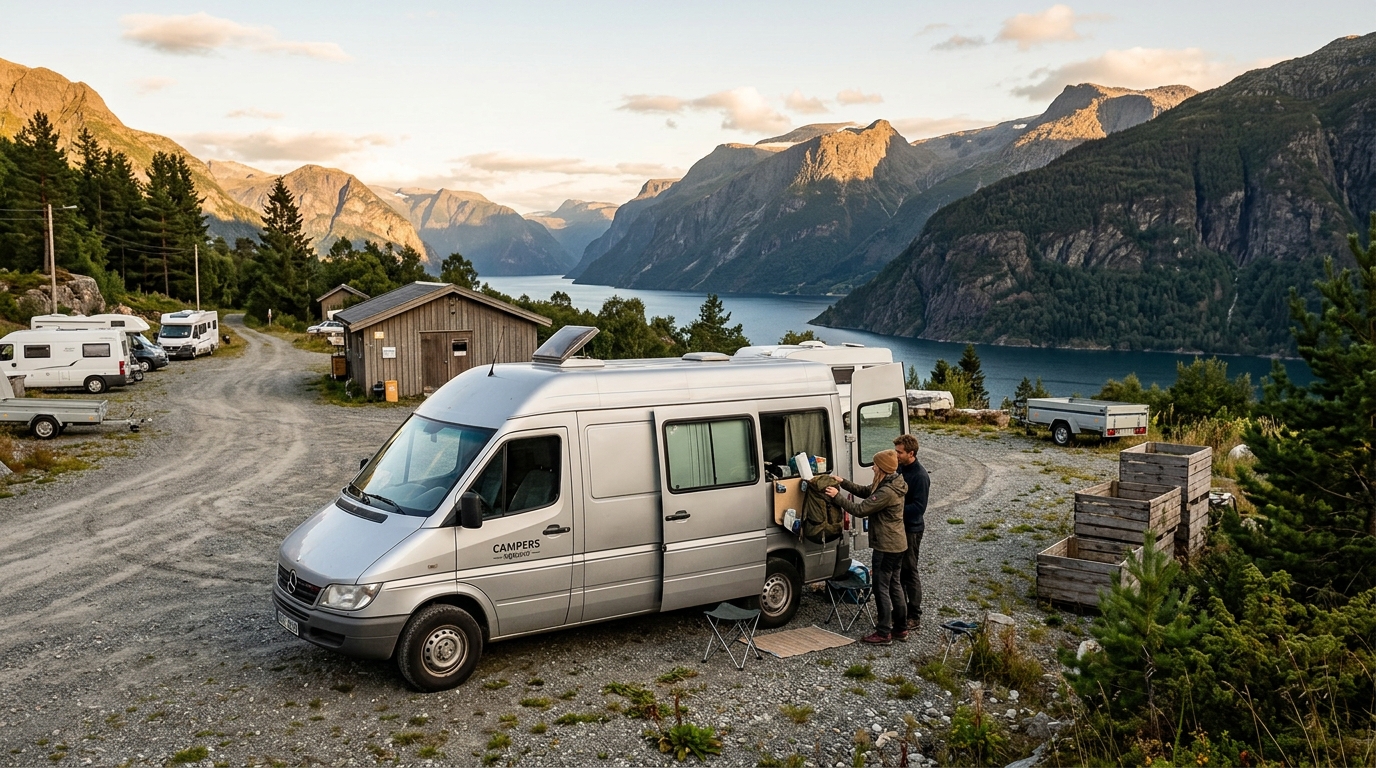
Class B - Camper Vans are ideal for solo travelers or couples prioritizing maneuverability, fuel efficiency, and ease of parking in Norway. Bandana's global fleet average for Camper Vans is 5.8 meters in length, offering about 3.2 sleeping places and comfort for roughly 2.7 adults. These compact RVs boast an average load capacity of 37 kg and are highly fuel-efficient, typically consuming only 8-10 Liters/100 km. Their smaller footprint makes them perfect for navigating Norway's narrowest fjord roads and finding more discreet wild camping spots, offering a nimble and efficient way to explore.
Driving Class A - Integrated RV in Norway: Specs & Tips
Class A - Integrated RVs provide a premium travel experience in Norway, characterized by spacious interiors and comprehensive amenities, making them suitable for discerning travelers. Based on Bandana's global fleet averages, these luxurious RVs typically measure 7.5 meters in length, offering around 4.4 sleeping places and comfortable space for approximately 4 adults. With a substantial average load capacity of 209.5 kg and fuel consumption ranging from 8-12 Liters/100 km, they are designed for extended, comfortable touring. While they offer maximum comfort, their larger size necessitates more attention on narrow roads and in urban areas, but their powerful engines effortlessly handle inclines, ensuring a smooth journey.
Driving Class TC - Truck Camper in Norway: Specs & Tips
Class TC - Truck Campers offer a robust and versatile option for exploring Norway, combining the utility of a pickup truck with a compact living unit, ideal for adventurous couples seeking to access more remote areas. Bandana's global fleet data shows these units averaging 5.5 meters in length, providing approximately 2.4 sleeping places and space for around 2.1 adults. These campers have varying load capacities (though the truck's capacity is the primary factor) and typically consume 12-17 Liters/100 km, reflecting their more rugged build. Their often higher ground clearance and potential 4x4 capabilities make them excellent for accessing less-traveled tracks and more remote Norwegian landscapes, offering a unique blend of mobility and comfort.
What You Shouldn't Miss
- Drive the scenic Norwegian Fjords, experiencing the dramatic cliffs and turquoise waters of Geirangerfjord or Sognefjord.
- Explore charming coastal towns like Bergen, with its colorful Hanseatic wharf, Bryggen.
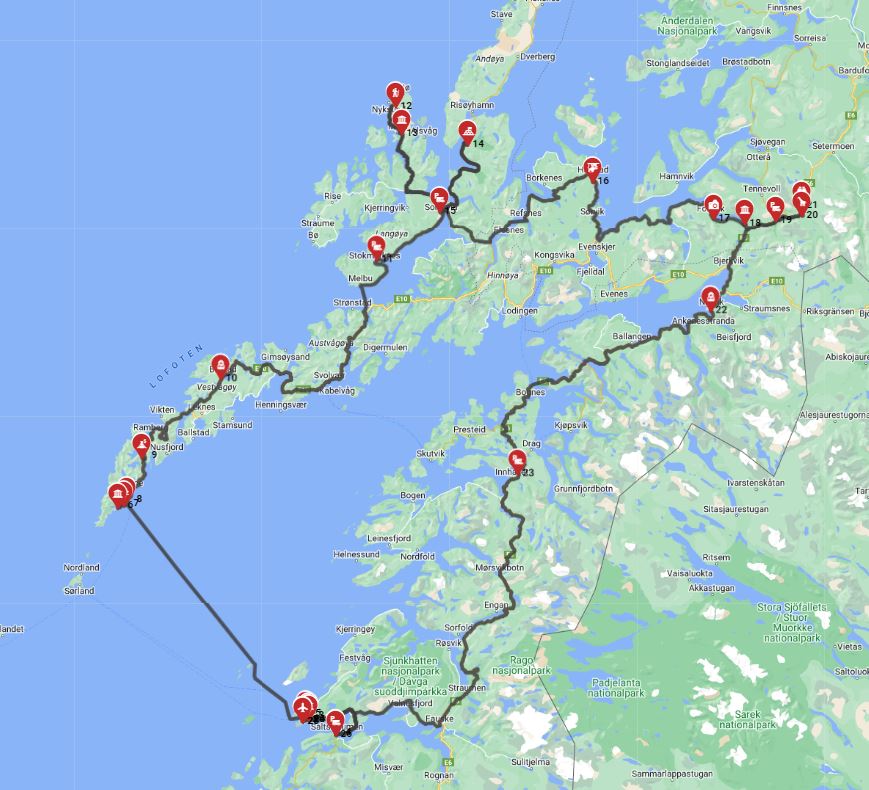
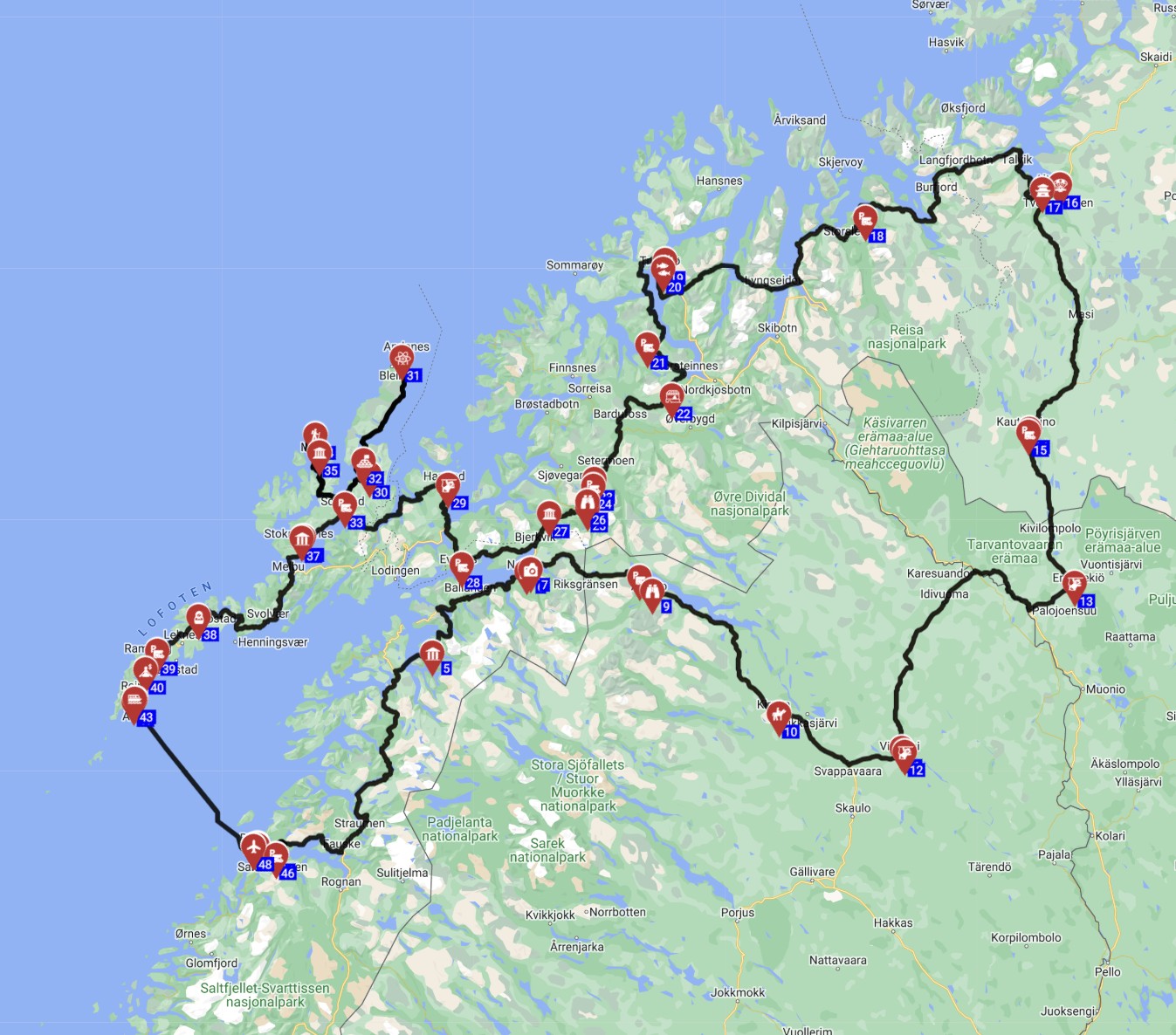
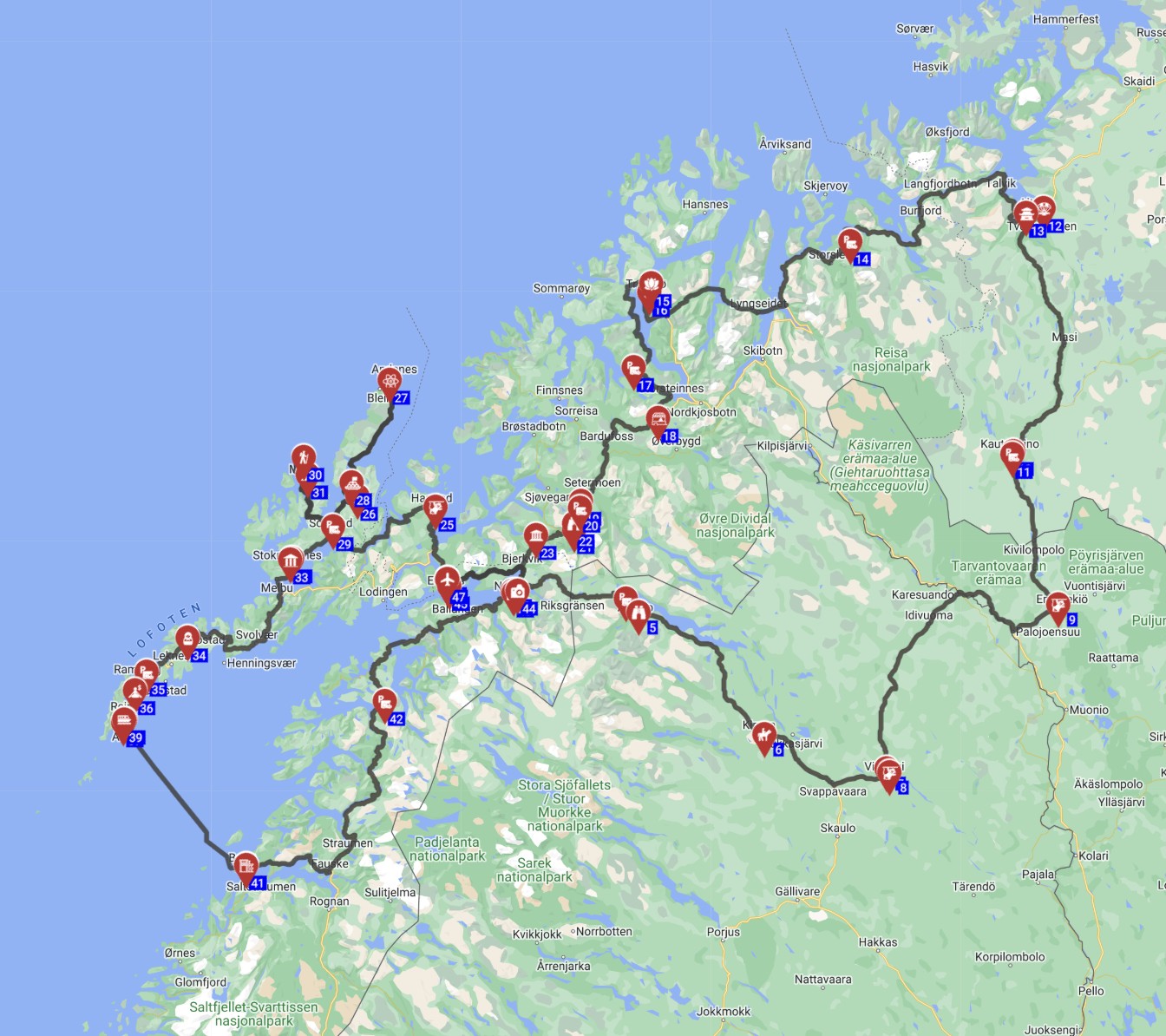
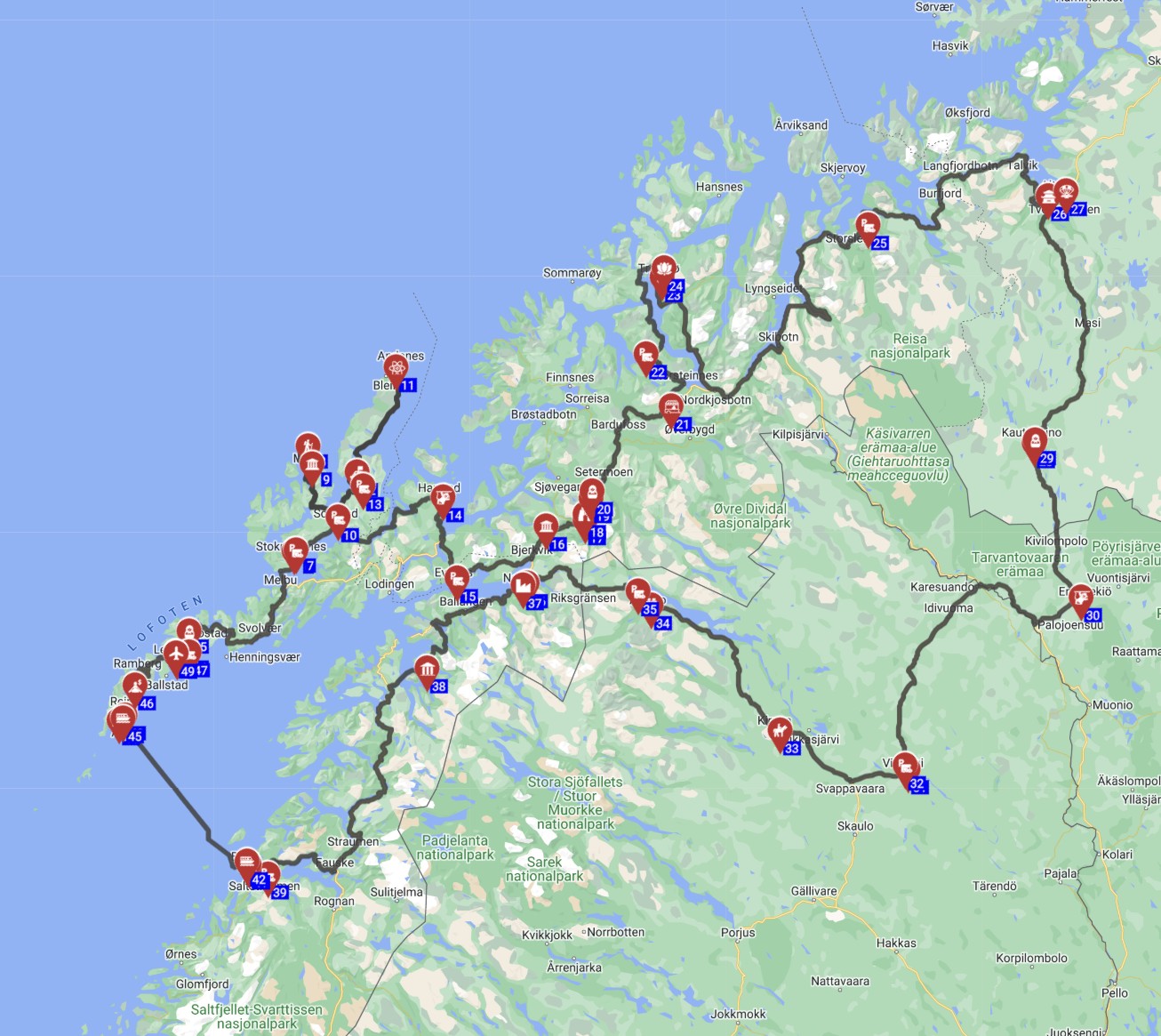
- Witness the magic of the Northern Lights (Aurora Borealis) during winter months, particularly in the northern regions like Tromsø. Consider the Tromsø Round Trip - Arctic Wonders itinerary for a curated experience.
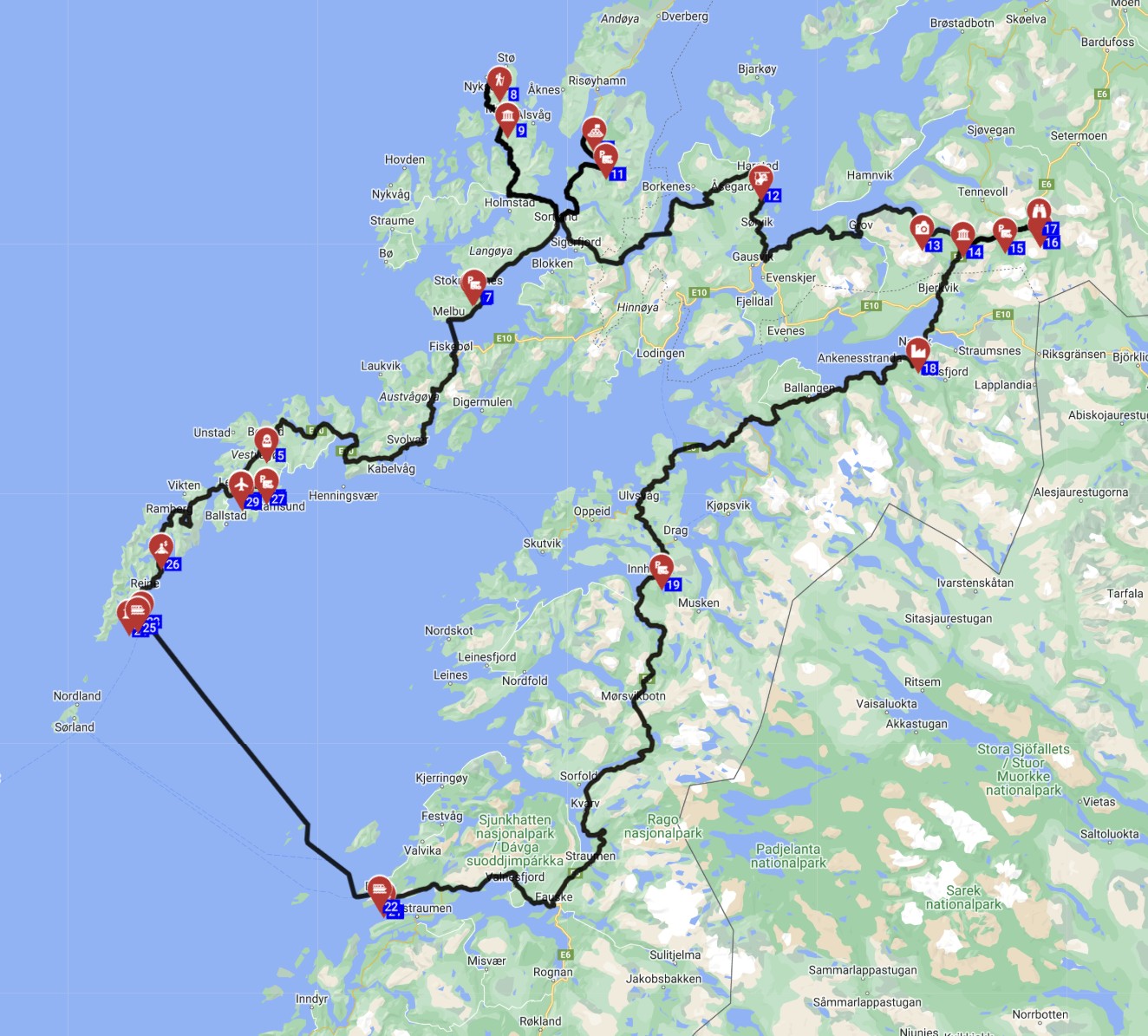
- Discover the stunning landscapes of Northern Norway on a Tromsø Round Trip - Arctic Wonders, with 15 days and over 2400 km of exploration, including wildlife encounters and museums.
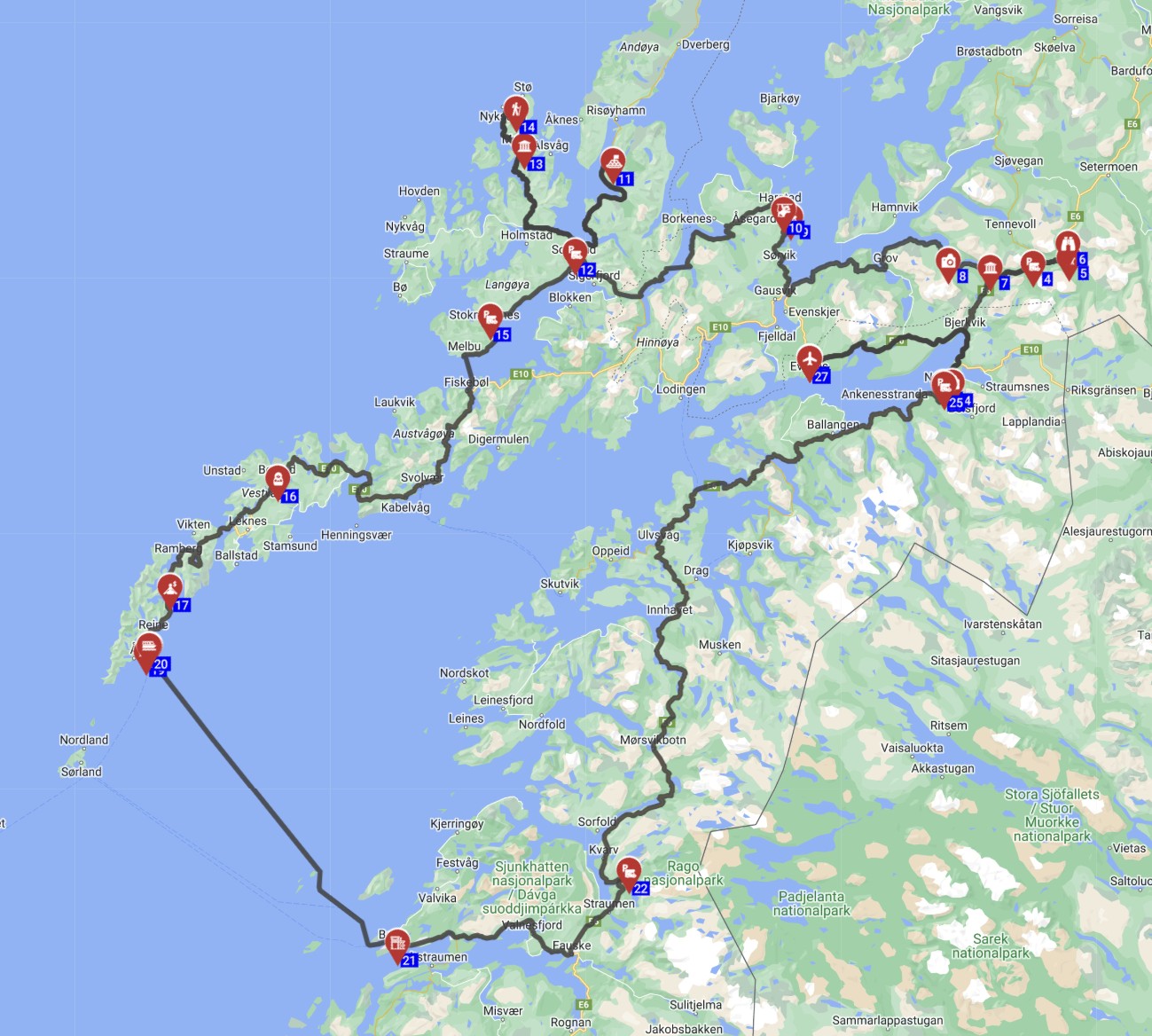
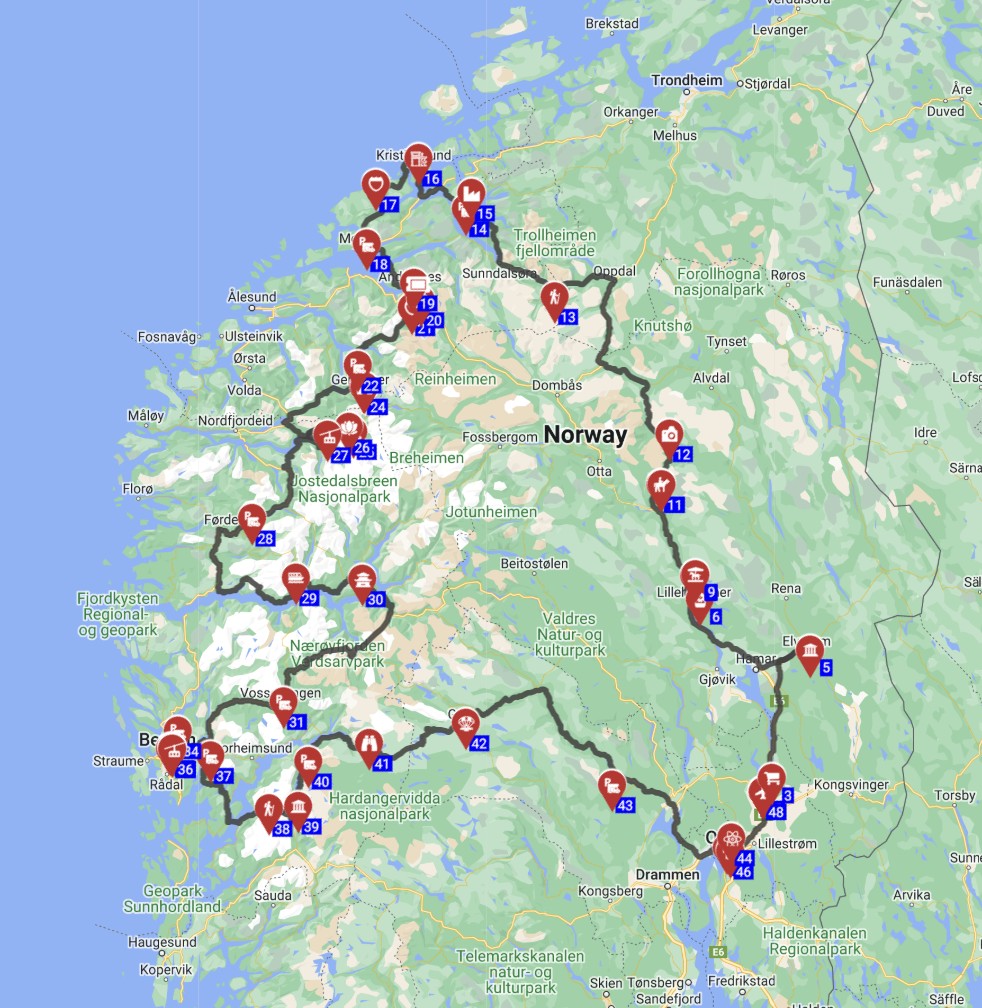
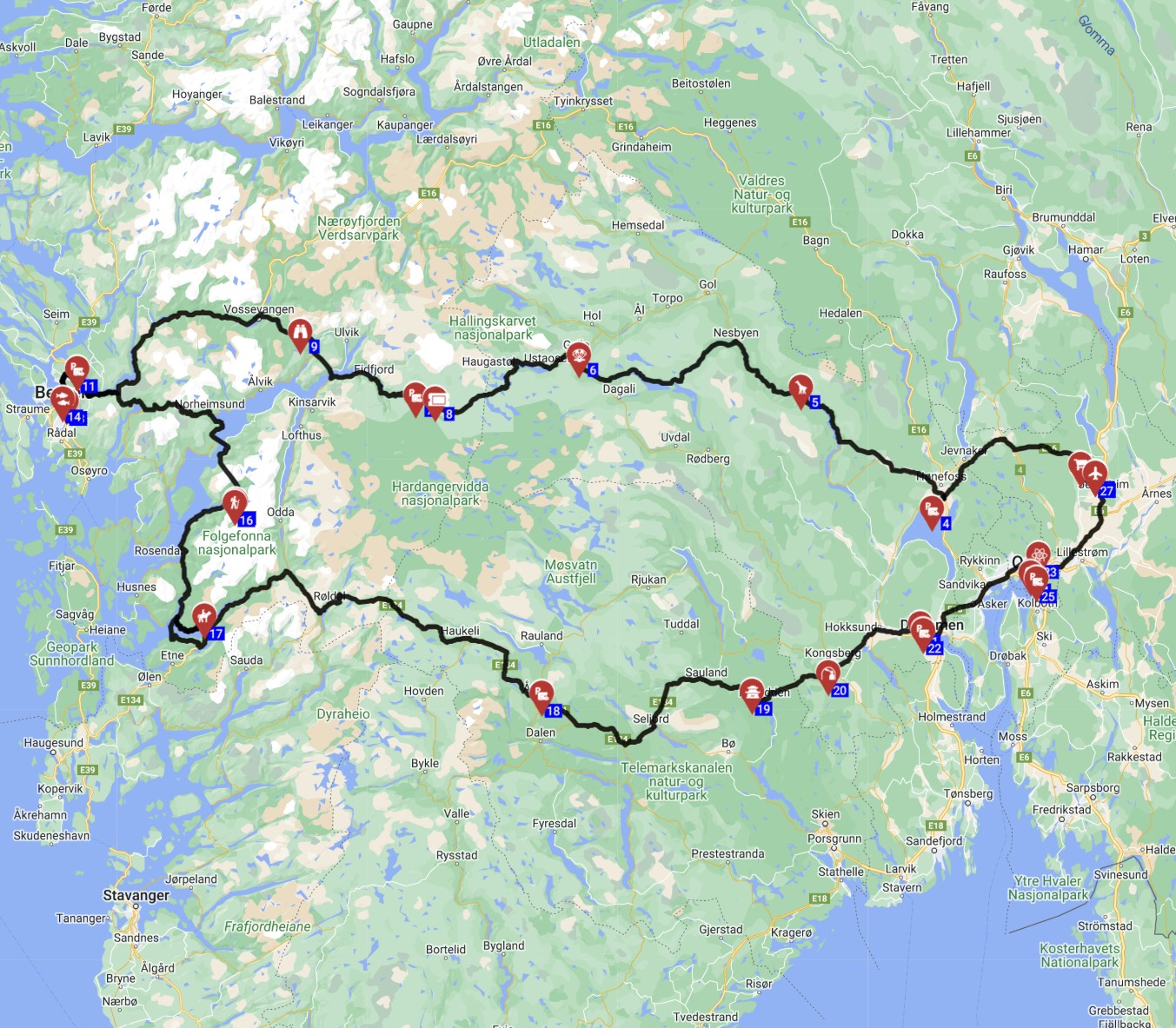
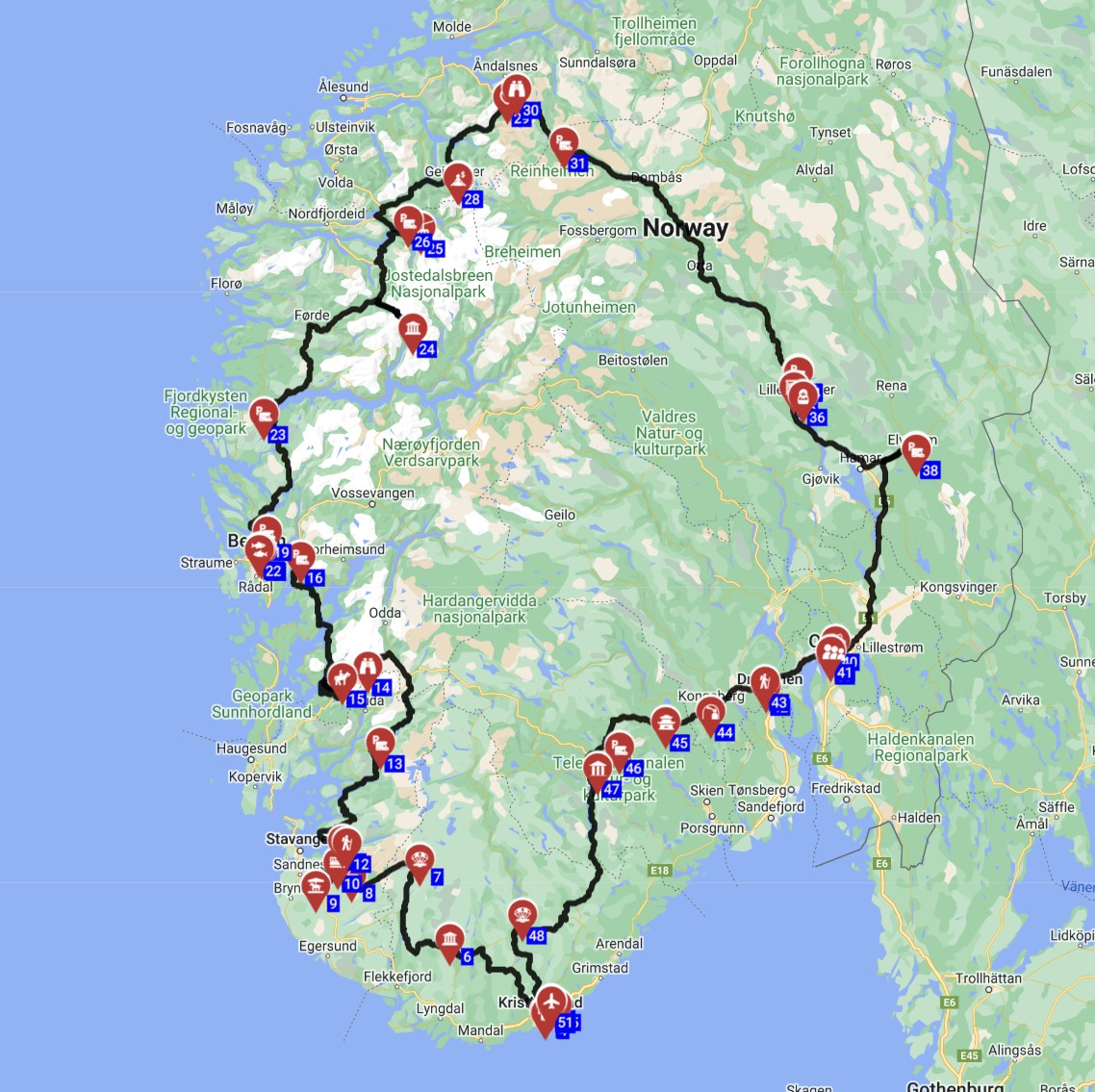
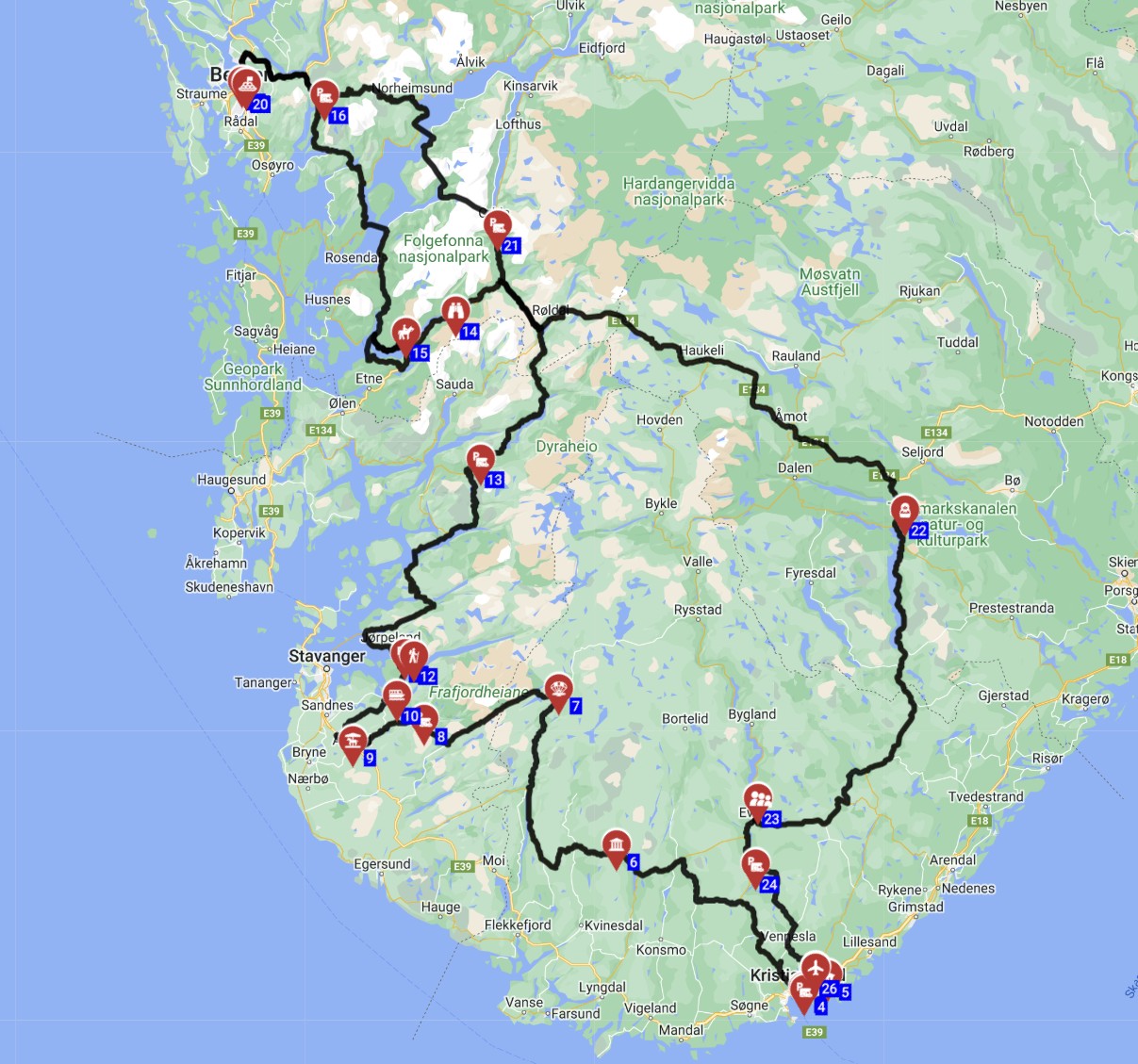
- Experience the historic charm of Bergen with its 8-day, 782 km Coastal Wonders route, featuring amusement parks, museums, and scenic viewpoints.
- Hike in national parks like Jotunheimen, offering breathtaking mountain scenery and numerous trails suitable for various fitness levels.
Final Thoughts
Embarking on an RV adventure in Norway offers unparalleled freedom to explore its stunning natural beauty at your own pace. From dramatic fjords to the enchanting Northern Lights, a rented motorhome is your gateway to an unforgettable experience.
Remember to plan ahead, especially regarding fuel and ferry costs, and embrace the slower, more immersive travel style that RVing allows. With Bandana Caravan, you have a partner dedicated to making your journey as smooth and enjoyable as possible, offering transparent pricing and exceptional support.
Get inspired for your next trip! Discover top destinations, planning tips, all in one place! Plan a trip itinerary in advance with minimal effort and maximum enjoyment.