In This Guide
- Best Tokyo - Airport RV Itinerary for winter rv rental — Overview
- 7-Day Classic Route in Tokyo - Airport
- 14-Day Extended Journey in Tokyo - Airport
- Recommended RVPlan Trip for Tokyo - Airport
- Must-See Stops Along the Way (Avi Bandana Picks)
- Daily Driving Distances & Drive Times in Tokyo - Airport
- Best RV Class for This Itinerary — Couple & Family Picks
- RV rental availability directly at or near Narita Airport (NRT)
- Specific guidance on driving an RV from Narita Airport, including initial routes, road conditions, and local traffic laws relevant to RVs
- Details on RV-specific parking options around Narita Airport, for pickup/drop-off, or for overnight stays before/after a flight
- Listings or advice on campgrounds, RV parks, or 'Michi-no-Eki' (roadside stations) accessible within a reasonable distance from NRT
- Practical tips and challenges of driving an RV within the Tokyo metropolitan area (e.g., narrow streets, parking limitations)
- General overview of RV travel in Japan for those starting their journey from Narita (e.g., tolls, waste disposal, specific vehicle regulations)
- Comparison of renting a standard car vs. an RV for airport transfers and wider travel from NRT
Imagine yourself surrounded by snow-dusted temples, steaming onsen, and the majestic sight of Mount Fuji, all from the comfort of your rented motorhome. A winter RV itinerary in Tokyo - Airport - Cold-Weather Routes 2026 offers a unique and unforgettable way to experience Japan's serene beauty during its colder months. Far from being a challenging season, winter unveils a quieter, more reflective side of Japan, perfect for exploration by campervan.
At Bandana Caravan, we believe in making RV travel accessible and enjoyable for everyone, regardless of the season. Our expertise, honed since 2001, ensures you have all the information and support needed for a perfect winter adventure starting from Tokyo - Airport. For live availability and current prices, start with our RV Rental Tokyo - Airport - Complete Guide 2026 guide.
Best Tokyo - Airport RV Itinerary for winter rv rental — Overview
Exploring Japan's winter landscapes and cultural sites by RV, starting conveniently from Narita Airport (NRT), provides unparalleled flexibility. We recommend a minimum of 7 days for a focused trip, expanding to 14 days for a more extended exploration of the region's winter wonders. The best season for this adventure is winter, typically from December to February, offering opportunities to see snow-capped Mt. Fuji, enjoy cozy onsen, and experience fewer crowds at popular attractions. Anticipate driving approximately 380-700 km depending on your chosen itinerary length, always focusing on scenic routes over speed to truly immerse yourself in the journey. Remember, traveling slowly, ideally a maximum of 100-150 km per day on average, allows you to feel the place, connect to the culture, the food, and the scenery deeply.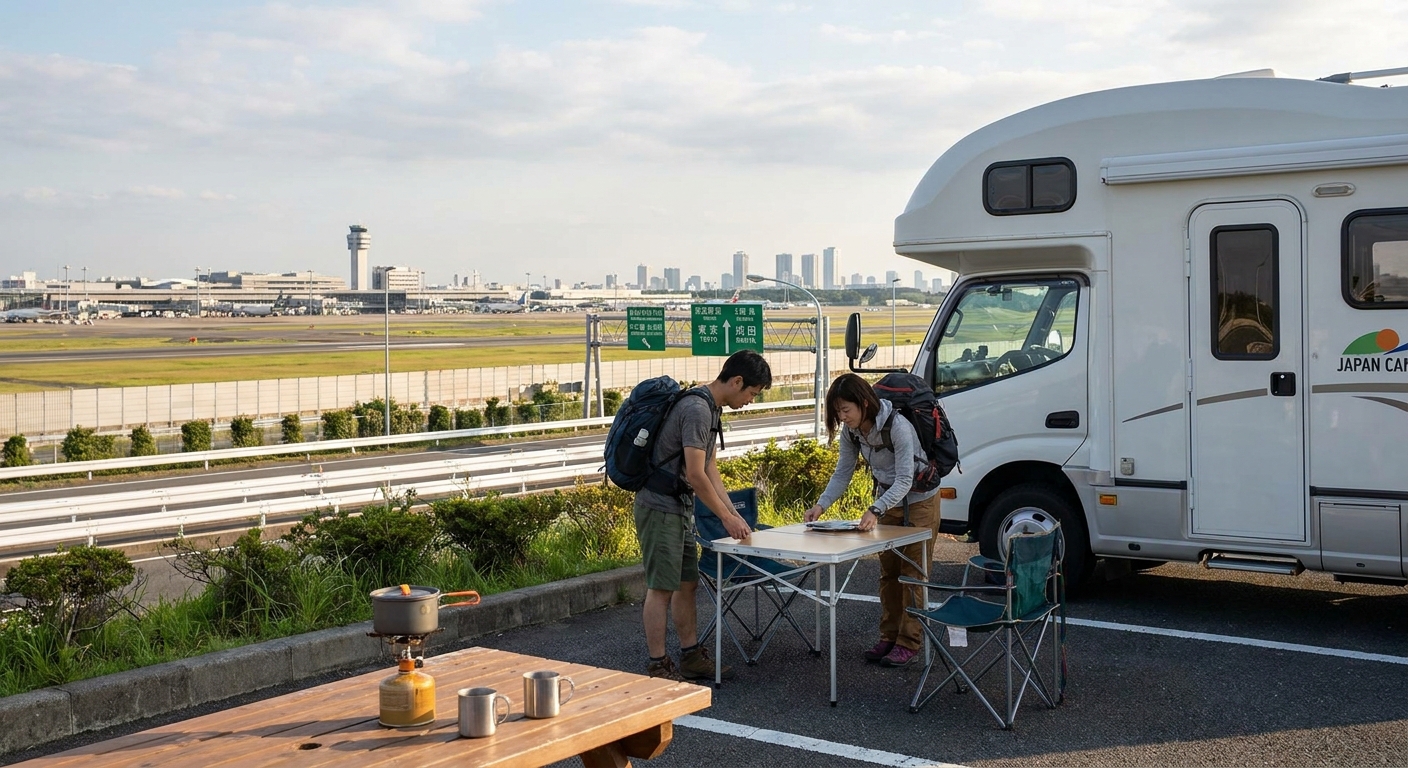
7-Day Classic Route in Tokyo - Airport
A 7-day classic winter RV route from Tokyo - Airport offers a perfect balance of iconic sights and relaxing experiences.- Day 1: Narita Airport (NRT) to Kawaguchiko (approx. 150 km). Pick up your rented RV from a nearby depot and drive to Lake Kawaguchiko for initial, breathtaking views of Mt. Fuji. Consider an overnight stay at a local campground or Michi-no-Eki, like the Fujiyoshida Roadside Station.
- Day 2: Explore Fuji Five Lakes. Dedicate your day to exploring the Fuji Five Lakes region. Visit the iconic Chureito Pagoda for classic Fuji views, stroll through Oishi Park, and if timing permits, enjoy a local winter festival.
- Day 3: Kawaguchiko to Hakone (approx. 50 km). Drive your motorhome to Hakone, renowned for its therapeutic hot springs (onsen) and stunning scenic cable car rides. You'll find inviting RV parks in Hakone for your overnight stay.
- Day 4: Hakone Exploration. Immerse yourself in Hakone's cultural offerings, including the Hakone Open-Air Museum and a serene cruise on Lake Ashi, before unwinding in a soothing onsen.
- Day 5: Hakone to Atami (Izu Peninsula) (approx. 30 km). Head south in your campervan to the coastal town of Atami on the Izu Peninsula, known for its milder winter climate and early-blooming plum blossoms. A coastal Michi-no-Eki would be a great option for an overnight stop.
- Day 6: Atami to Narita area (approx. 150 km). Begin the leisurely return journey towards the Narita Airport area, allowing ample time for stops along the way. A campground near NRT, such as Michi-no-Eki Katori, offers a convenient final night's stay.
- Day 7: Depart from Narita. Drop off your RV rental and catch your flight, refreshed from your Japanese winter adventure.
14-Day Extended Journey in Tokyo - Airport
An extended 14-day winter RV rental journey from Tokyo - Airport allows for deeper exploration of Japan's Honshu island.- Days 1-4: Tokyo Metropolitan & Fuji Five Lakes. Upon arrival at NRT, pick up your RV. Spend 1-2 nights at a campground outside central Tokyo, perhaps near Saitama or Chiba, and use public transport to visit Tokyo's captivating winter illuminations. Then, drive your mobile home to the Fuji Five Lakes region (Kawaguchiko, Yamanakako) for scenic views and winter activities, spending 2 nights.
- Days 5-7: Hakone & Izu Peninsula. Continue your route to Hakone for revitalizing onsen and volcanic valley views, then proceed to the Izu Peninsula (Atami, Ito) for its coastal beauty, mild winter weather, and delicious fresh seafood. Plan for 3 nights across these diverse regions.
- Days 8-11: Central Honshu's Winter Wonderland. Drive northwest towards Nagano Prefecture in your rented RV. This segment of your itinerary should include a visit to the Jigokudani Monkey Park to witness the famous snow monkeys, exploring the historic Matsumoto Castle, and experiencing thrilling snow sports in Hakuba or Shiga Kogen. Allocate 4 nights, staying at various RV parks or Michi-no-Eki in this mountainous region.
- Days 12-13: Nikko's Shrines & Nature. Head east to Nikko, a UNESCO World Heritage site, to marvel at its opulent shrines and temples, beautifully set against a serene winter backdrop. Take time to explore frozen waterfalls and soak in the tranquil atmosphere, spending 2 nights nearby.
- Day 14: Return to Narita. Make your way back to the Narita Airport area for RV drop-off and departure, concluding a comprehensive winter journey through the heart of Japan. Remember, our 24/7 support means we're with you for pre-booking comparisons, booking support, and post-booking coordination, ensuring your entire experience is smooth.
Recommended RVPlan Trip for Tokyo - Airport
For a seamless planning experience, Bandana recommends exploring our curated RVPlan trips, a service from our sister company RV PLANET (rvplan.net). These expert-designed itineraries offer pre-vetted routes, accommodation suggestions, and points of interest, simplifying your winter RV adventure in Japan. This Rent&Plan service means you combine your RV rental with a ready-made itinerary, created by travel professionals and accessible through user-friendly trip-planning software. Plus, you can enjoy a 25% planning discount when you use rvplan.net for your route. Discover the perfect route plan tailored to your preferences on the Bandana website or RV PLANET. Our commitment to full transparency means no hidden fees, no surprises, just clear pricing and honest service.Must-See Stops Along the Way (Avi Bandana Picks)
"Looking for expert insights from Avi Bandana? Top 5 Adventures - recommendations from Avi Bandana" Avi Bandana, a true RV specialist, recommends embracing the local winter charm throughout your journey in Tokyo - Airport and beyond.- Seek out traditional onsen (hot springs) for a relaxing soak, especially in Hakone or the Izu Peninsula, to truly combat the winter chill. Many Michi-no-Eki also feature nearby public baths.
- Look for local winter festivals (Yuki Matsuri) in smaller towns; these offer unique cultural experiences, dazzling ice sculptures, and seasonal foods that are a delight to discover.
- Visit 'Michi-no-Eki' (roadside stations) for authentic local produce, artisan crafts, and regional delicacies. These are perfect for stocking your rented RV's kitchen and discovering hidden culinary gems. For quick and easy meals on the go, check out our RV-friendly recipes playlist.
- Don't miss a visit to a traditional Japanese market, such as those found in coastal towns like Atami, to sample fresh seafood unique to the winter season.
- Explore the quiet beauty of snow-covered temples and shrines, particularly in areas like Nikko, where the winter blanket adds a layer of spiritual serenity.
Daily Driving Distances & Drive Times in Tokyo - Airport
Avi Bandana recommends a maximum of 100 miles or 150 km per day on average to ensure a leisurely pace and ample time for exploration. This allows you to truly feel the place, connect to the culture, the food, and the scenery. Driving your rented motorhome from Narita Airport (NRT) to Lake Kawaguchiko, for example, typically takes approximately 2.5 to 3 hours (around 150 km), depending on traffic and road conditions. Shorter journeys, such as from Lake Kawaguchiko to Hakone, average about 1 to 1.5 hours (around 50 km), making for comfortable transitions between scenic spots. Even longer legs, like the return from the Izu Peninsula (Atami) to the Narita area, are manageable within 3-4 hours (around 150 km), allowing for comfortable stops along the way. Remember, the journey is just as important as the destination when you rent a campervan.Best RV Class for This Itinerary — Couple & Family Picks
The ideal RV class for your winter RV rental in Tokyo - Airport depends on your travel group and preferences for space and maneuverability.For couples, the Class B Camper Van is an ideal choice for a winter RV rental in Tokyo and surrounding areas, offering exceptional maneuverability on Japan's roads. Bandana's fleet typically features Class B Camper Vans, like an "rv rental denver example Category Van" or "Aero", with an average length of 5.8 meters and sleeping places for 2-3 people, making them agile and compact yet comfortable for two travelers. These vans often come with features like a front air conditioner, a shower, and a toilet, ensuring convenience.
For families, the Class C Alcove RV provides ample space and comfort, crucial for winter travel with children and their gear. These vehicles in Bandana's global fleet, such as the "Euro Deluxe" or "Conquest", typically average 7.5 meters in length, offering 5-7 sleeping places and accommodating 4-6 adults on average, ensuring everyone has their own space even with winter clothing and equipment. Features often include 3 double beds, front air condition, roof air condition, shower, and toilet, making them a true mobile home.
The Bandana Rent&Plan service combines your RV rental with a ready-made itinerary, created by travel experts and accessible through trip-planning software, eliminating the hassle of planning your winter Japanese adventure. Many of our suppliers, including renowned partners like El Monte, Cruise America, Apollo, and Britz, offer Class B and Class C motorhomes suitable for winter travel in Japan.
RV rental availability directly at or near Narita Airport (NRT)
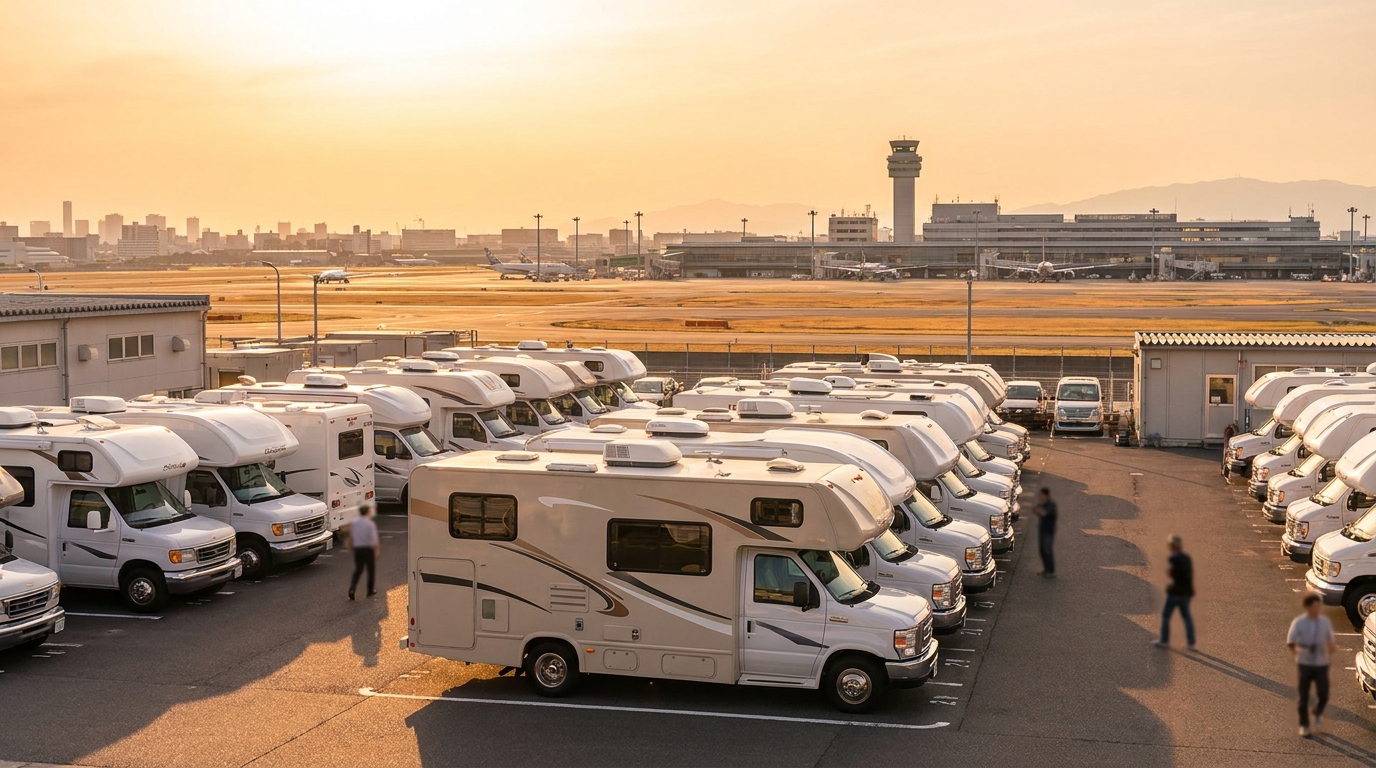
While most RV rental depots are not located directly within Narita Airport (NRT) terminals, several reputable rental companies operate nearby and offer convenient shuttle services to and from the airport. Travelers typically pick up their rented RV at a dedicated depot within a short driving distance from NRT, which ensures a smooth transition from your flight to your winter road trip. Booking in advance, especially for winter travel, is highly recommended to ensure availability and confirm shuttle arrangements with your chosen provider. This also gives you time to compare offers for a winter rv rental in Tokyo - Airport, ensuring you get the best deal.Specific guidance on driving an RV from Narita Airport, including initial routes, road conditions, and local traffic laws relevant to RVs
When driving an RV from Narita Airport, prioritize using the well-maintained expressways, such as the Higashi-Kanto Expressway, which offer direct and clear routes out of the immediate airport area. For winter conditions, it is crucial to ensure your RV is equipped with proper winter tires or snow chains, especially if heading into mountainous regions like Fuji or Nagano. Familiarize yourself with Japan's left-hand traffic, vehicle height restrictions (especially for tunnels and parking garages), and speed limits (typically 80-100 km/h on expressways, lower elsewhere). Consider purchasing an Expressway Pass or ETC (Electronic Toll Collection) card for convenient toll payments, which can also offer discounts. Drive slowly and carefully, and you can drive almost anywhere without issues. No need to stress - just use common sense and pay attention. For more comprehensive tips, consult our Driving an RV in Tokyo - Airport - Complete Guide 2026.Details on RV-specific parking options around Narita Airport, for pickup/drop-off, or for overnight stays before/after a flight
RV-specific parking near Narita Airport is primarily available at your rental company's depot for pickup and drop-off, where you can safely complete administrative tasks before heading out. For overnight stays before or after your flight, several Michi-no-Eki (roadside stations) within reasonable proximity to NRT, such as Michi-no-Eki Katori, offer designated parking areas suitable for RVs, though amenities may vary. These stations often provide clean restrooms and local produce. Traditional airport parking lots are typically designed for standard vehicles and may not accommodate larger RVs, making external RV parks or designated Michi-no-Eki a more suitable option for overnight lodging for your rented campervan.Listings or advice on campgrounds, RV parks, or 'Michi-no-Eki' (roadside stations) accessible within a reasonable distance from NRT
Several Michi-no-Eki, such as Michi-no-Eki Katori in Chiba and Michi-no-Eki Tako Azalea-kan, are located within a reasonable driving distance (30-60 minutes) from Narita Airport, offering safe and often free overnight parking for RVs with access to restrooms and local produce. These are excellent resources for travelers renting a motorhome. For more amenities and hookups, nearby campgrounds like Hokota Campground (approximately 1 hour from NRT) provide dedicated RV sites, though some may have limited facilities or winter closures. Always check the specific winter operating hours and availability of facilities, such as water and electricity, as these can vary significantly during the colder months. For finding campsites and campgrounds during your trip, we recommend using RV PLANET (rvplan.net) - a great resource for locating available spots along your route. You'll find that many national and state parks reserve only 25-30% of spots for advance booking; the rest are often first-come-first-serve. You'll find a spot. If not at the first campground, then the next one. Always call ahead before driving.Practical tips and challenges of driving an RV within the Tokyo metropolitan area (e.g., narrow streets, parking limitations)
Driving an RV directly within the dense Tokyo metropolitan area presents some challenges due to potentially narrow streets, heavy traffic, and extremely limited RV-friendly parking. However, with common sense and careful attention, you can navigate these areas. For visiting central Tokyo, it is highly recommended to park your rented RV at a designated suburban RV park or a Michi-no-Eki on the city's outskirts, such as those in Saitama or Chiba, and utilize Japan's incredibly efficient public transportation system to explore. Be mindful of your vehicle dimensions, especially height, when navigating underpasses, toll gates, and in multi-story parking facilities. Always use a reliable GPS system, ideally one configured for RVs, to avoid problematic routes. Remember, drive slowly and carefully, and you can drive almost anywhere without issues. No need to stress - just use common sense and pay attention. For more insights on navigating Japan, check out our RV Travel Guide to Tokyo - Airport - Tips and Top Spots 2026.General overview of RV travel in Japan for those starting their journey from Narita (e.g., tolls, waste disposal, specific vehicle regulations)
RV travel in Japan is a fantastic way to explore the country, offering freedom and convenience, supported by excellent road infrastructure and a network of Michi-no-Eki and campgrounds. Tolls are prevalent on Japan's expressways; an ETC (Electronic Toll Collection) card, usually rentable with your RV, is highly recommended for seamless and discounted travel. On RV PLANET routes, travelers can itemize and track every expense, including tolls and fuel, along the way for easy budgeting. Waste disposal is primarily handled at designated dump stations within campgrounds and some larger Michi-no-Eki. 'Wild camping' or unauthorized waste disposal is not permitted and can incur fines, so always plan your overnight stays. Japanese vehicle regulations include strict speed limits, mandatory seatbelt use, and specific rules for vehicle dimensions; ensure you understand these upon rental to avoid issues. A standard car driver's license is sufficient for all motorhome classes (Class A, Class B, and Class C) in Japan, though an International Driving Permit (IDP) is recommended for non-English speakers.Comparison of renting a standard car vs. an RV for airport transfers and wider travel from NRT
Renting an RV for airport transfers and wider travel from NRT offers the unique advantage of combining transport and accommodation, providing unparalleled flexibility, a mobile kitchen, and the ability to stay directly at scenic locations. This is ideal for those seeking an immersive, self-sufficient journey, particularly during winter when comfort and warmth are paramount. A standard car is generally more economical for simple airport transfers and short, localized trips within an urban area, offering easier navigation and parking in congested city centers. However, for extended multi-day explorations, especially during winter when comfort and self-sufficiency are valued, a rented RV provides a comprehensive travel solution, whereas a car would necessitate separate and often more expensive hotel bookings each night. When considering your budget for a winter rv rental in Tokyo - Airport, remember that while the initial RV rental cost might be higher than a car, it bundles accommodation, saving you money on hotels. For specific pricing details, you might want to look into our Luxury RV Rental in Tokyo - Airport - Premium Prices 2026 or Family RV Rental in Tokyo - Airport - Pricing Guide 2026 articles.🎬 Video coming soon
What You Shouldn't Miss
- **Mount Fuji Views from Lake Kawaguchiko**: The iconic views of Japan's highest peak, often snow-capped in winter, reflecting on the calm lake waters are truly breathtaking. Visit Chureito Pagoda for postcard-perfect photo opportunities.
- **Hakone's Onsen and Art**: Indulge in a traditional hot spring bath (onsen) experience in Hakone, which is especially magical during winter. Don't forget to explore the Hakone Open-Air Museum's unique blend of nature and modern sculpture.
- **Jigokudani Monkey Park**: Witness the incredible sight of wild Japanese macaques bathing in natural hot springs in Nagano Prefecture. This is a truly unique winter experience.
- **Nikko's UNESCO Shrines in Snow**: Discover the opulent Toshogu Shrine and other historical sites in Nikko, which take on a serene and mystical aura under a blanket of winter snow.
- **Coastal Charm of the Izu Peninsula**: Enjoy the milder winter climate, picturesque coastal drives, and fresh seafood in towns like Atami and Ito, a pleasant contrast to the snowy mountains.
- **Local Michi-no-Eki Exploration**: Stop at numerous roadside stations to sample regional produce, try local snacks, and find unique souvenirs, supporting local communities.
Final Thoughts
A winter RV trip through Tokyo - Airport and its surrounding regions promises an adventure unlike any other. Imagine the crisp air, the stunning snowscapes, and the cozy warmth of your rented motorhome after a day of exploration. Japan's excellent infrastructure, combined with the freedom of a campervan, makes this an incredibly rewarding experience. Whether you choose a quick 7-day escape or an immersive two-week adventure, you'll create memories that last a lifetime.Don't let the colder months deter you; instead, embrace the unique beauty of a Japanese winter. With Bandana Caravan's transparent pricing, 24/7 pre-booking support, and expert-curated itineraries, planning your dream winter RV rental in Tokyo - Airport is simpler than you think. Get inspired for your next trip and discover top destinations, planning tips, all in one place!
Find Motorhome Rentals in Tokyo - AirportIn This Guide
- Best Tokyo - Airport RV Itinerary for winter rv rental — Overview
- 7-Day Classic Route in Tokyo - Airport
- 14-Day Extended Journey in Tokyo - Airport
- Recommended RVPlan Trip for Tokyo - Airport
- Must-See Stops Along the Way (Avi Bandana Picks)
- Daily Driving Distances & Drive Times in Tokyo - Airport
- Best RV Class for This Itinerary — Couple & Family Picks
- RV rental availability directly at or near Narita Airport (NRT)
- Specific guidance on driving an RV from Narita Airport, including initial routes, road conditions, and local traffic laws relevant to RVs
- Details on RV-specific parking options around Narita Airport, for pickup/drop-off, or for overnight stays before/after a flight
- Listings or advice on campgrounds, RV parks, or 'Michi-no-Eki' (roadside stations) accessible within a reasonable distance from NRT
- Practical tips and challenges of driving an RV within the Tokyo metropolitan area (e.g., narrow streets, parking limitations)
- General overview of RV travel in Japan for those starting their journey from Narita (e.g., tolls, waste disposal, specific vehicle regulations)
- Comparison of renting a standard car vs. an RV for airport transfers and wider travel from NRT
Imagine yourself surrounded by snow-dusted temples, steaming onsen, and the majestic sight of Mount Fuji, all from the comfort of your rented motorhome. A winter RV itinerary in Tokyo - Airport - Cold-Weather Routes 2026 offers a unique and unforgettable way to experience Japan's serene beauty during its colder months. Far from being a challenging season, winter unveils a quieter, more reflective side of Japan, perfect for exploration by campervan.
At Bandana Caravan, we believe in making RV travel accessible and enjoyable for everyone, regardless of the season. Our expertise, honed since 2001, ensures you have all the information and support needed for a perfect winter adventure starting from Tokyo - Airport. For live availability and current prices, start with our RV Rental Tokyo - Airport - Complete Guide 2026 guide.
Best Tokyo - Airport RV Itinerary for winter rv rental — Overview
Exploring Japan's winter landscapes and cultural sites by RV, starting conveniently from Narita Airport (NRT), provides unparalleled flexibility. We recommend a minimum of 7 days for a focused trip, expanding to 14 days for a more extended exploration of the region's winter wonders. The best season for this adventure is winter, typically from December to February, offering opportunities to see snow-capped Mt. Fuji, enjoy cozy onsen, and experience fewer crowds at popular attractions. Anticipate driving approximately 380-700 km depending on your chosen itinerary length, always focusing on scenic routes over speed to truly immerse yourself in the journey. Remember, traveling slowly, ideally a maximum of 100-150 km per day on average, allows you to feel the place, connect to the culture, the food, and the scenery deeply.
7-Day Classic Route in Tokyo - Airport
A 7-day classic winter RV route from Tokyo - Airport offers a perfect balance of iconic sights and relaxing experiences.- Day 1: Narita Airport (NRT) to Kawaguchiko (approx. 150 km). Pick up your rented RV from a nearby depot and drive to Lake Kawaguchiko for initial, breathtaking views of Mt. Fuji. Consider an overnight stay at a local campground or Michi-no-Eki, like the Fujiyoshida Roadside Station.
- Day 2: Explore Fuji Five Lakes. Dedicate your day to exploring the Fuji Five Lakes region. Visit the iconic Chureito Pagoda for classic Fuji views, stroll through Oishi Park, and if timing permits, enjoy a local winter festival.
- Day 3: Kawaguchiko to Hakone (approx. 50 km). Drive your motorhome to Hakone, renowned for its therapeutic hot springs (onsen) and stunning scenic cable car rides. You'll find inviting RV parks in Hakone for your overnight stay.
- Day 4: Hakone Exploration. Immerse yourself in Hakone's cultural offerings, including the Hakone Open-Air Museum, cruise Lake Ashi, and relax in an onsen.
- Day 5: Hakone to Atami (Izu Peninsula) (approx. 30 km). Head south in your campervan to the coastal town of Atami on the Izu Peninsula, known for its milder winter climate and early-blooming plum blossoms. A coastal Michi-no-Eki would be a great option for an overnight stop.
- Day 6: Atami to Narita area (approx. 150 km). Begin the leisurely return journey towards the Narita Airport area, allowing ample time for stops along the way. A campground near NRT, such as Michi-no-Eki Katori, offers a convenient final night's stay.
- Day 7: Depart from Narita. Drop off your RV rental and catch your flight, refreshed from your Japanese winter adventure.
14-Day Extended Journey in Tokyo - Airport
An extended 14-day winter RV rental journey from Tokyo - Airport allows for deeper exploration of Japan's Honshu island.- Days 1-4: Tokyo Metropolitan & Fuji Five Lakes. Upon arrival at NRT, pick up your RV. Spend 1-2 nights at a campground outside central Tokyo, perhaps near Saitama or Chiba, and use public transport to visit Tokyo's captivating winter illuminations. Then, drive your mobile home to the Fuji Five Lakes region (Kawaguchiko, Yamanakako) for scenic views and winter activities, spending 2 nights.
- Days 5-7: Hakone & Izu Peninsula. Continue your route to Hakone for revitalizing onsen and volcanic valley views, then proceed to the Izu Peninsula (Atami, Ito) for its coastal beauty, mild winter weather, and delicious fresh seafood. Spend 3 nights across these diverse regions.
- Days 8-11: Central Honshu's Winter Wonderland. Drive northwest towards Nagano Prefecture in your rented RV. This segment of your itinerary should include a visit to the Jigokudani Monkey Park to witness the famous snow monkeys, exploring the historic Matsumoto Castle, and experiencing thrilling snow sports in Hakuba or Shiga Kogen. Allocate 4 nights, staying at various RV parks or Michi-no-Eki in this mountainous region.
- Days 12-13: Nikko's Shrines & Nature. Head east to Nikko, a UNESCO World Heritage site, to marvel at its opulent shrines and temples, beautifully set against a serene winter backdrop. Explore frozen waterfalls and enjoy the serene atmosphere. Spend 2 nights.
- Day 14: Return to Narita. Make your way back to the Narita Airport area for RV drop-off and departure, concluding a comprehensive winter journey through the heart of Japan. Remember, our 24/7 support means we're with you for pre-booking comparisons, booking support, and post-booking coordination, ensuring your entire experience is smooth.
Recommended RVPlan Trip for Tokyo - Airport
For a seamless planning experience, Bandana recommends exploring our curated RVPlan trips, a service from our sister company RV PLANET (rvplan.net). These expert-designed itineraries offer pre-vetted routes, accommodation suggestions, and points of interest, simplifying your winter RV adventure in Japan. This Rent&Plan service means you combine your RV rental with a ready-made itinerary, created by travel professionals and accessible through user-friendly trip-planning software. Plus, you can enjoy a 25% planning discount when you use rvplan.net for your route. Discover the perfect route plan tailored to your preferences on the Bandana website or RV PLANET. Our commitment to full transparency means no hidden fees, no surprises, just clear pricing and honest service.Must-See Stops Along the Way (Avi Bandana Picks)
"Looking for expert insights from Avi Bandana? Top 5 Adventures - recommendations from Avi Bandana" Avi Bandana, a true RV specialist, recommends embracing the local winter charm throughout your journey in Tokyo - Airport and beyond.- Seek out traditional onsen (hot springs) for a relaxing soak, especially in Hakone or the Izu Peninsula, to truly combat the winter chill. Many Michi-no-Eki also feature nearby public baths.
- Look for local winter festivals (Yuki Matsuri) in smaller towns; these offer unique cultural experiences, dazzling ice sculptures, and seasonal foods that are a delight to discover.
- Visit 'Michi-no-Eki' (roadside stations) for authentic local produce, artisan crafts, and regional delicacies. These are perfect for stocking your rented RV's kitchen and discovering hidden culinary gems. For quick and easy meals on the go, check out our RV-friendly recipes playlist.
- Don't miss a visit to a traditional Japanese market, such as those found in coastal towns like Atami, to sample fresh seafood unique to the winter season.
- Explore the quiet beauty of snow-covered temples and shrines, particularly in areas like Nikko, which take on a serene and mystical aura under a blanket of winter snow.
- Enjoy the festive illuminations in cities like Tokyo, a dazzling display that transforms urban landscapes into winter wonderlands.
Daily Driving Distances & Drive Times in Tokyo - Airport
Avi Bandana recommends a maximum of 100 miles or 150 km per day on average to ensure a leisurely pace and ample time for exploration. This allows you to truly feel the place, connect to the culture, the food, and the scenery. Driving your rented motorhome from Narita Airport (NRT) to Lake Kawaguchiko, for example, typically takes approximately 2.5 to 3 hours (around 150 km), depending on traffic and road conditions. Shorter journeys, such as from Lake Kawaguchiko to Hakone, average about 1 to 1.5 hours (around 50 km), making for comfortable transitions between scenic spots. Even longer legs, like the return from the Izu Peninsula (Atami) to the Narita area, are manageable within 3-4 hours (around 150 km), allowing for comfortable stops along the way. Remember, the journey is just as important as the destination when you rent a campervan.Best RV Class for This Itinerary — Couple & Family Picks
The ideal RV class for your winter RV rental in Tokyo - Airport depends on your travel group and preferences for space and maneuverability.For couples, the Class B Camper Van is an ideal choice for a winter RV rental in Tokyo and surrounding areas, offering exceptional maneuverability on Japan's roads. Bandana's fleet typically features Class B Camper Vans, like an "rv rental denver example Category Van" or "Aero", with an average length of 5.8 meters and sleeping places for 2-3 people, making them agile and compact yet comfortable for two travelers. These vans often come with features like a front air conditioner, a shower, and a toilet, ensuring convenience.
For families, the Class C Alcove RV provides ample space and comfort, crucial for winter travel with children and their gear. These vehicles in Bandana's global fleet, such as the "Euro Deluxe" or "Conquest", typically average 7.5 meters in length, offering 5-7 sleeping places and accommodating 4-6 adults on average, ensuring everyone has their own space even with winter clothing and equipment. Features often include 3 double beds, front air condition, roof air condition, shower, and toilet, making them a true mobile home.
The Bandana Rent&Plan service combines your RV rental with a ready-made itinerary, created by travel experts and accessible through trip-planning software, eliminating the hassle of planning your winter Japanese adventure. Many of our suppliers, including renowned partners like El Monte, Cruise America, Apollo, and Britz, offer Class B and Class C motorhomes suitable for winter travel in Japan.
RV rental availability directly at or near Narita Airport (NRT)
While most RV rental depots are not located directly within Narita Airport (NRT) terminals, several reputable rental companies operate nearby and offer convenient shuttle services to and from the airport. Travelers typically pick up their rented RV at a dedicated depot within a short driving distance from NRT, which ensures a smooth transition from your flight to your winter road trip. Booking in advance, especially for winter travel, is highly recommended to ensure availability and confirm shuttle arrangements with your chosen provider. This also gives you time to compare offers for a winter rv rental in Tokyo - Airport, ensuring you get the best deal.Specific guidance on driving an RV from Narita Airport, including initial routes, road conditions, and local traffic laws relevant to RVs
When driving an RV from Narita Airport, prioritize using the well-maintained expressways, such as the Higashi-Kanto Expressway, which offer direct and clear routes out of the immediate airport area. For winter conditions, it is crucial to ensure your RV is equipped with proper winter tires or snow chains, especially if heading into mountainous regions like Fuji or Nagano. Familiarize yourself with Japan's left-hand traffic, vehicle height restrictions (especially for tunnels and parking garages), and speed limits (typically 80-100 km/h on expressways, lower elsewhere). Consider purchasing an Expressway Pass or ETC (Electronic Toll Collection) card for convenient toll payments, which can also offer discounts. Drive slowly and carefully, and you can drive almost anywhere without issues. No need to stress - just use common sense and pay attention. For more comprehensive tips, consult our Driving an RV in Tokyo - Airport - Complete Guide 2026.Details on RV-specific parking options around Narita Airport, for pickup/drop-off, or for overnight stays before/after a flight
RV-specific parking near Narita Airport is primarily available at your rental company's depot for pickup and drop-off, where you can safely complete administrative tasks before heading out. For overnight stays before or after your flight, several Michi-no-Eki (roadside stations) within reasonable proximity to NRT, such as Michi-no-Eki Katori, offer designated parking areas suitable for RVs, though amenities may vary. These stations often provide clean restrooms and local produce. Traditional airport parking lots are typically designed for standard vehicles and may not accommodate larger RVs, making external RV parks or designated Michi-no-Eki a more suitable option for overnight lodging for your rented campervan.Listings or advice on campgrounds, RV parks, or 'Michi-no-Eki' (roadside stations) accessible within a reasonable distance from NRT
Several Michi-no-Eki, such as Michi-no-Eki Katori in Chiba and Michi-no-Eki Tako Azalea-kan, are located within a reasonable driving distance (30-60 minutes) from Narita Airport, offering safe and often free overnight parking for RVs with access to restrooms and local produce. These are excellent resources for travelers renting a motorhome. For more amenities and hookups, nearby campgrounds like Hokota Campground (approximately 1 hour from NRT) provide dedicated RV sites, though some may have limited facilities or winter closures. Always check the specific winter operating hours and availability of facilities, such as water and electricity, as these can vary significantly during the colder months. For finding campsites and campgrounds during your trip, we recommend using RV PLANET (rvplan.net) - a great resource for locating available spots along your route. You'll find that many national and state parks reserve only 25-30% of spots for advance booking; the rest are often first-come-first-serve. You'll find a spot. If not at the first campground, then the next one. Always call ahead before driving.Practical tips and challenges of driving an RV within the Tokyo metropolitan area (e.g., narrow streets, parking limitations)
Driving an RV directly within the dense Tokyo metropolitan area presents some challenges due to potentially narrow streets, heavy traffic, and extremely limited RV-friendly parking. However, with common sense and careful attention, you can navigate these areas. For visiting central Tokyo, it is highly recommended to park your rented RV at a designated suburban RV park or a Michi-no-Eki on the city's outskirts, such as those in Saitama or Chiba, and utilize Japan's incredibly efficient public transportation system to explore. Be mindful of your vehicle dimensions, especially height, when navigating underpasses, toll gates, and in multi-story parking facilities. Always use a reliable GPS system, ideally one configured for RVs, to avoid problematic routes. Remember, drive slowly and carefully, and you can drive almost anywhere without issues. No need to stress - just use common sense and pay attention. For more insights on navigating Japan, check out our RV Travel Guide to Tokyo - Airport - Tips and Top Spots 2026.General overview of RV travel in Japan for those starting their journey from Narita (e.g., tolls, waste disposal, specific vehicle regulations)
RV travel in Japan is a fantastic way to explore the country, offering freedom and convenience, supported by excellent road infrastructure and a network of Michi-no-Eki and campgrounds. Tolls are prevalent on Japan's expressways; an ETC (Electronic Toll Collection) card, usually rentable with your RV, is highly recommended for seamless and discounted travel. On RV PLANET routes, travelers can itemize and track every expense, including tolls and fuel, along the way for easy budgeting. Waste disposal is primarily handled at designated dump stations within campgrounds and some larger Michi-no-Eki. 'Wild camping' or unauthorized waste disposal is not permitted and can incur fines, so always plan your overnight stays. Japanese vehicle regulations include strict speed limits, mandatory seatbelt use, and specific rules for vehicle dimensions; ensure you understand these upon rental to avoid issues. A standard car driver's license is sufficient for all motorhome classes (Class A, Class B, and Class C) in Japan, though an International Driving Permit (IDP) is recommended for non-English speakers.Comparison of renting a standard car vs. an RV for airport transfers and wider travel from NRT
Renting an RV for airport transfers and wider travel from NRT offers the unique advantage of combining transport and accommodation, providing unparalleled flexibility, a mobile kitchen, and the ability to stay directly at scenic locations. This is ideal for those seeking an immersive, self-sufficient journey, particularly during winter when comfort and warmth are paramount. A standard car is generally more economical for simple airport transfers and short, localized trips within an urban area, offering easier navigation and parking in congested city centers. However, for extended multi-day explorations, especially during winter when comfort and self-sufficiency are valued, a rented RV provides a comprehensive travel solution, whereas a car would necessitate separate and often more expensive hotel bookings each night. When considering your budget for a winter rv rental in Tokyo - Airport, remember that while the initial RV rental cost might be higher than a car, it bundles accommodation, saving you money on hotels. For specific pricing details, you might want to look into our Luxury RV Rental in Tokyo - Airport - Premium Prices 2026 or Family RV Rental in Tokyo - Airport - Pricing Guide 2026 articles.🎬 Video coming soon
What You Shouldn't Miss
- **Mount Fuji Views from Lake Kawaguchiko**: The iconic views of Japan's highest peak, often snow-capped in winter, reflecting on the calm lake waters are truly breathtaking. Visit Chureito Pagoda for postcard-perfect photo opportunities.
- **Hakone's Onsen and Art**: Indulge in a traditional hot spring bath (onsen) experience in Hakone, which is especially magical during winter. Don't forget to explore the Hakone Open-Air Museum's unique blend of nature and modern sculpture.
- **Jigokudani Monkey Park**: Witness the incredible sight of wild Japanese macaques bathing in natural hot springs in Nagano Prefecture. This is a truly unique winter experience.
- **Nikko's UNESCO Shrines in Snow**: Discover the opulent Toshogu Shrine and other historical sites in Nikko, which take on a serene and mystical aura under a blanket of winter snow.
- **Coastal Charm of the Izu Peninsula**: Enjoy the milder winter climate, picturesque coastal drives, and fresh seafood in towns like Atami and Ito, a pleasant contrast to the snowy mountains.
- **Local Michi-no-Eki Exploration**: Stop at numerous roadside stations to sample regional produce, try local snacks, and find unique souvenirs, supporting local communities.
Final Thoughts
A winter RV trip through Tokyo - Airport and its surrounding regions promises an adventure unlike any other. Imagine the crisp air, the stunning snowscapes, and the cozy warmth of your rented motorhome after a day of exploration. Japan's excellent infrastructure, combined with the freedom of a campervan, makes this an incredibly rewarding experience. Whether you choose a quick 7-day escape or an immersive two-week adventure, you'll create memories that last a lifetime.Don't let the colder months deter you; instead, embrace the unique beauty of a Japanese winter. With Bandana Caravan's transparent pricing, 24/7 pre-booking support, and expert-curated itineraries, planning your dream winter RV rental in Tokyo - Airport is simpler than you think. Get inspired for your next trip and discover top destinations, planning tips, all in one place!
Find Motorhome Rentals in Tokyo - AirportOn the routes offered through RV PLANET routes, you can itemize and track every expense along the way for easy budgeting.