In This Guide
- Best Texas RV Itinerary for winter rv rental — Overview
- 7-Day Classic Route in Texas
- 14-Day Extended Journey in Texas
- Recommended RVPlan Trip for Texas
- Must-See Stops Along the Way (Avi Bandana Picks)
- Daily Driving Distances & Drive Times in Texas
- Best RV Class for This Itinerary — Couple & Family Picks
- What are Texas RV Rules and Regulations?
- How Easy is it to Drive an RV in Texas?
- How Much Does an RV Trip in Texas Cost?
- Where Can I Go Boondocking and Wild Camping in Texas?
- What is the Best Time of Year for RV Travel in Texas?
- What are Hidden Gem RV Destinations in Texas?
- Where Can I Find RV Services in Texas?
- What are the Rules for Pet-Friendly RV Travel in Texas?
- What are Accessible RV Travel Options in Texas?
Best Texas RV Itinerary for winter rv rental — Overview
An optimal winter RV journey through Texas should ideally last a minimum of 7 days, with 14 or more days recommended for a truly comprehensive experience that covers diverse landscapes and cultural highlights. This duration allows for a relaxed pace, adhering to our recommendation of traveling slowly, averaging no more than 100-150 km per day, so you can truly immerse yourself in each destination. The best season for this itinerary is winter (December-February) to avoid the extreme heat and enjoy the state's mild temperatures.
Winter RV travel in Texas means comfortable exploration, especially in central and coastal areas, where daily temperatures typically range from 10-20°C (50-68°F). This provides ideal conditions for hiking, exploring city centers, and enjoying outdoor activities without the sweltering heat of summer. Our Rent&Plan service can take the guesswork out of crafting such an adventure, providing pre-planned routes by professionals that ensure you make the most of your time on the road. Remember, we are true RV specialists, not just a side department of a general travel agency, meaning we genuinely know and love RV travel.
7-Day Classic Route in Texas
A week-long RV adventure in Texas during winter allows you to experience a diverse mix of culture, history, and natural beauty, focusing primarily on Central and Coastal Texas. Daily driving distances are deliberately kept below 150 km (approximately 90 miles) to maximize your exploration time at each stop and prevent travel fatigue.
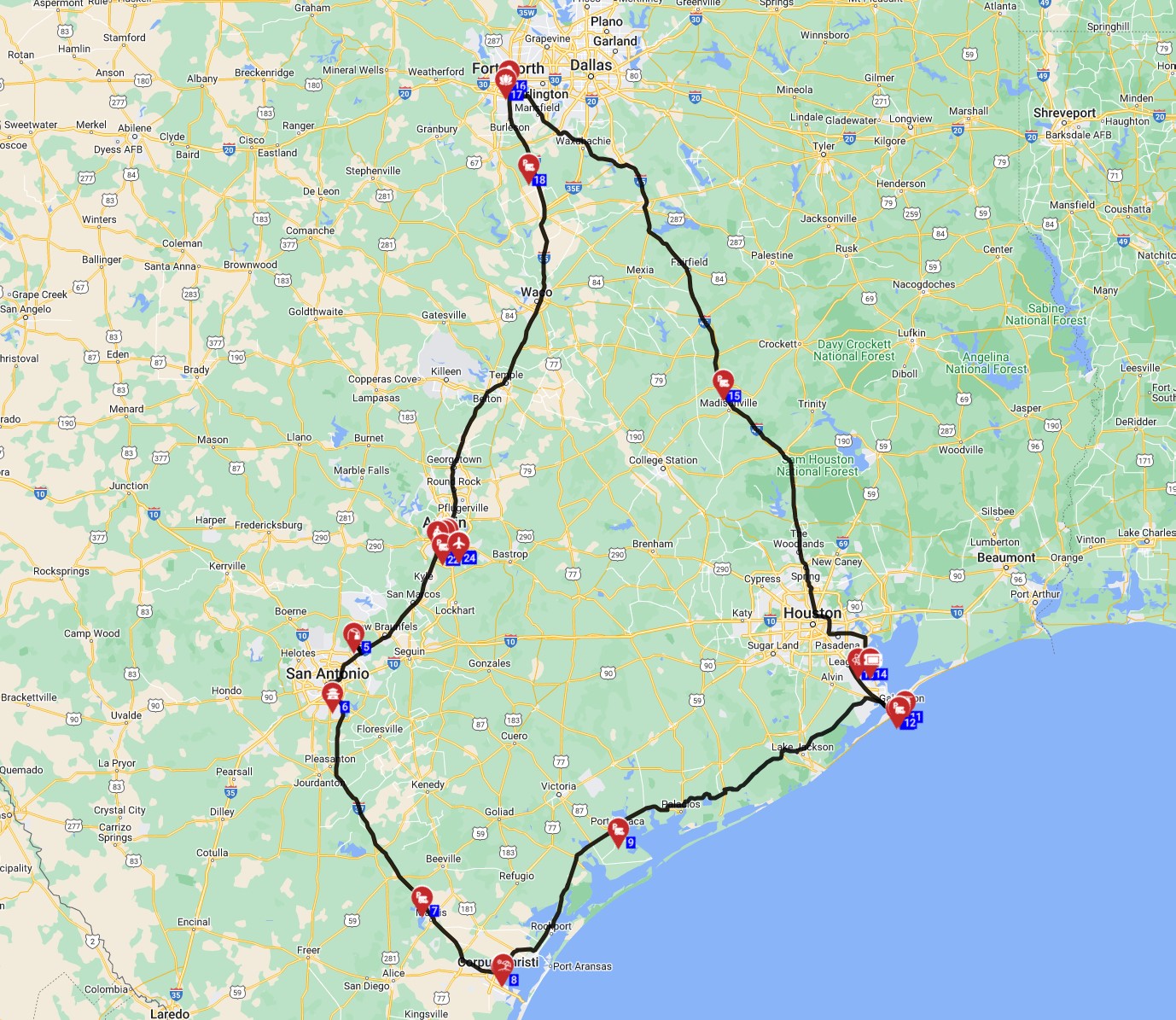
- Day 1-2: Houston & Galveston Island. Pick up your rented motorhome in Houston. Spend a day exploring Houston's museums and culinary scene. Drive slowly and carefully, and you can drive almost anywhere without issues. No need to stress - just use common sense and pay attention. Then, take a short drive (approx. 1 hour, 80 km) to Galveston Island. Enjoy the historic Strand District and walk along the beach. Galveston Island State Park offers RV camping right by the sea, with 66 developed campsites with water and electric hookups.
- Day 3-4: San Antonio. Head west to San Antonio (approx. 3 hours, 290 km). Immerse yourself in history at the Alamo, stroll along the Riverwalk, and savor Tex-Mex cuisine. There are several private RV parks nearby, offering full hookups and amenities for your stay.
- Day 5-6: Austin. Drive north to Austin (approx. 1.5 hours, 130 km). Explore the vibrant live music scene, visit the State Capitol, and enjoy outdoor activities at Zilker Park. Consider McKinney Falls State Park for RV camping, offering 81 campsites with water and electric hookups, just a short drive from downtown.
- Day 7: Return to Houston or Dallas. Depending on your drop-off location, return your RV to Houston (approx. 2.5-3 hours, 260 km) or continue to Dallas (approx. 3 hours, 315 km) for a one-way rental drop-off, if available. For finding campsites and campgrounds during your trip, we recommend using RV PLANET (rvplan.net) - a great resource for locating available spots along your route.
14-Day Extended Journey in Texas
For a comprehensive two-week itinerary exploring more of Texas's varied regions, travelers can extend their journey to include the Gulf Coast, Hill Country, and even parts of West Texas, maintaining a relaxed pace of about 100-150 km per day. This extended trip allows for deeper immersion into the state’s natural beauty and cultural offerings.
- Week 1: Gulf Coast & Central Texas. Follow the 7-day route outlined above, starting in Houston, exploring Galveston, San Antonio, and Austin. Ensure you spend ample time at each location, perhaps an extra day in the Hill Country towns surrounding Austin like Fredericksburg or Wimberley, known for their wineries and German heritage.
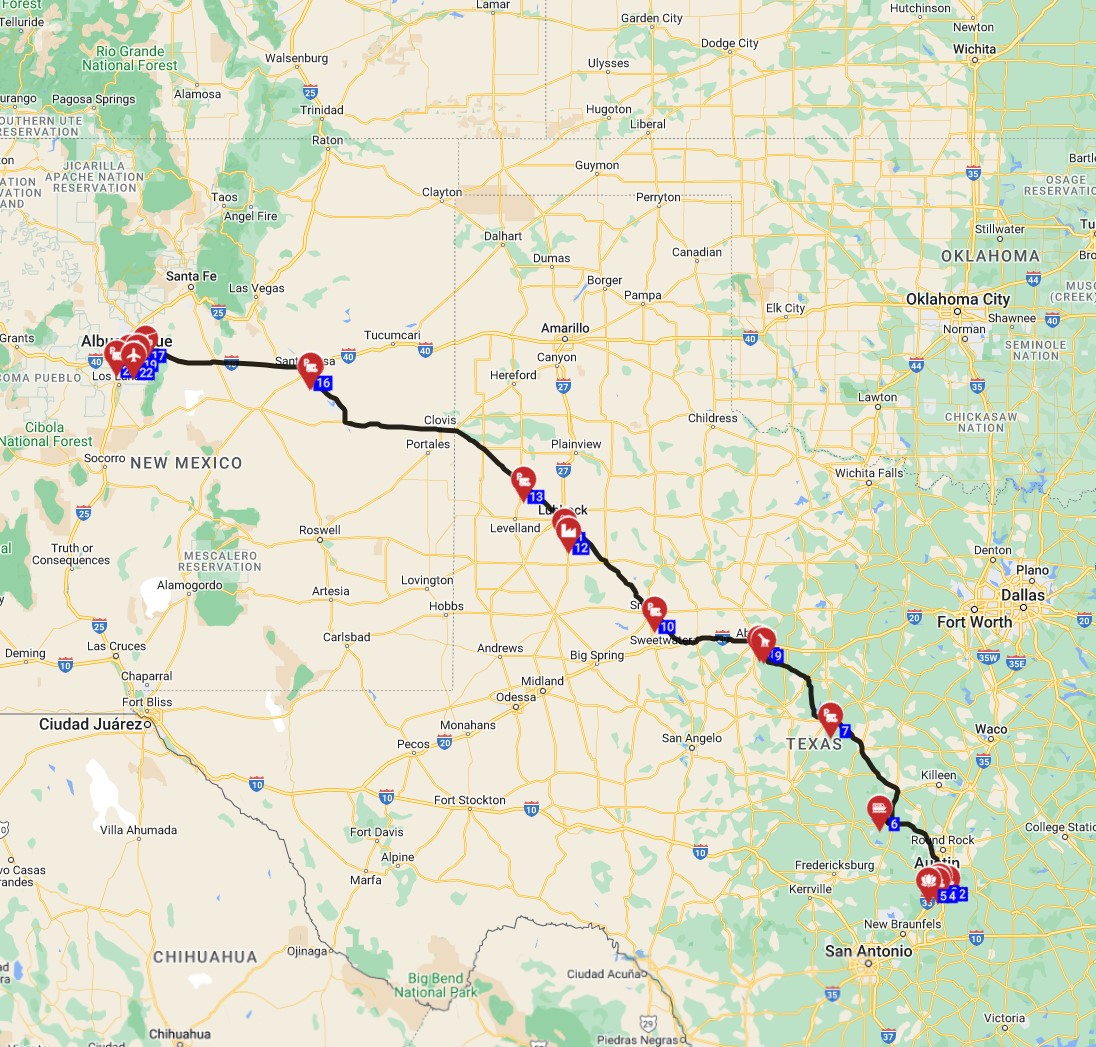
- Week 2: West Texas Wonders. From Austin, venture further west towards Big Bend National Park (approx. 7-8 hours, 700 km), a stunning, remote desert wilderness with dramatic mountain and river landscapes. This part of the journey requires more dedicated driving days, but the destinations are truly rewarding. Big Bend offers several RV-friendly campgrounds like Rio Grande Village RV Park, with 25 full hookup sites. On your way back, consider stopping at Palo Duro Canyon State Park near Amarillo, Texas's Grand Canyon, offering over 30 miles of trails and RV camping, before returning your rented RV to a major hub like Dallas or Houston.
For those who love to plan every detail, pre-planners will appreciate that many national and state parks reserve only 25-30% of spots for advance booking; the rest are first-come-first-serve. You'll find a spot. If not at the first campground, then the next one. Call ahead before driving to ensure availability. We compare final prices across 50+ suppliers so you don't have to, making your planning process effortless.
Recommended RVPlan Trip for Texas
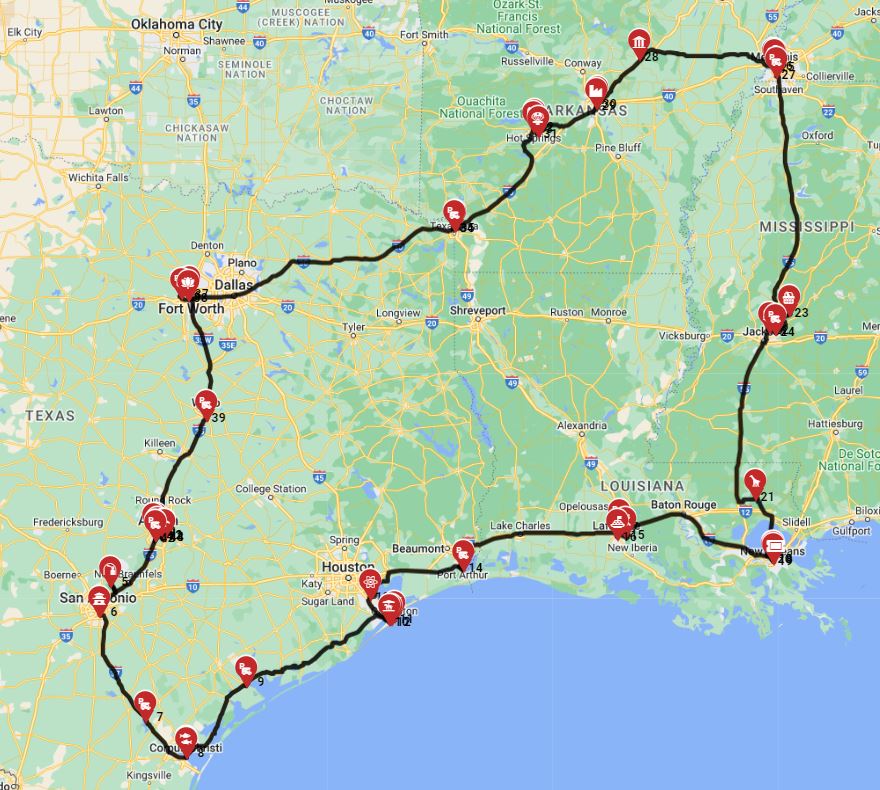
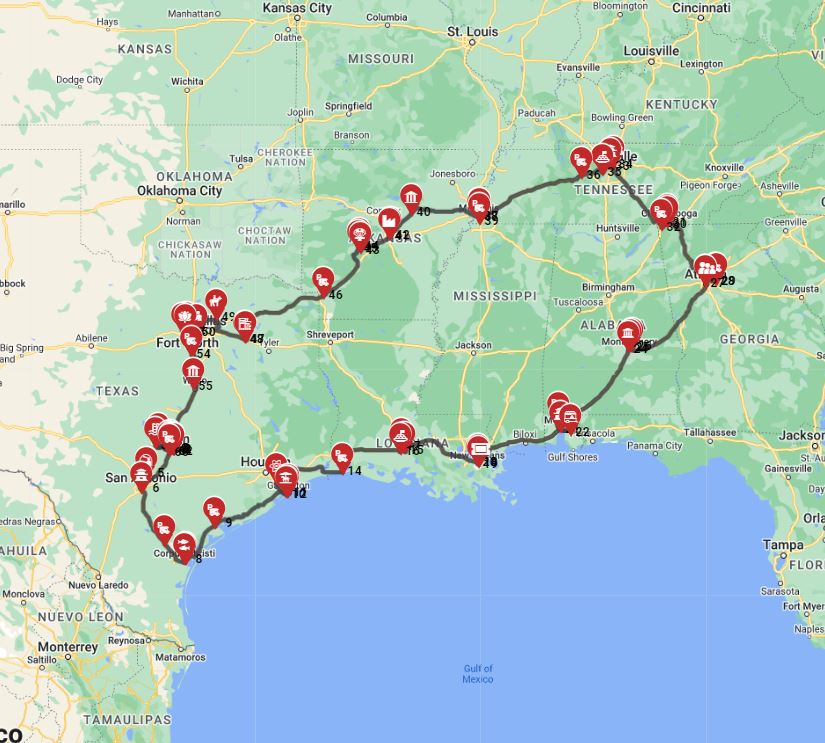
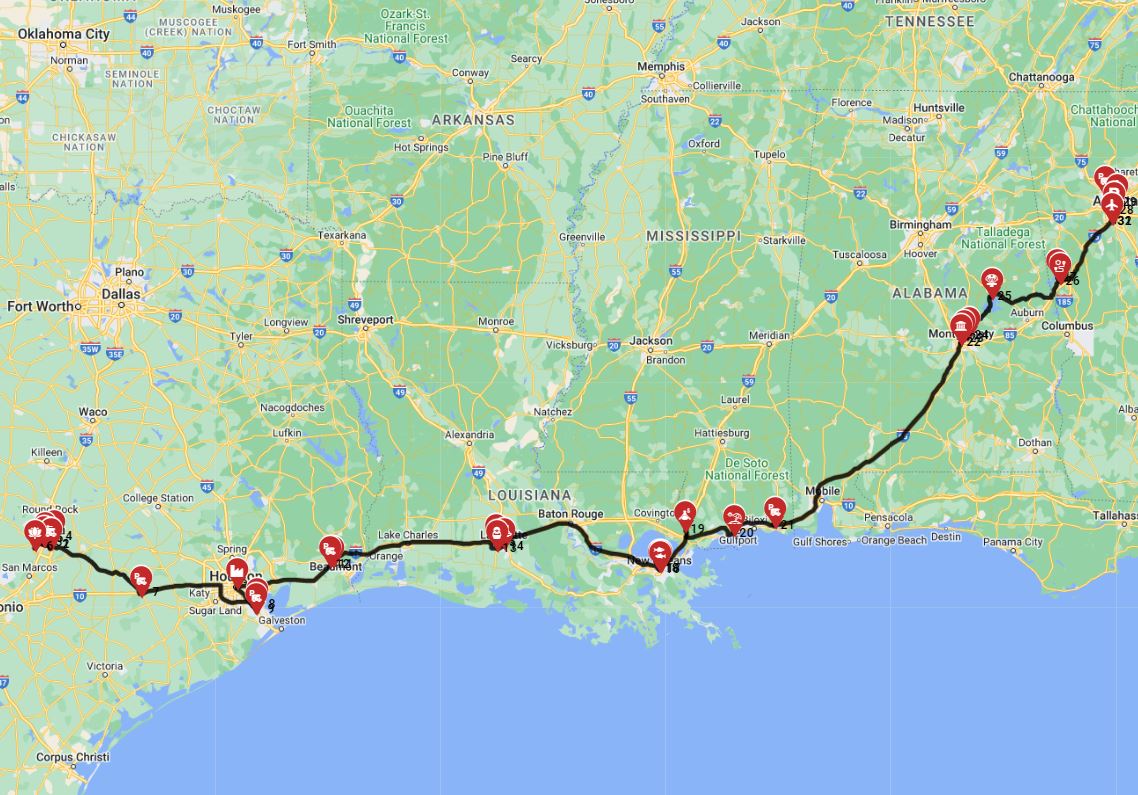
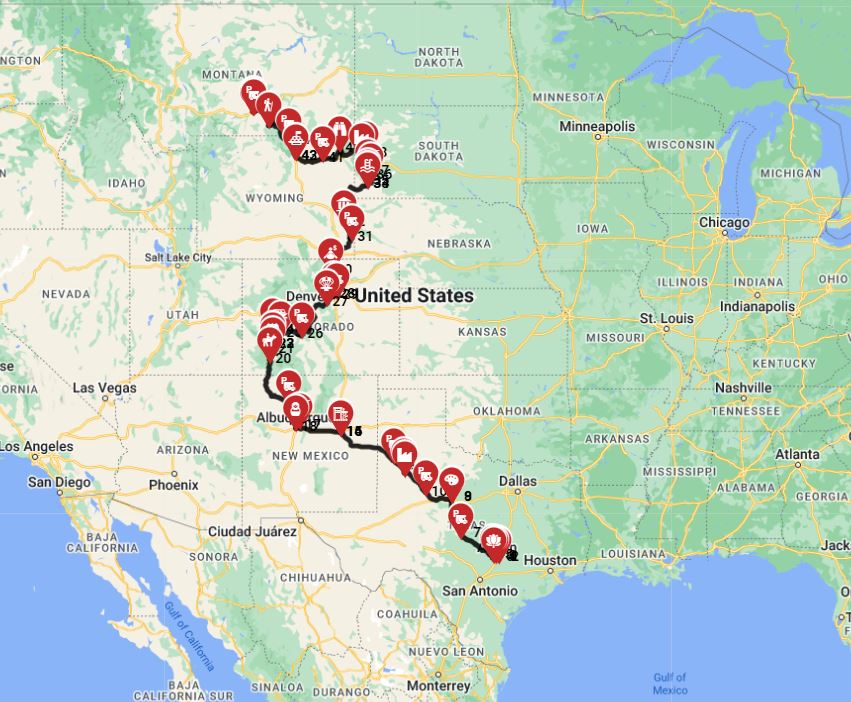
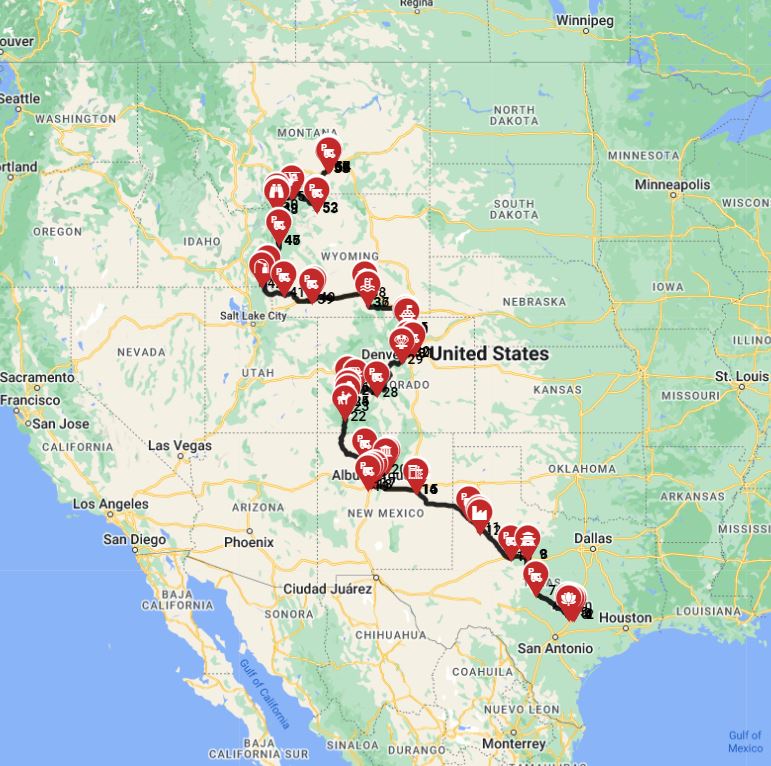
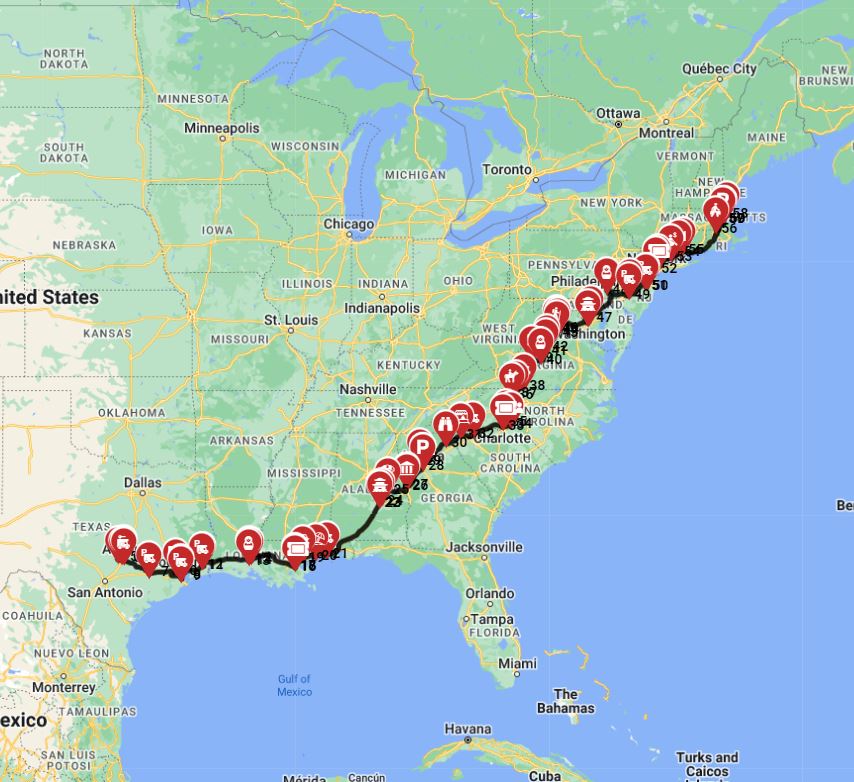
For an extensive 21-day RV adventure that includes significant time exploring Texas, the "
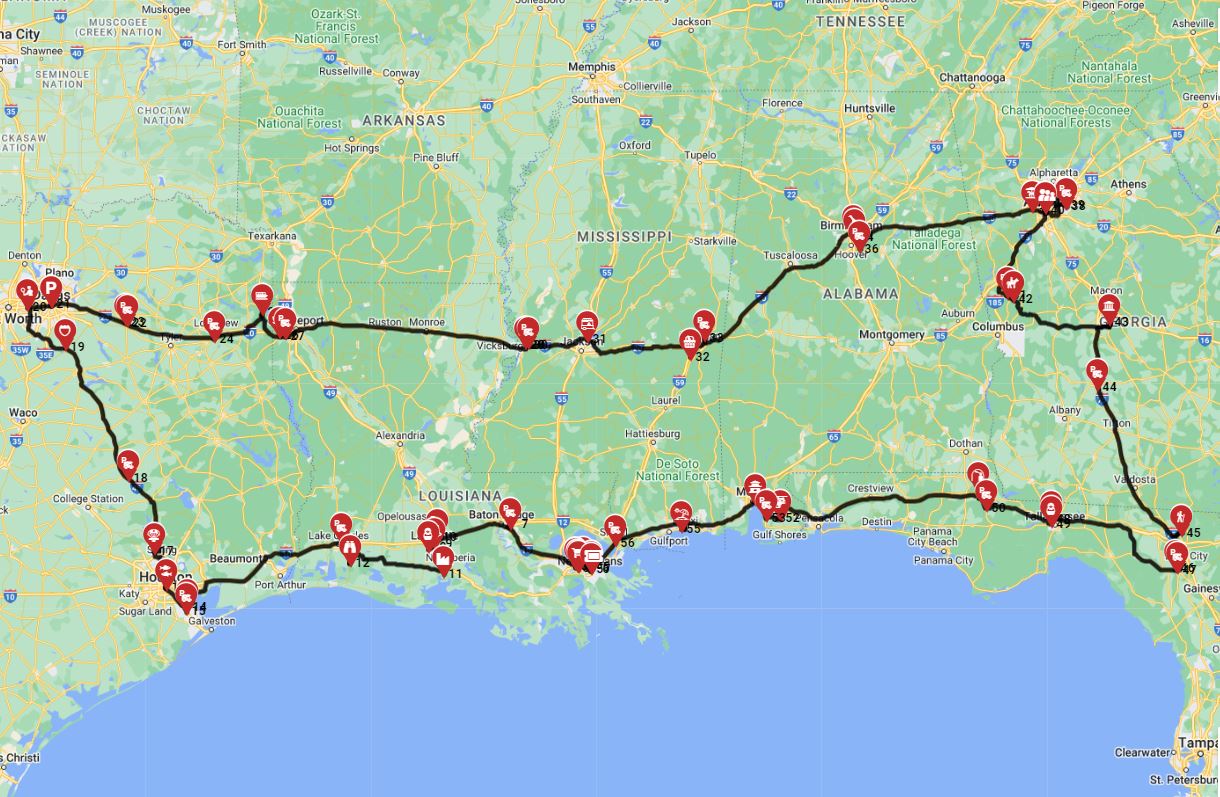
This structured route is ideal for those seeking an extended exploration of the American South, combining vibrant city experiences with natural beauty and historical sites. The itinerary includes opportunities to visit 1 Amusement Park, enjoy 1 Animals Show / Wildlife watch, explore 1 Aquarium, appreciate 1 Art Gallery, relax at 1 Beach, utilize 1 Bike Rental, wander through 1 Botanical garden, experience 1 Cable Railway, partake in 1 Canoe / Kayak / Rafting adventure, marvel at 1 cave, enjoy 1 Cruise Terminal / Sailing experience, embark on 1 Day Tour, try 1 Extreme Activity, delight in 1 Family Activity, delve into 1 Heritage site, hike in 2 separate hiking areas, discover 2 Historical Sites, enjoy 1 Horseback Riding session, observe 1 Local Industry, visit 2 Museums, appreciate 1 Natural Feature, enjoy 1 Park, have a picnic in 1 Picnic Area, drive 1 Scenic Route, explore 1 Science Site, visit 1 Tourist Attraction, experience 1 Traditional Market, dine at 2 Traditional Restaurant / Fine Dining establishments, enjoy 2 Traditional Visits, splash at 1 Water Park, and visit 1 Zoo. As a bonus for using our sister company, RV PLANET, you receive a 25% planning discount when you book your RV rental with us.
Must-See Stops Along the Way (Avi Bandana Picks)
Looking for expert insights from Avi Bandana? Top 5 Adventures - recommendations from Avi Bandana.
- Austin's Traditional Markets: Avi Bandana recommends exploring Texas's vibrant Traditional Markets, such as those found in Austin or Fredericksburg, for local crafts, produce, and unique gifts. These markets offer a true taste of local culture and are perfect for finding authentic souvenirs.
- San Antonio Riverwalk Restaurants: For authentic Texan flavors, Avi suggests visiting Traditional Restaurants and Fine Dining establishments, particularly in cities like San Antonio or Houston, for a taste of regional cuisine. Don't miss the chance to try some brisket or Tex-Mex classics. Remember you can always cook delicious meals in your RV kitchen; check out our RV-friendly recipes playlist for inspiration!
- The Alamo and Texas Capitol: Embrace Texas's rich heritage with Traditional Visits to historical sites, such as the iconic Alamo in San Antonio or the impressive State Capitol building in Austin, to understand the deep history of the Lone Star State.
- Hill Country Wineries: Consider seeking out opportunities to explore Local Industry, perhaps a Texan vineyard or craft brewery in the Hill Country, to experience the state's diverse economy and crafts. Many offer tours and tastings, providing a delightful break from driving.
- Big Bend National Park's Desert Vistas: For breathtaking natural beauty and unparalleled stargazing, Avi highly recommends a visit to Big Bend National Park in West Texas. Its rugged mountains, vast desert, and the winding Rio Grande offer incredible hiking and photography opportunities.
Daily Driving Distances & Drive Times in Texas
Avi Bandana recommends a maximum of 100 miles or 150 km per day on average to ensure a relaxed pace and ample time for exploration during your RV trip in Texas. This approach to travel allows you to truly feel the place, connect to the culture, the food, and the scenery, rather than rushing from one spot to the next. Traveling slowly is key to an enjoyable RV vacation, allowing for spontaneous stops and deeper experiences.
Driving slowly allows travelers to fully appreciate the diverse Texan landscapes, from the flat coastal plains and piney woods of East Texas to the rolling hills of Central Texas and the rugged mountains of West Texas. For instance, a drive from San Antonio to Austin is approximately 1 hour 30 minutes for 80 miles (130 km), leaving plenty of time to explore both cities. A trip from Houston to Galveston is even shorter, about 1 hour for 50 miles (80 km), making it an easy day trip or first leg of your adventure. Even when navigating larger cities, remember: Drive slowly and carefully, and you can drive almost anywhere without issues. No need to stress - just use common sense and pay attention to your surroundings.
🎬 Video coming soon
Best RV Class for This Itinerary — Couple & Family Picks
Choosing the right RV class for your Texas winter rental depends on your group size and desired comfort level, with both campervans and Class C motorhomes offering excellent options. Bandana offers a wide range of motorhomes from various trusted suppliers like El Monte and Cruise America, ensuring you find the perfect fit.
For couples, the Class B - Camper Van is an ideal choice for a Texas winter RV rental, offering an average length of 5.8 meters and comfortably sleeping 2-3 adults. Its compact size makes it agile for navigating various roads, including urban centers, and generally boasts good fuel efficiency, often around 8-10 Liters/100 km (23-29 MPG), which is beneficial for longer trips. These models frequently include features like a shower, toilet, and front air conditioning, providing a comfortable home base on the go. One popular option might be an 'Active Classic' campervan or a 'Juliette Family 5' model, offering a balance of amenities and maneuverability.
Families planning a Texas adventure will find the Class C - Alcove to be an excellent option, with an average length of 7.5 meters and sleeping capacity for 4-6 individuals, accommodating an average of 4-5 adults. The Class C provides more living space, a larger kitchen, and amenities, perfect for family comfort, and typically consumes 10-12 Liters/100 km (19-23 MPG) on average. A '24' Class C Motorhome' or a 'C-MEDIUM PLUS' often feature generators, microwaves, and multiple beds including an alcove bed over the cab, ensuring everyone has space. To remove planning headaches, consider Bandana's 'Rent&Plan' service, which combines RV rental with a ready-made itinerary crafted by travel experts, including full access to trip-planning software, helping you discover top destinations with minimal effort and maximum enjoyment. We partner directly with 50+ leading RV suppliers worldwide, including El Monte, Cruise America, Apollo, and Britz, to offer you the best selection.
What are Texas RV Rules and Regulations?
Texas RV rules encompass various regulations, including vehicle length limits, specific overnight parking laws, and varied restrictions within state parks, which are crucial for renters to understand. Generally, the legal length limit for a single motorhome in Texas is 45 feet (approximately 13.7 meters), while combination vehicles (including a towed car) typically have a maximum length of 65 feet (19.8 meters).
It is important to be aware of state and local ordinances regarding where RVs can legally park overnight, particularly in urban areas or on public lands. While truck stops and some retail parking lots may allow overnight stays (always confirm with management), municipal street parking or undesignated public land camping is often prohibited. Each Texas State Park also has its own set of regulations regarding RV size, hookups, generator use, and pet policies, which should be verified directly prior to arrival. For example, some parks may have quiet hours for generators or restrictions on where pets can go. A standard car driver's license is sufficient for operating all classes of motorhomes (Class A, B, or C) in Texas, with no special license or CDL required. An International Driving Permit (IDP) is recommended for international visitors but is not mandatory in most cases.
How Easy is it to Drive an RV in Texas?
Driving an RV in Texas is generally straightforward on its well-maintained interstate highways, but the ease can vary significantly based on specific road conditions, urban navigation, and the particular RV size. Texas features vast, open stretches of road, particularly in West Texas, which are ideal for comfortable RV travel, though these areas can also experience strong crosswinds requiring extra vigilance.
Navigating major cities like Houston, Dallas, or Austin requires careful planning, especially during peak hours, and familiarity with multi-lane highways and urban traffic patterns. However, there's no need to feel intimidated; drive slowly and carefully, and you can drive almost anywhere without issues. Just use common sense and pay attention to road signs and your surroundings. Unlike some western states, Texas does not have extensive mountain passes, but areas of the Hill Country and Big Bend National Park do present winding roads and elevation changes that require cautious driving and awareness of your vehicle's capabilities. Our 24/7 support means real people are behind you before, during, and after your booking, ensuring you have peace of mind on the road.
How Much Does an RV Trip in Texas Cost?
The cost of an RV trip in Texas varies widely depending on rental duration, vehicle size, fuel prices, and campsite fees, along with additional expenses like food and attractions. RV rental costs typically range from $120-$250 per day for a Class C motorhome during winter, while a smaller campervan might be $90-$180 per day, but these prices are dynamic and change daily based on availability, seasonality, and supplier marketing decisions. On the routes offered through RV PLANET routes, you can itemize and track every expense along the way for easy budgeting.
Fuel is a significant expense, with current estimates suggesting an average consumption of 10-12 Liters/100 km (19-23 MPG) for many RV classes, impacted by fluctuating gas prices and vehicle size. Average campsite fees in Texas typically range from $25-$60 per night for a standard site with hookups, with state parks often being more affordable (e.g., $20-$40) than private campgrounds (e.g., $40-$80). Budget-friendly alternatives include seeking out free boondocking spots on public lands, utilizing memberships like Harvest Hosts or Hipcamp for unique private land stays, and cooking most meals in your RV to save on dining out. Our RV PLANET routes allow travelers to itemize and track every expense along the way for easy budgeting, ensuring full transparency with no hidden fees.
Where Can I Go Boondocking and Wild Camping in Texas?
Legal boondocking and wild camping opportunities in Texas are available on designated public lands, including National Forests, National Grasslands, and certain state-managed areas, though options are more limited compared to some western states. Texas boasts four National Forests (Angelina, Davy Crockett, Sabine, Sam Houston) and one National Grassland (Lyndon B. Johnson) where dispersed camping is often permitted, typically requiring you to be at least 150 feet from roads, trails, and water sources.
Many Texas State Parks also offer primitive camping options, which are essentially boondocking with basic facilities, often requiring reservations and adherence to specific park rules for sites that may not have full hookups. Private land stays through platforms like Hipcamp and Harvest Hosts offer unique alternatives for legal overnight parking, often with access to local farms, wineries, or attractions for a fee, providing a more curated experience. Additionally, specific beach camping permits are available for areas along the Gulf Coast, allowing RVers to camp directly on the sand in locations like Padre Island National Seashore (which has 45 undeveloped sites) or designated sections of Galveston Island State Park, providing a unique coastal boondocking experience. Always check local regulations before setting up camp to ensure compliance.
What is the Best Time of Year for RV Travel in Texas?
The best time of year for RV travel in Texas is generally during the cooler months, from late fall to early spring (October to April), to comfortably avoid the intense summer heat. Winter in Texas, specifically December through February, offers remarkably mild temperatures, particularly in the southern and coastal regions, making it ideal for exploring state parks, cities, and cultural sites without the oppressive summer humidity and heat.
Regional climate differences mean that while South Texas enjoys comfortable winters with average highs of 15-20°C (59-68°F), the Panhandle and North Texas can experience freezing temperatures and occasional ice storms, requiring RV winterization measures for rentals in those areas. Travelers should always prepare for sudden cold fronts, even in mild areas, ensuring their RV's heating system is functional and they have appropriate clothing for cooler evenings, which can drop to near freezing. Planning your trip during these off-peak months also typically means fewer crowds at popular attractions and campgrounds, enhancing your overall experience. Spontaneous travelers can also find plenty of first-come, first-serve spots in many parks during this season.
What are Hidden Gem RV Destinations in Texas?
Beyond major cities and well-known national parks, Texas offers numerous hidden gem RV destinations, including quirky roadside attractions, lesser-known cultural sites, and local-favorite natural spots that provide unique experiences. The small towns of the Texas Hill Country, such as Fredericksburg or Wimberley, are charming cultural havens with numerous wineries, art galleries, and boutique shops, often featuring RV parks nearby like Fredericksburg RV Park with 100+ sites.
For natural beauty, explore destinations like Colorado Bend State Park, known for its breathtaking Gorman Falls and numerous trails, offering 28 primitive campsites for a more rugged experience. Another gem is Caprock Canyon State Park in the Panhandle, home to unique red rock formations, a large bat colony, and the official Texas State Bison Herd, with 35 RV sites available. Seek out quirky roadside attractions like Cadillac Ranch near Amarillo, an iconic art installation of partially buried Cadillacs, or the literal dinosaur footprints at Dinosaur Valley State Park in Glen Rose, offering a truly memorable and less-traveled stop. These destinations often provide unique insights into local industry, from wine-making to geological wonders, adding layers to your travel experience.
Where Can I Find RV Services in Texas?
RV-specific services in Texas, including dump stations, propane refills, and repair services, are widely available across the state, even in more remote areas, but strategic planning is essential. Many state parks, private campgrounds, and large truck stops (like Flying J or Love's) offer dump stations and potable water refill points, with apps like iOverlander or RV LIFE Trip Wizard proving invaluable for locating them along your route.
Propane refills can typically be found at larger gas stations, dedicated propane distributors, and many RV dealerships or service centers throughout Texas. For unexpected repairs, it's advisable to carry basic tools for minor fixes, and for major issues, consult RV-specific repair shops often concentrated near major interstate highways and larger towns like Houston, Dallas, or San Antonio. These service providers can handle anything from engine issues to appliance malfunctions. Before embarking on your trip, perform a thorough check of your rented motorhome or campervan, including tire pressure, fluid levels, and essential systems, ensuring a smooth and worry-free journey. Our top-level deductible reimbursement option provides extra peace of mind for any unforeseen incidents.
What are the Rules for Pet-Friendly RV Travel in Texas?
Pet-friendly RV travel in Texas generally involves adhering to specific rules, particularly concerning pet policies in state parks, local leash laws, and access to pet-friendly attractions, ensuring a smooth trip for you and your furry companions. Most Texas State Parks allow pets in campgrounds and on designated trails, provided they are kept on a leash no longer than six feet and are not left unattended at campsites; however, some specific trails, swimming areas, or buildings may restrict pet access, so always check individual park regulations.
Many Texas towns and cities are increasingly pet-friendly, offering designated dog parks, pet-welcoming patios at restaurants (especially common in Austin), and certain attractions that permit well-behaved pets. It's crucial to research emergency veterinary services along your planned route, especially when traveling through remote areas like West Texas, to ensure quick access in case of a pet health emergency. Always carry waste bags and dispose of pet waste properly to maintain a clean and welcoming environment for all travelers. With a rented motorhome, your pet can join you on every adventure!
What are Accessible RV Travel Options in Texas?
Accessible RV travel options in Texas are expanding, with a growing number of state parks and private campgrounds offering ADA-compliant campsites, trails, and facilities for travelers with disabilities. Many Texas State Parks feature ADA-compliant campsites with paved pads, accessible restrooms, and showers, along with accessible fishing piers, overlooks, and boardwalks to enhance outdoor enjoyment.
Major cities like San Antonio and Austin have actively worked to improve accessibility at their top attractions, including museums, historical sites, and entertainment venues, often providing ramps, elevators, and accessible parking for visitors. RV travelers with disabilities should always verify specific accessibility features directly with parks and attractions prior to their visit to ensure their needs can be fully accommodated. Resources like the Texas Parks and Wildlife Department website provide detailed accessibility information for their facilities. Renting an RV provides the flexibility and convenience of a mobile home, allowing travelers to comfortably bring necessary medical equipment and tailor their itinerary to their specific accessibility requirements, making RV travel an inclusive option for everyone.
Final Thoughts
Exploring Texas in a rented RV during the winter offers an incredible opportunity to discover its diverse landscapes and vibrant culture without the summer crowds. From the lively cities to the tranquil state parks and hidden gems, your mobile home provides the ultimate flexibility and comfort. Remember to travel slowly, embrace the local charm, and make every mile count.
At Bandana RV, we're passionate about helping you create unforgettable memories. Our commitment to transparent pricing, specialist knowledge, and unwavering support ensures your winter RV adventure in Texas is smooth and stress-free. So, why wait? Get inspired for your next trip and embark on a Texan road trip that you'll cherish for years to come!
Plan a trip itinerary in advance with minimal effort and maximum enjoyment. Find your perfect winter RV rental in Texas today and start building your dream itinerary with confidence.