In This Guide
- Can You Drive an RV in Bergen? License & Age Rules
- Road Conditions & Terrain in Bergen
- RV Size Limits, Bridges & Restricted Zones
- Fuel: Diesel vs. Petrol & Cost per 100 km
- Tolls, Vignettes & Border Rules
- Driving Tips for winter rv rental Travelers
- Recommended RV Class for Bergen Roads
- Should I Choose a Compact Van Instead of a Large RV in Bergen?
- Can I Park Anywhere? Free & Wild Camping Rules in Bergen
- Can I Drive an RV Into the City Center? Heights, Tunnels & Local Signage
- Can you drive an RV in the winter?
- Is Norway RV friendly?
- Is it safe to drive in Norway in winter?
- Where to park a camper in Bergen?
- Can I sleep in RV while driving?
- What category is a VW camper van?
- Does RV insurance cover freeze damage?
- How much does RV insurance cost a year?
- Can you get temporary RV insurance?
Can You Drive an RV in Bergen? License & Age Rules
A standard Category B driver's license typically allows you to drive RVs up to 3,500 kg, which covers most campervans and smaller semi-integrated motorhomes available for winter RV rental in Bergen. For larger RVs exceeding 3,500 kg, such as some Class C Alcove or Class A Integrated models, a higher license category (e.g., C1 or C) is required, depending on the RV's Gross Vehicle Weight Rating (GVWR) and the specifics of your license. The minimum driver age for renting an RV in Bergen is typically 21 years old, with no young driver surcharges and no vehicle class restrictions based on age across Bandana's partner suppliers. International drivers from non-EU/EEA countries generally need an International Driving Permit (IDP) in addition to their valid national driver's license to drive legally in Norway, though it's recommended in most cases rather than strictly mandatory. For live availability and current prices, start with our RV Rental Bergen - Complete Guide 2026 guide. Many of our smaller Class B campervans, such as the "Active Classic", are perfect for couples and easy to handle.Road Conditions & Terrain in Bergen
Bergen's roads are generally well-maintained, but the terrain is mountainous and coastal, featuring numerous narrow, winding roads, steep inclines, and tunnels that demand careful driving. During winter, road conditions frequently include snow, ice, black ice, and reduced visibility, making studded or non-studded winter tires (mandatory for RVs) absolutely essential for safety. Expect to encounter a mix of urban density in the city center, especially around Torgallmenningen and Bryggen, and more remote, challenging routes in the surrounding fjords and mountains. Driving a rented RV in Bergen requires a slower, more cautious approach, allowing ample time to navigate curves, anticipate conditions, and fully appreciate the scenic landscapes. While main routes are paved, be prepared for occasional gravel sections on less-trafficked roads, especially when accessing remote areas or specific campsites outside the city center.RV Size Limits, Bridges & Restricted Zones
Bergen features numerous tunnels, some of which, like the Nygårdstunnelen leading into the city, may have height restrictions; always check overhead clearance signs carefully before entering with your rented motorhome. While less common on main routes, older bridges or smaller local roads might have weight limits; adhering to all posted signage is critical to avoid issues. Bergen's city center may have environmental zones or limited access areas, potentially restricting older or larger RVs; confirm your rental RV's compliance with local regulations from your supplier. When planning ferry crossings, such as the popular Fjord Line ferries from Bergen, note that charges are typically based on vehicle length and weight, meaning larger RVs will incur higher ferry costs. For Class C Alcove RVs, averaging 7.4 meters in length, or Class A Integrated RVs, averaging 6.8 meters, pre-planning routes to avoid exceptionally tight or restricted areas is advisable for a stress-free trip. If you're comparing larger options, our guide to Luxury RV Rental in Bergen - Premium Prices 2026 might be helpful.Fuel: Diesel vs. Petrol & Cost per 100 km
The vast majority of motorhomes and campervans available for rent in Bergen, including Bandana's fleet, run on diesel fuel, which is widely available across Norway at numerous fuel stations like Circle K and Shell. Fuel prices in Norway are among the highest in Europe, making it a significant budget consideration for winter RV renters, with average prices often exceeding €2.00 per liter. Based on Bandana's fleet data, Class B - Camper Vans, such as a rented "VW California Ocean", average approximately 8 liters/100 km, while Class SI - Semi-integrated, Class C - Alcove, and Class A - Integrated RVs typically consume 10-12 liters/100 km. For a typical Class SI motorhome, expect to budget for fuel consumption of around 10-12 liters per 100 kilometers, meaning longer journeys will incur substantial costs. Inquire with your rental provider about any potential fuel discount cards or programs that might be included with your RV rental to help manage costs, and for detailed budgeting, explore RV PLANET routes where you can itemize and track every expense.Tolls, Vignettes & Border Rules
Norway uses an automated toll system called AutoPASS, and most rental RVs will come equipped with a transponder or be registered for automatic billing, simplifying your journey. Tolls are prevalent throughout Norway, including multiple charges when entering and exiting Bergen, such as along E39 towards the Bergen airport; these are typically billed to the rental company, which then forwards the accumulated cost to you, often with a small administration fee. Unlike some other European countries, Norway does not use a vignette system; instead, tolls are paid per passage or section of road, such as the bridges and tunnels around Bergen. There are generally no specific border rules for RVs entering Norway from neighboring Schengen countries like Sweden, beyond standard passport and vehicle documentation checks. It is crucial to clarify with your RV rental provider how tolls are managed and billed, as some may offer options to pre-purchase toll passes or packages to streamline the process and avoid potential post-trip fines. For understanding the costs, check out "RV Rental in Bergen - Prices and Best Deals 2026".Driving Tips for winter rv rental Travelers
Mastering winter driving is crucial: drive slowly, maintain significantly increased following distances (at least three car lengths), and be smooth with steering, braking, and acceleration on snow and ice. Always check road conditions daily before starting your journey by consulting the Norwegian Public Roads Administration (Statens vegvesen) website (vegvesen.no) for current road closures, mountain pass conditions, and weather alerts in the Bergen region. Utilize your rented RV's heating and insulation effectively: learn to operate the internal heating system and consider using thermal covers for windows and skylights to prevent pipes from freezing and maintain warmth, especially overnight. Always pack a robust winter emergency kit including extra blankets, a shovel, sand or grit for traction, a high-visibility vest, and a fully charged mobile phone. Plan your stops carefully: for families or those seeking comfort, plan regular stops every 2-3 hours to stretch, warm up, and enjoy the scenery, as driving conditions can be tiring in winter. Remember to travel slowly, max 100-150 km per day on average, to truly feel the place, connect to the culture, the food, and the scenery.Recommended RV Class for Bergen Roads
For navigating the varied roads around Bergen, a Class B - Camper Van or a Class SI - Semi-integrated RV is generally recommended due to their optimal balance of maneuverability and comfort. Class B Camper Vans, averaging 5.7 meters in length, such as the "EcoLine 2", are highly agile for Bergen's narrower city streets and winding coastal roads, making parking easier and fuel consumption lower (approximately 8 liters/100 km). Class SI - Semi-integrated RVs, with an average length of 6.9 meters like the "2 Berth Tamar", offer more interior space and amenities suitable for winter camping while remaining relatively manageable on Norway's roads. These semi-integrated models typically consume 10-12 liters/100 km and provide a good compromise between living comfort for 2-3 adults and ease of driving on mountain passes. While larger Class C Alcove (7.4m) and Class A Integrated (6.8m) RVs offer more capacity, their increased length and height can be more challenging on some of Norway's tighter routes and require more cautious navigation, though still perfectly manageable with common sense and attention.Should I Choose a Compact Van Instead of a Large RV in Bergen?
Choosing between a compact van and a larger RV in Bergen depends heavily on your travel priorities, but for winter, the added comfort of a larger RV often outweighs the maneuverability benefits of a compact van. Compact vans (e.g., Class B Camper Vans like a VW camper van) genuinely excel in extremely tight urban centers, such as around the historic Bryggen wharf, and on the most narrow, challenging mountain passes, where their smaller footprint is a distinct advantage. However, a larger RV, such as a Class SI - Semi-integrated like the "Koru Star 4 Freedom", provides superior insulation, more robust heating, larger fresh water tanks (often 100-120 liters), and significantly more indoor living space, which are crucial for comfort during cold Norwegian winters. Most popular routes and well-maintained roads in and around Bergen are perfectly manageable with a mid-sized Class SI RV, offering a good balance without excessive driving difficulty. Opt for a compact van if maximum agility and minimalist travel are your top priorities; otherwise, the enhanced warmth, space, and facilities of a larger RV typically offer a more enjoyable and practical winter rental experience. Our "Cheap RV Rental in Bergen - Budget Guide 2026" offers more insights into smaller, budget-friendly options.Can I Park Anywhere? Free & Wild Camping Rules in Bergen
Norway's 'Allemannsretten' (right to roam) permits wild camping on uncultivated land, but specific rules apply to RVs, especially near urban areas like Bergen. For motorized vehicles, wild camping is generally allowed at least 150 meters from the nearest inhabited house or cabin and for no more than two consecutive nights in the same spot. Within Bergen city limits and densely populated surrounding areas, overnight parking for RVs is typically restricted to designated campgrounds or official RV parking areas, such as Bergen Camping Park or Midttun Camping. Always adhere to local signage regarding parking restrictions, and ensure you do not block access, disturb residents, or leave any trace of your stay. Rules vary by region, so always check local regulations and follow local law before parking overnight. For finding campsites and campgrounds during your trip, we recommend using RV PLANET (rvplan.net) - a great resource for locating available spots along your route.Can I Drive an RV Into the City Center? Heights, Tunnels & Local Signage
Yes, you can generally drive an RV into Bergen's city center, but it requires careful planning and strict attention to local road signs and regulations. Be acutely aware of height limits for tunnels and underpasses, particularly with taller RVs like Class C Alcove models which can be up to 3.2 meters tall, to avoid damage or blocked routes. Bergen has areas with narrow streets, pedestrian zones, and potential environmental restrictions (e.g., for older vehicles), so always look for specific local signage, especially around the historic port area. Many historic parts of the city center are not designed for large vehicles, making navigation and parking challenging for anything larger than a compact campervan. For ease, consider parking your RV at a designated facility on the city's outskirts, such as areas near the Bergen Light Rail (Bybanen) stops, and using Bergen's efficient public transport system to explore the central attractions. Drive slowly and carefully, and you can drive almost anywhere without issues. No need to stress - just use common sense and pay attention. You can also review our "RV Travel Guide to Bergen - Tips and Top Spots 2026" for more local tips.Can you drive an RV in the winter?
Yes, driving a rented RV in winter is absolutely possible in Bergen and throughout Norway, provided the vehicle is properly equipped with winter tires and heating, and drivers are prepared for challenging road conditions. Norwegian law mandates that RVs must be fitted with approved winter tires (studded or non-studded) during the winter season (typically November 1 to April 1), ensuring necessary grip on snow and ice. Rental RVs in Bergen designed for winter use typically feature enhanced insulation, powerful heating systems, and often insulated and heated water tanks to prevent freezing. Drivers must be experienced in cold-weather conditions and prepared for reduced visibility, slower speeds, and potentially slippery roads, especially on mountain passes like those found on routes such as the "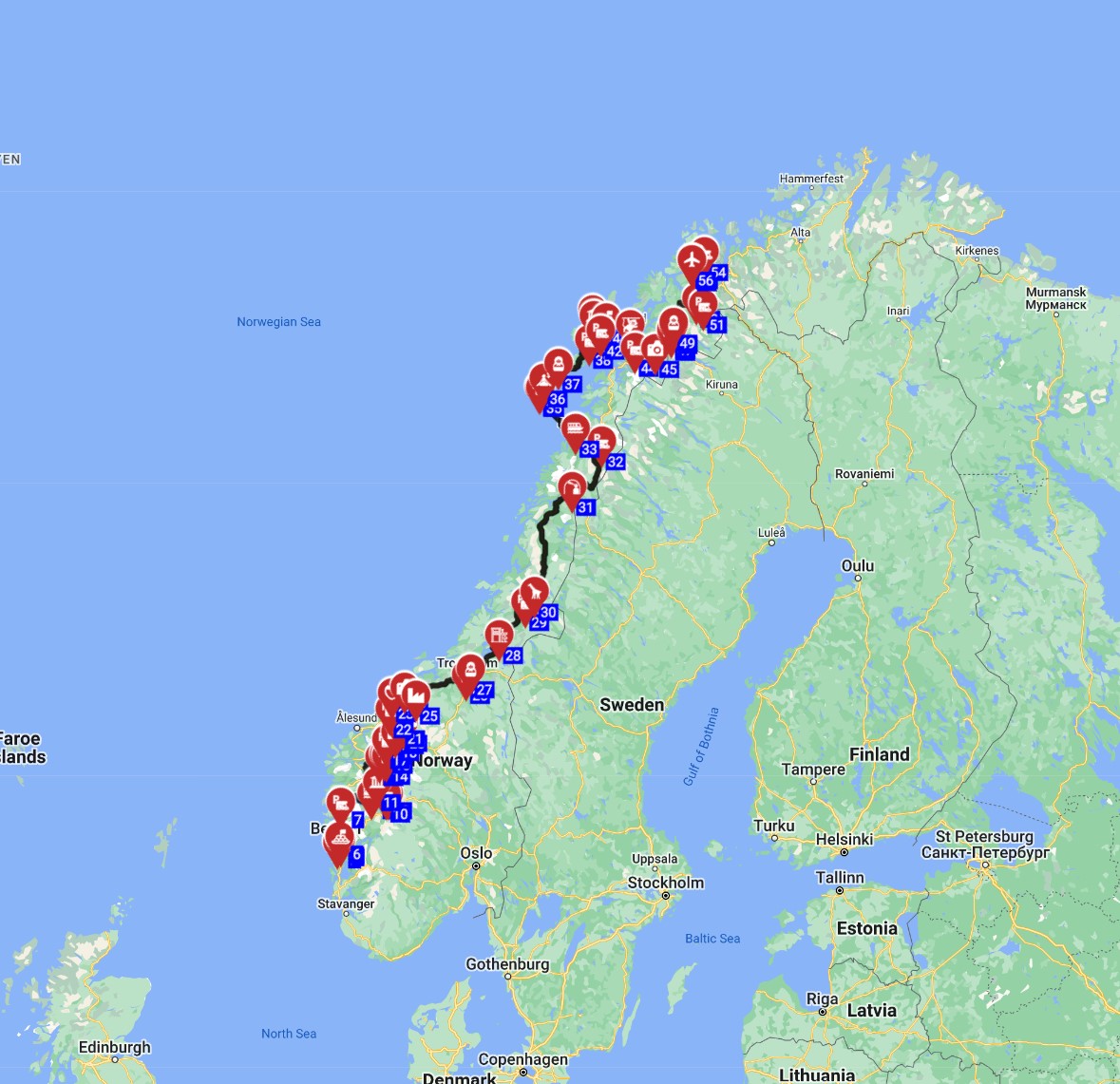
Bergen to Tromso - Norwegian Coastal Odyssey
Is Norway RV friendly?
Norway is generally very RV friendly, offering stunning scenic routes, well-maintained infrastructure, and numerous campgrounds, although winter conditions require extra preparation. The country boasts an extensive network of well-maintained roads, including many designated scenic routes perfect for RV exploration, though some can be narrow and winding, particularly in fjord regions. Norway provides ample RV infrastructure, including frequent gas stations, dump stations (e.g., near Bergen Airport Flesland), and water refill points, even in more remote areas. While Allemannsretten (right to roam) offers possibilities for wild camping, specific rules for motorized vehicles and proximity to populated areas must be respected, making designated campgrounds often a better choice for overnight stays. Numerous well-equipped campgrounds are available, often with electricity hookups, showers, and laundry facilities, though winter availability may be limited to specific sites with winterized facilities.Is it safe to drive in Norway in winter?
Driving in Norway in winter can be safe for experienced drivers with properly equipped vehicles, but it demands significant caution, preparation, and strict adherence to specific winter driving regulations. Norwegian roads are generally well-maintained and efficiently cleared of snow and ice, but conditions can change rapidly, particularly in mountainous regions and coastal areas around Bergen. It is legally mandatory for RVs to be fitted with approved winter tires (studded or non-studded) during the winter months, and carrying snow chains is advisable for extreme conditions, especially when venturing to higher elevations. Reduced daylight hours in winter mean much of your driving may occur in darkness, increasing the importance of good headlights and careful observation for wildlife (e.g., moose, deer) that may cross roads. Always check current weather forecasts and road conditions via the Norwegian Public Roads Administration (Statens vegvesen) website or app before embarking on any winter journey from Bergen.Where to park a camper in Bergen?
In Bergen, campers can be parked at designated campgrounds, specific RV parking lots, or sometimes at general parking facilities that accommodate larger vehicles, though overnight wild camping within city limits is generally restricted. Official campgrounds such as Bergen Camping Park (just south of the city center on the E39) or Midttun Camping offer dedicated pitches with amenities like electricity, water, and waste disposal, providing secure overnight parking options. Look for specific RV parking areas located on the outskirts of Bergen, which often provide convenient access to public transport for exploring the city center without driving your RV through narrow streets. Avoid attempting to park larger RVs in the very narrow streets of Bergen's historic center, where space is limited and restrictions are common. Always pay close attention to local signage regarding parking regulations, time limits, and payment requirements to avoid fines, especially within urban zones. For finding campsites and campgrounds during your trip, we recommend using RV PLANET (rvplan.net).Can I sleep in RV while driving?
No, it is unsafe and illegal for passengers to sleep in an RV's living area while the vehicle is in motion; all occupants must be seated and buckled in designated seats. Norwegian traffic laws strictly enforce the use of seatbelts for all passengers in any moving vehicle, including motorhomes and campervans. Sleeping in beds, walking around, or not being properly secured in a designated seat poses severe safety risks in the event of sudden braking, a sharp turn, or an accident. Ensure all passengers are buckled into forward-facing or designated rear-facing seats before the RV is driven to comply with safety regulations and laws. The interior amenities of a rented RV are designed for use when the vehicle is stationary and safely parked.What category is a VW camper van?
A VW campervan typically falls under the 'Class B - Camper Van' category for RVs, characterized by its compact size, integrated living space within a van chassis, and exceptional ease of maneuverability. Class B campervans, such as those based on the Volkswagen Transporter chassis, integrate living amenities directly into the original van body, without extending beyond the vehicle's standard width. They are known for their smaller footprint (e.g., around 5.7 meters long), making them highly agile on narrow roads around Bergen, easier to park in urban settings, and generally more fuel-efficient (Bandana's fleet averages 8 liters/100 km). These vans typically include a compact kitchen, a sleeping area for 2-3 people, and sometimes a small wet bath, making them suitable for couples or small families. Most VW campervans fall well within the 3,500 kg weight limit, meaning they can typically be driven with a standard Category B car driver's license. Our "Weekly RV Rental in Bergen - Pricing 2026" guide often features these popular models.Does RV insurance cover freeze damage?
RV insurance policies often cover freeze damage, particularly for water systems and engines, but coverage specifics vary significantly, and preventative measures are usually required. Comprehensive RV insurance typically includes protection against damage caused by freezing temperatures to plumbing, water pumps, holding tanks, and engine components. However, insurance providers generally require that reasonable precautions were taken by the renter or owner, such as properly winterizing the RV's water system or maintaining adequate interior heating (e.g., keeping the internal temperature above freezing, particularly for a "Combi Van" with external water tanks). Failure to adhere to rental company guidelines for winter operation or neglect of preventative measures may lead to claims being denied or a higher deductible being applied. It is crucial to review your specific rental agreement and any additional insurance purchased to fully understand the scope of freeze damage coverage and any associated conditions. You can also upgrade to a top-level deductible for extra peace of mind, an option Bandana offers for many rentals.How much does RV insurance cost a year?
The annual cost of RV insurance for personal ownership varies widely based on the RV type, value, coverage level, driver's history, and location, typically ranging from a few hundred to over a thousand euros per year. For RV rentals in Bergen, basic insurance coverage is generally included in the total rental price, offering protection against third-party liability and often collision damage, providing travelers with transparent pricing and no hidden fees. This standard rental insurance usually comes with a significant deductible (excess), which is the amount you are responsible for in case of damage. Renters often have the option to purchase additional collision damage waiver (CDW) or super CDW products to reduce or eliminate this deductible, increasing the rental cost but decreasing financial risk. The exact cost for rental insurance will be detailed in your rental quote, and it's essential to understand what is included and what optional extras are available for comprehensive coverage. For more details, explore "RV Rental Deals in Bergen - Latest Offers 2026".Can you get temporary RV insurance?
Yes, temporary RV insurance is readily available, often provided by rental companies as part of the rental agreement or purchased separately for short-term use, offering coverage for specific durations. When renting an RV in Bergen, the rental company typically includes basic liability and collision insurance as part of your rental package, effectively acting as temporary coverage for your rental period. This standard rental coverage often comes with a high deductible; however, you can usually purchase optional 'excess reduction' or 'zero deductible' insurance directly from the rental company or a third-party provider for your trip. For those borrowing an RV or needing short-term coverage for a personal vehicle, specialized insurers in some markets offer policies specifically designed for a few days, weeks, or months. Always confirm the scope of coverage, deductibles, and any exclusions when obtaining temporary RV insurance to ensure it meets your needs for winter travel in Norway, providing you with full transparency and no surprises. For specific one-way options, consult our "One-Way RV Rental in Bergen - Price Guide 2026".What You Shouldn't Miss
- **Flåm Railway Excursion:** Take a scenic detour from Bergen to experience one of the world's steepest railway lines, offering breathtaking winter fjord views as it descends to Flåm.
- **Explore Bryggen's Historic Wharf:** Wander through Bergen's UNESCO-listed wooden houses, especially beautiful under a dusting of snow, and discover its rich Hanseatic history.
- **Mount Fløyen Funicular:** Ride the Fløibanen funicular to the top of Mount Fløyen for panoramic views of Bergen, the surrounding fjords, and snow-capped mountains, ideal for winter photography.
- **Bergen Christmas Market:** If visiting in early winter, immerse yourself in the festive atmosphere of Bergen's traditional Christmas market, enjoying local crafts and delicious Norwegian treats.
- **Fjord Cruise from Bergen:** Even in winter, a short fjord cruise from Bergen is a must-do to truly appreciate the dramatic, snow-draped landscapes and icy waters.
- **Local Seafood Delights:** Warm up with Bergen's renowned fresh seafood at the Fish Market or one of its many cozy restaurants. For those cooking in their RV, check out our RV-friendly recipes playlist for inspiration.
Looking for expert insights from Avi Bandana?
Top 5 Adventures - recommendations from Avi Bandana (Video coming soon)
🎬 Video coming soon
Final Thoughts
Embarking on a winter RV adventure in Bergen promises an unforgettable experience, filled with dramatic landscapes and cozy moments. While the challenges of winter driving require careful preparation and awareness, the rewards of seeing Norway's stunning fjords blanketed in snow from the comfort of your rented motorhome are truly immense. Remember, the journey is just as important as the destination-travel slowly, embrace the local culture, and let the magic of the Norwegian winter unfold around you. God is in the small details, and we take care of them, making all the difference for your trip. Ready to plan your magical winter escape? Your perfect Bergen adventure is waiting. Find Winter RV Rentals in BergenOn the routes offered through RV PLANET routes, you can itemize and track every expense along the way for easy budgeting.