In This Guide
- Where to Camp in Tokyo - Airport - Top Options
- Campground Types in Tokyo - Airport (National, Private, Wild)
- Featured RV Park or Campground in Tokyo - Airport
- Hookups & Amenities - What to Expect
- Booking Windows & Reservations in Tokyo - Airport
- Nearby Supermarkets & Resupply Points
- Best RV Class for Camping in Tokyo - Airport
- How to Save on Campgrounds in Tokyo - Airport
- What are the logistics for picking up an RV at Narita or Haneda Airport
- How do I plan my first night in an RV near Tokyo Airport to avoid congestion
- What are Michi-no-Eki and how do they work for RVers in Japan
- What are the cultural nuances for RV waste disposal and water refills in Japan
- How do I navigate dense urban areas like Tokyo with an RV
- What is a detailed cost breakdown for an RV trip starting from Tokyo airports
- What is RV-specific emergency preparedness in Japan and how do rental companies support this
- Understanding different Japanese RV types and sizes and their suitability for local roads
- What is the best time to visit by RV from Tokyo airports considering weather and crowds
Imagine yourself embracing the crisp winter air, surrounded by serene landscapes, all from the comfort of your rented motorhome. A winter RV camping adventure from Tokyo - Airport offers a unique perspective on Japan, far from the bustling city centers. We at Bandana RV are true RV specialists, with over 23 years of experience since our founding in 2001, dedicated to helping tens of thousands of travelers discover the freedom of the open road across 50+ countries. For a comprehensive look at all your rental options and live availability, start with our RV Rental Tokyo - Airport - Complete Guide 2026.
🎬 Video coming soon
Where to Camp in Tokyo - Airport - Top Options
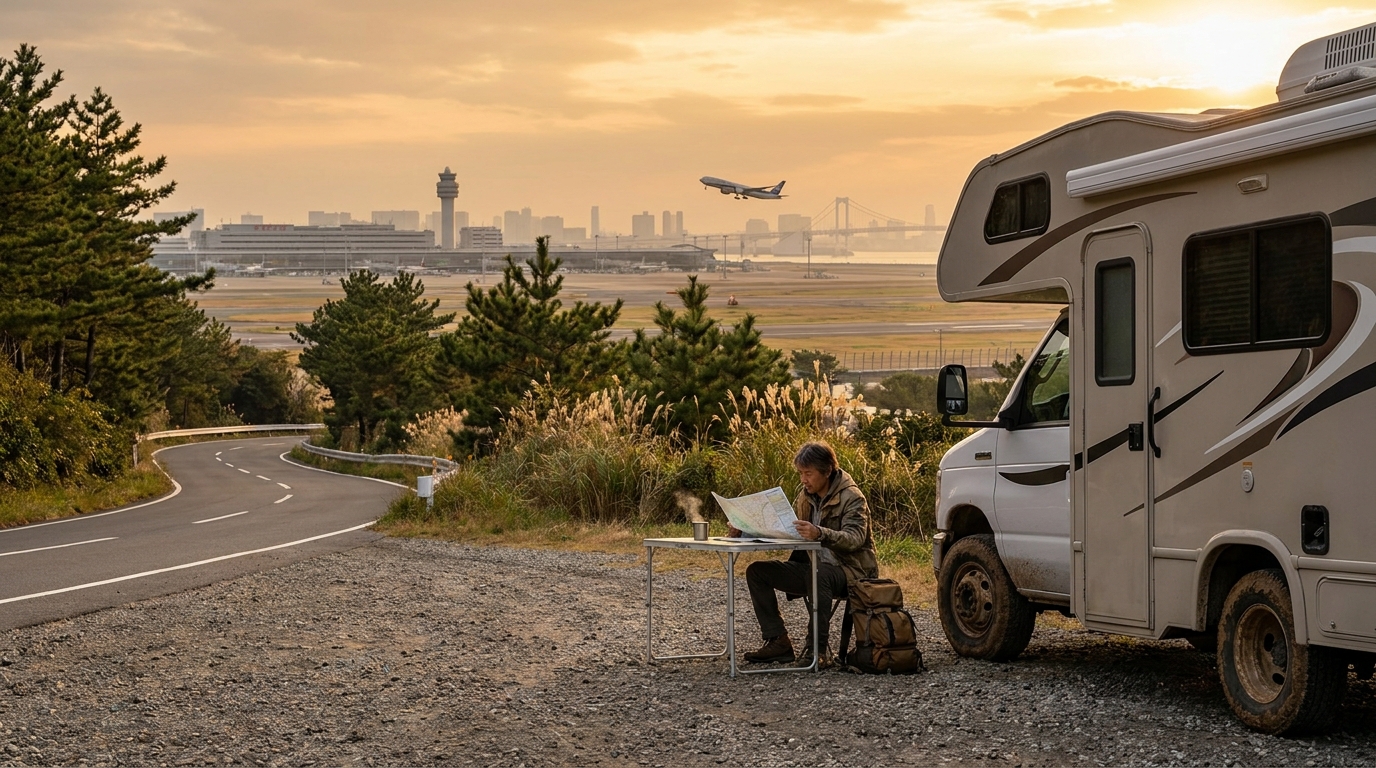
Direct RV camping within Tokyo's immediate airport vicinity, whether Narita (NRT) or Haneda (HND), is limited, but numerous well-equipped campgrounds and Michi-no-Eki (Roadside Stations) are accessible within a short driving distance, offering a convenient first night's stay. For travelers arriving at Narita, consider heading northeast towards Ibaraki Prefecture, where you'll find options like the Ibaraki Kitaura Lakeside Campground offering tranquil winter settings. If flying into Haneda, routes south towards Kanagawa or Yamanashi prefectures can quickly lead you to less congested areas with natural surroundings, such as the Tanzawa Sanso Campground.
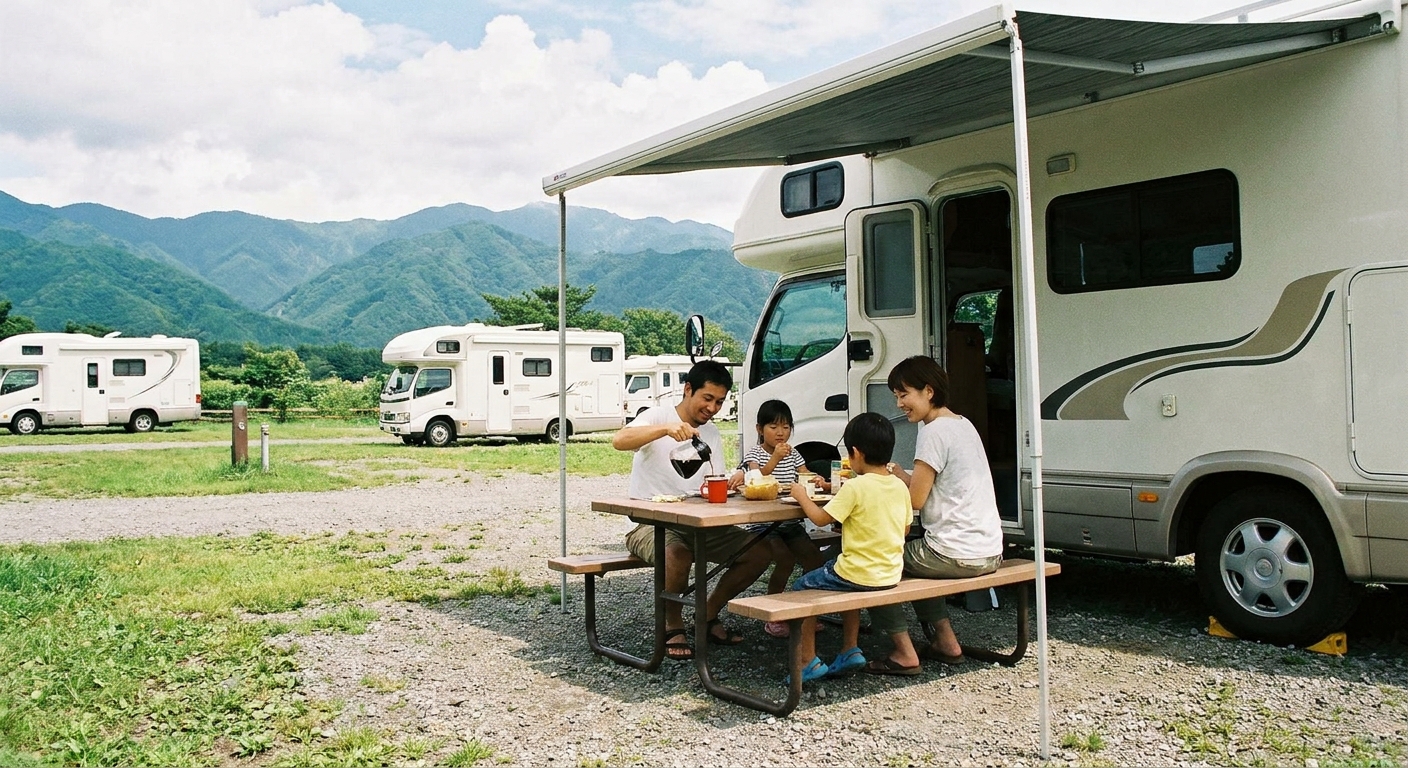
Exploring Chiba Prefecture's coastal parks or inland mountain ranges provides diverse winter experiences, from ocean views to snow-dusted peaks. Always remember that slow travel, averaging max 100-150 km per day, allows you to truly feel the place, connect to the culture, the food, and the scenery. Our Rent&Plan service can even provide pre-planned routes by professionals to help you discover these hidden gems with ease.
Campground Types in Tokyo - Airport (National, Private, Wild)
In Japan, particularly around Tokyo - Airport, RVers primarily encounter private campgrounds and government-run (prefectural or municipal) sites, which are consistently well-maintained and offer reliable amenities. These facilities are often designed with comfort in mind, providing a welcoming environment even in colder months. Wild camping, also known as 'boondocking' or 'freedom camping,' is generally not permitted or tolerated in designated areas in Japan, especially near urban centers like Tokyo.
Michi-no-Eki (Roadside Stations) serve as common, legal, and safe overnight parking spots, although they are technically for rest and not extensive camping. This means that setting up outdoor equipment like awnings, tables, or chairs is usually not allowed, maintaining their primary function for travelers to rest and access local services. These stations are an excellent resource for flexible travel planning, especially after a long flight into Tokyo.
Featured RV Park or Campground in Tokyo - Airport
When selecting an RV park near Tokyo's airports for your winter adventure, prioritize those that clearly state 'RV OK' or 'キャンピングカー歓迎' (camper van welcome) to ensure a hassle-free stay. For instance, Mother Farm Camp Site in Chiba Prefecture offers a family-friendly environment with scenic views and winter readiness. Look for facilities that reliably provide electrical hookups (typically 100V, so a transformer might be needed for some appliances if not built into the rental RV), potable water, and waste disposal (dump stations), which are crucial for comfortable winter RVing. On the routes offered through RV PLANET routes, you can itemize and track every expense along the way for easy budgeting.
Many popular campgrounds, even those a bit further from the airport, frequently provide detailed English-language information on their websites or through dedicated booking platforms. Booking ahead for a week-long trip can often secure you a prime spot and potentially a better rate, offering a cozy retreat after a day of exploring.
Hookups & Amenities - What to Expect
RVers renting in Tokyo - Airport can generally expect campgrounds to offer essential hookups like electricity (100V, so be mindful of your rental RV's appliance compatibility), fresh water, and gray/black water dump stations. These are vital for maintaining comfort and hygiene during a winter RV trip. Common amenities at Japanese campgrounds include immaculately clean restrooms, coin-operated showers, and often laundry facilities. While Wi-Fi is sometimes available, expect limited connectivity in more rural areas.
Propane (LPG) refills require specific knowledge of local gas stations or dedicated RV service centers, as they are not as widely available for foreign tanks as in some other countries. Your rental provider at Tokyo - Airport will guide you on the best locations for refilling or swapping LPG bottles, essential for your RV's heating and cooking systems. Remember that planning your meals in your fully-equipped kitchen is part of the fun, and you can find inspiration in our RV-friendly recipes playlist.
Booking Windows & Reservations in Tokyo - Airport
For winter RV rentals in Tokyo - Airport, planners should aim to book popular campgrounds several weeks to a few months in advance, especially if your trip coincides with weekends, New Year's, or other public holidays. This proactive approach ensures you secure your preferred heated sites. While spontaneous travelers might find same-day or next-day availability at less popular sites or *Michi-no-Eki*, calling ahead before driving is always recommended, particularly outside of peak season when some facilities may have reduced hours or closures.
Unlike some countries, national park campgrounds in Japan typically operate on a reservation system for most spots, rather than reserving a fixed percentage for first-come, first-served. However, *Michi-no-Eki* offer excellent flexibility for overnight parking without prior reservations. Our advice for last-minute travelers remains consistent: you'll find a spot; if not at the first campground, then the next one. For tips on navigating spontaneous bookings, consult Last-Minute RV Rental in Tokyo - Airport - What to Expect 2026.
Nearby Supermarkets & Resupply Points
Upon arriving with your rented RV from Tokyo airports, you'll find numerous large supermarkets near major road networks, offering convenient resupply points for your trip. Key Japanese chains like AEON, Ito-Yokado, and Seiyu (affiliated with Walmart) are widely available and well-stocked with groceries, fresh produce, and other essentials for your RV kitchen. Look for these stores along major highways as you depart from Narita or Haneda.
Many *Michi-no-Eki* also feature local produce and souvenir shops, which can be excellent for unique regional foods and fresh, seasonal ingredients directly from local farmers. These local stops are perfect for stocking your RV pantry with authentic Japanese flavors. Remember that you can track all your trip expenses, from groceries to tolls, by planning your route with RV PLANET routes.
Best RV Class for Camping in Tokyo - Airport
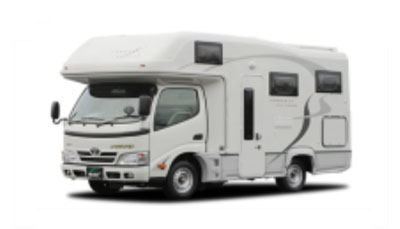
For camping around Tokyo - Airport and navigating Japan's often narrower roads, Class B - Camper Vans and Class SI - Semi-integrated RVs are generally the most suitable choices. Class B camper vans, averaging 5.8m in length with 3.2 sleeping places, offer superior maneuverability for dense urban areas and can often fit into regular parking spots, making them ideal for a park-and-ride strategy when exploring Tokyo. A Class B Camper Van, like the "Active Pop Top" which has a 90 Liter fresh water tank and sleeps 4, can offer both comfort and agility.
Semi-integrated models, typically averaging 6.9m in length with 3.8 sleeping places, provide a good balance of comfort and size, allowing for more amenities while still being manageable on most Japanese roads. For instance, the "2 Berth Rover," a Class SI - Semi-integrated model, offers a shower and toilet, and is Winter Ready. These models typically consume 10-11 Liters/100 km, based on Bandana's global fleet average, making them efficient for extended road trips. For a deeper dive into vehicle choices, check our RV Rental in Tokyo - Airport for Couples - Pricing 2026 or Family RV Rental in Tokyo - Airport - Pricing Guide 2026.
How to Save on Campgrounds in Tokyo - Airport
Utilizing campground discount cards or memberships, which some rental companies offer as an add-on, can significantly reduce accommodation costs during your winter RV trip from Tokyo - Airport. These cards often provide discounts of 10-20% at participating sites. Booking your trips during the shoulder season (early winter before the peak New Year's rush or late winter before spring bloom) or choosing municipal/regional campgrounds over more expensive private resorts often yields lower nightly rates, typically saving ¥500-¥1,500 per night.
Consider staying 3+ nights at a single location, as many campgrounds offer weekly or long-stay discounts, providing a more relaxed pace and greater savings. Additionally, if traveling in a convoy, exploring options for sharing hookups where permitted can further split utility costs. Look for RV Rental Deals in Tokyo - Airport - Latest Offers 2026 to maximize your savings.
What are the logistics for picking up an RV at Narita or Haneda Airport
Picking up a rented RV near Tokyo's airports typically involves specific off-site depots, as direct airport terminal pick-up for RVs is rare; rental companies usually provide shuttle services or detailed instructions for taxi or public transport to their nearby branches. For both Narita (NRT) and Haneda (HND), most RV rental depots are located within a 15-30 minute drive from the airport, offering convenient access but requiring pre-arranged transfers. It's crucial to confirm shuttle availability, operating hours, and precise meeting points with your rental provider well in advance, especially for late arrivals or early departures.
Upon arrival at the depot, expect a thorough vehicle orientation covering Japanese RV features, winterization tips, and local driving regulations, which is a key part of your rental agreement. This briefing ensures you are comfortable and prepared for your adventure. Remember, a standard car driver's license is sufficient for all motorhome classes, and an International Driving Permit (IDP) is recommended for visitors from non-English-speaking countries.
How do I plan my first night in an RV near Tokyo Airport to avoid congestion
To avoid Tokyo's dense city congestion on your first night, planning a route immediately from Narita or Haneda Airport to a nearby RV-friendly location is highly recommended. From Narita Airport, consider heading northeast into Chiba Prefecture or towards Ibaraki, which offers several peaceful Michi-no-Eki or campgrounds, allowing you to quickly escape urban traffic. From Haneda, routes south towards Kanagawa or Yamanashi prefectures via expressways like the Aqua-Line can lead you to less congested areas efficiently.
Utilize GPS systems with RV-specific routing to help avoid narrow city streets and low clearances that can be challenging for larger vehicles. Drive slowly and carefully, and you can drive almost anywhere without issues. No need to stress - just use common sense and pay attention. The first night should focus on familiarizing yourself with the RV and its systems in a calm environment, rather than navigating complex urban driving challenges. For more driving wisdom, check our Driving an RV in Tokyo - Airport - Complete Guide 2026.
What are Michi-no-Eki and how do they work for RVers in Japan
*Michi-no-Eki* (道の駅), or Roadside Stations, are government-designated rest stops found across Japan that provide travelers with safe parking, clean restrooms, and access to local products, making them invaluable for RVers seeking convenient overnight parking. While *Michi-no-Eki* are not official campgrounds, they generally permit overnight parking for RVs and cars, serving as a practical solution for stopping during journeys, particularly when traditional campgrounds are unavailable or too far. These stations are perfect for an easy first night after picking up your campervan from Tokyo - Airport.
Amenities often include 24-hour restrooms, local farmers' markets, restaurants, and sometimes even hot springs (*onsen*). However, setting up outdoor camping equipment like awnings, tables, and chairs is typically prohibited to maintain their primary function as rest areas. It's customary to be respectful of quiet hours, especially at night, and to ensure all waste is properly disposed of, with designated trash bins often available. Specific dump stations for grey/black water are rare at these locations, so plan to use a formal campground for waste disposal.
What are the cultural nuances for RV waste disposal and water refills in Japan
RVers in Japan must understand specific cultural nuances, especially regarding waste disposal and water refills, which differ from practices in many Western countries. Grey and black water disposal is primarily handled at designated dump stations found at private campgrounds or dedicated RV service centers; free public dump stations are rare. It's crucial to plan your route to include stops at these facilities every few days, especially if you're on an extended road trip.
Water refills for potable water can be obtained at most campgrounds, some *Michi-no-Eki*, and sometimes even at larger supermarkets, though it's always polite to ask permission. Propane (LPG) availability for foreign tanks is limited, and most Japanese rental RVs use LPG bottles that are refilled at specific gas stations or swapped at rental depots; plan your refills carefully to ensure your heating and cooking systems remain operational in winter. Adhering to quiet hours at all parking spots and campgrounds is crucial, respecting local norms for peace and communal harmony.
How do I navigate dense urban areas like Tokyo with an RV
Navigating dense urban areas like Tokyo with a rented RV requires careful planning due to narrow roads, low clearances, and limited parking, making a 'park-and-ride' strategy often the most practical approach. Utilize smaller RV classes like a Class B - Camper Van (average length 5.8m), which are more agile for city driving and can often fit into standard parking spots, avoiding the need for specialized RV parking. For example, a "V3" motorhome, with an average length of 6.36m, is ideal for couples seeking urban maneuverability.
When exploring central Tokyo, park your RV at a designated RV-friendly spot or *Michi-no-Eki* on the outskirts of the city and use Japan's efficient public transport system (trains, subways) to reach central attractions. Always pay attention to road signs indicating vehicle height and width restrictions, as well as automated parking garage limitations, to prevent damage or getting stuck. Remember, drive slowly and carefully, and you can drive almost anywhere without issues.
What is a detailed cost breakdown for an RV trip starting from Tokyo airports
A detailed cost breakdown for an RV trip starting from Tokyo airports includes several components, requiring careful budgeting for your adventure. Rental fees for a motorhome typically range from ¥15,000 to ¥30,000+ per day, depending on the RV size, season, and supplier, with winter potentially offering better rates in some periods. For instance, a 1-week winter RV trip in Tokyo - Airport could cost around ¥105,000-¥210,000 just for the rental.
Expect significant toll expenses on Japan's expressways (e.g., ¥500-¥2,000+ per section), and factor in fuel costs, with Bandana's Class C - Alcove RVs, such as the "cruise america rv rental example Explorer" (7.1m length, 82 Liter fresh water tank), averaging 10-12 Liters/100 km. Campground fees usually range from ¥2,000 to ¥5,000 per night for a powered site, while food costs can vary widely depending on whether you cook in the RV or eat out. Attraction fees are similar to those for non-RV travel. For detailed pricing specific to your needs, check Luxury RV Rental in Tokyo - Airport - Premium Prices 2026 or Family RV Rental in Tokyo - Airport - Pricing Guide 2026.
What is RV-specific emergency preparedness in Japan and how do rental companies support this
RV-specific emergency preparedness in Japan involves understanding responses to natural events like earthquakes, typhoons, and heavy snowfall, which rental companies typically support with guidance and communication protocols. Rental companies will provide essential information on what to do during an earthquake (pull over, stay inside your camper, listen to radio alerts) and advise on typhoon-related travel restrictions and safe parking locations. In winter, be prepared for potential road closures due to heavy snow, especially in mountain passes.
In case of road closures or natural disasters, rental companies often offer 24/7 roadside assistance, alternative route suggestions, and support for re-routing or extending rental periods if necessary. Many rental RVs are equipped with basic first-aid kits and emergency contact numbers, and it's advisable for renters to have a portable charger, local emergency numbers programmed into their phone, and knowledge of disaster alert apps. You can always upgrade to a top-level deductible for extra peace of mind, ensuring you're covered in unexpected situations.
Understanding different Japanese RV types and sizes and their suitability for local roads
Understanding different Japanese RV types and sizes is crucial for navigating local roads, with Kei-campervans and Class B - Camper Vans (averaging 5.8m in length) being highly suitable for Japan's often narrow and winding routes. These compact vehicles offer excellent maneuverability and can fit into smaller parking spaces, which are common in towns and attractions outside major cities. While larger models like Class A - Integrated RVs (averaging 7.5m in length with 4.4 sleeping places, like the "Class A - Thor ACE 30") offer more spacious living, their size can be challenging on smaller prefectural roads, in small towns, and for parking.
Japanese roads, especially outside major highways, are not always designed for wide vehicles, making compact RVs the preferred choice for ease of driving and parking. Class SI - Semi-integrated RVs (averaging 6.9m in length with 3.8 sleeping places), such as the "Auto-Trail F60," offer a good compromise, providing more amenities than a campervan while remaining manageable on most roads. Always select a vehicle size that aligns with your comfort level for driving in unfamiliar, potentially narrow, conditions.
What is the best time to visit by RV from Tokyo airports considering weather and crowds
The best time to visit by RV from Tokyo airports, considering weather and crowds for a winter RV rental, is generally from late November to mid-December or late January to early March. These periods offer a balance of picturesque winter scenery, potential for snow activities in mountain regions, and typically fewer crowds compared to the peak New Year's holiday period (late December to early January), when prices for both rentals and campgrounds can be significantly higher.
While winter can bring colder temperatures, especially at higher altitudes, many rental RVs are well-equipped with heating systems, providing a cozy experience. Be aware that mountain passes and certain roads in heavy snow areas may close during severe winter conditions; it's essential to check road status regularly before planning your route. For broader planning, our RV Rental Japan - Complete Guide 2026 offers a year-round perspective.
What You Shouldn't Miss
- Soak in Hakone Onsen: Just a short drive southwest from Haneda Airport, Hakone offers stunning views of Mt. Fuji and numerous hot spring resorts, perfect for winter relaxation in your rented mobile home.
- Explore Shirakawa-go & Gokayama (UNESCO): Venture further into the Japanese Alps with your Class C motorhome for a magical experience in the snow-covered *gassho-zukuri* villages, best enjoyed with a slow travel approach over a week-long trip.
- Skiing or Snowboarding in Nagano: Home to the 1998 Winter Olympics, Nagano Prefecture is accessible by a rented campervan from Tokyo and offers world-class ski resorts like Hakuba Valley, offering heated sites at nearby campgrounds.
- Visit the Snow Monkeys of Jigokudani: A unique wildlife encounter, observe Japanese macaques bathing in natural hot springs in Yamanouchi, Nagano, a memorable winter stop on any RV itinerary.
- Enjoy Winter Illuminations in Tokyo or Yokohama: While parking an RV in central Tokyo requires strategy, consider parking on the outskirts and taking public transport to witness spectacular winter light displays in areas like Shibuya or Yokohama's Minatomirai.
- Looking for expert insights from Avi Bandana? Top 5 Adventures — recommendations from Avi Bandana: Find your next RV adventure
Final Thoughts
A winter RV camping trip from Tokyo - Airport promises an extraordinary adventure, offering the perfect blend of cozy comfort and exhilarating exploration. With a rented motorhome or campervan, you have the flexibility to chase the snow-capped peaks, discover tranquil hot springs, and immerse yourself in Japan's unique winter culture at your own pace.
Remember our tips: choose the right-sized vehicle for Japanese roads, plan your first night strategically to avoid city congestion, and lean into the convenience of *Michi-no-Eki*. At Bandana Caravan, we are here to support you every step of the way, ensuring full transparency and expert guidance for your journey. Get inspired for your next trip and discover top destinations, planning tips, all in one place!
So pack your bags, prepare for scenic drives averaging 100-150 km per day, and get ready to experience the magic of winter in Japan. Your unforgettable motorhome adventure from Tokyo - Airport is waiting!
Find Motorhome Rentals in Tokyo - Airport