In This Guide
- The 5 RV Families Compared for Tokyo - Airport
- Class A (Integrated) - Best For
- Price Comparison by RV Class in Tokyo - Airport
- Class SI (Semi-Integrated) - Best For
- Class C (Alcove) - Best For
- Class B (Campervan) - Best For
- Class TC (Truck Camper) - Best For
- Side-by-Side Comparison Table
- Our Recommendation for weekly rv rental Travelers in Tokyo - Airport
- What are the pickup and drop-off logistics for an RV rental at Narita (NRT) or Haneda (HND) airports?
- Where can I find designated RV parking near Narita (NRT) or Haneda (HND) airports, and what are the costs?
- How should I manage jet lag and immediate post-arrival challenges when starting an RV trip directly from a Japanese airport?
- What are the cultural nuances and etiquette for RV travelers starting their journey from a major international airport in Japan?
- What is the ETC toll system in Japan and how do RV renters use it for efficient travel?
- How much does a weekly RV rental in Tokyo - Airport cost, including potential hidden fees?
- What are the best RV-friendly overnight parking options closest to NRT or HND for the first night?
- How do I navigate Japan's left-hand drive road system and specific signage as an RV renter?
The 5 RV Families Compared for Tokyo - Airport
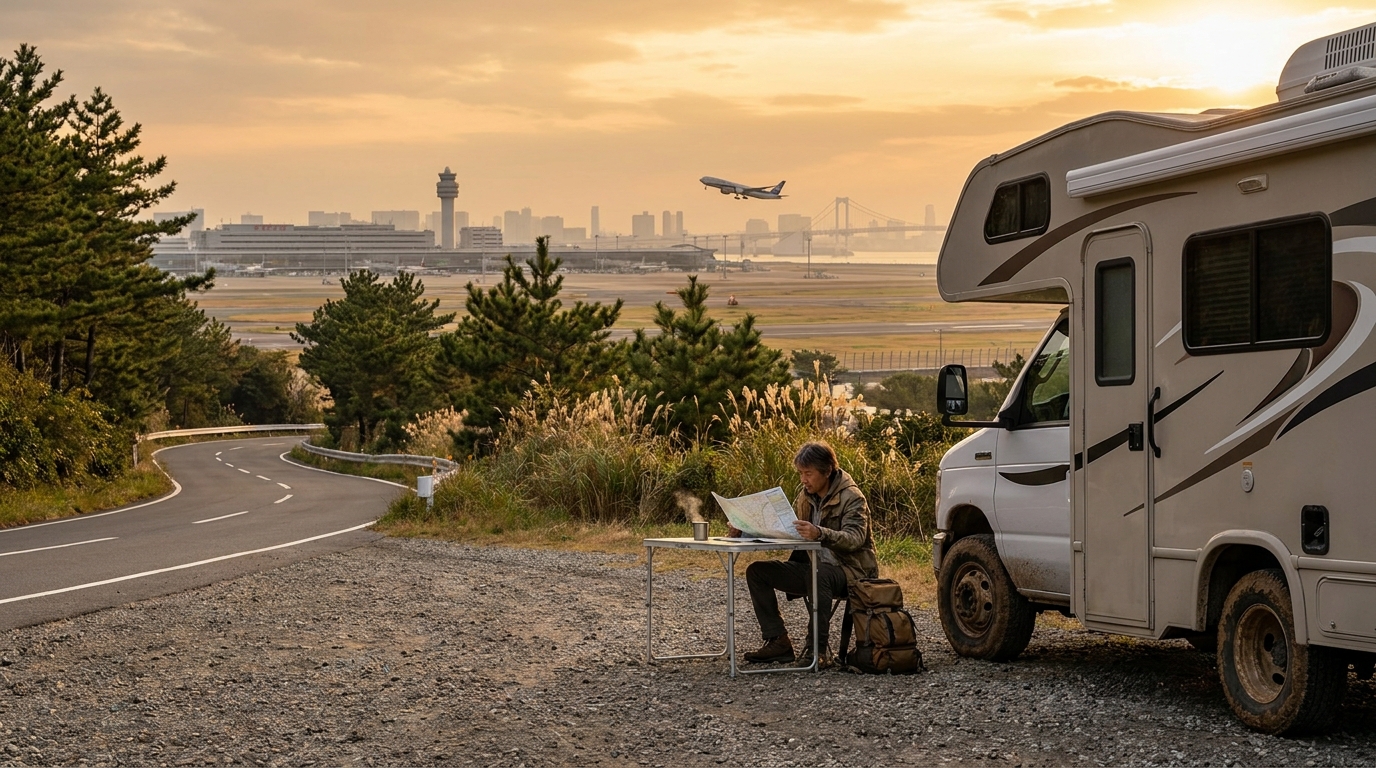
Choosing the right RV family for your weekly RV rental in Tokyo - Airport is crucial for a comfortable and enjoyable trip, particularly given Japan's unique road infrastructure and travel style. Maneuverability on Japanese roads, especially in and around cities like Tokyo, is significantly influenced by your chosen RV's size and class. Consider your group size, the desired length of your adventure, and the amenities you prioritize, as these factors will guide your selection. For live availability and current prices, start with our RV Rental Tokyo - Airport - Complete Guide 2026 guide to explore options that perfectly match your travel vision.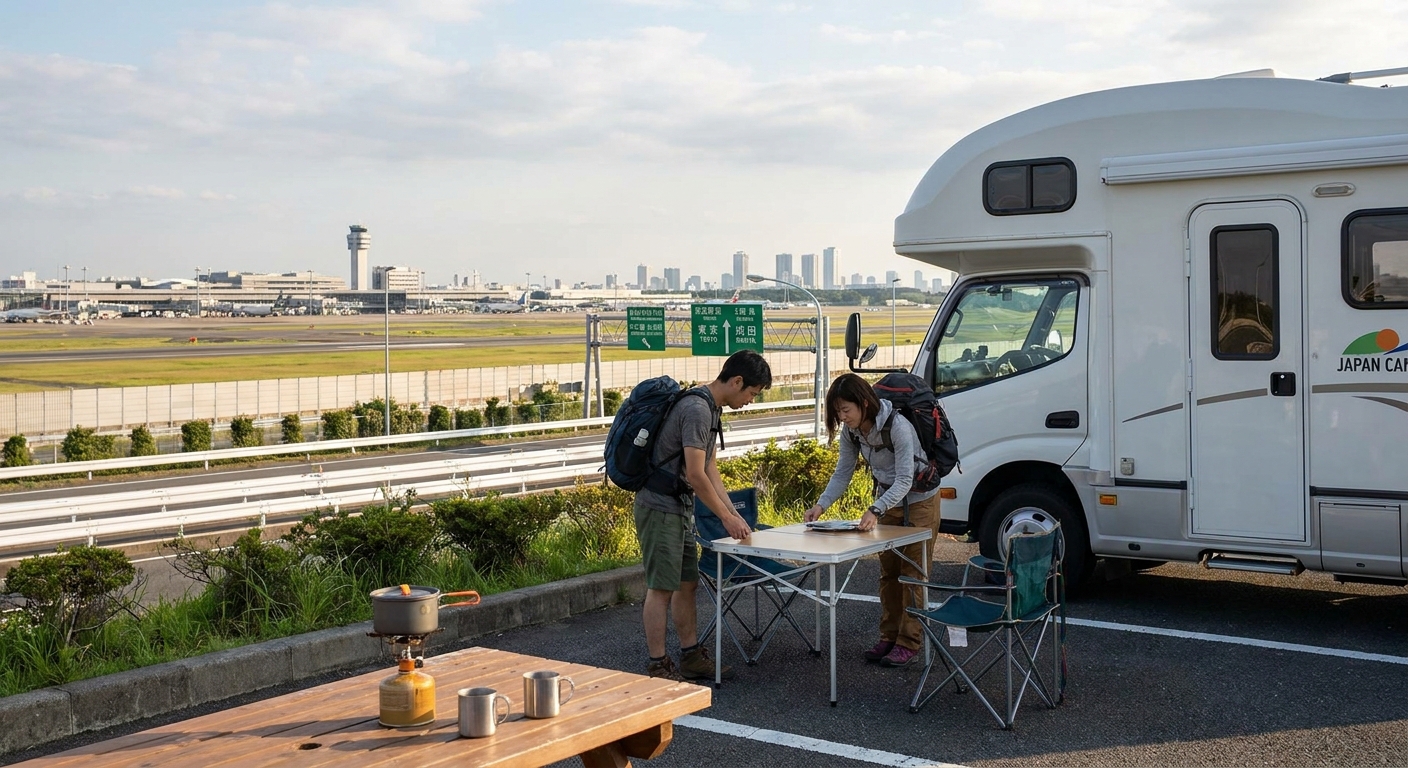
Class A (Integrated) - Best For
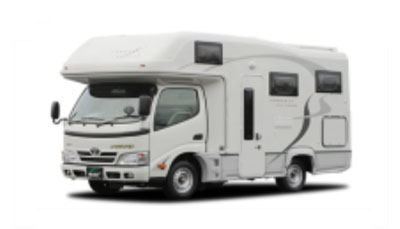
Class A motorhomes, also known as integrated motorhomes, offer a luxurious, spacious experience, akin to a small bus. These large vehicles are best for larger groups (4-7 people) or those prioritizing maximum comfort and extensive amenities, such as a full kitchen and multiple sleeping areas, for an extended road trip from Tokyo - Airport. While they provide an exceptional living space, their larger dimensions can make navigation challenging in tight urban areas of Tokyo and on some narrower rural roads in Japan. For instance, a typical Class A like the "rent rv example E3" features spacious living and sleeping arrangements. Their fuel consumption is higher, typically around 20-25 liters per 100 km, so factor this into your overall travel budget.Price Comparison by RV Class in Tokyo - Airport
RV rental prices in Tokyo - Airport are dynamic, much like flight tickets, and vary significantly based on seasonality, demand, and the specific RV class chosen. Weekly rentals generally offer better per-day rates compared to shorter durations, often providing savings of up to 10-20% on the daily price. For example, a compact Class B campervan might start from $100 per day in the low season, while a large Class C motorhome could average $250-$400 per day during peak travel times. The best way to secure your desired weekly RV rental and see the most current pricing specific to your travel dates is to use Bandana's live search platform, where we compare final prices across 50+ trusted suppliers.Class SI (Semi-Integrated) - Best For
Class SI, or semi-integrated motorhomes, strike a superb balance between spaciousness and maneuverability, making them an excellent choice for a weekly RV rental in Tokyo - Airport. These vehicles are ideal for small families (2-4 people) or couples seeking enhanced comfort without the excessive length of a Class A. They typically feature a fixed bed, a living area, and a compact kitchen, providing a home-like feel on the road. The "2 Berth Tamar" and "2 Berth Rover" are examples of semi-integrated motorhomes. With better fuel efficiency than Class A models (often around 12-15 liters per 100 km), they are well-suited for diverse Japanese routes, allowing for comfortable travel along coastal roads or through mountainous regions.Class C (Alcove) - Best For
Class C motorhomes, often recognized by the distinctive sleeping alcove over the driver's cabin, are an excellent choice for families with kids or groups of 4-6 people. This design provides extra sleeping space, making them highly functional for weekly rentals from Tokyo - Airport. These vehicles, like the "24' Class C Motorhome" with its 166-liter fresh water tank or the "4 Berth Henty" which accommodates up to four, offer a good balance of living space and amenities, including a kitchen and bathroom, while remaining relatively manageable on the road. Their robust design and ample storage capacity make them a popular option, balancing cost and comfort for group travel exploring Japan.Class B (Campervan) - Best For
Class B campervans are celebrated for their high maneuverability, making them perfect for navigating Japan's narrower roads and fitting into city parking spaces near attractions in and around Tokyo - Airport. This makes them ideal for solo adventurers or couples prioritizing agility, ease of driving, and efficient access to diverse locations. They are often the most fuel-efficient option, typically achieving 9-11 liters per 100 km, which is a significant advantage for budget-conscious travelers planning extensive touring. Many campervans, such as the "Active Classic" or "2 Berth Hi Top", include essential features like a small kitchen with a refrigerator and a comfortable sleeping area. With a rented campervan, you have a mobile headquarters to venture out to national parks and charming towns without feeling overwhelmed by vehicle size. If you plan to prepare simple meals on board, check out our RV-friendly recipes playlist for inspiration.Class TC (Truck Camper) - Best For
Class TC, or Truck Campers, offer significant flexibility for adventurers, as the living unit is mounted on the bed of a pickup truck. This setup is ideal for travelers seeking off-the-beaten-path experiences or multi-modal trips around Tokyo - Airport, where you might want to detach the living unit to explore with the truck alone. Truck campers are generally suitable for smaller groups (1-2 people) who prioritize versatility and access to diverse terrains, including some unpaved roads leading to remote scenic spots. Models like the "Patagonia Camper 4x4 double cab" emphasize off-road capability and compact convenience, offering basic amenities for a rugged, yet comfortable, adventure.Side-by-Side Comparison Table
Comparing key specifications is essential for selecting the perfect RV for your weekly rental from Tokyo - Airport. This table helps you quickly identify the best RV class based on your group size, desired level of comfort, and travel itinerary. Consider factors like overall length (Class B: ~5-6m; Class C: ~6-8m; Class A: ~8-10m), sleeping capacity (2 to 7+ people), and estimated fuel efficiency when making your choice.| RV Class | Typical Length (meters) | Sleeping Capacity | Fuel Efficiency (L/100km est.) | Ideal For |
|---|---|---|---|---|
| Class A (Integrated) | 8-10+ | 4-7+ | 20-25 | Luxury, large groups, long trips |
| Class SI (Semi-Integrated) | 6-7.5 | 2-4 | 12-15 | Couples/small families, balanced comfort |
| Class C (Alcove) | 6-8 | 4-6 | 15-20 | Families, groups, good amenities |
| Class B (Campervan) | 5-6 | 1-3 | 9-11 | Solo/couples, urban navigation, agility |
| Class TC (Truck Camper) | 5-6 (on truck) | 1-2 | 12-16 | Adventure, off-road access, versatility |
Our Recommendation for weekly rv rental Travelers in Tokyo - Airport
For most weekly RV rental travelers in Tokyo - Airport, the Class B Campervan is our top recommendation due to its unparalleled maneuverability and excellent fuel efficiency. Japan's compact infrastructure, with its bustling cities and often winding rural roads, makes smaller vehicles a significant advantage. A campervan allows you to navigate both the lively streets of Tokyo and the serene paths of Hakone or Nikko with relative ease, simplifying parking and reducing stress. The next best option is a Class SI (Semi-Integrated) motorhome, offering more interior space and comfort for small families while still being manageable in most driving situations. Both options provide the flexibility to explore Japan at a relaxed pace. Remember to travel slowly, averaging 100-150 km per day, to truly immerse yourself in the culture, food, and stunning scenery. Consider planning your trip with a "Rent a Motorhome in Japan - Costs, Routes & Itineraries 2026" itinerary for seamless exploration.What are the pickup and drop-off logistics for an RV rental at Narita (NRT) or Haneda (HND) airports?
Most RV rental providers serving Tokyo - Airport, including Bandana partners like Apollo and Britz, do not have direct counters inside Narita (NRT) or Haneda (HND) airport terminals; instead, they operate from nearby depots. Many suppliers offer complimentary shuttle services from designated airport meeting points to their rental stations, typically located within a 15-30 minute drive. It is essential to verify your specific rental agreement for precise instructions on shuttle meeting points, contact numbers for arranging pickup, and the operating hours of the rental depot, as these can vary significantly. Plan to allocate an extra 1-2 hours for transfers and the vehicle handover process, especially after a long international flight, to ensure a smooth start to your RV adventure in Tokyo - Airport.Where can I find designated RV parking near Narita (NRT) or Haneda (HND) airports, and what are the costs?
Designated RV parking directly at Narita (NRT) or Haneda (HND) airports is often limited and can be expensive, with hourly rates typically ranging from ¥300-¥600 (approximately $2-$4 USD). However, several airport-adjacent parking lots and "Michi-no-Eki" (roadside stations) offer more RV-friendly options. For example, the Narita Airport RV Camping Park, located just minutes from NRT, provides dedicated spots with basic amenities at a reasonable daily fee (around ¥3,000-¥5,000, or $20-$35 USD). Near Haneda (HND), while direct RV parking is scarce, some commercial lots in Kawasaki or Yokohama cater to larger vehicles. Researching these options in advance and factoring potential parking costs into your budget is advisable when planning your weekly RV trip from Tokyo - Airport.How should I manage jet lag and immediate post-arrival challenges when starting an RV trip directly from a Japanese airport?
Managing jet lag and immediate post-arrival challenges is crucial when beginning an RV trip directly from a Japanese airport. To combat jet lag effectively, prioritize immediate rest by considering a short stay at a nearby hotel (e.g., in Narita City or around Shinagawa for HND access) or planning an early first night's stop at a Michi-no-Eki like Tako Ajisai-kan near NRT, which provides a secure and quiet place to adjust. Hydrate well, try to align your sleep schedule with local time as quickly as possible, and avoid making complex driving plans for your first day. Immediately after pickup, locate nearby supermarkets or convenience stores (konbini) for initial grocery stocking using navigation apps like Google Maps or referring to pre-planned routes from rvplan.net to ease into your RV life.What are the cultural nuances and etiquette for RV travelers starting their journey from a major international airport in Japan?
RV travelers beginning their journey from a major international airport in Japan should be mindful of several cultural nuances and driving etiquette specific to the country. Japan drives on the left side of the road, and road signs are in Japanese, often with English translations on major routes. Always drive slowly and carefully, paying attention to smaller roads and residential areas, as Japanese streets can be narrower than in many Western countries. Be polite with lane changes, adhere strictly to speed limits (typically 40-60 km/h in urban areas and 80-100 km/h on expressways), and avoid honking unnecessarily. When parking overnight, especially at Michi-no-Eki, be respectful of noise levels and dispose of waste in designated facilities, demonstrating a keen awareness of local rules. For additional insights on local driving, refer to our "Driving an RV in Tokyo - Airport - Complete Guide 2026".What is the ETC toll system in Japan and how do RV renters use it for efficient travel?
The ETC (Electronic Toll Collection) system in Japan is a highly efficient method for automatic toll payment on the country's extensive expressway network, significantly streamlining travel for RV renters. Many RV rentals in Tokyo - Airport, offered by Bandana partners, come equipped with an ETC card reader. Renters should inquire about the availability of ETC card rental or purchase options directly from their provider, often for a small daily fee or a one-time purchase. Using an ETC card allows you to pass through toll gates without stopping for cash payments, avoiding potential language barriers and queues, especially on busy routes from Narita or Haneda. This system makes navigating Japan's toll roads much smoother, allowing you to maximize your travel time.How much does a weekly RV rental in Tokyo - Airport cost, including potential hidden fees?
A weekly RV rental in Tokyo - Airport typically includes a base rental fee, standard insurance, and often a vehicle preparation fee. For a compact campervan (Class B), base rates might start from $700-$1,000 for a week in the low season, while a larger Class C motorhome could be $1,200-$2,800. Potential hidden fees can include airport access charges (if not collected at the depot), ETC card rental fees (e.g., ¥330-¥550, or $2-$4 USD per day), additional driver fees ($5-$15 USD per day), cleaning charges (if the RV is not returned clean, $100-$200 USD), and mileage limits (with excess mileage charged at $0.25-$0.50 USD per km). It's crucial to review the full rental agreement thoroughly and ask your Bandana advisor for a transparent breakdown of all anticipated costs before booking, ensuring there are no surprises at pickup. Our commitment to Full Transparency means what you see is what you pay. You can also explore "RV Rental Deals in Tokyo - Airport - Latest Offers 2026" for current promotions.What are the best RV-friendly overnight parking options closest to NRT or HND for the first night?
For RV-friendly overnight parking closest to Narita (NRT) or Haneda (HND) airports for your first night, Michi-no-Eki (Roadside Stations) are generally excellent, safe, and often free options. Near NRT, "Michi-no-Eki Tako Ajisai-kan" is a popular choice, providing basic amenities like restrooms and local produce. Closer to HND, although slightly further out, options like "Michi-no-Eki Kisarazu Umikaoru" offer beautiful views over Tokyo Bay after a drive across the Tokyo Bay Aqua-Line. Some private campgrounds or "auto-campsites" within a 30-60 minute drive of the airports are also available, such as "Keiryu Gardens" near Narita, though these usually require advance booking and incur a fee (typically $25-$50 USD per night). Always call ahead to confirm availability and any specific RV restrictions before driving to a location.How do I navigate Japan's left-hand drive road system and specific signage as an RV renter?
Navigating Japan's left-hand drive road system and specific signage as an RV renter requires careful attention, especially immediately after picking up your vehicle near Tokyo - Airport. Japan drives on the left side of the road, meaning the steering wheel will be on the right side of your rental motorhome. Practice driving in a low-traffic area, such as a large supermarket parking lot, before heading onto main roads. Familiarize yourself with common Japanese road signs; while many use pictograms, some include Kanji and Hiragana characters. Fortunately, major expressways and tourist areas often have English translations. Utilize a reliable GPS with English language support, such as Google Maps or a dedicated in-car navigation system (available as an add-on), for precise turn-by-turn directions. Don't stress, just use common sense and pay attention.What You Shouldn't Miss
- **Mount Fuji & Hakone**: Drive your rented motorhome west from Tokyo - Airport for about 2-3 hours to witness the iconic Mount Fuji. Stay at a lakeside campground in Hakone and enjoy hot springs (onsen) with stunning views.
- **Nikko National Park**: Head north approximately 2 hours from Tokyo - Airport to explore Nikko, a UNESCO World Heritage site known for its ornate shrines and temples, majestic waterfalls, and vibrant autumn foliage.
- **Izu Peninsula Coastal Drive**: For a scenic week-long journey, take your campervan south of Tokyo to the Izu Peninsula. Explore rugged coastlines, charming fishing villages, and enjoy fresh seafood.
- **Kamogawa Sea World**: A great family stop roughly 1.5 hours southeast of Narita Airport, offering impressive marine animal shows and interactive exhibits.
- **Chiba Flower Line**: A picturesque driving route in Chiba Prefecture, especially beautiful in spring with blooming rape blossoms and other flowers.
- **Looking for expert insights from Avi Bandana?** Top 5 Adventures - recommendations from Avi Bandana.
Final Thoughts
Embarking on a weekly RV rental adventure from Tokyo - Airport is an incredible way to experience the diverse beauty and culture of Japan. Whether you opt for the agile Class B campervan to navigate cityscapes or a spacious Class C for a family journey through scenic countrysides, the freedom of a rented motorhome offers unparalleled flexibility. Remember, our commitment to transparency means you’ll always know the full cost upfront, and our expert team is here to support you every step of the way. Imagine waking up to views of Mount Fuji, cooking a delicious breakfast in your mobile kitchen, and discovering hidden gems along your chosen route. This is the magic of RV travel, and we’re here to help you unlock it. Don't wait to start planning your dream trip. Find Motorhome Rentals in Tokyo - AirportFor ideas you can prep on the road, watch our RV-friendly recipes playlist on YouTube.
On the routes offered through RV PLANET routes, you can itemize and track every expense along the way for easy budgeting.