For live availability and current prices, start with our RV Rental Dublin - Complete Guide 2026 guide.
In This Guide
- Best Dublin RV Itinerary for weekly rv rental — Overview
- 7-Day Classic Route in Dublin
- 14-Day Extended Journey in Dublin
- Recommended RVPlan Trip for Dublin
- Must-See Stops Along the Way (Avi Bandana Picks)
- Daily Driving Distances & Drive Times in Dublin
- Best RV Class for This Itinerary — Couple & Family Picks
- What is the 3-3-3 rule for RV travel?
- What is the 4 4 4 rule for RVing?
- What is the 2 2 2 rule for RV travel?
- Is 7 days enough for Dublin?
- Can Google Maps be used for motorhomes?
- What shouldn't you miss in Dublin?
- What are some hidden gems for families in Ireland?
- What is the most beautiful road trip in Ireland?
- How to visit Ireland 7 days ultimate road trip?
- What is the most scenic drive in Ireland?
Best Dublin RV Itinerary for weekly rv rental — Overview
A 7-day RV rental from Dublin offers a flexible and immersive way to explore Ireland's Ancient East or a segment of the Wild Atlantic Way. The recommended duration is a minimum of 7 days, allowing for approximately 700-1000 km (435-620 miles) of scenic driving. The best season for an RV trip in Ireland is typically late spring (May-June) or early autumn (September-October) for mild weather and fewer crowds. This allows ample time for sightseeing without rushed driving, adhering to slow travel principles.
7-Day Classic Route in Dublin
For a classic week-long RV itinerary starting from Dublin, consider this journey through Ireland's historical heartland:
- Day 1: Dublin City Exploration - Park your rented RV outside the city center and use public transport to explore Dublin's iconic sites like the Guinness Storehouse, Trinity College (home to the Book of Kells), and the lively Temple Bar district. Overnight at an RV-friendly campsite near Dublin, such as Camac Valley Tourist Caravan & Camping Park.
- Day 2: Wicklow Mountains & Glendalough - Drive south from Dublin towards the Wicklow Mountains National Park (~100 km / 62 miles). Explore the ancient monastic site of Glendalough, wander through the stunning Powerscourt Estate gardens, and enjoy scenic drives through the mountains. Camp overnight in Glendalough, perhaps at Wolfe Tone Camping.
- Day 3: Kilkenny & Medieval Ireland - Travel onward to Kilkenny (~130 km / 81 miles). Discover Kilkenny Castle, climb St. Canice's Cathedral for panoramic views, and walk the Medieval Mile. Stay at Nore Valley Park Campsite for the night.
- Day 4: Cashel & Waterford's Viking Triangle - Head towards Cashel to see the iconic Rock of Cashel, then continue to Waterford (~100 km / 62 miles). Visit the House of Waterford Crystal and explore Reginald's Tower in Waterford's Viking Triangle. Overnight at Faithlegg House Hotel & Golf Club Caravan & Camping Park.
- Day 5: Kildare & The Curragh - Journey towards County Kildare (~120 km / 75 miles). Visit the Irish National Stud and Japanese Gardens, and explore the famous Curragh Racecourse. Find an RV spot at Camping Ireland, Kildare.
- Day 6: Boyne Valley & Ancient Sites - Drive north into the Boyne Valley (~100 km / 62 miles). Explore the UNESCO World Heritage Site of Brú na Bóinne, including Newgrange and Knowth, and visit the Hill of Tara. Settle in for the night at Rathdooney Campsite near Drogheda.
- Day 7: Return to Dublin - A short drive back to Dublin (~60 km / 37 miles) for RV drop-off. Enjoy some last-minute souvenir shopping or a relaxed brunch before concluding your adventure.
14-Day Extended Journey in Dublin
For a more in-depth exploration, a 14-day RV journey allows for a deeper dive into Ireland, combining the Ancient East with a significant portion of the Wild Atlantic Way, while adhering to the recommended maximum of 150 km (100 miles) per day.
Part 1: Dublin & Ancient East (Days 1-5)
- Days 1-2: Dublin city exploration and immediate surrounds (e.g., Howth, Malahide).
- Day 3: Wicklow Mountains (Glendalough, Powerscourt).
- Day 4: Kilkenny.
- Day 5: Waterford.
Highlights include historic Dublin sites, monastic heritage, stunning gardens, and medieval castles.
Part 2: Southern & Western Ireland (Days 6-11)
- Day 6: Cork & Kinsale.
- Day 7-8: Ring of Kerry (Killarney, scenic drive).
- Day 9: Cliffs of Moher & Doolin.
- Day 10-11: Galway City & Connemara National Park.
Experience the coastal beauty of the Wild Atlantic Way, dramatic cliffs, vibrant city life, and rugged landscapes.
Part 3: Midlands & Return to Dublin (Days 12-14)
- Day 12: Midlands (e.g., Athlone Castle, Clonmacnoise).
- Day 13: Boyne Valley (Newgrange, Hill of Tara).
- Day 14: Return to Dublin for RV drop-off.
Discover early Christian sites, pre-historic monuments, and peaceful countryside.
Recommended RVPlan Trip for Dublin
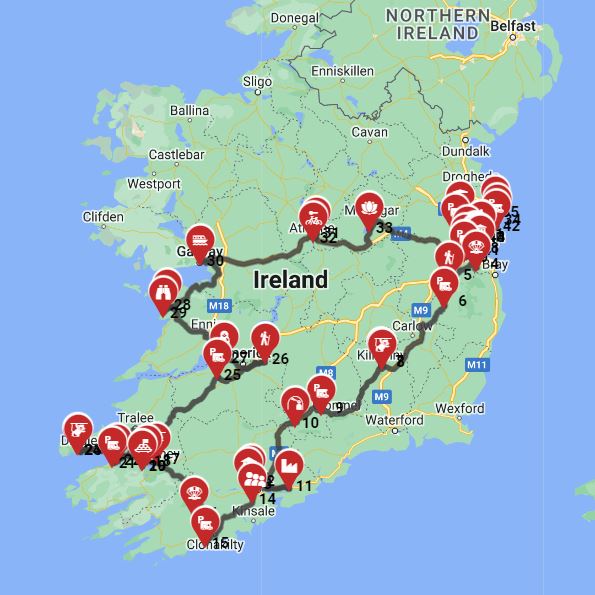
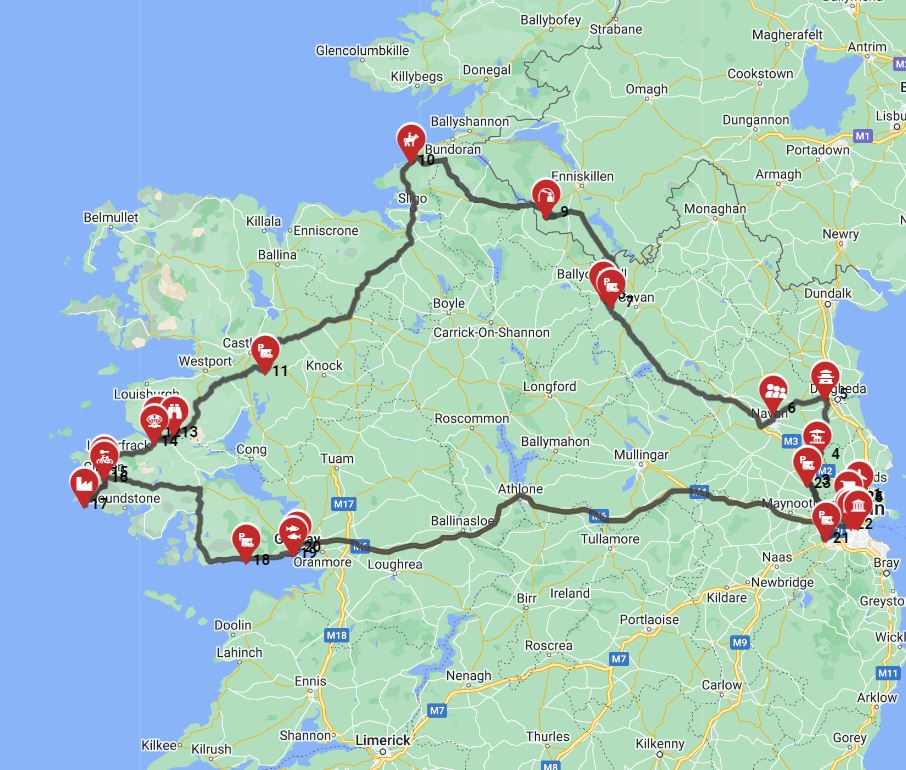
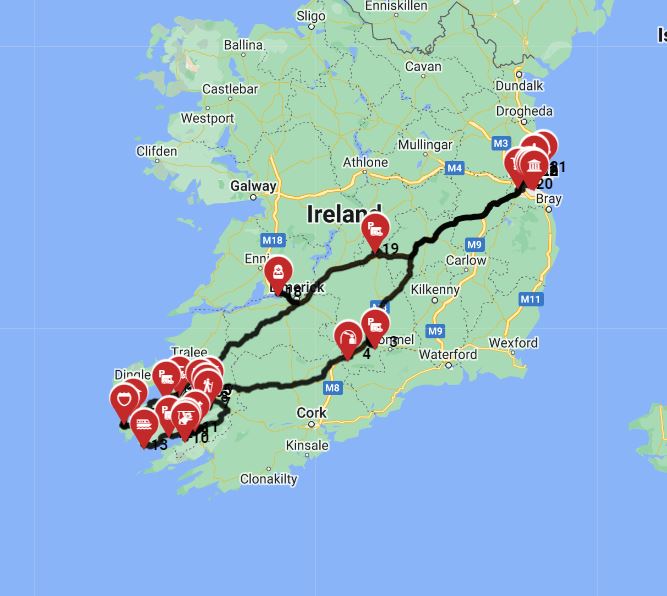
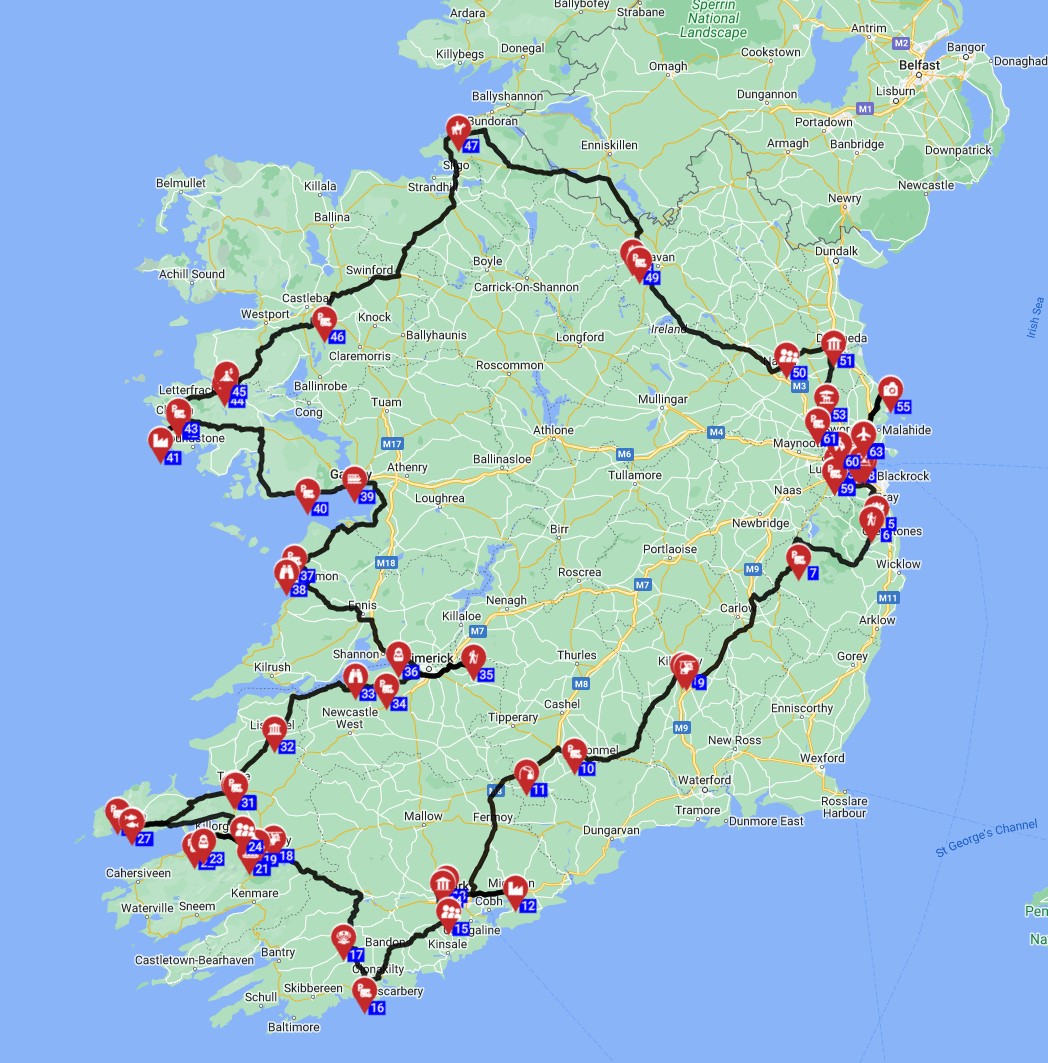
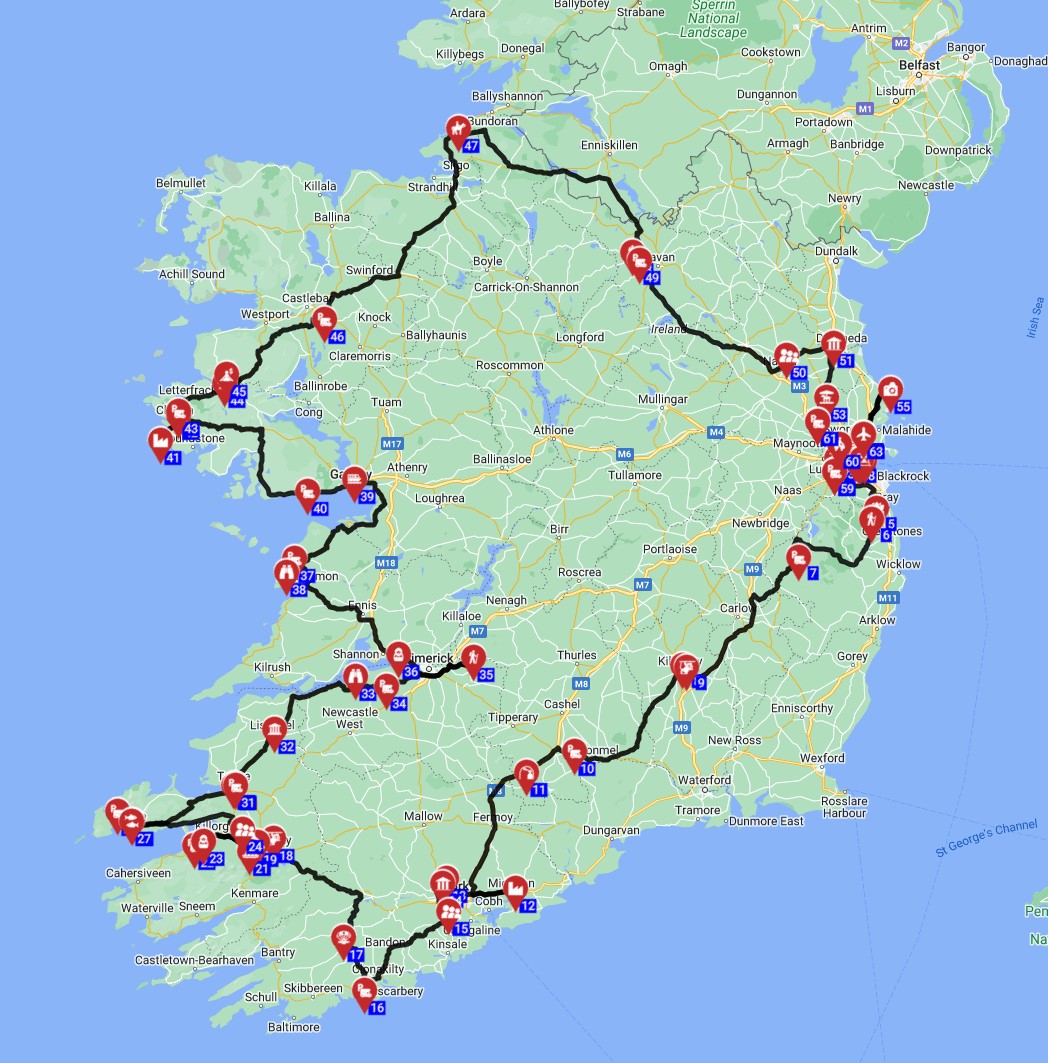
For an extensive exploration of Ireland starting from Dublin, RVPlan recommends the '
Must-See Stops Along the Way (Avi Bandana Picks)
Avi Bandana's personal picks for an unforgettable RV journey around Dublin and Ireland emphasize cultural immersion, local craftsmanship, and traditional experiences:
- Powerscourt House & Gardens (Traditional Visit): Located in County Wicklow, this estate offers stunning formal gardens, a grand Palladian mansion, and Ireland's highest waterfall. Perfect for a leisurely traditional visit.
- Blarney Castle & Gardens (Traditional Visit): Near Cork, this iconic castle is a must-see for its historic significance and the chance to kiss the famous Blarney Stone, said to bestow the gift of eloquence.
- Bunratty Castle & Folk Park (Traditional Visit): In County Clare, explore a beautifully restored 15th-century castle and a living recreation of 19th-century Ireland, complete with traditional village life.
- Connemara Smokehouse (Local Industry): Situated in Connemara, this is a fantastic opportunity to witness traditional Irish artisan food production and sample delicious smoked salmon and other local seafood.
- Seeking Local Markets & Traditional Restaurants: Throughout your journey, keep an eye out for local markets to taste regional produce and traditional Irish restaurants for authentic culinary experiences, from hearty stews to freshly caught seafood.
Daily Driving Distances & Drive Times in Dublin
Avi Bandana recommends a maximum of 100 miles or 150 km per day on average for RV travel in Ireland, advocating for a slow travel approach to fully appreciate the scenery. This guideline helps avoid driver fatigue and allows ample time for spontaneous stops, exploring charming villages, and navigating potentially narrower roads. While main motorways are efficient, secondary roads in Ireland are often winding and require slower speeds, making shorter daily distances more enjoyable and practical for an RV.
- Dublin to Kilkenny: Approximately 125 km (78 miles), taking around 1.5 to 2 hours of driving, plus time for breaks.
- Cork to Killarney: Roughly 85 km (53 miles), with an estimated driving time of 1.5 hours, allowing plenty of time to explore the start of the Ring of Kerry.
- Galway to Cliffs of Moher (via Wild Atlantic Way): Approximately 75 km (47 miles), typically taking 1.5 hours, excluding stops at scenic viewpoints along the coastal route.
Best RV Class for This Itinerary — Couple & Family Picks
Choosing the right RV for your Dublin and Ireland adventure is key to comfort and maneuverability on Irish roads. Consider these recommendations:
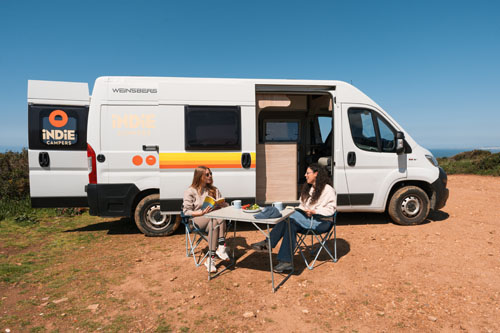
- Ideal for Couples: Class B - Camper Van
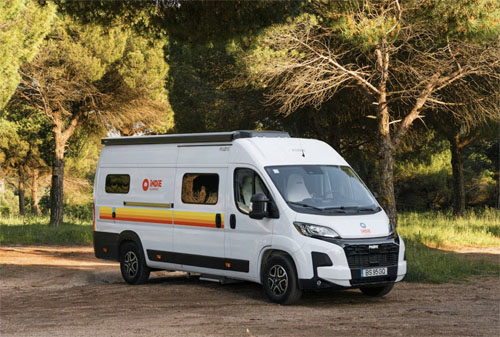
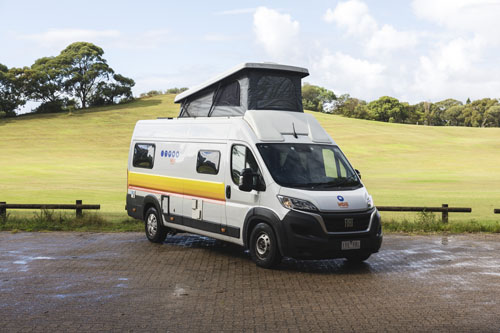
For couples, a Class B Camper Van is highly recommended due to its compact size, making it easier to navigate Ireland's often narrow and winding roads and to park in towns. Bandana's global fleet typically features Class B Camper Vans with an average length of 5.8 meters and sleeping places for 3.2 people, offering a snug yet comfortable experience. These vans typically achieve fuel consumption around 8-10 Liters/100 km, making them an economical choice. - Ideal for Families: Class C - Alcove
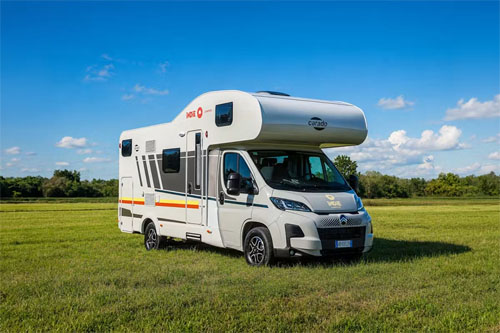
For families, the Class C Alcove RV provides significantly more living space and dedicated sleeping areas, ensuring comfort for everyone. Bandana's global fleet's Class C Alcove models average 7.5 meters in length and comfortably sleep 5.8 people, with an average capacity for 4.4 adults. While larger, these RVs offer the amenities needed for family travel and typically consume 10–12 Liters/100 km, balancing space with reasonable fuel efficiency. Consider using Bandana's 'Rent & Plan' service, which combines your RV rental with a ready-made itinerary by travel experts, giving you full access to trip-planning software and removing the headache of organizing your adventure.
What is the 3-3-3 rule for RV travel?
The 3-3-3 rule for RV travel is a widely adopted guideline that suggests driving no more than 300 miles (or around 480 km) in a single day, arriving at your campsite or destination by 3 PM, and staying for at least 3 nights. This rule is designed to prevent driver fatigue, allow ample time for setting up camp, and encourage travelers to thoroughly explore each location rather than constantly moving. While beneficial for longer trips in larger countries, in Ireland, where distances are shorter and roads can be more challenging, a modified or more relaxed version (like the 2-2-2 rule) is often more appropriate for maximizing enjoyment and minimizing stress.
What is the 4 4 4 rule for RVing?
The 4-4-4 rule for RVing is a variant of travel guidelines, recommending driving no more than 400 miles (approximately 640 km) in a day, stopping by 4 PM, and staying for a minimum of 4 nights at a single location. This rule caters to travelers who prefer to cover more ground on driving days but still desire longer stays to immerse themselves in a destination. Given Ireland's compact size and the density of attractions, adhering to a 400-mile daily drive might mean missing many scenic stops and experiencing rushed travel, making it less ideal for a typical weekly rental itinerary around Dublin.
What is the 2 2 2 rule for RV travel?
The 2-2-2 rule for RV travel is a more relaxed guideline that advises driving no more than 200 miles (approximately 320 km) in a day, stopping by 2 PM, and staying for at least 2 nights at each destination. This rule is particularly well-suited for an RV trip in Ireland, especially for a weekly rental around Dublin, as it promotes slow travel, allowing ample time for exploration and enjoying the journey. It aligns perfectly with Avi Bandana's recommendation of limiting daily driving to 100 miles/150 km, ensuring a relaxed pace to navigate Ireland's scenic routes, manage logistics like finding dump stations, and deal with potentially limited cell service in remote areas. On the routes offered through RV PLANET routes, you can itemize and track every expense along the way for easy budgeting.
Is 7 days enough for Dublin?
While 7 days provides ample time to thoroughly explore Dublin city itself and its immediate surroundings, it is also an ideal duration for an RV road trip starting from Dublin to experience a broader region of Ireland, such as the Ancient East or a segment of the Wild Atlantic Way. For a city-focused visit, you can immerse yourself in Dublin's culture, history, and nightlife, utilizing RV-friendly campsites near the city (e.g., Camac Valley) and public transport for city access. However, for an RV adventure, a week allows for a fantastic loop out of Dublin, combining city highlights with scenic drives to places like the Wicklow Mountains, Kilkenny, or the Boyne Valley, offering a taste of Ireland's diverse landscapes and heritage.
Can Google Maps be used for motorhomes?
While Google Maps provides general navigation, it lacks critical RV-specific information such as low bridge clearances, weight restrictions, narrow road warnings, and the locations of dump stations, making dedicated RV navigation apps or GPS devices a safer and more reliable alternative for motorhomes in Ireland. Ireland's roads, particularly outside major motorways, can be narrow, winding, and feature low stone bridges or restricted city access, which Google Maps may not account for in its routing. It is highly recommended to use RV-specific GPS applications like CoPilot RV or Sygic Truck & RV, or even consult a physical road map, in conjunction with Google Maps for general overview, to avoid unsuitable routes and ensure a smooth journey. When driving an RV within Dublin, be extra vigilant for one-way systems, congestion zones, and peak traffic times, as well as specific multi-story car parks that might accommodate RV heights for parking outside the city center.
What shouldn't you miss in Dublin?
When visiting Dublin with an RV, key attractions not to miss include the historic Dublin Castle, the cultural vibrancy of Temple Bar, the iconic Guinness Storehouse for an immersive experience, and the tranquil St. Stephen's Green, all of which can be accessed by parking your RV at designated spots outside the city center and utilizing public transport. For RV travelers, consider utilizing park-and-ride schemes available on the outskirts of Dublin, or RV-friendly campsites near Dublin with direct public transport links into the city, like Camac Valley, to avoid navigating narrow city streets and finding suitable parking for your vehicle.
- Dublin Castle: Explore centuries of Irish history, from Viking settlement to British rule, in this impressive complex.
- Guinness Storehouse: Discover the story of Ireland's most famous stout and enjoy panoramic city views from the Gravity Bar.
- Temple Bar: Immerse yourself in the lively atmosphere of Dublin's cultural quarter, known for its pubs, music, and art.
- Trinity College & The Book of Kells: Witness an ancient manuscript of unparalleled beauty in the stunning Long Room library.
What are some hidden gems for families in Ireland?
Beyond mainstream attractions, Ireland offers numerous family-friendly hidden gems perfect for RV travelers, including the Dún Na Sí Amenity & Heritage Park in Westmeath, the enchanting Fairy Fort Farm in County Kerry, and the scenic walks around Glendalough in County Wicklow, many of which offer suitable RV parking.
- Dún Na Sí Amenity & Heritage Park, Westmeath: A beautiful park with a heritage trail, playground, and traditional Irish farm, offering space for children to run and explore.
- Fairy Fort Farm, County Kerry: An interactive, magical experience where families can learn about Irish folklore, explore ancient fairy forts, and enjoy farm animals, often with accessible parking nearby.
- Delta Sensory Gardens, County Carlow: A tranquil haven designed to stimulate all five senses, featuring beautiful displays, water features, and accessible paths for all ages.
- Glendalough, County Wicklow: While popular, exploring its lesser-known trails and picnic spots can feel like a hidden gem, offering stunning natural beauty and ancient monastic ruins, with larger car parks often accommodating RVs outside peak season.
What is the most beautiful road trip in Ireland?
Widely acclaimed as the most beautiful road trip in Ireland, the Wild Atlantic Way offers a breathtaking coastal journey along the entire west coast, though other stunning routes like the Ring of Kerry and the Causeway Coastal Route also provide incredible scenic beauty. The Wild Atlantic Way stretches over 2,500 km (1,550 miles) from Donegal to Cork, showcasing dramatic cliffs, golden beaches, historic towns, and vibrant cultural experiences. While a full Wild Atlantic Way trip requires more than a weekly RV rental from Dublin (as highlighted by the 22-day RVPlan 'Dublin Roundtrip - Wild Atlantic Way' itinerary), even a segment, such as the Cliffs of Moher or the Dingle Peninsula, offers an unforgettable experience. RV travelers can enjoy the freedom to explore its many viewpoints, hidden coves, and charming villages at their own pace, making it an ideal choice for a scenic adventure, with numerous RV-friendly campsites along the route.
How to visit Ireland 7 days ultimate road trip?
To achieve an ultimate 7-day RV road trip in Ireland from Dublin, focus on a regional loop like the Ancient East or a concentrated segment of the Wild Atlantic Way, ensuring daily driving distances remain manageable (under 150 km/100 miles) to allow for thorough exploration of each stop. Planning is essential: pre-book RV-friendly campsites, especially during peak season, and familiarize yourself with Ireland's driving laws, including the barrier-free M50 toll in Dublin. Logistics to consider include fuel prices, planning your dump station stops, and carrying local currency for smaller purchases. For a 7-day trip, consider a loop covering the Southeast (Wicklow, Kilkenny, Waterford) or journeying west to explore a section of the Wild Atlantic Way (e.g., Clare and Galway), returning to Dublin. Remember to use an RV-specific GPS to navigate narrow roads and low bridges, and be aware of wild camping restrictions across the country, opting for official campsites for overnight stays.
What is the most scenic drive in Ireland?
Often considered the most scenic drive in Ireland, the Ring of Kerry is an iconic circular route around the Iveragh Peninsula in County Kerry, offering spectacular ocean views, ancient monuments, and picturesque villages, perfectly suited for an RV exploration over several days. This 179 km (111 miles) route, a highlight of the Wild Atlantic Way, provides breathtaking vistas of rugged coastlines, sandy beaches, and mountains, with key stops including Killarney National Park, Ladies View, and the quaint village of Sneem. While beautiful, parts of the Ring of Kerry can be narrow and winding, making slow travel in an RV highly recommended. RV travelers should aim to dedicate at least 2-3 days to comfortably navigate and appreciate its beauty, stopping at various viewpoints and charming towns, and utilizing local campsites.
What You Shouldn't Miss
- Explore the Celtic roots in Kilkenny: Wander through Kilkenny Castle and the Medieval Mile, soaking in centuries of history and architecture.
- Witness the power of the Wild Atlantic Way: Even a shorter section, like the drive towards the Cliffs of Moher, offers dramatic coastal scenery that is quintessential Ireland.
- Discover ancient history in the Boyne Valley: Newgrange and the Hill of Tara offer a glimpse into Ireland's prehistoric past and its rich mythological heritage.
- Immerse yourself in Dublin's culture: Spend a day or two exploring the capital's vibrant pubs, historical sites, and literary landmarks.
- Embrace slow travel in the Wicklow Mountains: Enjoy the serene beauty of Glendalough and the rolling hills, stopping at scenic viewpoints with your RV.
- Sample local flavors: Seek out traditional Irish pubs and restaurants for hearty meals and to experience local hospitality.
Final Thoughts
Renting an RV for a week in Dublin and exploring Ireland offers an unparalleled sense of freedom and connection to the landscape. From the historical richness of the Ancient East to the dramatic beauty of the Wild Atlantic Way, Ireland unfolds beautifully from the comfort of your mobile home. Remember to book in advance, especially for peak seasons, and embrace the slow travel ethos to truly savour this enchanting country.
Whether you're planning a detailed itinerary with RV PLAN or venturing out spontaneously, an RV rental from Dublin promises an unforgettable Irish adventure. Let Bandana Caravan help you find the perfect vehicle for your journey!
Find Motorhome Rentals in DublinFor ideas you can prep on the road, watch our RV-friendly recipes playlist on YouTube.