In This Guide
- Top 5 Tips for RV Rental in Tokyo - Airport
- Before You Book - Class, Dates, Insurance
- Pre-Trip Prep - Packing Checklist for Tokyo - Airport
- On the Road - Driving, Fueling, Navigation
- At the Campground - Setup, Hookups & Etiquette
- RV Rental-Specific Tips for Tokyo - Airport
- Common Mistakes to Avoid in Tokyo - Airport
- How can I coordinate my international flight schedule with RV rental pickup/drop-off times?
- What's the best way to pick up or drop off an RV rental near Tokyo airports?
- How do I find RV parking at Haneda (HND) and Narita (NRT) airports for my rental?
- Where can I find essential services for RVers near Tokyo airports?
- What do foreign RV drivers need to know about driving in Japan?
- How can I navigate Tokyo's streets and parking with an RV?
- Which RV type is best for Japanese roads and city access?
Top 5 Tips for RV Rental in Tokyo - Airport
Planning an unforgettable journey in a rented motorhome from Tokyo - Airport begins with understanding key local considerations. First, securing your campervan or motorhome well in advance is crucial, particularly if you aim to travel during Japan's popular cherry blossom (March-April) or autumn foliage (October-November) seasons, as availability for preferred models like a compact "Paradise Family 5" or a "Category Van" can become limited quickly. Second, obtaining an International Driving Permit (IDP) from your home country before arriving in Japan is not just recommended, it's a mandatory legal requirement for driving any rental vehicle. Third, prioritizing compact campervans or smaller Class C motorhomes is highly advisable for better maneuverability on Japan's narrower roads, especially when venturing beyond major highways into quaint towns or navigating near metropolitan areas. Fourth, take time to familiarize yourself with Japanese road signs, which often feature pictograms but also utilize Kanji, and strictly adhere to local driving etiquette, including always driving on the left side of the road. Finally, confirm your airport transfer options directly with your RV rental company, as most depots are located a short distance from Haneda (HND) and Narita (NRT) airports and require pre-booked shuttle services. For live availability and current prices, start with our RV Rental Tokyo - Airport - Complete Guide 2026 guide.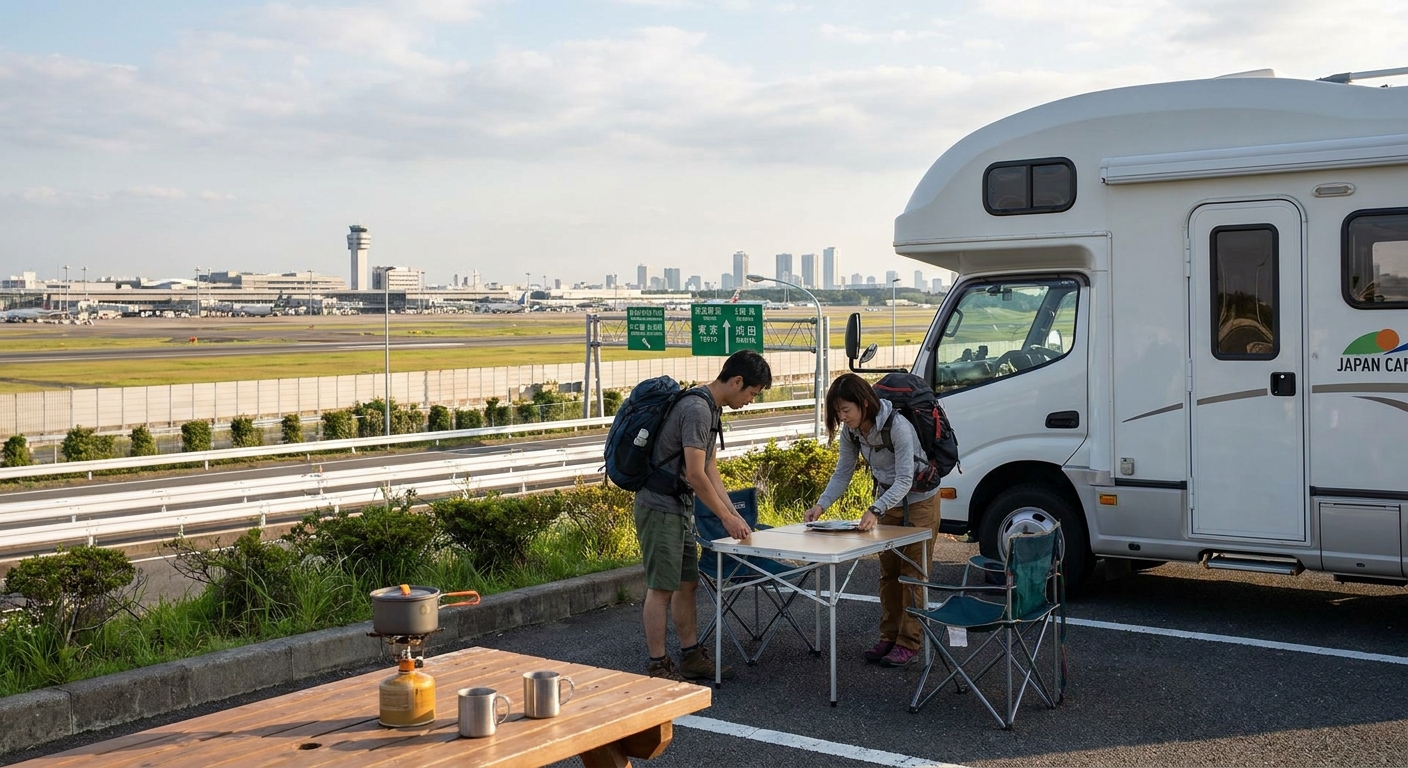
Before You Book - Class, Dates, Insurance
Choosing the right RV class for your rental in Tokyo - Airport largely depends on your group size and comfort preferences, with compact campervans and small Class C motorhomes being the most practical options for Japanese infrastructure. Campervans like the "Active Bunk" or a smaller Class C model offer easier navigation through Japan's often narrower roads and city streets, including around Tokyo's bustling Ginza or Shibuya districts, without issues- just drive slowly and carefully. When it comes to securing your rental dates, booking 3-6 months in advance is highly advisable, particularly for an extended road trip during peak travel times, which ensures you have the widest selection of vehicles and potentially more favorable rates. Basic insurance is always included with RV rentals in Japan; however, for maximum peace of mind, you can upgrade to a top-level deductible reimbursement option, which provides comprehensive coverage in case of unforeseen incidents. Always compare options to understand the full transparency of pricing and features included. For insights into different budget levels, check out our "Luxury RV Rental in Tokyo - Airport - Premium Prices 2026" and "RV Rental in Tokyo - Airport for Couples - Pricing 2026" guides.Pre-Trip Prep - Packing Checklist for Tokyo - Airport
An organized packing checklist is essential for an RV trip in Tokyo - Airport, considering Japan's variable weather and the compact nature of motorhome living. Key items to bring include your International Driving Permit (IDP), comfortable walking shoes for exploring cities like Kyoto or walking through national parks, and layered clothing to adapt to temperature changes. It's often practical to pack light, as storage space in a rented motorhome can be limited, and utilize local supermarkets like Aeon or Ito-Yokado found near both Tokyo airports for provisioning on the go. Essential documents such as your passport, visa (if required), and copies of your RV rental agreement and insurance should always be accessible. Additionally, a portable Wi-Fi device or a local SIM card, offline maps (e.g., downloaded Google Maps regions), and a translation app will prove invaluable for navigation and communication during your Japanese adventure.- Layered clothing for varying temperatures
- Comfortable walking shoes
- Universal power adapter (Japan uses Type A/B outlets, 100V)
- Portable Wi-Fi device or local SIM card
- Reusable shopping bags
- Basic cooking essentials (if not provided by rental)
- Travel-size toiletries
- First-aid kit
- International Driving Permit (IDP)
- Passport and visa (if required)
- Copies of RV rental agreement and insurance documents
- Offline maps (e.g., Google Maps downloaded regions)
- Translation app
On the Road - Driving, Fueling, Navigation
Driving a rented motorhome in Japan requires adherence to local rules, most notably driving on the left side of the road, and an understanding of distinct Japanese signage. Drive slowly and carefully, and you can drive almost anywhere without issues. No need to stress - just use common sense and pay attention. Fueling up typically involves using 'Regular' (レギュラー) gasoline for most motorhomes and campervans, which is widely available at service stations throughout the country. Efficient navigation is crucial, and apps like Google Maps or Japan-specific car navigation systems offer reliable directions, often integrating toll road information for expressways like the Tokyo Bay Aqua-Line. Remember that planning your route with RV PLANET (rvplan.net) allows you to itemize and track every expense, including fuel and tolls, along the way for easy budgeting. For more detailed insights into local driving customs, refer to our "Driving an RV in Tokyo - Airport - Complete Guide 2026" guide.At the Campground - Setup, Hookups & Etiquette
Upon arriving at a Japanese campground, often referred to as 'auto-camp-jo,' always park your rented RV in the clearly marked designated spot before proceeding with any setup. Connecting hookups typically involves plugging into the 100V power outlet (Type A/B), connecting your fresh water hose if available, and ensuring wastewater tanks are ready for disposal at designated dump stations. Observing local campground etiquette, such as adhering to quiet hours (often from 9 PM to 7 AM), maintaining cleanliness in communal areas, and properly sorting and disposing of trash in designated bins, contributes significantly to a pleasant experience for everyone. Many larger Michi-no-Eki also provide basic facilities for RVs, making them great interim stops. Cooking inside your RV is a fantastic way to enjoy local ingredients; find inspiration with our RV-friendly recipes playlist.RV Rental-Specific Tips for Tokyo - Airport
For families planning an RV trip from Tokyo - Airport, selecting a motorhome with a dedicated dinette or multiple sleeping areas can significantly enhance comfort and provide ample space for children during drives or rest. Budget-conscious travelers can explore "Michi-no-Eki" (roadside stations) for potential free overnight parking, offering convenient amenities like restrooms and local produce markets. Seniors, or those seeking extra comfort, might prefer RV models with lower entry steps, ergonomic seating, and clear, easy-to-reach controls for a more relaxed travel experience. Luxury RV renters in Tokyo - Airport can further elevate their trip with premium add-ons such as portable Wi-Fi devices, high-quality cooking utensils, or even concierge services for tailored route plans and bookings. Consider our "Family RV Rental in Tokyo - Airport - Pricing Guide 2026" for more specific vehicle recommendations.Common Mistakes to Avoid in Tokyo - Airport
Underestimating Tokyo's traffic congestion can lead to significant delays; instead, plan your city driving during off-peak hours or utilize public transport for central Tokyo exploration. Attempting to navigate Tokyo's dense urban core with a large RV is often impractical due to narrow streets and limited parking; instead, opt for a compact campervan or park on the outskirts and use the efficient train system. Forgetting your International Driving Permit (IDP) makes driving illegal in Japan; ensure you obtain one in your home country before departure. Ignoring toll road costs can quickly accumulate on expressways like the Shuto Expressway or other major arteries around Tokyo - Airport; instead, consider obtaining an ETC (Electronic Toll Collection) card with your rental to streamline payments and potentially receive discounts. Finally, failing to plan for waste disposal can be problematic; instead, locate designated dump/fill stations at campgrounds or larger Michi-no-Eki along your route before you head out. Don't forget to check our "Last-Minute RV Rental in Tokyo - Airport - What to Expect 2026" if you're booking on short notice.How can I coordinate my international flight schedule with RV rental pickup/drop-off times?
To seamlessly connect international flights with RV travel logistics in Tokyo - Airport, allow a minimum of 2-3 hours buffer time between your flight's scheduled arrival or departure and your RV rental pickup or drop-off appointment. Always confirm the exact operating hours of your rental depot in advance, as many, especially those near Haneda (HND) and Narita (NRT) airports, close in the late afternoon or are not open 24/7. If your flight arrives late or departs very early, consider booking an overnight stay at an airport hotel, which can help minimize stress and allow for a relaxed RV handover the following day. We handle the details, so you can live the journey, providing personal service from day one until your booking is confirmed.What's the best way to pick up or drop off an RV rental near Tokyo airports?
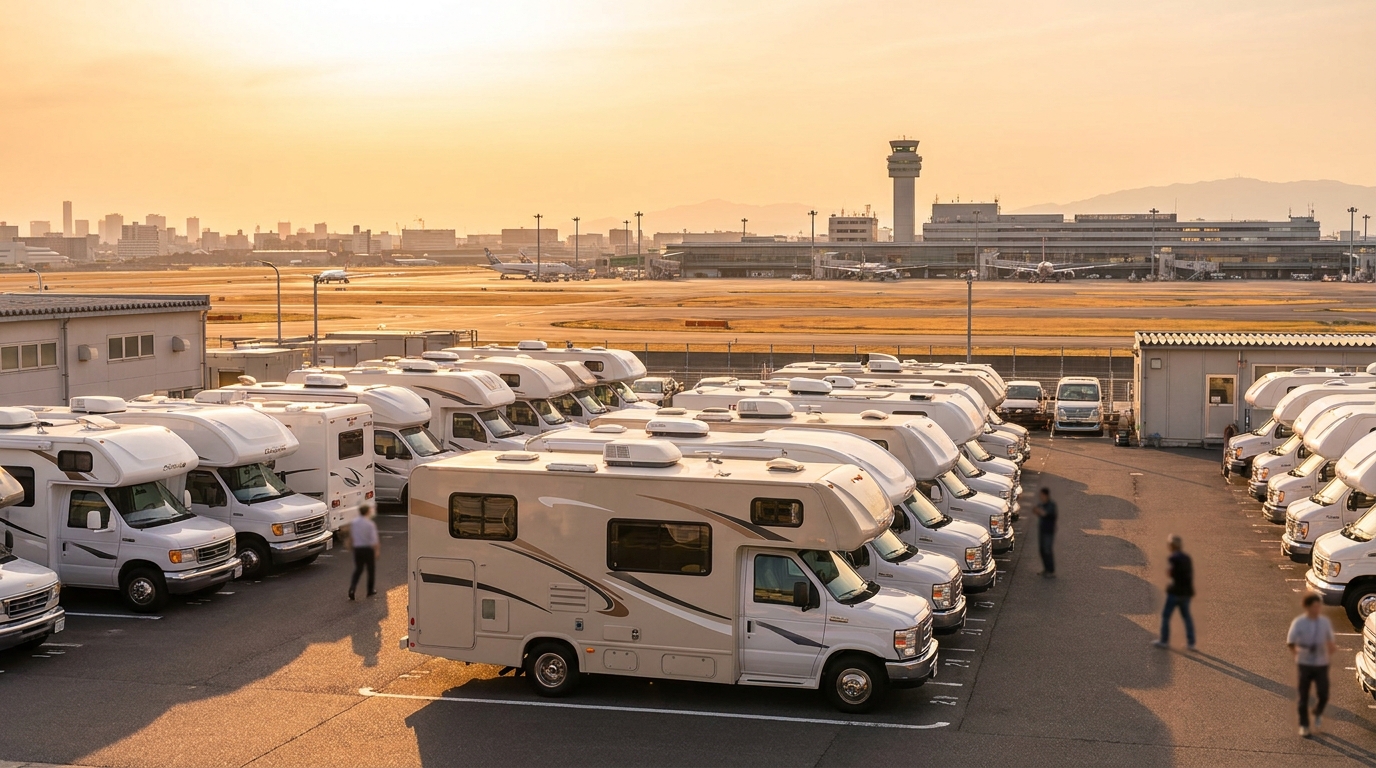
The most convenient way to pick up or drop off an RV rental near Tokyo airports (Haneda or Narita) is typically via a pre-arranged shuttle service provided by your chosen rental company. RV rental depots are rarely located directly within airport terminals, so confirming the exact depot location and available shuttle or public transport connections (e.g., train, bus, taxi) when booking your RV is crucial. Many suppliers like El Monte or Apollo offer complimentary transfers from a designated airport meeting point to their nearby facility, but these services should always be booked in advance to avoid any delays to your adventure. For finding campsites and campgrounds during your trip, we recommend using RV PLANET (rvplan.net) - a great resource for locating available spots along your route.How do I find RV parking at Haneda (HND) and Narita (NRT) airports for my rental?
Finding suitable RV parking directly at Haneda (HND) and Narita (NRT) airports for oversized vehicles can be challenging, as dedicated RV-specific parking is limited or often unavailable. Most airport parking garages have height restrictions, typically under 2.5 meters, making them unsuitable for larger motorhomes like a "6 Berth Deluxe" model. It's essential to check the specific parking facility dimensions and restrictions on the airport's official website prior to arrival with your rented RV. For larger motorhomes, consider alternative off-airport parking facilities with shuttle services, or plan to pick up or drop off your RV at the rental depot and use Tokyo's extensive public transportation system for airport transfers.Where can I find essential services for RVers near Tokyo airports?
Essential services for RVers immediately around Tokyo airports, such as 24/7 gas stations, large supermarkets for provisioning, and specific dump/fill stations, require pre-planning as they are not typically within airport grounds. You can locate 24-hour gas stations (look for `ガソリンスタンド`) along major routes leading away from both Haneda and Narita using navigation apps. Large supermarkets for provisioning, such as Aeon (イオン) or Ito-Yokado (イトーヨーカドー), are typically found in suburban areas a short drive from the airports; planning a stop for groceries before heading out is highly recommended. Designated dump and fill stations are primarily located at registered campgrounds ('auto-camp-jo') or some 'Michi-no-Eki' (roadside stations) further afield, so confirm their availability and location in advance for wastewater disposal and fresh water replenishment.What do foreign RV drivers need to know about driving in Japan?
Foreign RV drivers in Japan absolutely must secure an International Driving Permit (IDP) before arrival, as it is legally required alongside your home country's driving license to operate any rented motorhome. Understanding local driving etiquette, such as giving way to pedestrians, being exceptionally courteous on narrower roads (especially in residential areas or mountain passes), and adhering strictly to speed limits, is crucial for a safe and respectful journey. Familiarizing yourself with common Japanese road signs, many of which use pictograms but some rely on Kanji (Japanese characters), and utilizing essential navigation apps like Google Maps or Japan-specific car navigation systems for real-time guidance are highly recommended. A standard car driver's license is sufficient for all motorhome classes; no special license or additional permits are required.How can I navigate Tokyo's streets and parking with an RV?
Navigating Tokyo's unique driving challenges with a rented RV necessitates choosing a compact vehicle, as city streets can be significantly narrower than those in many Western countries. Drive slowly and carefully, and you can drive almost anywhere without issues. No need to stress - just use common sense and pay attention. Utilize navigation apps with satellite views (like Google Maps) to identify potential height limits for tunnels and underpasses, as well as to scout for available city parking for larger vehicles, which is scarce and often expensive, particularly in central districts like Shinjuku or Shibuya. It's generally more practical to park your rented motorhome on the outskirts of Tokyo, perhaps near a major train station, and use the city's incredibly extensive and efficient public transportation system for sightseeing, thereby avoiding the difficulties of urban RV driving and parking.Which RV type is best for Japanese roads and city access?
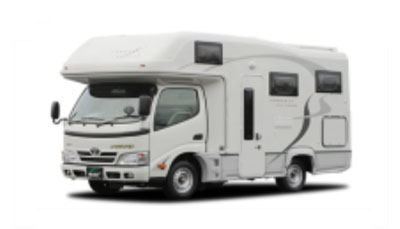
Compact campervans, often based on commercial vans like the Toyota Hiace, or small 'Cab-con' (cab-over) motorhomes are generally considered the best RV types for navigating Japanese infrastructure and ensuring city access, especially from Tokyo - Airport. These smaller vehicles, such as a "2 Berth Hi Top" or a compact "rv rental denver example Category Van" offer superior maneuverability on Japan's narrower roads, are more likely to fit under lower overhead clearances in tunnels and parking garages, and can more easily find parking spaces even in less urbanized areas. Larger Class A or C motorhomes from Western markets are often too wide and tall for many Japanese roads, particularly in urban areas and national parks, making a compact option significantly more practical and less stressful. For more choices, view our "RV Rental Deals in Tokyo - Airport - Latest Offers 2026".🎬 Video coming soon
What You Shouldn't Miss
- Mount Fuji Views from Lake Kawaguchiko: Drive your rented motorhome to the Fuji Five Lakes region, especially Lake Kawaguchiko, for iconic, breathtaking views of Mount Fuji, often considered one of Japan's most sacred sites.
- Hakone Open-Air Museum: Explore this unique outdoor art museum in the scenic Hakone region, offering a blend of nature and contemporary sculpture, easily accessible by a short drive from Tokyo.
- Nikko Toshogu Shrine: Journey north to Nikko to visit this UNESCO World Heritage site, a lavishly decorated shrine and mausoleum of Tokugawa Ieyasu, set amidst stunning natural landscapes.
- Kamakura's Great Buddha: Head south from Tokyo - Airport to Kamakura, a coastal town famous for its historic temples and the impressive Kotoku-in Temple with its colossal bronze statue of Amida Buddha.
- A Drive Along the Boso Peninsula: Enjoy the scenic coastal roads of the Boso Peninsula in Chiba prefecture, offering beautiful beaches, fishing villages, and fresh seafood, perfect for a slow travel pace.
- Onsen Experience in Hakone or Izu: Immerse yourself in Japan's traditional hot spring culture at a public onsen in nearby regions like Hakone or the Izu Peninsula, offering a relaxing break from your travels.
Looking for expert insights from Avi Bandana?
Top 5 Adventures - recommendations from Avi Bandana.
Final Thoughts
Embarking on a motorhome adventure from Tokyo - Airport offers an unparalleled opportunity to discover Japan's captivating blend of ancient traditions and modern marvels at your own pace. With a rented campervan, you gain the freedom and flexibility to craft a truly personalized journey, whether you're chasing cherry blossoms in spring or admiring vibrant autumn leaves. Remember to travel slowly, averaging max 100-150 km per day, allowing ample time to feel the unique charm of each place, connect with the local culture and incredible food, and immerse yourself in the stunning scenery. From navigating local roads with care to finding the perfect 'Michi-no-Eki' for an overnight stay, we hope these tips empower you to confidently plan your dream RV trip. Bandana Caravan is dedicated to ensuring your rental experience is stress-free, offering full transparency and expert support every step of the way. Your Japanese road trip awaits – get ready to create memories that will last a lifetime! Find Motorhome Rentals in Tokyo - AirportOn the routes offered through RV PLANET routes, you can itemize and track every expense along the way for easy budgeting.