In This Guide
- Top 5 Tips for RV Rental in Dublin
- Before You Book - Class, Dates, Insurance
- Pre-Trip Prep - Packing Checklist for Dublin
- On the Road - Driving, Fueling, Navigation
- At the Campground - Setup, Hookups & Etiquette
- RV Rental-Specific Tips for Dublin
- Common Mistakes to Avoid in Dublin
- What are some important things to know before renting an RV?
- What are some tips for camping in Ireland?
- What size RV is good for a beginner?
- Should Americans rent a car in Ireland?
- What is the 3-3-3 rule when RVing?
- What is the 4 4 4 rule for RVing?
- What is the 2 2 2 rule for RV camping?
Embarking on an RV adventure from Dublin offers unparalleled freedom to explore Ireland's stunning landscapes and vibrant culture. Whether you're a seasoned RVer or a first-timer, preparing with the right information ensures a smooth and memorable journey. For live availability and current prices, start with our RV Rental Dublin - Complete Guide 2026 guide.
Top 5 Tips for RV Rental in Dublin
To ensure a smooth RV rental experience in Dublin, it is essential to plan carefully, especially regarding vehicle choice and route planning.
- Book your motorhome or campervan well in advance, particularly for peak season (June-August) and Irish bank holidays, to secure your preferred vehicle and dates.
- Choose an RV or campervan size appropriate for Ireland's often narrow and winding roads; a compact campervan like the "hire campervan example Paradise S/T" (under 6m) is often ideal.
- Thoroughly understand your insurance coverage, including excess and breakdown assistance, which Bandana offers with full transparency and optional top-level deductible reimbursement.
- Plan your route with pre-booked campsites, as wild camping laws are strict in most areas around Dublin and across Ireland.
- Familiarize yourself with driving on the left-hand side of the road and navigating roundabouts before you hit the open road.
Before You Book - Class, Dates, Insurance
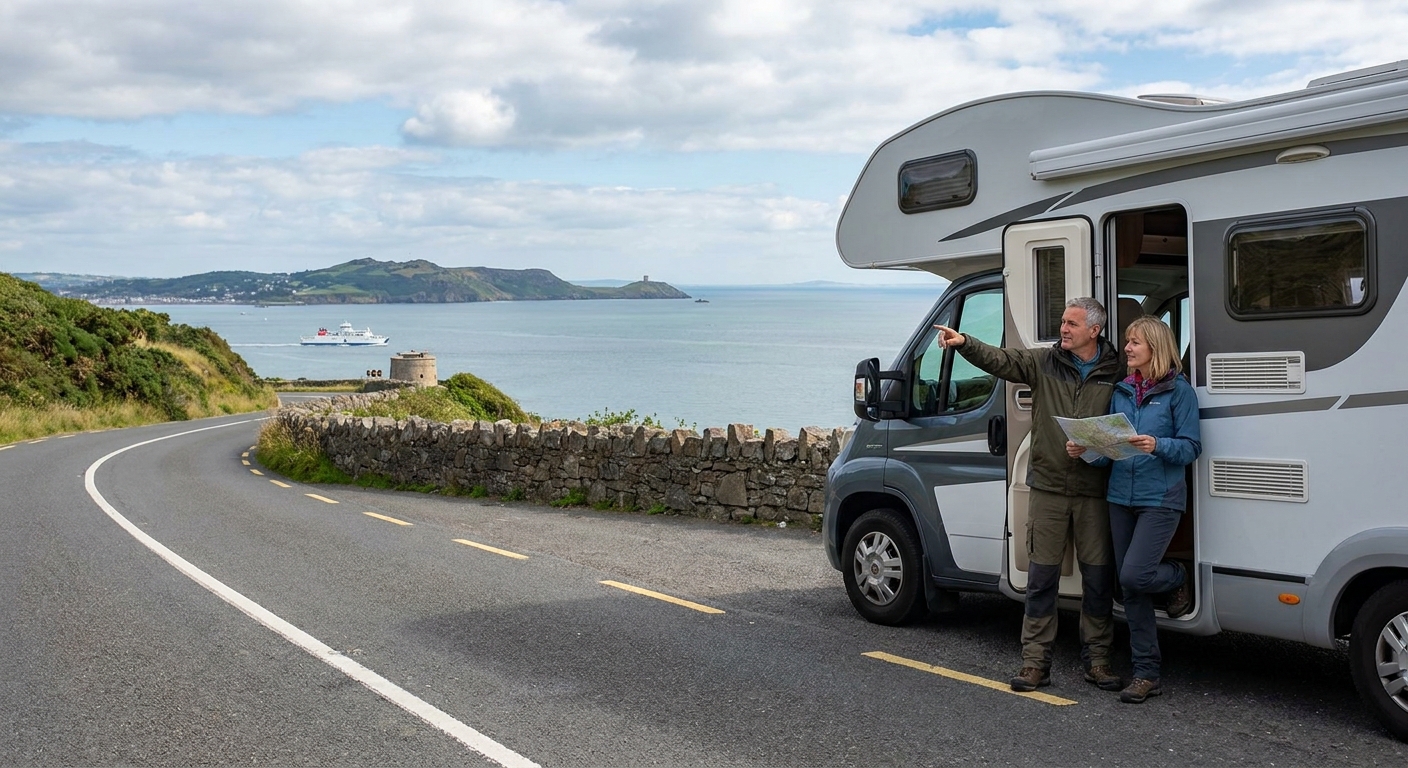
Choosing the right RV class, booking dates strategically, and understanding insurance options are crucial for a smooth RV rental experience in Dublin, with transparent pricing and 24/7 support available pre-booking.
Consider compact campervans or smaller motorhomes (under 6 meters in length), such as a "Category Van" or "rv rentals example Comfort Class" model, for easier navigation on Ireland's often narrow and winding roads, particularly outside major urban areas. For families, a Class C motorhome like the "MHC24" (7.3 meters long) provides more space but requires extra caution. Booking early for summer months (2026 and beyond) and bank holidays is advisable to ensure availability and better rates, as prices are dynamic and change daily based on demand. Basic insurance is always included in your rental, but to see prices including the most comprehensive coverage and to consider an upgrade to a top-level deductible for extra peace of mind, select that option during your search on our platform. Review insurance excess, optional coverages, and breakdown assistance specifics for your rental agreement to avoid any surprises. Remember, Bandana ensures full transparency with no hidden fees, allowing you to compare final prices across suppliers seamlessly.
Pre-Trip Prep - Packing Checklist for Dublin
A comprehensive packing checklist tailored for Dublin's climate and RV travel ensures comfort and preparedness for your Irish adventure, helping you make the most of your rented motorhome.
- Layers of clothing (e.g., thermal base layers, fleece) are essential due to Ireland's unpredictable weather.
- Waterproof jacket and trousers are crucial for enjoying outdoor activities, even on sunny days.
- Sturdy, waterproof walking shoes are a must for exploring national parks and scenic hiking areas.
- A universal travel adapter (Type G plug) is needed for charging devices and using any personal electronics at campsites.
- Local currency (Euros) is useful for tolls, small shops, and parking, especially in rural areas where card payments may not be universally accepted.
- Your driver's license and an International Driving Permit (IDP) are recommended for visitors from non-English-speaking countries.
- Keep your rental booking confirmation and insurance documents easily accessible.
- A first-aid kit, along with any personal medications, is vital for peace of mind on the road.
- Offline GPS maps or a reliable physical map provide essential navigation backup in areas with limited mobile signal.
- A power bank for devices ensures your phone and other gadgets stay charged while on the move.
- A reusable water bottle helps you stay hydrated and reduces plastic waste.
- Insect repellent is advisable, particularly if you plan to spend evenings outdoors at campgrounds.
On the Road - Driving, Fueling, Navigation
Driving a rented RV in Ireland requires familiarity with left-hand traffic, navigating diverse road types, and strategic fueling, all of which contribute to a safe and enjoyable journey from Dublin.
Always drive on the left and be particularly cautious at roundabouts, giving way to traffic from the right. Be aware of narrower roads, especially 'boreens' (small country roads) which are common outside major routes like the N4 or M7; these often have passing places but require slow and careful driving. No need to stress about driving almost anywhere with your RV – just use common sense and pay attention. Diesel is the most common fuel type for motorhomes and campervans in Ireland; always confirm your vehicle's specific fuel requirement. Major fuel stations are plentiful along primary routes, but rural areas may have fewer options, so plan ahead. Use a reliable GPS system, ideally one designed for larger vehicles or with offline capabilities, and supplement with physical maps for comprehensive navigation across Ireland. Plan parking in towns carefully, as RV parking can be limited; for Dublin city, consider using park-and-ride facilities outside the city center, such as those near the Red Cow Luas stop.
🎬 Video coming soon
For more detailed driving conditions and route plans specific to your journey, check out RV PLANET routes, where you can itemize and track every expense, including tolls and fuel, for easy budgeting. On the routes offered through RV PLANET routes, you can itemize and track every expense along the way for easy budgeting.
At the Campground - Setup, Hookups & Etiquette
Proper setup, understanding hookup procedures, and adhering to campground etiquette ensure a pleasant stay at Irish campsites, whether you're near Dublin or exploring the Wild Atlantic Way.
Upon arrival at a campsite like Camac Valley Caravan & Camping Park (Dublin) or Blarney Caravan & Camping Park (Cork), familiarize yourself with reversing and leveling your rented RV; leveling blocks are often helpful on uneven pitches. Connect your electric hookup (EHU) first, typically a 16-amp European blue plug, then connect your fresh water hose to fill the tank (some sites offer direct water hookups). Ensure waste tanks are managed responsibly: grey water (from sinks/shower) should be emptied into designated drains, and black water (from toilet) at chemical disposal points (CDPs). Observe quiet hours, typically from 10 PM to 7 AM, to respect fellow campers and local wildlife. Always keep your pitch tidy, dispose of rubbish in designated bins, and respect shared facilities like showers and toilets. Many campgrounds offer excellent facilities, and pre-booking is highly recommended, especially during popular travel periods, as many national/state parks reserve only 25-30% of spots while the rest are first-come-first-serve. You'll find a spot; if not at the first campground, then the next one. Call ahead before driving to confirm availability.
RV Rental-Specific Tips for Dublin
Tailoring your RV rental experience to specific traveler profiles, like families or budget travelers, can enhance your Dublin trip, leveraging the flexibility of a rented campervan or motorhome.
For families, choose an RV with adequate sleeping and living space, such as a 6-berth Class C motorhome like the "Motorhome MC6 Gold" (approximately 7.2 meters long) that features ample beds and a spacious dining area; plan shorter drives with frequent stops for kids to enjoy attractions like Dublin Zoo or the Viking Splash Tour. Senior travelers might opt for an ergonomic RV with easy access, like a comfortable Class B campervan, and consider locations with accessible facilities. Budget travelers will find smaller, fuel-efficient campervans beneficial and can save significantly by self-catering frequently using the RV's kitchen facilities (check out our RV-friendly recipes playlist for inspiration); research budget-friendly campsites through rvplan.net. Luxury travelers can explore premium RV models with amenities like spacious kitchens and en-suite bathrooms, and consider add-ons like Wi-Fi. To combine RV travel with city exploration in Dublin, park your RV at a well-serviced campsite outside Dublin, such as Newcastle House or Grangebellew, and use public transport (bus or Luas) to visit the city center. This strategy avoids the notorious difficulty of finding suitable RV parking within the city.
Common Mistakes to Avoid in Dublin
Avoiding common pitfalls like underestimating road conditions or neglecting insurance details can significantly improve your RV trip in Dublin, ensuring a hassle-free journey with your rented campervan.
- Don't overschedule your itinerary; instead, allow flexibility for slower travel, averaging 100-150 km per day, and unexpected scenic stops like the Wicklow Mountains just south of Dublin.
- Don't ignore road signs, especially those indicating vehicle width, height, or weight restrictions, which are crucial on Ireland's older, narrower roads; always pay close attention to avoid difficult situations.
- Don't overlook the insurance excess; instead, consider options to reduce it for extra peace of mind, as Bandana offers optional top-level deductible reimbursement.
- Don't attempt illegal wild camping, particularly in popular areas around Dublin; instead, utilize official Fáilte Ireland approved campsites or designated 'aire' type spots.
- Don't rely solely on mobile data for navigation, as rural signal can be patchy; instead, download offline maps or carry a physical map as a reliable backup.
- For tips tailored to your specific trip and vehicle, always talk to a Bandana RV specialist who genuinely knows RV travel.
What are some important things to know before renting an RV?
Before renting an RV in Dublin, it's crucial to understand vehicle size considerations for Ireland's roads, total cost implications beyond the daily rate, and essential driving requirements to ensure a well-prepared trip.
Ensure your standard car driver's license is valid for motorhomes in Ireland; an International Driving Permit (IDP) is recommended for non-EU license holders but is not mandatory in most cases. Anticipate additional costs such as fuel, tolls (e.g., M50), ferry fees (if traveling to islands), campsite fees (averaging €30-€50 per night), and potentially higher insurance excess if you don't opt for additional coverage. Ireland's roads are often narrow, especially 'boreens' and in historic villages, so selecting a smaller campervan or motorhome (e.g., 5-6 meters in length) is generally advisable for a more comfortable driving experience. Bandana emphasizes full transparency in pricing, meaning what you see is what you pay, with no hidden fees or surprises. Confirm what is included in your rental (e.g., bedding, kitchen pack) and what optional extras you might need, so you arrive fully prepared for your adventure.
What are some tips for camping in Ireland?
Camping in Ireland involves embracing unpredictable weather, understanding local regulations for wild camping, and respecting cultural etiquette at designated campsites across the country, starting from your Dublin RV rental.
Always book campsites in advance, especially during peak season (June-August), as popular sites near attractions like the Cliffs of Moher or the Giant's Causeway fill up quickly. Be prepared for all types of weather, even in summer, by packing layers and waterproof gear. Understand that true wild camping is largely prohibited on private land without explicit landowner permission and in National Parks; always seek designated Fáilte Ireland approved campsites or specific 'aire' locations for overnight stays. Respect local communities by proper waste disposal, keeping noise levels down, and leaving no trace of your visit. For finding campsites and campgrounds during your trip, we recommend using RV PLANET (rvplan.net) - a great resource for locating available spots along your route, with over 1,300 pre-planned routes across 5 continents available.
What size RV is good for a beginner?
For beginners renting an RV in Ireland, a smaller campervan or compact motorhome (typically under 6 meters in length) is generally recommended due to Ireland's narrow and winding roads, especially away from major motorways.
Compact campervans, often based on van chassis like the "Class I Van" or "rv rental denver example Category Van" models, offer excellent maneuverability, making them significantly easier to drive and park in smaller towns and on rural roads such as those leading to County Kerry's Ring of Kerry. While larger RVs, like a 7.6-meter "CA-25" Class C motorhome, offer more space and amenities (e.g., a larger refrigerator or more sleeping berths for a "Family RV Rental in Dublin - Pricing Guide 2026"), they can be challenging for new drivers, especially when encountering single-track roads or navigating tight city streets in places like Galway or Cork. Prioritize ease of driving and the ability to access a wider range of scenic routes over maximum interior space for your first Irish RV trip. Bandana offers a variety of vehicle classes to compare, ensuring you find the right fit for your comfort and skill level.
Should Americans rent a car in Ireland?
While renting an RV offers immense freedom to explore Ireland's countryside, Americans might consider renting a separate car in Ireland as a supplemental option for exploring Dublin city or very remote areas where RV access or parking is difficult.
RV parking in Dublin city center is extremely challenging and often expensive, with many multi-story car parks having height restrictions (often under 2.1 meters), making a smaller car or public transport a more practical option for city sightseeing. Many RV campers find it convenient to park their rented vehicle at a well-serviced campsite outside Dublin, such as Camac Valley, and then use local bus or Luas (tram) services to commute into the city. Renting a separate small car can also provide flexibility for day trips to areas with very narrow roads unsuitable for a larger RV, or if you plan to visit a city while leaving your RV at a distant campground. Ultimately, the choice depends on your itinerary and comfort with driving different vehicle sizes on Irish roads.
What is the 3-3-3 rule when RVing?
The '3-3-3 rule' in RVing, suggesting driving no more than 300 miles, stopping by 3 PM, and staying for at least 3 nights, offers a relaxed pace that can be adapted for an Irish road trip, promoting slow travel.
In Ireland, due to narrower roads and lower speed limits (typically 80-100 km/h on national roads), the '300 miles' aspect might be better interpreted as '3-4 hours of driving' to avoid fatigue and allow for appreciating the stunning scenery. Arriving by 3 PM allows ample time to set up camp, connect to electric hookups at a Fáilte Ireland approved campground, explore the immediate area, and relax before dinner, which is particularly beneficial when traveling with a rented RV and preparing meals in its kitchen. Staying for at least 3 nights enables deeper exploration of a region, reduces the frequency of packing and unpacking, and fosters a more immersive travel experience, perfect for delving into Irish culture, food, and scenery.
What is the 4 4 4 rule for RVing?
The '4-4-4 rule' for RVing, suggesting driving less than 4 hours, arriving before 4 PM, and traveling with 4 gallons of water, is a guideline for safe and comfortable travel, particularly relevant for conserving resources with a rented RV in Ireland.
Limiting daily driving to less than 4 hours promotes a more relaxed pace, allowing for stops at scenic points like Glendalough or the Rock of Cashel, and reduces driver fatigue on winding Irish roads. Arriving at your campsite before 4 PM ensures you have daylight for setup, increases your chances of securing a desirable pitch, and allows time to settle in. While '4 gallons of water' is a US-centric measure (approx. 15 liters), the principle of carrying adequate fresh water in your RV's 80-120 liter tank is essential, especially when venturing into remote areas or planning for longer stays between refills.
What is the 2 2 2 rule for RV camping?
The '2-2-2 rule' for RV camping, which advises driving no more than 200 miles a day, arriving by 2 PM, and staying for at least 2 nights, promotes a more leisurely and less stressful travel experience suitable for scenic Irish routes and rented motorhomes.
Driving no more than 200 miles (or roughly 320 km, approximately 3 hours of driving) a day in Ireland allows for appreciating the country's rich scenery and avoids rushed travel on potentially challenging country roads. Arriving by 2 PM gives you ample time to check into your campsite, set up your rented RV, and begin exploring the local area or relaxing, without the pressure of a late-day arrival. Staying for at least 2 nights at each location minimizes the constant packing and unpacking, allowing you to immerse yourself more fully in the destination and reduces overall trip fatigue, making your adventure more enjoyable and authentic.
What You Shouldn't Miss
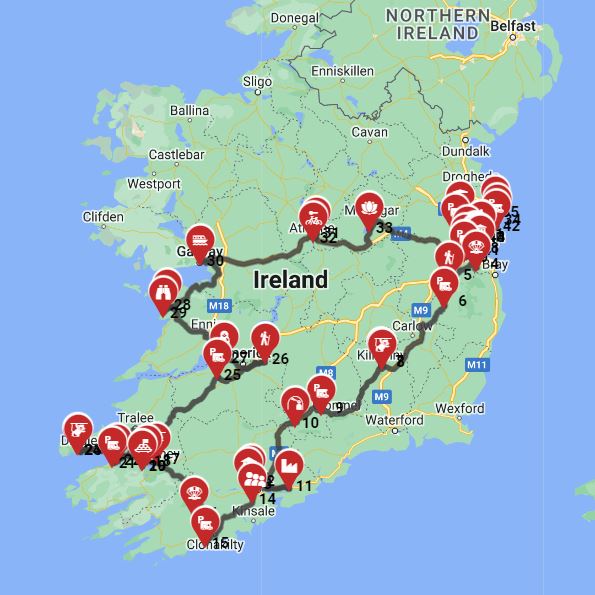
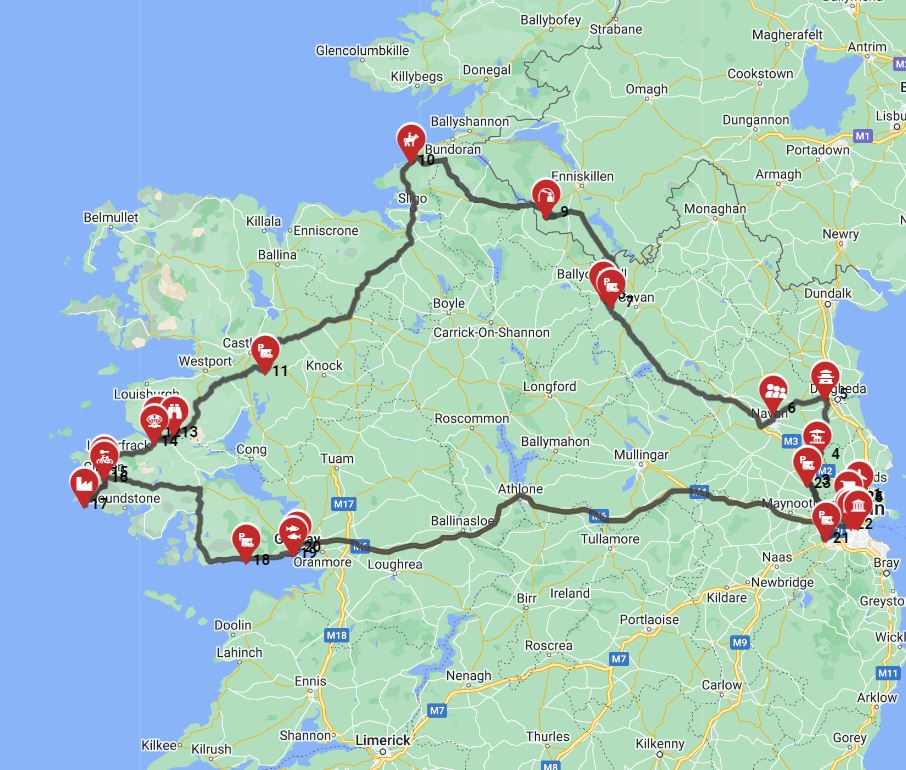
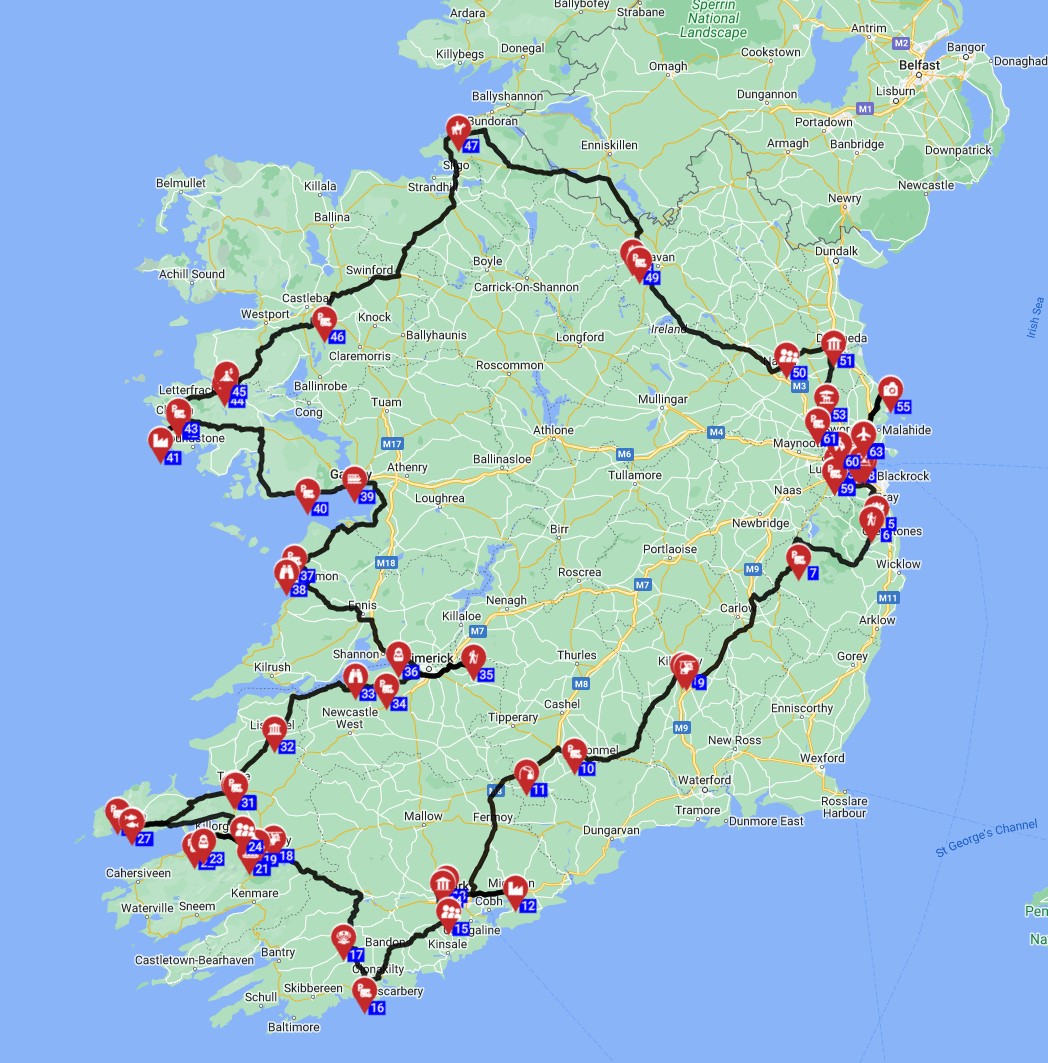
- **Drive the Wild Atlantic Way**: Imagine 2,500 km of rugged coastline, ancient monuments, and charming villages. Starting from Dublin, take your RV rental west to experience breathtaking views, traditional pubs, and vibrant culture. Our "
" route plan covers 22 days and includes 3 wildlife watch opportunities and 4 hiking areas.
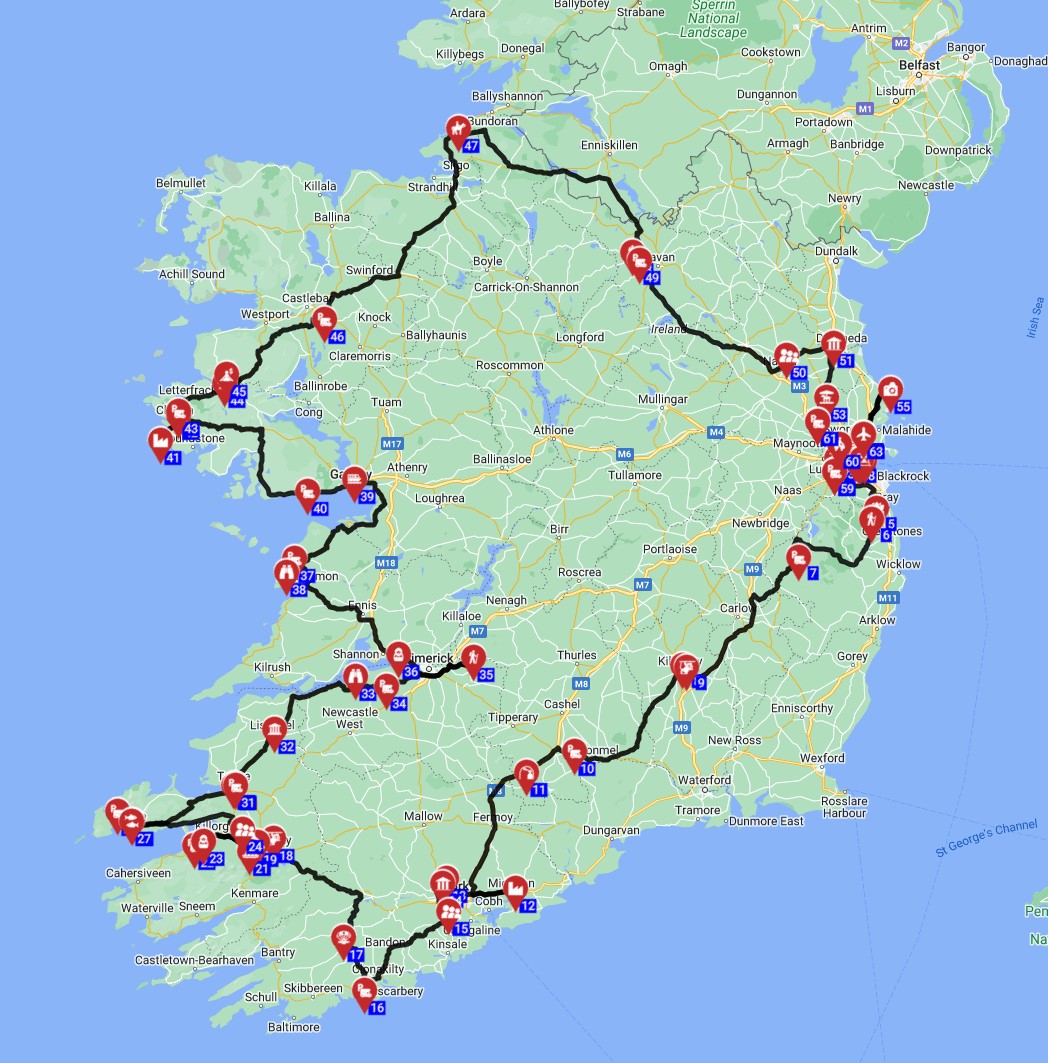 Dublin Roundtrip - Wild Atlantic Way
 - **Explore the Wicklow Mountains**: Just a short drive south of Dublin, this 'Garden of Ireland' offers stunning scenery, glacial valleys, and the historic monastic site of Glendalough. It's perfect for a day trip or an overnight stay in your campervan.
- **Visit the Guinness Storehouse in Dublin**: Even non-drinkers appreciate the history, views, and immersive experience. Afterwards, you can unwind at a nearby campsite, knowing your RV is waiting.
- **Discover the Ring of Kerry**: This iconic 179 km scenic drive offers panoramic coastal vistas, quaint towns, and historical forts. Our "
" route plan includes 1 horseback riding experience and 1 traditional market visit.
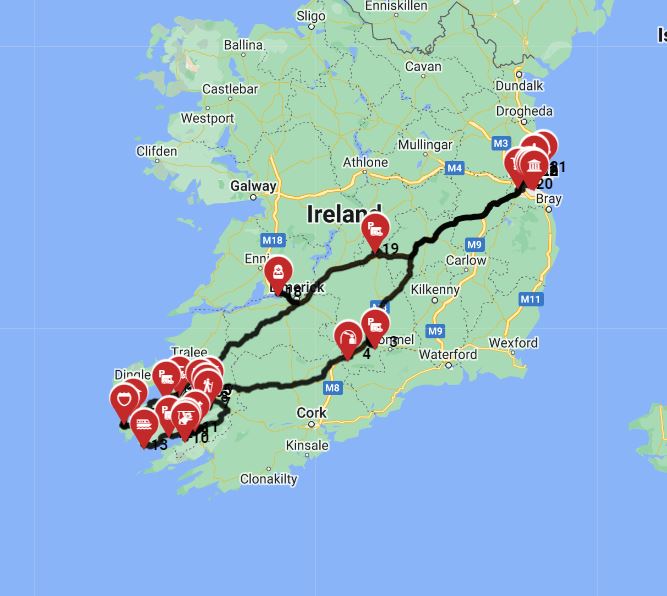 Dublin Roundtrip - Ring of Kerry
 - **Experience Traditional Irish Music**: Seek out a 'trad session' in a local pub in Dublin or any village along your route. It's an authentic way to connect with the culture and enjoy a memorable evening.
- Looking for expert insights from Avi Bandana? Top 5 Adventures - recommendations from Avi Bandana
Final Thoughts
Renting an RV in Dublin opens up a world of adventure, allowing you to immerse yourself in Ireland's enchanting landscapes and vibrant culture at your own pace. With careful planning, choosing the right size campervan, and understanding local driving customs and camping etiquette, your journey will be seamless and unforgettable. Remember to embrace slow travel, allowing ample time to savor each moment and connect deeply with the places you visit.
Bandana Caravan is here to support you from your first search to the moment you pick up your keys. We're true RV specialists, dedicated to making your travel dreams a reality with full transparency, expert advice, and unparalleled support. Imagine waking up to a different scenic view each day, with the freedom of your own mobile home.
Don't wait to start planning your epic Irish road trip. Discover top destinations, planning tips, all in one place, and compare prices for your ideal motorhome or campervan today!
Find Motorhome Rentals in Dublin