In This Guide
- Can You Drive an RV in California? License & Age Rules
- Road Conditions & Terrain in California
- RV Size Limits, Bridges & Restricted Zones
- Fuel: Diesel vs. Petrol & Cost per 100 km
- Tolls, Vignettes & Border Rules
- Driving Tips for rv rental Travelers
- Recommended RV Class for California Roads
- Should I Choose a Compact Van Instead of a Large RV in California?
- Can I Park Anywhere? Free & Wild Camping Rules in California
- Can I Drive an RV Into the City Center? Heights, Tunnels & Local Signage
- How much does it cost to rent an RV in California?
- What is the best time of year to RV in California?
- What is the average cost of RV camping in California?
- How to find RV campsites in California?
- Is RV travel popular in California?
Can You Drive an RV in California? License & Age Rules
Most RVs in California, particularly those under 26,001 pounds (11,793 kg) Gross Vehicle Weight Rating (GVWR), can be driven with a standard Class C driver's license. This means that if you hold a regular car license, you're likely all set to embark on your Californian motorhome journey. However, a Class A or B non-commercial license is required for rented RVs exceeding 26,001 pounds GVWR or those towing heavier trailers, though our fleet primarily consists of motorhomes and campervans that fall within the standard Class C requirements. The minimum age for driving an RV in California is 18, but most rental companies, including our partners, require drivers to be at least 21 years old, with no young driver surcharges or vehicle class restrictions based on age. Foreign drivers can use their valid foreign license for up to one year, but an International Driving Permit (IDP) is highly recommended for licenses not issued in English, providing an extra layer of peace of mind.Road Conditions & Terrain in California
California features a diverse range of road conditions, from multi-lane interstates and well-maintained state highways to winding mountain roads, scenic coastal routes, and even some unpaved forest service roads. Travelers should expect varied terrain, including steep ascents and descents in areas like the majestic Sierra Nevada mountains and picturesque coastal ranges, as well as long, flat stretches through deserts and fertile valleys. Urban areas, particularly around bustling Los Angeles and the vibrant San Francisco Bay Area, are prone to heavy traffic and congestion, requiring patience and careful navigation. Drive slowly and carefully, and you can drive almost anywhere without issues; there’s no need to stress-just use common sense and pay attention. For a relaxed and immersive experience, slow, scenic driving is always encouraged on many routes to safely appreciate California's breathtaking landscapes and navigate any challenging sections with ease.RV Size Limits, Bridges & Restricted Zones
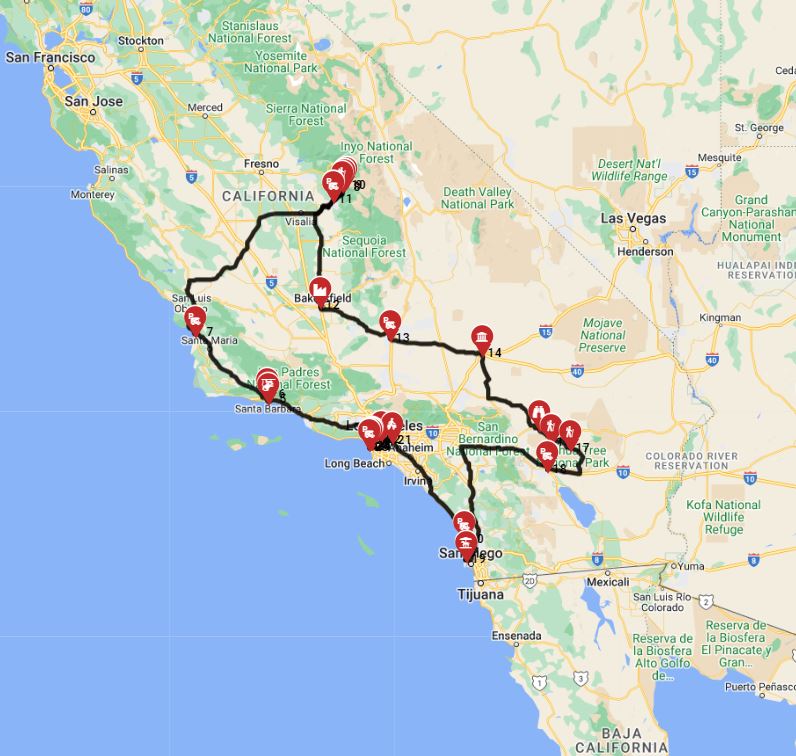
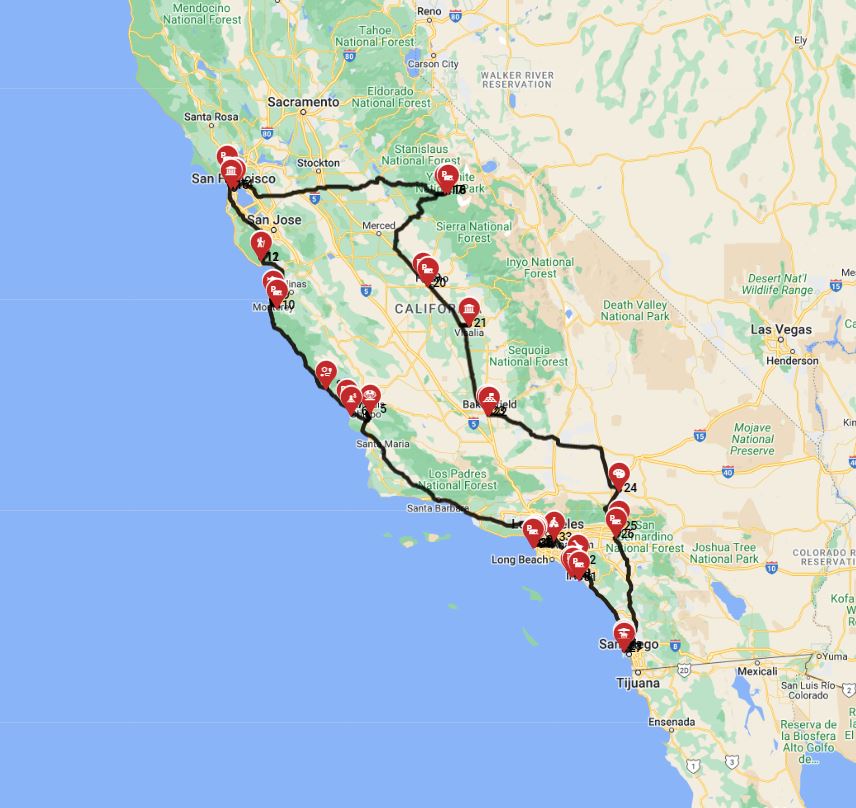
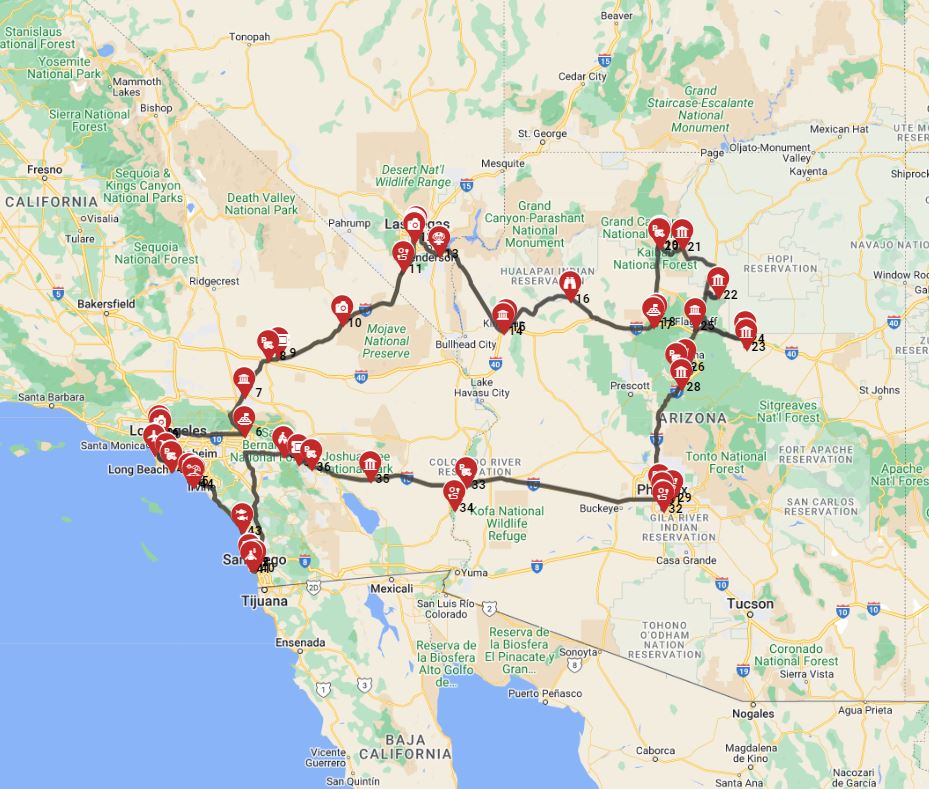
While California generally accommodates larger RVs, drivers must be aware of state-wide length limits, typically 40 feet (12.2 meters) for a single vehicle and 65 feet (19.8 meters) for a vehicle and any towed unit, though specific routes may have stricter limits. Height restrictions for bridges and tunnels are less common on major interstates but can be a concern on older or secondary roads, especially within national parks or quaint historic towns. Some national park roads, such as Glacier Point Road in Yosemite National Park, have length restrictions or are unsuitable for very large RVs due to tight turns and steep grades, making routes like those in "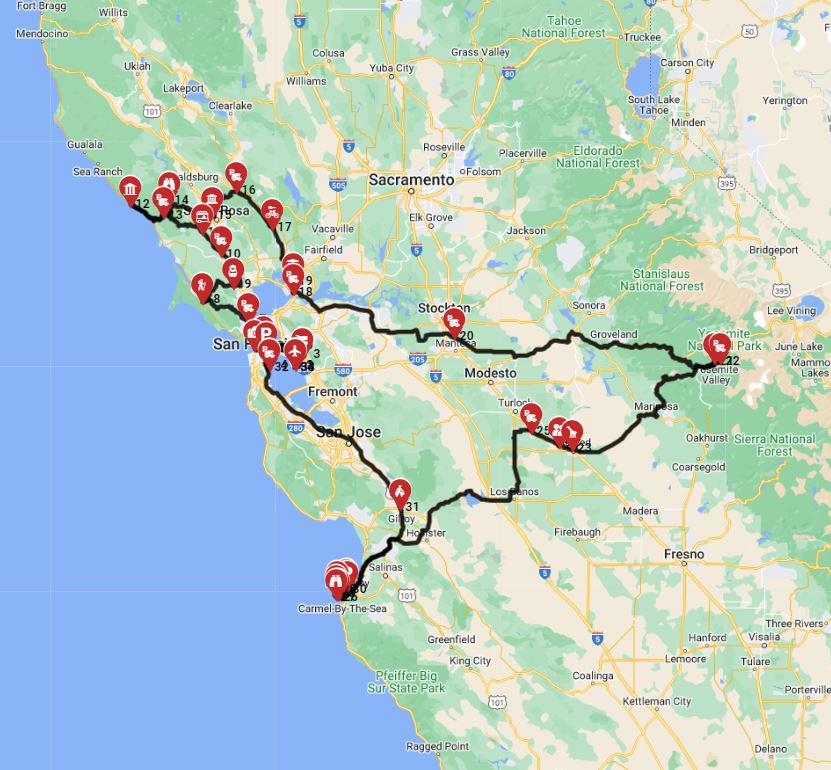
San Francisco Roundtrip
Fuel: Diesel vs. Petrol & Cost per 100 km
RVs in California primarily use either diesel or petrol, with fuel costs fluctuating based on global markets and location within the state; Bandana’s global fleet typically consumes between 8 and 17 liters per 100 km. Class B Camper Vans, like the "Active Pop Top" which is ideal for a couple and measures 5.99 meters in length, generally achieve better fuel economy at 8-10 Liters/100 Km, making them a smart choice for longer journeys. Class C Alcoves and Class SI Semi-integrated RVs average 10-12 Liters/100 Km and 10-11 Liters/100 km respectively, offering more space for families. Diesel is widely available at most gas stations, often at separate pumps for commercial vehicles, while petrol is universally available. When budgeting for your trip, consider your RV type and potential rental perks, as some providers offer fuel discount cards to mitigate costs; remember, on RV PLANET routes, you can itemize and track every expense for easy budgeting.Tolls, Vignettes & Border Rules
California has several toll roads and bridges, predominantly in the San Francisco Bay Area (e.g., the iconic Golden Gate Bridge, the Bay Bridge) and specific parts of Southern California, with some express lanes also requiring tolls. The state primarily uses the FasTrak electronic toll collection system, meaning cash payment at most toll plazas is no longer an option. Visitors can purchase a transponder or set up a "license plate account" online to pay tolls, which helps avoid potential fines for missed tolls. The United States does not use vignettes for road access, nor are there any border rules or checks when driving a rented RV between US states, offering seamless travel across the country. Some RV rental companies may offer pre-purchased FasTrak passes or rental transponders, which can simplify toll payments and ensure a smooth journey.Driving Tips for rv rental Travelers
Always plan your route in advance, paying close attention to potential road closures, height and weight restrictions, and steep grades, especially when heading into mountainous or national park areas. Drive defensively and maintain greater following distances than you would in a car, as larger RVs like a Class C (averaging 7.5 meters in length, like the "Explorer") require more time and space to brake and maneuver safely. Be mindful of your RV's dimensions when making turns and parking; practicing wide turns and using your mirrors frequently will help. Monitor weather forecasts closely for California's diverse regions, as conditions can change rapidly from extreme heat in deserts to heavy snow in mountains or wildfire warnings. We recommend that you travel slowly, max 100-150 km per day on average, taking frequent breaks to combat driver fatigue, especially on long stretches, and allowing extra time for travel due to the more relaxed pace of RV driving.Recommended RV Class for California Roads
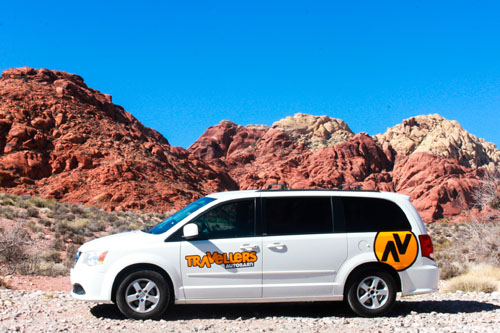
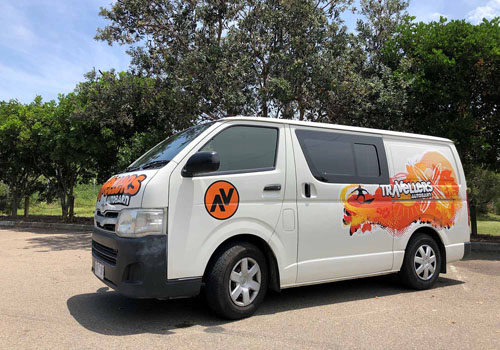
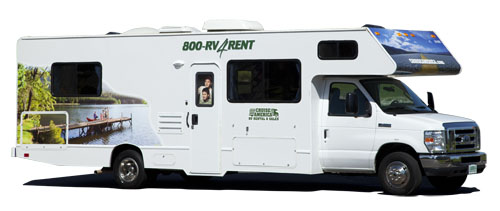
Class B Camper Vans, averaging 5.8 meters in length, are highly recommended for California due to their maneuverability, ease of parking, and suitability for navigating smaller roads and urban areas while offering enough space for 2-3 adults. These compact units, like the "Active Classic" or "Juliette 2-3", provide excellent versatility for diverse Californian landscapes. Class C Alcove RVs, with an average length of 7.5 meters (such as the "Explorer" or "MHC24"), also provide an excellent balance of comfort and reasonable size for California roads, offering more living space and sleeping capacity for families, typically accommodating 4-5 adults. Both Class B and Class C RVs are generally well-suited for most California highways, state parks, and national park access roads, providing ample ground clearance for typical paved and well-maintained unpaved routes. While Class A Integrated RVs (also averaging around 7.5 meters) offer luxury and extensive amenities, their larger profile may be more challenging for first-time RVers or in very congested areas. For details on pricing and availability, consider browsing our RV Rental in California - Prices and Best Deals 2026 resource.Should I Choose a Compact Van Instead of a Large RV in California?
Choosing a compact van, or a Class B Camper Van, over a larger RV in California offers superior maneuverability and easier parking, making it ideal for navigating tight city streets, scenic coastal routes, and some national park roads with specific restrictions. A compact campervan, typically averaging 5.8 meters in length (like the "V3"), provides flexibility for travelers who want to venture into bustling urban centers or explore narrower, winding roads without feeling overwhelmed. On the other hand, larger RVs like Class C Alcoves (averaging 7.5 meters, such as the "MH-A" or "MH-B") or Class A Integrated models provide significantly more interior living space, amenities, and storage, which can be preferable for longer trips, families (many Class C models can comfortably sleep 4-6 people, with some offering enough space for up to 9 adults, like the "Turnagain Voyager 32 - Gold"), or those prioritizing onboard comfort and privacy. While a compact van may be easier to park in popular tourist spots or find street parking, most main roads and major attractions in California are accessible to all standard RV sizes. The trade-off often boils down to comfort versus agility; compact vans offer unmatched flexibility, while larger RVs provide a more spacious "home-on-wheels" experience with robust amenities.Can I Park Anywhere? Free & Wild Camping Rules in California
Free and wild camping, often referred to as boondocking or dispersed camping, is permissible in California on public lands managed by the Bureau of Land Management (BLM) and within National Forests, provided you adhere to specific local regulations and Leave No Trace principles. This offers a fantastic way to experience California's natural beauty without campground fees. Overnight parking and camping are generally prohibited on city streets, at trailheads, within developed state parks, and within most national park boundaries unless you are in a designated campground. Resources like iOverlander, Campendium, and official BLM/USFS websites can help locate legal and suitable free camping spots, though these typically lack amenities like hookups and dump stations. Rules vary by region, so always check local regulations, fire restrictions, and follow local law before parking overnight, ensuring you leave no trace of your visit.Can I Drive an RV Into the City Center? Heights, Tunnels & Local Signage
Yes, you can generally drive an RV into California city centers, but drivers must remain highly aware of local signage for specific height restrictions, tunnel clearances, low bridges, and potential residents-only streets. While major thoroughfares and most urban areas accommodate RVs, challenges may arise with parking availability, particularly for larger units like a Class C Alcove (averaging 7.5 meters in length) in congested downtown areas of cities like San Francisco or Los Angeles. Always pay close attention to signs indicating vehicle height limits for parking garages, underpasses, and drive-throughs to prevent damage. Environmental zones are not a common restriction for RVs in California city centers, unlike in some European cities, but local parking ordinances and street cleaning schedules should always be heeded to avoid fines. Drive slowly and carefully, and you can drive almost anywhere without issues.How much does it cost to rent an RV in California?
The cost to rent an RV in California typically ranges from $100 to $400 per night, varying significantly based on the RV class, rental duration, season, and included amenities. For example, a compact Class B Camper Van might be on the lower end, while a spacious Class C Alcove like the "MHC28" (offering multiple sleeping areas and a full kitchen) could be on the higher end, especially during peak season. Beyond the base rental fee, a comprehensive budget for RV travel in California must account for fuel (with Bandana's fleet averaging 8-17 liters per 100 km), campground fees (from free dispersed camping to over $70 per night for full-hookup sites), activity permits, and groceries. To save money, consider booking during the off-season (fall or spring), opting for a smaller RV, and utilizing the RV's kitchen to prepare meals; check out our RV-friendly recipes playlist for inspiration. Additional costs might include mileage limits, generator usage fees, cleaning fees, and pet fees, so always review the rental agreement thoroughly. For more detailed pricing insights, our RV Rental in California - Prices and Best Deals 2026 provides a comprehensive overview.What is the best time of year to RV in California?
The best time to RV in California depends significantly on your preferred activities and regions, with spring (April-May) and fall (September-October) generally offering ideal weather, fewer crowds, and moderate temperatures across most of the state. Summer (June-August) is peak season, excellent for visiting higher-elevation national parks like Yosemite and Sequoia-Kings Canyon, but expect extreme heat in desert regions and an increased risk of wildfires. Winter (November-March) is prime for exploring California's deserts such as Joshua Tree and Death Valley, and for skiing or snowboarding in the Sierra Nevada, but mountain passes may experience snow closures, and coastal areas can be rainy. To avoid crowds and secure popular campgrounds, booking well in advance (up to 6 months) is crucial, especially for spring and summer trips to sought-after destinations. Our RV Rental Deals in California - Latest Offers 2026 can help you find great prices during these times.What is the average cost of RV camping in California?
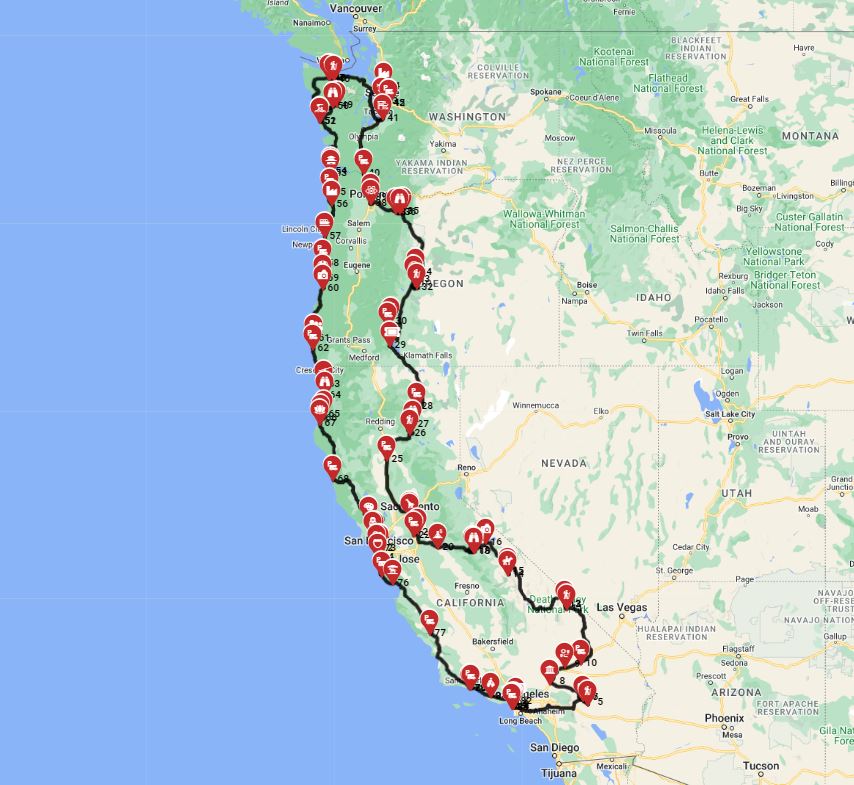
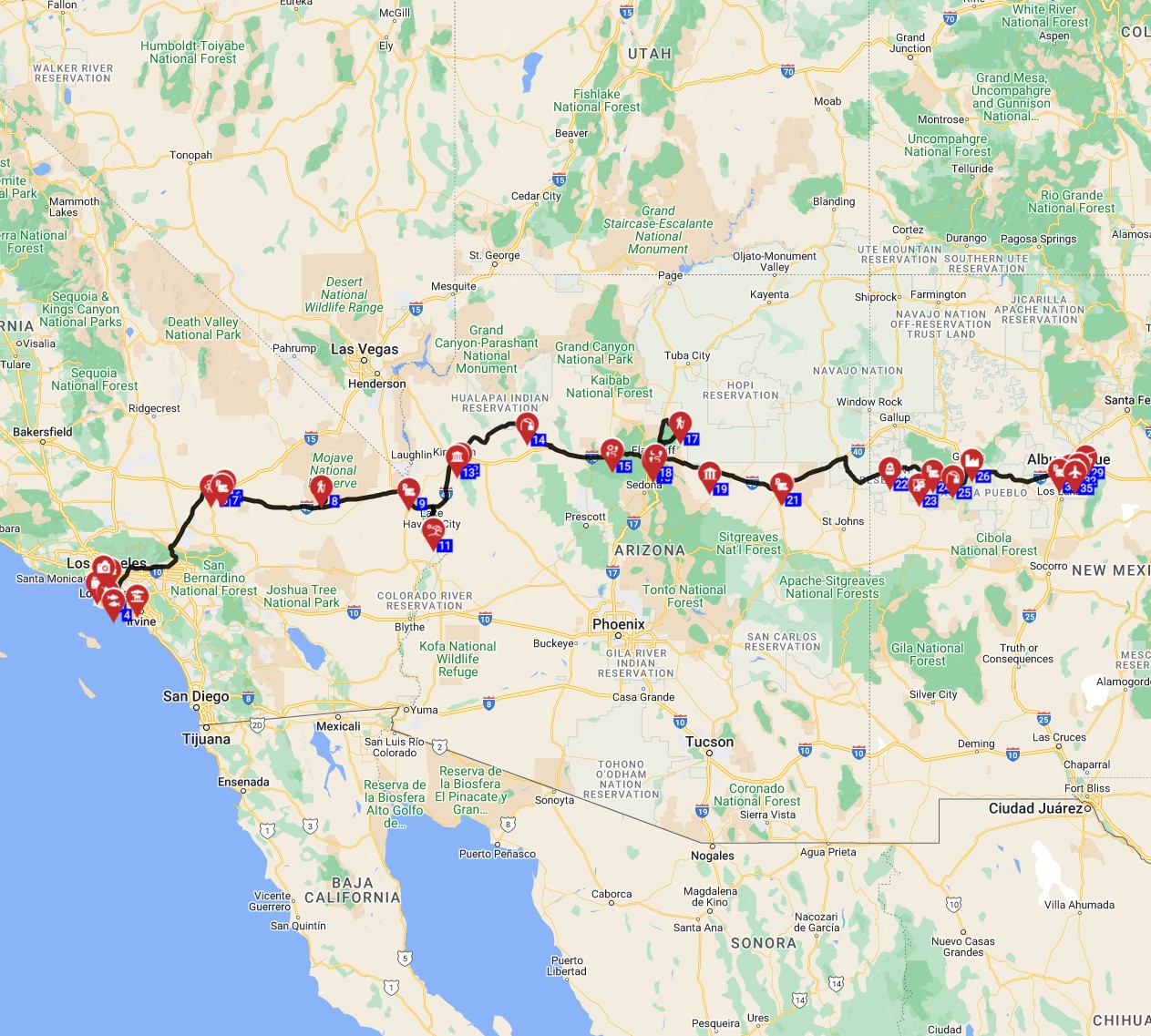
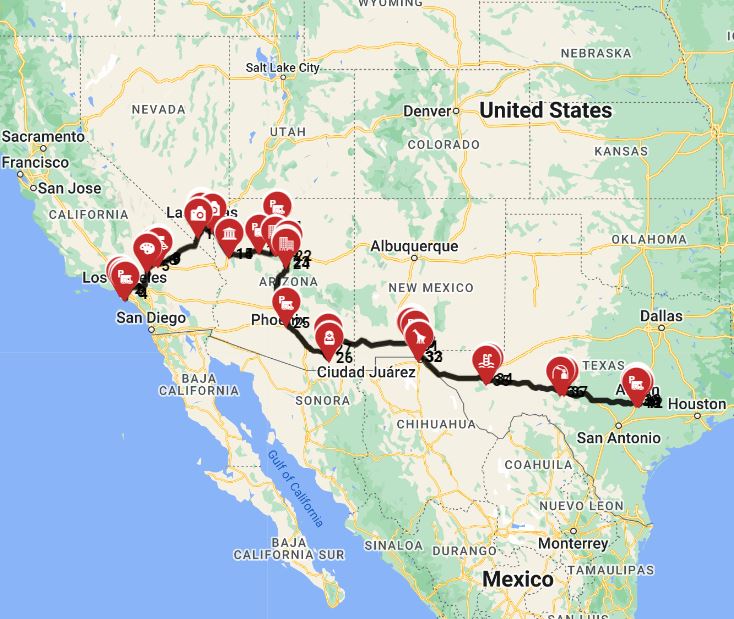
The average cost of RV camping in California can range from free for dispersed camping on public lands to over $70 per night for full-hookup sites at private campgrounds or popular national and state parks. Basic campsites in California State Parks typically cost $30-50 per night, while National Park campgrounds often range from $20-60, usually requiring advance reservations which open up to six months ahead of time. For budget-conscious travelers, free camping options are available on Bureau of Land Management (BLM) and National Forest lands, though these typically lack amenities like hookups and dump stations. Private RV parks, such as KOA or independent resorts, offer a wider range of amenities like full hookups, pools, and Wi-Fi, with prices often starting at $50 and easily exceeding $100 per night in prime locations, like those along a route such as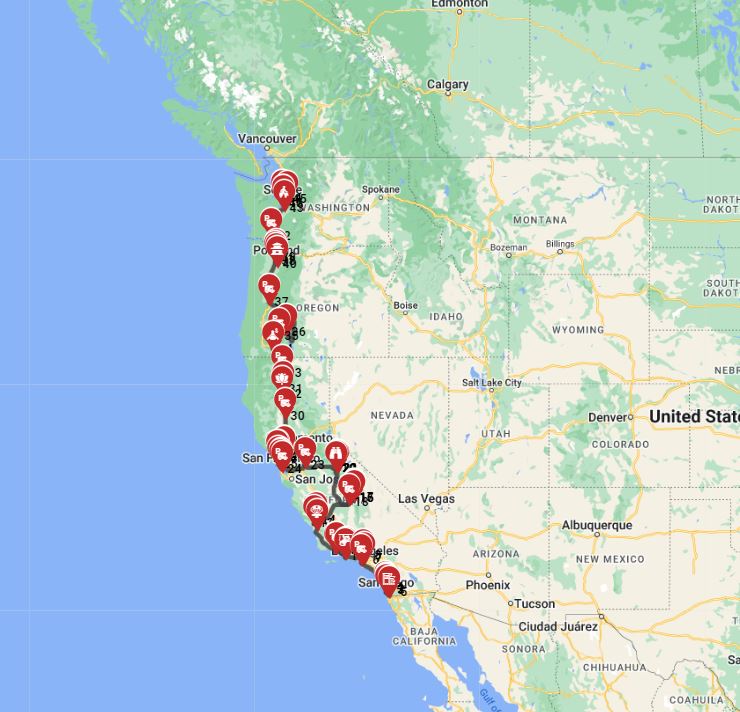
San diego to Seattle - California to the Pacific Northwest
How to find RV campsites in California?
To find RV campsites in California, utilize online reservation platforms such as Recreation.gov for national parks and forests, and ReserveCalifornia.com for state parks, where booking windows often open up to six months in advance. For private campgrounds, websites like KOA, Good Sam, or Hipcamp offer extensive listings and direct booking options, catering to various amenity preferences, often with facilities for Class A, B, and C motorhomes. To locate free or dispersed camping spots on public lands, resources like iOverlander, Campendium, and official Bureau of Land Management (BLM) or US Forest Service (USFS) websites are invaluable. For securing popular campgrounds, aim to book immediately when reservation windows open. For last-minute alternatives, consider first-come, first-served sites, boondocking opportunities, or calling private parks directly for cancellations; remember, you'll find a spot, and if not at the first campground, then the next one.Is RV travel popular in California?
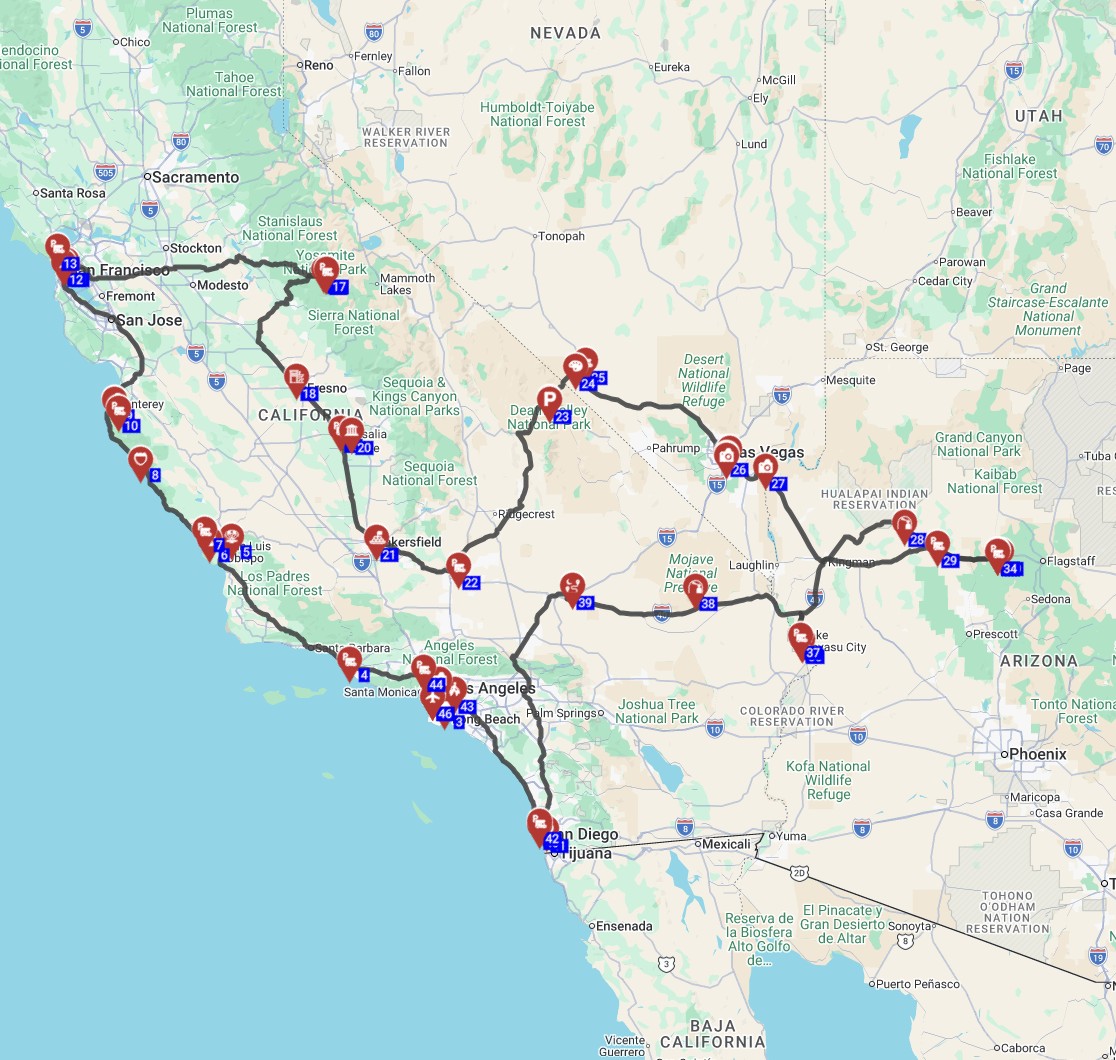
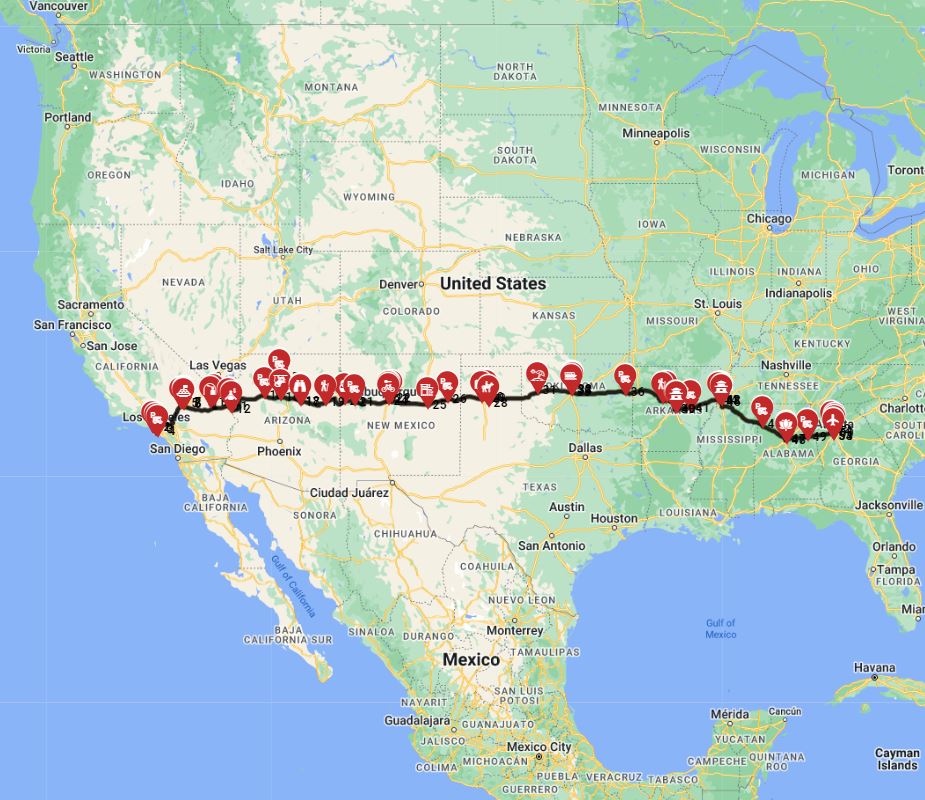
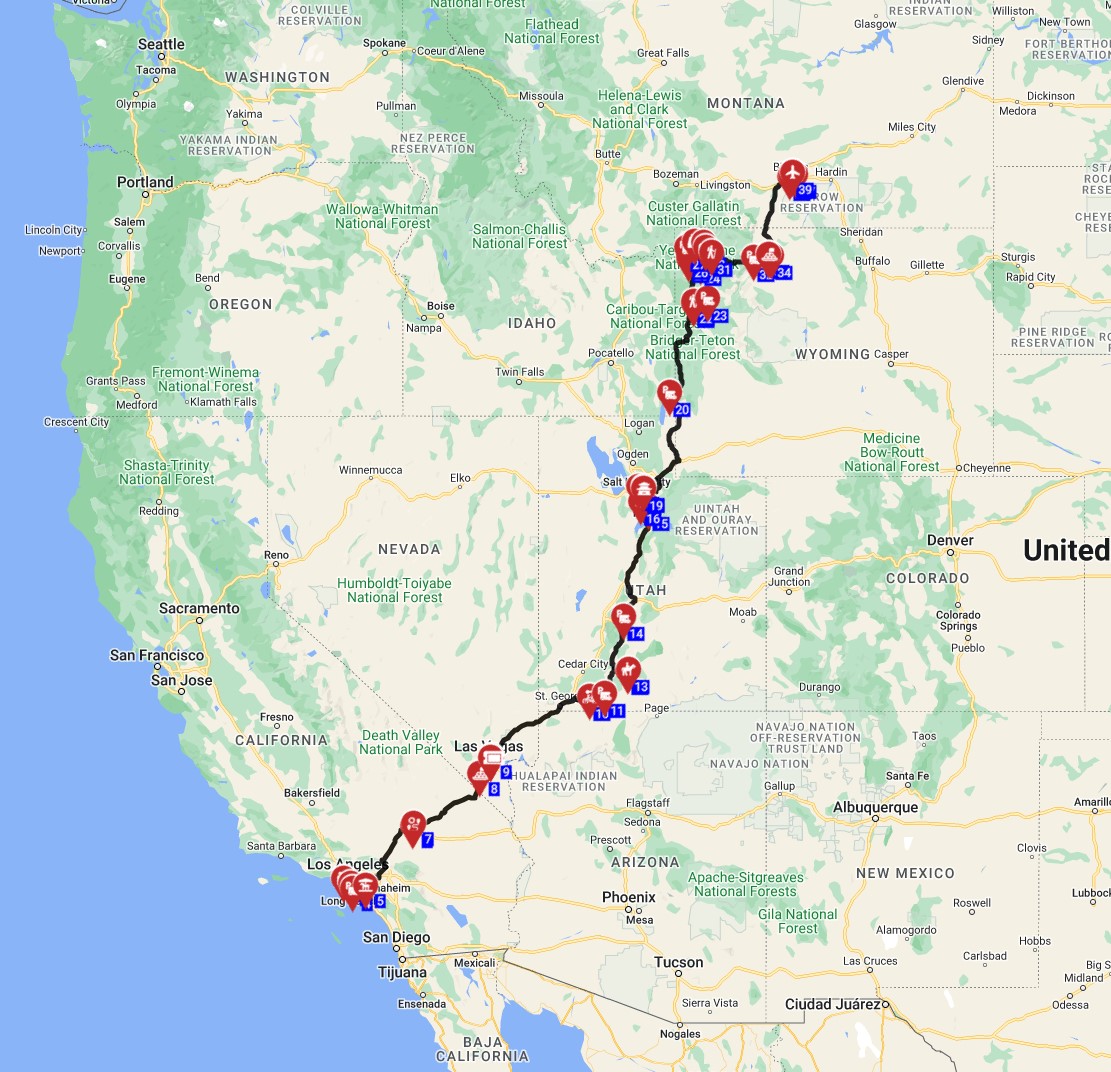
RV travel is exceptionally popular in California, attracting a wide array of domestic and international visitors drawn to the state's diverse landscapes, numerous national parks, and extensive camping infrastructure. The appeal of renting an RV in California stems from the flexibility it offers to explore everything from pristine beaches and towering redwood forests to dramatic deserts and majestic mountains, often with the comfort of a mobile home. The popularity is reflected in the high demand for campsites, particularly during peak seasons, and the abundance of motorhome and campervan rental options available throughout the state from trusted suppliers like El Monte and Cruise America. Many travelers choose rented RVs for the freedom to create personalized itineraries, immerse themselves in nature, and enjoy a cost-effective way to travel with family or friends on an extended road trip. Consider exploring routes like
Charlotte to San Francisco - Southern Roots and California Shores
What You Shouldn't Miss
- **Cruise Highway 1:** Experience the iconic Pacific Coast Highway with your rented motorhome, taking your time to soak in breathtaking ocean views and charming coastal towns. This is a classic comfort route, allowing you to stop frequently and enjoy the scenery.
- **Explore Yosemite National Park:** From the grandeur of Half Dome to the tranquility of Yosemite Valley, this park offers numerous RV-friendly campgrounds, though booking well in advance is essential. Its diverse hiking areas cater to all activity levels.
- **Discover Palm Springs and the Deserts:** For a unique contrast, head to the California deserts like Joshua Tree National Park or Death Valley. Many smaller RVs and campervans can easily navigate the roads, and you'll find plenty of opportunities for stargazing and exploring otherworldly landscapes.
- **Wine Country Wanderings:** Enjoy a leisurely pace through Napa or Sonoma Valley, sampling world-class wines. Many wineries offer RV parking, and the scenic drives are perfectly suited for slow travel, allowing you to connect to the culture and food.
- **Redwood National and State Parks:** Drive your motorhome through towering ancient redwood forests, some of the tallest trees on Earth. Imagine parking your RV right beneath these giants for an unforgettable camping experience in Jedediah Smith Redwoods State Park.
- **Top 5 Adventures - recommendations from Avi Bandana** - Our founder, Avi, has extensively explored California by RV. He recommends spending ample time in the lesser-known state parks, like Humboldt Redwoods State Park, which offers fantastic RV camping among giant redwoods, and Anza-Borrego Desert State Park for its unique desert wildflowers and stargazing. He also suggests integrating a visit to a local traditional market in any city you visit, to truly connect to the culture and food.
🎬 Video coming soon
Final Thoughts
Embarking on an RV adventure in California, especially designed with comfort routes in mind, promises an unforgettable journey filled with stunning landscapes and unparalleled freedom. Whether you choose a nimble campervan for urban exploration or a spacious motorhome for a family-sized week-long trip, the Golden State offers endless possibilities for discovery. Remember, planning is part of the fun, and with Bandana RV, you have a dedicated team of specialists ready to support you every step of the way, ensuring a smooth and transparent booking experience.So, take the scenic route, travel slowly, and allow yourself to truly connect with the diverse culture, incredible food, and breathtaking scenery that California has to offer. Your perfect RV escape is just around the corner, waiting for you to hit the open road and create lasting memories. Life is now-start planning your dream California motorhome journey today!
On the routes offered through RV PLANET routes, you can itemize and track every expense along the way for easy budgeting.