In This Guide
- Can You Drive an RV in Chile? License & Age Rules
- Road Conditions & Terrain in Chile
- RV Size Limits, Bridges & Restricted Zones
- Fuel: Diesel vs. Petrol & Cost per 100 km
- Tolls, Vignettes & Border Rules
- Driving Tips for RV Rental Deals Travelers
- Recommended RV Class for Chile Roads
- Should I Choose a Compact Van Instead of a Large RV in Chile?
- Can I Park Anywhere? Free & Wild Camping Rules in Chile
- Can I Drive an RV Into the City Center? Heights, Tunnels & Local Signage
- How Much Does RV Rental Cost in Chile?
- What is the Best Time to Rent an RV in Chile for Weather and Deals?
- What are the Best RV Routes and Destinations in Chile?
- How Can I Find the Best RV Rental Deals in Chile?
- What Insurance Options Are Available for RV Rentals in Chile?
- Top Cities for RV Rental in Chile
- What You Shouldn't Miss
- Why Book with Bandana Caravan
- Final Thoughts
- Frequently Asked Questions
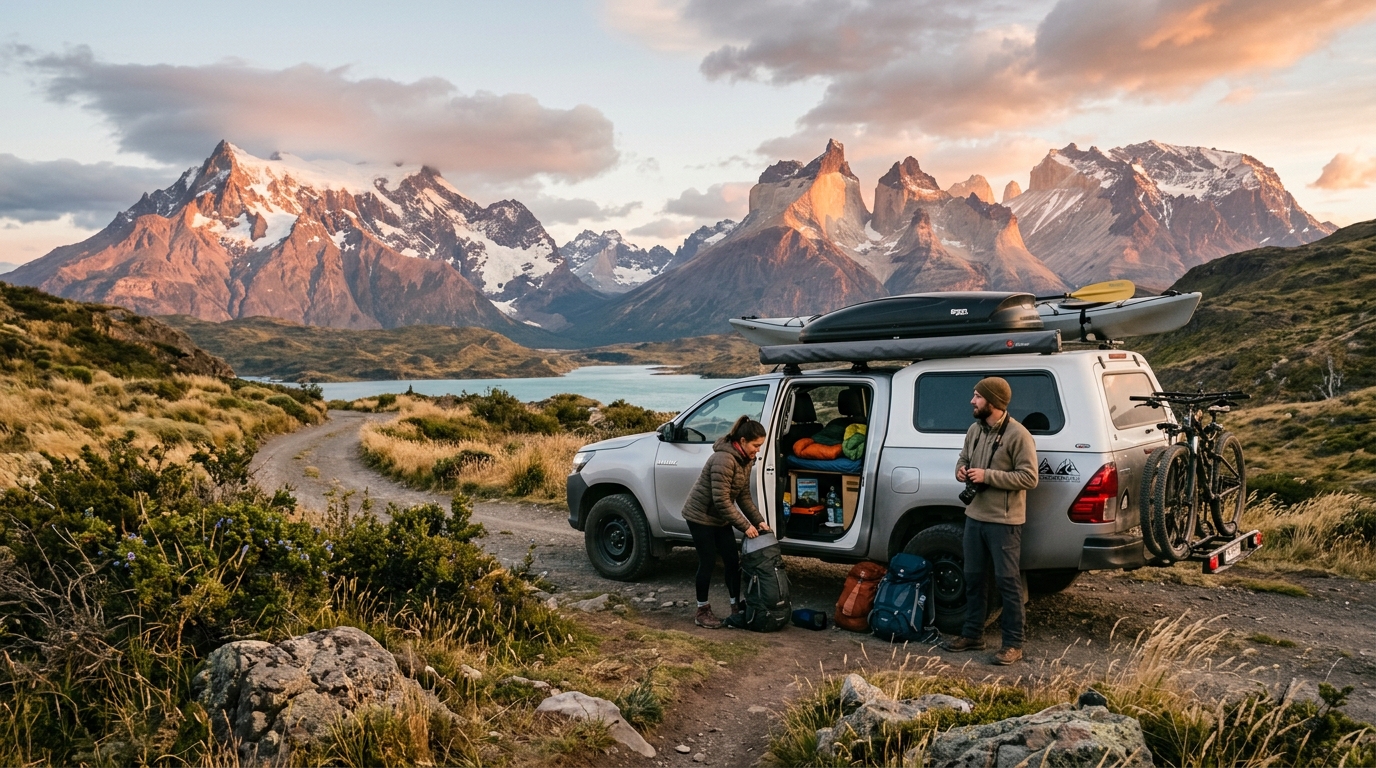
Exploring Chile by motorhome or campervan offers an unparalleled sense of freedom, allowing you to discover its incredibly diverse landscapes at your own pace. From the lunar valleys of the Atacama Desert in the north to the dramatic fjords and glaciers of Patagonia in the south, a rented RV is your mobile base for adventure. To ensure you have all the essential information for a smooth and enjoyable journey, start with our RV Rental Chile - Complete Guide 2026. This comprehensive guide will help you navigate everything from driving regulations to finding the best deals across the country.
Can You Drive an RV in Chile? License & Age Rules
Foreigners can indeed drive a rented RV in Chile, and typically, a valid national driver's license from your home country, along with an International Driving Permit (IDP), is all you'll need. For most rental motorhomes weighing under 3,500 kg, a standard Class B (or equivalent) driver's license is perfectly sufficient. Rental companies in Chile generally require drivers to be at least 21 years old, with no young driver surcharges or vehicle class restrictions based on age, making RV adventures accessible for many. Always ensure you carry your physical driver's license, IDP, passport, and vehicle registration documents while driving in Chile, as roadside checks are a common occurrence.
Road Conditions & Terrain in Chile
Chile offers highly diverse road conditions, ranging from excellent, well-maintained paved highways like the Ruta 5 (Pan-American Highway) to challenging gravel and unpaved sections, especially in the remote regions of Patagonia and some Andean mountain passes. Drivers should anticipate varying terrain, including arid deserts in the north, winding mountain roads in the Andes, and occasionally rough, unsealed roads (locally known as "ripio") in areas such as the Carretera Austral. Urban areas, particularly Santiago, boast modern infrastructure but can experience dense traffic, while rural roads frequently provide breathtaking scenic drives at a leisurely pace. Preparing for these diverse conditions by choosing a suitable rented RV class and allocating ample travel time is crucial for an enjoyable Chilean RV adventure. Remember to travel slowly, aiming for a maximum of 100-150 km per day on average, to truly connect with the culture, food, and stunning scenery.
RV Size Limits, Bridges & Restricted Zones
While Chile generally accommodates most standard rented RV sizes, drivers should be mindful of their vehicle's dimensions, especially when navigating older towns, entering some national parks, and during specific ferry crossings. Few general height or weight restrictions apply on major Chilean highways; however, specific bridges, tunnels, or parking garages in urban centers may have clearly posted limits. Environmental zones, such as those sometimes implemented in Santiago during peak pollution periods, might temporarily restrict vehicle access based on emission standards or license plate numbers, so always check local regulations closer to your travel dates. Ferry travel, particularly to iconic destinations like Chiloé Island or along segments of the Carretera Austral, requires advance booking and confirmation that your rented RV's length and weight are within the ferry's specified capacity. A standard Class C motorhome like the "cruise america rv rental example Explorer" with a length of 7.1 meters is usually well within most limits, but always check for larger Class A motorhomes.
🎬 Video coming soon
Fuel: Diesel vs. Petrol & Cost per 100 km
Most rented RVs and campervans in Chile primarily operate on diesel fuel, which is widely available at service stations throughout the country. However, options may become more limited in very remote areas, making careful planning of fuel stops essential. Based on Bandana Caravan's global fleet averages, a Class SI (Semi-integrated) RV typically consumes 10-11 Liters/100 km, while a Class C (Alcove) motorhome averages 10-12 Liters/100 km, and a Class B (Camper Van) is generally more fuel-efficient at 8-10 Liters/100 km. Fuel prices in Chile are generally comparable to European rates; budgeting for approximately 10-12 Liters/100 km is a realistic estimate for most RV classes, with costs varying slightly by region. When considering ancillary trip costs, remember that with RV PLANET routes, travelers can itemize and track every expense along the way for easy budgeting, including fuel, campground fees, and groceries. On the routes offered through RV PLANET routes, you can itemize and track every expense along the way for easy budgeting.
Tolls, Vignettes & Border Rules
Chile operates a modern electronic toll system, particularly on major highways such as the Ruta 5, where tolls are frequently collected via a TAG device or a temporary "Pase Diario Único" (daily pass) purchased in advance. Unlike some European countries, Chile does not typically utilize physical vignettes for road use; instead, tolls are pay-as-you-go or electronic. If your rented RV trip involves crossing borders from Chile, especially into Argentina, specific vehicle permits, international insurance (Mercosur coverage), and potentially a Carnet de Passages for your rental motorhome will be required, all of which must be arranged with the rental company well in advance. Some RV rental companies may offer convenient options to pre-purchase toll passes or provide TAG devices, which can significantly simplify your travel and help prevent potential fines.
Driving Tips for RV Rental Deals Travelers
For RV rental travelers in Chile, prioritizing slow and steady driving is key, especially on unpaved roads and winding mountain passes, to ensure both safety and the full appreciation of Chile's stunning and varied landscapes. Always plan your fuel stops ahead of time, particularly when venturing into remote regions like the Atacama Desert or Patagonia, where gas stations can be scarce. Be aware of local driving habits; Chilean drivers can be assertive, so always maintain a safe distance and stay alert. Prepare for strong Patagonian winds, which can significantly impact a campervan's stability, requiring reduced speeds and careful handling, especially on exposed roads. Finally, carrying some Chilean pesos (cash) is advisable for small purchases, local markets, or in areas where electronic payment might not be readily available.
Consider looking into "RV Rental Deals in Chile - Latest Offers 2026" to find promotions that might include GPS or extra mileage, which can further enhance your trip. And remember, driving a rented motorhome in cities is easily manageable: drive slowly and carefully, and you can drive almost anywhere without issues. No need to stress - just use common sense and pay attention to signs.
Recommended RV Class for Chile Roads
For navigating Chile's diverse road network, Class SI (Semi-integrated) and Class B (Camper Van) RVs are generally highly recommended, as they offer an excellent balance of comfort and maneuverability. Class SI motorhomes, with an average length of 6.9 meters from Bandana's fleet, provide comfortable living space for up to 3-4 adults while remaining agile on various road types and consuming 10-11 Liters/100 km. Class B Camper Vans, typically averaging 5.8 meters in length, are ideal for tackling narrower roads, rougher terrain (especially if 4x4 options are available like a "Patagonia Camper 4x4 double cab"), and offering easier parking in towns, with a fuel efficiency of 8-10 Liters/100 km. While larger Class C motorhomes and Class A RVs offer more interior space and amenities, their increased size can be less nimble on extended unpaved sections of the Carretera Austral or very steep mountain passes.
Choosing the right vehicle for your adventure is a big part of getting the most from your trip. For example, a "hire campervan example Paradise S/T" offers automatic transmission, shower, and toilet, making it ideal for couples seeking comfort and ease of driving. It's truly about matching the vehicle to your itinerary and comfort preferences.
Should I Choose a Compact Van Instead of a Large RV in Chile?
While most standard rented RV sizes are manageable on Chile's main roads, opting for a compact van over a larger RV can offer distinct advantages for specific types of exploration. Compact vans, such as Class B Camper Vans, excel in maneuverability on the narrower, unpaved roads typical of sections of the Carretera Austral or within older, smaller towns where parking and navigating tight spaces can be challenging. Larger motorhomes, like a "rent rv example D1" which can sleep 6, provide significantly more indoor space, amenities, and overall comfort, which can be preferable for longer week-long or multi-week trips, families with 2+2 kids, or those seeking a more luxurious travel experience. Ultimately, the choice between a compact van and a larger RV depends entirely on your planned itinerary in Chile: a compact van offers more flexibility for off-the-beaten-path adventures, whereas a larger RV provides a more comfortable 'home on wheels' for main route travel.
Can I Park Anywhere? Free & Wild Camping Rules in Chile
Wild camping, also known as boondocking, is generally tolerated in many remote, non-private areas of Chile, particularly within the vast, open landscapes of the Atacama Desert and Patagonia, though formal regulations can vary significantly by region. Always seek explicit permission before parking overnight on private land or near local communities, and never wild camp within national parks or protected areas, which typically require you to use designated campgrounds. For efficiently finding safe and legal overnight spots, resources like the iOverlander app are invaluable, providing user-generated information on wild camping locations, official campgrounds ('campamentos'), and other unique overnight options such as 'estancias' that welcome RVs. Practice Leave No Trace principles rigorously: pack out all trash, avoid disturbing local flora and fauna, dispose of waste properly, and respect local customs and Chile's sensitive ecosystems. Remember that rules vary by region, so always check local regulations and follow local law before parking overnight. For finding campsites and campgrounds during your trip, we recommend using RV PLANET (rvplan.net), a great resource for locating available spots along your route.
Can I Drive an RV Into the City Center? Heights, Tunnels & Local Signage
Driving a rented RV into most Chilean city centers is generally possible and often straightforward, especially for Class B campervans and Class SI motorhomes, but it always requires careful attention to local signage. Pay close attention to any posted height and weight restriction signs, particularly for underground parking garages, older tunnels, or low bridges that may exist in some historic or densely built urban areas. Santiago, like many large cities, may implement environmental zones or temporary driving restrictions based on vehicle type or license plate numbers during high pollution alerts, so it's wise to monitor local news or municipal websites if planning extensive city driving. While direct city center access is often feasible, especially with a compact van like a "Category Van" with front air conditioning and ideal for a couple, consider parking your RV on the outskirts of major cities like Santiago, Arica, Calama, Puerto Montt, or Punta Arenas and utilizing public transportation to explore, as this can simplify parking and reduce overall travel stress. Drive slowly and carefully, and you can drive almost anywhere without issues. No need to stress - just use common sense and pay attention.
How Much Does RV Rental Cost in Chile?
The cost of a rented RV in Chile varies significantly, influenced by factors such as the RV class, rental duration, season of travel, included amenities, and the specific rental company. On average, a compact campervan (Class B) might start from $80-$120 USD per day, while a semi-integrated (Class SI) or alcove (Class C) RV can range from $120-$250+ USD per day, particularly during the peak summer season (December-February). For a week-long trip, you might expect to pay approximately $560-$840 USD for a Class B, or $840-$1750+ USD for a Class C motorhome, excluding additional costs. A two-week adventure would double these estimates, while a month-long trip often sees a slight reduction in the average daily rate, bringing the total to $2400-$3600 USD for a campervan or $3600-$7500+ USD for a larger motorhome.
Beyond the daily rental rate, budget for additional costs including fuel (estimated 10-12 Liters/100 km, similar to European prices), optional insurance upgrades, national park entrance fees, ferry costs, and potential one-way rental fees if applicable. For couples, a smaller Class B campervan such as the "rv rental denver example Category Van" is often ideal and more budget-friendly, while families with kids may prefer the extra space and amenities of a Class C motorhome like the "rv rentals example Comfort Class" which offers 3 double beds, fitting a group of 2 couples or a big family of 2+2. Cooking your own meals in your RV's kitchen can significantly reduce food expenses; for inspiration, check out our RV-friendly recipes playlist. Prices are dynamic like flight tickets, changing daily based on availability, seasonality, and supplier marketing decisions; the final price is set at actual booking time. For more specific pricing details, consider exploring "Cheap RV Rental in Chile - Budget Guide 2026" or "RV Rental in Chile - Prices and Best Deals 2026".
What is the Best Time to Rent an RV in Chile for Weather and Deals?
The ideal time to rent an RV in Chile largely depends on your desired region and the type of weather you prefer, with the shoulder seasons (spring: October-November and autumn: March-April) often offering the best balance of pleasant conditions and fewer crowds. For exploring Patagonia and the southern regions, the summer months (December-February) are optimal for warmer temperatures and longer daylight hours, although this is also peak season with higher prices and limited availability. Travel to the Atacama Desert in the north is viable year-round due to its consistently dry climate, but generally, avoid the Chilean winter (June-August) for mountainous regions if you prefer milder conditions, as some roads or parks may have limited access due to snow. For the best RV rental deals, consider booking during the low season (May-September) when daily rates can be up to 30% lower, or secure early bird discounts by booking well in advance, 3-6 months prior to travel, for peak season adventures.
What are the Best RV Routes and Destinations in Chile?
Chile offers an array of incredible RV routes and destinations, catering to diverse interests, from the unique lunar landscapes of the Atacama Desert in the north to the majestic glacial fjords of Patagonia in the south. The Carretera Austral (Route 7) in Patagonia is a world-renowned route, offering stunning natural scenery and access to national parks like Queulat, but it features long stretches of unpaved road (ripio) that often benefit from a robust RV, with 4x4 options like the "Patagonia Camper 4x4 double cab" sometimes recommended for specific sections. Driving the Ruta 5 (Pan-American Highway) provides excellent access to Chile's central valleys, renowned wine regions, and charming coastal towns, with generally superb road conditions suitable for all RV classes. Other popular destinations include the Chilean Lake District, famous for its volcanoes and verdant national parks, and the Atacama Desert, where unique geological formations and unparalleled stargazing opportunities await, presenting distinct driving challenges due to high altitude and isolation. When you rent a campervan, remember to explore slowly, averaging max 100-150 km per day, to truly immerse yourself in each place.
How Can I Find the Best RV Rental Deals in Chile?
To secure the best RV rental deals in Chile, savvy travelers start by comparing prices across multiple rental platforms and local operators well in advance, especially if planning a trip during the peak summer season (December-February). Many of our direct partner suppliers, including trusted names like Apollo and Britz, offer competitive rates. Look for special promotions or off-season discounts during the shoulder seasons (spring and autumn) or the low season (May-September), as many companies offer reduced rates to attract travelers outside the busiest periods. Consider booking longer rental periods, as daily rates often decrease with extended durations, making a two-week or month-long adventure more cost-effective than shorter trips. Always inquire about inclusive packages that might cover essential extras like insurance, unlimited mileage, one-way fees (if you plan to pick up in Santiago and drop off in Puerto Montt, for instance), or essential equipment, as bundling these can lead to significant overall savings. Remember, prices are dynamic, so act fast when you find a good deal. Our full transparency means no hidden fees and no surprises at pickup.
What Insurance Options Are Available for RV Rentals in Chile?
Standard RV rental in Chile typically includes basic third-party liability insurance, which covers damages to other vehicles or property, but often comes with a significant deductible or excess that renters are responsible for. Most rental companies, including Bandana's direct partners, offer additional comprehensive insurance packages, such as Collision Damage Waiver (CDW) or Theft Protection (TP), which can substantially reduce your financial liability for damages to the rented RV itself. It is highly recommended to opt for full coverage insurance, if available, or consider purchasing a separate travel insurance policy that specifically covers RV rentals, to mitigate risks associated with accidents, theft, or unforeseen events. You can upgrade to a top-level deductible for extra peace of mind, ensuring a worry-free journey. Always review the rental agreement meticulously to fully understand the extent of your coverage, deductibles, and any exclusions, especially concerning damages incurred on unpaved roads like parts of the Carretera Austral or specific remote regions of Chile.
Top Cities for RV Rental in Chile
Chile offers several excellent starting points for your motorhome or campervan adventure, each providing access to unique regions and landscapes. Bandana Caravan partners with leading suppliers worldwide to offer you options in these key locations:
- Santiago: As Chile's capital and largest city, Santiago and its airport (Santiago - Airport) serve as the primary gateway for international travelers. From here, you can head north to the Atacama Desert or south towards Patagonia, making it a versatile starting point.
- Arica: Located in the far north, Arica is perfect for exploring the high-altitude deserts, historical sites, and unique cultures of the Altiplano region.
- Calama - Airport: This city is the gateway to the Atacama Desert, home to stunning salt flats, geysers, and some of the world's best stargazing spots. Picking up your rented campervan here puts you right in the heart of this arid wonder.
- Puerto Montt: Situated at the northern edge of Chilean Patagonia, Puerto Montt is the ideal starting point for exploring the breathtaking Lake District and embarking on the legendary Carretera Austral, an iconic route for any RV enthusiast.
- Punta Arenas: As one of the southernmost cities in the world, Punta Arenas offers unparalleled access to the wild expanses of Southern Patagonia, including Torres del Paine National Park and the Strait of Magellan.
Choosing your pickup location wisely can significantly enhance your travel experience and connect you directly with your desired region. Remember our support team is available before and after booking to assist with any questions about these locations.
What You Shouldn't Miss
- Drive the Carretera Austral: This iconic route (Route 7) stretches over 1,200 kilometers through Chilean Patagonia, offering breathtaking landscapes of fjords, glaciers, national parks like Queulat, and remote villages. It's a journey best savored slowly in a rented motorhome.
- Stargaze in the Atacama Desert: Head to the driest desert in the world in a rented campervan, especially around San Pedro de Atacama. The clear, unpolluted skies offer some of the best astronomical viewing opportunities on Earth.
- Explore Torres del Paine National Park: While you'll need to leave your rented RV at the entrance and take shuttles or hike, this Patagonian gem offers stunning granite peaks, sapphire lakes, and active wildlife viewing, including guanacos and condors.
- Discover the Lake District's Volcanoes: Drive your rented RV through regions around Puerto Montt, Pucón, and Puerto Varas, where snow-capped volcanoes, thermal springs, and serene lakes create picturesque scenery, perfect for outdoor activities.
- Visit Chiloé Island: Take a short ferry ride (remember to book your RV in advance!) to this unique island, known for its colorful wooden churches (UNESCO World Heritage Sites), distinct mythology, and delicious local cuisine.
Looking for expert insights from Avi Bandana? Top 5 Adventures - recommendations from Avi Bandana
Avi Bandana, our founder, is a true RV specialist. He emphasizes slow travel to truly soak in the unique places you visit. "Life is now!" is his motto, and he believes that the magic of RV travel lies in the freedom to linger, explore, and connect authentically with your surroundings. He recommends allocating extra days for unexpected detours, meeting locals, and trying regional foods.
Final Thoughts
A motorhome rental adventure in Chile is truly an unforgettable experience, offering the flexibility to traverse epic landscapes from the high deserts of the Atacama to the wild beauty of Patagonia. With careful planning regarding road conditions, fuel stops, and local regulations, you'll be well-prepared for whatever wonders Chile throws your way. Remember that embracing slow travel, perhaps 100-150 km per day, allows you to truly immerse yourself in the local culture, savor the delicious food, and appreciate every stunning vista.
Whether you dream of majestic glaciers, vibrant cities, or star-filled desert nights, a rented RV provides the perfect home on wheels. We're here to support you every step of the way, from comparing prices with full transparency to offering peace of mind with top-level deductible reimbursement options. So go ahead, imagine yourself on the route, cooking a meal with a view, and waking up to new horizons each day.
Get inspired for your next trip! Compare Motorhome Prices for Chile now and discover the perfect vehicle for your Chilean road trip.