In This Guide
- Can You Drive an RV in Boston? License & Age Rules
- Road Conditions & Terrain in Boston
- RV Size Limits, Bridges & Restricted Zones
- Fun Facts About Boston
- Fuel: Diesel vs. Petrol & Cost per 100 km
- Tolls, Vignettes & Border Rules
- Driving Tips for RV Rental Deals Travelers
- Recommended RV Class for Boston Roads
- Should I Choose a Compact Van Instead of a Large RV in Boston?
- Can I Park Anywhere? Free & Wild Camping Rules in Boston
- Can I Drive an RV Into the City Center? Heights, Tunnels & Local Signage
- Do I need a special license to drive an RV in Massachusetts?
- Do you need a special license to rent and drive an RV?
- What is the 3-3-3 rule for RVs and campers?
- Is it cheaper to rent an RV or stay in hotels?
- Where to park a camper in Boston?
- Do you have to get a license for renting an RV?
- How much is it to rent an RV in Boston?
- What insurance covers RV rentals?
- How much does it cost to insure a rental RV?
- How much is rental insurance in Boston?
- What You Shouldn't Miss
- Why Book with Bandana Caravan
- Final Thoughts
- Frequently Asked Questions
Exploring Boston and the greater Massachusetts region in a rented RV offers unparalleled freedom and a unique perspective on New England's rich history and stunning natural beauty. From the bustling Freedom Trail to the serene coastal drives, a motorhome rental provides your own mobile sanctuary. For live availability and current prices, start with our RV Rental Boston - Complete Guide 2026 guide. We are committed to full transparency, ensuring no hidden fees or surprises throughout your booking process, from your initial search for RV rental deals in Boston to returning your vehicle.
Can You Drive an RV in Boston? License & Age Rules
Most recreational RVs in Massachusetts, particularly those with a Gross Vehicle Weight Rating (GVWR) under 26,000 pounds, can be safely driven with a standard Class D driver's license. This applies to nearly all Class B campervans, Class C motorhomes, and even many Class A motorhomes available for rent. You do not need a Commercial Driver's License (CDL) for personal RV use in Boston or anywhere else in Massachusetts, unless the vehicle is being used for commercial purposes or exceeds the 26,000-pound weight threshold, which is rare for standard rental units. The minimum age to rent an RV in Boston is typically 21 years old across our partner suppliers, and we proudly do not impose young driver surcharges or vehicle class restrictions based on age, making RV adventures accessible for younger travelers. International drivers should carry a valid driver's license from their home country; an International Driving Permit (IDP) is highly recommended for clarity with local authorities, though it is not legally mandatory in most cases.
Road Conditions & Terrain in Boston
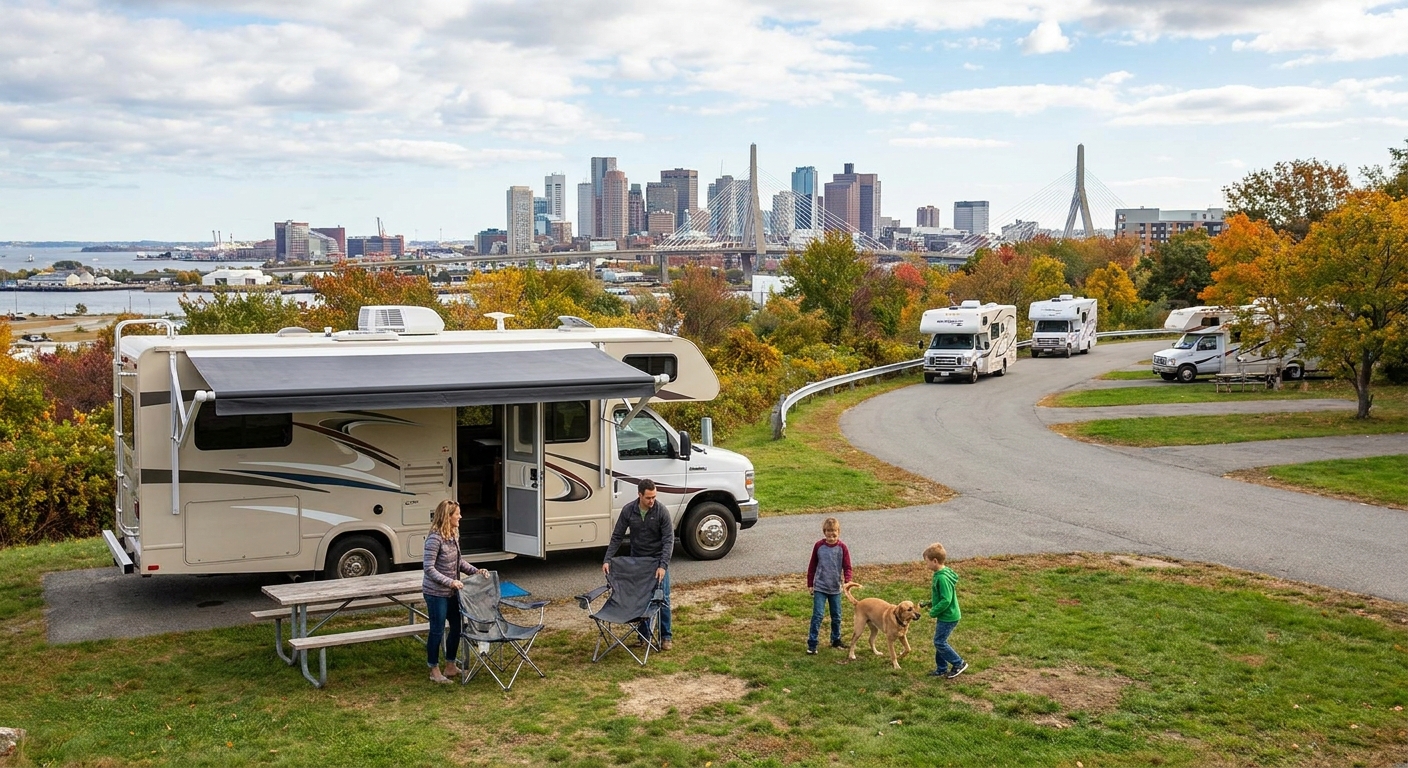
Boston's road conditions are characterized by a unique mix of historic, often narrow and winding streets, alongside modern urban highways and even some cobblestone sections in older districts like the North End. The terrain directly around Boston is generally flat to gently rolling, but the dense urban environment, especially around areas like Beacon Hill or the Back Bay, can make navigation challenging for a larger RV. Expect significant traffic congestion on major arteries such as I-93 and I-90, and particularly within the city center during peak rush hours. Driving slowly and carefully, and paying close attention to signage, will allow you to navigate almost anywhere without issues. No need to stress-just use common sense and pay attention to your surroundings, especially for tight turns, potholes, and heavy pedestrian and vehicle traffic. For a broader view of RV travel in the state, consider our RV Rental Massachusetts - Complete Guide 2026.
RV Size Limits, Bridges & Restricted Zones
Boston is famously notorious for its low bridges, especially on picturesque parkways like Storrow Drive and Memorial Drive, where height limits can be as low as 10 feet. RV drivers must pay extremely close attention to all height and weight restriction signage, as attempting to navigate these areas incorrectly can lead to significant damage and costly fines-a local phenomenon known as 'Storrowing'. There are no specific environmental 'zones' in Boston akin to those found in some European cities, but general vehicle idling laws are enforced. If you are considering a ferry service to popular Massachusetts islands like Martha's Vineyard or Nantucket, be aware that these often have strict RV length and weight restrictions, and advanced reservations are essential and can be quite expensive. Understanding these local nuances is key to a smooth trip.
Fuel: Diesel vs. Petrol & Cost per 100 km
Most rental RVs in Bandana Caravan's fleet, especially larger models like Class A and Class C motorhomes, typically run on diesel fuel, which is widely available at gas stations across Massachusetts. Smaller campervans (Class B), such as the "Active Classic" or "Juliette 2-3", may use either petrol (gasoline) or diesel, so it's essential to confirm your specific rental's fuel type before starting your journey. Based on Bandana Caravan's global fleet averages, fuel consumption typically ranges from 8-10 Liters/100 km for Class B Camper Vans and 10-12 Liters/100 km for Class C Alcove RVs. The actual cost per 100 km will fluctuate based on current fuel prices in Boston and your RV's specific consumption, so budgeting for these variable costs is always a wise decision. For detailed budget planning, remember that RV PLANET routes allow you to itemize and track every expense along the way. On the routes offered through RV PLANET routes, you can itemize and track every expense along the way for easy budgeting.
Tolls, Vignettes & Border Rules
Massachusetts utilizes an electronic tolling system (E-ZPass MA) on its major highways and tunnels, including the Massachusetts Turnpike (I-90) and the tunnels leading directly into Boston, like the Sumner and Callahan tunnels. Unlike some European countries, there are no 'vignette' systems in Massachusetts or anywhere else in the United States; tolls are collected per passage. RV rental agreements often include options for pre-paid toll passes, which can save valuable time and help you avoid higher pay-by-plate fees that are typically mailed to the rental company. If your RV adventure involves crossing into Canada, specific border rules regarding vehicle documentation, customs, and transported items apply, requiring a valid passport and adherence to international travel regulations for all passengers.
Driving Tips for RV Rental Deals Travelers
Navigating Boston in a rented motorhome requires a bit of foresight and adherence to specific local advice to make your trip as smooth as possible. Firstly, plan your route carefully, utilizing GPS apps that offer RV-specific navigation to help you avoid low bridges (e.g., Storrow Drive), narrow historic streets, and residential-only areas in and around Boston. Always allow extra time for travel, as Boston's traffic can be heavy and unpredictable, particularly on routes like I-93 and I-90 during rush hours. Crucially, check your mirrors frequently, as RVs have significant blind spots; leverage any available backup cameras and blind-spot monitoring systems vigilantly. Before driving, ensure all internal cabinets, appliances, and loose items are secured to prevent damage or injury during sudden stops or turns, especially on uneven city roads. Finally, remember that RVs require significantly longer braking distances than passenger cars, so maintain a greater following distance, especially in dense urban traffic. Remember to travel slowly, aiming for a maximum of 100-150 km per day on average, to truly experience the culture, food, and scenery of Massachusetts. For more insights on regional travel, check out our "RV Travel Guide to Boston - Tips and Top Spots 2026" video guide.
🎬 Video coming soon
Recommended RV Class for Boston Roads
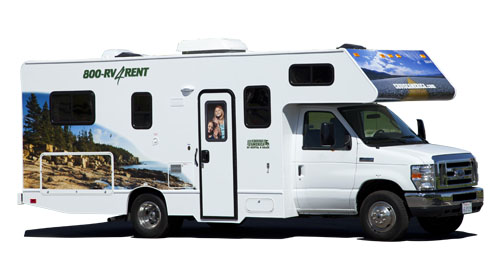
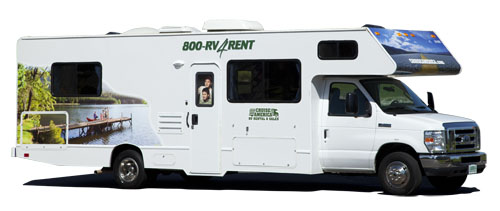
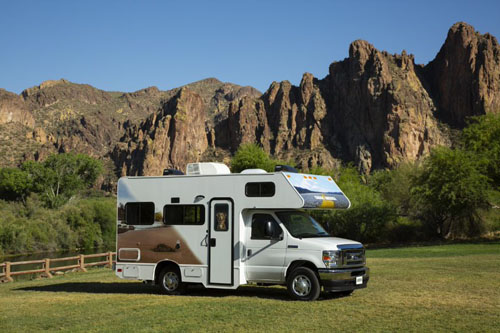
For navigating Boston's unique urban landscape, a Class B Camper Van or a Class SI Semi-integrated RV is generally the most manageable option due to their more compact dimensions. Class B Camper Vans, with an average length of 5.8 meters across Bandana's global fleet (for example, the "Category Van"), offer exceptional maneuverability, making them easier to park and weave through city streets. Class SI Semi-integrated RVs, averaging 6.9 meters in length, such as the "K3", provide a comfortable balance between interior amenities and external manageability, suitable for those who desire more living space without the bulk of a large Class C or A. While larger Class C and Class A RVs offer expansive living areas, their average lengths (7.5 meters and up) can make driving and finding parking in Boston significantly more challenging. We recommend travelers interested in smaller, agile vehicles check our "RV Rental in Boston for Couples - Pricing 2026" guide.
Should I Choose a Compact Van Instead of a Large RV in Boston?
Choosing a compact campervan (Class B) over a larger motorhome can offer significant advantages for navigating Boston, primarily in terms of maneuverability and parking ease, making city exploration considerably less stressful. While larger RVs, like a "32′ Class C Motorhome", typically provide more interior space, amenities, and comfort for extended stays, a compact van, such as an "Active Classic" at about 6 meters, is genuinely more practical for Boston's tight historic centers and crowded urban areas. For travelers prioritizing ease of driving, fitting into standard parking spots, and avoiding infamous height restrictions like Boston's low bridges, a Class B Camper Van is often the better trade-off. However, if your Boston trip primarily involves staying at campgrounds located outside the city and using public transport for city access, a larger RV can provide a more luxurious and comfortable base camp without the daily city driving hassle. Consider your travel style and itinerary before making this decision.
Can I Park Anywhere? Free & Wild Camping Rules in Boston
No, you generally cannot park just anywhere or engage in "wild camping" within Boston or its immediate suburban areas; overnight RV parking is restricted to designated campgrounds or approved private lots. Boston's city ordinances, like those in many urban centers, strictly prohibit overnight RV parking on most streets and public spaces, with unauthorized parking potentially leading to fines or towing. While a few retail parking lots, such as specific Walmart locations outside the downtown core, might permit overnight parking as a courtesy, this is never guaranteed and does not constitute "camping" with awnings extended or generators running. For official overnight stays, RVers must utilize established RV campgrounds located outside the immediate city center, many of which offer convenient public transport connections (MBTA 'T' or commuter rail) into Boston. Always check local regulations and call ahead to confirm parking availability before planning an overnight stop. For finding campsites and campgrounds during your trip, we recommend using RV PLANET (rvplan.net) - a great resource for locating available spots along your route.
Can I Drive an RV Into the City Center? Heights, Tunnels & Local Signage
Yes, you can generally drive an RV into Boston's city center, but it absolutely requires extreme caution and meticulous advance planning due to several urban challenges. Drivers must pay unwavering attention to local signage, particularly concerning height limits for tunnels like the Ted Williams Tunnel (connecting to Logan Airport) and, most critically, the notorious low bridges prevalent on major parkways such as Storrow Drive and Memorial Drive. Getting stuck under one of these bridges is a common and highly disruptive event. The Tip O'Neill Tunnel (part of the I-93 central artery) has specific height clearances, and larger vehicles must often use designated lanes. Navigating Boston's narrow, winding streets, heavy traffic patterns, and finding suitable parking for a larger RV once in the city center are significant challenges that necessitate prior research and a flexible approach. Always double-check your RV's height and plan your route with a dedicated RV GPS to avoid unexpected detours or hazards.
Do I need a special license to drive an RV in Massachusetts?
No, for most recreational RVs, a standard Class D driver's license is sufficient in Massachusetts, provided the vehicle's Gross Vehicle Weight Rating (GVWR) remains under 26,000 pounds. This covers the vast majority of rental Class B campervans, Class C motorhomes, and Class SI semi-integrated RVs, which typically fall well below this weight threshold. A Commercial Driver's License (CDL) is generally only required for commercial vehicles or for RVs exceeding 26,000 pounds GVWR when used non-commercially, which is uncommon for standard rental units from our partners like El Monte, Cruise America, Apollo, and Britz. Always confirm the specific licensing requirements with your chosen RV rental provider before your trip, especially if considering a very large Class A motorhome like an "MHLUX".
Do you need a special license to rent and drive an RV?
Generally no, you do not need a special license to rent and drive an RV; a standard, valid driver's license from your home state or country is typically sufficient for most recreational vehicles, including those rented in Boston. Rental companies will require a valid license, often for a minimum period (e.g., 1-2 years), and usually set a minimum age for renters, which is commonly 21 years old across our suppliers. Foreign drivers should always carry their valid national driver's license and an International Driving Permit (IDP) as a translation, although an IDP is not legally mandated in Massachusetts, it is highly recommended for ease of communication. The primary factor determining license requirements is the RV's Gross Vehicle Weight Rating (GVWR), with nearly all rental RVs falling under the weight limits for a standard license.
What is the 3-3-3 rule for RVs and campers?
The '3-3-3 rule' is a widely adopted guideline among RVers designed to promote a more relaxed and enjoyable travel pace, particularly beneficial for an extended road trip around Boston and Massachusetts. This rule suggests driving no more than 300 miles (approximately 480 km) a day, arriving at your campground destination by 3 PM, and staying for at least 3 nights. Following this guideline encourages travelers to avoid burnout from overly long driving days, allowing ample time for leisurely setup and breakdown at campgrounds. Arriving by 3 PM ensures you have sufficient daylight to navigate the campground, set up your site, and address any potential issues before dark. Staying for at least 3 nights provides enough opportunity to fully explore the local area, connect with the culture and scenery, and avoid the constant packing and unpacking that shorter stays entail, making your Boston RV adventure more enjoyable and less rushed. This slow travel philosophy aligns perfectly with our recommendations for experiencing new destinations.
Is it cheaper to rent an RV or stay in hotels?
Renting an RV can be significantly more cost-effective than staying in hotels, especially for longer trips (like a two-week adventure), larger families (4-6 people), or groups exploring Boston and its surrounding areas, but the total cost comparison requires a detailed breakdown of all expenses. A comprehensive cost analysis for a Boston RV trip should include the RV rental fees (ranging from $100-$600+ per night), optional insurance, fuel costs (e.g., 8-12 Liters/100 km for most of Bandana's fleet), campground fees (which can be $40-$100+ per night near Boston), propane, dump station fees, and groceries versus hotel rates, restaurant dining, and potential urban parking fees. A major saving of RV rental comes from the ability to prepare your own RV-friendly recipes playlist, drastically cutting down on dining expenses. For short trips or solo travelers focused solely on downtown Boston attractions, hotels might appear simpler, but for multi-day excursions that offer the freedom to change scenery and truly explore Massachusetts, an RV rental often provides better value and a richer experience. Remember that prices are dynamic, changing daily based on availability, seasonality, and supplier marketing decisions.
Where to park a camper in Boston?
Parking a rented campervan or motorhome directly in downtown Boston is highly challenging due to strict size restrictions, numerous low bridges (especially on Storrow Drive with clearances under 10 feet), and very limited large vehicle parking, making peripheral RV-friendly parking options the most practical solution. The most effective strategy involves parking your RV at a designated RV campground outside the city that offers convenient public transportation connections (MBTA 'T' or commuter rail) into Boston. Recommended campgrounds typically include places like Harold Parker State Forest in Andover, Wompatuck State Park in Hingham (about 20 miles south of Boston, with easy access to public transit), or the Boston/Cape Cod KOA in Middleboro, all offering essential amenities and proximity to transit hubs. Some private parking lots on the outskirts may accommodate larger vehicles for day use, but overnight parking is usually prohibited outside of established campgrounds or specific commercial RV parks. Always research and call ahead to confirm parking availability and regulations, ensuring a stress-free visit to the city.
Do you have to get a license for renting an RV?
No, generally you do not need a special license for renting an RV; a standard, valid driver's license from your home country or state is sufficient for most recreational vehicles in Massachusetts. The requirement for a special license typically depends on the RV's weight and class, but the vast majority of rental RVs (Class B, C, and Semi-integrated) fall comfortably within the limits for a regular driver's license. Rental agencies, including our partners like El Monte and Cruise America, will verify your license and often have age requirements (e.g., typically 21 years old, not 25, and no young driver surcharges) before allowing you to complete a booking for your Boston adventure. It's always advisable to confirm specific license requirements directly with the RV rental company you plan to use, as policies can vary slightly. For flexibility and deals, exploring options on platforms like ours helps find the cheapest RV rental in Boston.
How much is it to rent an RV in Boston?
The cost to rent an RV in Boston varies widely based on the RV class, rental duration, seasonality, and included features, but typically ranges from $100-$300 per night for smaller campervans to $300-$600+ per night for larger, luxury Class A motorhomes. For a Class B Camper Van, average nightly rates might be lower due to their compact size, while Class C Alcove and Class SI Semi-integrated RVs (like a "Comfort Family 5") often fall into the mid-range. Peak seasons, such as summer and the fall foliage period (September to October), will see higher prices and lower availability, so booking several months in advance is recommended for better RV rental deals in Boston. Additional costs to budget for include optional insurance (ranging $20-$70 per day), fuel (e.g., a Class C motorhome consumes 10-12 Liters/100 km), campground fees, cleaning fees, and potential mileage charges, which can significantly impact the total trip expense. Prices are dynamic and change daily, so the final price is set at the actual booking time. For comparing options, review our "Cheap RV Rental in Boston - Budget Guide 2026".
What insurance covers RV rentals?
RV rental insurance typically includes options for liability coverage, collision damage waiver (CDW), and sometimes personal effects coverage, which travelers can obtain through several channels. Many RV rental companies offer their own insurance packages directly at the time of booking, which may include primary liability, supplemental liability, and physical damage coverage. Your personal auto insurance policy might extend coverage to a rental RV, but it is absolutely crucial to check with your provider for specific terms, limits, and exclusions, especially for larger RVs that differ significantly from your personal vehicle. Certain credit card companies also offer rental vehicle insurance benefits that might cover some aspects of an RV rental, though often limited to smaller vehicles or requiring the full rental cost to be charged to that card; always confirm directly with your card issuer. You can also upgrade to a top-level deductible for extra peace of mind, an optional enhancement our platform offers for your Boston RV rental.
How much does it cost to insure a rental RV?
The cost to insure a rental RV can vary significantly but generally ranges from $20-$70 per day, depending on the level of coverage chosen, the value of the RV, the rental duration, and the specific insurance provider. Basic liability coverage is often mandatory as part of your rental, with options to add comprehensive collision damage waivers (CDW), roadside assistance, and personal effects coverage for an additional daily fee. Some renters may find that their personal auto insurance or certain credit card benefits can reduce or even eliminate the need for additional rental company insurance, but thorough verification of coverage specifics for RVs is paramount before your Boston trip. Comprehensive policies offering broader protection against various incidents will naturally be at the higher end of the daily cost spectrum. We offer full transparency on insurance options and costs when you compare final prices across suppliers on our platform.
How much is rental insurance in Boston?
Rental insurance costs for an RV in Boston are largely consistent with national rates, typically falling within the $20-$70 per day range for standard policies, influenced by coverage levels, vehicle type, and the specific insurer. While Boston's dense urban areas *could* theoretically impact localized pricing for some types of insurance, the primary drivers of RV rental insurance costs remain the chosen coverage limits and the RV's market value. It's crucial to obtain a detailed quote from your chosen RV rental provider or directly from an independent insurance agent specializing in RV rentals to understand the exact costs for your Boston trip. Always thoroughly review the policy's deductible, exclusions, and what is covered in terms of property damage, personal liability, and medical expenses before finalizing your rental in Boston. Our platform compares final prices across suppliers, ensuring what you see is what you pay, with no surprise fees at pickup, including transparent insurance options.
Planning Your Boston RV Routes with RVPLAN.net
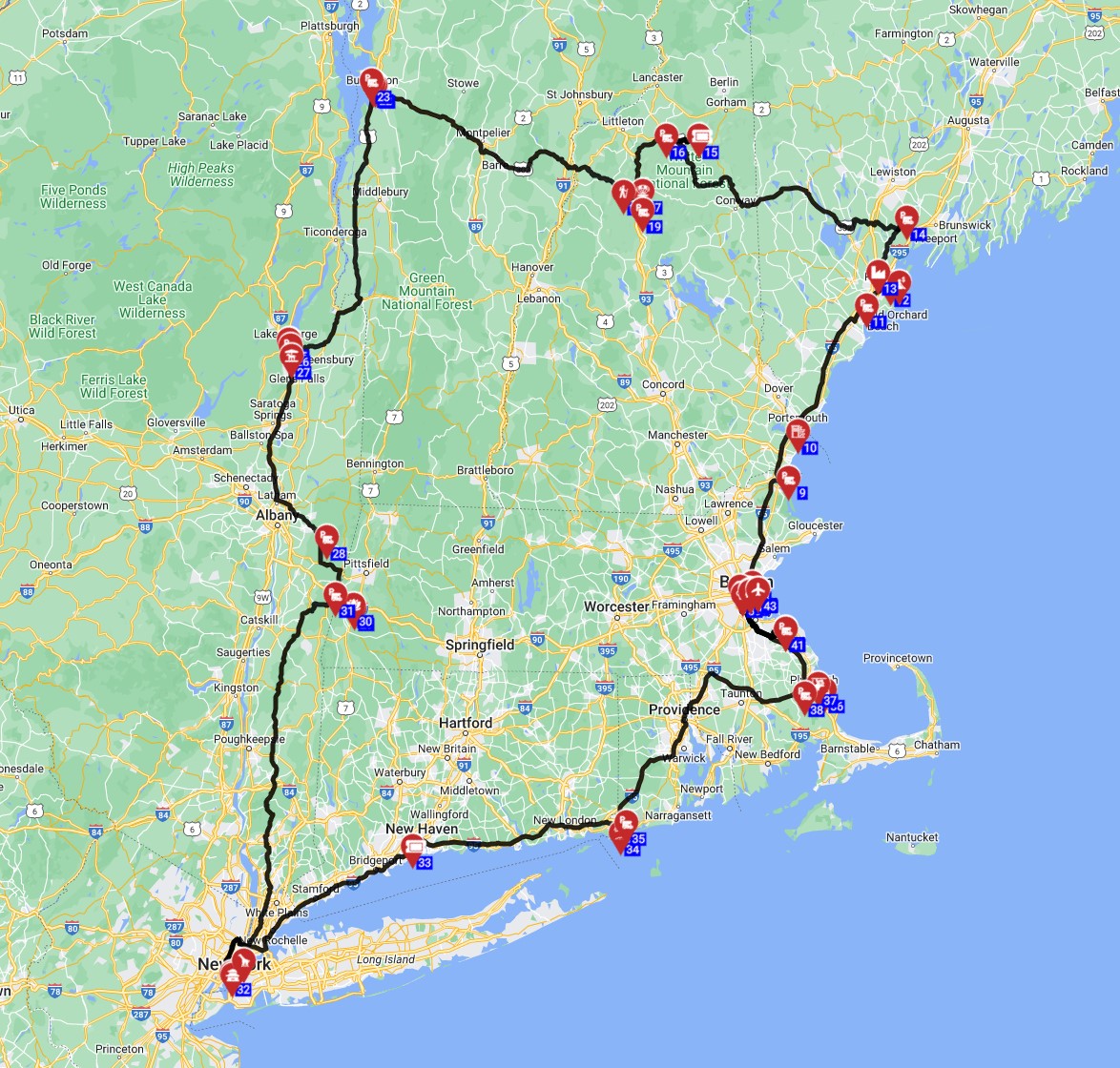
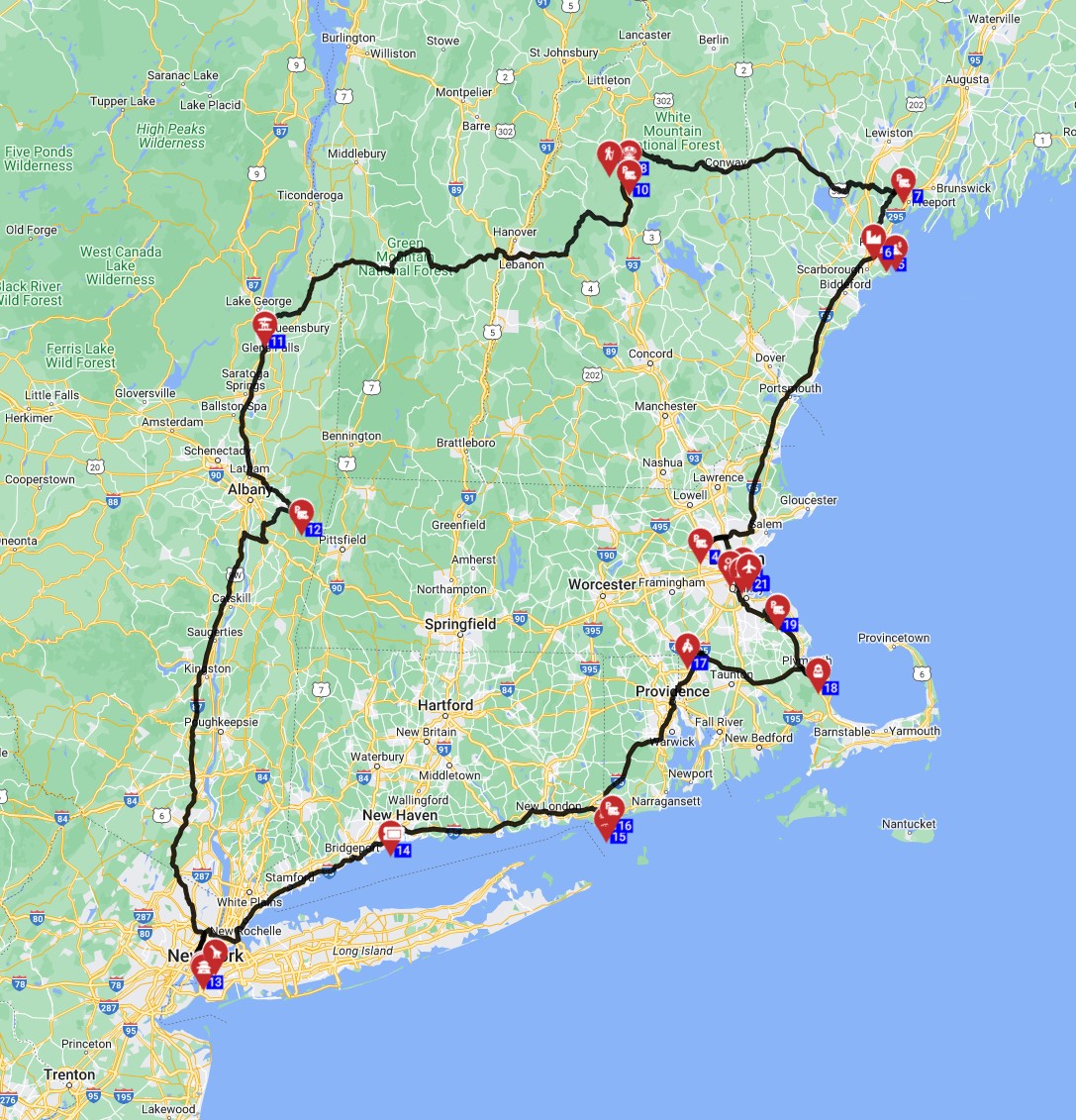
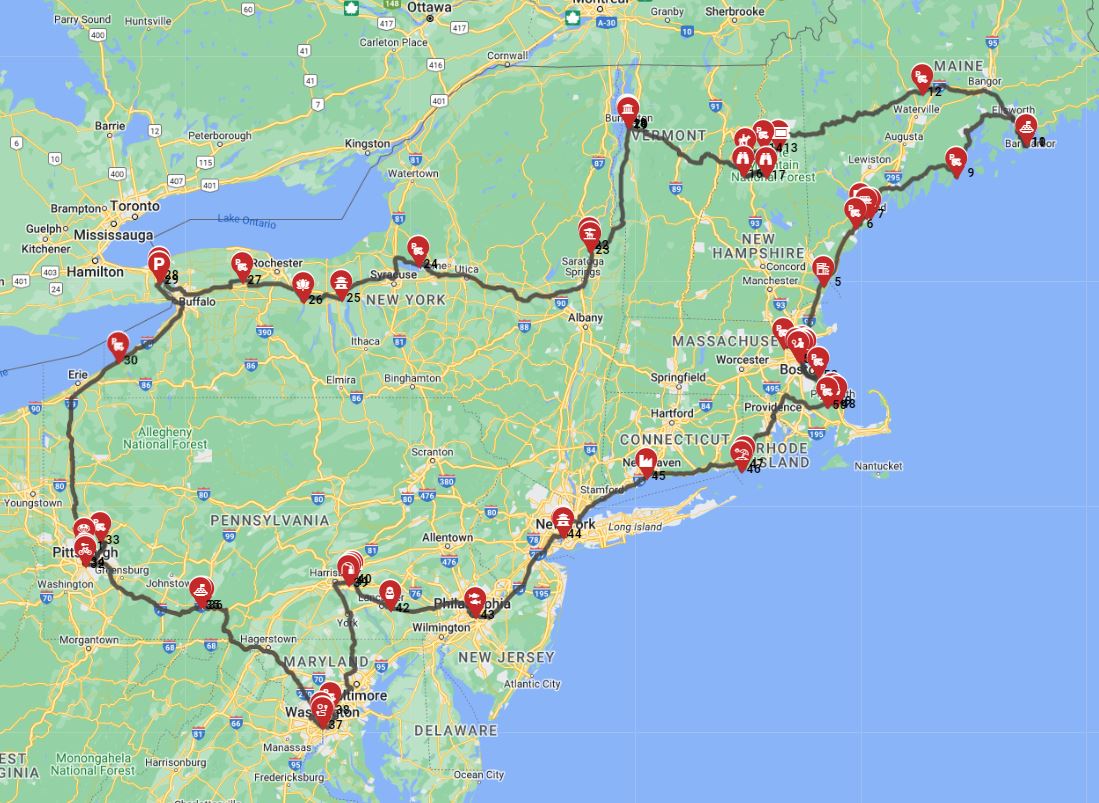
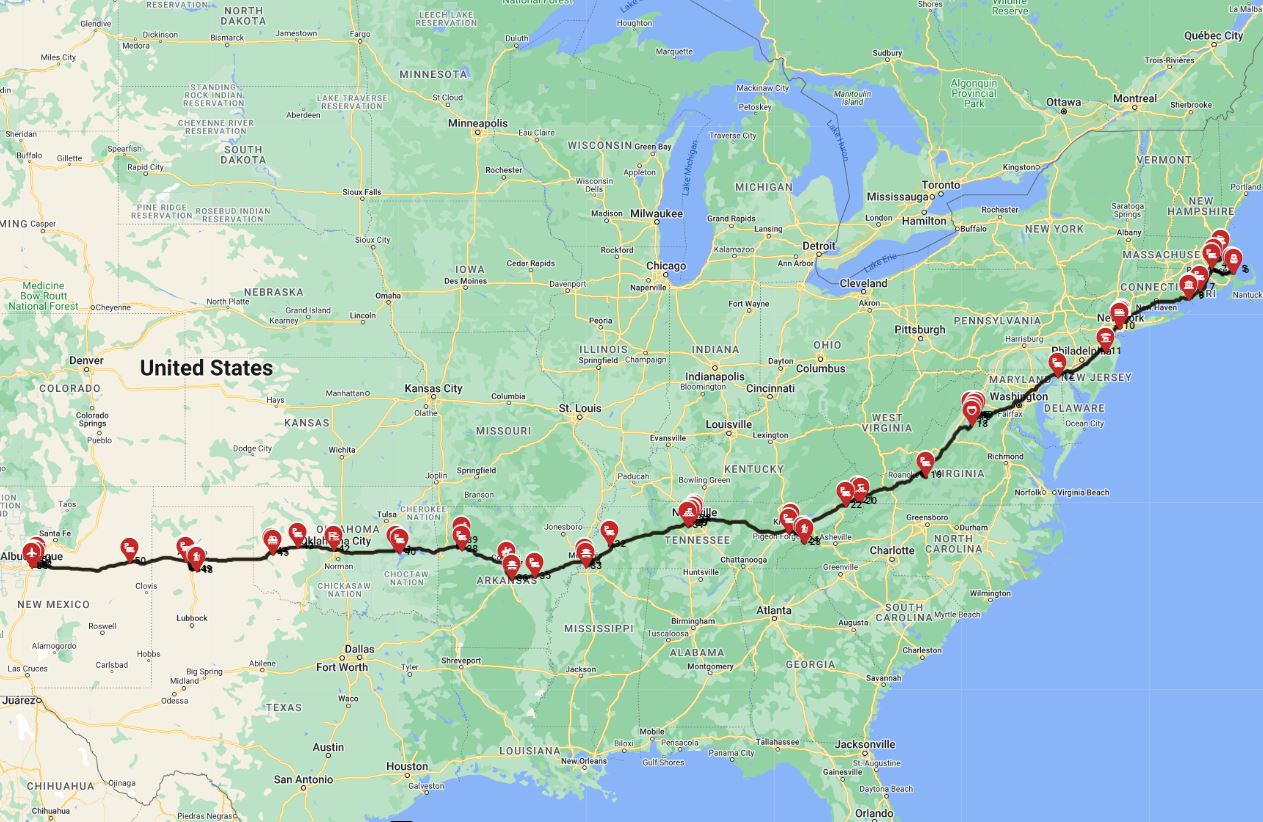
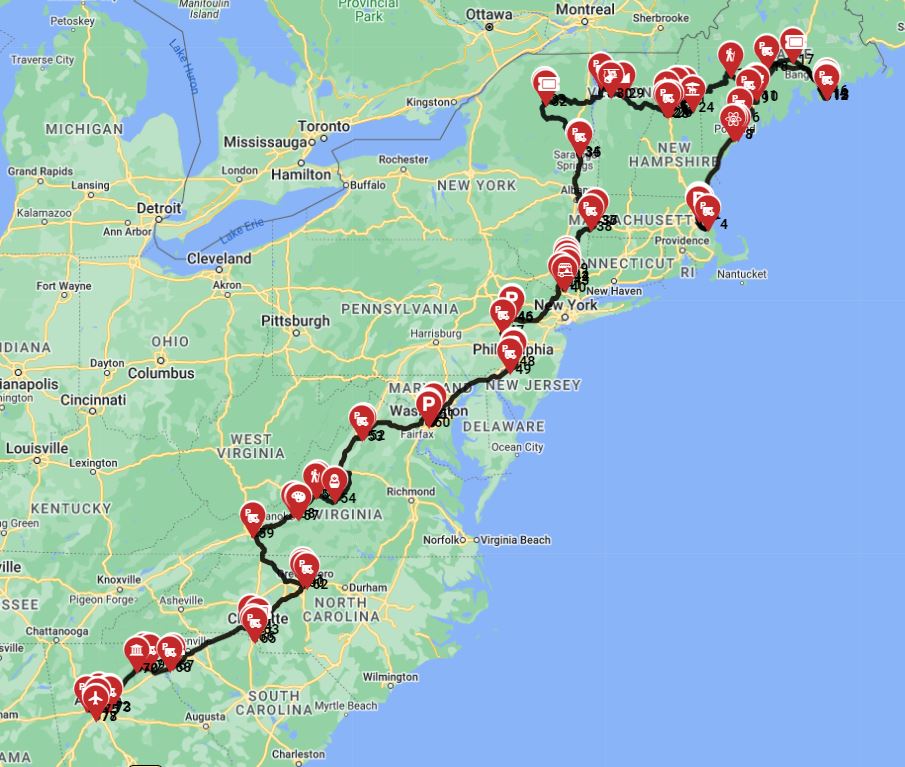
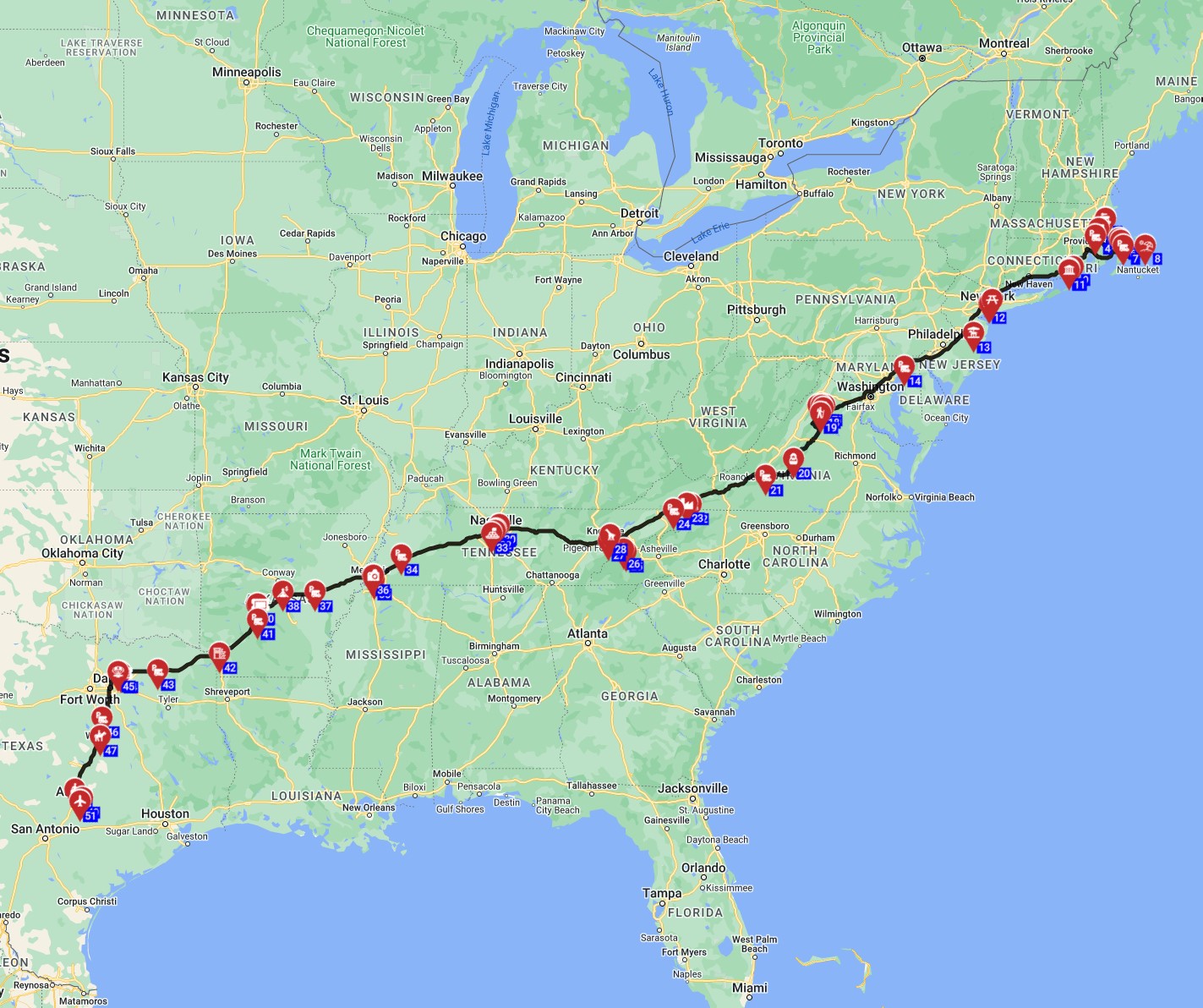
To truly enhance your RV rental experience from Boston, planning a detailed itinerary can make all the difference. Our sister company, RV PLANET (rvplan.net), offers over 1,300 pre-planned routes across 5 continents, including fantastic options starting or ending in Boston. These professionally curated route plans take the stress out of organizing, allowing you to focus on the adventure. Plus, when you use RVPLAN.net, you're rewarded with a 25% planning discount on your next booking with Bandana Caravan!
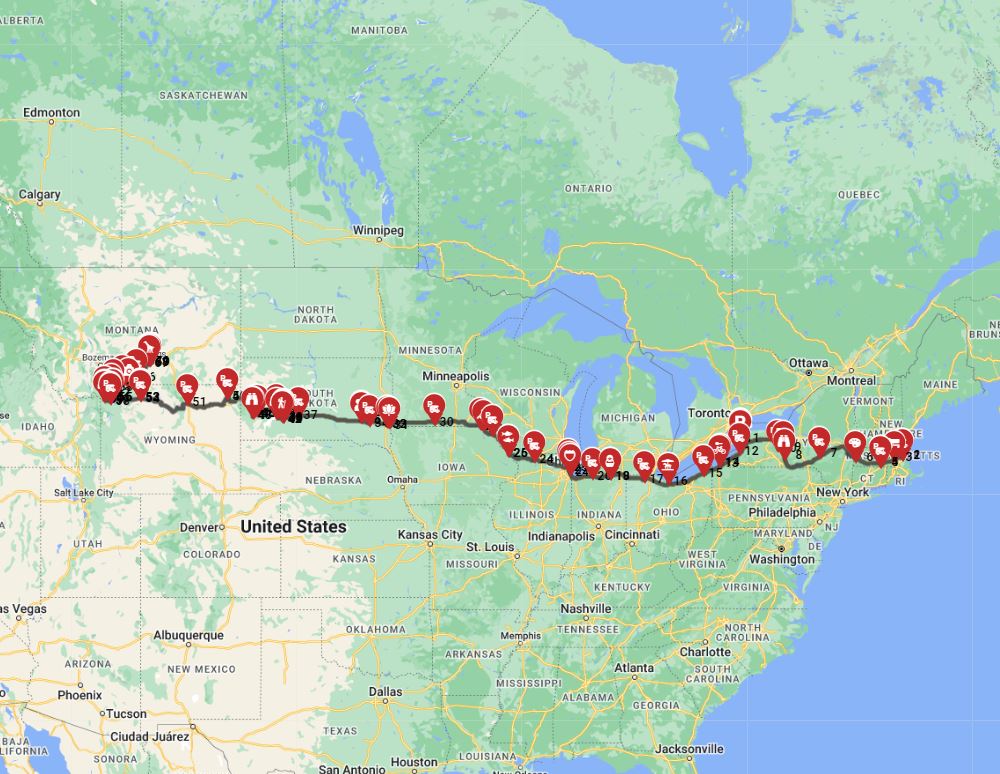
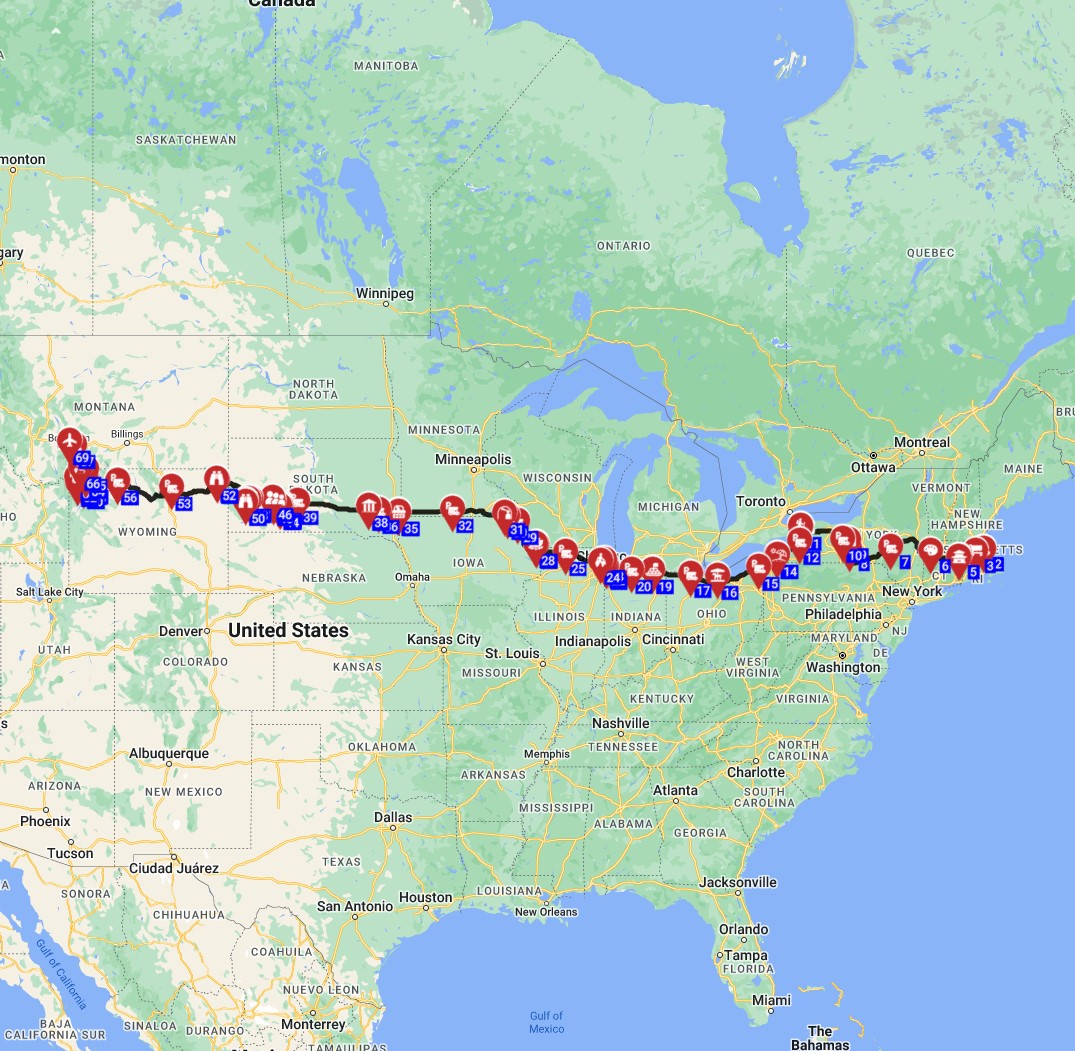
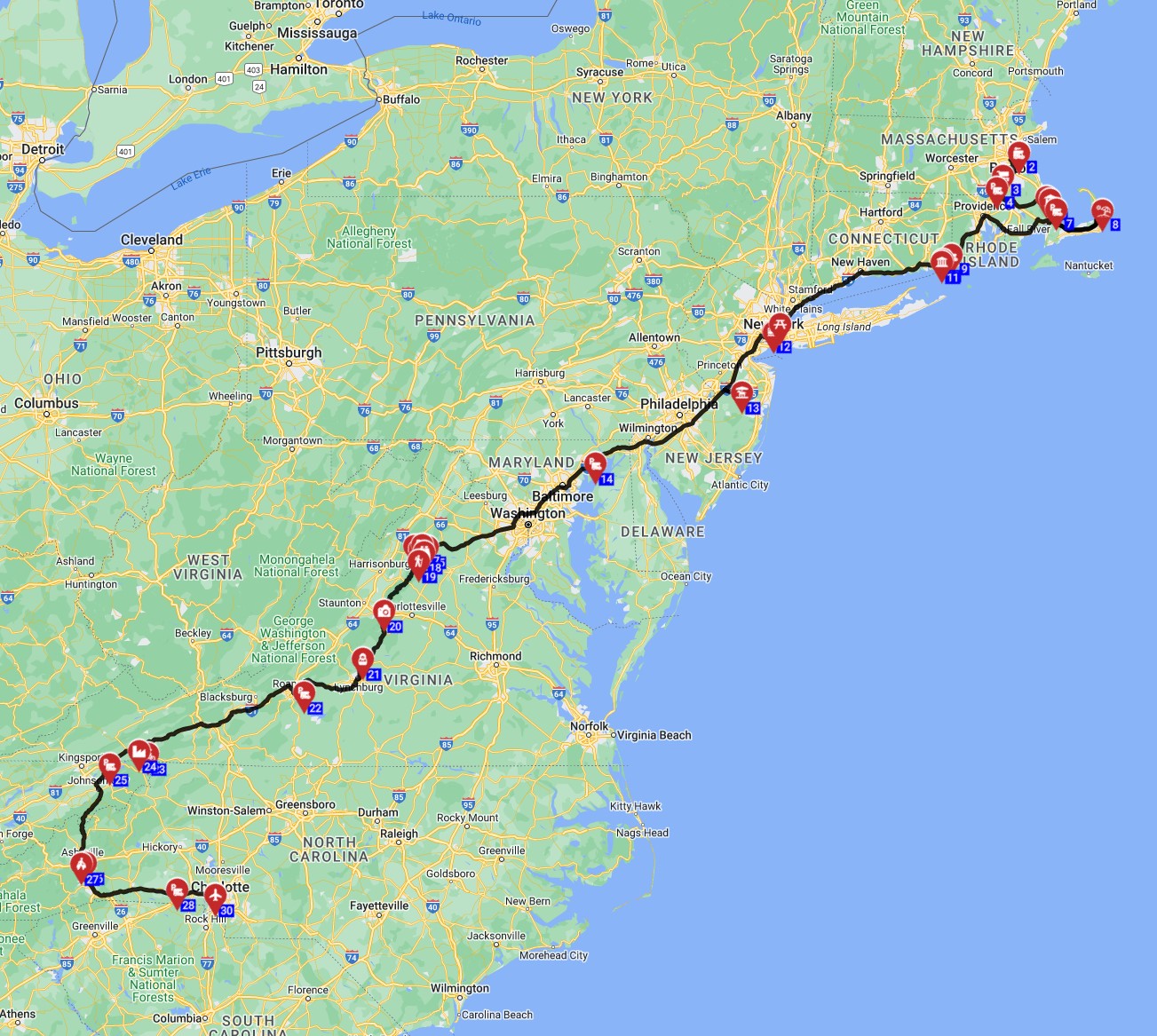
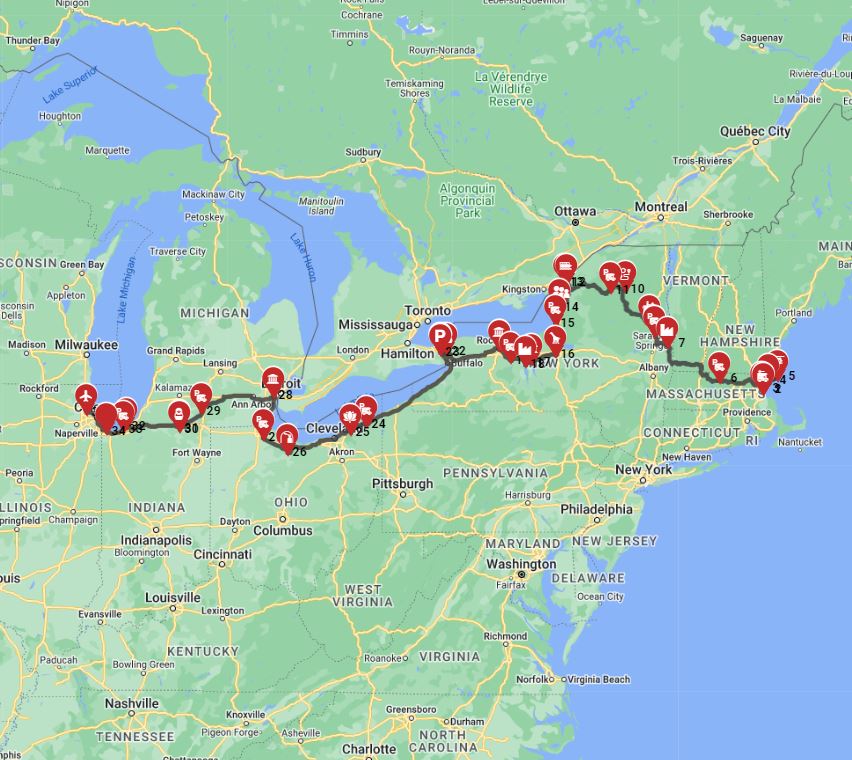
Imagine embarking on the "Salt Lake City to Boston - Mountains, Monuments, and Memories" route, a grand 29-day, 5567.5 km journey that immerses you in diverse landscapes and cultural experiences. This epic route plan includes stops at 3 animals shows, 5 museums, and 4 traditional restaurants, ensuring every day is packed with discovery. For those seeking a shorter yet equally rich experience, the "

For an ultimate family RV adventure across 9 states, consider the "Billings to Boston - Mountains, Falls & Freedom Trail: A Family RV Adventure Across 9 States" route. This extensive 27-day, 5928.5 km itinerary is packed with natural wonders, including 10 natural features and 3 caves, along with family activities and historical sites. With RVPLAN.net, you're not just renting a motorhome; you're gaining access to expertly crafted route plans designed to maximize your enjoyment and savings. We handle the details, you live the journey-personal service from day one until your booking is confirmed.
What You Shouldn't Miss
Boston and its surrounding regions offer a wealth of experiences perfect for a rented RV adventure. Make sure to include these must-do experiences in your travel plans:
- Freedom Trail Walk: Explore Boston's iconic Freedom Trail, a 2.5-mile red-lined path connecting 16 historically significant sites, including Paul Revere's House and Faneuil Hall. Park your RV at an outlying campground like Wompatuck State Park and take public transport into the city.
- Coastal New England Drive: Head north from Boston along scenic Route 1A to charming towns like Rockport and Gloucester on Cape Ann. Discover stunning rocky coastlines, fresh seafood, and artisan shops. There are several RV-friendly campgrounds in this area, perfect for a week-long trip.
- Fall Foliage Tour: If traveling between late September and mid-October, venture inland to central or western Massachusetts for breathtaking fall foliage views. Consider a route plan through the Berkshires for picturesque drives and cozy small towns.
- Lexington and Concord Historic Sites: Just a short drive west of Boston, explore the battlefields and historic homes of Lexington and Concord, where the American Revolution began. Parking for RVs is easier to find in these suburban towns.
- Cape Cod Escape: Take your rented motorhome south to Cape Cod for a classic New England seaside experience. Enjoy beautiful beaches, charming villages, and fresh seafood. Book your RV campground well in advance, especially during summer.
Looking for expert insights from Avi Bandana? Top 5 Adventures - recommendations from Avi Bandana.
Final Thoughts
Embarking on an RV adventure from Boston offers a unique blend of urban charm and New England's natural splendor. With a rented RV, you have the flexibility to explore historic landmarks, coastal towns, and scenic routes at your own pace, creating unforgettable memories with your family or friends. While city driving and parking in Boston require careful planning due to specific challenges like low bridges, the freedom and comfort of your mobile home base make it an incredibly rewarding way to travel.
At Bandana Caravan, we are true RV specialists, dedicated to making your booking experience as seamless and transparent as possible. We’re here to support you before, during, and after your booking, ensuring you have all the information and assistance you need to confidently embark on your journey. Don't just dream of your next adventure-start planning your Boston RV trip today and discover the open road with confidence.
Find Motorhome Rentals in Boston