In This Guide
- Where to Camp in Alaska - Top Options
- Campground Types in Alaska (National, Private, Wild)
- Featured RV Park or Campground in Alaska
- Hookups & Amenities - What to Expect
- Booking Windows & Reservations in Alaska
- Nearby Supermarkets & Resupply Points
- Best RV Class for Camping in Alaska
- How to Save on Campgrounds in Alaska
- Can I park my RV anywhere in Alaska?
- What is the 3 3 3 rule for RVs and campers?
- Where is the best place to park an RV for free?
- Is boondocking legal in Alaska?
- What does FF mean in camping?
- What is the best time of year to RV to Alaska?
- How much are campsites in Alaska?
- What is the 200 rule for camping?
An RV camping adventure in Alaska offers unparalleled freedom to explore the Last Frontier's vast and stunning landscapes. From majestic mountains to abundant wildlife, a rented motorhome provides a comfortable and flexible base for your journey. At Bandana RV, we're dedicated to helping you discover the perfect RV rental for your dream trip, ensuring full transparency with no hidden fees and 24/7 support before and after your booking. For live availability and current prices, start with our RV Rental Alaska - Complete Guide 2026 guide.
Imagine waking up to views of glaciers, cooking breakfast amidst ancient forests, and witnessing the midnight sun from your doorstep. Alaska is a land of extremes, and an RV rental lets you experience it all at your own pace. Drive slowly and carefully, and you can drive almost anywhere without issues. No need to stress - just use common sense and pay attention to road signs and conditions.
Where to Camp in Alaska — Top Options
Alaska offers diverse camping experiences, ranging from developed campgrounds in national and state parks to incredibly remote backcountry sites. Major destinations like Denali National Park, Kenai Fjords National Park, and popular areas around Anchorage and Fairbanks provide various RV-friendly options. Always check specific campground regulations and availability, especially in popular areas, as they can vary widely.
For those seeking convenience, Anchorage is an excellent starting point, with several well-equipped private RV parks. Further north, Fairbanks provides access to interior Alaska's attractions and numerous campgrounds. Coastal towns such as Seward and Homer offer stunning ocean views and opportunities for marine wildlife viewing from your campsite. Denali National Park is a must-see, though RV access is limited past the Savage River campground, requiring shuttle buses for deeper exploration. You'll find spots, and if not at the first campground, then the next one. Just call ahead before driving.
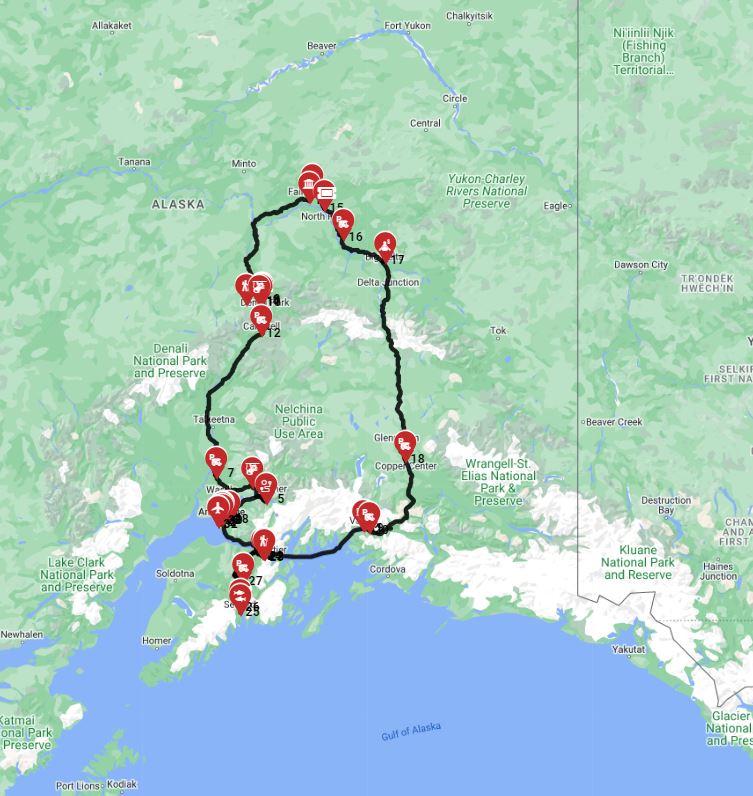
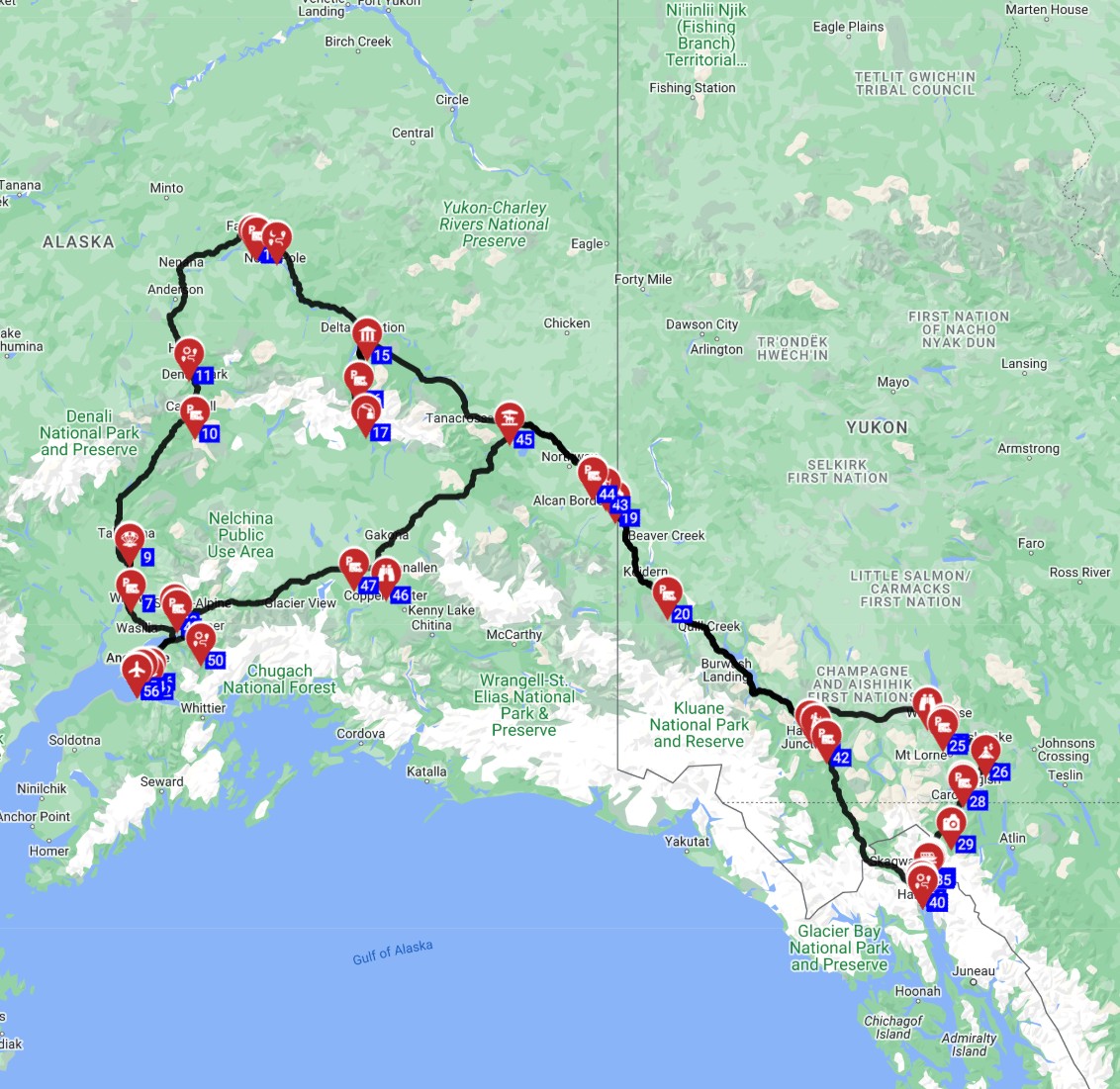
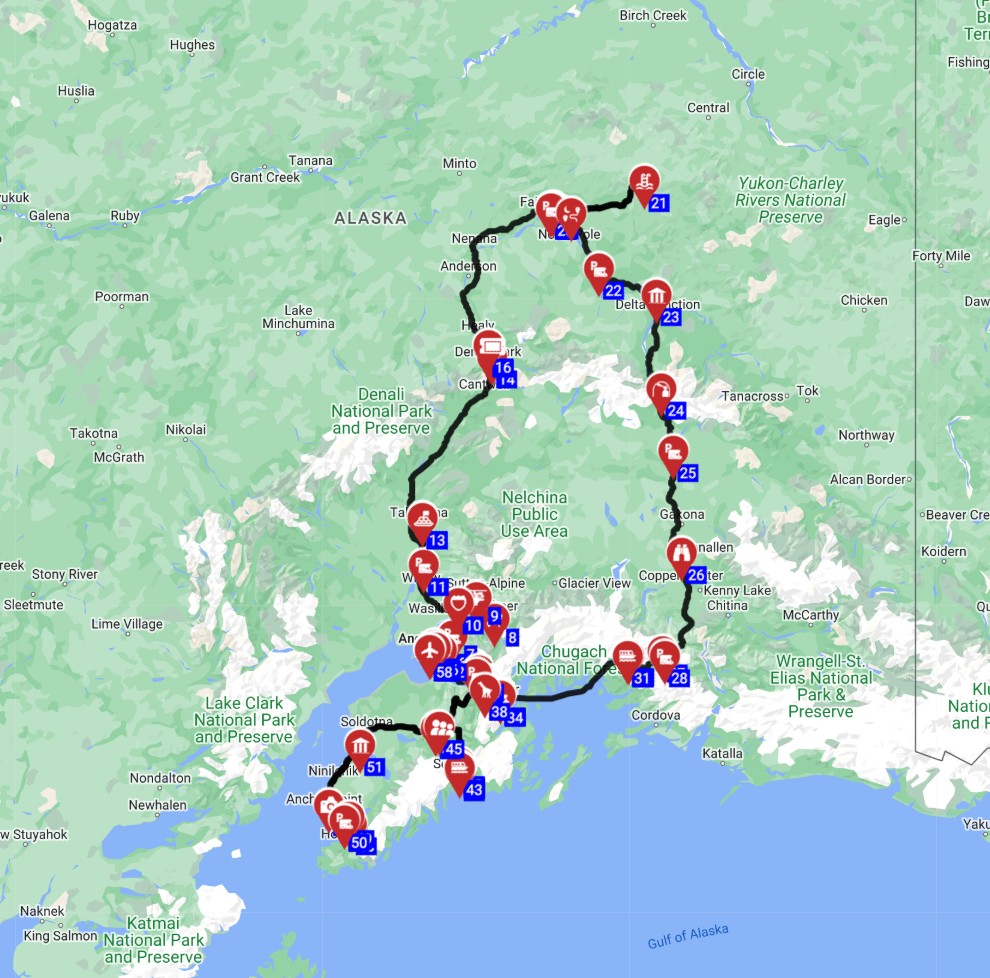
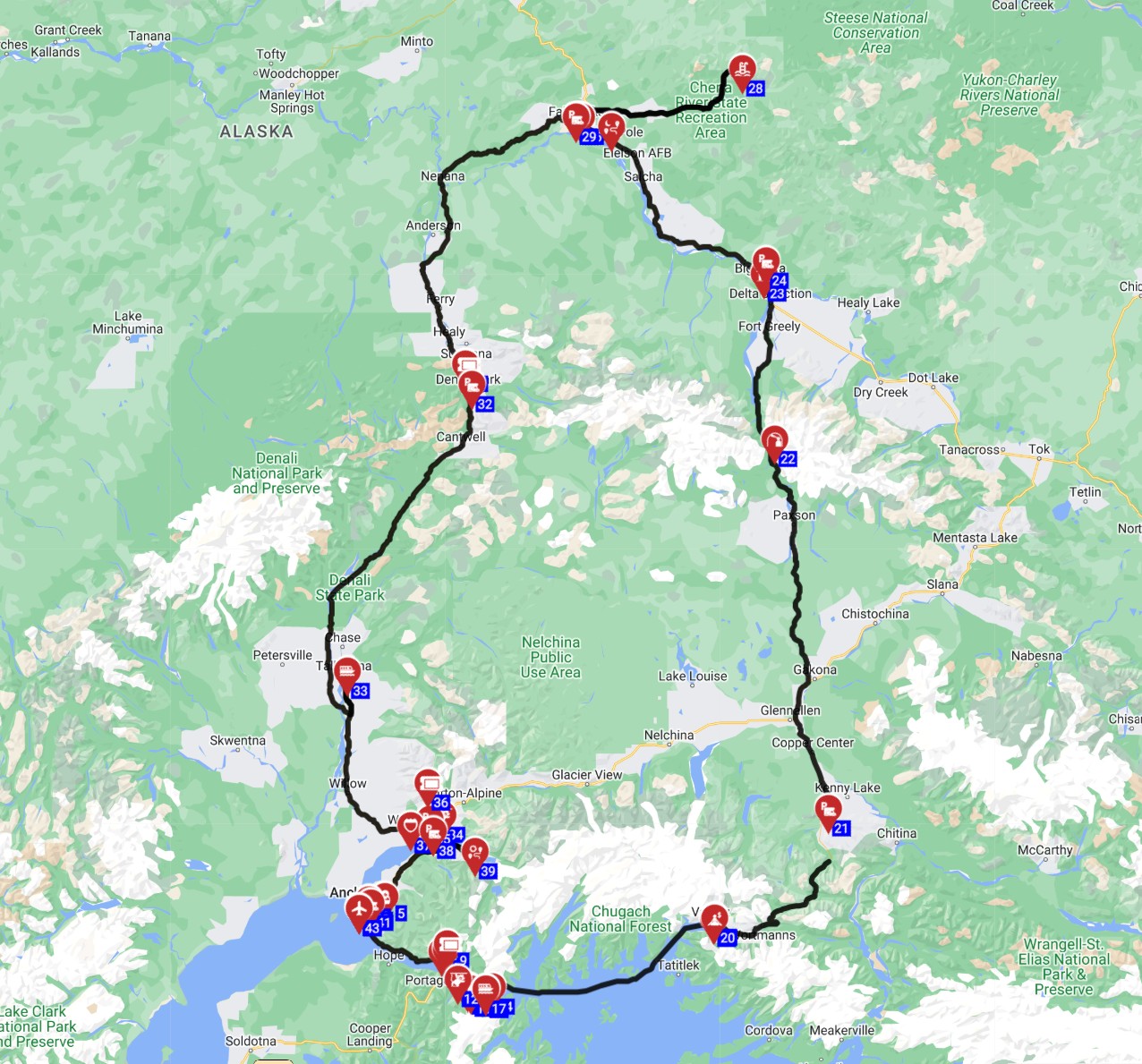
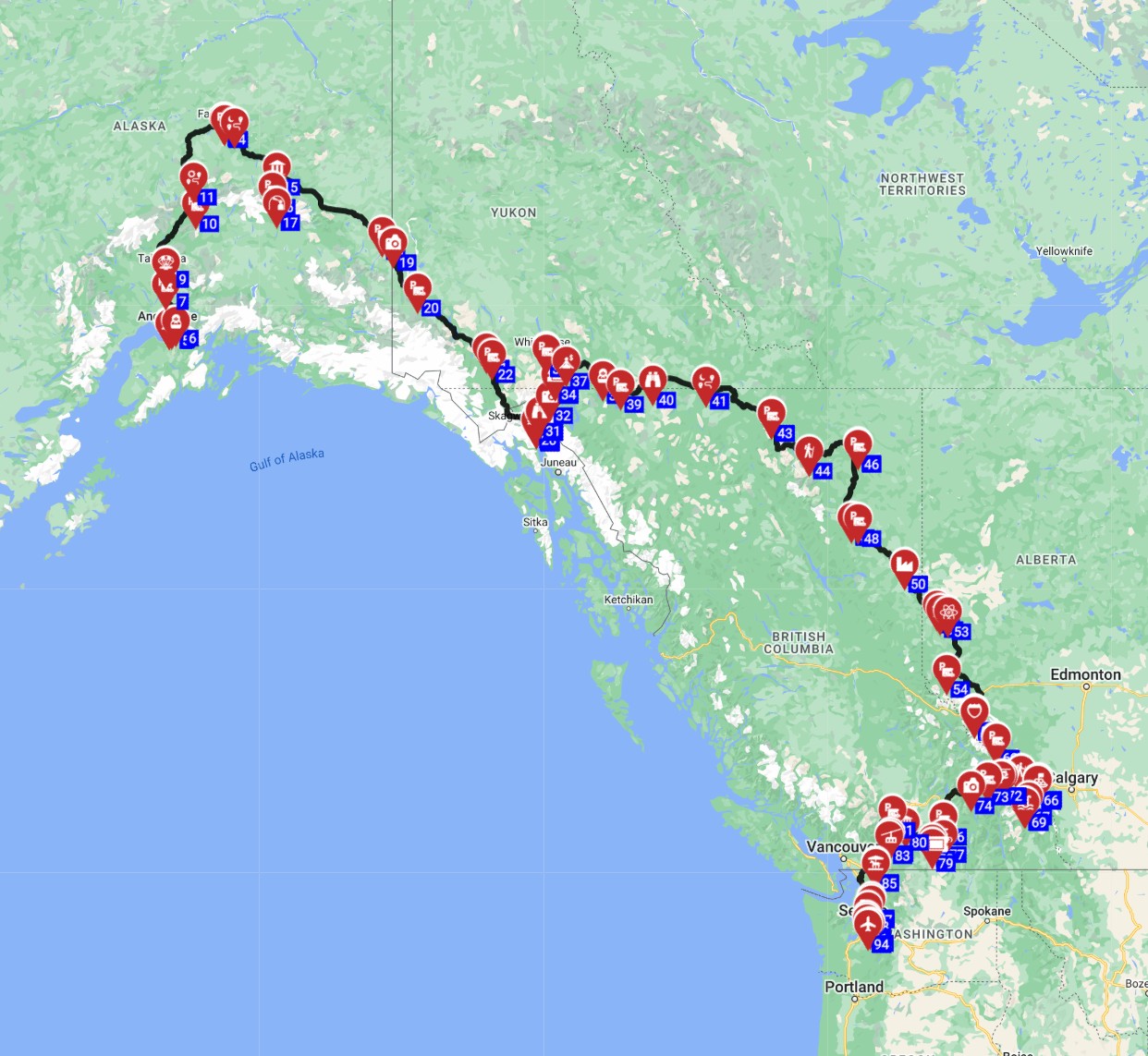
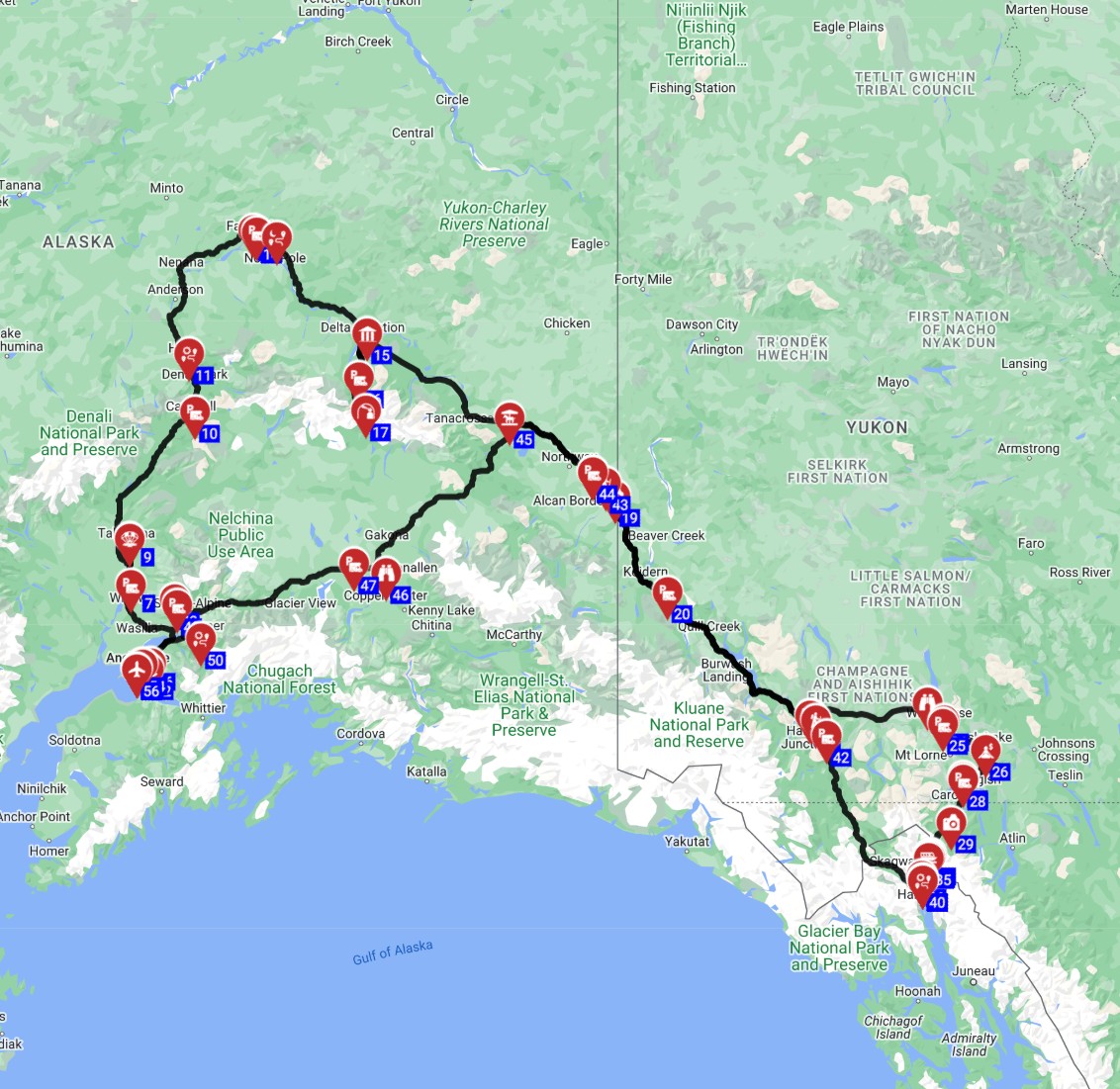
To help plan your route and find campsites, we recommend using RV PLANET (rvplan.net) - a great resource for locating available spots along your route and even planning detailed itineraries, like the "
Campground Types in Alaska (National, Private, Wild)
In Alaska, RVers can choose between national/state park campgrounds, private RV parks, and wild (freedom) camping, each with distinct rules and amenities. National and state park campgrounds, such as those in Chugach National Forest or Denali State Park, offer scenic beauty and basic amenities, often without full hookups, and typically require reservations or operate on a first-come, first-served (FCFS) basis with fees ranging from $15-$35 per night.
Private RV parks, found in larger towns like Anchorage, Fairbanks, and Seward, generally provide more amenities like full hookups (water, sewer, electric), Wi-Fi, laundry facilities, and showers, catering to a more comfortable stay but with higher fees, often between $40-$80 per night. Wild camping, also known as boondocking or dispersed camping, is generally legal on vast federal lands (e.g., Bureau of Land Management - BLM, National Forests) and some state lands in Alaska, provided no specific restrictions are posted. This free camping requires adherence to 'Leave No Trace' principles and careful respect for wildlife.
Featured RV Park or Campground in Alaska
When selecting an RV park in Alaska, travelers should look for establishments that blend convenience with natural beauty and offer essential amenities. A prime example of what to look for might be a park situated near a major natural attraction, offering full hookups, clean facilities, and convenient access to local activities like fishing or hiking. For instance, the Seward Waterfront Park, while often busy, provides stunning Resurrection Bay views, close proximity to Kenai Fjords cruises, and essential services for a comfortable stay in a rented motorhome.
Ideal featured parks often provide robust Wi-Fi (though service can be spotty in remote Alaska), laundry facilities, dump stations, and potentially even guided tours or shuttle services to nearby sights. Prioritize parks that emphasize responsible tourism and offer insights into local wildlife and environmental preservation. For an organized plan that includes such featured locations, consider using RV PLANET's pre-planned route plans, which offer detailed information on campgrounds, attractions, and more. For more tailored route options, you might explore "Weekly RV Rental in Alaska - Pricing 2026" to optimize your stay duration with campground availability. On the routes offered through RV PLANET routes, you can itemize and track every expense along the way for easy budgeting.
Hookups & Amenities — What to Expect
When camping in Alaska, hookup availability for your rented motorhome varies significantly; private RV parks typically offer full hookups (electric, water, sewer), while state and national park campgrounds often provide limited or no hookups. Electric hookups in Alaska generally use standard 30 or 50 amp connections, requiring appropriate adapters for different RV types, so it's a good idea to check what's included with your rental motorhome. Water hookups supply potable water, but in remote areas, fresh water might be limited to central spigots or not available at all, necessitating carrying your own supply with a RV PLANET route that tracks water stops.
Dump stations for black and gray water are common in private RV parks and some state/national campgrounds, but off-grid campers will need to plan routes to find these periodically. Wi-Fi and cell service are generally reliable in urban centers and private parks but become spotty to non-existent in more remote Alaskan regions; consider alternative communication plans like satellite devices for extended off-grid stays. Many campgrounds also offer amenities like laundry facilities, showers, restrooms, and picnic tables, enhancing the comfort of your Alaskan RV adventure. Remember, cooking in your RV is a fantastic way to enjoy meals with a view, and you can find great ideas on our RV-friendly recipes playlist.
Booking Windows & Reservations in Alaska
For RV camping in Alaska, pre-planners should book popular campgrounds well in advance, especially for peak season (June-August), while spontaneous travelers can often find same-day or next-day spots in less-known areas. Many popular national and state park campgrounds, particularly those around Denali and Kenai, open reservations 6-12 months ahead and fill quickly. However, it's a common practice that some national park campgrounds release only 25-30% of spots for reservations, leaving the majority available on a first-come, first-served (FCFS) basis, offering flexibility for those without firm itineraries.
For spontaneous trips, arriving early in the day (before noon) at FCFS campgrounds significantly increases your chances, and calling ahead to potential campgrounds before driving long distances is highly recommended. You will almost certainly find a place to stay in Alaska - if not the first campground, then the next - but popular spots require foresight, and alternative options (like dispersed camping) are abundant. Don't let booking fears hold you back; there's always an adventure to be found, whether planned months in advance or discovered on the fly.
Nearby Supermarkets & Resupply Points
Access to supermarkets and resupply points in Alaska is generally good in major cities and towns, but distances between them can be vast in remote areas. Travelers will find major chains such as Fred Meyer (part of Kroger), Safeway, and Carrs-Safeway in larger population centers like Anchorage, Fairbanks, and Juneau for comprehensive grocery shopping. These stores often stock a wide range of products, including fresh produce and specialty items, perfect for stocking your rented RV kitchen.
Smaller towns across Alaska will have local grocery stores or general stores, which may have higher prices and more limited selections but are crucial for last-minute needs when exploring places like Seward or Homer. Always plan your resupply stops carefully, especially when venturing into remote regions, as fuel, water, and food can be scarce for hundreds of miles, requiring careful budgeting of your supplies. Consider stocking up on non-perishable items and essential supplies whenever you pass through a major town to minimize stress and ensure preparedness for long stretches of wilderness travel. Our itineraries at rvplan.net can help you plan resupply stops.
Best RV Class for Camping in Alaska
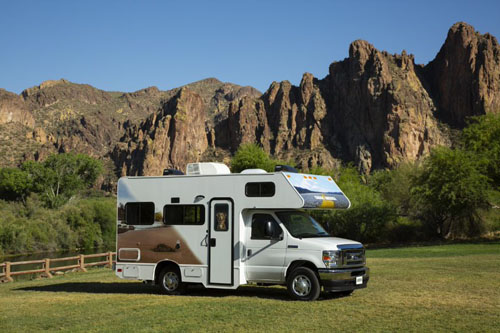
The best RV class for camping in Alaska depends heavily on your travel style and desired level of access, with Class B Campervans or Class C motorhomes offering versatile options. For couples or solo travelers seeking maneuverability on winding Alaskan roads and access to more primitive campsites, a compact Class B Campervan like the "2 Berth Hi Top" with its economical fuel consumption (8-10 Liters/100 Km) and average length of 5.8m is an excellent choice. These campervans are also ideal for discreet boondocking, though they offer fewer amenities and less storage.
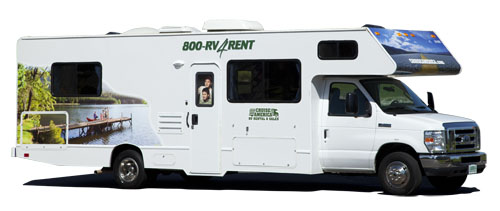
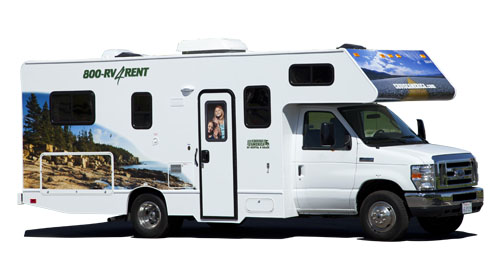
Families or groups of 4-6 people often prefer the comfort and space of a Class C Alcove motorhome, such as the "24' Class C Motorhome," which typically averages 7.46m in length and includes a gas stove and refrigerator. These vehicles are well-suited for established campgrounds with hookups, providing ample living space and storage for a comfortable base for Alaskan adventures, consuming around 15-20 Liters/100 km. While larger Class A Integrated motorhomes offer the most luxury, like the "Class A - Thor ACE 30" with its 9.37m length and 189-liter fresh water tank, their size can be challenging on some narrower Alaskan roads, making them less suitable for extensive off-grid exploration. Bandana RV offers a wide range of motorhome and campervan rentals to perfectly match your Alaskan journey.
How to Save on Campgrounds in Alaska
To save on campground costs in Alaska, travelers can leverage discount programs, strategically choose camping locations, and plan stays for optimal duration and season. Consider using campground discount cards (like those offered by some RV rental companies), which can provide significant savings at participating private RV parks, potentially reducing rates by 10-20%. Opt for municipal, state, or federal campgrounds (e.g., US Forest Service, BLM, State Parks) over private resorts, as they are generally more affordable, often ranging from free (dispersed) to $15-$35 per night for basic sites.
Look for weekly rates by staying 3+ nights, as many private campgrounds offer discounts for longer commitments. Traveling during the shoulder seasons (May-early June, late August-September) means lower demand, leading to fewer crowds and potentially reduced rates at some private establishments. Finally, embrace boondocking or dispersed camping on public lands where legal, as this offers free overnight stays, though it requires self-sufficiency in terms of water, power, and waste management. For routes that factor in budget-friendly camping options, check out the RV PLANET routes to itemize and track every expense, like fuel, propane, and dump fees, along the way for easy budgeting.
Can I park my RV anywhere in Alaska?
No, you cannot park your RV just anywhere in Alaska; while boondocking (dispersed camping) is legal on much of the state's vast public lands, specific restrictions apply to private property, city limits, and designated protected areas. Parking an RV overnight on private land requires explicit permission from the landowner, so always ask first. Within city limits and towns, parking restrictions are common, often prohibiting overnight RV parking on streets or in public parking lots; always check local ordinances or look for designated RV parking signs.
In national and state parks, camping is generally restricted to designated campgrounds or requires specific backcountry permits, and roadside parking outside these areas for overnight stays is usually forbidden. Always be mindful of 'No Overnight Parking' or 'No Camping' signs, which are legally binding and enforced. Instead of stressing about where to park, focus on finding fantastic designated spots that offer both convenience and scenery, many of which can be found using tools like RV PLANET to help with your trip planning.
What is the 3 3 3 rule for RVs and campers?
The '3-3-3 rule' for RVs and campers, often referred to as the '3-3-3 rule for camping,' is a guideline recommending that you drive no more than 300 miles (approximately 480 km) a day, arrive at your destination by 3 PM, and stay for at least 3 days. This rule is particularly pertinent for Alaska's unique environment, where long stretches between towns, variable road conditions (like permafrost heaves and gravel roads), and the need for wildlife awareness can make driving more demanding. By limiting daily mileage to around 300 miles, you reduce driver fatigue and allow for unexpected delays, such as road construction or scenic stops, keeping your trip relaxing and enjoyable.
Arriving by 3 PM ensures you have ample daylight to set up camp, explore the immediate area, and troubleshoot any issues, which is crucial in Alaska where daylight hours vary drastically by season and camp setup can be complex. Staying for at least 3 days allows for a more relaxed experience, deeper exploration of an area, and reduces the stress of constant packing and unpacking, perfectly fitting the slower travel pace (max 100-150 km per day on average) that helps you truly feel the place, connect to the culture, the food, and the scenery of Alaska.
Where is the best place to park an RV for free?
The best places to park a rented RV for free in Alaska are primarily on designated public lands managed by the Bureau of Land Management (BLM) and the US Forest Service, which widely permit dispersed camping. BLM lands offer extensive opportunities for free boondocking across Alaska, including areas along the Denali Highway, parts of the Dalton Highway, and numerous other remote tracts, provided you adhere to 'Leave No Trace' principles by packing out all trash and minimizing your impact. National Forests, such as Chugach and Tongass, also allow dispersed camping away from developed recreation sites, typically requiring you to be at least a quarter-mile from developed areas and adhering to local forest orders.
Some Alaskan state lands and public easements may also permit free overnight parking, but these rules can be complex and location-specific, so always consult current state land use plans or local ranger stations for the most accurate information. While Walmarts or other large retail parking lots sometimes permit overnight RV parking in the Lower 48, this is less common and less reliable in Alaska; always seek permission before staying. Be prepared for self-sufficiency when parking for free, as these locations will not offer hookups or amenities, and remember to practice robust bear safety and proper food storage due to the remote nature of Alaskan wilderness. For information on "One-Way RV Rental in Alaska - Price Guide 2026," consider using our comparison platform.
Is boondocking legal in Alaska?
Yes, boondocking, or dispersed camping, is generally legal and widely practiced across much of Alaska's public lands, particularly those managed by the Bureau of Land Management (BLM) and the U.S. Forest Service. On BLM land, boondocking is typically allowed for up to 14 days in any 30-day period in one location, provided you are at least 100 feet from any water source and follow 'Leave No Trace' principles to protect the pristine environment. Within National Forests (like Chugach and Tongass), dispersed camping is also permitted unless otherwise posted, often requiring you to be a certain distance from developed campgrounds, roads, and water sources to minimize impact.
Alaskan state lands also have provisions for dispersed camping, though specific regulations can vary by borough and land type, making it essential to check with the Alaska Department of Natural Resources (DNR) for specific areas and any current fire bans or restrictions. It is illegal to boondock on private property without explicit owner permission, in most city or town limits, and within designated National Park boundaries outside of official campgrounds (unless a backcountry permit is obtained). Always be self-sufficient when boondocking with your rented campervan or motorhome, carrying enough water, fuel, and supplies, and be highly vigilant about bear safety, proper food storage in bear-resistant containers, and having emergency communication devices (e.g., satellite messenger) due to the remote nature of Alaskan wilderness. More information can be found in our "RV Travel Guide to Alaska - Tips and Top Spots 2026."
What does FF mean in camping?
In the context of RV camping, 'FF' most commonly stands for 'Full Hookups,' indicating that a campsite provides all three essential utility connections: fresh water, electricity, and sewer. Full Hookups are highly desired by many RVers as they allow for maximum comfort and convenience, enabling extended stays without needing to refill water tanks or empty waste tanks, which is particularly beneficial for longer week-long trips. While 'FF' is a common abbreviation in camping guides and reservation systems, some may also encounter variations like 'FHU' for Full Hook Up, which means the same thing.
When planning an RV trip to Alaska, identifying campsites with 'FF' or 'FHU' is important for those prioritizing amenities, especially since many state and national park campgrounds offer only partial or no hookups. Many private RV parks in Alaska will advertise 'FF' sites, providing a comfortable home base for exploring nearby attractions while enjoying all the conveniences of your rented motorhome. However, always remember that in more remote locations, 'FF' sites are rare, so be prepared for some dry camping and conserve your onboard resources.
What is the best time of year to RV to Alaska?
The best time of year to RV to Alaska is generally from mid-June to mid-August, offering the warmest weather, longest daylight hours (often 20+ hours daily), and full availability of attractions and services, though shoulder seasons provide unique advantages. During this peak season, temperatures typically range from 15-25°C (60-75°F), making it ideal for hiking, sightseeing, and enjoying outdoor activities, with excellent chances for wildlife viewing. However, it also means larger crowds and higher prices for campgrounds, excursions, and RV rentals, so booking well in advance is crucial to secure your spot and find "RV Camping Deals in Alaska - Discounted Sites 2026.".
The shoulder seasons, from May to early June and late August to September, offer fewer crowds, potentially lower prices, and distinct experiences. May to early June provides a chance to see spring wildlife and snow-capped peaks, with services mostly open, though some high-elevation roads or remote areas might still be closed due to snow, and early-season mosquitoes can be prevalent. Late August to September brings stunning fall foliage, excellent chances to see the Northern Lights (especially later in September when nights lengthen), and fewer people. Temperatures begin to drop, some attractions may start closing, and active fishing seasons (like salmon runs) can be fantastic. Consider your priorities: for maximum warmth and access, choose peak summer; for fewer crowds and budget-friendly options, or Northern Lights viewing, opt for the shoulder seasons, being prepared for cooler weather and potentially limited services in very remote areas.
How much are campsites in Alaska?
Campsite prices in Alaska vary significantly based on location, amenities, and type, generally ranging from free for dispersed camping to over $100 per night for premium private RV park spots with full hookups. Dispersed camping on BLM land or in National Forests is typically free, offering a true wilderness experience but requiring complete self-sufficiency. State Park Campgrounds often provide basic amenities like pit toilets and water spigots, with fees usually ranging from $15 to $35 per night, depending on the park and specific site, and are often first-come, first-served.
National Park Campgrounds, while scenic (e.g., in Denali), are typically primitive or offer dry camping for RVs, with fees ranging from $20 to $40 per night; reservations are highly recommended and can be competitive. Private RV Parks offer the most amenities (full hookups, Wi-Fi, laundry, showers) and are found near towns and attractions. Prices typically range from $40 to $80 per night, with premium sites or sought-after locations exceeding $100, especially during peak season from June to August. Beyond campsite fees, travelers must consider additional costs like fuel (which can be more expensive in Alaska, particularly in remote regions), potential permit fees for certain areas, and costs for excursions or unexpected maintenance, to form a comprehensive budget. For managing your total trip cost, remember that RV PLANET routes allow you to itemize and track every expense along the way.
What is the 200 rule for camping?
The '200 rule' for camping is a key guideline, suggesting that when boondocking or dispersed camping, you should camp at least 200 feet (approximately 60 meters) from any water source, such as a lake, river, or stream. This rule is crucial for environmental protection in Alaska's pristine wilderness, preventing pollution of water bodies by human waste, soaps, or other contaminants from your rented motorhome. Adhering to the 200-foot rule helps protect riparian ecosystems, minimize disturbance to wildlife that relies on water sources for survival (including bears, moose, and caribou), and maintain the natural beauty of the area for future generations.
While not always a strict legal requirement in all areas, it is a widely accepted best practice aligned with 'Leave No Trace' principles and is often enforced on specific public lands, making it a wise guideline to follow for responsible RV camping in Alaska's wilderness. Always be aware of your surroundings, understand local regulations, and make choices that preserve the natural environment that makes Alaska so special. This applies whether you're in a compact campervan or a larger Class C motorhome.
🎬 Video coming soon
What You Shouldn't Miss
Looking for expert insights from Avi Bandana? Here are his Top 5 Adventures - recommendations from Avi Bandana:
- Denali National Park & Preserve: Take the shuttle deep into the park to witness North America's highest peak and spot grizzly bears, caribou, and Dall sheep. Remember your RV will stay at designated areas like Riley Creek Campground.
- Kenai Fjords National Park: Embark on a boat tour from Seward (a city often covered in "RV Rental Anchorage - Complete Guide 2026") to see tidewater glaciers, humpback whales, orcas, and puffins up close.
- Alaska Highway Journey: Drive at least a section of this iconic route. For example, the
covers 1929.9 km and includes 2 wildlife watches, 3 cruise terminals, and 4 tourist attractions.
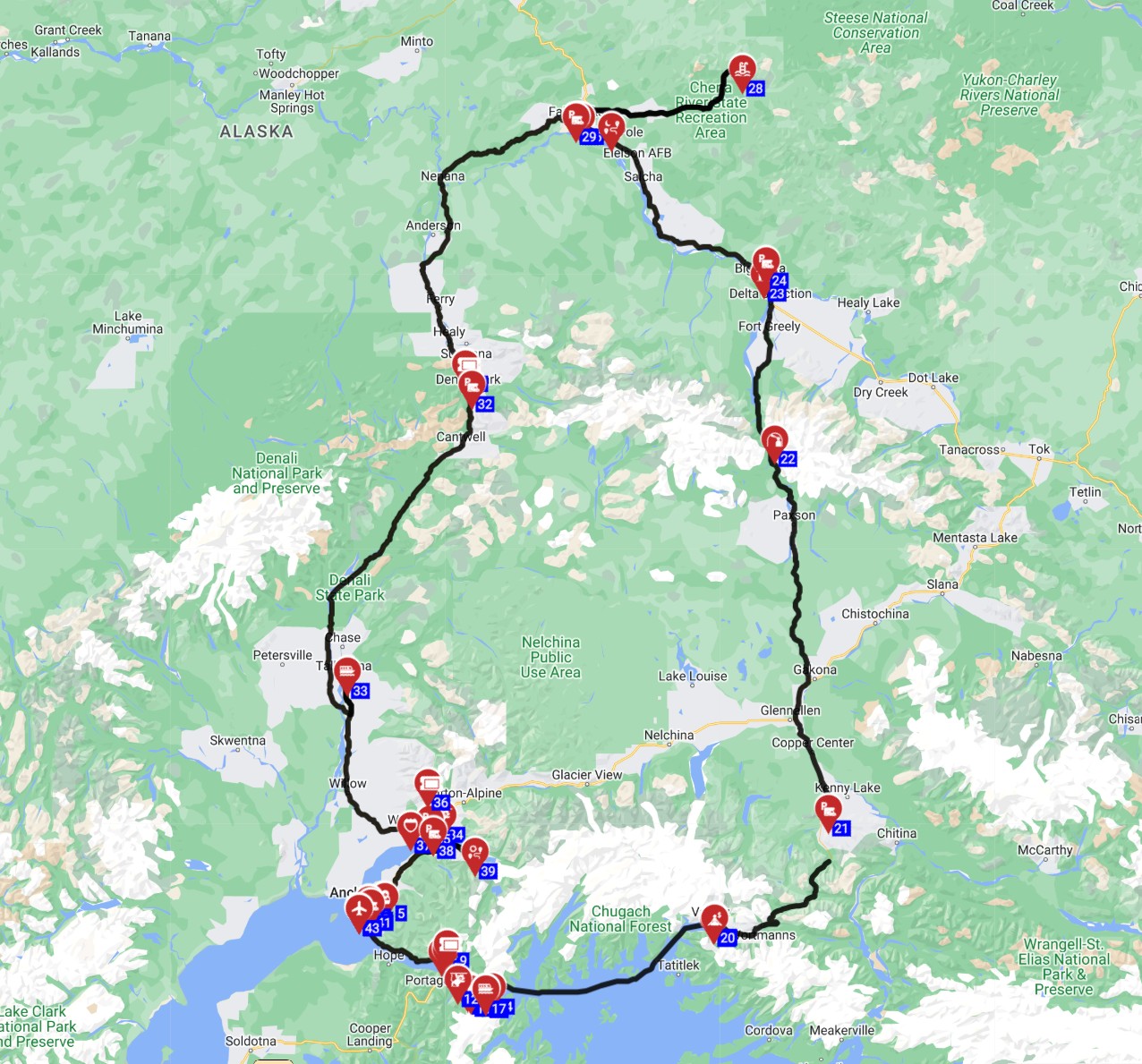 Anchorage Roundtrip Heading North - The Great Alaskan Wilderness Road Trip
 - Fairbanks & The Arctic Circle: Head north to Fairbanks, then consider a drive along the Dalton Highway (if your rental allows) or at least a day trip to experience the vastness of interior Alaska and the chance to see the Northern Lights in late August/early September.
- Homer Spit: Explore this unique 4.5-mile strip of land jutting into Kachemak Bay, renowned for its fishing charters, artisan shops, and stunning views. It's a fantastic spot to enjoy fresh seafood from your rented mobile home.
Final Thoughts
Embarking on an RV camping adventure in Alaska is more than just a trip; it's an immersive experience into one of the world's last great wildernesses. With a rented motorhome or campervan, you have the freedom to chase the midnight sun, witness incredible wildlife, and explore stunning landscapes at your leisure. Remember, planning is key, but so is embracing the unexpected joys of the open road.
At Bandana RV, we're with you every step of the way, from comparing prices and ensuring full transparency, to offering expert advice through RV PLANET's routes. We make sure all the small details are covered so you can focus on the big difference: making unforgettable memories in Alaska. So, are you ready to answer the call of the wild?
Discover top destinations, planning tips, all in one place!
Plan a trip itinerary in advance with minimal effort and maximum enjoyment.
Find your perfect RV for an Alaskan adventure today!