In This Guide
- Can You Drive an RV in Texas? License & Age Rules
- Road Conditions & Terrain in Texas
- RV Size Limits, Bridges & Restricted Zones
- Fuel: Diesel vs. Petrol & Cost per 100 km
- Tolls, Vignettes & Border Rules
- Driving Tips for pet friendly rv rental Travelers
- Recommended RV Class for Texas Roads
- Should I Choose a Compact Van Instead of a Large RV in Texas?
- Can I Park Anywhere? Free & Wild Camping Rules in Texas
- Can I Drive an RV Into the City Center? Heights, Tunnels & Local Signage
- What Practical Logistics Should I Consider for an RV Trip in Texas?
- How Can I Budget and Manage Costs for an RV Rental in Texas?
- What are Texas-Specific Challenges for RVers and How Can I Solve Them?
- Where Can I Find Unique and Off-the-Beaten-Path RV Experiences in Texas?
- How Do RV Rentals in Texas Cater to Diverse Traveler Needs?
- What Local RV Laws and Regulations Apply in Texas?
- How Can I Connect with the RV Community and Local Events in Texas?
Can You Drive an RV in Texas? License & Age Rules
Texas generally requires a standard Class C driver's license for recreational vehicles (RVs) under 26,000 lbs Gross Vehicle Weight Rating (GVWR), which covers most rental units. For RVs exceeding 26,000 lbs GVWR or specific combination vehicles, a Class A or B Commercial Driver's License (CDL) may be required, though most rental RVs fall below this threshold. The minimum driver age for most RV rentals in Texas is typically between 21 and 25 years old, depending on the rental provider's policies. Foreign drivers with a valid foreign driver's license are permitted to drive in Texas for up to one year; an International Driving Permit (IDP) is highly recommended for translation purposes.
Road Conditions & Terrain in Texas
Texas offers diverse road conditions, ranging from multi-lane, well-maintained interstates connecting major cities to scenic, narrower state and county roads, all generally suitable for pet-friendly RV travel. The state's terrain varies significantly, encompassing the flat Gulf Coast plains, the forested Piney Woods, the rolling hills of the Hill Country, and the high deserts of West Texas. While major routes are smooth, some rural roads leading to state parks or natural areas may be unpaved, gravel, or narrow; drivers should adjust speed and practice caution. We always encourage slow, scenic driving to fully appreciate the diverse landscapes and allow for frequent, comfortable stops for your pets.
RV Size Limits, Bridges & Restricted Zones
Texas's infrastructure is largely accommodating for RVs, but drivers must always be vigilant for posted height and weight restrictions, particularly in urban centers and for older bridge structures. Standard highway height clearance in Texas is generally 14 feet, though drivers should watch for lower overpasses, especially on secondary roads or near older infrastructure. Weight limits primarily affect commercial vehicles; most rental RVs fall within standard legal limits, but always be aware of your vehicle's Gross Vehicle Weight Rating (GVWR). Texas does not have statewide environmental zones that restrict RV access based on emissions, nor are there general ferry limits that typically impact RVs for standard travel. Always pay attention to local signage, which may indicate specific restrictions in historic districts or smaller towns.
Fuel: Diesel vs. Petrol & Cost per 100 km
Fuel costs represent a significant portion of RV travel expenses in Texas, with most rental RVs using either petrol (gasoline) or diesel, and consumption varying by vehicle class. Petrol is widely available across Texas for common RV classes like Bandana's Class SI - Semi-integrated, Class C - Alcove, and Class B - Camper Van units. Diesel fuel is typically found at larger truck stops and is common for larger Class A - Integrated RVs and Class TC - Truck Campers. Bandana's Class C - Alcove RVs typically consume 10-12 Liters/100 km, while Class B - Camper Vans average 8-10 Liters/100 km. Based on an estimated Texas fuel cost of $0.79/liter (average for 2026), a Class C RV might cost approximately $8.69 per 100 km, and a Class B around $7.11 per 100 km. Some rent-motorhome RVs include fuel discount cards, which can offer savings over the vast distances typical of Texas RV trips. On the routes offered through RV PLANET routes, you can itemize and track every expense along the way for easy budgeting.
Tolls, Vignettes & Border Rules
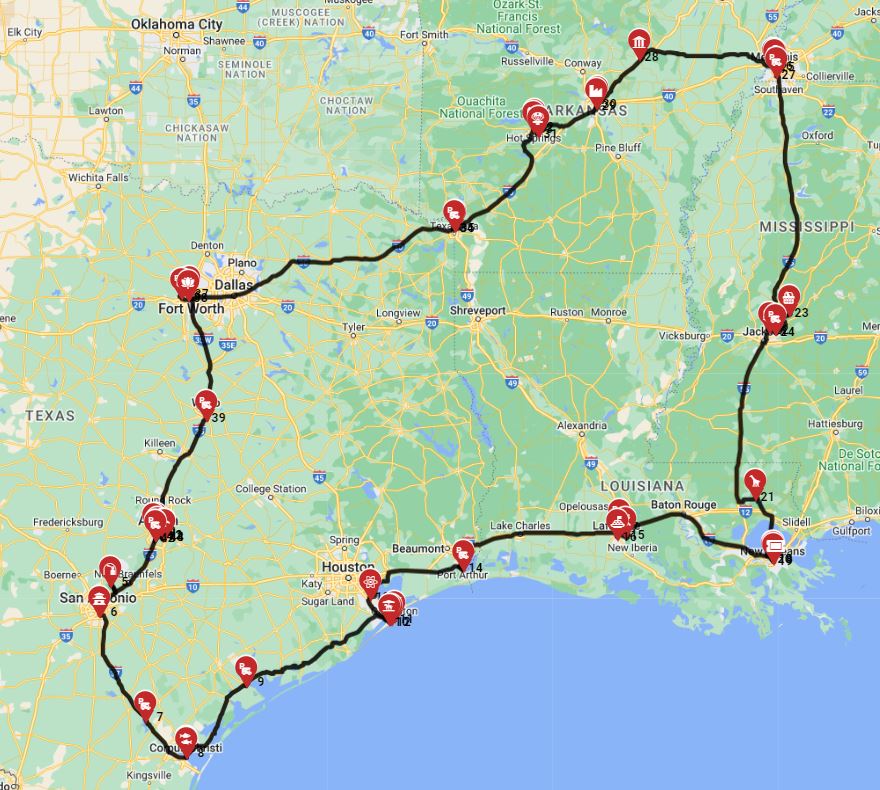
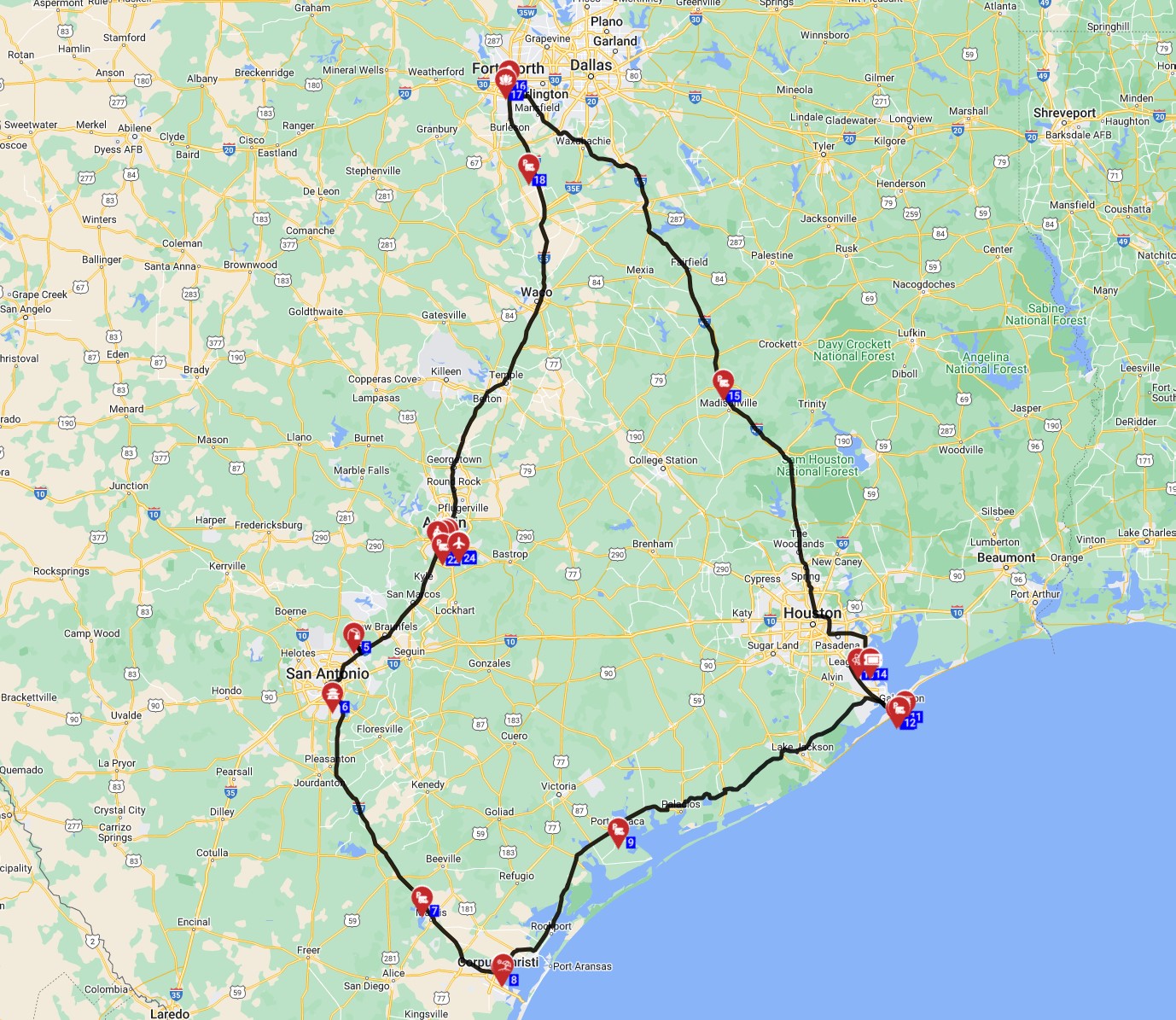
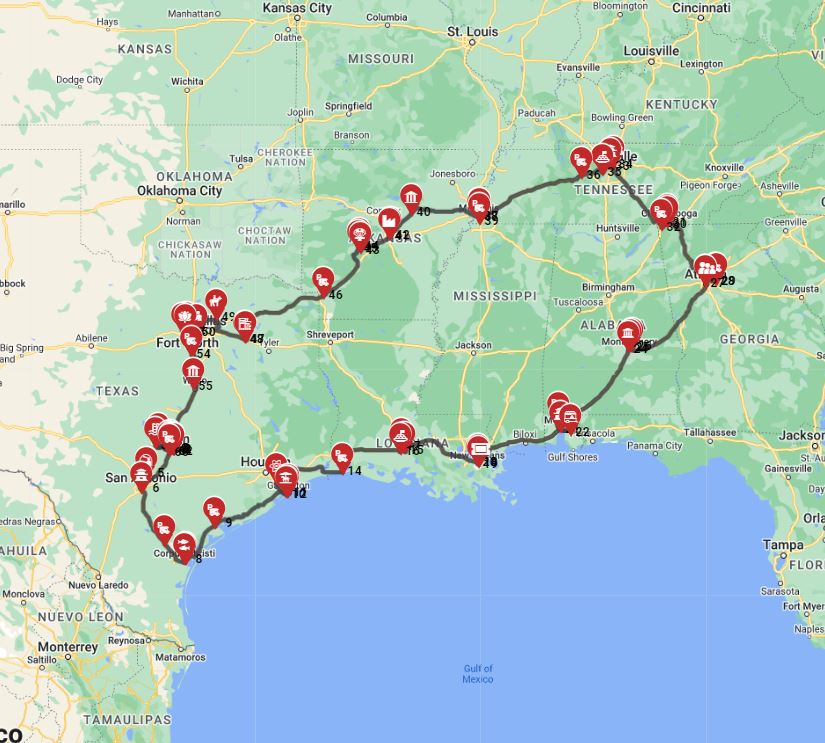
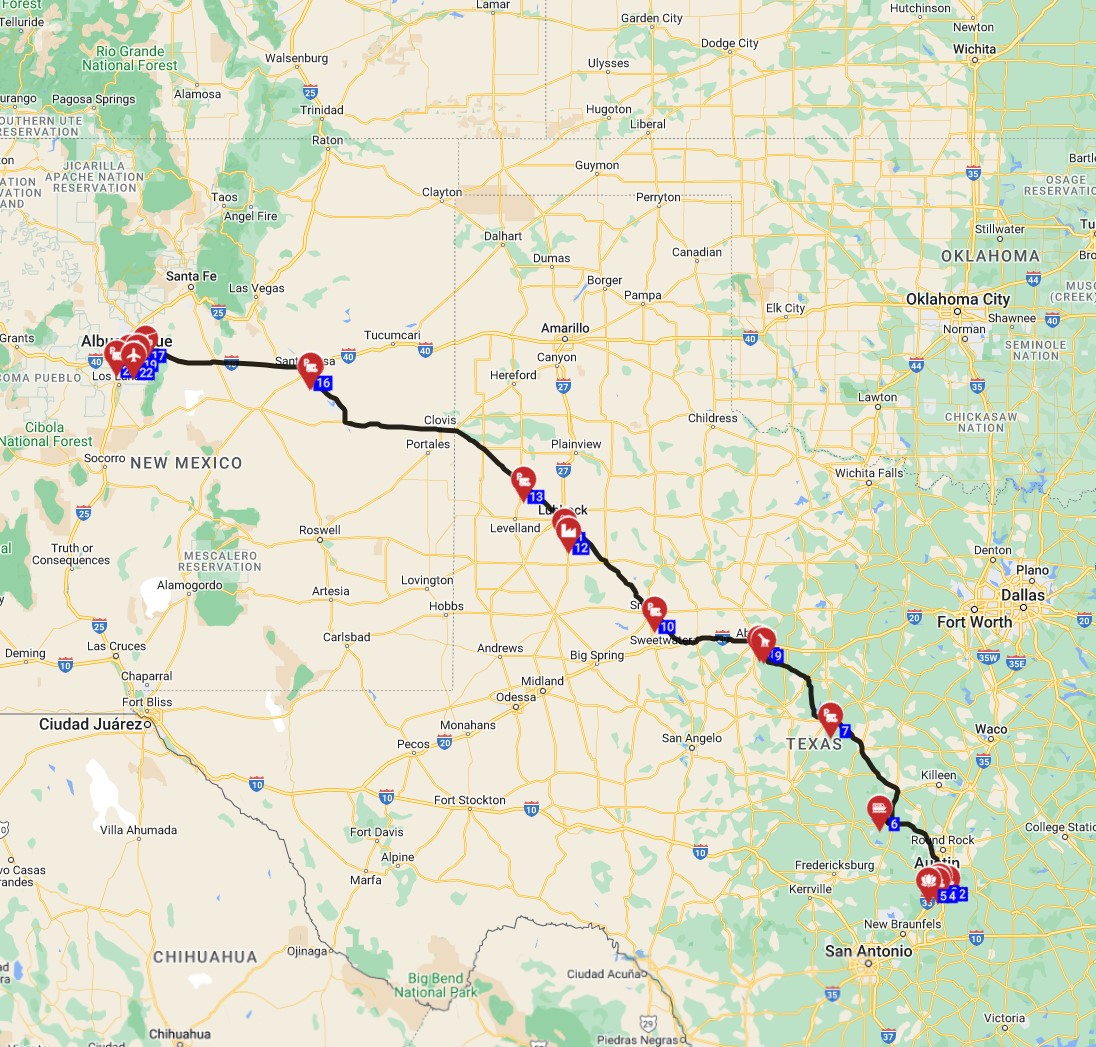
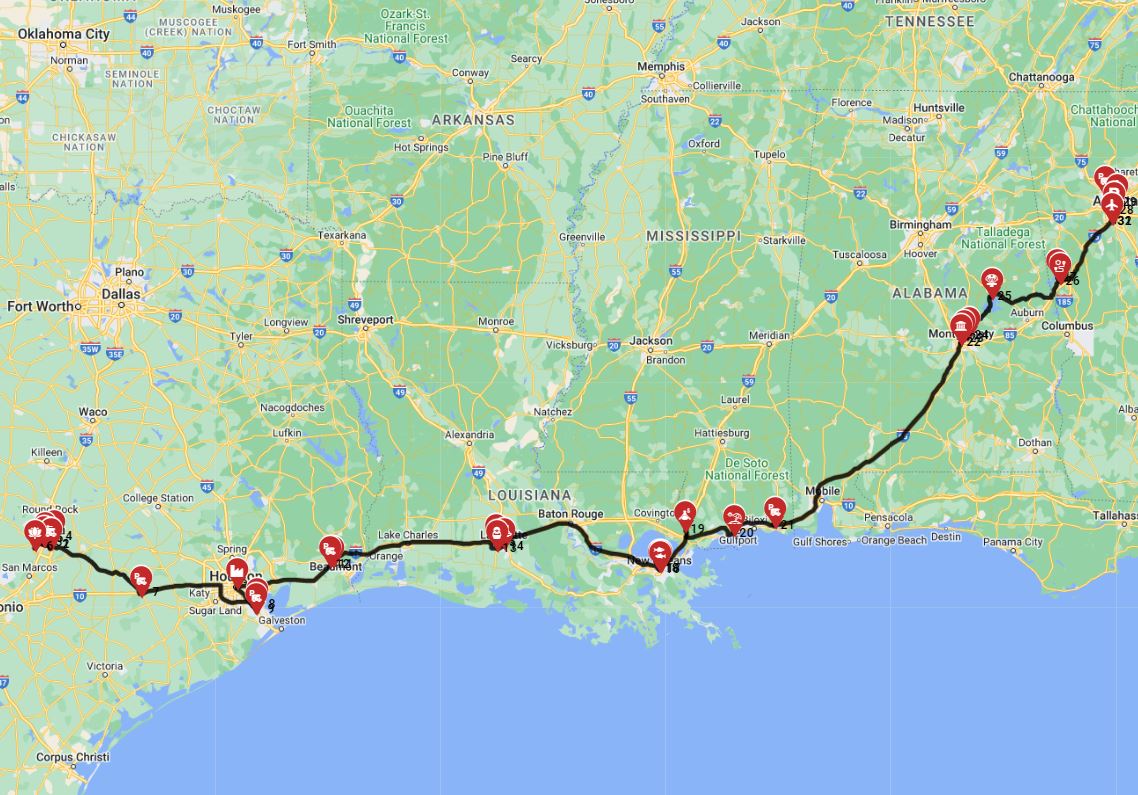
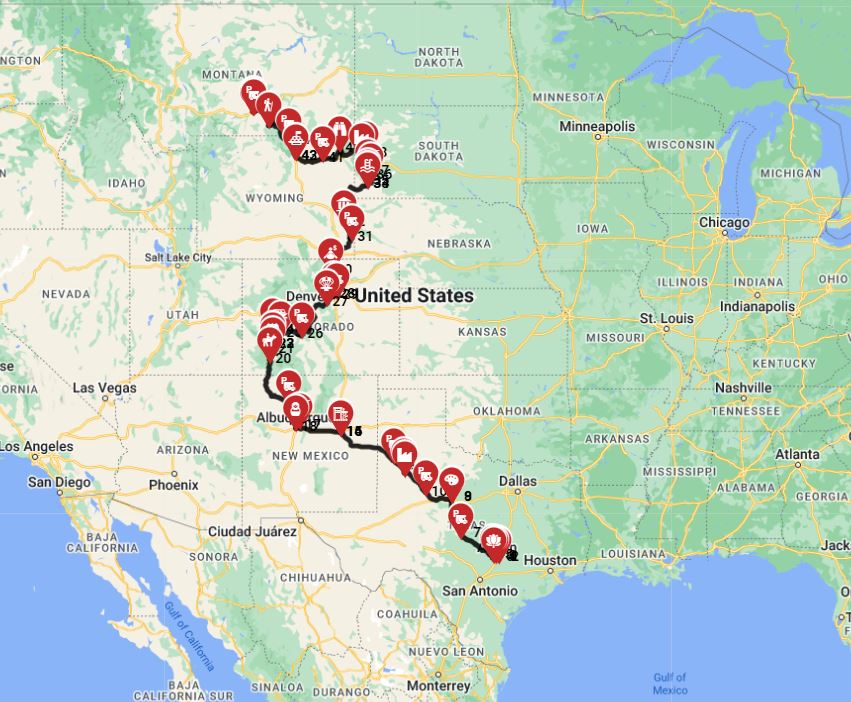
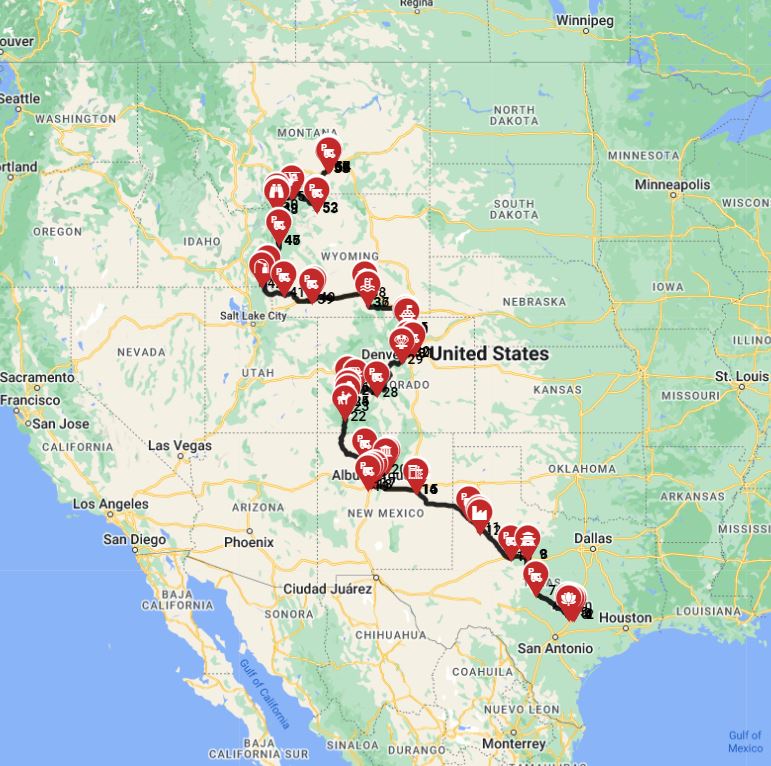
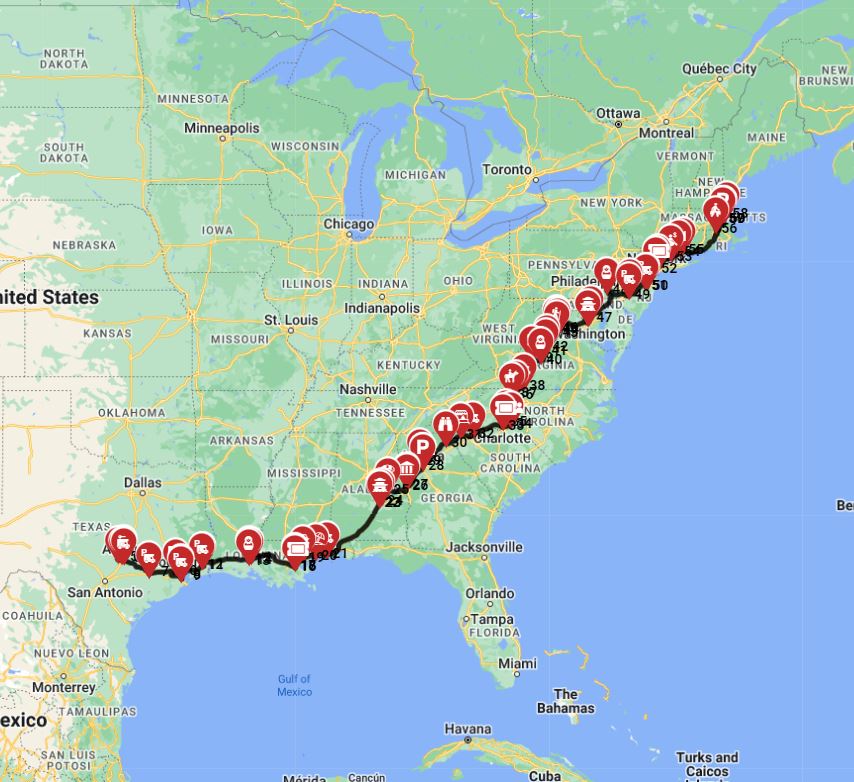
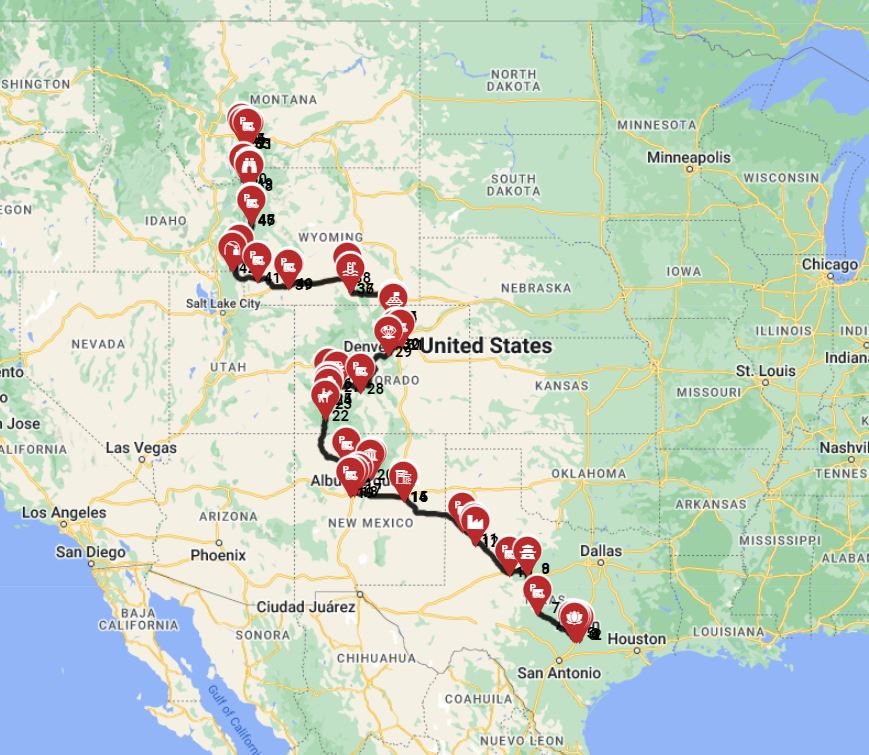
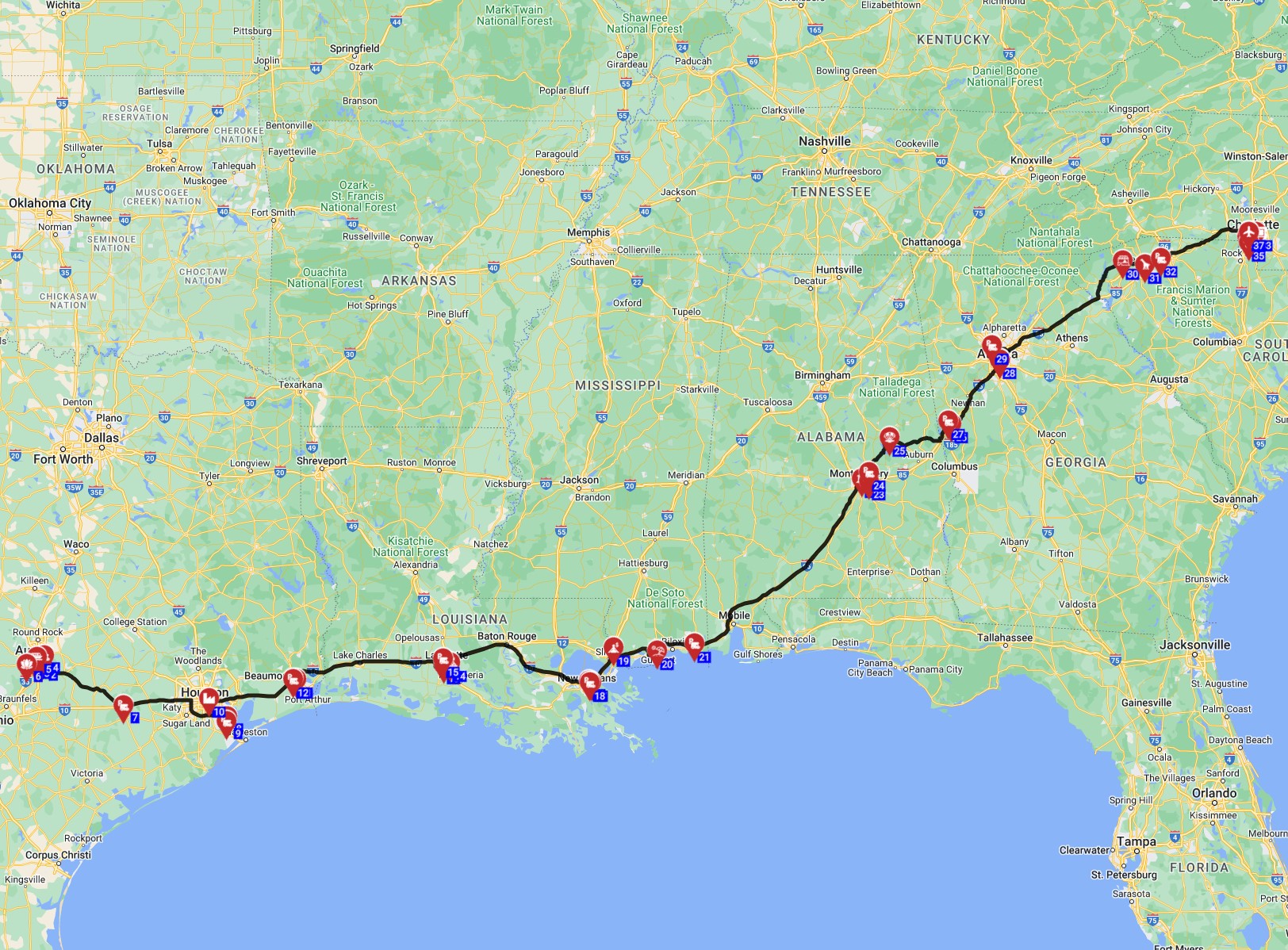
Texas features numerous electronic toll roads, particularly concentrated in and around major metropolitan areas, but does not require vignettes for vehicle use. Tolls are primarily electronic, utilizing systems like TxTag, TollTag, or EZ TAG; visitors without these passes can use 'Pay By Mail' options, though these typically incur higher administrative fees. No vignettes (pre-paid road use stickers) are required for driving an RV in Texas. The provided Southwest USA Road Trip Maps (including Texas) illustrate the extensive regional travel opportunities, but specific border rules only apply when crossing international borders (e.g., into Mexico) and not for internal US travel. Some rent-motorhome RVs allow for pre-purchasing toll passes or include transponders, simplifying toll payments and helping avoid potential fines.
Driving Tips for pet friendly rv rental Travelers
Planning frequent stops, diligently managing the extreme Texas summer heat, and being aware of your RV's dimensions are critical driving tips for a successful pet-friendly RV adventure. Plan to pull over every 2-3 hours for your pets to stretch, drink water, and relieve themselves, ensuring a comfortable journey. Texas summers can be intensely hot; always ensure your RV's air conditioning is operational and never leave pets unattended in a hot vehicle. Utilize RV-specific GPS navigation to identify suitable routes, avoiding low clearances, narrow roads, or areas difficult for larger rigs. Bring an ample supply of water, pet food, a first-aid kit for both humans and pets, and waste bags, as amenities can be sparse in remote areas. Most rental RVs are equipped with automatic transmissions, which significantly simplifies driving and reduces fatigue over Texas's long distances.
Recommended RV Class for Texas Roads
For most Texas road trips, Bandana's Class C - Alcove or Class B - Camper Van RVs offer an excellent balance of space, amenities, and maneuverability, making them ideal for pet owners. For example, our Class C RVs, with an average length of 7.5m, comfortably sleep 5-6 people and provide ample living and sleeping space for families and their pets. The Class B Camper Vans, averaging 5.8m in length, are a more compact option, perfect for couples or small groups, offering greater ease of navigation in towns and parking. Both our Class C and Class B RVs typically offer sufficient ground clearance to handle the varied Texas terrains, from smooth highways to state park access roads.
Should I Choose a Compact Van Instead of a Large RV in Texas?
While larger RVs offer superior comfort and dedicated space for pets, a compact van's maneuverability can be advantageous in specific Texas settings, though the state's roads generally accommodate all RV sizes. Larger RVs like Class C and Class A provide significantly more living area, dedicated pet zones, and comprehensive amenities, which are often preferred for extended pet-friendly trips. Compact vans offer easier parking and navigation in urban centers, historic districts, or smaller state park campgrounds, making them suitable for quick weekend trips. For pet owners, the increased interior space in a larger RV for crates, pet beds, and free movement often outweighs the marginal maneuverability benefits of a compact van.
Can I Park Anywhere? Free & Wild Camping Rules in Texas
Free and wild camping in Texas is generally restricted to specific designated areas, requiring adherence to local regulations and prohibiting random overnight parking on public lands or private property without permission. Wild camping, or dispersed camping, may be permitted in certain National Forests (e.g., Sam Houston National Forest, Davy Crockett National Forest) and limited Bureau of Land Management (BLM) areas, often requiring self-sufficiency. Texas State Parks and National Parks primarily offer developed campgrounds with designated sites and associated fees, which should be booked in advance. Overnight parking on roadsides, rest stops, or retail parking lots (like Walmart) is generally not allowed in Texas unless specific local ordinances or store policies permit it. Always verify local regulations and follow state and local law before parking overnight, as rules vary significantly by region and land ownership.
Can I Drive an RV Into the City Center? Heights, Tunnels & Local Signage
Most RVs can generally navigate Texas city centers, but drivers must remain exceptionally vigilant for specific local signage, particularly regarding height limits, low bridges, narrow streets, and parking availability. Driving into metropolitan areas like Houston, Dallas, Austin, or San Antonio is typically permissible for RVs, though managing dense traffic and locating suitable parking can be challenging. Pay close attention to all local signage indicating height restrictions for tunnels, underpasses, and parking garages, as these may not accommodate larger RVs. Texas cities generally do not impose specific environmental zones that restrict RV access based on vehicle emissions. Always plan your route using RV-specific GPS navigation to avoid potential hazards such as overly narrow streets in older districts or unexpected low clearances.
What Practical Logistics Should I Consider for an RV Trip in Texas?
Beyond basic planning, RV travelers in Texas should consider vehicle-specific logistics, strategies for fuel efficiency over vast distances, comprehensive emergency preparedness, and reliable connectivity. Understand your RV's exact dimensions for navigating tight spaces and know the specific hookup requirements (electric, water, sewer) for various campgrounds. Plan your routes to minimize heavy braking and acceleration, maintain consistent speeds, and strategically locate fuel stops to optimize consumption across Texas's long stretches. Keep emergency roadside assistance contacts readily available and familiarize yourself with basic RV troubleshooting for common on-the-road issues. Pack for Texas's varied and sometimes extreme weather (summer heat, sudden thunderstorms, potential for cold fronts), including a comprehensive first-aid kit and pet-specific emergency supplies. Research cell service coverage for your intended destinations, especially remote areas, and consider a mobile hotspot for consistent internet access.
How Can I Budget and Manage Costs for an RV Rental in Texas?
Effective budgeting for an RV rental in Texas involves a detailed cost analysis beyond general savings, including hidden fees, boondocking benefits, state park passes, and fuel cost mitigation strategies. Create a comprehensive budget that includes rental rates, insurance, fuel, campground fees, food, activities, and pet-related expenses. Be aware of potential extra costs like mileage limits, generator usage fees, specific pet cleaning charges, propane refills, and late return penalties. Utilize free or low-cost dispersed camping (boondocking) options in designated national forests or BLM lands to significantly reduce nightly accommodation expenses. Consider purchasing a Texas State Parks Pass, which offers unlimited entry to state parks for one year and discounts on camping fees, potentially saving hundreds of dollars for families. Use fuel tracking apps to find the best prices, leverage fuel discount cards provided by your rental company, and drive conservatively to improve your RV's fuel efficiency over long distances.
What are Texas-Specific Challenges for RVers and How Can I Solve Them?
RVing in Texas presents unique regional challenges such as extreme heat, navigating vast distances, and understanding local regulations, all of which can be addressed with proactive planning and specific solutions. For extreme heat mitigation, plan travel during cooler seasons or schedule driving for early mornings/evenings in summer; ensure your RV's AC is fully functional and provide plenty of water and shade for pets. To navigate long distances efficiently, break long drives into shorter segments, utilize cruise control on highways, and plan fuel and rest stops strategically to conserve energy and time. Stay informed about current local fire bans (especially during dry periods) and water conservation rules by checking park websites or local news before arriving. Be prepared for driving through diverse terrain, from flat coastal roads to winding Hill Country routes and desert passes, adjusting driving style and tire pressure as appropriate. Finally, manage insect populations by packing effective repellent and considering installing screens or using bug netting for your RV, especially during warmer months near water sources.
Where Can I Find Unique and Off-the-Beaten-Path RV Experiences in Texas?
Texas offers a wealth of unique and off-the-beaten-path RV experiences, from lesser-known destinations and local artisan encounters to specific food trails, optimal stargazing spots, and diverse wildlife viewing. Explore hidden gems like Big Bend Ranch State Park (the 'other' Big Bend), Palmetto State Park, or the unique rock formations of Caprock Canyon State Park. Seek out charming small towns in the Hill Country for local artisan shops, art galleries, and craft breweries, engaging directly with local creators. Embark on a themed culinary journey such as the Texas BBQ Trail, exploring historic smokehouses, or a local wine trail in the Hill Country. Visit designated International Dark Sky Parks like Big Bend National Park or Copper Breaks State Park for unparalleled views of the night sky. Explore lesser-known wildlife refuges such as Aransas National Wildlife Refuge for whooping cranes, or the World Birding Center sites in the Rio Grande Valley for diverse avian species.
How Do RV Rentals in Texas Cater to Diverse Traveler Needs?
RV rentals in Texas are increasingly tailored to accommodate diverse traveler needs, offering suitable vehicles and amenities for solo adventurers, multi-generational groups, and those with specific accessibility requirements, catering to both short-term and long-term trips. Compact Class B Camper Vans, like Bandana's models, provide independence, ease of driving, and efficient fuel consumption for single travelers or couples. Larger Class C or Class A RVs offer multiple sleeping areas, separate living spaces, and abundant storage for family comfort, ideal for multi-generational groups. Some rental providers offer specially adapted RVs with features like wheelchair lifts or modified interiors; inquire directly with Bandana for availability. Smaller, more fuel-efficient RVs are perfect for quick getaways, offering ease of setup and breakdown for shorter adventures, while fully equipped RVs with more extensive amenities, larger tanks, and ample storage are ideal for extended journeys across Texas.
What Local RV Laws and Regulations Apply in Texas?
RV operators in Texas must adhere to state-specific laws and regulations covering vehicle operation, towing, overnight parking rules, and restrictions within state and national parks. Drivers are responsible for ensuring their RV's total weight, including cargo and passengers, complies with the vehicle's Gross Vehicle Weight Rating (GVWR) and any posted bridge or road weight limits. Texas has specific requirements for towing, including mandated safety chains, operational brake lights, and maximum combined length limits for the RV and any towed vehicle. Generally, overnight parking for RVs is prohibited on public roads, rest areas, and most commercial parking lots unless explicitly allowed by local ordinance or property management. Individual state and national parks in Texas often have unique rules regarding pet access, generator hours, fire restrictions, and maximum vehicle length within campgrounds. Proper disposal of grey and black water at designated dump stations is legally required to prevent environmental contamination and is strictly enforced.
How Can I Connect with the RV Community and Local Events in Texas?
Connecting with Texas's vibrant RV community and participating in local events can significantly enhance your pet-friendly RV trip, offering opportunities for camaraderie, shared experiences, and deeper cultural immersion. Join Texas-specific RV Facebook groups or online forums to exchange tips, ask questions, and discover local meetups and gatherings. Many RV parks and campgrounds across Texas host social events, potlucks, or happy hours, providing excellent opportunities to meet fellow RVers. Plan your itinerary around Texas's numerous cultural, music, food, and art festivals or rodeos, often finding nearby RV-friendly parking or camping. Look for opportunities to engage in volunteer tourism, such as park cleanups or conservation projects, allowing you to give back and connect with the local environment and community. Explore national RV clubs (e.g., Good Sam Club, FMCA) that organize rallies and events in Texas, offering structured social activities and educational sessions.
Final Thoughts
Renting a pet-friendly RV in Texas opens up a world of adventure, allowing you and your furry companions to explore the diverse landscapes and unique culture of this vast state at your own pace. From the rolling hills of the Hill Country to the vast deserts of West Texas, a rented RV provides the freedom and comfort to make unforgettable memories.
Remember to plan ahead, especially for popular parks, and embrace the slow travel philosophy. Embrace the open road, discover hidden gems, and enjoy the incredible journey with your pets by your side. Bandana Caravan is here to help you every step of the way, ensuring a smooth and enjoyable rental experience.