In This Guide
- Best Ireland RV Itinerary for one way rv rental — Overview
- 7-Day Classic Route in Ireland
- 14-Day Extended Journey in Ireland
- Recommended RVPlan Trip for Ireland
- Must-See Stops Along the Way (Avi Bandana Picks)
- Daily Driving Distances & Drive Times in Ireland
- Best RV Class for This Itinerary — Couple & Family Picks
- What is a one way rv rental?
- What is the best month to RV Ireland?
- How long does it take to drive around Ireland in an RV?
- What do I need to pack for an RV trip to Ireland?
- Is there mobile data in Ireland?
- Can you wild camp in Ireland in an RV?
- How do you find campsites in Ireland?
- How do you fill up water in an RV in Ireland?
- Is it hard to drive an RV in Ireland?
- What are the rules for driving an RV in Ireland?
- What are the requirements for RV rental in Ireland?
- How much does it cost to rent an RV in Ireland?
- Can you take an RV on Irish ferries?
Best Ireland RV Itinerary for one way rv rental — Overview
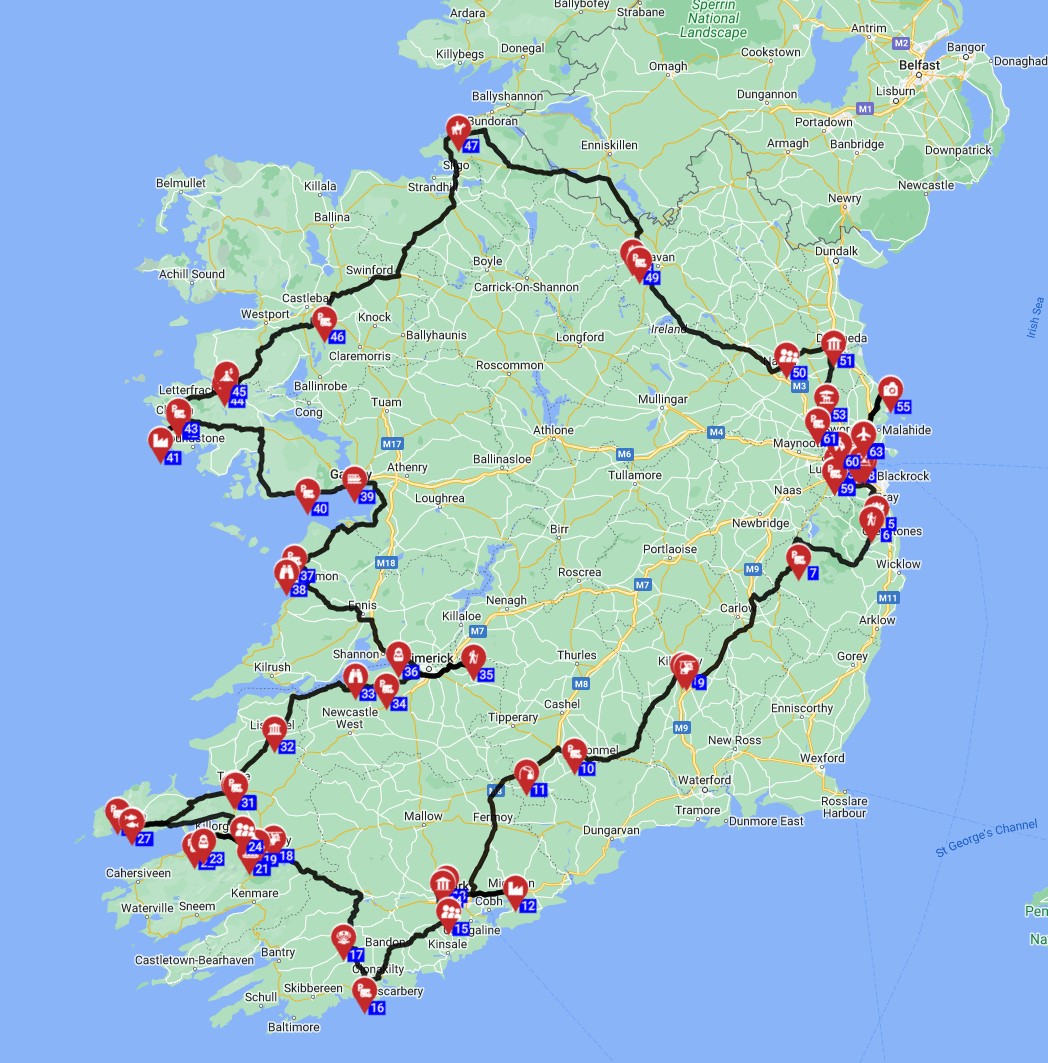
A one-way RV rental in Ireland typically involves picking up your motorhome in one major city, such as Dublin, and dropping it off in another, like Shannon or Belfast, facilitating a linear journey across the island. This type of trip is best experienced over a minimum of 7 to 14 days to fully appreciate Ireland's landscapes and culture without rushing. Expect to cover approximately 700-1500 kilometers (430-930 miles), depending on the chosen route and number of days. The ideal season for an RV adventure in Ireland is during the shoulder months of May, June, September, and early October, offering milder weather, fewer crowds, and better campsite availability.
7-Day Classic Route in Ireland
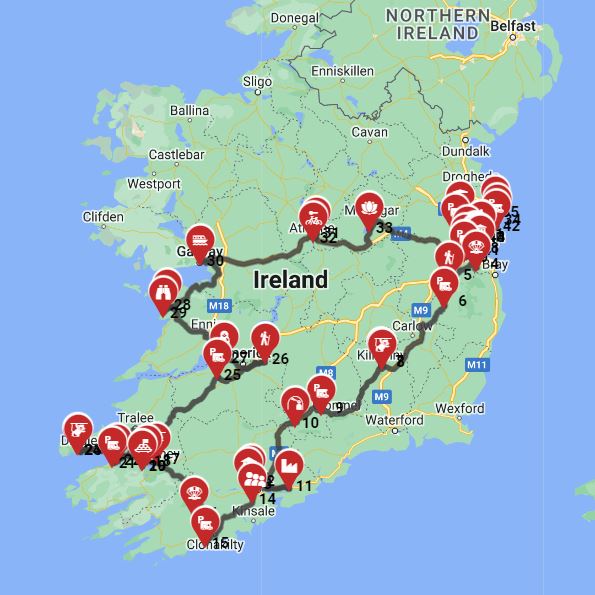
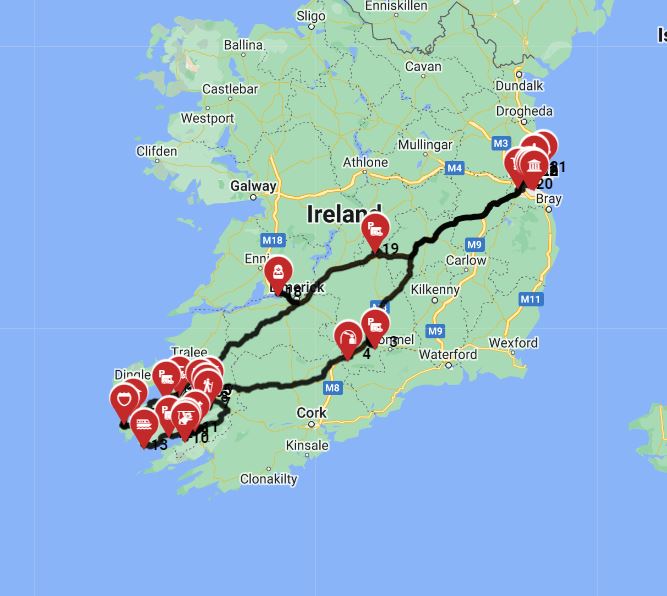
This 7-day itinerary offers a taste of Ireland's south and west, starting near Dublin and heading towards the Atlantic coast, respecting Avi Bandana's recommended daily driving limits: Day 1: Dublin area → Kilkenny (approx. 125 km / 78 miles). Visit Kilkenny Castle and explore the medieval city. Sleep: Nore Valley Park. Day 2: Kilkenny → Cork (approx. 100 km / 62 miles). Kiss the Blarney Stone at Blarney Castle. Sleep: Blarney Caravan & Camping Park. Day 3: Cork → Killarney (approx. 85 km / 53 miles). Explore Killarney National Park and parts of the Ring of Kerry. Sleep: Fossa Caravan & Camping Park. Day 4: Killarney → Dingle (approx. 65 km / 40 miles). Drive the scenic Dingle Peninsula. Sleep: Dingle Bay Camping & Caravan Park. Day 5: Dingle → Cliffs of Moher / Ennis (approx. 140 km / 87 miles). Witness the majestic Cliffs of Moher and explore the Burren. Sleep: Nagles Camping & Caravan Park (Doolin) or near Ennis. Day 6: Ennis → Galway (approx. 75 km / 47 miles). Immerse yourself in the vibrant city of Galway. Sleep: Salthill Caravan Park. Day 7: Galway → Shannon Airport (for drop-off) (approx. 75 km / 47 miles). A convenient drop-off point for one-way rentals.
14-Day Extended Journey in Ireland
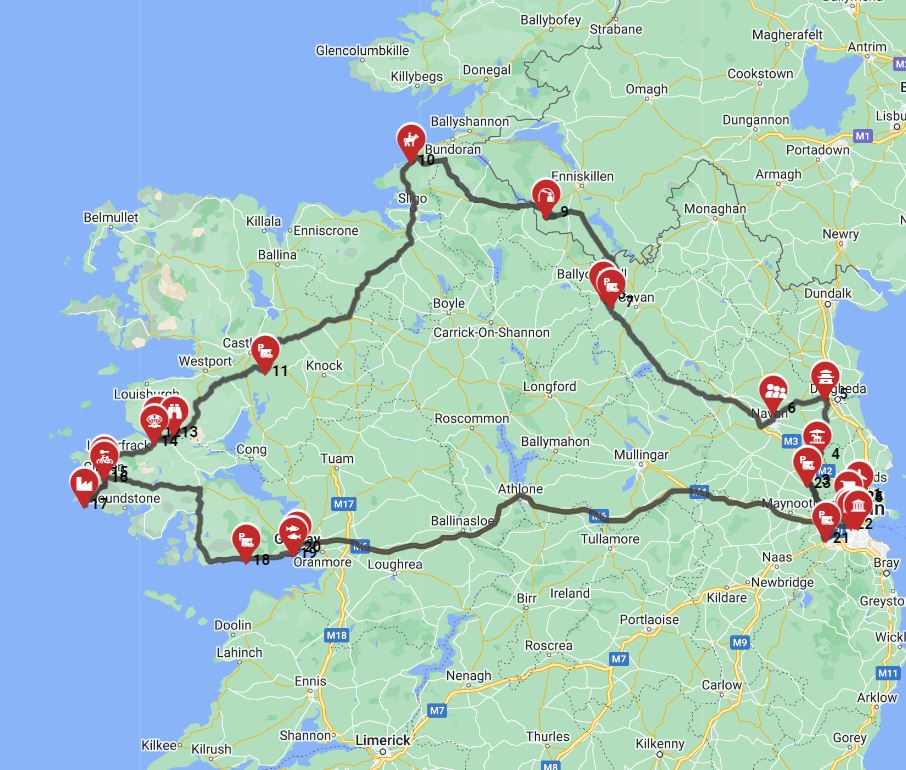
An extended 14-day RV journey allows for deeper exploration of both the Republic of Ireland and potentially Northern Ireland, maintaining a leisurely pace. Days 1-7: Follow the '7-Day Classic Route in Ireland' (Dublin to Galway/Shannon area). Day 8: Galway → Connemara National Park (approx. 80 km / 50 miles). Explore the wild beauty of Connemara and Kylemore Abbey. Sleep: Clifden Eco Beach Camping & Caravanning Park. Day 9: Connemara → Westport (approx. 80 km / 50 miles). Hike Croagh Patrick or explore Westport town. Sleep: Westport House Caravan & Camping Park. Day 10: Westport → Sligo (approx. 100 km / 62 miles). Visit Strandhill beach and enjoy views of Benbulben mountain. Sleep: Strandhill Caravan Park. Day 1L: Sligo → Donegal Town (approx. 100 km / 62 miles). Discover the rugged coastline and Slieve League Cliffs. Sleep: Lakeside Centre Caravan & Camping Park. Day 12: Donegal → Derry/Londonderry, Northern Ireland (approx. 100 km / 62 miles). Walk the historic Walled City. Sleep: Foyle Valley Glamping and Caravan Park. Day 13: Derry → Antrim Coast / Giant's Causeway, Northern Ireland (approx. 80 km / 50 miles). Marvel at the Giant's Causeway and Carrick-a-Rede Rope Bridge. Sleep: Causeway Coast Holiday Park. Day 114: Antrim Coast → Belfast (for drop-off) (approx. 60 km / 37 miles). Explore Belfast city before your one-way RV return.
Recommended RVPlan Trip for Ireland
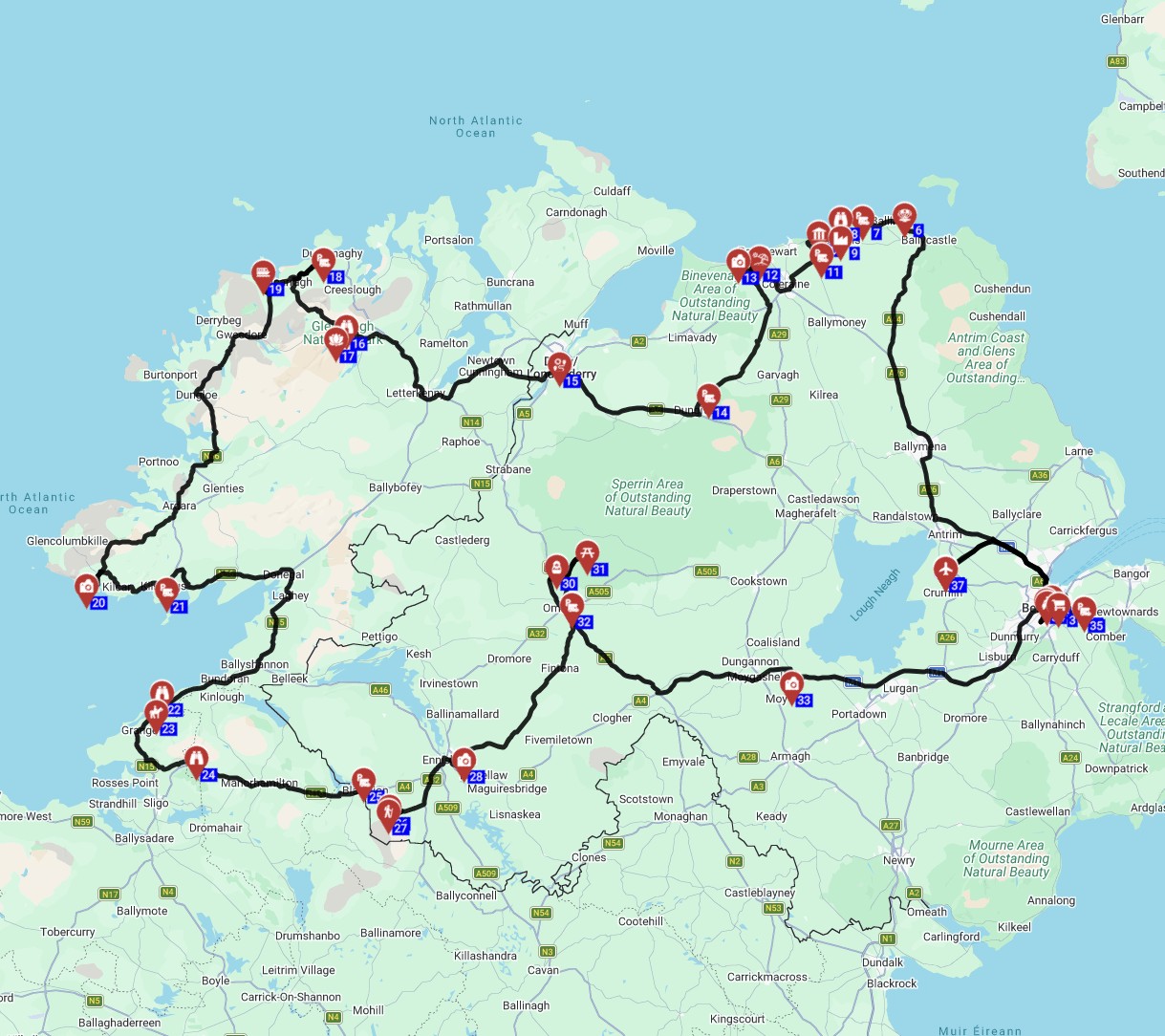
While focused on a round trip in Northern Ireland, the RVPlan "

Must-See Stops Along the Way (Avi Bandana Picks)
Avi Bandana's personal picks for cultural immersion and unique experiences during an Ireland RV trip emphasize traditional visits, local industries, and breathtaking natural features: **Local Industry Visit:** Seek out opportunities to visit a local craft brewery, distillery, or a traditional tweed weaving mill to understand Ireland's heritage and craftsmanship firsthand. **Traditional Visit:** Engage with local history and folklore by visiting a historic village, a traditional music session in a pub, or a local storytelling event. **Natural Features:** Don't miss the dramatic beauty of the Cliffs of Moher, the otherworldly landscapes of the Burren, the serene lakes of Killarney National Park, or the unique basalt columns of the Giant's Causeway. **Historical Sites:** Explore ancient monastic settlements like Clonmacnoise, majestic castles such as Kilkenny Castle, or the prehistoric Newgrange passage tomb.
Daily Driving Distances & Drive Times in Ireland
Avi Bandana recommends a maximum of 100 miles or 150 km per day on average when RVing in Ireland, encouraging a slow travel approach to truly savor the landscapes and local culture. Driving in Ireland often takes longer than anticipated due to narrow roads, frequent turns, and the temptation of spontaneous stops at scenic viewpoints or charming villages. For example, the drive from Dublin to Galway, approximately 210 km (130 miles), can take around 2.5-3 hours of continuous driving, but easily extends to 4-5 hours or more with a leisurely pace and stops. A journey from Galway to the Cliffs of Moher, roughly 75 km (47 miles), might be 1.5 hours of pure driving but often becomes a 3+ hour scenic exploration. The route from Killarney to Dingle, about 65 km (40 miles), takes just over an hour direct, but factor in several hours to fully experience the peninsula's beauty.
Best RV Class for This Itinerary — Couple & Family Picks
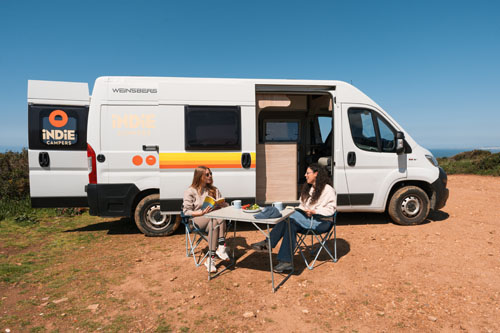
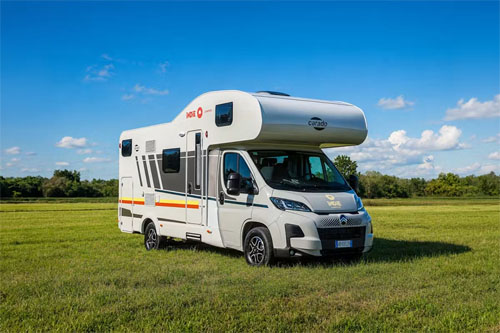
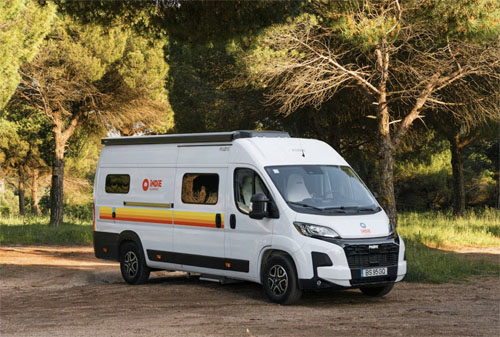
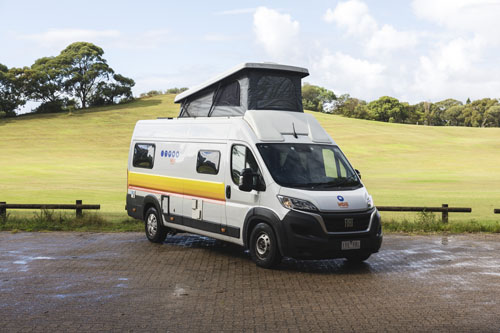
For couples, the **Class B - Camper Van** is highly recommended for an Ireland RV adventure due to its compact size and maneuverability. Bandana's fleet Class B Camper Vans typically average 5.8 meters in length and accommodate around 2.7 adults, making them ideal for navigating Ireland's narrow roads, accessing smaller towns, and fitting into tighter campsites with ease. For families, the **Class C - Alcove** motorhome offers a more spacious and comfortable experience without being overly cumbersome. Bandana's fleet Class C Alcove models average 7.5 meters in length and comfortably sleep around 4.4 adults, providing dedicated sleeping areas and more living space, perfect for families seeking comfort after a day of exploration. To remove planning headaches, Rent & Plan offers an exclusive 'Rent & Plan' service, combining your RV rental with a ready-made itinerary crafted by travel experts, providing full access to trip-planning software for a seamless and stress-free journey.
What is a one way rv rental?
A one-way RV rental allows you to pick up your motorhome in one designated location and return it to a different, pre-agreed location, offering significant flexibility for linear itineraries that don't loop back to the starting point. This service is particularly beneficial for travelers wanting to cover more ground across Ireland without the obligation of driving back to their initial pickup city. One-way rentals often incur an additional 'one-way fee' or 'relocation fee' to cover the cost of returning the vehicle to its home depot, which can add a notable expense to the overall rental cost. They are popular for extended journeys, such as traversing the Wild Atlantic Way from south to north, or for combining an RV trip with other forms of travel at either end of the journey.
What is the best month to RV Ireland?
The best months to RV Ireland are typically May, June, September, and early October, offering a balance of milder weather, longer daylight hours, and fewer crowds compared to the peak summer season (July-August). During these 'shoulder' seasons, you'll experience pleasant temperatures for outdoor activities, more readily available campsites, and potentially lower rental rates than in high summer. July and August offer the warmest weather and longest daylight, but also bring larger crowds to popular attractions and higher demand for campsites and RV rentals. Winter months (November-March) can be challenging due to shorter days, colder temperatures, and many campsites and attractions operating on reduced hours or closing entirely, making them less ideal for a first-time RV trip.
How long does it take to drive around Ireland in an RV?
To comfortably drive around the Republic of Ireland in an RV, allowing for scenic stops and exploration without rushing, you should plan for a minimum of 10-14 days. A 7-day trip can cover a specific region, like the southwest, but an ideal one-way journey across the island, such as Dublin to Belfast, typically requires at least two weeks. For a comprehensive exploration of the entire island, including Northern Ireland and significant portions of the Wild Atlantic Way, 3-4 weeks would enable a more leisurely and in-depth experience, adhering to the recommended maximum of 100 miles (150 km) per day. The duration depends heavily on your desired pace, the number of attractions you wish to visit, and how much time you allocate for cultural immersion beyond just driving.
What do I need to pack for an RV trip to Ireland?
For an RV trip to Ireland, a comprehensive packing list should prioritize layers of waterproof and warm clothing, sturdy walking shoes, universal power adapters, and reliable navigation tools, tailored to Ireland's variable weather. Essential clothing includes waterproof jackets and trousers, thermal layers, wool socks, and comfortable, water-resistant hiking boots for exploring. Don't forget personal items like toiletries (consider eco-friendly options), a quick-drying towel, and a small first-aid kit. For the RV, bring a universal travel adapter for charging electronics, offline maps (Google Maps, Maps.me), a portable Wi-Fi device or local SIM card for connectivity, and basic cooking supplies like a small pan, utensils, and reusable food containers. Other helpful items include a camera, binoculars for wildlife viewing, insect repellent (especially in summer), and a sturdy reusable water bottle. For ideas you can prep on the road, watch our RV-friendly recipes playlist on YouTube.
Is there mobile data in Ireland?
Yes, mobile data is widely available across Ireland, especially in urban areas and most rural regions, though signal strength can be intermittent in very remote or mountainous locations, necessitating offline navigation backups. Major network providers such as Vodafone, Three, and Eir offer good 4G and increasingly 5G coverage throughout the country, with various prepaid SIM card options available for tourists. For reliable navigation and communication, consider purchasing a local SIM card upon arrival or checking your existing mobile provider's international roaming plans. While many campsites and pubs offer Wi-Fi, it's advisable to download offline maps (e.g., via Google Maps or Maps.me) for areas with potential patchy signal and to save on data usage.
Can you wild camp in Ireland in an RV?
While traditional wild camping for tents is not explicitly illegal nationwide in Ireland (except on private land without permission), overnight parking or 'wild camping' in an RV is generally restricted on public lands and often discouraged, with a strong preference for designated campsites or private land with explicit permission. Specific local council bylaws prohibit overnight parking of RVs in many popular tourist areas, coastal car parks, and national parks to prevent environmental damage and overcrowding. It is crucial to adhere to 'Leave No Trace' principles, including proper disposal of grey water, black water, and rubbish at designated facilities, as incorrect disposal can lead to fines and environmental harm. Always seek out official campsites for overnight stays, or if considering a remote spot, obtain permission from the landowner beforehand to ensure a responsible and legal experience.
How do you find campsites in Ireland?
Finding campsites in Ireland is most effectively done using dedicated RV and camping apps like Campercontact or Park4night, along with online directories such as Camping Ireland, with pre-booking highly recommended during peak seasons. These apps provide up-to-date information on site locations, facilities (e.g., electricity, water, waste disposal), prices, and user reviews, including both official campsites and some informal overnight parking spots. The official 'Camping Ireland' website lists approved caravan and camping parks across the Republic, detailing amenities and booking information. Booking well in advance, especially for popular coastal regions or during summer and public holidays, is crucial to secure a spot, as many sites have limited pitches for larger vehicles.
How do you fill up water in an RV in Ireland?
You can reliably fill up your RV's fresh water tank in Ireland at designated campsites, which universally offer potable water points, or occasionally at larger petrol stations equipped with RV-specific facilities. Most campsites provide readily accessible taps for fresh water refills, often included in your pitch fee, ensuring a safe and clean water supply. Some larger service stations along motorways may have dedicated RV service points for water and waste disposal, though these are less common than in other European countries. Always ensure any water source is clearly marked as potable (drinkable) before filling your tank, and use your own clean water hose to prevent contamination, adhering to sustainable practices by conserving water wherever possible.
Is it hard to drive an RV in Ireland?
Driving an RV in Ireland presents unique challenges due to its distinctive road conditions, including extremely narrow, winding country roads (known as 'boreens'), frequent roundabouts, and the occasional presence of livestock, requiring a cautious and adaptable approach, especially for larger vehicles. Roads outside major urban areas can be significantly narrower than what many international drivers are accustomed to, often with stone walls or hedges close to the roadside, making passing other vehicles a careful maneuver requiring the use of designated 'passing places'. The left-hand side driving rule can be a significant adjustment for those from right-hand driving countries, demanding extra concentration, particularly on roundabouts and when entering/exiting junctions. Opting for a smaller RV (like a Camper Van or a Class SI Semi-integrated) is highly recommended for easier navigation and less stress on these challenging roads.
What are the rules for driving an RV in Ireland?
The rules for driving an RV in Ireland align with general Irish road laws, requiring adherence to driving on the left-hand side, specific speed limits for heavier vehicles, mandatory seatbelt usage, and regulations concerning vehicle weight and dimensions. RV speed limits often differ from standard car limits; generally, RVs over 3,500 kg have lower maximum speeds (e.g., 80 km/h on national roads) – always check local signage. All occupants must wear seatbelts when the vehicle is in motion, and drivers are prohibited from using handheld mobile phones. Drivers must be aware of vehicle height and width, particularly when navigating under bridges, through narrow village streets, or on ferries, and should be prepared for toll roads, which are mostly electronic (eFlow system) and require payment online or at designated shops. On the routes offered through RV PLANET routes, you can itemize and track every expense along the way for easy budgeting.
What are the requirements for RV rental in Ireland?
To rent an RV in Ireland, primary requirements generally include a valid driving license (often required to be held for 2+ years), a minimum age of 21 or 25 (depending on the rental company and vehicle size), a credit card for the security deposit, and potentially an International Driving Permit (IDP) for non-EU license holders. Drivers from the UK, EU, Australia, and New Zealand typically do not need an IDP, but it is highly recommended or required for licenses from other countries, often alongside your domestic license. Rental companies will also require proof of identity (passport) and a credit card in the main driver's name for payment and a significant security deposit, which can range from €1,500 to €3,000. It's essential to clarify insurance coverage options, particularly for international travelers, and understand any excess waiver policies or additional coverage needed for peace of mind.
How much does it cost to rent an RV in Ireland?
RV rental costs in Ireland vary significantly based on the vehicle class, rental duration, season, and crucially, the one-way fee for pick-up and drop-off at different locations, which can add hundreds of Euros to the total. Expect weekly rental prices for a basic campervan to range from approximately €800-€1,200 in the shoulder season, escalating to €1,200-€2,000+ during peak summer months (2026). Beyond the base rental and one-way fee (which can be €200-€500 or more), budget for mandatory insurance, fuel (diesel is common, averaging 10-12 Liters/100 km for Bandana's fleet), campsite fees (€25-€50 per night), road tolls, and groceries. A detailed budget breakdown for an entire trip should also include unforeseen costs like LPG refills, ferry crossings if applicable, and attraction entrance fees, bringing the total trip cost well beyond just the rental price.
Can you take an RV on Irish Ferries?
Yes, you can take an RV on Irish Ferries services between Ireland and the UK (e.g., Dublin-Holyhead) or France (e.g., Dublin-Cherbourg), though booking well in advance is essential, and pricing depends significantly on the vehicle's length, height, and chosen route. Ferry operators like Irish Ferries and Stena Line accommodate RVs of various sizes, but larger vehicles incur higher fares due to the space they occupy on the vehicle deck. When booking, it is critical to accurately provide your RV's exact length and height, including any roof-mounted accessories, as discrepancies can lead to additional charges or even refusal to board. Consider bringing your own RV from the UK or mainland Europe, but be prepared for customs, insurance requirements for foreign vehicles, and ensure your breakdown cover extends to Ireland.
What You Shouldn't Miss
- Drive the Ring of Kerry for its stunning coastal scenery and charming villages.
- Explore the dramatic Cliffs of Moher and the unique karst landscape of the Burren.
- Immerse yourself in the lively atmosphere and traditional music scene of Galway city.
- Experience the wild beauty of the Dingle Peninsula and its ancient sites.
- Discover the historic charm of Kilkenny, a medieval city with a magnificent castle.
- Walk the historic walls of Derry/Londonderry in Northern Ireland for a glimpse into its past.
- Marvel at the natural wonders of the Antrim Coast, including the Giant's Causeway and Carrick-a-Rede Rope Bridge.
Final Thoughts
Renting an RV and exploring Ireland offers an unparalleled way to experience the Emerald Isle's magic at your own pace. From the dramatic coastlines to the charming villages and rich cultural heritage, a one-way RV journey allows you to truly immerse yourself in the Irish spirit. With careful planning and the right vehicle, your Irish RV adventure promises to be an unforgettable experience.
We're here to help you find the perfect rental and plan your route with ease. Consider using RV PLANET (rvplan.net) to discover curated itineraries and simplify your planning process. Remember, with Bandana Caravan, you get full transparency and genuine RV specialists dedicated to making your trip a success.
Get inspired for your next trip! Discover top destinations, planning tips, all in one place! Plan a trip itinerary in advance with minimal effort and maximum enjoyment. We handle the details, you live the journey — personal service from day one until your booking is confirmed.