In This Guide
- Can You Drive an RV in Europe? License & Age Rules
- Road Conditions & Terrain in Europe
- RV Size Limits, Bridges & Restricted Zones
- Fuel: Diesel vs. Petrol & Cost per 100 km
- Tolls, Vignettes & Border Rules
- Driving Tips for One-Way RV Rental Travelers
- Recommended RV Class for Europe Roads
- Should I Choose a Compact Van Instead of a Large RV in Europe?
- Can I Park Anywhere? Free & Wild Camping Rules in Europe
- Can I Drive an RV Into the City Center? Heights, Tunnels & Local Signage
- What is the 3-3-3 rule for RV travel?
- What is the 333 rule for campervan?
- Can you sleep anywhere in a campervan in Europe?
- What do I need to take my motorhome to Europe?
- How to avoid one-way rental fees in Europe?
- Can you drive an RV in Europe?
- How long can I stay in Europe in my motorhome?
- Will my auto insurance cover me in Europe?
- Is Europe RV friendly?
- What You Shouldn't Miss
- Why Book with Bandana Caravan
- Final Thoughts
- Frequently Asked Questions
Europe offers an unparalleled adventure for travelers who choose a one-way RV rental, providing the ultimate freedom to explore diverse landscapes and cultures without backtracking. Imagine picking up your mobile home in the vibrant city of Lisbon and dropping it off weeks later amidst the majestic fjords of Norway, or starting your journey in Rome's ancient grandeur and concluding in the Scottish Highlands. At Bandana RV, we specialize in making these extended, multi-country journeys a seamless reality. For live availability and current prices, start with our RV Rental Europe - Complete Guide 2026 guide. We are true RV specialists, dedicated exclusively to RV travel, offering unmatched personal experience and attention to the smallest details of your one-way trip.
Can You Drive an RV in Europe? License & Age Rules
Most individuals can drive a rented RV in Europe with the correct license and an International Driving Permit (IDP).
A standard B category license, common for most car drivers, typically covers vehicles up to 3,500 kg (7,700 lbs) Maximum Authorised Mass (MAM), which is sufficient for many campervans and smaller motorhomes. For heavier RVs exceeding 3,500 kg but under 7,500 kg, a C1 license may be required, depending on your home country's licensing equivalencies and the specific rental vehicle. The minimum driver age for RV rentals in Europe is generally 21, and an International Driving Permit is often required for non-EU/EEA license holders to ensure your license is recognized across various countries. There are no young driver surcharges or vehicle class restrictions based on age, making RV travel accessible for younger adventurers too.
Road Conditions & Terrain in Europe
European road conditions generally range from excellent highways to narrower, winding country roads and challenging mountain passes, making an RV journey both diverse and rewarding.
Major motorways across countries like Germany, France, and Italy are well-maintained and facilitate smooth long-distance travel, especially important for one-way rentals covering significant ground. Be prepared for narrower roads in rural areas and historic towns, as well as steep gradients and tight turns in mountainous regions like the Alps or Pyrenees. We strongly encourage slow, scenic travel, averaging no more than 100-150 km per day. This allows you to truly feel the place, connect to the local culture, savor the food, and appreciate the diverse scenery, which is especially valuable when undertaking a one-way trip through different regions. Our RV PLANET routes offer comprehensive insights into the terrain, helping you plan your pace perfectly.
RV Size Limits, Bridges & Restricted Zones
Travelers renting a one-way RV in Europe must be mindful of varying size limits, especially for low bridges and tunnels, as well as increasingly common environmental (low-emission) zones in urban areas.
Always pay close attention to road signage indicating height (often in meters) and weight restrictions, particularly on older routes, in tunnels, and near historic city centers. Many European cities have established Low Emission Zones (LEZ) or Environmental Zones (ZFE) that restrict access for older, more polluting vehicles, including some RVs; research these zones for your itinerary to avoid unexpected fines. When planning ferry crossings, ensure your RV's dimensions (length, height, weight) comply with the ferry operator's limits, as larger vehicles incur higher costs and may have limited availability. For a full breakdown of potential costs, check our One-Way RV Rental in Europe - Price Guide 2026.
Fuel: Diesel vs. Petrol & Cost per 100 km
Diesel is the predominant fuel type for RVs in Europe and is widely available, with costs varying by country but generally higher than in North America.
Most rental motorhomes and campervans in Europe operate on diesel, which tends to offer better fuel efficiency for heavier vehicles. For example, Bandana's Class SI - Semi-integrated RVs typically consume 10-11 Liters/100 km, while Class B - Camper Vans average 8-10 Liters/100 km, offering a good benchmark for trip budgeting. Fuel prices fluctuate regionally and by country, but budgeting approximately €1.50 - €2.00 per liter for diesel is a reasonable estimate. This equates to roughly €15-€22 per 100 km for a semi-integrated RV, ensuring you can plan your RV PLANET routes effectively and itemize every expense along the way. On the routes offered through RV PLANET routes, you can itemize and track every expense along the way for easy budgeting.
Tolls, Vignettes & Border Rules
Navigating European roads with a one-way RV rental often involves diverse toll systems, from country-specific vignettes for highway access to electronic toll collection and pay-as-you-go systems.
Many countries, like Switzerland and Austria, require a 'vignette' (a sticker or digital pass) for highway use, which must be purchased in advance or at border crossings/gas stations. Other countries, such as France, Italy, and Spain, operate barrier-based or electronic toll systems (e.g., 'Telepass' in Italy), where fees are paid per distance traveled. For an in-depth look at managing your budget, including tolls, explore RV Rental in Europe - Prices and Best Deals 2026. Some Bandana partner suppliers may offer options for pre-purchasing toll passes, which can save time at toll booths and potentially help avoid fines across borders.
Driving Tips for One-Way RV Rental Travelers
For families enjoying an extended road trip in Europe, adhering to a 'stops every 2 hours' rule helps keep passengers comfortable and refreshed during long driving days.
Budget-conscious travelers should pre-pay for tolls or purchase vignettes to avoid potential fines and often higher on-the-spot costs. If renting a luxury RV, inquire about automatic transmission options, like the automatic transmission available in many of our "Luxury Small" Class SI - Semi-integrated models, which can significantly reduce driving fatigue on European roads. Familiarize yourself with local road rules, including speed limits, right-hand drive conventions (if applicable), and environmental zone requirements for each country on your one-way route. Utilize GPS systems specifically designed for RVs, which can account for vehicle dimensions and avoid unsuitable roads. Remember, drive slowly and carefully, and you can drive almost anywhere without issues. No need to stress - just use common sense and pay attention.
Recommended RV Class for Europe Roads
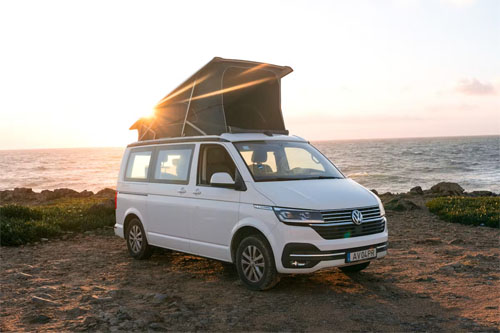
While most RV classes can be driven in Europe, Class B Camper Vans and Class SI Semi-integrated motorhomes are often recommended for their balance of maneuverability and comfort on European roads.
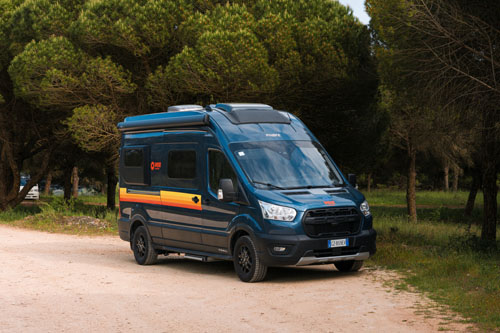
Class B Camper Vans, averaging 5.8m in length in Bandana's fleet, offer excellent agility for narrower roads, compact parking, and access to smaller towns, ideal for couples or solo travelers on a European adventure. Class SI - Semi-integrated models, at an average length of 6.9m, provide more spacious living areas and amenities for up to 3-4 adults without being overly cumbersome, making them a popular choice for families. Larger Class C - Alcove (avg. 7.5m) and Class A - Integrated (avg. 7.5m) RVs offer maximum space and comfort, suitable for longer trips and larger groups, but require more careful navigation in tight spaces. You can compare options and find great deals on a "Cheap RV Rental in Europe - Budget Guide 2026".
🎬 Video coming soon
Should I Choose a Compact Van Instead of a Large RV in Europe?
While compact campervans offer superior maneuverability in tight European city centers and mountain passes, larger RVs are generally manageable on main roads and offer significantly more comfort and living space, often making them a preferred choice for extended one-way trips.
A compact campervan, like a "Category Van" or "Active Pop Top" (which typically features sleeping for 4 in a vehicle around 5.99m long), genuinely helps when planning to frequently visit historic town centers with narrow streets or navigate highly winding mountain passes. However, for the majority of inter-city and inter-country travel on European highways, even larger motorhomes (Class SI or C) pose no significant issue and provide much-appreciated amenities like dedicated bathrooms, full kitchens, and separate sleeping areas. The trade-off often boils down to personal priorities: unparalleled maneuverability for spontaneous detours versus enhanced comfort and living space for a more relaxed journey.
Can I Park Anywhere? Free & Wild Camping Rules in Europe
Free or "wild camping" with a rented RV in Europe is largely restricted and varies significantly by country and even by local municipality, making it crucial to understand specific regulations before parking overnight.
In many Western European countries (e.g., Germany, France, Italy, Spain), wild camping is generally prohibited or heavily regulated, especially on private land or within national parks. Scandinavia and some Eastern European countries may have more lenient rules, often allowing overnight stays in certain designated public areas or with landowner permission. Alternatives include official campsites, which offer full facilities, and 'Stellplätze' (Germany/Austria) or 'Aires de Service' (France), which are dedicated motorhome parking areas, often with basic services like water and waste disposal, some even free. Always check local regulations and follow local law before parking overnight. For finding campsites and campgrounds during your trip, we recommend using RV PLANET (rvplan.net) - a great resource for locating available spots along your route.
Can I Drive an RV Into the City Center? Heights, Tunnels & Local Signage
While driving a rented RV into many European city centers is often possible, it requires careful attention to local signage regarding height and weight restrictions, environmental zones, and resident-only access.
Many historic European cities feature narrow, winding streets, low bridges, and tunnels that can be challenging or impassable for larger RVs. Always look for signs indicating height limits for tunnels and bridges, as seen on German streets, and be aware of Low Emission Zones (LEZ) common in many European urban areas that may restrict access for certain vehicle types. Utilize designated RV parking outside city centers (Park & Ride options are common) and use public transport to explore, which often proves more practical and less stressful. Drive slowly and carefully, and you can drive almost anywhere without issues. No need to stress - just use common sense and pay attention.
What is the 3-3-3 rule for RV travel?
The 3-3-3 rule for RV travel is a widely adopted guideline designed to enhance safety and enjoyment on the road, suggesting travelers drive no more than 300 miles (or roughly 300-350 kilometers) per day, arrive at their destination by 3 PM, and ideally stay in one spot for at least 3 nights.
Driving a maximum of 300-350 kilometers daily prevents driver fatigue and allows for more spontaneous stops and exploration. Arriving by 3 PM ensures sufficient daylight for setting up camp, exploring the local area, and securing a good spot, particularly in popular European campsites or Stellplätze. Staying for at least 3 nights encourages a slower pace of travel, fostering deeper immersion in each location rather than rushing through a one-way itinerary, truly letting you soak in the culture and scenery. This philosophy perfectly aligns with our recommendation for slow travel in Europe.
What is the 333 rule for campervan?
The "333 rule" for campervan travel is essentially the same as the 3-3-3 rule for RVs, advising campervan users to limit daily driving to around 300 kilometers, settle into their overnight spot by 3 PM, and plan to stay for at least 3 days to truly experience a location.
This rule is particularly pertinent for campervan travelers in Europe, as it helps balance the desire for exploration with the need for rest and local engagement. By adhering to this guideline, campervan enthusiasts can avoid burnout from excessive driving and maximize their experience in diverse European landscapes and cultures. It promotes mindful travel, aligning with the European ethos of savoring experiences rather than simply collecting destinations.
Can you sleep anywhere in a campervan in Europe?
No, you generally cannot sleep anywhere in a campervan in Europe, as "wild camping" or overnight parking outside designated campsites is largely restricted and subject to specific national and local laws that vary considerably across the continent.
Laws prohibit sleeping in your rented campervan on public land in many countries, and it is crucial to always adhere to local regulations and seek out official campsites or Stellplätze (motorhome parking areas) for overnight stays. Fines for illegal wild camping can be significant, and enforcement is common in popular tourist areas and protected natural reserves. While some areas may tacitly permit discrete overnight parking in remote spots, it's safer and more responsible to use official facilities or seek specific permission from private landowners. Always check your planned route through countries like Austria, Belgium, Croatia, and Cyprus for local nuances.
What do I need to take my motorhome to Europe?
When taking a rented motorhome to Europe, essential items include crucial documentation like your driver's license (plus International Driving Permit if applicable), vehicle rental agreement, and insurance, alongside mandatory safety equipment.
Beyond legal documents, a comprehensive packing list should include a hi-vis vest (mandatory in many countries), warning triangle, first-aid kit, spare bulbs, and headlight beam deflectors for right-hand drive vehicles if traveling to the UK or Ireland. Practical equipment should include European electrical adapters for shore power, levelling blocks for uneven ground, and possibly a Camping Key Europe Card for campsite discounts. Consider an emergency roadside assistance plan and a detailed navigation system that can account for RV dimensions and avoid restricted routes. For cooking in your RV, remember to stock up on local ingredients and check out our RV-friendly recipes playlist.
How to avoid one-way rental fees in Europe?
The most straightforward way to avoid one-way rental fees in Europe is to return the RV to the same pick-up depot, though specialized relocation deals or seasonal promotions for specific routes can sometimes offer one-way options without extra charges.
Rental companies often charge a significant fee for one-way rentals to cover the cost of transporting the vehicle back to its original location. Look for "relocation deals" which are typically offered during shoulder seasons or when a company needs to move fleet vehicles from one popular area to another, often with discounted rates and waived one-way fees. Planning a round trip loop from a single depot can be a cost-effective alternative to avoid one-way charges, especially if your itinerary allows for it. For current offers and deals, check out our RV Rental Deals in Europe - Latest Offers 2026 page.
Can you drive an RV in Europe?
Yes, you can absolutely drive a rented RV in Europe, and it's a popular and rewarding way to explore the continent, provided you have the correct driver's license and are aware of varying road rules and vehicle restrictions.
Europe offers excellent infrastructure for RV travel, including well-maintained roads and a vast network of campsites and motorhome-friendly parking areas. Success hinges on adequate planning, understanding local driving regulations, and choosing an RV size appropriate for your intended route and comfort. The experience provides unparalleled freedom to explore diverse cultures and landscapes at your own pace. With partners like El Monte, Cruise America, Apollo, and Britz, Bandana Caravan ensures you have a wide range of top-quality motorhomes and campervans for your European adventure.
How long can I stay in Europe in my motorhome?
The maximum duration you can typically stay in Europe with your rented motorhome, particularly if you are a non-EU/EEA citizen, is generally limited by the Schengen Area rules to 90 days within any 180-day period.
This '90/180-day rule' applies across all 27 Schengen countries as a collective block; crossing borders within the Schengen zone does not reset the clock. For stays longer than 90 days, non-EU/EEA citizens must apply for a specific long-stay visa (e.g., tourist, retirement, or student visa) from an individual Schengen country before arrival, which allows legal residency beyond the short-stay limit. EU/EEA citizens, however, have the right to free movement and can stay indefinitely, although they may need to register with local authorities after a certain period depending on the country.
Will my auto insurance cover me in Europe?
It is highly unlikely that a standard auto insurance policy from outside Europe will cover you or your rented RV adequately across European countries, making specific RV insurance for Europe a necessity.
For foreign-registered vehicles, a 'Green Card' issued by your insurer is often required as proof of minimum third-party liability insurance coverage in most European countries. When renting an RV in Europe, the rental company will typically provide mandatory third-party liability insurance, but it's crucial to understand what additional coverage (e.g., collision damage waiver, theft protection) is included and what your personal liability would be. You can upgrade to a top-level deductible for extra peace of mind, providing superior reimbursement compared to basic plans. Travel insurance is also highly recommended, not to cover the vehicle, but to provide health coverage, trip cancellation, and personal liability for the traveler while abroad.
Is Europe RV friendly?
Europe is generally very RV friendly, offering an extensive network of campsites, dedicated Stellplätze (motorhome parking areas), and diverse landscapes perfect for road trips, though navigating historic city centers and finding urban parking can present specific challenges.
With well-maintained road networks and a strong camping culture, Europe welcomes RV travelers, though specific country rules regarding wild camping and environmental zones should always be researched. The continent boasts excellent infrastructure for RVers, including numerous service points for water, electricity, and waste disposal. While large cities can be challenging, smaller towns and rural areas are often highly accommodating, making Europe an ideal destination for exploring by RV. For those seeking premium comfort on their journey, consider a Luxury RV Rental in Europe - Premium Prices 2026.
What You Shouldn't Miss
Embarking on a one-way RV adventure through Europe opens up a world of discovery. Here are some must-do experiences and popular routes:
- Alpine Passes in Austria and Switzerland: Drive through breathtaking mountain landscapes, stopping at charming villages and crystal-clear lakes. Imagine navigating the scenic Grossglockner High Alpine Road or exploring the pristine areas covered in our "Motorhome Rental in Austria - Price Guide 2026" guide.
- Coastal Drives of Croatia: Experience the stunning Adriatic coastline, with countless islands, historic towns like Dubrovnik, and hidden coves perfect for a leisurely stop.
- Christmas Markets Route in Central Europe: Explore the festive charm of cities like Vienna during the holiday season.
- Avi Bandana's Top 5 Adventures - Recommendations: This 15-day, 2762 km route plan from Vienna includes 10 traditional markets, 2 museums, and 2 historical sites, perfect for families and culture enthusiasts.
- Family Delights from Toulouse: Discover southern France's diverse attractions. Our "Toulouse Round trip - European Charms & Family Delights" route plan, spanning 15 days and 2088.7 km, includes an amusement park, an aquarium, 2 caves, and 4 traditional visits, ensuring fun for all ages.
- Lapland and Norway Scenic Roads: For a truly unique and picturesque journey, consider the "
." This 18-day, 3579 km route plan offers 3 wildlife watch opportunities, 5 museums, and 3 natural features, venturing into the stunning Arctic landscapes.
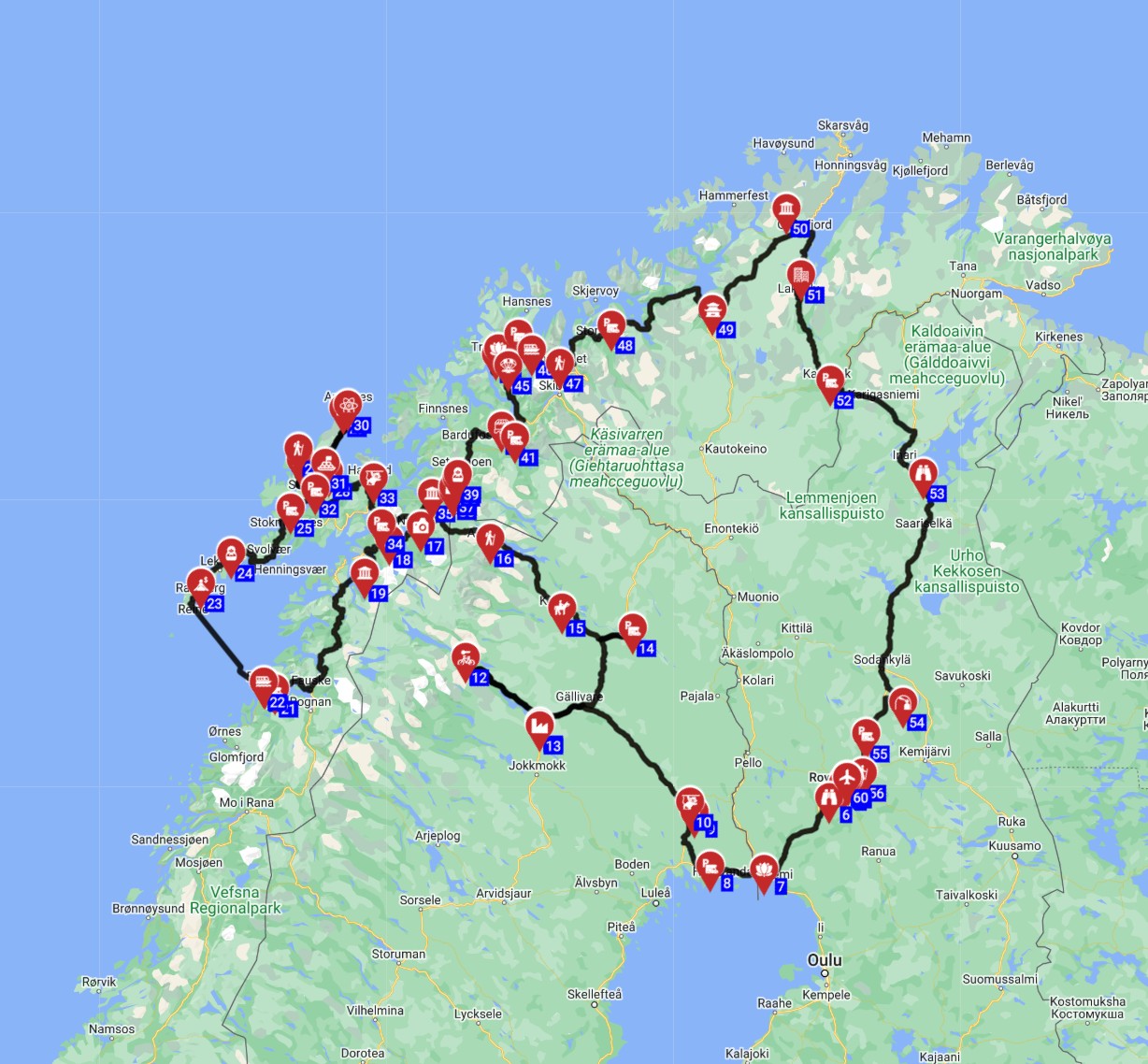 Rovaniemi Roundtrip - End of Europe scenic roads
 - Exploring Belgium's Medieval Towns: A rented campervan offers the flexibility to discover Belgium's historic cities and charming countryside. Find out more in our "Campervan Rental in Belgium - Price Guide 2026".
Final Thoughts
A one-way RV rental in Europe offers an extraordinary way to immerse yourself in the continent's diverse beauty and rich history. From the planning stages to the open road, it's an adventure waiting to happen. With the right preparation regarding licenses, road conditions, and local customs, you'll find that Europe is incredibly welcoming to RV travelers, regardless of vehicle size.
At Bandana Caravan, we're here to support you every step of the way, ensuring your one-way journey across Europe is as smooth and memorable as possible. We handle the details so you can focus on making incredible memories. Get inspired for your next trip and discover top destinations, planning tips, all in one place!
So, pack your bags, choose your route, and prepare for an unforgettable adventure. The open roads of Europe are calling!
Compare One-Way RV Rental Prices for Europe