In This Guide
- Top 5 Tips for luxury rv rental RV Rental in Tokyo - Airport
- Before You Book - Class, Dates, Insurance
- Pre-Trip Prep - Packing Checklist for Tokyo - Airport
- On the Road - Driving, Fueling, Navigation
- At the Campground - Setup, Hookups & Etiquette
- luxury rv rental-Specific Tips for Tokyo - Airport
- Common Mistakes to Avoid in Tokyo - Airport
- What are the RV rental requirements for international drivers in Japan?
- How much does a luxury RV rental cost in Tokyo, including hidden fees?
- What is the process for RV pickup and drop-off at Narita and Haneda airports?
- Where can I find groceries and essential supplies near Tokyo airports after picking up an RV?
- What are the best RV-friendly overnight parking spots near Narita and Haneda airports?
- What are the driving challenges for an RV in Japan?
- How do I park an RV for day trips into Tokyo from outside the city?
- Which RV types are best suited for Japanese roads?
Embarking on a luxury RV rental adventure from Tokyo - Airport offers an unparalleled way to explore Japan's captivating blend of ancient traditions and modern marvels. Imagine the freedom of waking up to views of Mount Fuji, cooking breakfast with fresh local ingredients, and setting your own pace through picturesque landscapes. For live availability and current prices, start with our RV Rental Tokyo - Airport - Complete Guide 2026 guide. We at Bandana RV, with our extensive experience since 2001, are true RV specialists, dedicated to making your premium travel seamless and unforgettable. Our commitment to full transparency means no hidden fees and no surprises, so you can focus entirely on the journey ahead.
Top 5 Tips for luxury rv rental RV Rental in Tokyo - Airport
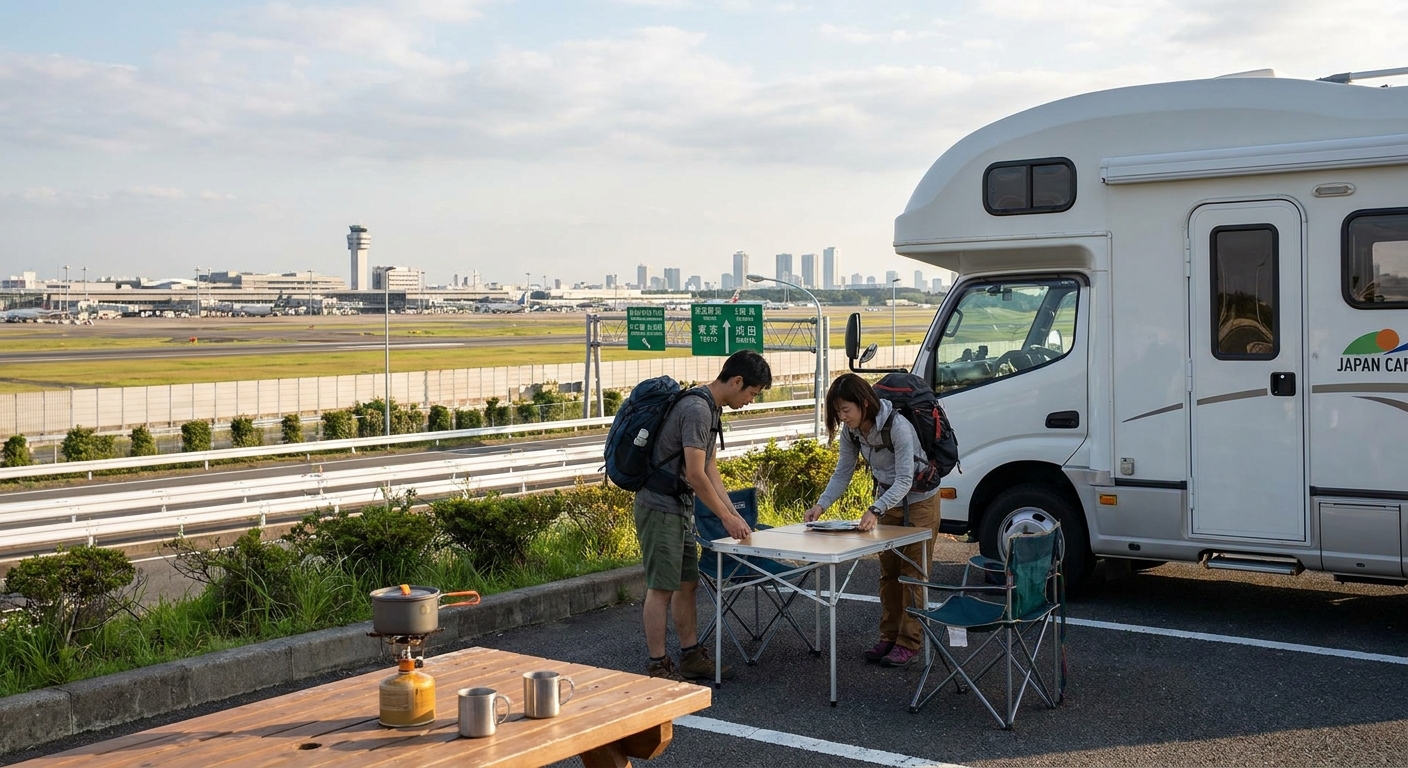
Securing a luxury RV rental in Tokyo - Airport requires thoughtful preparation to ensure a smooth and enjoyable experience, making these top 5 tips crucial for any discerning traveler.
- **Book Well in Advance:** Booking your preferred luxury RV model, especially smaller Class C motorhomes or premium campervans, 3-6 months before your trip is essential, particularly for popular periods like cherry blossom season (late March to early April) or autumn foliage (October to November) when availability can drop by 70-80%.
- **Understand Japanese Driving Regulations:** An International Driving Permit (IDP) issued under the 1949 Geneva Convention is legally required for all foreign drivers in Japan, and it must be obtained in your home country before departure.
- **Consider a Compact Luxury RV:** Opting for a compact luxury RV, typically under 6 meters (20 feet) in length, will significantly ease navigation on Japan's narrower roads, urban streets, and into tighter campground spaces, offering both comfort and maneuverability. For example, a "Category Van" or "Luxury Small" model provides amenities like a shower and toilet while remaining agile. Drive slowly and carefully, and you can drive almost anywhere without issues. No need to stress - just use common sense and pay attention.
- **Familiarize Yourself with ETC Cards:** An ETC (Electronic Toll Collection) card is highly recommended for seamless highway travel in Japan, as it allows for automatic toll payments and often provides discounted rates, avoiding cash transactions and potential language barriers at toll booths.
- **Plan Designated Overnight Stays:** Japan has strict rules against wild camping, so plan your overnight stays at designated RV-friendly locations such as Michi-no-Eki (roadside stations) or official campgrounds, many of which offer excellent facilities for a comfortable stay.
These initial steps lay the groundwork for a premium and hassle-free RV journey through Japan. For deeper insights, explore our "RV Travel Guide to Tokyo - Airport - Tips and Top Spots 2026" video guide.
Before You Book - Class, Dates, Insurance
Choosing the right RV class for a luxury experience in Japan involves balancing comfort with maneuverability, with compact premium campervans or smaller Class C models being popular due to Japanese road conditions. For instance, a campervan like the "V3" or "K125" offers a refrigerator and shower within a compact 6.36-meter length, ideal for couples, while a "MH4-5 - SIF" Class C model provides sleeping for 4 in 6.58 meters. Securing your desired rental dates early, ideally several months in advance for peak travel periods like Golden Week or New Year's, ensures availability and potentially better rates for luxury models. When searching on Bandana, selecting comprehensive insurance options during the initial search process transparently displays all relevant coverage and pricing, ensuring you travel with full peace of mind. Basic insurance is always included, but upgrading to a top-level deductible for extra protection is a popular choice for our travelers.
Pre-Trip Prep - Packing Checklist for Tokyo - Airport
Preparing a tailored packing list for a luxury RV trip from Tokyo - Airport ensures you have everything needed for ultimate comfort and convenience, considering Japan's specific travel environment and climate variations. Essential documents are paramount, including your International Driving Permit (IDP) and passport. Practical items like a universal travel adapter, a portable power bank for electronic devices, and comfortable walking shoes are highly recommended for exploring Japan's cities and natural attractions. For onboard cooking, while basic utensils are typically included with a luxury rental, bringing specialty items like your favorite coffee maker or unique spices can enhance your dining experience in your mobile home; check out our RV-friendly recipes playlist for inspiration. Pack layered clothing suitable for varying temperatures, as Japan can shift from cool mornings to warmer afternoons, and always include waterproof outerwear.
- International Driving Permit (IDP)
- Passport & Visa (if applicable)
- Rental Confirmation & Important Contact Numbers
- Travel Insurance Documents
- Layered Clothing (for varied temperatures)
- Comfortable Walking Shoes
- Waterproof Jacket or Umbrella
- Basic Toiletries & Personal Medications
- Universal Travel Adapter & Portable Power Bank
- Reusable Water Bottle & Shopping Bag
- Small Backpack for Day Trips
- First-Aid Kit
- Japanese Phrasebook or Translation App
- Credit Cards & Japanese Yen Cash
- Sunglasses & Sunscreen
On the Road - Driving, Fueling, Navigation
Driving a rented RV in Japan requires adherence to left-hand traffic rules, awareness of narrower roads, and careful attention to navigation, particularly outside major highways. While some luxury RVs can be larger, driving slowly and carefully allows you to navigate almost anywhere without issues. No need to stress-just use common sense and pay attention to your surroundings and road signs. Fueling is straightforward: most rental RVs use gasoline (regular is レギュラー, premium is ハイオク), readily available at numerous service stations across the country, some of which are self-service. Navigation is best managed with a modern GPS system that includes English language options or a reliable smartphone app like Google Maps or Waze, as road signs are often bilingual but some smaller roads may only feature Japanese text. For extended journeys, remember our philosophy: travel slowly, averaging a maximum of 100-150 km per day to fully connect with the culture, food, and scenery of Japan.
🎬 Video coming soon
At the Campground - Setup, Hookups & Etiquette
Setting up your RV at a Japanese campground involves a systematic approach to ensure both your comfort and compliance with local etiquette, which emphasizes peace and respect for fellow campers. Most campgrounds offer basic amenities; hookup order typically begins with electrical connections, followed by fresh water supply, and finally wastewater disposal, ensuring all connections are secure. RV PLANET (rvplan.net) is a great resource for locating available spots and amenities along your route, and their detailed routes allow you to itemize and track every expense. Quiet hours, usually starting in the evening (around 9:00 PM to 7:00 AM), are strictly observed in Japanese campgrounds, emphasizing the importance of respecting other campers' peace and privacy. Many Michi-no-Eki, while not traditional campgrounds, offer excellent facilities like spotless restrooms and vending machines, providing convenient overnight parking for resting.
luxury rv rental-Specific Tips for Tokyo - Airport
For a truly premium RV rental experience from Tokyo - Airport, consider luxury RV models like an "Euro Deluxe" or "Luxury" motorhome which often feature exclusive amenities tailored for comfort. When selecting your mobile home, prioritize those equipped with advanced navigation systems that support multiple languages, as this significantly reduces stress when driving in Japan. Many luxury rentals offer premium add-ons such as portable Wi-Fi hotspots, satellite TV, or upgraded bedding, which can significantly enhance your onboard experience and keep you connected. Opt for RVs that emphasize comfortable, ergonomic seating and spacious sleeping arrangements like a Class C with a large rear double bed (e.g., 152/203cm), ideal for extended journeys. Rent&Plan, our pre-planned routes designed by professionals, can include suggestions for luxury RV-friendly stops and experiences, and you can enjoy a 25% planning discount when using rvplan.net for route planning.
Common Mistakes to Avoid in Tokyo - Airport
First-time luxury RV renters in Tokyo - Airport can easily avoid common mistakes by preparing thoroughly before and during their trip. Failing to obtain an International Driving Permit (IDP) is a significant oversight; instead, ensure you have a valid IDP issued under the 1949 Geneva Convention before arriving in Japan, as it's a legal requirement. Underestimating the importance of an ETC card for toll roads can lead to delays and higher costs; instead, request an ETC card with your rental to streamline highway travel and potentially benefit from discounts. Ignoring height and width restrictions on smaller roads or parking garages is a frequent error, especially with a larger Class C motorhome; always be mindful of your RV's exact dimensions and plan routes accordingly using GPS with RV-specific settings. Not pre-booking popular campsites or Michi-no-Eki spots, particularly during peak seasons like cherry blossom festivals or Obon, can leave you without suitable overnight parking; while many national/state parks reserve only 25-30% of spots, with the rest being first-come-first-serve, it's wise to call ahead before driving. Lastly, forgetting to purchase travel insurance that specifically covers RV rental specifics can be costly; instead, verify your coverage extends to international RV adventures, and consider upgrading to a top-level deductible for extra peace of mind, a service we highlight at Bandana RV. On the routes offered through RV PLANET routes, you can itemize and track every expense along the way for easy budgeting.
What are the RV rental requirements for international drivers in Japan?
International drivers renting an RV in Tokyo - Airport must possess a valid International Driving Permit (IDP) issued under the 1949 Geneva Convention, alongside their domestic driver's license. For most standard campervans and Class C motorhomes available for rental, a regular Class B license (or equivalent from your home country) is sufficient, and no special commercial driver's license is needed. Age restrictions typically mandate drivers be at least 21 years old, and Bandana RV does not impose young driver surcharges or vehicle class restrictions based on age. Selecting comprehensive insurance options, which Bandana RV displays transparently during the search process, is highly recommended to cover potential damages, third-party liability, and roadside assistance during your trip, beyond the basic coverage typically included.
How much does a luxury RV rental cost in Tokyo, including hidden fees?
The comprehensive cost of a luxury RV rental in Tokyo - Airport extends beyond the base rental fee, encompassing tolls, fuel, campground fees, food, and potential unexpected expenses. Base rental prices for luxury RVs in Tokyo can range significantly, typically from ¥20,000 to ¥50,000+ per day (approximately $130-$330 USD) for a modern Class C motorhome or premium campervan, depending on the model, season, and rental duration. Additional costs include highway tolls, which can be substantial but are mitigated by renting an ETC (Electronic Toll Collection) card offering discounted rates. Fuel prices in Japan average around ¥170 per liter (approx. $1.15 USD/liter), and daily campground fees typically range from ¥1,000 to ¥5,000 per night ($7-$35 USD). Bandana RV ensures full transparency with no hidden fees, and for easy budgeting and expense tracking, all RV PLANET routes allow travelers to itemize every expense along their journey.
What is the process for RV pickup and drop-off at Narita and Haneda airports?
The RV pickup and drop-off process at Narita (NRT) and Haneda (HND) airports typically involves a shuttle service from your airport terminal to the rental depot, usually located within a short 15-30 minute driving distance. Upon arrival at the rental depot, you will complete necessary paperwork, including presenting your passport and International Driving Permit, followed by a thorough vehicle walkthrough with a rental specialist. This walkthrough covers the rental RV's operational features, safety equipment, and any unique aspects specific to Japanese RVs, often with English language support or a detailed manual provided. During this orientation, ensure you understand how to operate the vehicle's utilities, fill/empty fresh and wastewater tanks, and use essential features like heating and cooking facilities. Drop-off involves returning the RV to the designated depot, typically after ensuring it's cleaned and tanks are emptied, followed by a final inspection, adhering to the "what you see is what you pay" transparency promise from Bandana.
Where can I find groceries and essential supplies near Tokyo airports after picking up an RV?
After picking up your rented RV near Narita (NRT) or Haneda (HND) airports, several large supermarkets and convenience stores are typically located within a 10-15 minute drive for groceries and essential supplies. Near NRT, consider heading towards Narita City where you'll find larger supermarkets such as Aeon Mall Narita or Ito-Yokado, offering a wide range of fresh produce, pantry staples, toiletries, and household items. Close to HND, options in neighboring areas like Ota City or Kawasaki include supermarkets such as Seiyu or Daiei, as well as numerous ubiquitous convenience stores (konbini) like 7-Eleven or FamilyMart, perfect for quick snacks, drinks, basic groceries, and ATMs, especially useful for your first 24 hours on the road. Using a navigation app to search for 'スーパーマーケット' (supermarket) or 'コンビニ' (convenience store) from your rental depot will provide the most accurate, real-time options for your provision needs.
What are the best RV-friendly overnight parking spots near Narita and Haneda airports?
For your first or last night near Narita (NRT) or Haneda (HND) airports, RV-friendly overnight parking can be found at specific Michi-no-Eki (roadside stations) or dedicated campgrounds. Near NRT, Michi-no-Eki Tako Ajisai-kan (多古あじさい館) approximately 25 km from the airport, or Michi-no-Eki Katori (水の郷さわら) about 30 km away, are popular choices, offering ample parking, spotless restrooms, and sometimes local produce markets, though amenities for RVs like hookups can vary. Closer to HND, finding dedicated Michi-no-Eki can be more challenging due to the dense urban environment; however, some private campgrounds or designated RV parks in neighboring prefectures like Chiba or Kanagawa, typically within an hour's drive, offer suitable overnight options with full hookups and amenities. Always check in advance for availability, specific RV regulations, and any potential fees, remembering that Michi-no-Eki are primarily rest stops and not always full-service campgrounds, and many national/state parks reserve only 25-30% of spots, with the rest being first-come-first-serve.
What are the driving challenges for an RV in Japan?
Driving a rented RV in Japan presents unique challenges, including navigating in potentially unfamiliar Japanese road signs, understanding height and width restrictions, and recognizing specific fuel types. Navigation can be challenging without a reliable GPS system offering English language support, as some rural road signs may only be in Japanese, so it's wise to have a translation app handy. Japanese roads, especially in older towns or scenic areas like those detailed in "Driving an RV in Tokyo - Airport - Complete Guide 2026", can be narrower than those in many Western countries, requiring careful maneuvering and constant awareness of your RV's dimensions. Height and width restrictions are common for tunnels, bridges, and parking garages; always know your RV's exact dimensions and look for overhead clearance signs. Fuel types are clearly marked, typically gasoline (レギュラー for regular, ハイオク for premium) and diesel (軽油); ensure you know your RV's fuel type before filling up to avoid issues. Remember, driving slowly and carefully means you can drive almost anywhere without issues, alleviating any potential stress.
How do I park an RV for day trips into Tokyo from outside the city?
To effectively park an RV for day trips into Tokyo from outside the city, the most effective strategy involves utilizing park-and-ride facilities located on the outskirts and then using Japan's efficient public transportation network. Look for large parking lots near major train stations in suburban areas surrounding Tokyo, such as in Saitama, Chiba, or Kanagawa prefectures, which are generally more accommodating for larger vehicles like a 7-meter Class C motorhome. Popular options include parking facilities near major JR (Japan Railways) lines or private railway lines that offer direct access to central Tokyo's bustling districts. Some larger commercial complexes on the city's periphery might offer ample parking, but always verify their policies regarding RVs and overnight stays, as many strictly prohibit it. Alternatively, booking a campground or RV park slightly outside the city, such as those mentioned in "RV Camping in Tokyo - Airport - Best Campgrounds & Tips 2026", and commuting into Tokyo by train, is a highly efficient and stress-free option, aligning with our recommendation to travel slowly and enjoy the local transport experience.
Which RV types are best suited for Japanese roads?
For navigating Japanese roads, compact campervans or smaller Class C RVs (often referred to as 'cab-overs' or 'van conversions') are generally the most suitable due to their superior maneuverability. A "Category Van" or a compact Class C model like the "MH19 Small - Economy" with a length of around 6.17 meters, offers a good balance of amenities, including a shower and toilet, and ease of driving, fitting well on narrower roads, urban streets, and into smaller parking spaces commonly found in Japan. Larger RVs, while offering more spacious luxury, can be challenging to drive on Japan's intricate road network, especially outside of major highways and in older, more traditional urban areas. When considering a luxury RV rental in Tokyo - Airport for couples, a compact campervan like the "V2L" (5.99 meters long, sleeping 2) is often preferred for its ease of use. For families or groups of 4-6, a slightly larger but still manageable Class C, such as a "Category Family 5" model at 7 meters with bunk beds, provides ample space without excessive bulk, ensuring a comfortable journey through Japan.
What You Shouldn't Miss
- **Explore Hakone National Park by RV:** Drive your rented motorhome to Hakone, located just a couple of hours southwest of Tokyo. Park your RV at a local campground and explore the stunning views of Mount Fuji, serene Lake Ashi with its iconic torii gate, and soak in traditional onsen hot springs.
- **Visit the Historic Town of Kawagoe:** Take your campervan northeast of Tokyo to Kawagoe, also known as "Little Edo." Wander through preserved Edo-period streets, visit the Toki no Kane bell tower, and indulge in traditional Japanese sweets.
- **Coastal Drive to the Izu Peninsula:** Experience a scenic drive down the Izu Peninsula with your RV, stopping at beautiful beaches, dramatic coastlines, and charming fishing villages. Overnight at a Michi-no-Eki overlooking the Pacific Ocean.
- **Discover Nikko's Shrines and Temples:** Head north from Tokyo in your RV to the UNESCO World Heritage site of Nikko, home to magnificent Toshogu Shrine and Futarasan-jinja Shrine. Many RV-friendly parking options are available on the outskirts.
- **Enjoy Fresh Seafood at Tsukiji Outer Market:** While central Tokyo parking is challenging for RVs, you can park your RV in a suburban park-and-ride and take public transport to the Tsukiji Outer Market for an authentic Japanese culinary experience with fresh sushi and street food.
Looking for expert insights from Avi Bandana? Top 5 Adventures - recommendations from Avi Bandana
Final Thoughts
A luxury RV rental from Tokyo - Airport opens up a world of discovery, offering the perfect blend of comfort, flexibility, and authentic Japanese experiences. From navigating bustling city outskirts with confidence to unwinding in serene countryside campgrounds, a rented motorhome gives you the freedom to explore at your own pace. Remember to plan your journey with our expert tips in mind, embracing the unique challenges and joys of RV travel in Japan.
We're here to support you every step of the way, from comparing prices and choosing the ideal luxury RV to coordinating your booking details. So, get inspired for your next trip, compare our premium RV rental deals in Tokyo - Airport, and prepare to create unforgettable memories on the road. The open road of Japan is calling!
Find Motorhome Rentals in Tokyo - Airport