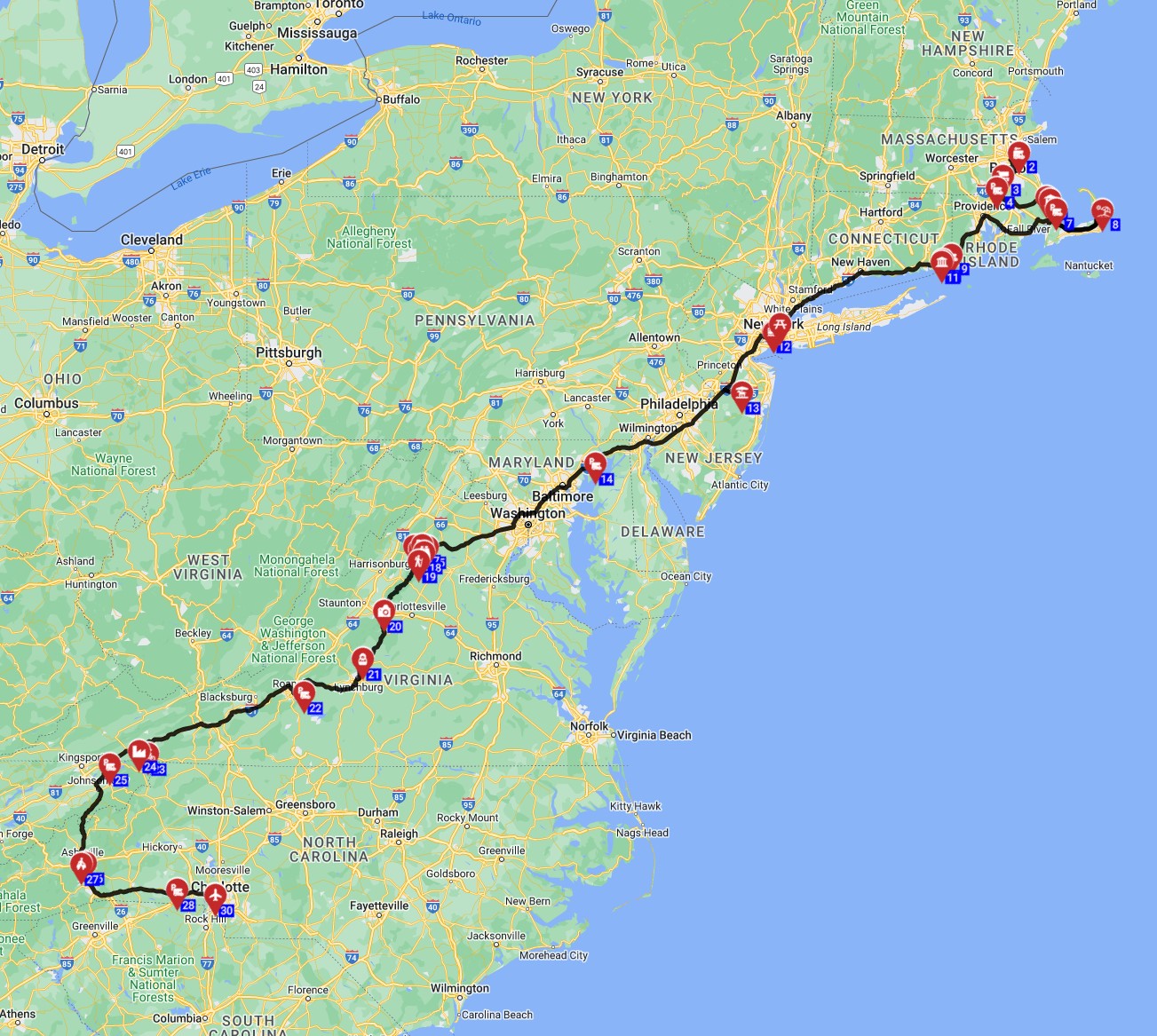
For live availability and current prices, start with our RV Rental Boston - Complete Guide 2026 guide.
In This Guide
- Can You Drive an RV in Boston? License & Age Rules
- Road Conditions & Terrain in Boston
- RV Size Limits, Bridges & Restricted Zones
- Fuel: Diesel vs. Petrol & Cost per 100 km
- Tolls, Vignettes & Border Rules
- Driving Tips for luxury rv rental Travelers
- Recommended RV Class for Boston Roads
- Should I Choose a Compact Van Instead of a Large RV in Boston?
- Can I Park Anywhere? Free & Wild Camping Rules in Boston
- Can I Drive an RV Into the City Center? Heights, Tunnels & Local Signage
- What is the 3-3-3 rule when RVing?
- Do you need a CDL to drive a luxury RV?
- What is the 4 4 4 rule for RVing?
- Do I need a special license to drive an RV in Massachusetts?
- What is the 3-3-3 rule for RV living?
- What is the largest motorhome you can drive on a car licence?
- Is my RV a class A or C?
- Who insures expensive motorhomes?
- How much does RV insurance cost in Massachusetts?
Can You Drive an RV in Boston? License & Age Rules
Most recreational RVs in the US, including luxury models, can be driven with a standard Class D driver's license if their Gross Vehicle Weight Rating (GVWR) is under 26,001 pounds.
A Commercial Driver's License (CDL) is generally required only for vehicles exceeding 26,000 pounds GVWR or those designed to transport hazardous materials or a large number of passengers. For rental purposes, the minimum driver age is typically 21, with many luxury RV rental companies requiring drivers to be 25 years or older. Foreign drivers can operate an RV in Massachusetts with a valid driver's license from their home country and, if not in English, an International Driving Permit (IDP) is highly recommended or legally required depending on the country of origin, along with their passport.
Road Conditions & Terrain in Boston
Boston's road conditions are characterized by dense urban areas, a labyrinth of historical, often narrow streets, numerous one-way roads, and high traffic volumes, particularly during rush hours. The terrain is generally flat within the city center but includes many small hills and winding paths in surrounding neighborhoods. Road quality can vary, with some historic areas featuring cobblestones or uneven surfaces, which can be challenging for larger, luxury RVs. Luxury RV travelers should anticipate slow speeds, frequent stops, and demanding maneuvers due to tight turns and congested intersections. Pre-planning routes with an RV-specific GPS that includes height and weight restrictions is crucial to avoid problematic areas.
RV Size Limits, Bridges & Restricted Zones
Navigating Boston with a luxury RV requires careful attention to size limits, particularly concerning notorious low bridges and restricted parkways like Storrow Drive and Memorial Drive. Many Boston parkways have strict height limits, often under 10 feet, making them impassable for most RVs, and these routes are explicitly signed; attempting to use them can lead to significant damage. There are no general maximum length or weight restrictions for RVs on most state roads and highways in Massachusetts, but local city streets may have practical limits due to their narrowness and tight turns. Parking is extremely limited and expensive for large vehicles in Boston, especially downtown, necessitating advanced planning for designated RV parking or utilizing 'park and ride' facilities outside the immediate city. Environmental zones are not currently a major factor in Boston, but drivers should always look for local signage indicating vehicle type or size restrictions.
Fuel: Diesel vs. Petrol & Cost per 100 km
Most luxury RVs, particularly larger Class A and Class C models, typically run on diesel fuel, which offers better fuel economy for their size. Smaller Class B Camper Vans and some Semi-integrated (Class SI) models may use petrol (gasoline). Based on Bandana's global fleet averages, Class SI RVs typically consume 10-11 Liters/100 km, Class C Alcove models 10-12 Liters/100 km, Class B Camper Vans 8-10 Liters/100 km, Class A Integrated 8-12 Liters/100 km, and Class TC Truck Campers 12-17 Liters/100 km. Fuel prices in Massachusetts fluctuate, but as an example, if diesel costs $4.00 per gallon (approximately $1.06 per liter) and an RV consumes 11 Liters/100 km, the cost per 100 km would be around $11.66 USD (11 liters * $1.06/liter). Travelers should check current local fuel prices upon arrival and consider fuel-efficient driving practices to minimize costs; some luxury RV rental packages may include fuel discount cards.
Tolls, Vignettes & Border Rules
RV travel around Boston and within Massachusetts involves numerous toll roads, bridges, and tunnels, primarily managed by the Massachusetts Department of Transportation (MassDOT) via the E-ZPass MA system. Massachusetts uses a cashless tolling system, meaning physical toll booths are rare, and tolls are collected electronically via E-ZPass transponders or by 'Pay By Plate' (where a photo of the license plate is taken and a bill is mailed to the registered owner, often with higher administrative fees). RV tolls are typically calculated based on the number of axles, so larger RVs with more axles will incur higher toll charges than standard passenger vehicles. For convenience and to avoid higher 'Pay By Plate' surcharges, luxury RV renters are advised to inquire about pre-purchasing or renting an E-ZPass transponder from their rental provider. There are no 'vignette' systems or complex border rules to consider when driving an RV between Massachusetts and neighboring US states, though drivers should be aware of varying state-specific traffic laws and regulations. On the routes offered through RV PLANET routes, you can itemize and track every expense along the way for easy budgeting.
Driving Tips for luxury rv rental Travelers
**Pre-Plan Routes Carefully:** Utilize an RV-specific GPS system that allows input for vehicle height, length, and weight to avoid low bridges (like those on Storrow Drive) and restricted parkways infamous in Boston. **Master Urban Maneuvering:** Practice slow, deliberate turns, especially on Boston's narrow, historic streets, and always use spotters when backing up or navigating tight spaces. **Strategize Parking:** Avoid driving directly into downtown Boston for sightseeing; instead, utilize RV-friendly 'park and ride' facilities outside the city with easy access to MBTA public transport (subway 'T' or commuter rail). **Account for Seasonality:** During fall foliage season, expect increased traffic, especially on scenic routes; in winter, be prepared for potential snow and ice, requiring careful driving and potentially winterizing considerations for your RV. **Take Frequent Breaks:** For longer journeys or while adapting to urban RV driving, adhere to a rhythm of stopping every 2-3 hours to rest, stretch, and check your vehicle, ensuring both safety and enjoyment of your luxury RV experience.
Recommended RV Class for Boston Roads
For navigating Boston's unique road conditions, a Class B Camper Van or a smaller Class SI Semi-integrated RV is often recommended for luxury RV travelers. Class B Camper Vans, averaging 5.8 meters in length in Bandana's fleet, offer excellent maneuverability, making them ideal for narrower streets and easier parking outside the immediate city. Class SI Semi-integrated RVs, with an average length of 6.9 meters from Bandana's global fleet, provide a balance of comfortable living space and manageable size for some suburban areas or designated RV parks. While larger Class A Integrated (averaging 7.5 meters) or Class C Alcove (averaging 7.5 meters) RVs offer more luxurious space, their size makes them significantly more challenging for urban driving, low bridge clearances, and parking within the Boston metropolitan area. The choice ultimately depends on the traveler's comfort with driving a larger vehicle in dense urban environments and their willingness to rely heavily on public transport after parking their RV further afield.
Should I Choose a Compact Van Instead of a Large RV in Boston?
Choosing a compact van, like a Class B Camper Van, can offer significant advantages for navigating Boston's tight, historic streets and notoriously limited parking compared to a larger luxury RV. While a larger RV provides more comfort and indoor amenities, the maneuverability of a compact van (with Bandana's Class B averaging 5.8 meters in length) can greatly reduce stress in dense urban traffic and make finding suitable parking easier. However, generally, any RV size *can* be driven in Boston, but the challenge shifts from driving to parking and avoiding specific low-clearance areas. A compact van genuinely helps if your primary goal is to drive right into the city for quick stops or if you prefer the flexibility of smaller parking spots at 'park and ride' locations closer to MBTA stations. If your Boston trip focuses more on luxury and comfortable living space at RV parks outside the city, with planned excursions into downtown via public transport, a larger luxury RV remains a viable and often preferred option.
Can I Park Anywhere? Free & Wild Camping Rules in Boston
In Boston, free camping or 'wild camping' in an RV is generally prohibited within city limits and on public lands; overnight parking for sleeping is typically restricted to designated campgrounds or private property with permission. Laws in Massachusetts, like most US states, do not permit sleeping in an RV overnight on city streets, residential areas, or most public parking lots without explicit authorization. For luxury RV travelers visiting Boston, the best and often only legal option for overnight stays is to book a spot at a private RV park or campground located outside the immediate city, many of which offer shuttle services or public transit access. It is crucial to research RV-friendly campgrounds in areas surrounding Boston (e.g., within an hour's drive) that provide amenities and convenient access to MBTA 'T' or commuter rail lines for downtown exploration. Always confirm local regulations and zoning laws before attempting to park overnight anywhere other than a designated campground, as rules vary by town and region, and unauthorized overnight parking can result in fines or towing.
Can I Drive an RV Into the City Center? Heights, Tunnels & Local Signage
While it is technically possible to drive an RV into Boston's city center, it is generally not recommended for larger luxury RVs due to a confluence of challenging factors. The primary concern is Boston's infamous low bridges, particularly those on Storrow Drive and Memorial Drive (parkways designed for cars, not RVs), which have height clearances as low as 9-10 feet. Major tunnels like the Ted Williams Tunnel, Callahan Tunnel, and Sumner Tunnel generally accommodate RVs, but drivers must pay strict attention to height limits and local signage, especially for commercial vehicles. Navigating Boston's dense, narrow, and often one-way streets with a large RV is extremely challenging, requiring high skill and patience, and often leading to significant delays. Parking a large RV in the city center is virtually impossible and prohibitively expensive; it is far more practical to park at an RV-friendly 'park and ride' facility or campground outside the city and use Boston's extensive public transit (MBTA) system for downtown exploration.
What is the 3-3-3 rule when RVing?
The 3-3-3 rule for RVing is a popular guideline encouraging safe and enjoyable travel by recommending drivers travel no more than 300 miles a day, arrive at their destination by 3 PM, and stay at least 3 nights. This rule is designed to prevent driver fatigue, allow ample time for setup and breakdown at campgrounds, and provide sufficient time to relax and explore the local area, rather than constantly being on the move. Applying the 3-3-3 rule to a Boston luxury RV trip would mean planning shorter daily drives when approaching the city, ensuring early arrival to navigate potentially tricky campground entries or 'park and ride' logistics, and allocating enough time to experience Boston's rich history without feeling rushed. Adhering to this rule helps mitigate the stress of urban RV driving by ensuring you're not exhausted when encountering dense traffic or tight parking situations, and it allows for a more immersive travel experience.
Do you need a CDL to drive a luxury RV?
In the United States, you typically do not need a Commercial Driver's License (CDL) to drive a luxury RV for recreational purposes, as most recreational vehicles fall below the federal weight threshold requiring a CDL. The federal standard for requiring a CDL is generally a Gross Vehicle Weight Rating (GVWR) of 26,001 pounds or more, or if the vehicle is designed to transport 16 or more passengers (including the driver), or carries hazardous materials requiring placards. Most luxury Class A, Class C, and other RV types have a GVWR under 26,000 pounds, allowing them to be driven with a regular Class D (car) license, which is the license type held by the majority of drivers. However, a few larger, heavier luxury RVs, especially some highly customized or older Class A models, might exceed the 26,000-pound threshold, in which case a non-commercial Class B or Class A license (depending on state regulations and towing status) might be required, though not a full CDL. Always verify the specific GVWR of the luxury RV you plan to drive and check the Massachusetts Registry of Motor Vehicles (RMV) regulations for any state-specific licensing requirements for large recreational vehicles.
What is the 4 4 4 rule for RVing?
The 4-4-4 rule for RVing is a variation of common travel guidelines, suggesting that RVers drive no more than 4 hours a day, travel no more than 400 miles, arrive by 4 PM, and stay at least 4 nights at each location. Similar to the 3-3-3 rule, the 4-4-4 rule is designed to ensure a more relaxed and less rushed RV experience, reducing driver fatigue and allowing ample time for setup, relaxation, and local exploration. For a luxury RV trip to Boston, adhering to this rule would mean prioritizing scenic, shorter drives, ensuring early arrival to navigate adjacent campgrounds or 'park and ride' facilities, and dedicating sufficient time to immerse oneself in Boston's history and culture without the constant pressure of moving on. Implementing the 4-4-4 rule is particularly beneficial when traveling with families or if you're new to RVing, as it provides a structured approach to travel that prioritizes enjoyment and safety over covering vast distances quickly.
Do I need a special license to drive an RV in Massachusetts?
For most recreational RVs, including luxury models, you typically do not need a special license beyond a standard Class D driver's license to operate an RV in Massachusetts, provided its Gross Vehicle Weight Rating (GVWR) is below 26,001 pounds. Massachusetts, like most states, follows the federal guideline where a commercial driver's license (CDL) or a higher class of non-commercial license is generally only required for vehicles exceeding 26,000 pounds GVWR or those carrying a specific number of passengers or hazardous materials. Therefore, the vast majority of RVs, including Class B Camper Vans, Class C Alcove, and many Class A Integrated and Semi-integrated models from Bandana's fleet (which average lengths between 5.8m and 7.5m), can be driven with a regular car license. However, it is always prudent to check the specific GVWR of your rental luxury RV and consult the official Massachusetts Registry of Motor Vehicles (RMV) website for the most current and precise licensing requirements to ensure full compliance.
What is the 3-3-3 rule for RV living?
The 3-3-3 rule for RV living is a guideline, distinct from the travel rule, often adopted by full-time RVers to describe a preferred pace of life: staying 3 weeks at a particular campground or location, 3 months in a state or region, and 3 years in a particular part of the country. This rule emphasizes a slower, more deliberate approach to RV life, allowing residents to deeply explore local areas, establish temporary routines, and minimize the constant packing and unpacking associated with rapid travel. For those considering full-time RV living in or around Massachusetts, adhering to this rule would mean selecting longer-term RV parks or campgrounds (many have monthly rates) and exploring the diverse offerings of New England. However, RVers must be mindful of local Massachusetts regulations, including zoning laws, which may restrict long-term parking or full-time residency in RVs outside of designated RV parks or private land with explicit permission. This rule is more about lifestyle planning than driving regulations, influencing decisions about mail forwarding, establishing residency, and finding communities.
What is the largest motorhome you can drive on a car licence?
In the United States, including Massachusetts, the largest motorhome you can typically drive on a standard Class D car license is one with a Gross Vehicle Weight Rating (GVWR) of up to 26,000 pounds (approximately 11,793 kilograms). This 26,000-pound threshold is the federal standard below which a Commercial Driver's License (CDL) or a specialized non-commercial license is not generally required for recreational vehicles. Most Class A Integrated motorhomes and Class C Alcove RVs, which are among the largest types of recreational vehicles (with Bandana's fleet averaging 7.5 meters in length for both classes), are designed to fall within this 26,000-pound limit. Some very large or customized luxury Class A motorhomes might exceed this weight, in which case a non-commercial Class B or Class A license, specific to the state's regulations for heavy non-commercial vehicles, would be necessary. Always check the specific GVWR of the motorhome you intend to drive, which is typically found on a sticker inside the RV, and confirm local Massachusetts DMV requirements.
Is my RV a class A or C?
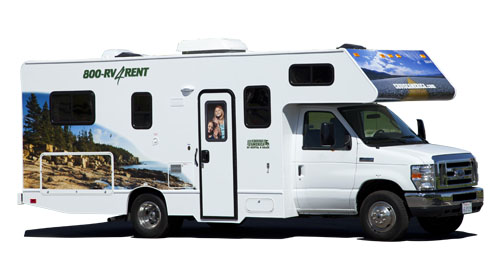
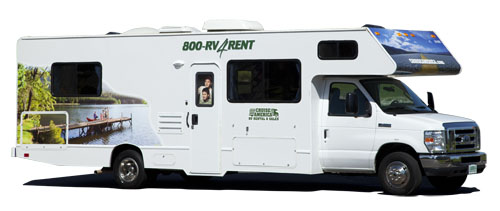
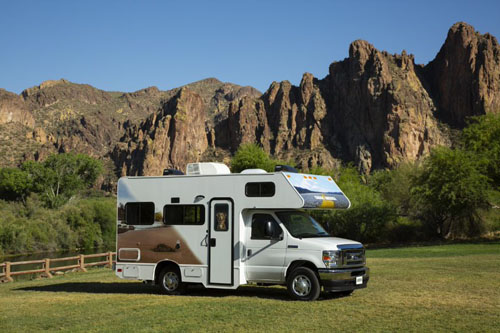
To determine if your RV is a Class A or Class C, you should look at its construction and appearance: Class A motorhomes are built on a heavy-duty chassis, resembling a bus or commercial coach, while Class C motorhomes are built on a cutaway van or truck chassis, identifiable by a distinctive cab-over bunk section. Class A RVs (like Bandana's Class A Integrated, averaging 7.5 meters) typically feature a flat, bus-like front end, large panoramic windshield, and often boast the most spacious and luxurious interiors, with the driver's seat integrated into the living space. Class C RVs (like Bandana's Class C Alcove, also averaging 7.5 meters) have a more conventional truck or van front end, retaining the original cab doors, and are characterized by the prominent sleeping or storage area extending over the cab. Other common RV classes include Class B Camper Vans (built within a standard van chassis, averaging 5.8 meters), Class SI Semi-integrated (built on a van chassis but with a custom, more aerodynamic body, averaging 6.9 meters), and Class TC Truck Campers (mounted directly onto the bed of a pickup truck). Knowing your RV's class is important for understanding its driving characteristics, available amenities, and applicable size restrictions, especially when navigating urban environments like Boston.
Who insures expensive motorhomes?
Expensive motorhomes are typically insured by specialized RV insurance providers, as well as major national insurance carriers that offer tailored policies for recreational vehicles. Companies like Progressive, National General (often through GMAC Insurance), Foremost (a Farmers Insurance Group company), and Safeco (a Liberty Mutual company) are well-known for offering comprehensive RV insurance. These insurers provide specialized coverage beyond standard auto insurance, which can include full-timer's coverage (for those living in their RV), personal effects coverage, vacation liability, roadside assistance, and total loss replacement. When insuring an expensive luxury motorhome, it is crucial to seek out policies that specifically cater to RVs and allow for customization based on the vehicle's value, usage (full-time vs. part-time), and specific features. It's recommended to obtain multiple quotes from different providers and work with an agent knowledgeable in RV insurance to ensure adequate protection for your significant investment, considering factors like market value vs. agreed value coverage.
How much does RV insurance cost in Massachusetts?
RV insurance costs in Massachusetts vary significantly based on numerous factors, including the type and value of the luxury RV, the driver's history, how often the RV is used, the level of coverage chosen, and where it is stored, typically ranging from a few hundred to several thousand dollars annually. A Class B Camper Van or a smaller Class SI Semi-integrated RV might have lower premiums compared to a large, high-value Class A Integrated motorhome, due to differences in purchase price, repair costs, and perceived risk. Key factors influencing Massachusetts RV insurance premiums include the RV's make, model, year, and replacement cost; the driver's age, driving record, and claims history; and the specific coverage selected, such as liability, collision, comprehensive, roadside assistance, and personal effects coverage. Using the RV full-time will generally result in higher premiums due to increased risk and the need for specialized 'full-timer's' coverage, which acts more like homeowner's insurance. To get an accurate estimate for a luxury RV rental in Boston, it's essential to obtain personalized quotes from multiple insurance providers that offer RV-specific policies, comparing their offerings for the desired level of protection.
What You Shouldn't Miss
- Consider the "
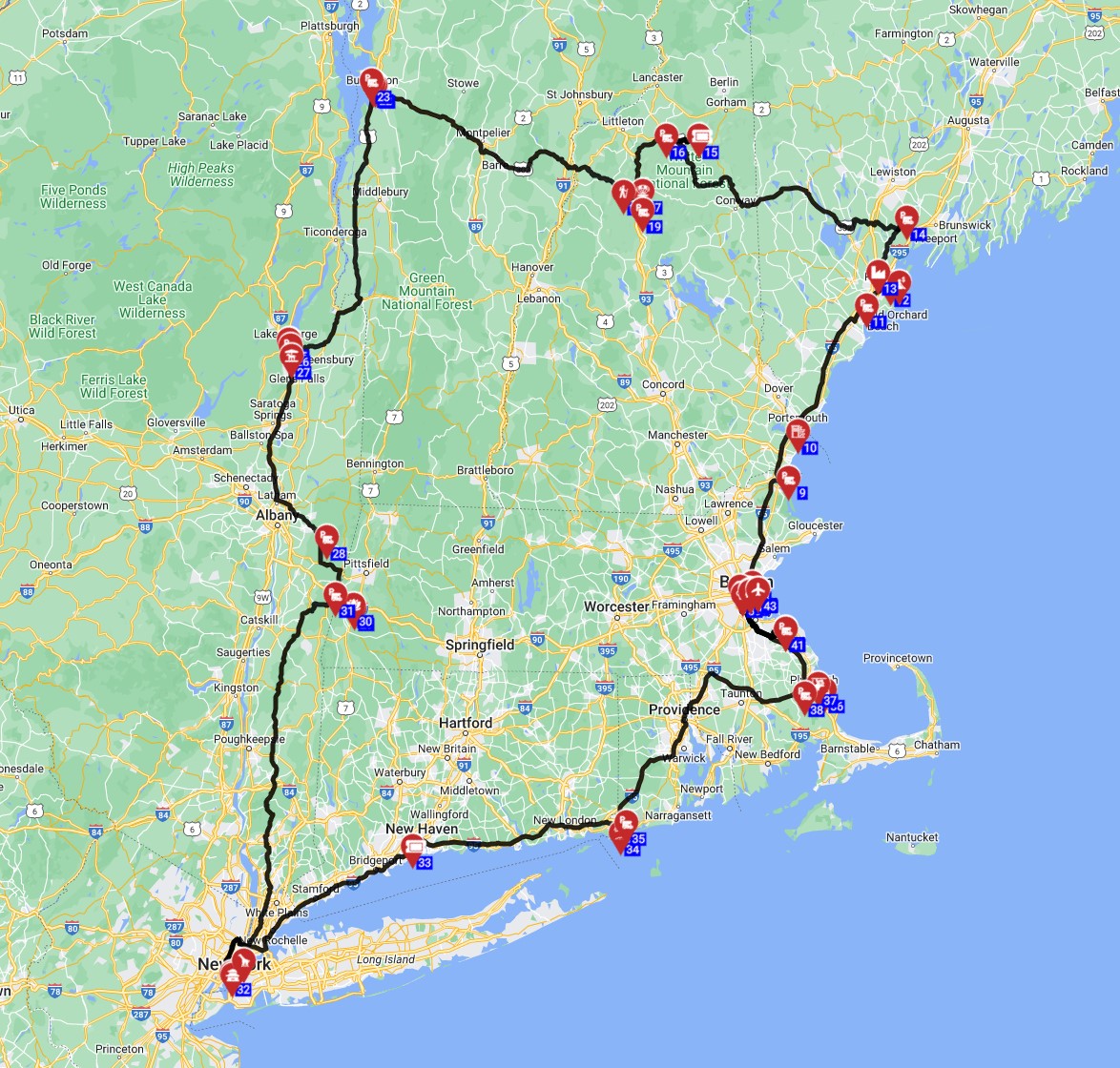
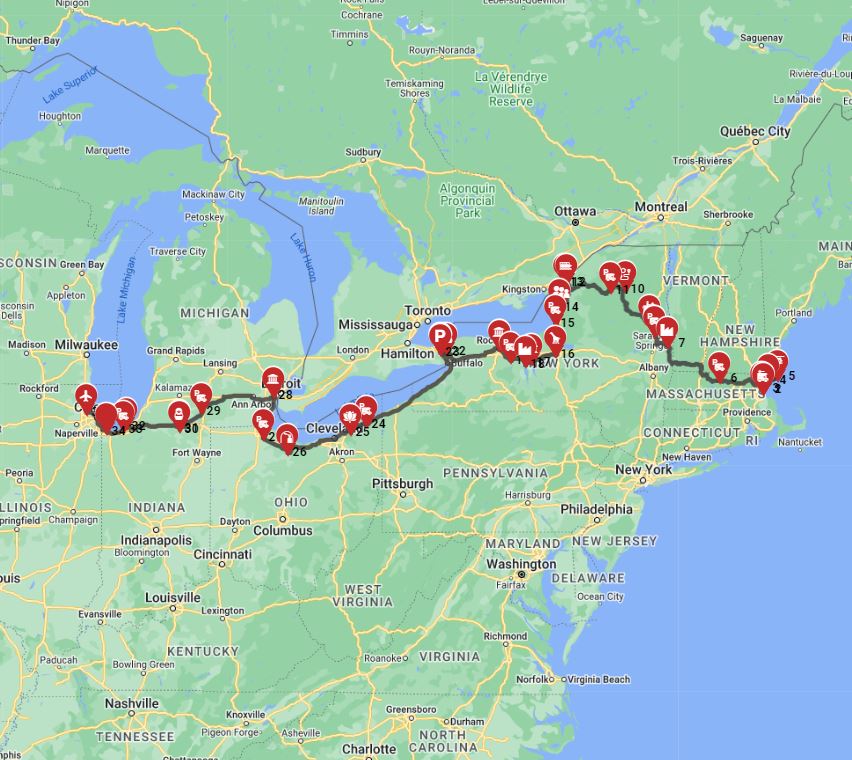
" if you have 15 days and want to cover 2,348 km, exploring 1 amusement park, 1 aquarium, and numerous historical sites.
 Chicago to Boston - The Rust Belt to Revolution Route
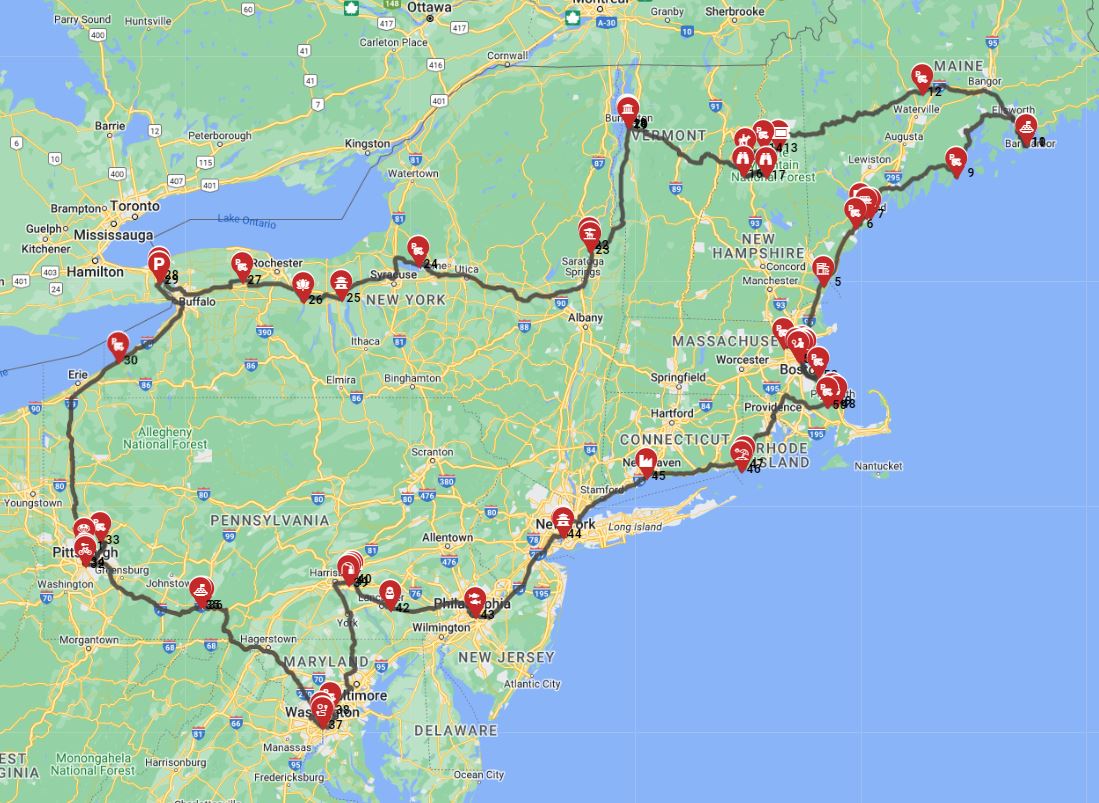
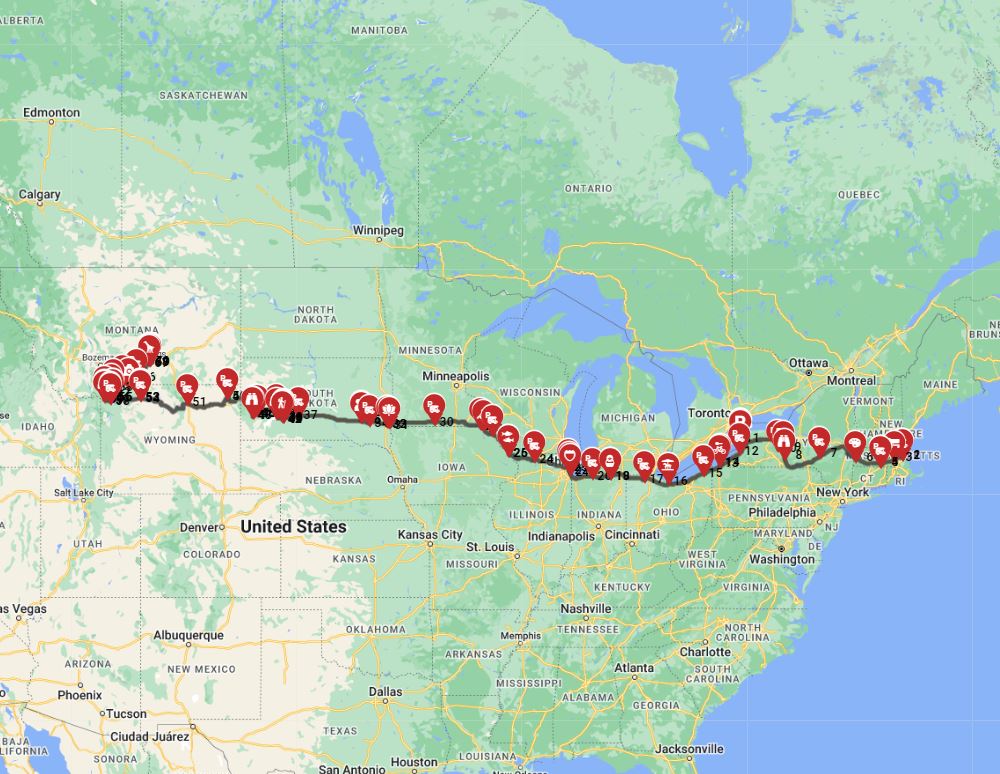
 - The "Billings to Boston - Mountains, Falls & Freedom Trail" route spans 27 days and 6,000 km, perfect for families seeking diverse experiences with 10 natural features and 3 scenic routes.
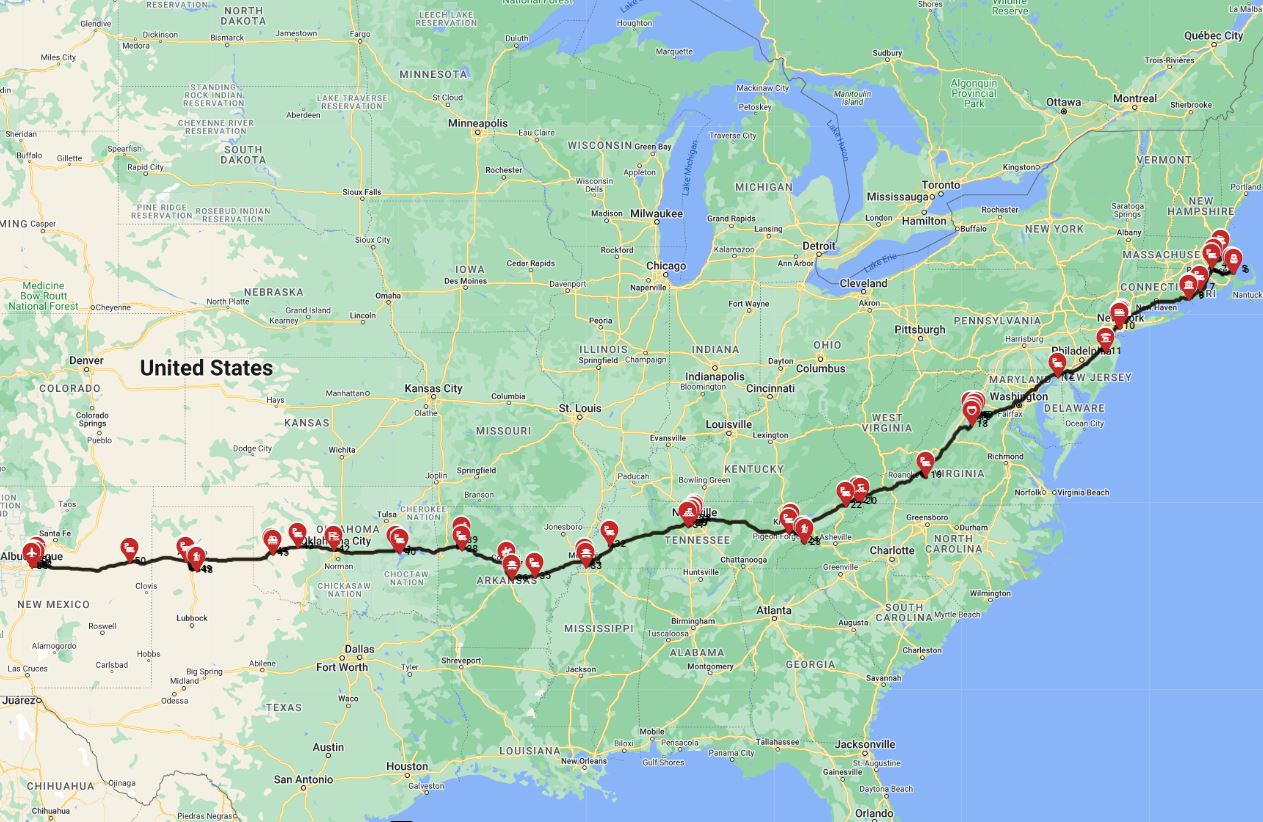
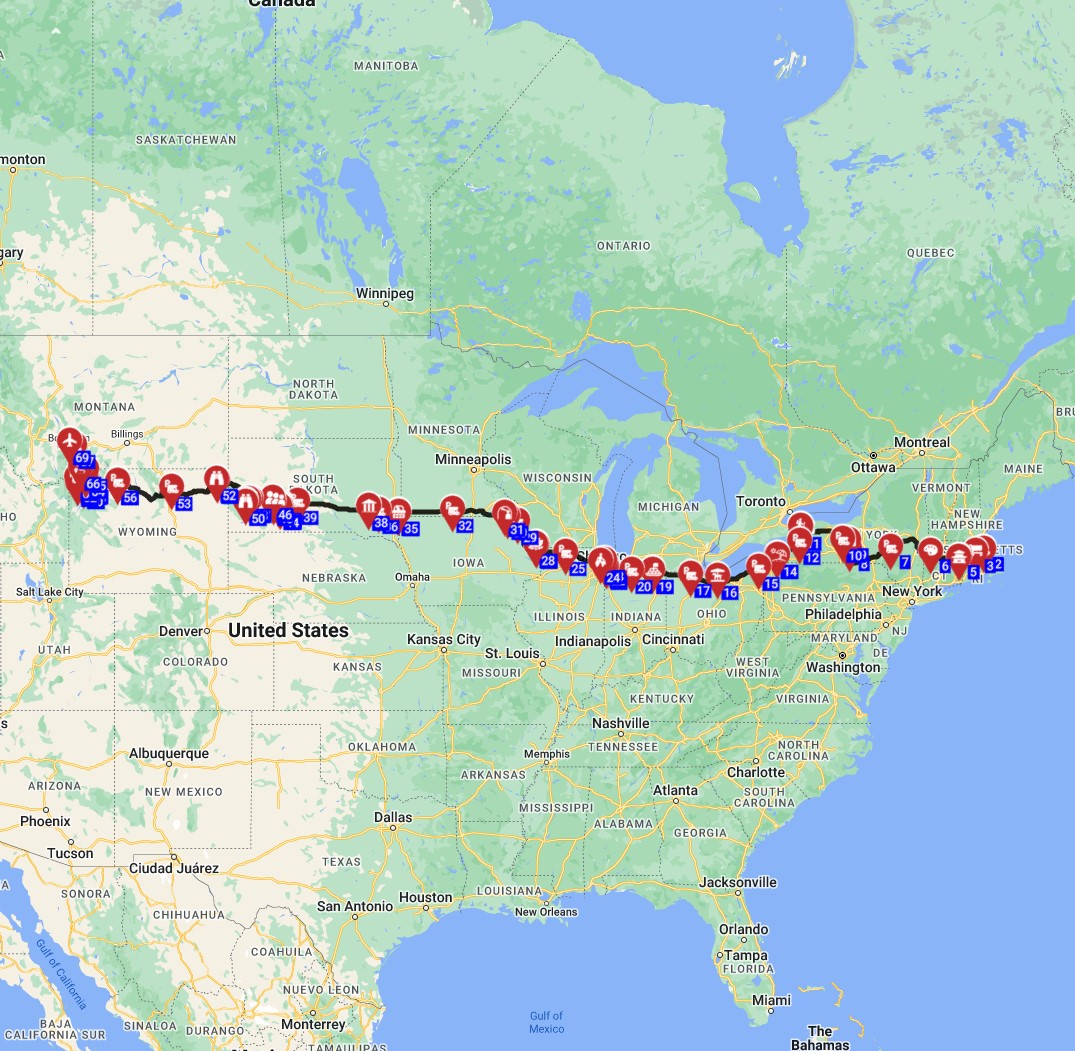
- For a longer adventure, the "Salt Lake City to Boston - Mountains, Monuments, and Memories" trip covers 5,567 km over 29 days, offering ample opportunities for wildlife watching and museum visits.
- Prioritize smaller RVs like Class B Camper Vans for easier navigation and parking within Boston's historic districts, using the efficient MBTA 'T' system for exploring downtown.
- Take advantage of 'park and ride' facilities outside Boston for your luxury RV and utilize the extensive public transportation network to access major attractions like Boston Common and the historic Freedom Trail.
Final Thoughts
Renting a luxury RV in Boston offers a unique way to experience the city and its surroundings, but it does come with its own set of challenges. By understanding the road conditions, adhering to size restrictions, and planning your parking and routes meticulously, you can ensure a smooth and enjoyable journey. Remember to prioritize smaller, more maneuverable RVs if you plan to venture into the city center, and leverage Boston's excellent public transport system.
We're here to help you navigate the complexities and make the most of your Boston RV adventure. With Bandana Caravan, you get the peace of mind that comes from transparent pricing and dedicated support, allowing you to focus on the incredible experiences that await.
Find Motorhome Rentals in Boston