In This Guide
- The 5 RV Families Compared for North Canada
- Class A (Integrated) - Best For
- Price Comparison by RV Class in North Canada
- Class SI (Semi-Integrated) - Best For
- Class C (Alcove) - Best For
- Class B (Campervan) - Best For
- Class TC (Truck Camper) - Best For
- Side-by-Side Comparison Table
- Our Recommendation for RV Rental Beginners Travelers in North Canada
- Which motorhome rental company is the best in Canada?
- How much to rent an RV for a week in Canada?
- Is RV rental cheaper than hotel?
- How much does it cost to rent an RV for a week in Canada?
- Which RV rental site is best?
- Is it easy to drive an RV in Canada?
- Is it cheaper to rent an RV or stay in hotels?
- What is the cheapest way to rent an RV?
- Where is the cheapest place to rent in Canada?
- Top Cities for RV Rental in North Canada
- Country-Wide Practical Information for RV Travelers in North Canada
- What You Shouldn't Miss
- Why Book with Bandana Caravan
- Final Thoughts
- Frequently Asked Questions
Embarking on a rented RV adventure through North Canada offers an unparalleled opportunity to explore some of the world's most pristine and breathtaking wilderness. For first-time RV renters, understanding the different motorhome types and what to expect on the road in Yukon, Northwest Territories, and the northern parts of provinces is key to a smooth and unforgettable trip. From navigating epic routes like the Alaska Highway to experiencing the magic of the Northern Lights, planning is crucial. For live availability and current prices, start with our RV Rental North Canada - Complete Guide 2026 guide.
The 5 RV Families Compared for North Canada
Choosing the right RV family is paramount for beginners in North Canada due to its unique terrain, diverse climate, and varied trip lengths. The vast, often remote landscapes of Yukon, Northwest Territories, and northern provinces demand specific vehicle considerations for a successful journey. Factors like fuel efficiency over long distances, maneuverability on gravel roads, sufficient storage for supplies, and insulation for cooler nights are critical for comfort and safety. Understanding the trade-offs between interior space, rental cost, and ruggedness helps beginners select the ideal home-on-wheels for their northern adventure. Keep in mind that Bandana Caravan is a true RV specialist, not just a side department of a general travel agency, meaning our insights are tailored directly to RV travel.
Class A (Integrated) - Best For
Class A integrated motorhomes are best for beginners seeking maximum comfort, expansive space, and a home-like experience on longer, well-planned trips through North Canada. Bandana's global fleet average for Class A units shows an average length of 7.5 meters and sleeping capacity for 4.4 people, comfortably accommodating families or larger groups. With an impressive average load capacity of 209.5 kg, these RVs are excellent for carrying ample supplies, which is crucial for remote northern routes with limited resupply points. However, their larger size and average fuel consumption of 11-12 liters/100 km mean they require more careful navigation on narrower northern roads and more frequent fuel stops. They offer a panoramic view, ideal for scenic drives, but their size can be challenging for parking in smaller campgrounds or navigating tighter turns on unpaved sections. These are often considered luxury RV rentals, so you might explore options in our Luxury RV Rental in North Canada - Premium Prices 2026 guide.
Price Comparison by RV Class in North Canada
Because RV rental pricing operates on a flex-rate system, influenced by demand, season, and availability, the table below pulls real example prices from Bandana's live search for various durations and RV classes. These prices reflect approximate costs for a typical booking in North Canada, allowing beginners to compare different RV types against their budget. Remember that Bandana's inventory and prices update daily, so for the most accurate and current numbers for your specific travel dates, always use the search box at the top of the page to compare motorhome prices for North Canada.
Live April Price Comparison — RV Class × Trip Length
| Trip length | Class A | Class B | Class C | Class SI | Class TC |
|---|---|---|---|---|---|
| 1 week 15/04 → 22/04 | Check prices | 2,104.99 $ AU | 2,732.81 $ AU | 2,841.60 $ AU | 2,994.96 $ AU |
| 2 weeks 15/04 → 29/04 | Check prices | 3,019.55 $ AU | 4,126.15 $ AU | 4,304.95 $ AU | 4,801.80 $ AU |
| 1 month 01/04 → 30/04 | Check prices | 5,302.20 $ AU | 7,426.25 $ AU | 7,706.46 $ AU | 7,907.99 $ AU |
Estimates only — flex-rate prices change daily based on availability and season.
Prices update daily and vary based on season, demand, and specific vehicle features. For the most accurate, live numbers tailored to your travel dates, always use the search box at the top of this page to check availability and rates for your North Canada RV rental.
Class SI (Semi-Integrated) - Best For
Class SI semi-integrated motorhomes are best for beginners in North Canada seeking a balanced combination of comfort, maneuverability, and fuel efficiency. Bandana's global fleet average for Class SI units typically measures around 6.9 meters in length, sleeping 3.8 people, making them suitable for couples or small families. Their design, integrating the cab with the living area but maintaining a distinct cab, offers better fuel economy (averaging 10-11 liters/100 km) and easier driving compared to larger Class A models. This is advantageous on North Canada's varied road conditions, which can include both paved and well-maintained gravel northern roads. With an average load capacity of 72.2 kg, they offer sufficient space for essentials and some extra gear, vital for less frequent resupply opportunities in the North. These models strike an ideal balance for beginners who want some amenities without the bulk of an integrated RV, making them an excellent choice for an extended road trip.
Class C (Alcove) - Best For
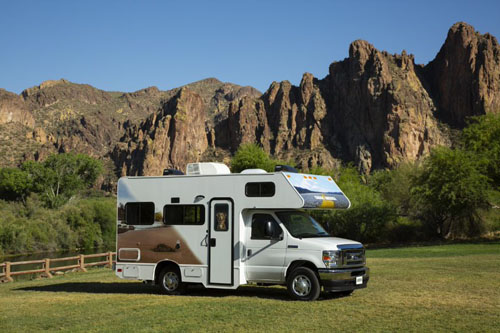
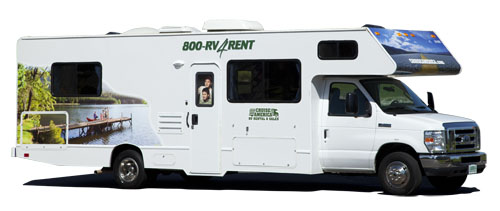
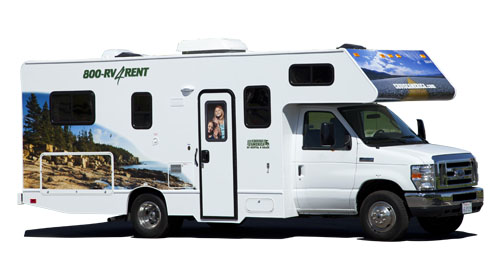
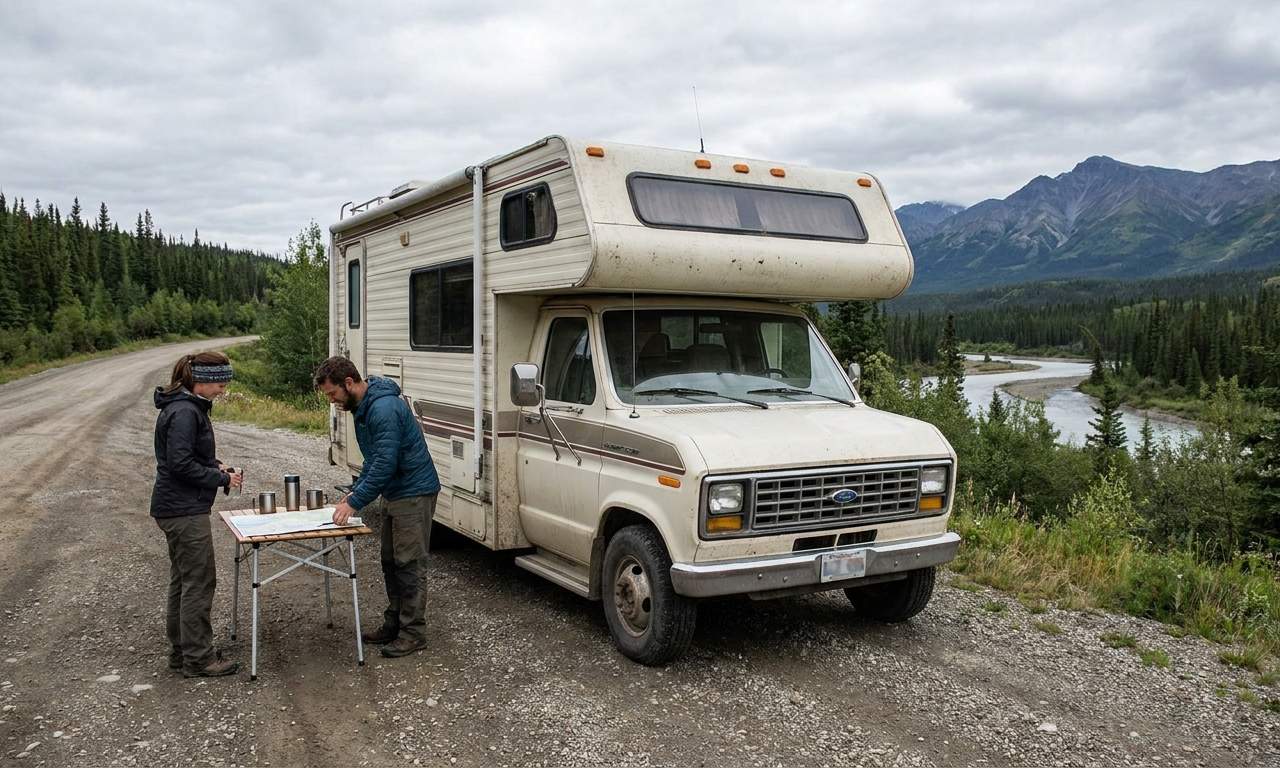
Class C alcove motorhomes are best for beginner families or groups of friends traveling North Canada, prioritizing ample sleeping space and a robust, familiar driving experience. Bandana's global fleet average indicates Class C units are about 7.5 meters long, with an impressive average of 5.8 sleeping places and accommodation for 4.4 adults, thanks to the distinctive over-cab bunk. These RVs offer a good balance of living space and storage for supplies (average load capacity of 42.4 kg), which is important for journeys through remote northern regions with limited amenities. With fuel consumption typically ranging from 10-12 liters/100 km, they are relatively cost-efficient for their size. Their truck-chassis base often provides a sturdy ride, making them a practical choice for beginner drivers on North Canada's diverse road surfaces, including some rougher sections, while offering a comfortable, family-friendly interior. You can find more details on budgeting in our Family RV Rental in North Canada - Pricing Guide 2026. On the routes offered through RV PLANET routes, you can itemize and track every expense along the way for easy budgeting.
Class B (Campervan) - Best For
Class B campervans are best for solo travelers, couples, or small groups of beginners in North Canada who prioritize maneuverability, fuel economy, and stealth camping capabilities. Bandana's global fleet average shows these compact RVs are typically 5.8 meters long, sleeping 3.2 people, making them the most agile option for navigating North Canada's diverse landscapes. They boast excellent fuel efficiency, averaging around 10 liters/100 km, which is a significant advantage given the potentially long distances between fuel stations in the North. While their average load capacity is 37 kg, storage is more limited, necessitating careful packing for remote trips. Campervans are ideal for accessing smaller, more secluded campsites, tackling less-maintained gravel roads with greater confidence, and blending into towns for easier parking, offering unparalleled flexibility for exploring North Canada's wilderness and unique communities. For couples specifically, check out our RV Rental in North Canada for Couples - Pricing 2026 guide.
Class TC (Truck Camper) - Best For
Class TC truck campers are best for adventurous beginners in North Canada seeking true off-grid capability, ruggedness, and the flexibility of a detachable living unit. Bandana's global fleet average for truck campers shows an average length of 5.5 meters and sleeping for 2.4 people, designed for intimate groups or couples ready for a more robust journey. Mounted on a pickup truck chassis, they excel on challenging northern terrain, including unpaved and gravel roads like parts of the Dempster Highway, offering superior ground clearance and 4x4 options. Fuel consumption typically ranges from 12-17 liters/100 km, reflecting their robust build and capability. While average load capacity is not specified in our global fleet data (0kg is provided), their primary advantage is the ability to detach the camper, allowing the truck to be used for day trips, accessing remote fishing spots or trailheads where larger RVs cannot go, making them perfect for deep wilderness exploration and wildlife viewing unique to North Canada.
Side-by-Side Comparison Table
To simplify your decision, here’s a side-by-side comparison of the five RV families available for your North Canada adventure, based on Bandana's global fleet averages. Compare average length, sleeping capacity, fuel consumption, and best-use cases to align with your trip requirements and comfort level. Consider the unique challenges of North Canada's environment, such as remote roads, limited services, and diverse wildlife, when evaluating each RV type.
| Family | Avg Length (m) | Sleeps (Avg) | Fuel Use (L/100 km) | Avg Load Capacity (kg) | Best Use Case in North Canada |
|---|---|---|---|---|---|
| Class A (Integrated) | 7.5 | 4.4 | 11-12 | 209.5 | Luxury, comfort, long trips with large groups on main routes. |
| Class SI (Semi-Integrated) | 6.9 | 3.8 | 10-11 | 72.2 | Balanced comfort/maneuverability, couples/small families, varied roads. |
| Class C (Alcove) | 7.5 | 5.8 | 10-12 | 42.4 | Families/groups, robust feel, good storage for multi-week trips. |
| Class B (Campervan) | 5.8 | 3.2 | ~10 | 37 | Solo/couples, agile exploration, off-grid capability, fuel efficiency. |
| Class TC (Truck Camper) | 5.5 | 2.4 | 12-17 | 0 | Rugged off-road adventure, ultimate flexibility, remote wilderness access. |
Our Recommendation for RV Rental Beginners Travelers in North Canada
For most RV rental beginners venturing into North Canada, the Class C (Alcove) motorhome stands out as the primary recommendation due to its excellent blend of space, comfort, and ease of driving. Its robust truck-chassis foundation handles varied northern roads well, and the generous sleeping capacity (5.8 average) makes it ideal for families or small groups, accommodating gear for remote travel. A strong runner-up is the Class B (Campervan) for those prioritizing agility, fuel economy, and access to more remote, challenging sites. The campervan's smaller footprint is perfect for navigating gravel roads like parts of the Dempster Highway and offers discreet parking, suiting adventurous couples or solo travelers keen on experiencing North Canada's wilderness intimately. Consider exploring our RV Travel Guide to North Canada - Tips and Top Spots 2026 for more specific vehicle recommendations tailored to northern routes.
Which motorhome rental company is the best in Canada?
Bandana is a top choice for motorhome rentals in Canada, especially for beginners exploring North Canada, offering a wide selection of privately-owned RVs and direct supplier partnerships with companies like El Monte, Cruise America, Apollo, and Britz. This diverse marketplace provides greater variety in RV types, ages, and price points compared to solely traditional rental agencies, often including unique vehicles better suited for northern conditions. For North Canada, finding a rental that explicitly allows travel on gravel roads (like the Dempster Highway) is crucial, and Bandana's diverse listings often specify these permissions. Be aware of Canada's unofficial '10-year rule' for RVs, which some national parks and campgrounds may enforce, suggesting restrictions for RVs older than 10 years. While this isn't a hard law, confirming age limits with your rental and planned campsites is advisable, as Bandana's platform allows you to see the exact year of the RV. Bandana facilitates direct communication with owners and provides expert support before and during the booking process, ensuring you can clarify specific vehicle capabilities and obtain local tips for navigating the North. Our dedication to full transparency means no hidden fees, no surprises.
How much to rent an RV for a week in Canada?
To rent an RV for a week in Canada, particularly for beginners in North Canada, prices typically range from CAD $1,000 to CAD $3,000+ depending on the RV class, season, and booking lead time. As illustrated in the 'Price Comparison by RV Class in North Canada' section above, a Class B Campervan might start lower, while a Class A Integrated motorhome will be at the higher end. Factors like peak summer season (June-August in North Canada), longer rental durations, and specific amenities will influence the final cost. Fuel costs, especially significant in North Canada due to vast distances and potentially higher prices, are an additional expense to factor in, with our global fleet averages indicating 10-17 liters/100 km depending on the vehicle. Ancillary costs like campground fees, propane, and groceries are also part of the total week-long trip budget. For easy budgeting and expense tracking on your route, explore RV PLANET routes.
Is RV rental cheaper than hotel?
RV rental can be cheaper than staying in hotels for beginners in North Canada, especially for longer trips or larger groups, primarily due to the integrated accommodation and transportation costs. In remote areas of North Canada, hotel options are often limited and expensive, making an RV a more cost-effective and practical choice for continuous travel. While the upfront RV rental cost, fuel, and campground fees add up, the ability to cook your own meals in an RV significantly reduces dining expenses compared to restaurant meals every day. For families or groups, sharing the cost of one rented RV is generally more economical than booking multiple hotel rooms, offering greater flexibility to explore remote parks and unique cultural sites. The overall value of an RV experience in North Canada- combining freedom, self-sufficiency, and direct access to nature- often outweighs the comparable cost of traditional lodging. Consider checking our RV Rental in North Canada - Prices and Best Deals 2026 for more insights.
How much does it cost to rent an RV for a week in Canada?
The cost to rent an RV for a week in Canada, particularly for beginners targeting North Canada, generally falls between CAD $1,000 and $3,500, varying based on the RV's size, age, and the demand during your travel period. As referenced in the 'Price Comparison by RV Class in North Canada' section, smaller, more fuel-efficient options like Class B campervans will typically be on the lower end, while larger Class A or C models offer more space at a higher price point. Booking well in advance for North Canada's short summer season (June to August) is recommended to secure better rates and availability, as last-minute bookings can incur premium pricing. Beyond the base rental fee, beginners should budget for mandatory insurance, often optional mileage packages (critical for North Canada's vast distances), and potential add-ons like kitchen kits or linen services. Considering the unique challenges and limited infrastructure in North Canada, the cost also reflects the value of having a self-sufficient vehicle capable of navigating remote conditions.
Which RV rental site is best?
Bandana is considered one of the best RV rental sites, especially for beginners seeking a diverse range of options for North Canada, primarily due to its combination of a peer-to-peer marketplace model and direct partnerships with major suppliers like Cruise America and Apollo. This platform connects renters directly with private RV owners, offering a wider selection of unique vehicles, including those potentially better equipped for challenging northern roads and colder climates, compared to commercial fleets. Bandana provides comprehensive insurance options and pre-booking support, crucial for the remote nature of North Canada travel where cell service can be spotty. The ability to communicate directly with owners allows beginners to ask specific questions about vehicle suitability for gravel roads (like the Dempster Highway) or particular destinations in Yukon or NWT. User reviews and detailed listings on Bandana help beginners choose an RV that perfectly matches their budget, comfort preferences, and the rugged demands of a North Canadian adventure. Our commitment to full transparency means you'll always know what you're paying for, with no hidden fees.
Is it easy to drive an RV in Canada?
Driving an RV in Canada is generally manageable, but for beginners venturing into North Canada, it presents unique challenges that require preparedness and caution. While main highways in provinces are well-maintained, northern routes like the Alaska Highway, Dempster Highway, or routes in Yukon and NWT often feature long stretches of gravel, narrow sections, and significant distances between services, necessitating vehicles suitable for rough roads (e.g., Class B, TC, or robust Class C). Beginners must be aware of large wildlife (e.g., bears, moose, caribou) on northern roads, practice bear safety protocols, and understand emergency communication limitations where cell service is absent, often requiring satellite devices. Drive slowly and carefully, and you can drive almost anywhere without issues. No need to stress - just use common sense and pay attention. Logistical planning for remote northern travel is crucial, as fuel scarcity, limited water sources, waste disposal in wilderness areas, and sparse grocery access demand careful preparation and a well-stocked RV. Seasonal considerations for northern travel are paramount; the short summer season (June-August) offers midnight sun, while early spring or late fall can bring sudden snow, requiring vigilance and appropriate vehicle readiness, as discussed in our Winter RV Driving in North Canada - Safety Guide 2026.
🎬 Video coming soon
Is it cheaper to rent an RV or stay in hotels?
Renting an RV is often more cost-effective than staying in hotels for a North Canada adventure, especially when considering the holistic experience and the practicalities of northern travel. Beyond the daily rental fee, a rented RV combines transportation and accommodation, eliminating separate costs for car rentals and multiple hotel rooms, which can be scarce and expensive in North Canada's remote locales. The biggest savings come from meal preparation; a rented RV allows you to cook your own food, drastically cutting down on dining expenses compared to eating out in areas where restaurant options are limited and costly. For delicious meal ideas on the road, check out our RV-friendly recipes playlist. While campground fees are an added cost, they are generally much lower than hotel rates, and the flexibility of boondocking (dry camping) in designated areas further reduces expenses. For beginners planning extensive travel across North Canada's vast landscapes, the self-sufficiency and immersive experience of a motorhome typically offer greater value and affordability over a hotel-based trip.
What is the cheapest way to rent an RV?
The cheapest way for beginners to rent an RV for North Canada involves strategic booking, flexibility with dates, choosing a suitable RV class, and understanding all costs. Booking through platforms like Bandana, which compare final prices across 50+ suppliers (including El Monte, Cruise America, Apollo, and Britz), often provides more competitive rates than single dealerships, as you can easily identify the best deals. Opting for off-peak seasons (late spring or early fall) outside the main summer window (June-August) can significantly reduce rental rates, though seasonal considerations for North Canada (e.g., potential for early snow, optimal aurora vs. midnight sun viewing) must be weighed. Choosing a smaller, more fuel-efficient RV class, such as a Class B campervan, will save money on both the rental fee and substantial fuel costs over long distances in North Canada. Finally, meticulously reviewing the rental agreement for hidden fees, mileage limits, and insurance details, along with pre-planning routes to minimize excessive mileage or fuel consumption, contributes to overall savings. We recommend checking our RV Rental Deals in North Canada - Latest Offers 2026 for current promotions.
Where is the cheapest place to rent in Canada?
Generally, the cheapest places to rent an RV in Canada are major urban centers like Vancouver, Calgary, Toronto, or Montreal, where competition among rental providers is highest and supply is abundant. However, for beginners specifically targeting North Canada (Yukon, NWT), the nearest major rental hubs would be Whitehorse, Yukon, or Edmonton, Alberta, which serve as common starting points for northern expeditions. While renting directly from a northern depot like Whitehorse might seem convenient, prices can sometimes be higher due to limited supply and the specialized nature of vehicles suited for northern conditions. Travelers often find value by renting from a larger city further south (e.g., Edmonton) and driving north, though this adds driving time and fuel costs. Ultimately, for North Canada, the 'cheapest' place isn't just about the lowest daily rate, but about the best value for a vehicle equipped to handle the unique demands of the region, balancing cost with reliability and suitability for challenging roads. Remember, Bandana allows you to compare final prices across suppliers, so what you see is what you pay.
Top Cities for RV Rental in North Canada
North Canada offers several excellent starting points for your RV adventure, each providing access to unique northern experiences. These cities serve as crucial hubs for picking up your rented motorhome and stocking up on supplies before heading into more remote areas.
- Whitehorse, Yukon: The capital of Yukon, Whitehorse is the largest city in northern Canada and a perfect gateway to the Yukon's vast wilderness, including Kluane National Park and the Alaska Highway. It offers essential services and supplies.
- Yellowknife, Northwest Territories: Known as the "Aurora Capital of North America," Yellowknife is an ideal base for Northern Lights viewing. It provides access to Great Slave Lake and unique Indigenous cultural experiences.
- Dawson City, Yukon: This historic Gold Rush town offers a step back in time and is a key access point for the Dempster Highway, leading to the Arctic Ocean. It's a must-visit for history buffs and those seeking rugged adventure.
- Inuvik, Northwest Territories: Located above the Arctic Circle, Inuvik serves as a northern hub, providing a taste of true Arctic life and a jumping-off point for further exploration to Tuktoyaktuk.
- Grande Prairie, Alberta: While not strictly in "North Canada" (Yukon/NWT), Grande Prairie is a significant northern Alberta city that often serves as a southern gateway for travelers heading further north into Yukon via the Alaska Highway.
Country-Wide Practical Information for RV Travelers in North Canada
Navigating North Canada in a rented RV requires a bit of local knowledge and preparedness. Canada generally drives on the right side of the road, and road signs are in English (and French in some areas, though less common in the far North). Speed limits are typically 90-100 km/h on highways and 50 km/h in urban areas. There are no toll roads in North Canada. For national parks, you will need a Parks Canada Discovery Pass or individual park permits, which can be purchased online or at park gates. Insurance for your RV rental is usually included in your booking, but always review the terms for coverage details; you can upgrade to a top-level deductible for extra peace of mind. Regular gasoline and diesel are widely available in major towns and along main highways like the Alaska Highway, but fuel stations can be sparse on remote routes, so always fill up when you have the chance. Emergency services can be reached by dialing 911 (police, fire, ambulance). For connectivity, major towns have cell service, but large sections of remote roads will not. Consider a satellite messenger or phone for emergencies. Wild camping, or boondocking, is generally permitted on Crown Land, but always check local regulations, particularly near communities or protected areas. Respect private property and leave no trace. Traveling slowly, aiming for a maximum of 100-150 km per day on average, allows you to truly feel the place, connect to the culture, the food, and the scenery.
What You Shouldn't Miss
A rented motorhome trip through North Canada is filled with unique experiences that simply can't be missed. Imagine parking your RV under the vast expanse of the northern sky, witnessing the spectacular dance of the Aurora Borealis- a sight truly unlike any other. Driving the legendary Alaska Highway is an adventure in itself, offering stunning vistas and wildlife viewing opportunities at every turn. Exploring the rugged beauty of Kluane National Park and Reserve, home to Canada's highest peak, Mount Logan, provides access to world-class hiking and wilderness. Venture off the beaten path on the Dempster Highway, which leads you to the Arctic Ocean for a truly epic journey. Don't forget to immerse yourself in the rich Indigenous cultures found throughout the North, perhaps visiting a cultural center in Yellowknife or Inuvik. And, of course, the vibrant, quirky charm of Gold Rush towns like Dawson City offers a delightful blend of history and unique local character.
Looking for expert insights from Avi Bandana? Top 5 Adventures - recommendations from Avi Bandana
Avi Bandana recommends that every traveler to North Canada takes the time to truly absorb the vastness and the unique culture of the region. "The silence of the Yukon wilderness, the sheer scale of the mountains in Kluane, and the vibrant stories of the Indigenous communities are experiences that truly change you," he says. He advises driving slowly to fully appreciate the scenery and the chance encounters with wildlife. His personal top 5 adventures include: driving a portion of the Dempster Highway, experiencing a full day under the midnight sun, wildlife spotting in Kluane National Park, visiting Watson Lake's Signpost Forest, and taking a scenic flight over the mountains of the Northwest Territories for a bird's-eye view of the untouched landscapes.
Final Thoughts
Embarking on your first RV rental journey through North Canada is an adventure that promises unparalleled freedom and breathtaking scenery. With Bandana Caravan, you're not just renting a motorhome; you're gaining a partner dedicated to making your trip seamless and unforgettable. We provide the transparency, support, and expert knowledge you need to confidently choose the perfect camper for your northern expedition.
Whether you dream of chasing the Northern Lights in a nimble campervan or exploring national parks with your family in a spacious Class C, North Canada awaits. Trust in our expertise, benefit from our full price transparency, and discover the joy of the open road with peace of mind. Prepare for an adventure of a lifetime, where every kilometer brings a new discovery.
Get inspired for your next trip! Discover top destinations, planning tips, all in one place! Compare Motorhome Prices for North Canada and start planning your ultimate northern adventure today.