For live availability and current prices, start with our RV Rental Texas - Complete Guide 2026 guide.
In This Guide
- Best Texas RV Itinerary for rv rental beginners — Overview
- 7-Day Classic Route in Texas
- 14-Day Extended Journey in Texas
- Recommended RVPlan Trip for Texas
- Must-See Stops Along the Way (Avi Bandana Picks)
- Daily Driving Distances & Drive Times in Texas
- Best RV Class for This Itinerary — Couple & Family Picks
- How much does it cost to rent an RV in Texas?
- What is the best time of year to RV in Texas?
- What are the RV laws in Texas?
- Where can I legally park an RV overnight in Texas?
- What are good RV campgrounds in Texas?
- Is it hard to drive an RV in Texas?
- Can you boondock in Texas?
- What are some hidden gems in Texas for RVers?
- Are RV parks in Texas pet friendly?
- What are essential amenities for RV camping in Texas?
- How to get cell service while RVing in Texas?
- What are the biggest challenges of RVing in Texas?
Best Texas RV Itinerary for rv rental beginners — Overview
Embarking on your first RV rental adventure in Texas is an exciting prospect, and a well-planned itinerary can make all the difference. A beginner-friendly Texas RV itinerary typically covers 7 to 14 days, focusing on the central and eastern parts of the state, encompassing its vibrant cities, rich historical sites, and stunning natural parks. The ideal duration for a foundational RV trip in Texas is a minimum of 7 days. This allows for ample exploration without feeling rushed, providing a comfortable pace to truly soak in the experiences. Travelers can expect to cover approximately 1,000-1,500 km (600-900 miles) over a 7-day trip, with an average of 100-150 km per driving day. This manageable distance allows for plenty of time for sightseeing, setting up camp, and enjoying the journey itself. The best seasons for RV travel in Texas are spring (March-May) and fall (September-November), offering pleasant, mild temperatures and often showcasing the state's diverse landscapes at their most beautiful.
7-Day Classic Route in Texas
For a fantastic introduction to RVing in Texas, this 7-day itinerary offers a delightful loop through some of the state's most accessible and engaging attractions, perfect for first-time renters. Your journey begins in the Dallas-Fort Worth metroplex, where you'll pick up your rented RV and settle in, perhaps with a visit to the historic Fort Worth Stockyards National Historic District to witness the daily cattle drive. For your first night, consider The Vineyards Campground & Cabins on Lake Grapevine. Day two involves a short, scenic drive of about 90 km (55 miles) to Glen Rose, the "Dinosaur Capital of Texas." Here, Dinosaur Valley State Park awaits, where you can walk in the footsteps of ancient giants by viewing dinosaur footprints in the Paluxy Riverbed. Stay overnight at the Dinosaur Valley State Park Campground. The following day, a brief 80 km (50-mile) trip leads you to Waco, home to the beloved Magnolia Market at the Silos and the Dr Pepper Museum, offering a taste of modern charm and nostalgic treats. Midway Park COE Campground on Lake Waco is a great place to park. Day four takes you to Austin, the vibrant "Live Music Capital of the World" (approximately 100 km / 60 miles). Immerse yourself in the city's culture by visiting the Texas State Capitol, exploring the unique shops on South Congress Avenue, and relaxing in the expansive Zilker Park. McKinney Falls State Park is an excellent choice for camping near Austin. On day five, venture into the heart of Texas Wine Country and the charming German town of Fredericksburg, about 120 km (75 miles) away. Enjoy wine tastings and browse the boutiques along Main Street. Camping at Lady Bird Johnson Municipal Park is a pleasant option. Day six offers a more relaxed pace with a short drive (around 50 km / 30 miles) to Johnson City, the birthplace of Lyndon B. Johnson, where you can visit his National Historical Park, followed by a visit to Pedernales Falls State Park for stunning river views and hiking opportunities. The final day involves a longer drive back to Dallas (approximately 320 km / 200 miles) to return your RV, concluding a diverse and memorable central Texas RV adventure.
14-Day Extended Journey in Texas
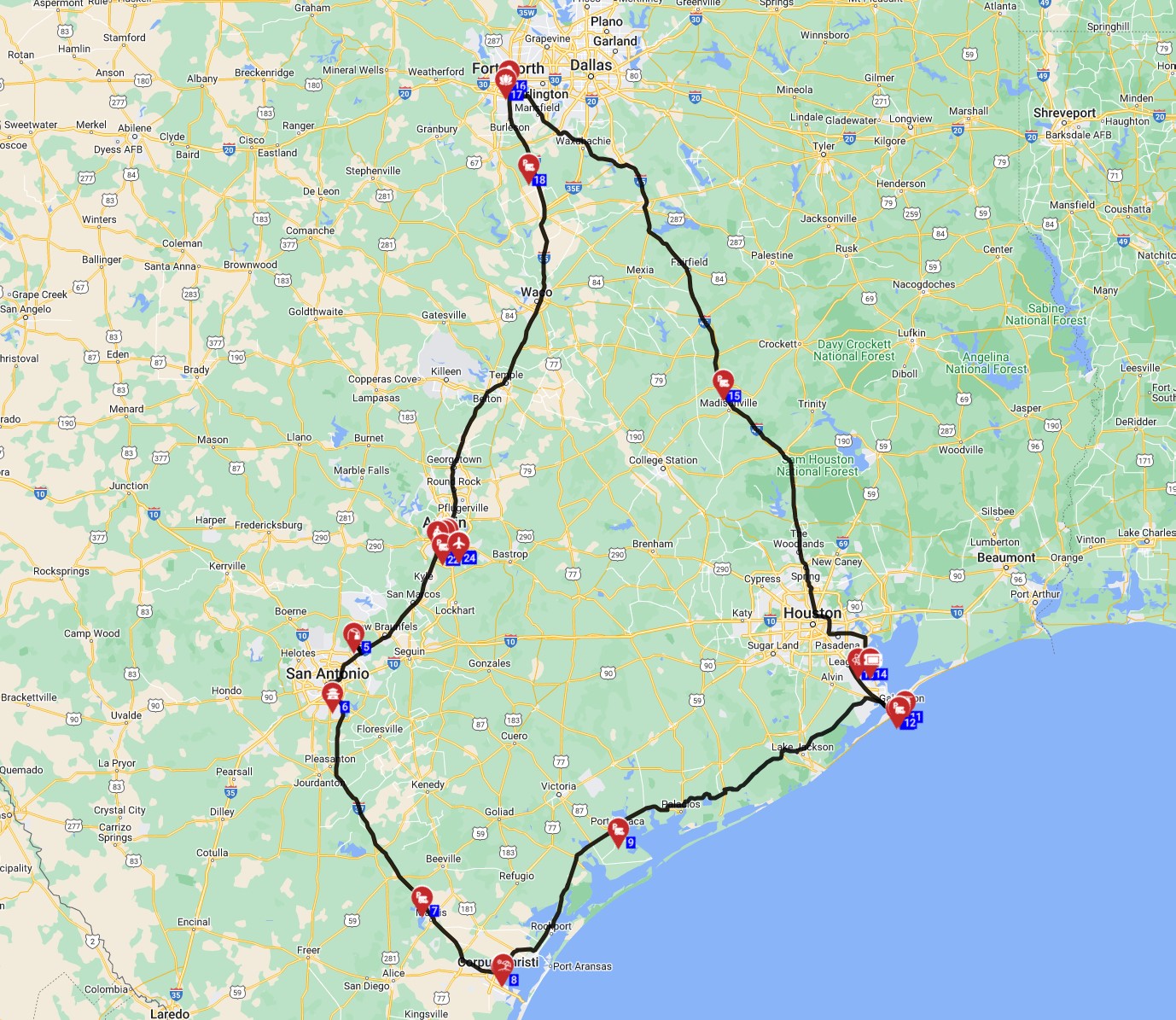
To truly experience the breadth of Texas by RV, consider this extended 14-day itinerary, building upon the classic route and venturing further south and east. Days 1-6 follow the 7-day itinerary from Dallas-Fort Worth to Pedernales Falls State Park near Johnson City, allowing you to savor the central Texas highlights. On Day 7, you'll head to San Antonio, a mere 80 km (50 miles) south. Here, immerse yourself in history by visiting The Alamo, strolling along the iconic Riverwalk, and exploring the beautifully preserved Spanish missions. The Alamo KOA offers convenient camping. Day 8 takes you to Goliad State Park (approximately 150 km / 93 miles), a site rich in Texas history with Mission Espíritu Santo and Presidio La Bahía offering a tangible connection to the past. Continue your journey eastward on Day 9 to Galveston, a coastal gem approximately 200 km (124 miles) away. Enjoy the Gulf beaches, explore the attractions at Moody Gardens, or wander through the historic Strand District. Galveston Island State Park provides a fantastic coastal camping experience. Dedicate Day 10 to fully exploring Galveston's attractions, from its sandy shores to the Pleasure Pier. On Day 11, it's a short 80 km (50-mile) drive to Houston. Discover the wonders of space at Space Center Houston, explore the diverse Museum District, or indulge in the city's renowned culinary scene. Lakeview RV Resort is a popular choice for RVers in Houston. Day 12 offers a change of scenery as you head into the piney woods of Huntsville State Park (about 110 km / 68 miles), perfect for hiking, fishing, and kayaking. Cap off your exploration on Day 13 with a visit to Palestine, known for its historic downtown and scenic Texas State Railroad rides (approximately 100 km / 62 miles). The Palestine RV Park is a convenient option. Finally, on Day 14, complete your extended Texas adventure with the drive back to Dallas (around 160 km / 100 miles) to return your RV, filled with memories of diverse landscapes and rich experiences.
Recommended RVPlan Trip for Texas
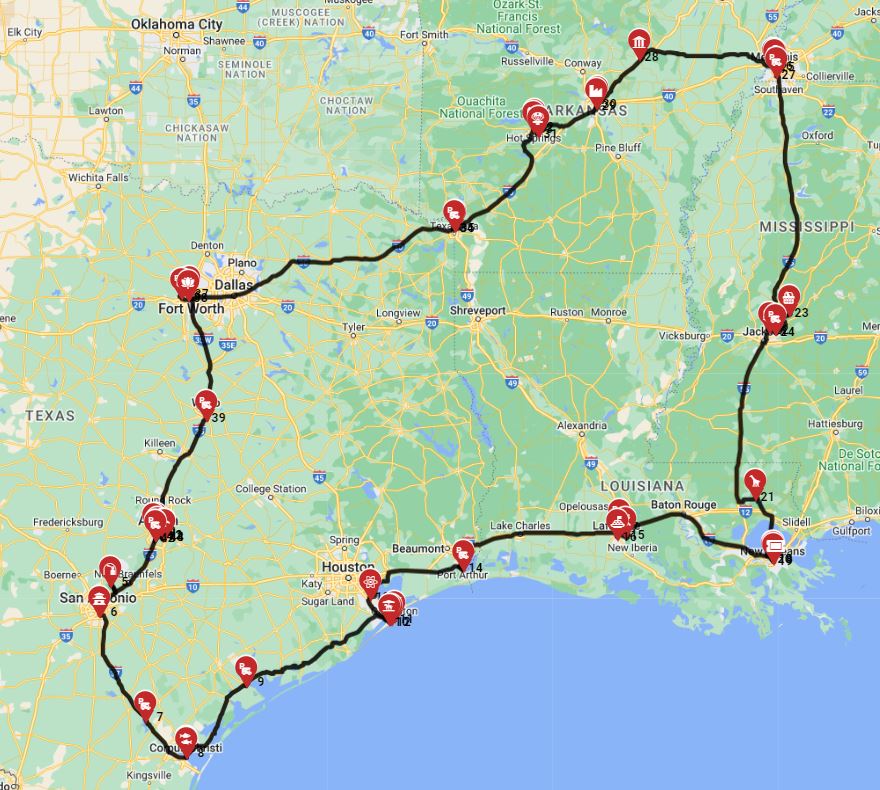
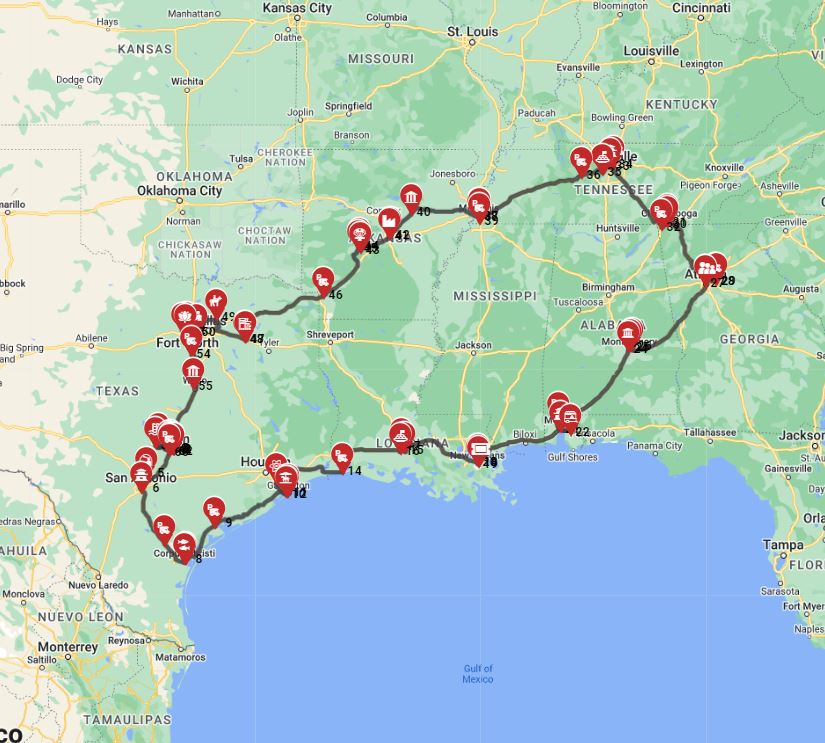
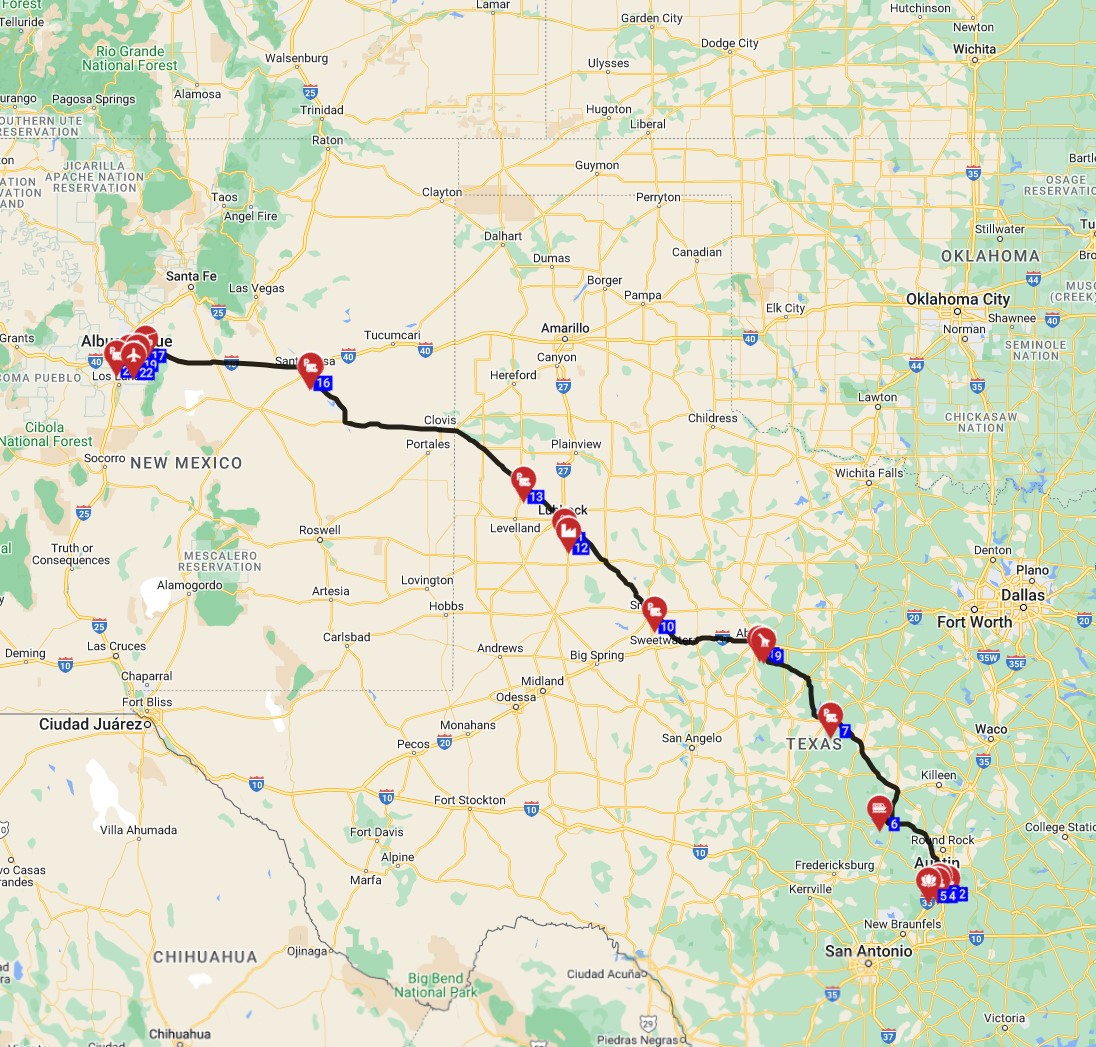
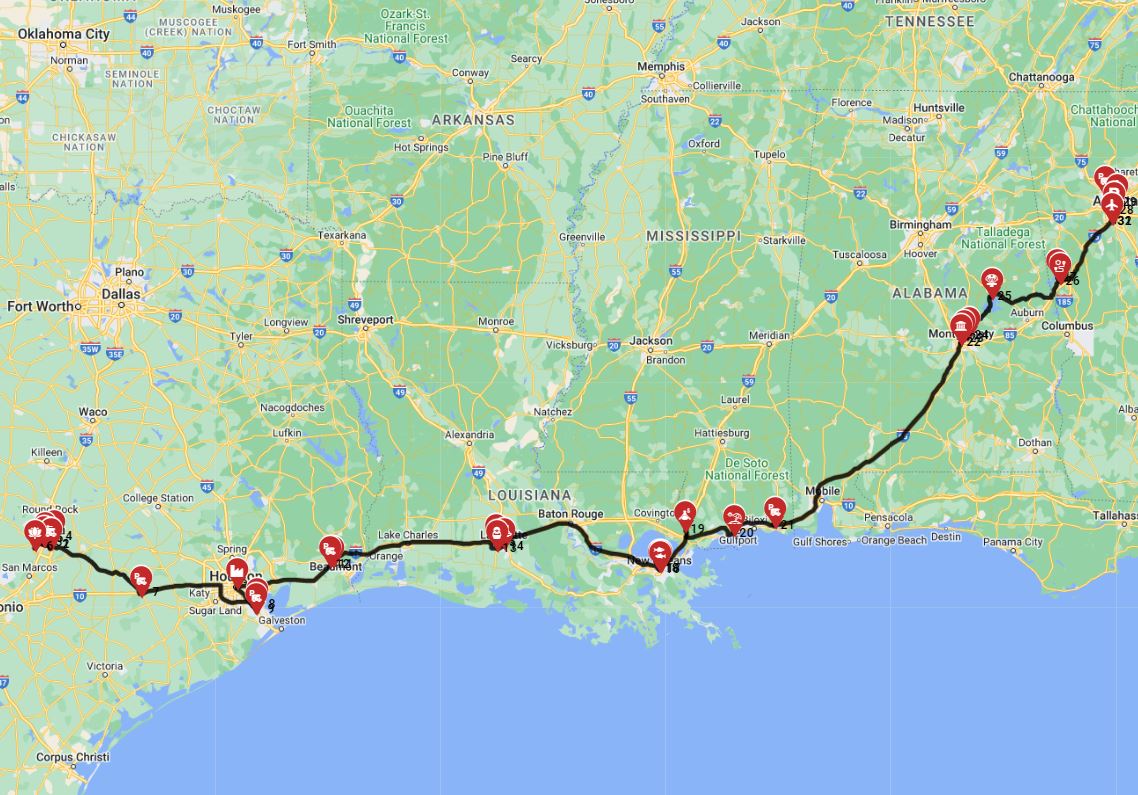
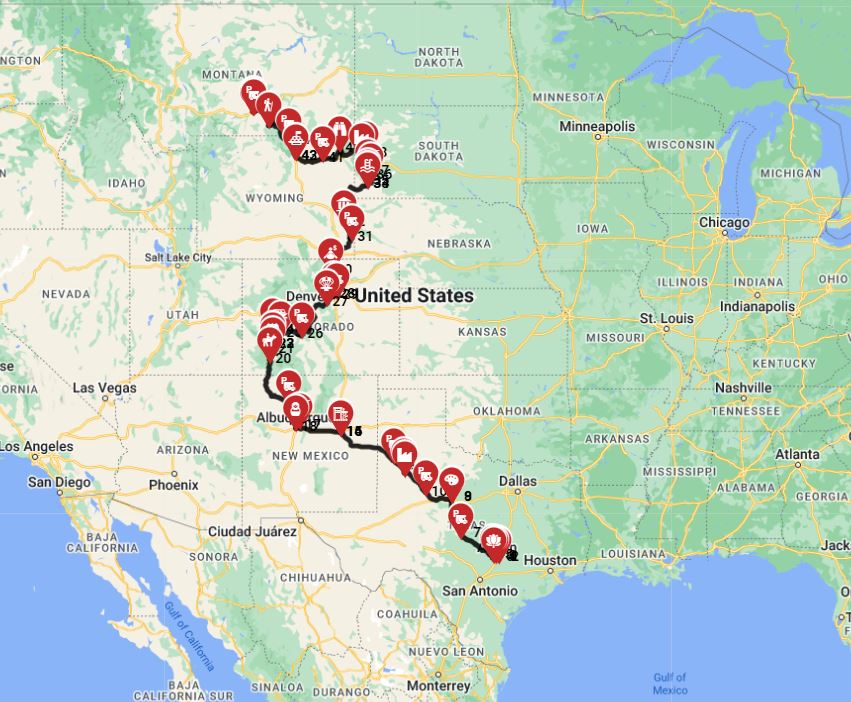
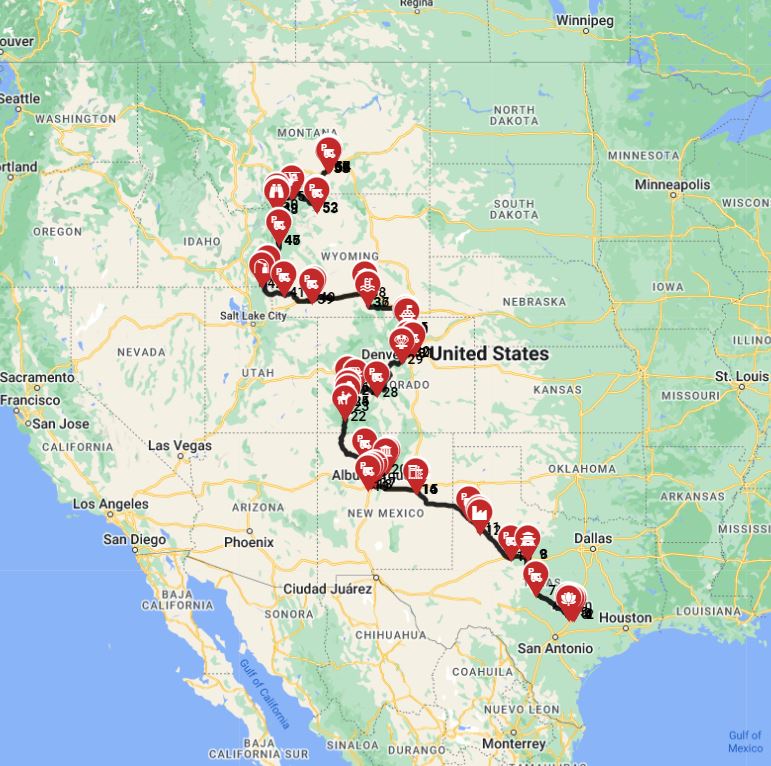
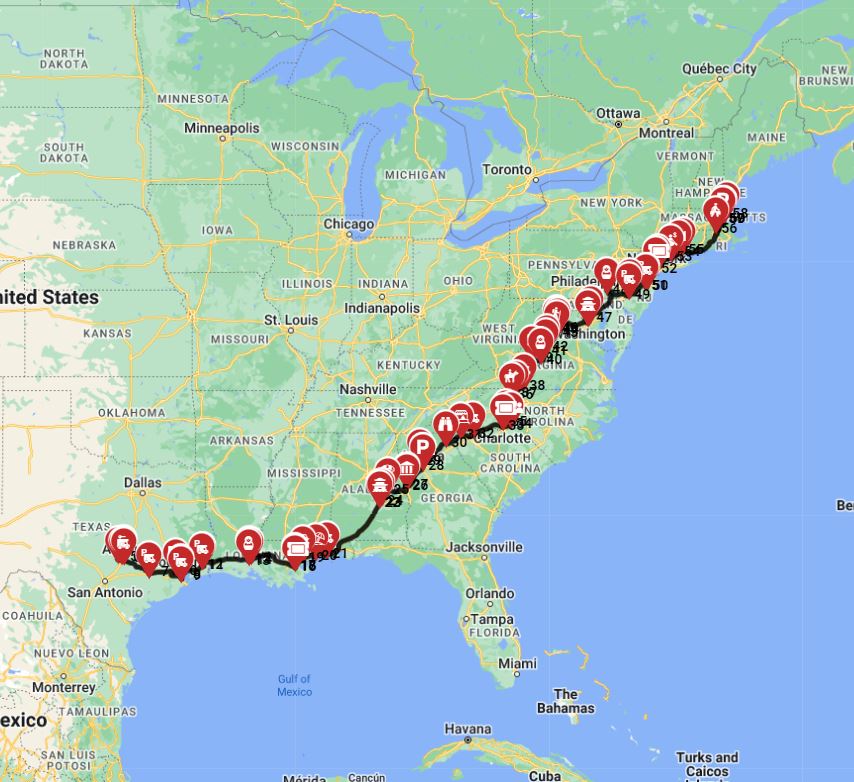
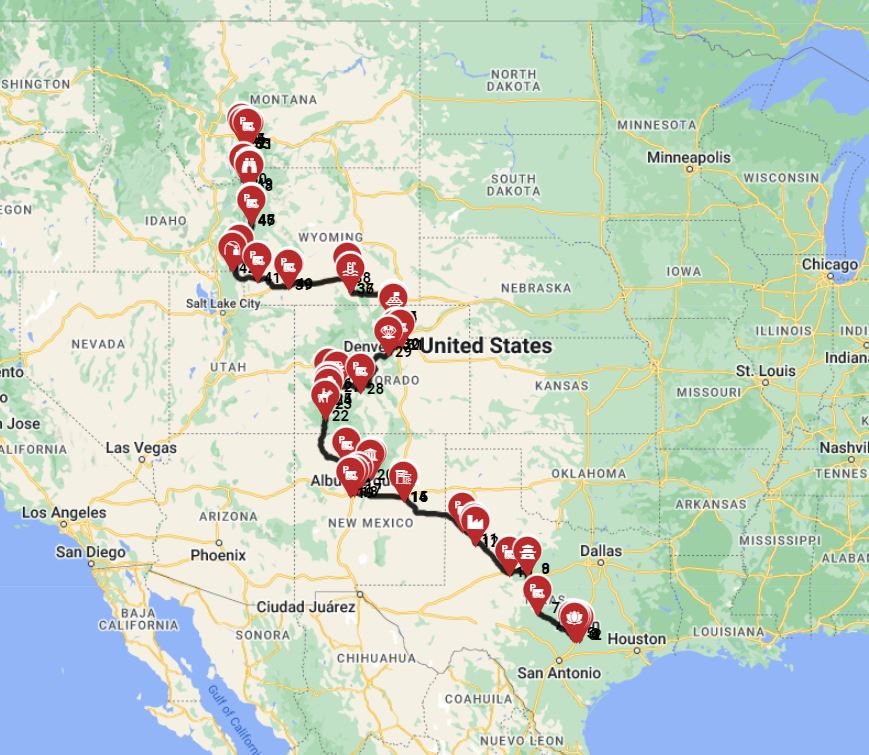
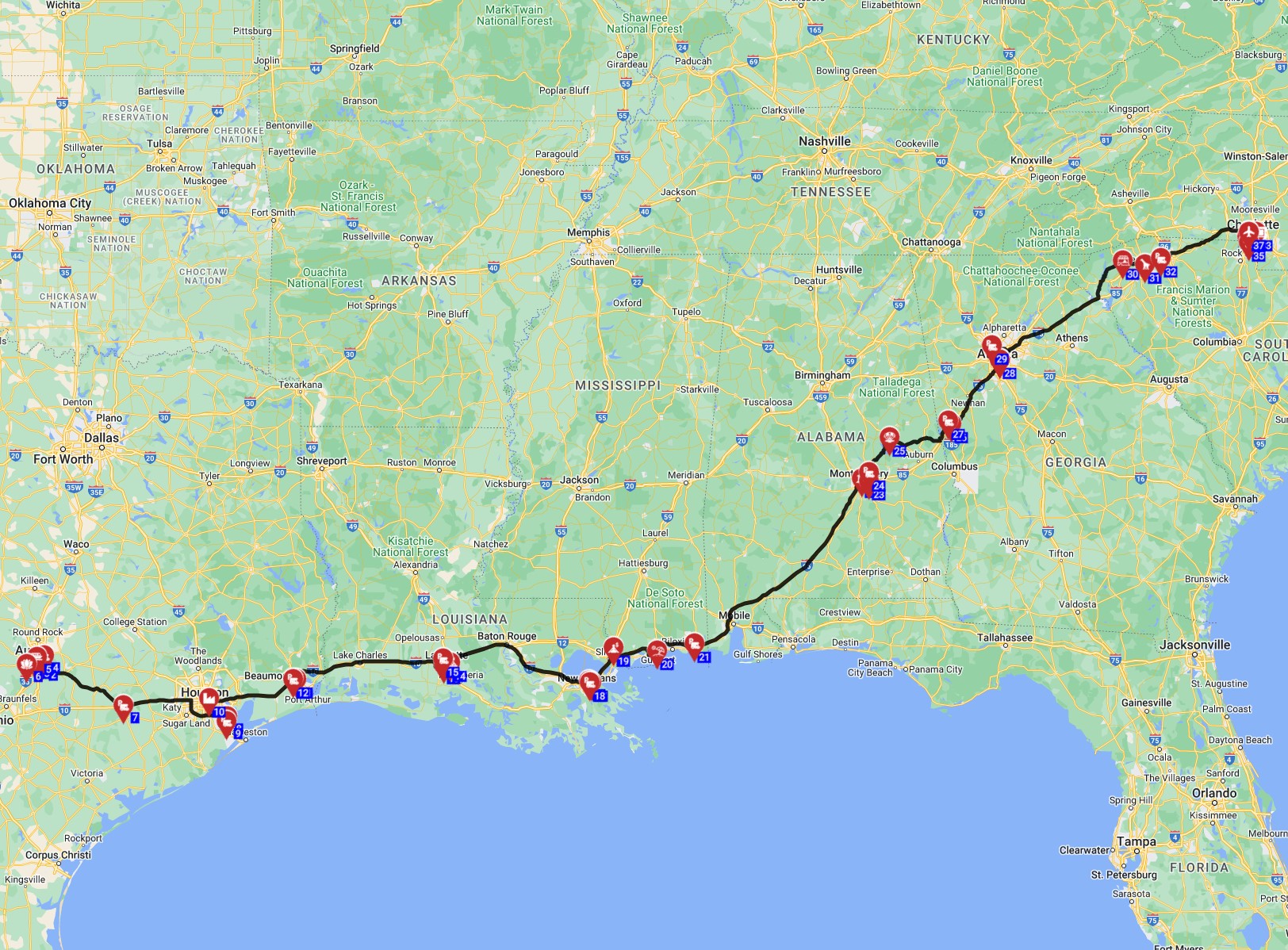
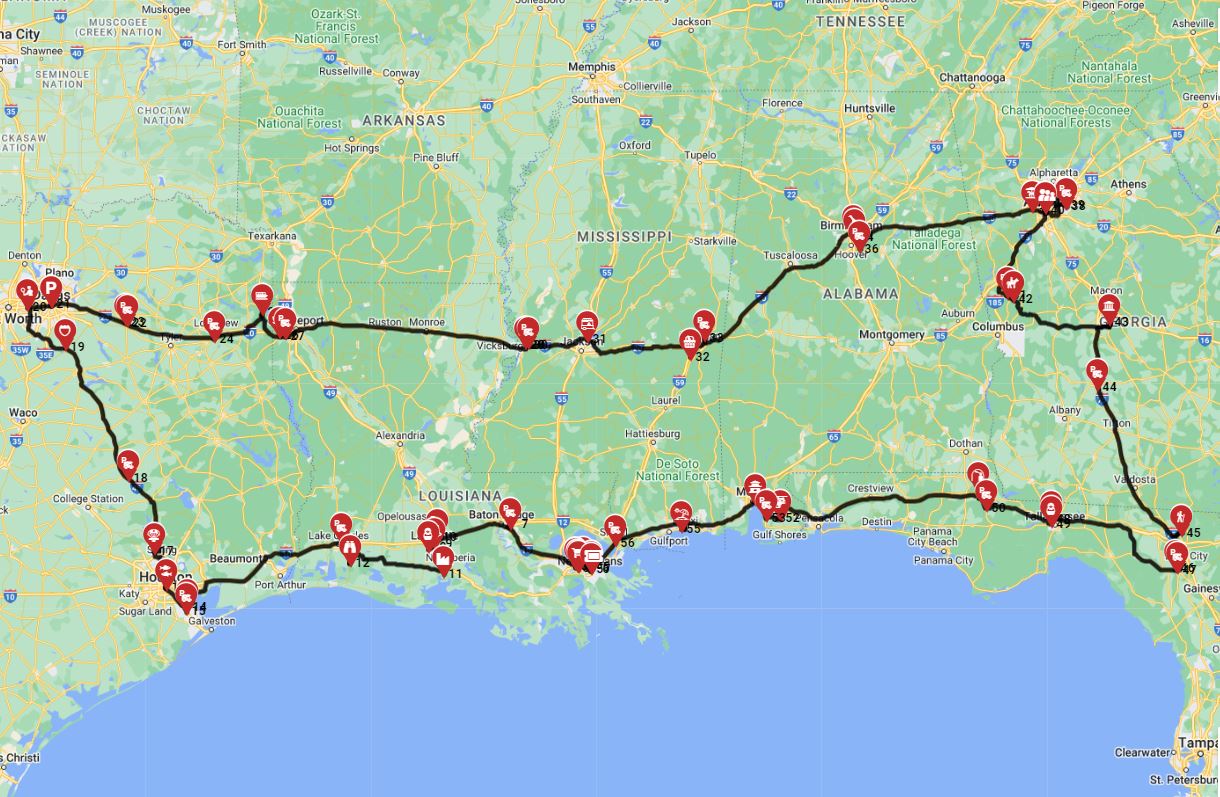
For those seeking a more comprehensive RV adventure that can incorporate Texas as part of a larger regional exploration, RVPlan offers an excellent option. The '
Must-See Stops Along the Way (Avi Bandana Picks)
When planning your Texas RV adventure, think like an explorer! Avi Bandana, our resident RV travel expert, always emphasizes weaving in unique cultural and culinary experiences to truly connect with a destination. When using resources like RVPlan's regional routes, look for opportunities to experience authentic local flavors and crafts. Prioritize visiting a "Traditional Market" to discover regional produce, artisanal goods, and perhaps some unique ingredients for your RV kitchen. Savoring authentic Texas barbecue or Tex-Mex at a "Traditional Restaurant / Fine Dining" establishment is a must for a true taste of the state. Don't miss exploring "Local Industry" sites – perhaps a historic ranch, a craft brewery, or an oil museum – to understand Texas's heritage and economic drivers. Finally, make time for "Traditional Visits," which often include significant historical landmarks, cultural centers, or natural wonders that offer deeper insights into the areas you're exploring. These curated stops transform an RV trip from a simple drive into a rich, immersive experience. For ideas you can prep on the road, watch our RV-friendly recipes playlist on YouTube.
Daily Driving Distances & Drive Times in Texas
To ensure a relaxed and enjoyable RV experience in Texas, Avi Bandana recommends a sensible approach to daily driving. Aim for a maximum of 100 miles or approximately 150 km per day on average. This allows ample time for sightseeing, spontaneous stops, setting up camp without rushing, and simply enjoying the journey. Traveling slowly is key to discovering those charming roadside attractions and local eateries that often become the highlights of an RV trip. For instance, the drive from Dallas to Fort Worth is a short, manageable approximately 50 km (30 miles), typically taking around 45 minutes to an hour. This makes it an ideal starting point for your RV adventure. Similarly, driving from Austin to San Antonio covers about 130 km (80 miles) and usually takes 1.5 to 2 hours, allowing you to explore both vibrant cities within a day's travel. The relatively short distance from Houston to Galveston, around 80 km (50 miles), can be completed in approximately 1 to 1.5 hours, offering a leisurely transition to the coastal region.
Best RV Class for This Itinerary — Couple & Family Picks
Choosing the right RV class is crucial for a comfortable Texas journey. For couples, a Class B Camper Van is an excellent choice due to its exceptional maneuverability and fuel efficiency. Bandana's global fleet typically features Class B Camper Vans with an average length of 5.8 meters, comfortably sleeping 3.2 individuals and accommodating 2.7 adults, making them ideal for navigating both bustling city streets and serene state park roads while providing a cozy living space. For families traveling with children, Class C Alcove models offer a superior balance of space and ease of driving, perfectly suited for longer adventures. From Bandana's global offerings, Class C Alcove models average around 7.5 meters in length, providing ample sleeping space for 5.8 individuals and comfortably accommodating 4.4 adults. The distinctive overhead alcove bed is often a family favorite, offering extra sleeping quarters without sacrificing central living space. To simplify your planning further, consider Bandana's 'Rent & Plan' service, which seamlessly combines your RV rental with a pre-designed itinerary, offering full access to trip-planning tools and removing the initial planning stress.
How much does it cost to rent an RV in Texas?
The cost to rent an RV in Texas varies significantly based on several factors, but generally ranges from $100-$300 per night for smaller units like Class B camper vans or truck campers, up to $250-$500+ per night for larger Class A or C motorhomes. Rental prices are heavily influenced by the RV class chosen, the rental duration, the season (peak times like spring break or holidays will incur higher rates), and the specific rental company and any chosen insurance options. Beyond the rental itself, budgeting for your Texas RV adventure should also encompass additional expenses. Fuel costs are a significant consideration, with many RVs consuming 10-12 liters per 100 km. Campground fees can range from $20-$70+ per night for state parks versus more amenity-rich private resorts. Keep in mind potential costs for dump stations or water refills. To maximize savings, consider booking during the off-season, opting for longer rental periods which often reduce the daily rate, cooking most meals in your RV, and utilizing any available campground loyalty programs or discounts. On the routes offered through RV PLANET routes, you can itemize and track every expense along the way for easy budgeting.
What is the best time of year to RV in Texas?
The most favorable time of year to RV in Texas is generally during the spring months (March to May) and the fall months (September to November). During these periods, you'll experience mild temperatures and comfortable conditions across most of the state, making outdoor activities and driving much more enjoyable. Spring is particularly beautiful in Texas, marked by the iconic blooming wildflowers, especially in the Hill Country, and pleasant temperatures perfect for hiking before the intense summer heat sets in. Fall offers equally inviting weather, ideal for exploring state parks and attending numerous outdoor festivals. However, regional variations exist: North Texas is best in spring and fall, Central Texas shines during wildflower season, coastal areas are most pleasant in early spring and late fall (avoiding the peak hurricane season from June to November), and West Texas deserts are most comfortable from late fall through early spring. Regardless of the season, always prepare for weather variations; Texas summers can be extremely hot (often exceeding 100°F), coastal areas carry a risk of hurricanes, and even mild winters can bring sudden cold fronts, especially in the northern parts of the state.
What are the RV laws in Texas?
Understanding Texas RV laws is essential for a smooth trip. For most recreational RVs, a standard Class C driver's license is sufficient for operation. However, if you plan to drive exceptionally heavy RVs exceeding 26,000 pounds gross vehicle weight rating (GVWR), or combinations involving a trailer over 10,000 pounds, you might need a Class A or B non-commercial license. Towing regulations in Texas are also important: trailers exceeding 4,500 pounds GVWR must be equipped with independent braking systems, and safety chains are mandatory for all towed vehicles. Regarding overnight parking, legality varies greatly. While designated RV parks and campgrounds are the primary legal spots, restrictions apply to public streets. Retail parking lots, such as those at Walmart or Cabela's, may permit overnight parking, but always seek explicit permission from store management beforehand. Rest areas are typically for short-term rest only, not extended camping.
Where can I legally park an RV overnight in Texas?
Legally parking an RV overnight in Texas primarily involves utilizing designated campgrounds. These include a wide array of options, from scenic state parks and national park facilities to numerous private RV resorts offering a full range of amenities. Texas State Parks, such as Garner State Park or Big Bend Ranch State Park, provide beautiful, often more affordable, settings for overnight stays, though reservations are highly recommended. Private RV parks typically offer enhanced amenities like swimming pools, clubhouses, and full hookups for those prioritizing comfort and convenience. For RVers seeking more economical or unique options, some truck stops and travel centers, like those operated by Love's or Pilot Flying J, may allow overnight parking, though it's crucial to confirm with management upon arrival. Certain retail parking lots, particularly large retailers like Walmart, may also permit overnight parking, but policies vary by location and store management; always confirm permission before setting up for the night. Additionally, dispersed camping, often referred to as boondocking, is legally permissible on specific federal and state lands, including certain National Forests and Wildlife Management Areas, provided you adhere to all posted regulations and "Leave No Trace" principles.
What are good RV campgrounds in Texas?
Texas boasts a diverse range of excellent RV campgrounds catering to every preference, from rustic state parks to amenity-rich private resorts. For a serene natural experience, state parks like Garner State Park in the Hill Country, Big Bend Ranch State Park in West Texas, or Inks Lake State Park in Central Texas offer beautiful settings with opportunities for hiking and water activities, though hookup availability can be limited at some primitive sites. If you're seeking comfort and convenience, private RV resorts such as Buckhorn Lake Resort near Kerrville or Galveston Island RV Resort provide extensive amenities including swimming pools, clubhouses, and full hookups. For those looking to explore less-trafficked, unique destinations, consider Caprock Canyon State Park & Trailway in the Panhandle, home to the official state bison herd and stunning canyon views, or Palmetto State Park near Gonzales, which features a rare dwarf palmetto forest and a unique subtropical environment ideal for hiking and paddling. Coastal campers might enjoy Mustang Island State Park for its beach camping opportunities, while Lake Whitney State Park offers a lovely lakeside camping experience in Central Texas.
Is it hard to drive an RV in Texas?
Driving an RV in Texas is generally manageable, but the ease largely depends on the RV class, the driver's experience, and familiarity with the state's vast and varied road conditions. Smaller RVs, such as Class B Camper Vans (averaging 5.8 meters in Bandana's fleet), are highly maneuverable and feel similar to driving a large SUV, making them quite easy for beginners to navigate through cities and on highways. Larger RVs, like Class A Integrated or Class C Alcove models (averaging 7.5 meters in Bandana's fleet), require more caution due to their length, width, and weight. Be mindful of tighter turns, parking limitations, and potential strong crosswinds on open highways. Texas features extensive, well-maintained interstate highways that are generally straightforward to drive. However, some rural roads leading to state parks or more remote areas can be narrower, winding, or unpaved, necessitating slower speeds and careful handling, particularly for larger vehicles. First-time RV drivers should practice maneuvering, learn to effectively use their mirrors, and be aware of increased braking distances and turning radii, especially when navigating urban environments or backing into campsites.
Can you boondock in Texas?
Yes, boondocking, which is dispersed camping without hookups, is permissible in specific areas of Texas. These opportunities are primarily found on certain public lands such as National Forests and Wildlife Management Areas, and are subject to strict regulations. While Texas has limited Bureau of Land Management (BLM) land, areas like the Sam Houston National Forest, Angelina National Forest, and Big Thicket National Preserve do offer opportunities for dispersed camping, often in designated spots or outside developed campgrounds. It is crucial to adhere to "Leave No Trace" principles, check for any fire bans, stay within designated areas, and understand length-of-stay limits, which typically cap at 14 days within a 30-day period. To find legal boondocking locations, resources such as the iOverlander app, Campendium, and the National Forest Service websites are invaluable for identifying suitable sites and checking current conditions or restrictions. Safety and security tips for boondocking in Texas include parking on level ground, informing someone of your whereabouts, carrying ample water and supplies, securing your vehicle, being aware of local wildlife, and ensuring you have a reliable communication method.
What are some hidden gems in Texas for RVers?
Beyond the popular destinations, Texas holds numerous hidden gems perfect for RVers seeking unique and less-trafficked experiences. For those who love the rugged beauty of West Texas but want to avoid the crowds of Big Bend National Park, Big Bend Ranch State Park is an excellent alternative. It offers rugged backcountry roads, stunning desert landscapes, and unparalleled stargazing opportunities for the adventurous RVer. In the Panhandle, Caprock Canyon State Park & Trailway presents incredible red rock formations and a vast canyon system where you can see the official state bison herd, making it ideal for hiking and wildlife viewing away from the typical tourist throngs. For a tranquil coastal escape, Mustang Island State Park, near Corpus Christi, offers miles of undeveloped coastline perfect for beach camping (with permits), fishing, and birdwatching. A truly unique ecological experience awaits at Palmetto State Park, near Gonzales, which features a rare dwarf palmetto jungle-like environment. Finally, in East Texas, Caddo Lake State Park showcases a mystical cypress swamp draped in Spanish moss, offering fantastic opportunities for kayaking and fishing, revealing a completely different side of Texas's natural beauty.
Are RV parks in Texas pet friendly?
The vast majority of RV parks and campgrounds across Texas are pet-friendly, recognizing that many RV travelers include their furry companions on their journeys. Most parks generally require pets to be kept on a leash, prohibit them from certain indoor facilities like restrooms or clubhouses, and expect owners to promptly clean up after them. Many Texas State Parks also welcome pets in campgrounds and on trails, provided they are leashed, though they may be restricted from swimming areas or buildings. To find specific pet-friendly trails and attractions, researching individual park websites or using pet-friendly travel apps like BringFido can be very helpful. It is always advisable to confirm the specific pet policy directly with the RV park or campground before making a reservation, especially if you have larger breeds or multiple pets, as some may have size or quantity restrictions.
What are essential amenities for RV camping in Texas?
Essential amenities for RV camping in Texas extend beyond basic hookups to include crucial services like access to dump stations, readily available water refill points, propane availability, and reliable RV repair services. Full hookups, typically encompassing electric, water, and sewer connections, are standard at most private RV parks and are highly desirable for comfortable extended stays. State parks often offer partial hookups or more primitive sites, adding to the natural experience. Public dump stations and water refill points are vital for self-contained RVs and can be found at many state parks, private campgrounds (sometimes for a fee if you're not a registered guest), municipal wastewater treatment plants, and dedicated RV service centers. Propane refills are widely accessible across the state, available at many gas stations, hardware stores, and RV dealerships, ensuring your heating, cooking, and refrigeration systems remain operational. Having reliable RV repair services nearby is also important; major cities and popular RVing routes typically have RV dealerships and independent repair shops, and online resources or apps can help locate emergency services in more remote areas.
How to get cell service while RVing in Texas?
Maintaining reliable cell service while RVing in Texas, especially when venturing into the more remote areas like West Texas, requires proactive planning and potentially the use of signal-enhancing equipment. It is highly advisable to check coverage maps for multiple cellular carriers (such as AT&T, Verizon, and T-Mobile) along your planned route, as signal strength can vary dramatically even within short distances. Utilizing a cellular signal booster, like those from weBoost, can significantly improve reception by amplifying weak signals, making a tangible difference in fringe coverage areas. Consider carrying mobile hotspots or opting for a data plan with an alternative carrier to provide a backup internet connection when your primary cell service is spotty. Planning your overnight stops at RV parks known for reliable Wi-Fi or good cell reception can also help mitigate connectivity issues, particularly if you need to work remotely or stream content.
What are the biggest challenges of RVing in Texas?
The most significant challenges faced by RVers in Texas often include managing the extreme heat during summer months, navigating the vast distances between destinations, dealing with potentially unreliable cell service in remote areas, and preparing for sudden weather changes. Texas summers, from June through August, can be intensely hot, making efficient air conditioning essential and often limiting outdoor activities to the cooler morning and evening hours. Careful itinerary planning is crucial to manage the significant driving distances between attractions, ensuring you adhere to recommended daily driving limits and avoid driver fatigue. Cell service and Wi-Fi connectivity can be inconsistent, particularly in expansive and remote regions like West Texas or within many state parks, necessitating alternative communication strategies such as satellite devices or signal boosters. Additionally, Texas is prone to sudden and severe weather changes, including thunderstorms, heavy rains, flash floods, and even tornadoes during the spring season, underscoring the need to consistently monitor weather forecasts and remain prepared for unexpected route detours or the need to seek shelter.
🎯 Fun Facts About Texas
- Texas is a Microcosm of America: It boasts 10 distinct ecoregions – from high deserts and mountains to pine forests and subtropical beaches – offering RVers diverse experiences every few hundred miles.
- Beachfront RV Camping is Legal: You can drive and camp your RV directly on the sand at several Texas beaches, including Mustang Island State Park, allowing for unique coastal stays.
- America's Second Largest Canyon: Palo Duro Canyon State Park, known as the 'Grand Canyon of Texas,' offers stunning geological formations and RV-friendly campgrounds within its vast canyon system.
- The 'Bat Capital' of North America: Austin is home to over 1.5 million Mexican free-tailed bats whose nightly exodus from under the Congress Avenue Bridge (March-October) is an incredible natural spectacle.
- Boondocking Near Big Bend: Vast tracts of public and private lands bordering Big Bend National Park offer abundant free or low-cost dispersed camping, providing flexible access to this remote wilderness.
What You Shouldn't Miss
- Explore the historic charm and live music scene of Austin, perhaps catching an outdoor concert or enjoying the vibrant food truck culture.
- Step back in time at the Alamo and along San Antonio's Riverwalk, immersing yourself in Texas's rich history and culture.
- Hike through the dramatic landscapes of Palo Duro Canyon State Park, experiencing the "Grand Canyon of Texas" firsthand.
- Witness the incredible natural phenomenon of Austin's Congress Avenue Bridge bat colony at dusk for a truly unique wildlife encounter.
- Savor authentic Texas BBQ in the Hill Country or along the coast – a culinary essential for any RV road trip through the state.
- Experience the vastness of West Texas with a visit to Big Bend Ranch State Park for rugged beauty and unparalleled stargazing.
Final Thoughts
Renting an RV in Texas for your first road trip is an incredible way to experience the vastness and diversity of this unique state. With careful planning, focusing on manageable daily distances, and selecting the right vehicle for your needs, you're set for an unforgettable adventure. Remember to embrace the slow travel philosophy – take your time, discover the local culture, and savor the journey itself.
Whether you choose the classic 7-day loop or extend your exploration for 14 days, Texas offers endless possibilities for RV enthusiasts. Don't hesitate to use resources like RV PLANET (rvplan.net) to discover pre-planned routes and refine your itinerary. We're here to support you every step of the way, from booking to hitting the open road.