In This Guide
- Can You Drive an RV in Chile? License & Age Rules
- Road Conditions & Terrain in Chile
- RV Size Limits, Bridges & Restricted Zones
- Fuel: Diesel vs. Petrol & Cost per 100 km
- Tolls, Vignettes & Border Rules
- Driving Tips for RV Beginners Travelers
- Recommended RV Class for Chile Roads
- Should I Choose a Compact Van Instead of a Large RV in Chile?
- Can I Park Anywhere? Free & Wild Camping Rules in Chile
- Can I Drive an RV Into the City Center? Heights, Tunnels & Local Signage
- How Much Does an RV Trip in Chile Cost? Budget Breakdown
- What RV Infrastructure and Services Are Available in Remote Chile?
- What are the Best Connectivity Solutions for RV Travel in Chile?
- Is RV Travel Safe in Chile? Security & Emergency Tips
- How Can I Overcome Language Barriers and Connect with Locals in Chile?
- Do I Need a 4x4 RV for Driving in Chile?
- What are the Logistics for Border Crossings and Vehicle Permits in Chile?
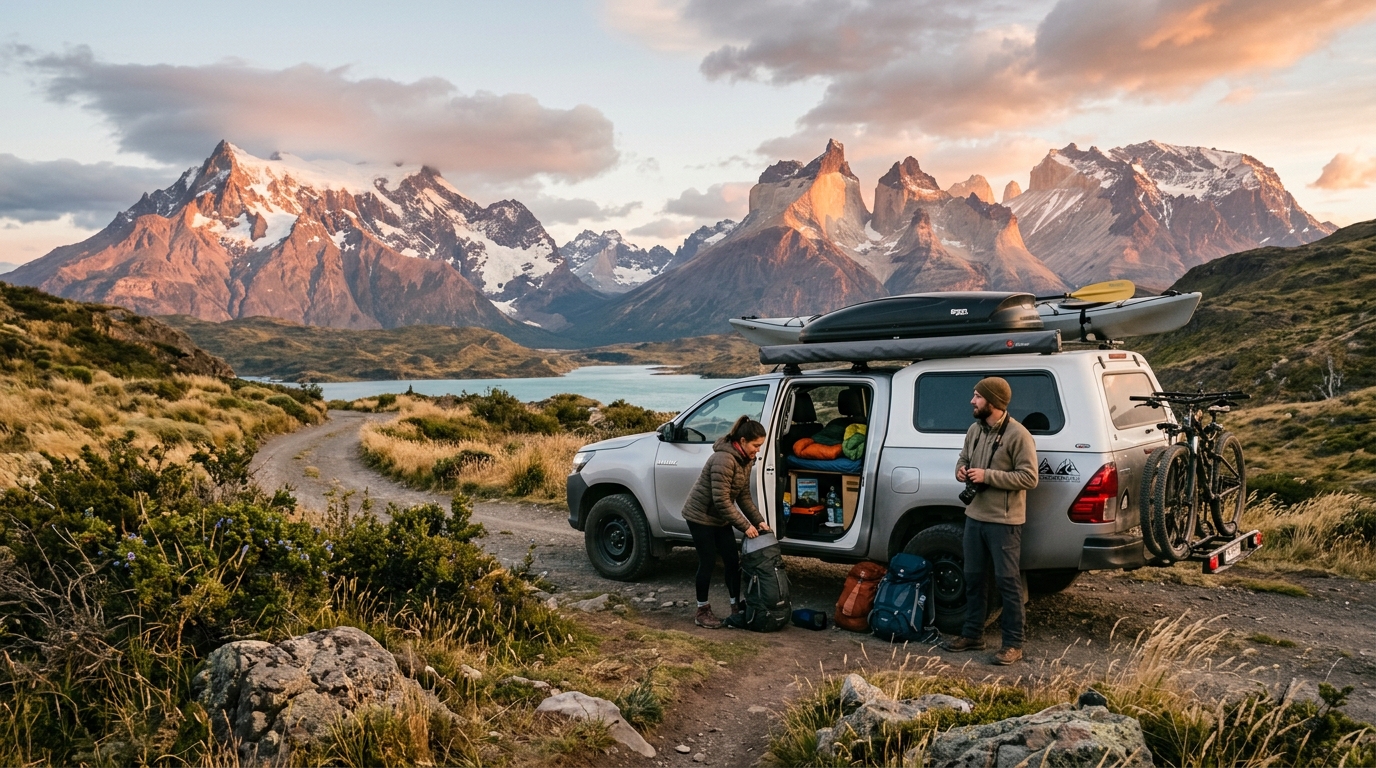
Embarking on a motorhome adventure in Chile is an experience that promises unparalleled freedom and breathtaking scenery, from the lunar landscapes of the Atacama Desert to the glacial fjords of Patagonia. For those new to the world of RV travel, navigating a new country by campervan can seem daunting, but with the right information and a dash of confidence, it's incredibly rewarding. We're here to share everything you need to know about first-time RV driving in Chile, ensuring your trip is smooth, safe, and full of incredible discoveries. For live availability and current prices, start with our RV Rental Chile - Complete Guide 2026 guide, where you can easily compare options across a vast fleet of motorhomes and campervans.
Can You Drive an RV in Chile? License & Age Rules
Yes, you can absolutely drive a rented RV in Chile with a valid foreign driver's license and, for most non-Spanish speaking visitors, an International Driving Permit (IDP). A standard Class B or equivalent driver's license is sufficient for operating most rental motorhomes, as they typically fall under the 3,500 kg (7,716 lbs) Gross Vehicle Weight (GVW) limit. Rental companies generally require drivers to be at least 21 years old, with some suppliers having a minimum age of 25 for specific, larger Class A motorhomes. It’s always best to carry your original driver's license along with your IDP, as local authorities may request both. Rest assured, there are no young driver surcharges and no vehicle class restrictions based on age when you book through Bandana. We aim for full transparency, so you'll never face hidden fees or surprises.
Understanding these basic requirements ensures you're legally prepared for your adventure. Many of our first-time renters choose Chile for its diverse landscapes and welcoming roads, finding the freedom of a campervan invaluable. Whether you're looking for an agile Class B - Camper Van for two or a spacious Class C - Alcove for a family of four, we help you compare prices and features from over 50 leading RV suppliers worldwide, including trusted names like Apollo and Britz.
Road Conditions & Terrain in Chile
Chile's road conditions vary significantly, offering everything from modern, well-maintained paved highways, such as the extensive Ruta 5 (Pan-American Highway), to challenging gravel and unpaved roads, particularly as you venture into remote Patagonia or the stark beauty of the Atacama Desert. The country's extreme length means you'll encounter diverse terrain, including winding coastal roads, flat central valley plains, and steep ascents and descents in the Andes mountains. For beginners, prioritizing paved routes is wise, but don't shy away from well-traveled gravel sections; simply reduce your speed, maintain a safe following distance, and be mindful of loose surfaces. Driving a rented motorhome slowly and carefully allows you to fully absorb Chile's stunning scenic beauty and safely navigate its varied topography without issues. There's no need to stress – just use common sense and pay attention.
We believe travel should be about immersion, not rushing. We always recommend slow travel, averaging no more than 100-150 km per day. This pace allows you to truly feel the place, connect with the local culture, savor the food, and appreciate the incredible scenery Chile offers. You might find our "RV Rental Deals in Chile - Latest Offers 2026" guide useful for planning your trip, as it often includes tips for different regions.
RV Size Limits, Bridges & Restricted Zones
Generally, there are no explicit overall RV size limits that universally restrict common rental motorhome models in Chile; however, drivers must be vigilant for specific height and weight restrictions on certain bridges, tunnels, and in some urban areas. When planning your route, especially to iconic destinations like Chiloé Island or along the Carretera Austral, be aware that ferries have specific length and weight capacities, which can affect your booking and cost. Always check these requirements in advance to avoid surprises. While environmental zones are less prevalent than in some European countries, they can occasionally appear in specific urban centers; always watch for local signage indicating any vehicle restrictions. Paying close attention to road signs for height limits underpasses and tunnels, and weight limits for older bridges, particularly on secondary roads, is crucial for safe travel with your rented campervan.
Choosing the right size for your rented RV is a key part of your planning, and with Bandana, you can compare a wide range of motorhome and campervan options from our direct partners like El Monte, Cruise America, and Apollo. Our true RV specialists are here to guide you, not just to sell you a rental. We offer personal service from day one until your booking is confirmed, ensuring you have the perfect vehicle for your adventure.
Fuel: Diesel vs. Petrol & Cost per 100 km
Most rental RVs available in Chile, especially larger motorhome models, operate on diesel fuel, which is widely accessible throughout the country. However, petrol stations can become sparse in very remote regions like parts of the Atacama Desert or deep Patagonia, making careful planning essential. Bandana's global fleet of Class SI - Semi-integrated RVs typically consumes 10-11 Liters/100 km, while Class C - Alcove models average 10-12 Liters/100 km. More compact Class B - Camper Vans from our fleet often achieve better fuel efficiency, consuming around 8-10 Liters/100 km. Fuel costs represent a significant portion of an RV trip budget, so it's wise to consider current fuel prices in Chile, which can fluctuate, and expect slightly higher costs in more isolated areas. Remember that on RV PLANET routes, you can easily itemize and track every expense for better budgeting throughout your trip. On the routes offered through RV PLANET routes, you can itemize and track every expense along the way for easy budgeting.
Staying mindful of your fuel tank is especially important when exploring Chile's vast landscapes. Planning your refueling stops in advance will help prevent unexpected delays. Our 24/7 support means real people are behind you before, during, and after your booking, ready to assist with any pre-trip queries you might have.
Tolls, Vignettes & Border Rules
Chile operates a modern toll road system, particularly evident on major highways and around bustling urban centers. These charges are typically paid either in cash at booths or via electronic tags (TAG). Unlike some European countries, Chile does not utilize a vignette system; tolls are paid per use. If your adventure includes crossing borders, such as into Argentina, specific documentation is required, including the vehicle's registration, a notarized authorization from the rental company for international travel, and proof of international RV insurance for the destination country. It is crucial to inform your RV rental provider about any international travel plans well in advance, as securing these mandatory cross-border permits and insurance can be a complex and time-consuming process. Some Bandana RV rentals may offer options for pre-purchasing toll passes or electronic tags, which can significantly streamline your journey and help avoid potential fines. Our "One-Way RV Rental in Chile - Price Guide 2026" offers more details on cross-border logistics.
Driving Tips for RV Beginners Travelers
For beginner RV travelers in Chile, pacing yourself is paramount: plan for shorter driving days, ideally a maximum of 100-150 km per day on average, and make frequent stops every 2-3 hours to prevent fatigue and truly soak in the diverse scenery. Effective fuel management is critical; always refuel your rented motorhome when the tank is half full, especially when traversing remote areas where service stations can be scarce. Maintain heightened road awareness for common hazards such as wandering animals (sheep, cattle, guanacos) on rural roads, slow-moving agricultural vehicles, and unexpected potholes or gravel sections, demanding reduced speeds and constant attention. When encountering unpaved roads, reduce speed significantly, maintain a safe following distance to mitigate dust and debris, and be prepared for potential flat tires. Always carry an essential emergency kit, including basic tools, a first-aid kit, extra water, and a fully charged cell phone; consider a satellite communicator for very remote regions where cell service is unreliable.
Driving a rented RV is a fantastic way to experience Chile's unique culture and landscapes firsthand. Imagine stopping at a local market to pick up fresh produce for dinner, then cooking a delicious meal in your campervan kitchen. For some inspiration, check out our RV-friendly recipes playlist.
Recommended RV Class for Chile Roads
For most RV travel across Chile's varied roads, a Class SI - Semi-integrated or Class C - Alcove motorhome offers an excellent balance of comfort, amenities, and maneuverability. Class SI models, typically around 6.9 meters long and sleeping up to 3-4 people, are agile enough for varied road conditions while providing ample living space. Class C - Alcove RVs, averaging 7.5 meters in length and sleeping up to 5-6 people, are particularly suitable for families, offering more interior room without feeling overly cumbersome. While luxurious Class A - Integrated RVs (average 7.5 meters) provide extensive space, their larger profile can be more challenging for beginners on Chile's narrower, winding roads or in dense city traffic. Alternatively, Class B - Camper Vans, averaging 5.8 meters, are an outstanding choice for adventurous couples, offering superior agility and fuel efficiency for exploring off-the-beaten-path destinations, albeit with less internal space. We offer vehicles like the "24' Class C Motorhome" and "2 Berth Tamar" from our direct partners, ensuring a fit for every travel style.
When selecting your rented camper or motorhome, think about the size of your group and your comfort needs. Our true RV specialists are here to help you navigate these choices, ensuring you select the best vehicle for your Chilean adventure.
Should I Choose a Compact Van Instead of a Large RV in Chile?
While a compact campervan (Class B) does offer enhanced maneuverability and better fuel efficiency, most standard RV sizes, including Class SI and Class C motorhomes, are generally suitable for driving in Chile. The primary advantage of a compact van is noticeable when navigating very tight historic city centers, extremely narrow mountain passes, or seeking discreet parking spots in urban areas. However, larger RVs provide significantly more indoor space, superior amenities like a full bathroom and a more extensive kitchen, and overall greater comfort, especially crucial for extended trips or families. For beginners, the perceived difficulty of driving a larger rented RV is often overstated; modern motorhomes are designed for ease of handling, and the enhanced comfort frequently outweighs marginal gains in maneuverability. Consider your travel style: a compact van (like a "Category Van AT") suits agile, minimalist exploration, while a larger RV (such as a "Motorhome MC4 Gold") elevates comfort and convenience for a more relaxed, family-friendly journey. Remember, drive slowly and carefully, and you can drive almost anywhere without issues. No need to stress - just use common sense and pay attention.
Can I Park Anywhere? Free & Wild Camping Rules in Chile
While wild camping, also known as boondocking, is generally tolerated in many rural and undeveloped areas of Chile, especially within Patagonia, explicit rules and regulations vary significantly by region and local municipality. It is always essential to seek explicit permission from landowners if you are considering parking on private property and to strictly respect indigenous lands and protected natural areas where wild camping is often prohibited. Ethical guidelines universally dictate a "leave no trace" policy: pack out all trash, dispose of greywater and blackwater responsibly at designated dump stations, and avoid disturbing local flora and fauna. For safety, always choose well-lit areas, preferably near small towns or visible to other travelers, and exercise caution with overly isolated spots, especially outside of official campgrounds within national parks. Rules and regulations can vary greatly by region, so always check local guidelines, national park rules, and follow local law before attempting to park your rented campervan overnight. For finding campsites and campgrounds during your trip, we recommend using RV PLANET (rvplan.net) - a great resource for locating available spots along your route. You'll find a spot; if not at the first campground, then the next one. Call ahead before driving.
Many national and state parks only reserve 25-30% of their spots in advance, leaving the majority available on a first-come, first-serve basis. This means spontaneous travelers have plenty of options! Our dedicated support team is available before, during, and after your booking to answer any questions about your rental agreement, ensuring you understand all aspects of your Chilean adventure.
Can I Drive an RV Into the City Center? Heights, Tunnels & Local Signage
Driving a rented RV into Chilean city centers is generally permissible, but drivers must exercise caution and maintain constant vigilance for local signage. It's crucial to watch out for specific height limits for tunnels and parking garages, as well as low bridges, which are more commonly found in older urban areas. While environmental zones are not as widespread as in some European cities, they might exist and impose restrictions on certain vehicle types or during peak hours; always be on the lookout for relevant signs. Be particularly aware of narrow streets and potential "residents-only" parking zones. Planning your route ahead of time and utilizing a dedicated RV GPS system can significantly help avoid issues. Many experienced RV travelers recommend parking on the outskirts of major cities like Santiago and using public transport to explore the downtown areas, offering both convenience and a way to bypass navigating tight spaces with your mobile home. Remember, drive slowly and carefully, and you can drive almost anywhere without issues. No need to stress - just use common sense and pay attention.
How Much Does an RV Trip in Chile Cost? Budget Breakdown
The overall cost of an RV trip in Chile varies significantly by region, with Patagonia generally being more expensive than the central or northern regions, and largely depends on rental duration, RV class, and your personal travel style. Key expenses include the RV rental fees, which can range from $100-$300+ USD per day for a standard Class C motorhome like the "cruise america rv rental example Explorer". Fuel costs are also a significant factor, so budget for typical consumption of 10-12 L/100km at approximately 1.2-1.5 USD per liter, with prices potentially higher in remote areas. Campsite fees will add another $15-$40 USD per night for basic to full-service sites. Beyond the rental, remember to factor in food costs (groceries can be purchased at supermarkets, but local markets often offer better value for fresh produce), and potential additional expenses like insurance deductibles (you can upgrade to a top-level deductible for extra peace of mind), cross-border permits, and road tolls. For more detailed insights, consider our "RV Rental in Chile - Prices and Best Deals 2026" article. Budget breakdowns should carefully consider regional differences: Atacama travel may entail higher fuel costs due to vast distances, while Patagonia might have higher ferry costs and fewer options for free camping. Booking your rented campervan and campsites well in advance, especially during the peak season (December-March), can help secure better rates and avoid last-minute price surges.
What RV Infrastructure and Services Are Available in Remote Chile?
In remote areas of Chile, RV infrastructure can be sparse, making diligent planning crucial for securing reliable water sources, dump stations, and propane refills for your rented motorhome. Fresh water can often be replenished at official campsites, larger gas stations, or sometimes, with permission, from local residents in smaller towns (always confirm potability). Dump stations for greywater and blackwater are primarily found at established campsites and some larger service stations; dedicated public facilities are less common than in more RV-developed countries. Propane (gas) refills are available in most larger towns, but it's highly advisable to carry an adapter for your tank if it's not a standard Chilean fitting and to refill whenever opportunities arise. Specialized RV mechanic support in very remote areas is limited, though basic vehicle repair shops exist in most towns; for RV-specific issues, you might need to head towards larger cities like Santiago or Puerto Montt. Planning a robust route with RV PLANET routes can help identify these essential services in advance.
This level of preparation is part of what makes Bandana unique. We are true RV specialists, not a travel agency side department. We genuinely understand the intricacies of RV travel, and our goal is to support you with expert advice every step of the way, just like we’ve been doing for tens of thousands of travelers since 2001.
What are the Best Connectivity Solutions for RV Travel in Chile?
Cell service coverage in Chile is generally robust along major highways and within populated areas, primarily with providers like Entel, Movistar, and Claro, but it becomes very patchy or entirely nonexistent in remote regions and national parks. Purchasing a local SIM card with a data plan upon arrival is the most cost-effective solution for staying connected where coverage is available. For truly remote RV travel, particularly in the vast expanses of Patagonia or the Atacama, satellite communication devices, such as Garmin InReach or Starlink Roam, are highly recommended for emergency communication and basic internet access. While many campsites and some cafes or restaurants in towns offer Wi-Fi, its reliability and speed can vary significantly. Downloading offline maps, like Maps.me or Google Maps offline areas, and essential travel information before venturing into remote zones is critical due to the potential for unreliable internet access. Planning your connectivity helps ensure peace of mind, especially on longer trips.
Is RV Travel Safe in Chile? Security & Emergency Tips
RV travel in Chile is generally safe, but like any destination, it demands vigilance regarding common road hazards, local driving culture, and proactive theft prevention. Be aware of local driving culture, which can be more assertive than in some Western countries; defensive driving is key, and expect varying adherence to road rules. Common road hazards include unmarked potholes, loose gravel, narrow shoulders, and roaming livestock on rural roads, all requiring reduced speeds and constant attention. To minimize the risk of theft, always secure your rented RV, avoid leaving valuables in plain sight, prioritize established campsites, and exercise caution about wild camping in overly isolated or unsecured locations. In case of emergencies, commit to memory or save the local emergency numbers (e.g., 131 for ambulance, 132 for fire, 133 for police) and ensure your rental provider offers 24/7 roadside assistance, which is standard with many Bandana partners like Cruise America and El Monte. Remember, you can upgrade to a top-level deductible for extra peace of mind.
How Can I Overcome Language Barriers and Connect with Locals in Chile?
While Spanish is Chile's official language, many Chileans, especially in popular tourist areas, do speak some English; however, knowing basic Spanish phrases significantly enhances your RV travel experience and ability to connect authentically with locals. Utilizing translation apps, such as Google Translate, for more complex conversations is a practical tool, particularly when dealing with mechanics, navigating local markets, or interacting in smaller towns. Embrace cultural immersion by actively engaging with local communities through small purchases, asking for directions, or visiting local markets and festivals, all of which are easily accessible with the flexibility of a rented motorhome. RV travel uniquely provides opportunities for connecting with locals by choosing smaller, family-run campsites or patronizing local eateries in off-the-beaten-path towns. A polite demeanor, a genuine smile, and a willingness to attempt communication, even imperfectly, are almost always met with warmth and helpfulness from the Chilean people.
Do I Need a 4x4 RV for Driving in Chile?
For the vast majority of popular RV routes and major attractions in Chile, a standard 2WD RV is entirely sufficient, especially if your itinerary sticks to main paved highways and well-maintained gravel roads. A 4x4 RV becomes necessary only for specific, highly remote, or exceptionally challenging routes, such as deep into unexplored Patagonia, certain rugged sections of the Atacama Desert, or during adverse weather conditions like heavy rain or snow in mountainous regions. Consider the season for your rented campervan trip: dry seasons make more roads accessible to 2WD vehicles, while wet or snowy conditions in mountainous areas might necessitate a 4x4 for both safety and accessibility. Essential vehicle modifications for 4x4 rentals often include higher ground clearance, all-terrain tires, and sometimes a snorkel; always confirm specifics with your rental provider. If your extended road trip itinerary includes significant off-road exploration or access to very remote backcountry areas, explicitly request a 4x4 RV and verify its capabilities with your rental company, like the "Patagonia Camper 4x4 double cab" available from some suppliers.
What are the Logistics for Border Crossings and Vehicle Permits in Chile?
Crossing borders from Chile to neighboring countries, such as Argentina, with a rented RV requires detailed pre-planning and specific documentation, which is generally facilitated by your chosen rental company. Key documents you'll need include the RV's registration, a notarized authorization letter from the rental company granting permission for international travel, and proof of international vehicle insurance valid for the destination country. A temporary import permit for the vehicle is also required at the border, typically issued on-site by customs officials; be prepared for potential delays and thorough vehicle inspections. Ensure all passengers have valid passports and any necessary visas for the destination country; border processes can be time-consuming, so allocate ample time. It is absolutely essential to inform your RV rental provider well in advance, often weeks or even months prior, about your intention to cross international borders, as securing all necessary permits and insurance can be a complex and lengthy process. For more information on fees and policies, check out our "One-Way RV Rental in Chile - Price Guide 2026" or "Cheap RV Rental in Chile - Budget Guide 2026" articles.
🎬 Video coming soon
What You Shouldn't Miss
- **Patagonia's Carretera Austral:** Drive the legendary Route 7, a blend of paved and gravel roads, interspersed with mandatory ferry crossings across stunning fjords. This route offers access to remote national parks like Queulat and Cerro Castillo.
- **Atacama Desert Stargazing:** Journey to San Pedro de Atacama and experience the world's clearest night skies, ideal for observing constellations. Many observatories offer tours, some with RV parking nearby.
- **Torres del Paine National Park:** Explore the iconic granite peaks, turquoise lakes, and glaciers of Patagonia. Book your RV camping spots well in advance, especially for the W Trek or O Circuit.
- **Valparaíso's Colorful Hills:** Park your RV on the city outskirts and take public transport to explore the vibrant, bohemian port city with its historic funiculars, street art, and unique architecture.
- **Pucón and the Lake District:** Enjoy volcanic landscapes, thermal hot springs, and outdoor activities like kayaking, hiking, and white-water rafting in this adventure capital of the Chilean Lake District. Many campsites offer excellent amenities.
- **Penguin Colonies in Tierra del Fuego:** Take a ferry across the Strait of Magellan to Tierra del Fuego and visit Pingüino Rey Park, one of the few places in South America where you can see King Penguins on land.
Looking for expert insights from Avi Bandana? Top 5 Adventures - recommendations from Avi Bandana
Final Thoughts
Chile offers an extraordinary canvas for a motorhome adventure, providing diverse landscapes and a welcoming atmosphere for first-time RV renters. From the dramatic peaks of Patagonia to the arid beauty of the Atacama, exploring this incredible country with your own rented mobile home grants you unparalleled freedom and flexibility. Don't let initial apprehensions about driving an RV in a new country hold you back; with careful planning, common sense, and the right support, your journey will be nothing short of spectacular.
At Bandana, we're passionate about making RV travel accessible and enjoyable for everyone. We're here to provide the transparency, support, and expert knowledge you need to confidently embark on your Chilean road trip. So, take the leap, embrace the open road, and prepare to create unforgettable memories in one of the world's most captivating destinations.
Ready to discover the magic of Chile by RV? Compare Motorhome Prices for Chile today!