For live availability and current prices, start with our RV Rental Toulouse - Complete Guide 2026 guide.
In This Guide
- Can You Drive an RV in Toulouse? License & Age Rules
- Road Conditions & Terrain in Toulouse
- RV Size Limits, Bridges & Restricted Zones
- Fuel: Diesel vs. Petrol & Cost per 100 km
- Tolls, Vignettes & Border Rules
- Driving Tips for family rv rental Travelers
- Recommended RV Class for Toulouse Roads
- Should I Choose a Compact Van Instead of a Large RV in Toulouse?
- Can I Park Anywhere? Free & Wild Camping Rules in Toulouse
- Can I Drive an RV Into the City Center? Heights, Tunnels & Local Signage
- What do I need to drive my camper in France?
- What is the 3-3-3 rule for RV?
- Can your family ride in a RV while it drives?
- Do I need speed stickers on my motorhome in France?
- What are the new rules for motorhomes in France?
Can You Drive an RV in Toulouse? License & Age Rules
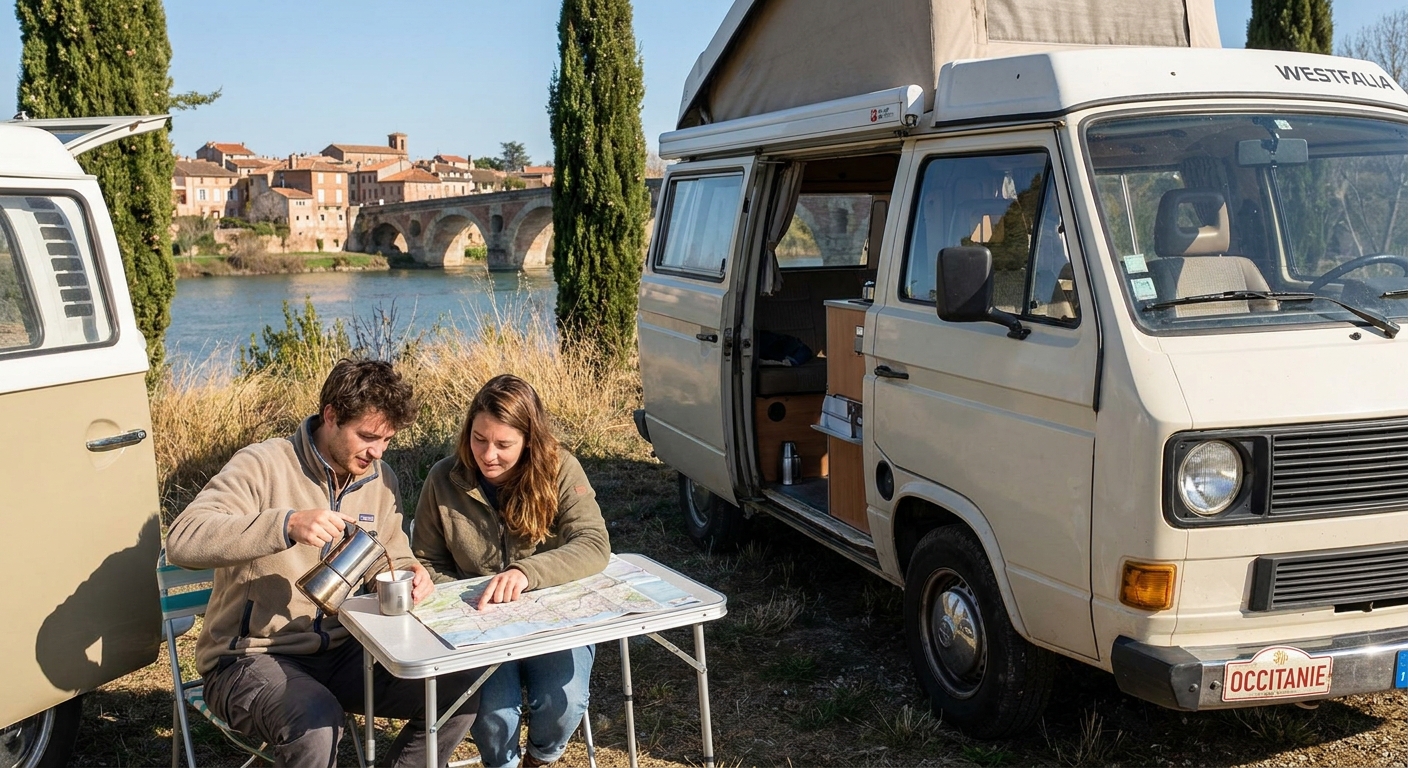
In France, driving an RV weighing up to 3,500 kg (a common limit for Class B and SI vehicles) generally requires a standard B driving license, similar to a passenger car.
For RVs exceeding 3,500 kg, such as some larger Class C or A models, a Category C1 or C license may be necessary, depending on the specific vehicle's Maximum Authorized Mass (MAS). The minimum age for RV rental in Toulouse is typically 21 or 23, with some companies requiring drivers to be over 25 and to have held a valid license for at least 2-3 years. Bandana RV Rentals allows drivers aged 21 and over to rent any vehicle class without young driver surcharges.
Foreign drivers from outside the EU/EEA must carry an International Driving Permit (IDP) along with their valid national license to drive legally in France. This ensures clarity and compliance with local regulations.
Road Conditions & Terrain in Toulouse
Road conditions around Toulouse are generally excellent, particularly on major motorways (autoroutes), offering smooth travel for RVs. The terrain directly surrounding Toulouse is mostly flat, situated within the Garonne river plain, making for easy and comfortable RV driving. Venturing into regions like the Pyrenees to the south or the Cévennes to the east will introduce mountainous terrain with winding roads and steeper inclines, requiring careful driving. Urban driving in Toulouse city center can be dense with narrower streets and numerous roundabouts, making a slower, more deliberate approach essential, especially with larger RVs.
RV Size Limits, Bridges & Restricted Zones
RV drivers in Toulouse must be mindful of height and weight restrictions, particularly for low bridges, tunnels, and urban areas. While specific height limits vary, common restrictions for underpasses can range from 2.5m to 3.5m; always check signage carefully before proceeding. Toulouse, like many French cities, operates a Crit'Air environmental zone (ZFE), requiring a specific vignette based on the vehicle's emissions to enter the city center during certain hours. The average length for Class B Camper Vans in Bandana's Toulouse fleet is 5.4m, while Semi-integrated (Class SI) RVs average 6.9m, and Alcove (Class C) RVs average 7.4m, impacting maneuverability in tight spots.
Fuel: Diesel vs. Petrol & Cost per 100 km
Most RVs in France, including Bandana's fleet, run on diesel (Gazole), which is widely available at service stations across the country. The average fuel consumption for Bandana's Class B Camper Vans in Toulouse is typically 9-15 Liters/100 km, while Semi-integrated RVs average 10-18 Liters/100 km. As of 2026, the cost of diesel in France fluctuates but can average around €1.80-€2.00 per liter, meaning a Class B might cost €16.20-€30 per 100 km, and a Class SI €18-€36 per 100 km. Some RV rentals, including certain Bandana vehicles, may offer fuel discount cards or pre-paid fuel options, which can help manage costs for budget-conscious families.
Tolls, Vignettes & Border Rules
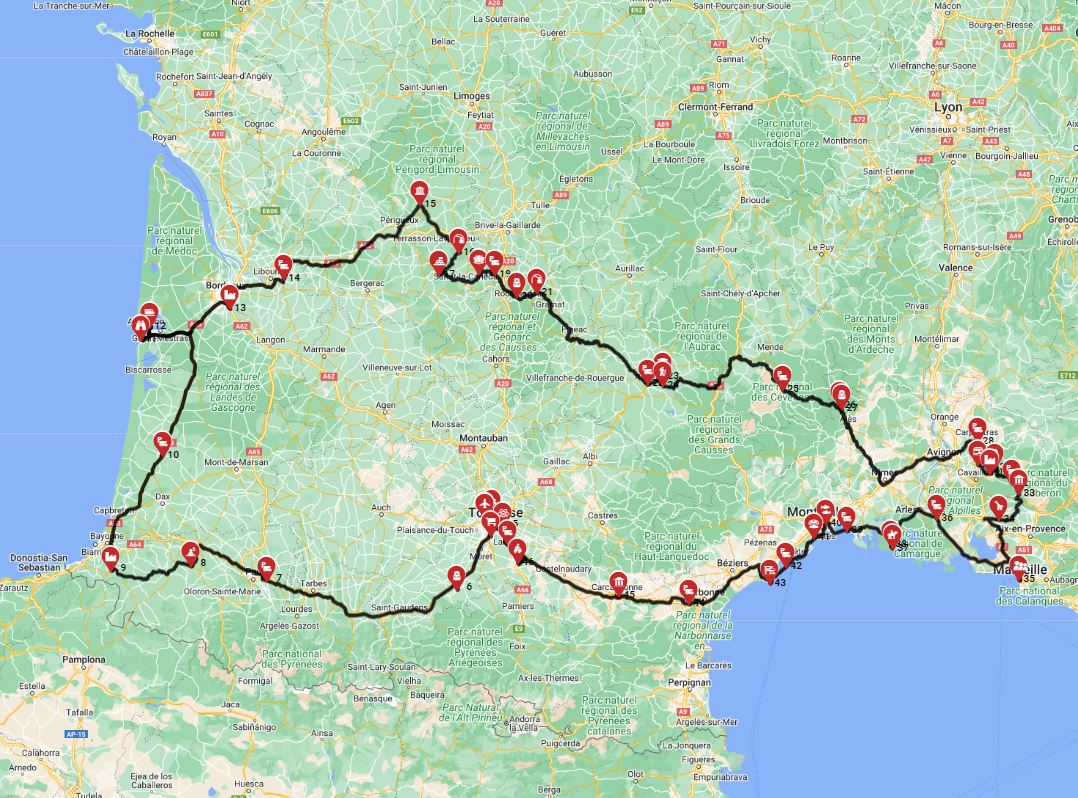
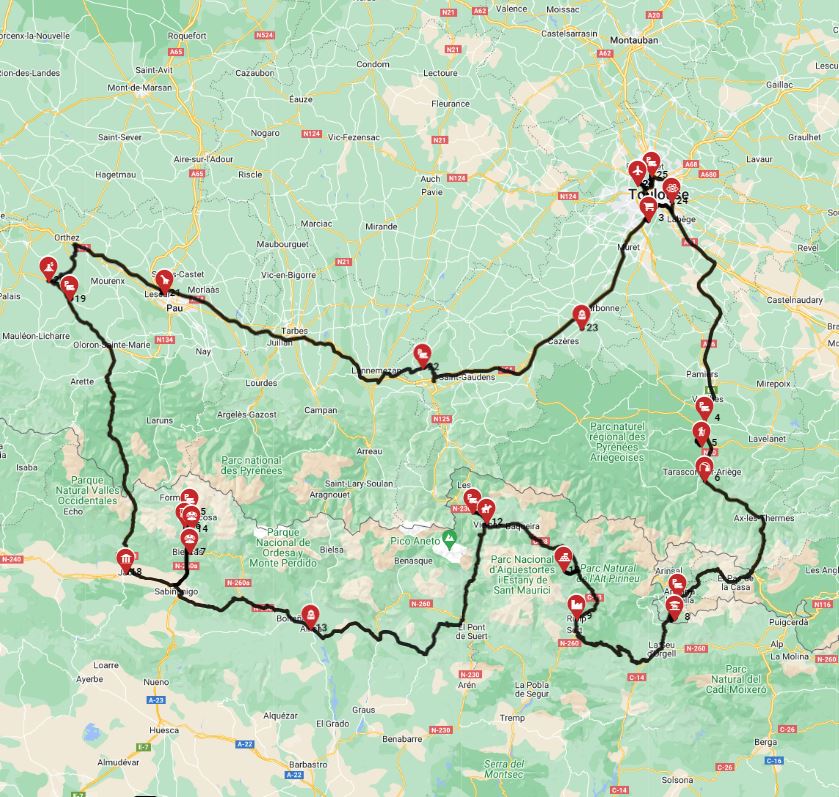
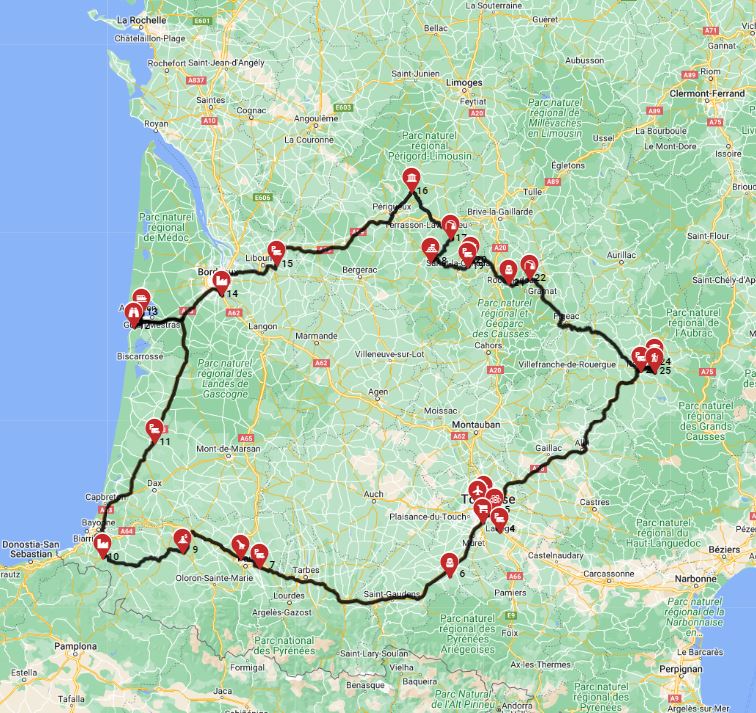
Most French motorways (autoroutes) operate on a 'Péage' (toll) system, which can be paid by credit card or cash; toll costs vary by distance and vehicle class, with RVs often falling into a higher category. RV drivers must be aware of the Crit'Air vignette requirement for environmental zones in major cities like Toulouse, which must be purchased in advance and displayed on the vehicle's windshield. For cross-border travel from Toulouse, vehicles entering neighboring countries like Spain will encounter their own toll systems (e.g., Autopistas) and potentially specific vehicle requirements. Some Bandana RV rentals allow pre-purchasing toll passes (e.g., Liber-t tags) to streamline travel through toll booths and avoid potential fines for non-compliance. On the routes offered through RV PLANET routes, you can itemize and track every expense along the way for easy budgeting.
Driving Tips for family rv rental Travelers
Plan frequent stops every 2 hours for family comfort, especially with children, to allow for stretching, snacks, and restroom breaks. Utilize GPS specifically designed for RVs to avoid narrow roads, low bridges, and areas with weight restrictions, which are common in older French towns. Budget for fuel and tolls by checking current prices and pre-paying where possible, as these can be significant costs over a family trip. Familiarize yourself with French road signs, especially those indicating speed limits for different vehicle types and environmental zone entry requirements. Consider an automatic transmission option from Bandana's fleet for easier driving on winding roads and in urban traffic, enhancing the overall family experience.
Recommended RV Class for Toulouse Roads
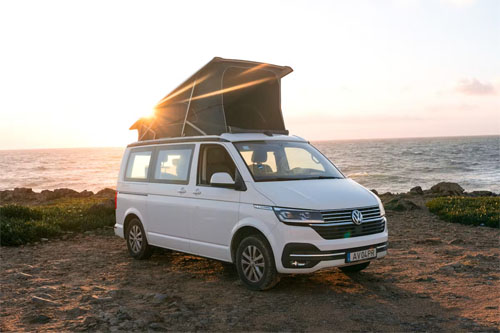
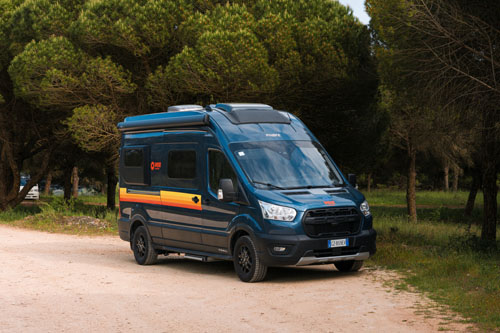
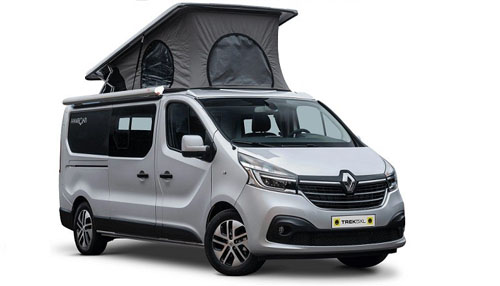
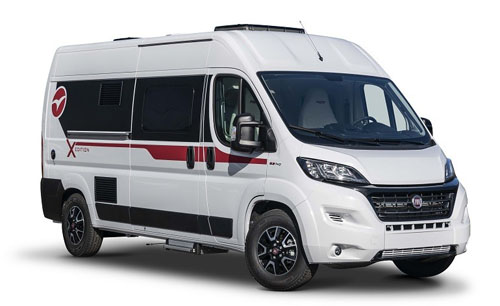
For family RV rental in Toulouse and exploring the surrounding region, a Class SI (Semi-integrated) RV or a Class B (Camper Van) are highly recommended due to their balance of comfort and maneuverability. For instance, a **Camper Van**, with its compact size and nimble handling, is ideal for navigating Toulouse's historic streets. Bandana's fleet includes models like the Active Classic Campervan, perfect for couples, or the more spacious City First Campervan, accommodating families. Class B Camper Vans, with an average length of 5.4m, are excellent for navigating tighter urban streets and finding parking, offering agile handling while sleeping an average of 3.6 people. Class SI Semi-integrated RVs, averaging 6.9m in length, provide more interior space, sleeping an average of 3.8 people comfortably, making them ideal for families who value indoor amenities without excessive length for French roads. While Class C Alcove RVs (avg. 7.4m) and Class A Integrated RVs (avg. 6.1m) offer more sleeping places (5.5 and 4 respectively), their larger dimensions may be less practical for certain historic village access or urban parking in Toulouse.
Should I Choose a Compact Van Instead of a Large RV in Toulouse?
While a compact camper van (Class B) offers superior maneuverability for extremely narrow village streets and easier parking in urban centers like Toulouse, a larger RV often provides significantly more comfort and indoor living space, which is crucial for family travel. The perception that all French roads are too narrow for larger RVs is often exaggerated; most main roads and regional routes around Toulouse are perfectly suitable for Semi-integrated or even some Alcove RVs. Opting for a larger RV (e.g., Class SI with avg. 6.9m length) offers amenities like larger kitchens, separate sleeping areas, and more storage, enhancing the family's quality of life during longer trips. A compact van (e.g., Class B with avg. 5.4m length) is genuinely advantageous if your itinerary heavily involves deeply historic city centers, very remote mountain passes, or if you prefer a 'stealthier' camping style. Consider a model like the Urban Luxury for city-friendly adventures, or a more robust option like the 4x4 Camper B - THOR if venturing off the beaten path.
Can I Park Anywhere? Free & Wild Camping Rules in Toulouse
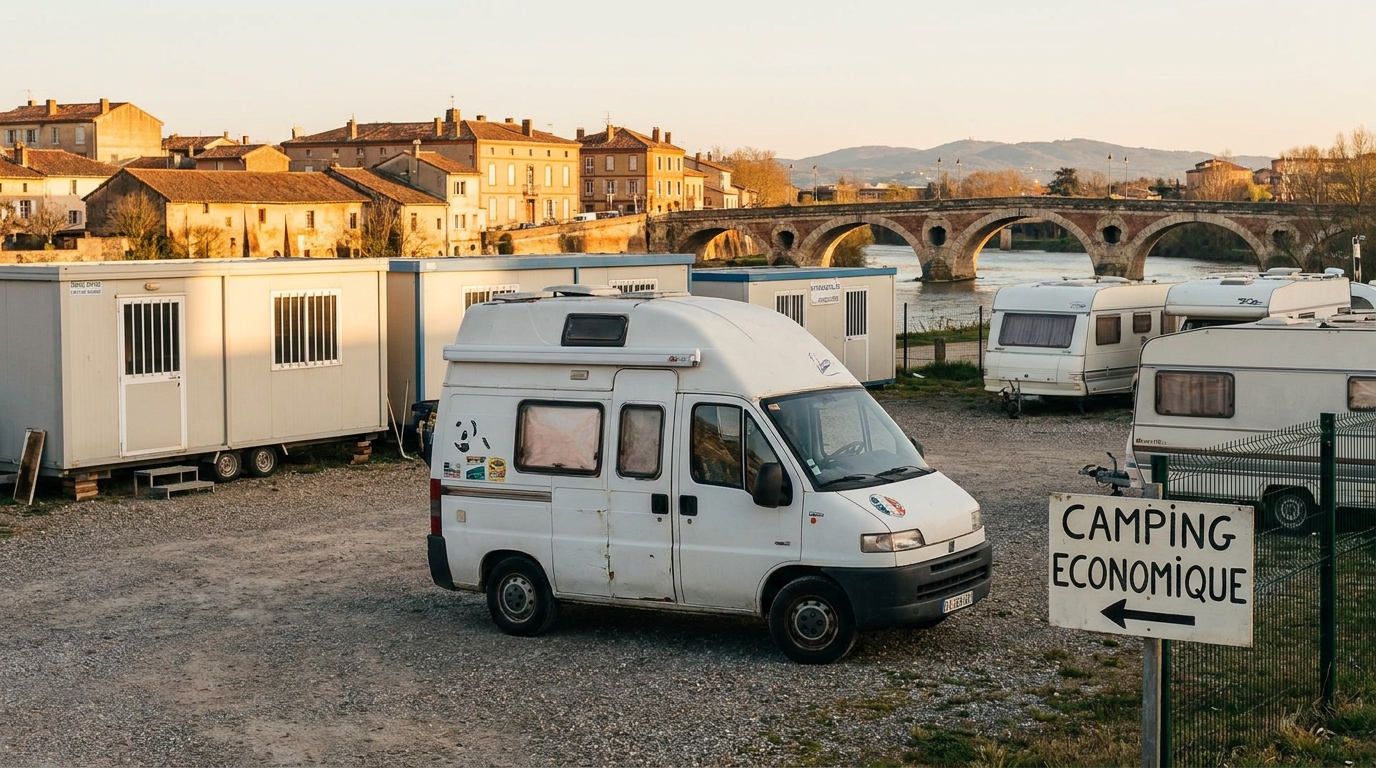
Free or wild camping in an RV is generally restricted or discouraged in France, particularly in urban areas like Toulouse and on private land without explicit permission. For overnight stays, RV travelers should utilize designated 'Aires de Service pour camping-cars' (motorhome service areas), which offer facilities for water, waste disposal, and sometimes electricity, often for a small fee or free for a limited time. Many official campsites throughout the Occitanie region surrounding Toulouse provide comprehensive facilities, security, and amenities suitable for families, often requiring advance booking during peak season. Always check local municipal regulations for specific parking restrictions in Toulouse and its surrounding communes, as rules can vary significantly, and follow local law before parking overnight.
Can I Drive an RV Into the City Center? Heights, Tunnels & Local Signage
Yes, it is generally possible to drive an RV into the city center of Toulouse, but with important considerations for height limits, tunnels, and local environmental zones. Drivers must pay close attention to local signage indicating height restrictions for underpasses (e.g., 2.5m, 3.0m) and weight limits, which can be critical for taller or heavier RVs. Toulouse's city center is part of a Crit'Air environmental zone (ZFE), meaning specific emissions-based vignettes are required for vehicle access during certain hours, impacting older or higher-emission RVs. While main arterial roads are accessible, parking an RV within the dense historic core can be challenging due to limited large spaces, making out-of-center parking and public transport often a more practical option.
What do I need to drive my camper in France?
To drive a camper in France, you primarily need a valid driver's license (a standard B license for RVs up to 3,500 kg, or a C1/C for heavier vehicles), an International Driving Permit (IDP) if your license is non-EU, and your rental agreement and insurance documents. Mandatory equipment for all vehicles in France includes a reflective safety vest (one per person is recommended) and a warning triangle, which must be accessible and used in case of a breakdown. Additionally, a Crit'Air vignette is required for environmental zones in many cities, including Toulouse, and while a breathalyzer kit is no longer legally enforced, carrying one is still a common practice. Ensure your RV has appropriate liability insurance, often included with your rental, and consider additional comprehensive coverage for peace of mind while traveling.
What is the 3-3-3 rule for RV?
The '3-3-3 rule' is a popular RV trip planning guideline suggesting drivers travel no more than 300 miles a day, arrive at their destination by 3 PM, and stay for at least 3 nights, promoting a relaxed and enjoyable travel pace for families. This rule is particularly beneficial for family RV rentals in Toulouse as it prevents driver fatigue, allows ample time for children to play and settle into each new location, and encourages deeper exploration of local attractions rather than constant driving. An alternative, the '4-4-4 rule,' similar in principle, often suggests stopping every four hours, no more than 400 km (approx. 250 miles) per day, and arriving by 4 PM, allowing for slightly longer travel days while still prioritizing rest. Adopting such rules helps in budgeting for fuel, tolls, and camping fees, reduces stress, and aligns with the desire for a comprehensive RV trip planning and lifestyle experience identified as a value gap.
Can your family ride in a RV while it drives?
Yes, your family can ride in an RV while it drives in France, provided all passengers are seated in designated seats equipped with seatbelts and are properly buckled up, just as in any passenger vehicle. Children must be restrained in appropriate car seats or booster seats according to their age, height, and weight, adhering to French child restraint laws (generally up to 10 years old or 135 cm height). It is generally safer for all passengers to remain seated while the vehicle is in motion, avoiding moving around, standing, or using unbelted bench seating, to mitigate risks in case of sudden braking or an accident. Ensure the rental RV has enough seatbelted positions for your entire family, and that all belongings are securely stowed to prevent them from becoming projectiles during transit, addressing key RV safety concerns for passengers.
Do I need speed stickers on my motorhome in France?
Yes, if your motorhome's Gross Vehicle Weight Rating (GVWR) exceeds 3,500 kg (3.5 tonnes), you are legally required to display specific speed limit reminder stickers on the rear of the vehicle when driving in France. These stickers indicate the maximum legal speed limits applicable to heavier vehicles: typically 80 km/h (rural roads), 100 km/h (expressways), and 110 km/h (motorways), although these can vary. Motorhomes with a GVWR of 3.5 tonnes or less, which includes many Class B Camper Vans and some Semi-integrated RVs, are generally exempt from this requirement and follow standard passenger car speed limits. Failing to display the correct speed stickers for vehicles over 3.5 tonnes can result in fines, so it's crucial to check your rental RV's weight classification and comply accordingly.
What are the new rules for motorhomes in France?
One of the most significant 'new rules' impacting motorhomes in France is the widespread implementation of Crit'Air environmental zones (ZFEs) in major cities, including Toulouse, which require vehicles to display a pollution emissions sticker to enter. Vehicle age and engine type determine the Crit'Air vignette category; older diesel RVs may face restrictions or outright bans from certain zones during peak pollution periods. For vehicles over 3.5 tonnes (relevant for some larger motorhomes), specific speed limit stickers must be displayed, as introduced to enhance road safety and clarity. While not strictly 'new,' adherence to strict wild camping regulations and increasing reliance on designated 'Aires de Service' or official campsites continues to be a key aspect of motorhome travel in France, with municipalities often reinforcing local parking restrictions.
What You Shouldn't Miss
- Explore the vibrant **Place du Capitole**, the heart of Toulouse, and admire its stunning architecture.
- Wander through the **Pont-Neuf**, Toulouse's oldest bridge, offering picturesque views of the Garonne River.
- Visit the **Cité de l'espace** (Space City), an interactive park dedicated to space exploration, perfect for families.
- Discover the **Basilica of Saint-Sernin**, a magnificent Romanesque church and UNESCO World Heritage site.
- Take a leisurely stroll or bike ride along the **Canal du Midi**, enjoying the serene waterside scenery and charming towpaths. Consider parking your RV at one of the many RV-friendly spots along the canal for a unique experience.
- Experience the thrill of aviation at the **Airbus Factory Tour**, a must-do for aerospace enthusiasts, with ample parking for RVs.
Final Thoughts
Renting a family RV in Toulouse opens up a world of exploration, offering unparalleled freedom and flexibility to discover the beauty of the Occitanie region and beyond. By understanding the local driving regulations, fuel costs, and opting for the right vehicle size, your family adventure can be both comfortable and memorable.
Remember to book in advance, especially during peak seasons, and consider utilizing the comprehensive planning tools available through RV PLANET (rvplan.net) to craft your perfect itinerary. With Bandana RV Rentals, you're not just renting a vehicle; you're gaining a partner dedicated to making your RV journey exceptional.
Ready to start planning your Toulouse RV adventure? Explore your options and book your perfect family motorhome today!
Find Motorhome Rentals in Toulouse