In This Guide
- Can You Drive an RV in Boston? License & Age Rules
- Road Conditions & Terrain in Boston
- RV Size Limits, Bridges & Restricted Zones
- Fuel: Diesel vs. Petrol & Cost per 100 km
- Tolls, Vignettes & Border Rules
- Driving Tips for Family RV Rental Travelers
- Recommended RV Class for Boston Roads
- Should I Choose a Compact Van Instead of a Large RV in Boston?
- Can I Park Anywhere? Free & Wild Camping Rules in Boston
- Can I Drive an RV Into the City Center? Heights, Tunnels & Local Signage
- What is the 3-3-3 rule when RVing?
- Can your family ride in an RV while it drives?
- What is the 4 4 4 rule for RVing?
- Do I need a special license to drive an RV in Massachusetts?
- Can you park an RV on the street in Massachusetts?
- How long can someone live in a camper on my property?
- How much does RV insurance cost in Boston?
- How much is RV insurance in Massachusetts?
- How much is insurance on a $200,000 RV in Boston?
- What You Shouldn't Miss
Embarking on a family RV adventure in Boston promises a unique blend of historical discovery and scenic exploration. Imagine having your home-on-wheels to discover the Cradle of Liberty, from the Freedom Trail's historic sites to the charming coastal towns of Massachusetts. With a rented RV, you unlock unparalleled flexibility and comfort, transforming your trip into an unforgettable journey for everyone. For live availability and current prices, start with our RV Rental Boston - Complete Guide 2026 guide.
At Bandana Caravan, we are true RV specialists, dedicated exclusively to motorhome and campervan rentals. We believe in full transparency, ensuring no hidden fees or surprises throughout your booking process. Our goal is to help you find the perfect family RV rental in Boston, making your planning smooth and stress-free. Let's dive into what you need to know to safely navigate Boston and beyond in your temporary mobile home.
Can You Drive an RV in Boston? License & Age Rules
Yes, you can absolutely drive a family RV in Boston and throughout Massachusetts, provided you meet the standard licensing and age requirements. In Massachusetts, most recreational vehicles (RVs) can be driven with a standard Class D driver's license, as long as their Gross Vehicle Weight Rating (GVWR) is under 26,001 pounds.
The vast majority of rental motorhomes, including Class B campervans, Class C alcoves, and many Class A integrated models, fall well within this Class D license threshold. For foreign drivers, a valid driver's license from your home country, combined with an International Driving Permit (IDP) translated into English, is generally sufficient for up to one year of driving in Massachusetts.
Regarding age, the minimum age to rent an RV through Bandana Caravan is 21 years old. Unlike some other vehicle rentals, there are no young driver surcharges or specific vehicle class restrictions based on age when you book a family RV rental in Boston with us. We make it easy for adventurous families and groups to hit the road. Our commitment to full transparency means you'll know all the requirements upfront, with no hidden fees or surprises.
Road Conditions & Terrain in Boston
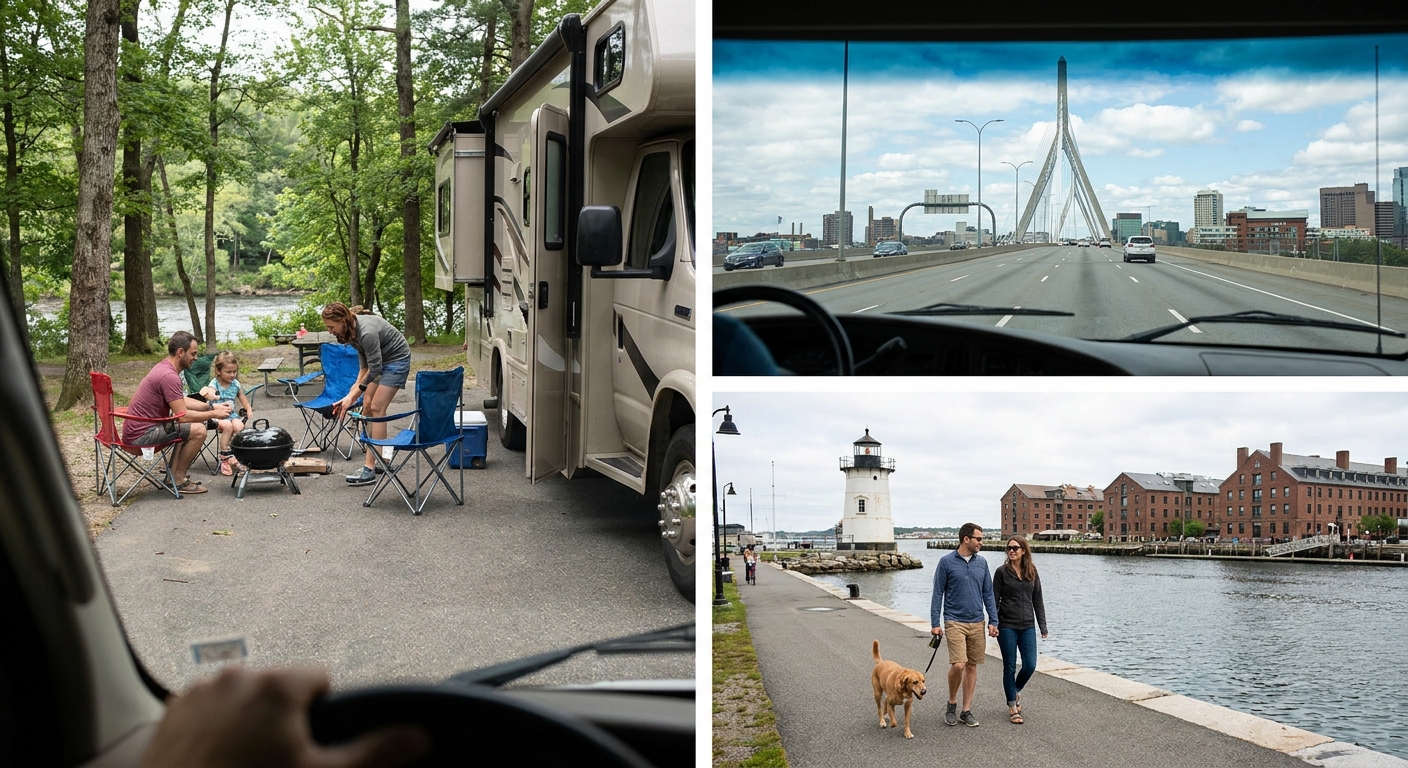
Boston's road conditions present a diverse landscape for RV drivers, featuring a blend of historic cobblestone streets, narrow lanes in older neighborhoods like the North End, and modern multi-lane highways such as I-93 and I-90. The terrain directly within and around Boston is generally flat to gently rolling, meaning you won't encounter significant mountain passes immediately near the city center.
Urban density translates to frequent stops, potential traffic congestion, and limited maneuvering space, necessitating extra caution and slower speeds for family RV renters. While some areas, especially after winter, might have potholes, driving slowly and attentively ensures a smooth journey. It's important to remember that you can drive almost anywhere without issues if you use common sense and pay attention. No need to stress about city driving - just be mindful of your surroundings.
For families, navigating Boston in a rented RV encourages a more deliberate pace. We recommend focusing on scenic routes outside the immediate city center before utilizing Boston's public transportation system, known as the 'T', to explore the downtown attractions. This approach allows you to appreciate the journey and minimize urban driving challenges.
RV Size Limits, Bridges & Restricted Zones
Boston is famous for its numerous low bridges and historic tunnels, which RV drivers must be acutely aware of. Most notably, parkways like Storrow Drive and Memorial Drive have notorious height limits, typically around 10 feet (3.05 meters), which are strictly enforced and can cause significant issues for larger vehicles.
RV drivers must pay extremely close attention to all height restriction signage, particularly when approaching parkways, tunnels like the Callahan Tunnel and Ted Williams Tunnel, and certain historic areas. Always know your rented motorhome's exact height in meters or feet before heading out. While weight restrictions on older bridges are less common for typical family rental RVs, it's always good practice to observe all posted signs.
There are no specific 'environmental zones' in Boston that restrict RV access based on emissions, but the sheer size of some motorhomes can make navigating and parking in the dense city center challenging. For those planning a broader adventure, ferry services to scenic islands like Martha's Vineyard or Nantucket have strict size and weight limitations, and reservations for RVs are highly recommended well in advance.
Fuel: Diesel vs. Petrol & Cost per 100 km
Understanding your rented RV's fuel type is essential for smooth travels around Boston. Most larger motorhomes in Bandana's fleet, particularly Class C and Class A models such as the 'Explorer' which has a 75-Liter fuel tank, typically run on diesel fuel, valued for its efficiency on longer hauls. Smaller Class B Camper Vans, like the 'V3' or 'Combi Van', might run on either diesel or petrol, with petrol being a common choice for many van conversions.
Regarding fuel consumption, Bandana's Class C Alcove RVs typically consume 10-12 Liters/100 km, while Class B Camper Vans average around 8-10 Liters/100 km. Diesel is readily available at most gas stations in and around Boston; however, look for dedicated RV-friendly stations with larger pumps for easier access. Fuel costs in Massachusetts fluctuate like anywhere else, so budgeting for an average cost per 100 km in 2026 requires checking current prices against your specific rental RV's consumption rate. On the routes offered through RV PLANET routes, you can itemize and track every expense along the way for easy budgeting.
For easy budgeting and tracking all ancillary costs, including fuel, propane, and tolls, remember that RV PLANET routes allow travelers to itemize and monitor every expense along their journey.
Tolls, Vignettes & Border Rules
Massachusetts primarily uses electronic tolling through the EZ-Pass MA system on major highways, including the Massachusetts Turnpike (I-90), and tunnels like the Ted Williams Tunnel. There are no 'vignettes' or road tax stickers required for RVs in Massachusetts or anywhere else in the United States; tolls are paid per-use, either electronically or via a 'Pay By Mail' system.
RV renters are strongly advised to inquire about transponder options, such as an EZ-Pass device, directly with their rental company. Many Bandana RVs from our partner suppliers may offer pre-purchased toll passes, which can save you money by avoiding the higher 'Pay By Mail' rates and potential administrative fees or fines. When planning to travel to neighboring states like New Hampshire or New York, most EZ-Pass transponders are interoperable across the Northeast, simplifying your toll payments.
Border rules are only relevant if you plan an international trip to Canada, which would be outside the scope of a typical family RV rental based in Boston. Always confirm any specific cross-state travel policies with your RV rental provider.
Driving Tips for Family RV Rental Travelers
Planning your family RV trip around Boston requires a few smart driving strategies to ensure a smooth and enjoyable journey. First, plan frequent stops, ideally every 2-3 hours, to allow children to stretch, use facilities, and burn off energy, making the overall journey far more pleasant for everyone. For families, this helps prevent restlessness and keeps spirits high on the road.
Utilize RV-specific GPS navigation apps or devices to help avoid notorious low bridges, such as those on Storrow Drive, narrow streets in historic neighborhoods, and weight-restricted roads in and around Boston. While traffic can be dense and fast-paced, defensive driving, maintaining extra following distance, and being hyper-aware of your RV's blind spots will make your experience much safer. Drive slowly and carefully, and you can drive almost anywhere without issues. No need to stress - just use common sense and pay attention.
For exploring Boston's downtown core, it is often more practical to park your rented RV at a designated RV park or satellite parking lot outside the immediate city and utilize Boston's excellent 'T' public transportation system. This approach eliminates the stress of navigating tight city streets and finding oversized parking, saving you time and potential fees. Remember, Bandana provides robust pre-booking comparison, booking support, and post-booking coordination, ensuring you have real people behind you every step of the way to ensure your planning is flawless.
🎬 Video coming soon
Recommended RV Class for Boston Roads
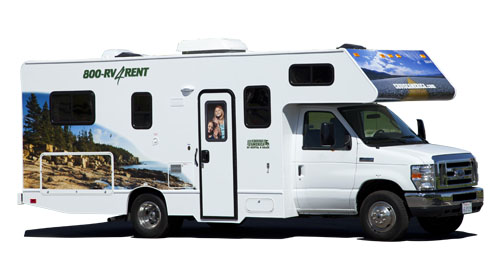
For navigating Boston's unique urban environment and exploring the surrounding areas, a Class B Camper Van or a Class SI Semi-integrated RV is generally recommended for family renters due to their balance of size and comfort. Class B Camper Vans, like the 'V3' (6.36 meters long) from our fleet, offer excellent maneuverability and are easier to park, closely resembling large vans.
Class SI Semi-integrated RVs, such as the 'MH4-5 - SIF' (6.58 meters long) which typically offers 4 sleeping places, provide a good balance of living space for a family while still being more manageable than larger Class C or Class A models. For instance, a 'Combi Van' has a length of 5 meters and can accommodate 4 sleeping places, making it quite nimble.
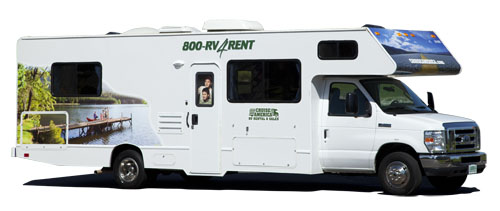
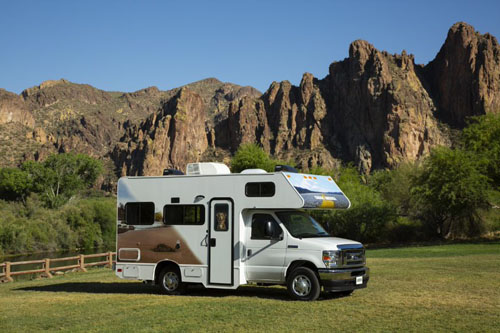
These classes usually provide sufficient ground clearance for varying road conditions without being excessively tall, which helps reduce concerns about infamous low bridges. While larger Class C models like the 'Explorer' (7.1 meters long, 4 sleeping places) or 'C-SMALL' (6.2 meters long, 3 sleeping places) offer more interior space and amenities, their increased size can make urban driving and parking in Boston significantly more challenging.
Should I Choose a Compact Van Instead of a Large RV in Boston?
Choosing a compact van (Class B Camper Van) versus a larger RV for a Boston family trip truly depends on your travel priorities and how much time you plan to spend directly in the city. A compact van, such as a Class B Camper Van with an average length of 5.8 meters, offers superior maneuverability and ease of parking, making city-specific sightseeing much less stressful.
However, a larger motorhome like a Class SI Semi-integrated (average length 6.9 meters) or a Class C Alcove (average length 7.5 meters) provides significantly more indoor living space, often featuring separate sleeping areas, larger kitchens for preparing RV-friendly recipes playlist, and more expansive bathrooms. These amenities are crucial for family comfort, especially on longer trips or during unexpected inclement weather.
The decision boils down to a trade-off between urban driving convenience and on-board comfort. If you intend to park your rented RV outside Boston's core and rely on public transport for city exploration, the extra comfort of a larger RV might be well worth it. Keep in mind that most motorhomes can be driven to Boston; the ultimate choice rests on how much time you intend to spend driving and parking directly within the city versus using it as a comfortable base for broader surrounding adventures.
Can I Park Anywhere? Free & Wild Camping Rules in Boston
In Massachusetts, especially in and around the dense urban environment of Boston, free and 'wild camping' in a rented RV is generally not permitted on public lands or city streets. This restriction aligns with local ordinances and private property laws that prioritize public safety and environmental protection.
Overnight parking in an RV is typically prohibited or severely restricted in most urban and residential areas of Boston and its surrounding towns. Attempting to park overnight illegally could result in fines or even towing of your vehicle. The most reliable and legal options for overnight stays in a rented RV are designated RV parks and private campgrounds.
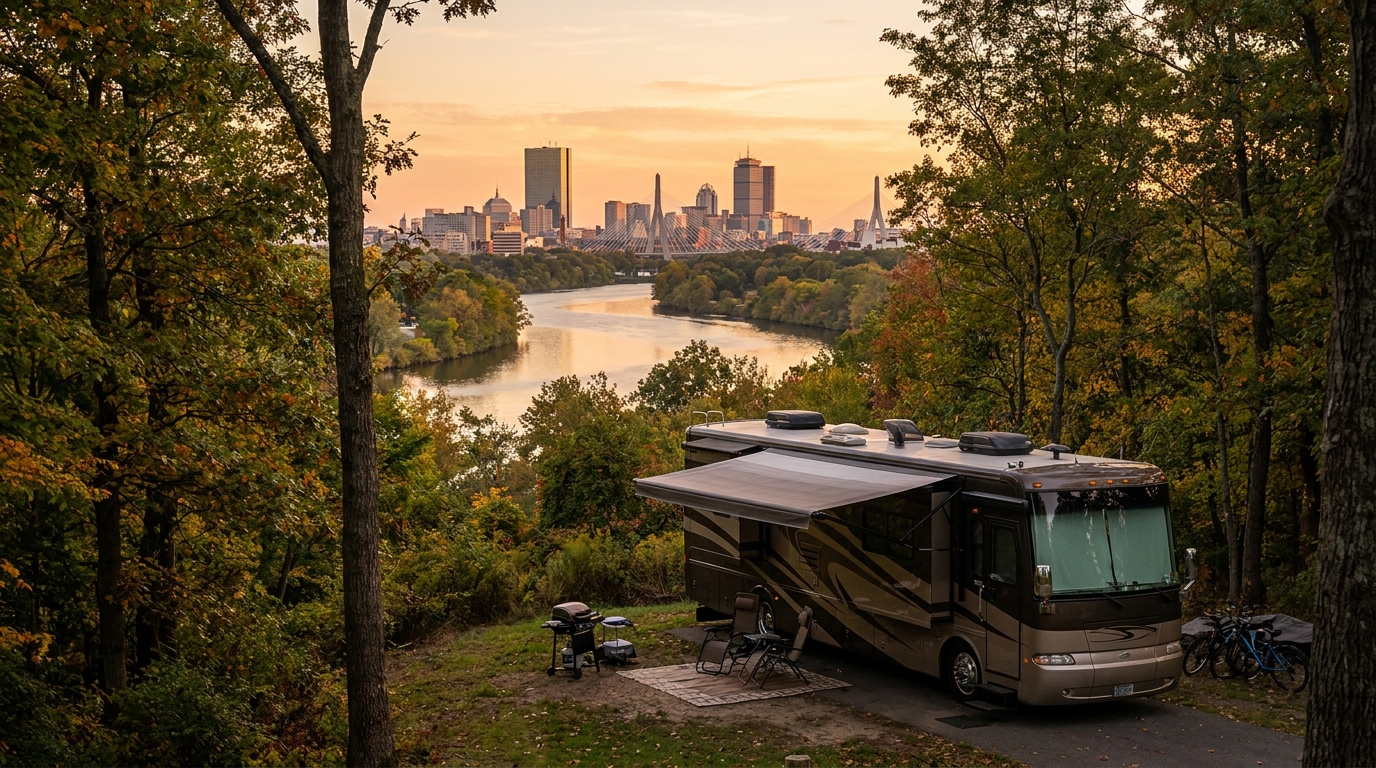
It is always recommended to research and book your campgrounds in advance, especially during peak travel seasons (May to October), as popular spots near Boston, such as Wompatuck State Park in Hingham or Harold Parker State Forest in Andover, can fill up quickly. For finding campsites and campgrounds during your trip, we recommend using RV PLANET (rvplan.net)-a great resource for locating available spots along your route. Remember, you'll find a spot; if not at the first campground, then the next one. Just call ahead before driving.
Can I Drive an RV Into the City Center? Heights, Tunnels & Local Signage
Yes, you can generally drive a rented RV into Boston's city center, but it requires extreme caution and meticulous planning due to several unique urban challenges. Drivers must pay particular attention to all local signage, especially for height limits, as Boston has infamous low bridges. Storrow Drive and Leverett Circle are notorious examples with strict 10-foot (3.05 meter) clearances that can trap unsuspecting RVs.
Tunnels like the Ted Williams Tunnel and Callahan Tunnel are typically safe for RVs, but knowing your vehicle's exact height is critical to ensure clearance. Many historic streets in downtown Boston are incredibly narrow and winding, making maneuvering larger motorhomes a significant challenge, and some areas may have residents-only parking restrictions.
For these reasons, it is often far more practical to park your rented motorhome at a designated RV park or satellite parking area on the outskirts of Boston. From there, you can utilize the city's robust public transportation system, known as the 'T', to explore the core attractions such as Faneuil Hall Marketplace, the New England Aquarium, and the historic Freedom Trail, saving yourself considerable stress and parking fees.
What is the 3-3-3 rule when RVing?
The 3-3-3 rule in RVing is a popular guideline designed to promote a relaxed and enjoyable travel pace for families. This rule recommends driving no more than 300 miles a day, stopping by 3 PM, and staying at least 3 nights in one location. Adhering to this practice is particularly beneficial for family RV trips, as it helps prevent driver fatigue and allows ample time for everyone to unwind and explore each destination fully.
By limiting daily driving distances, you reduce the pressure to rush and can truly take time to feel the place, connect to the culture, the food, and the scenery of areas around Boston, such as Cape Cod or the Berkshire Mountains. Stopping by 3 PM ensures you have sufficient daylight to find a campground, set up your rented RV, and relax before dinner. Staying for at least 3 nights provides a comforting sense of stability for children and allows for deeper engagement with local attractions and natural features, enhancing the overall vacation experience.
Can your family ride in an RV while it drives?
Yes, in Massachusetts, passengers are generally permitted to ride in the living area of a rented RV while it is in motion, provided they are properly secured in designated seats with seatbelts. Massachusetts law (MGL c. 90, § 7AA) explicitly requires all occupants to wear seatbelts when the vehicle is in motion, and children must be in appropriate child restraint systems as per state law. This is a critical safety consideration for any family RV rental in Boston.
While legal, it is generally considered safer for all passengers, especially younger children, to ride in the cab of the RV. The cab is equipped with the vehicle's primary safety features, including airbags and enhanced crash protection. If passengers are in the living area, ensure all loose items are securely stowed away to prevent them from becoming dangerous projectiles during sudden stops or turns. Always prioritize safety and adhere to both state laws and the rented motorhome's manufacturer recommendations for passenger seating.
What is the 4 4 4 rule for RVing?
The 4-4-4 rule for RVing is a variation of driving best practices, similar to the 3-3-3 rule, designed to balance travel efficiency with leisure. This guideline suggests driving no more than 400 miles a day, stopping by 4 PM, and staying at least 4 nights at a destination. It caters to families or travelers who might have slightly more ambitious itineraries or need to cover greater distances than suggested by the 3-3-3 rule, perhaps on a longer route like the

Stopping by 4 PM still provides ample time for setting up camp, preparing meals in your rented campervan, and unwinding before dusk, which is particularly important for families traveling with children. Staying for 4 nights encourages a more in-depth exploration of an area, allowing for full enjoyment of local attractions, hiking trails, or historical sites without the constant pressure of packing and unpacking your mobile home. This rule helps prevent burnout and ensures a more comprehensive and memorable extended road trip from Boston to other destinations, such as those found on RV PLANET routes.
Do I need a special license to drive an RV in Massachusetts?
In Massachusetts, a standard Class D driver's license is generally sufficient to operate most recreational vehicles (RVs) available for family rental in Boston. This applies as long as the RV's Gross Vehicle Weight Rating (GVWR) remains under 26,001 pounds. This threshold covers the vast majority of motorhomes and campervans available from Bandana Caravan's partner suppliers, including Class B, Class C, and many Class A models.
A special license, such as a Class B Commercial Driver's License (CDL) or a non-commercial Class A or B license, would only be required if the rented RV's GVWR exceeds 26,000 pounds. Most rental companies specifically offer vehicles that do not require these specialized licenses, making RV travel accessible to a wide range of drivers. Additionally, an air brake endorsement is only necessary if the RV is equipped with air brakes, which is uncommon for typical rental motorhomes. Always verify the specific GVWR of your chosen rental RV and consult the most current Massachusetts Registry of Motor Vehicles (RMV) regulations for complete peace of mind.
Can you park an RV on the street in Massachusetts?
Parking a rented RV on the street in Massachusetts is generally governed by local municipal ordinances, which often prohibit or significantly restrict the overnight parking of oversized vehicles in residential and commercial areas. While short-term daytime parking might be permitted in some areas where regular street parking is allowed, extended or overnight stays are typically disallowed in cities like Boston and surrounding towns to maintain neighborhood aesthetics and traffic flow.
Many towns across Massachusetts have specific bylaws addressing recreational vehicles, frequently requiring them to be parked on private property and explicitly forbidding their use as dwellings on public streets. It is crucial to check the specific parking regulations of each city or town you plan to visit, as rules can vary considerably. To avoid potential fines or even towing, it is always best to plan your overnight stays at designated RV parks, private campgrounds, or private property where you have explicit permission for RV parking.
How long can someone live in a camper on my property?
The legality of living in a camper or motorhome on private property in Massachusetts is strictly determined by local zoning bylaws and health codes, which typically restrict continuous occupancy of RVs as permanent dwellings. Most municipalities in Massachusetts do not permit RVs to be used as permanent residences on private land, even if you own the property, as these regulations are designed for permanent structures that meet specific building and safety codes.
Short-term occupancy, such as hosting temporary guests in a rented campervan or using it as temporary shelter during home renovations, may be allowed for a limited duration. However, such situations often require specific permits from the local zoning or building department. Health and safety codes also apply, addressing essential infrastructure like wastewater disposal, electricity, and sanitation, which permanent RV occupancy may not meet. It is imperative to contact your local city or town's zoning and health departments directly before allowing anyone to live long-term in a rented motorhome on your property to ensure compliance with all applicable regulations.
How much does RV insurance cost in Boston?
The cost of RV insurance in Boston and throughout Massachusetts varies significantly, depending on a multitude of factors specific to your rental and driving profile. These factors include the rented RV's value, its class (e.g., Class B campervan versus a larger Class A motorhome), your intended usage (e.g., short recreational trip), your driving record, and the chosen coverage limits. Typically, annual premiums can range from a few hundred dollars to over a thousand dollars.
For a basic liability policy on a smaller, older rental Class B RV, costs might start around $500-$800 per year. More comprehensive coverage for newer, larger Class C or Class A motorhomes, especially those with high replacement values, will naturally incur higher premiums, often ranging from $1,000 to $3,000+ annually. Your driving history, credit score, where you plan to store the RV, and the deductible you choose all significantly influence the final premium. You can upgrade to a top-level deductible for extra peace of mind, an optional enhancement available through many of our suppliers.
How much is RV insurance in Massachusetts?
The cost of RV insurance in Massachusetts is dynamic, much like flight tickets, and is influenced by a combination of individual and vehicle-specific details. Specific premiums are determined by factors such as the rented RV's make and model, the year it was manufactured, your personal driving history, and the geographic location within Massachusetts where it will be primarily used or stored. The breadth of your policy, encompassing options like liability, collision, comprehensive, roadside assistance, and personal effects coverage, also directly impacts the overall cost.
Massachusetts residents can expect to pay anywhere from under $1,000 for a basic policy on a smaller Class B campervan to several thousand dollars for comprehensive coverage on a high-value Class A motorhome. Your past claims history and the age of the primary driver are also significant determinants of your insurance premium. Comparing quotes from reputable insurers specializing in RV coverage, such as Progressive, GEICO, and National General, can help you find the best rates for your particular rented motorhome and personal profile in Massachusetts.
How much is insurance on a $200,000 RV in Boston?
Insuring a high-value $200,000 RV in Boston or anywhere in Massachusetts would typically place the premium in the higher end of the insurance cost spectrum. Due to its significant replacement value and potentially more complex features, you could expect annual premiums to range approximately from $1,500 to over $4,000, depending heavily on the specific coverage package and your driver profile. For such a valuable rented motorhome, robust comprehensive and collision coverage are not just recommended, but essential, and these significantly increase the premium compared to basic liability policies.
Factors such as whether the RV is new or used, its primary usage (e.g., occasional recreational trips vs. more extensive travel), and the specific year, make, and model will influence the exact cost. Your deductible choices also play a large role: a higher deductible generally results in a lower premium, but means a larger out-of-pocket expense in the event of a claim. Obtaining specialized RV insurance is crucial for a $200,000 vehicle, as standard auto policies may not provide adequate protection for its unique features and high value.
What You Shouldn't Miss
When you take a family RV rental in Boston, you're opening the door to a world of historical marvels and natural beauty. Here are a few must-do experiences that truly showcase the region's charm:
- Explore the Freedom Trail: Park your RV at a nearby campground like Wompatuck State Park (Hingham) or Myles Standish State Forest (Carver, MA) and take public transport into the city. Walk the 2.5-mile Freedom Trail, connecting 16 historically significant sites from Boston Common to the USS Constitution.
- Visit the New England Aquarium: Located on Central Wharf, the New England Aquarium is a fantastic family destination. It's easily accessible by the 'T' from various RV-friendly parking locations outside the city center, offering interactive exhibits with over 20,000 aquatic animals.
- Drive the Scenic Coastal Byways: Beyond the city, Massachusetts boasts stunning coastal routes. Head north from Boston along Route 1A towards picturesque towns like Rockport and Gloucester, or venture south towards Cape Cod and the Plymouth area. This is where slow travel, averaging 100-150 km per day, truly shines.
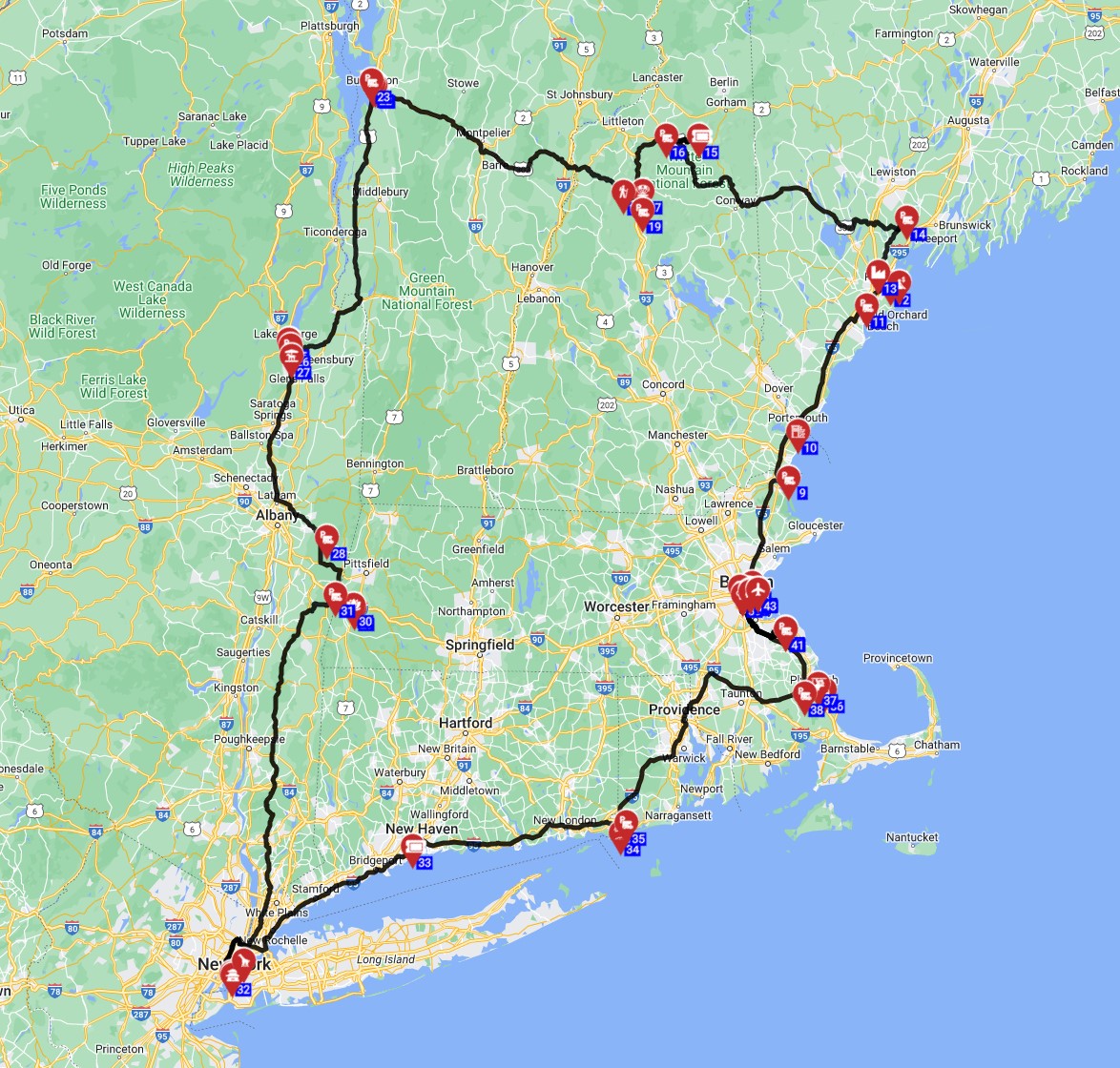
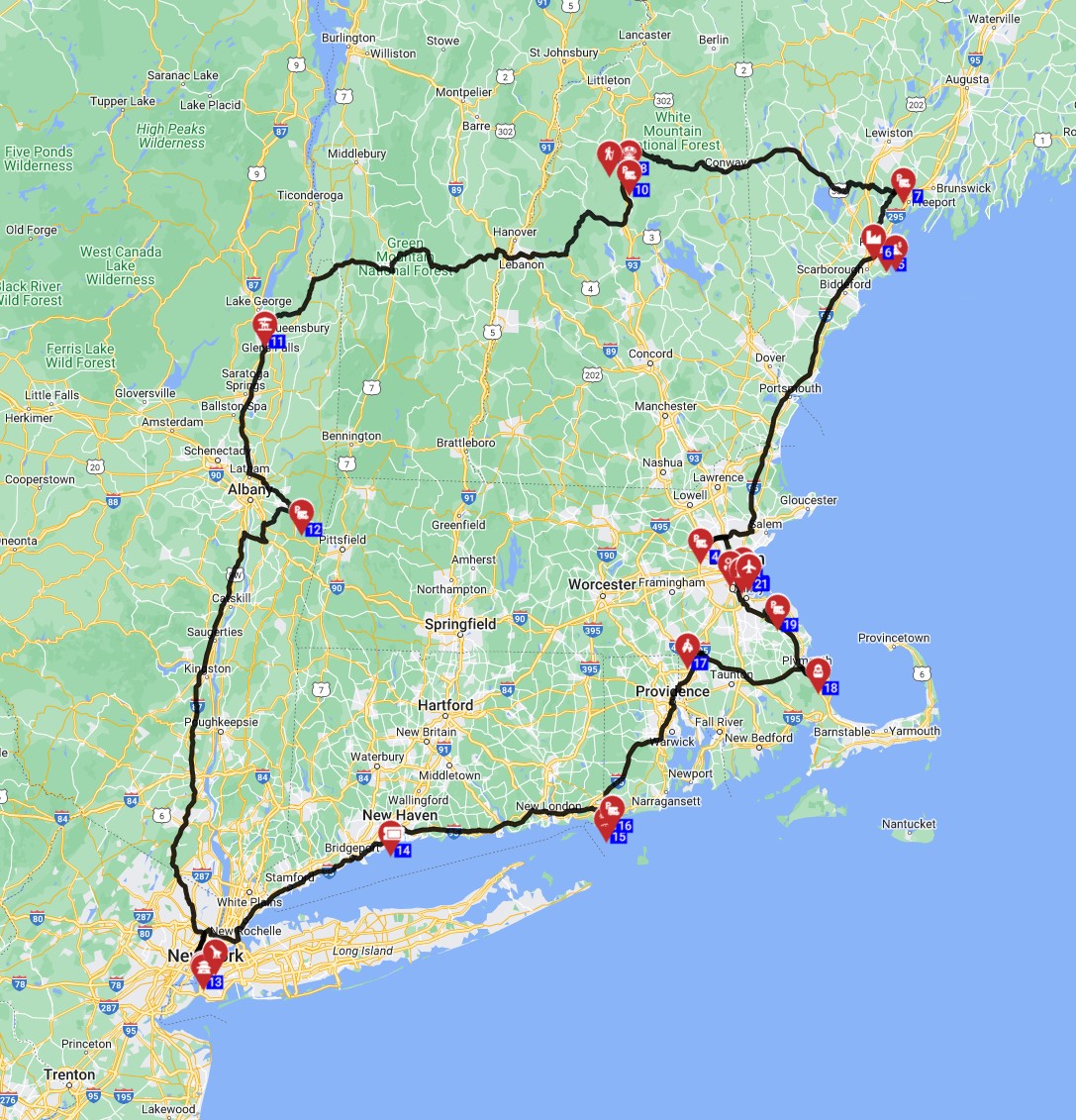
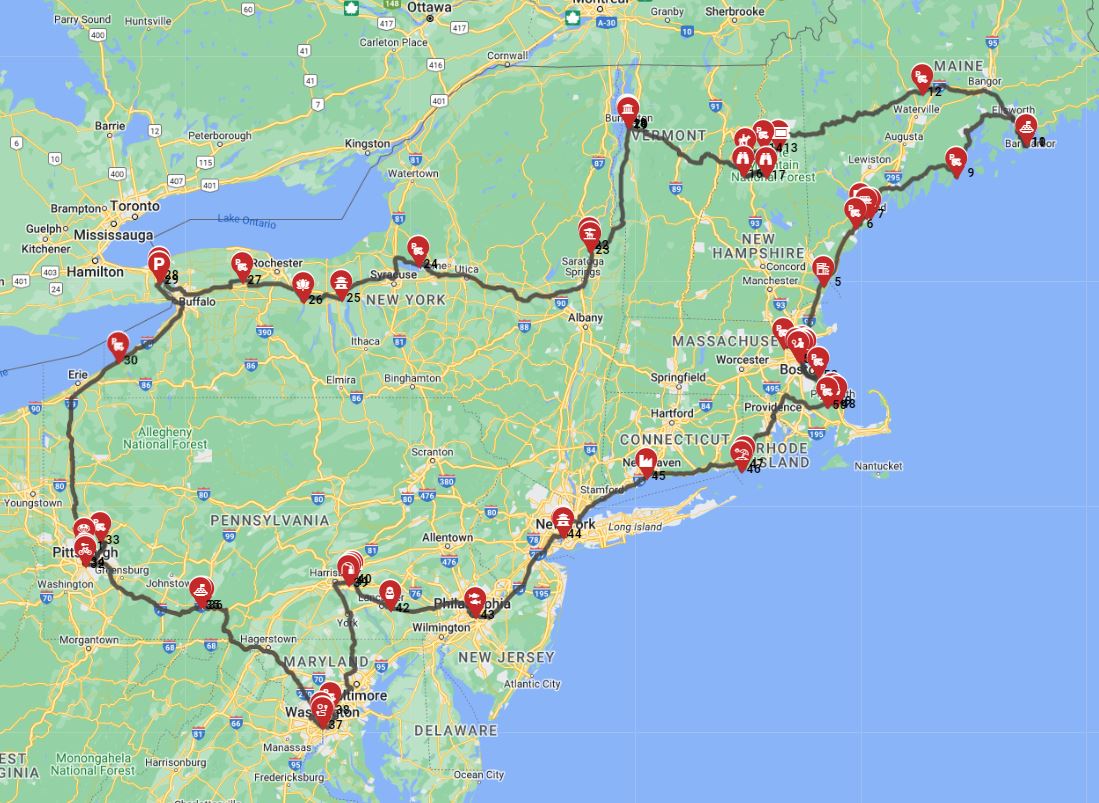
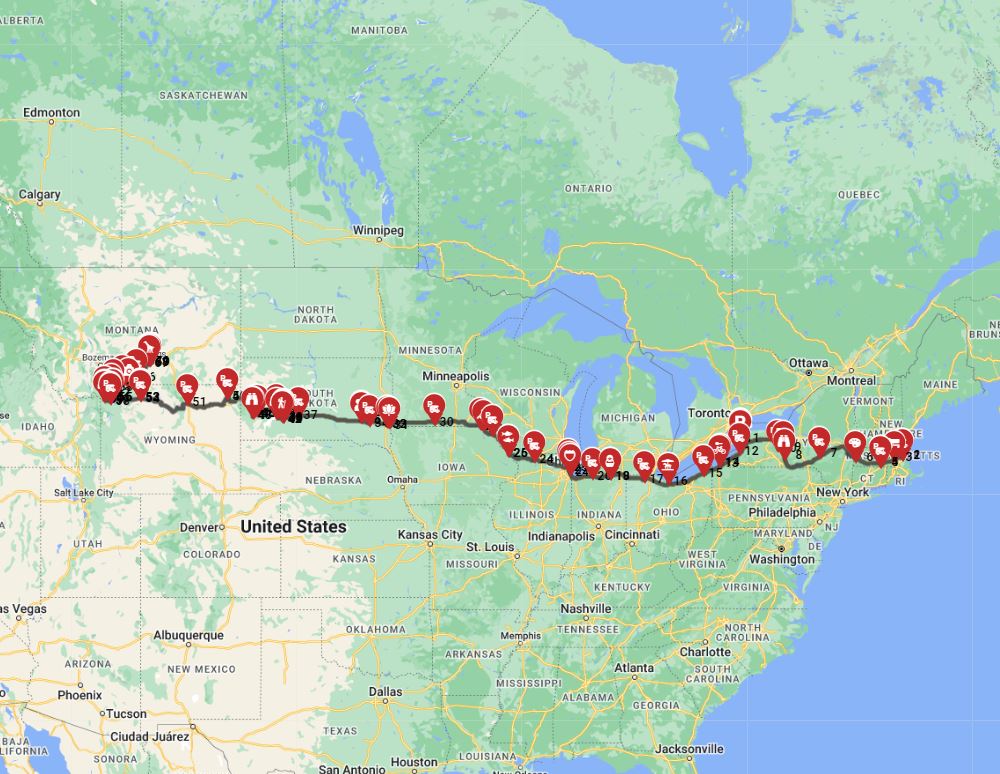
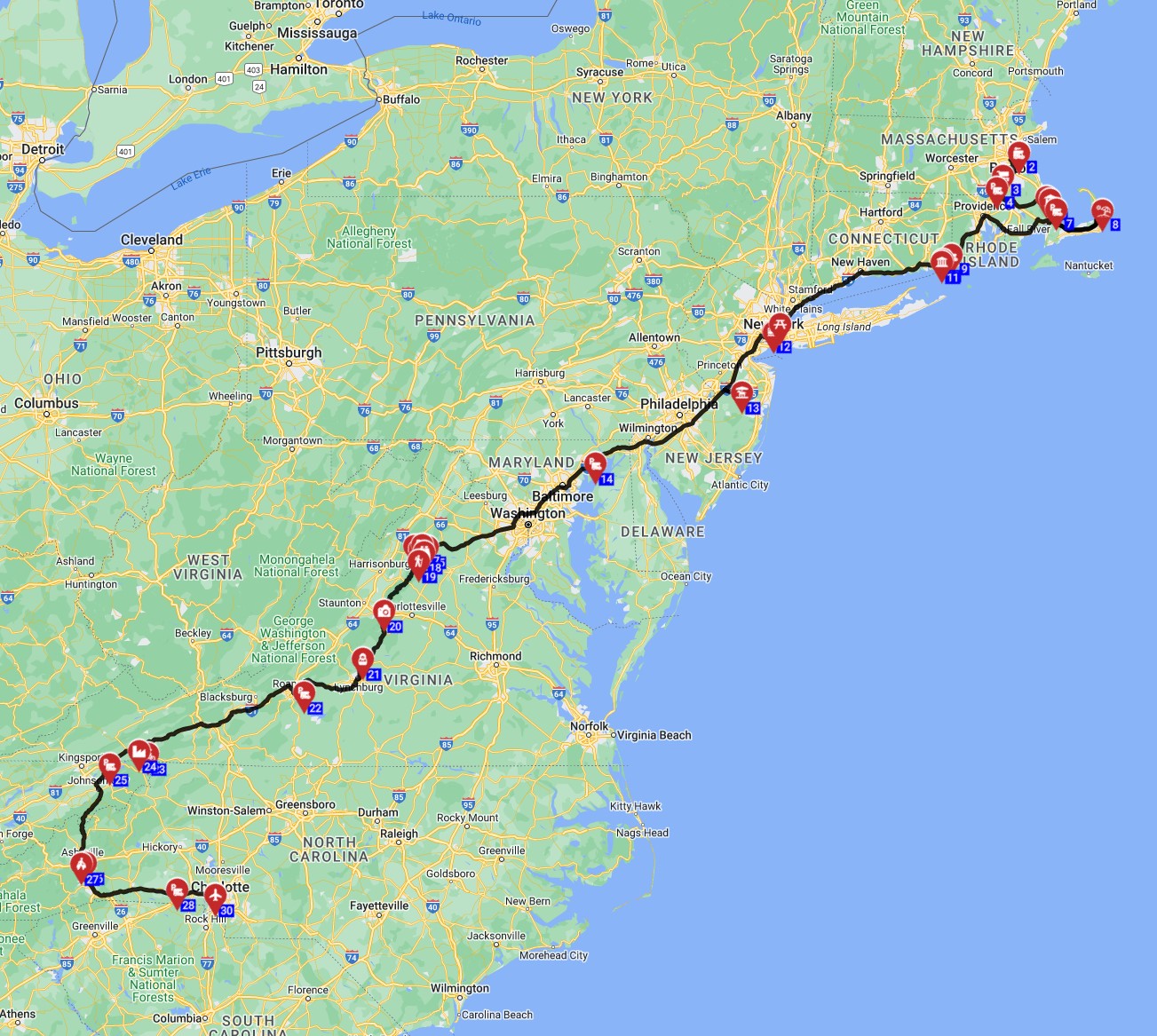
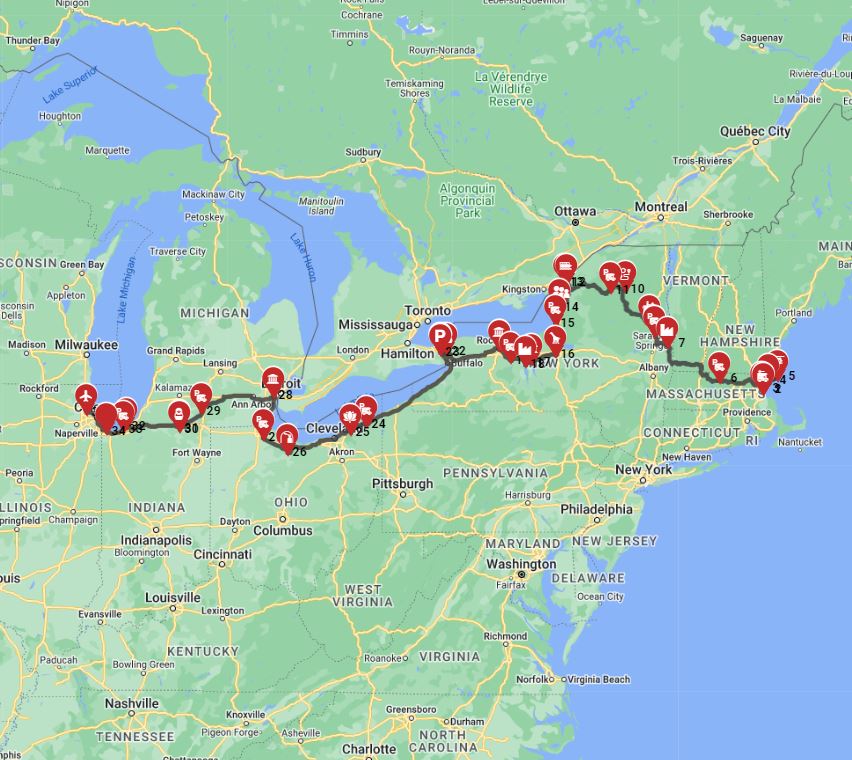
- Experience a Pre-Planned RV Itinerary: Looking for expert insights from Avi Bandana? Top 5 Adventures - recommendations from Avi Bandana. Our sister company, RV PLANET (rvplan.net), offers over 1,300 pre-planned routes. For instance, consider the "Chicago to Boston - The Rust Belt to Revolution Route" (15 days, 2348.1 km) which includes 1 Amusement Park, 1 Aquarium, and 1 Historical Site, ensuring a balanced trip from Chicago to Boston.
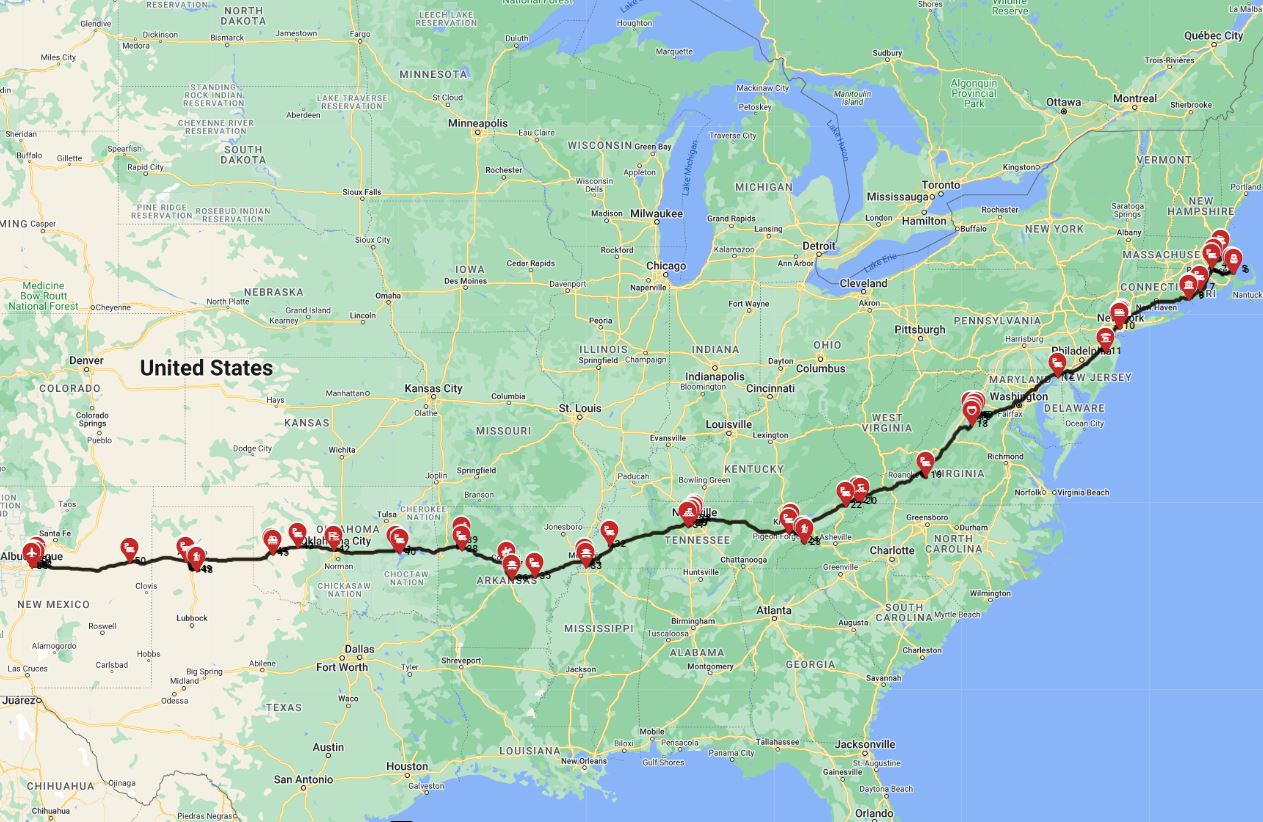
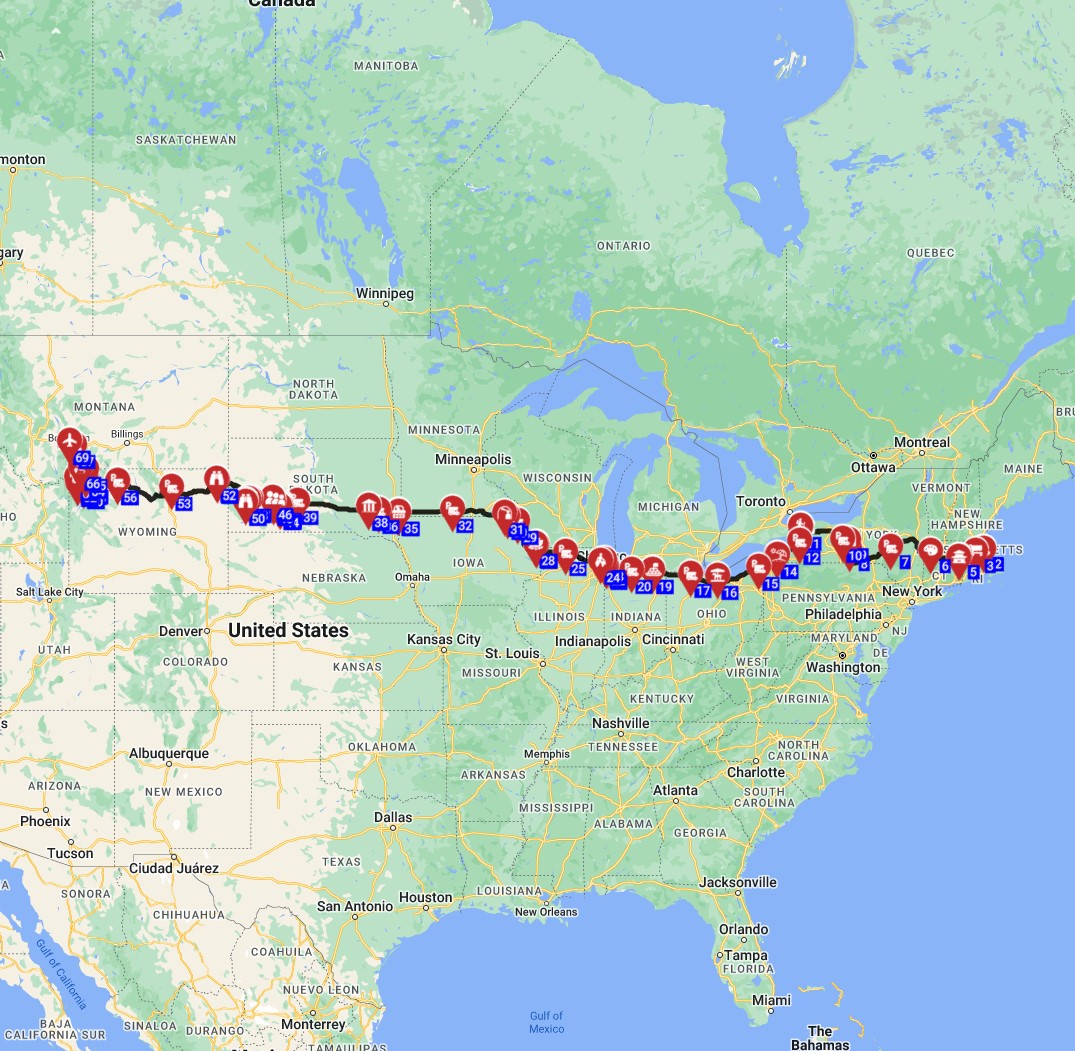
- Take an extended family RV adventure: Consider the "Salt Lake City to Boston - Mountains, Monuments, and Memories" (29 days, 5567.5 km) which takes you through stunning landscapes with 5 museums and 4 natural features. Or the "Billings to Boston - Mountains, Falls & Freedom Trail: A Family RV Adventure Across 9 States" (27 days, 5928.5 km), offering 10 natural features and 3 historical sites. These routes offer diverse activities perfect for all ages.
Final Thoughts
Exploring Boston and the greater Massachusetts area in a rented family RV offers an unparalleled sense of freedom and adventure. From navigating historic city streets with confidence to discovering serene campgrounds just a short drive away, a motorhome provides the perfect base for creating lasting family memories. Remember to embrace the spirit of slow travel, averaging around 100-150 km per day, allowing you to truly immerse yourselves in the vibrant culture and breathtaking scenery of New England.
At Bandana Caravan, we're here to support you every step of the way, from comparing prices across top suppliers like El Monte and Cruise America, to assisting with your booking and post-booking coordination. Our commitment to full transparency and personalized service ensures your journey is as smooth and enjoyable as possible. So, gather your family, plan your route, and get ready for an incredible adventure discovering the charms of Boston and Massachusetts!
Find Motorhome Rentals in Boston