In This Guide
- Can You Drive an RV in Bergen? License & Age Rules
- Road Conditions & Terrain in Bergen
- RV Size Limits, Bridges & Restricted Zones
- Fuel: Diesel vs. Petrol & Cost per 100 km
- Tolls, Vignettes & Border Rules
- Driving Tips for long term rv rental Travelers
- Recommended RV Class for Bergen Roads
- Should I Choose a Compact Van Instead of a Large RV in Bergen?
- Can I Park Anywhere? Free & Wild Camping Rules in Bergen
- Can I Drive an RV Into the City Center? Heights, Tunnels & Local Signage
- What is the 3-3-3 rule for RVs?
- Navigating Extended RV Stays in Norway
- Do you have to have a special license to drive a 30 ft RV?
- How big of an RV can I drive without a CDL?
- Is Norway RV friendly?
- Can you park an RV anywhere in Norway?
- Where to park a camper in Bergen?
- Do you need a special license to drive a long RV?
- RV Rental Insurance and Deductibles in Bergen
- Rental RV Insurance vs. Personal RV Insurance
Can You Drive an RV in Bergen? License & Age Rules
A standard Category B driving license is sufficient for operating most campervans and many Class C motorhomes with a Gross Vehicle Weight (GVW) up to 3,500 kg in Bergen. For larger RVs, typically Class C Alcove models or Class A Integrated motorhomes that weigh between 3,500 kg and 7,500 kg GVW, a C1 license is legally required in Norway. Most rental companies require drivers to be at least 21 years old and have held a valid driver's license for a minimum of 1-3 years. If you are a visitor from a non-EU/EEA country, carrying an International Driving Permit (IDP) alongside your national license is highly recommended for clarity and ease of travel, though it is not strictly mandatory in all cases. Rest assured, driving a rented motorhome in Bergen is accessible to most licensed drivers, and Bandana Caravan ensures full transparency on vehicle requirements during your booking process.Road Conditions & Terrain in Bergen
Bergen's road network offers a mix of modern highways, narrow fjord roads, and winding mountain passes, all requiring careful attention from RV drivers. You can expect to encounter numerous tunnels, some of which are quite long, and a few may have specific height or width restrictions clearly marked at their entrances. Within Bergen's urban areas, you might find some charming cobblestone streets and tighter turns, while the more rural routes can sometimes transition to gravel. Driving slowly and planning your route in advance using resources like RV PLANET (rvplan.net) is crucial, not only for safety on varied terrain but also to fully absorb the region's stunning and often distracting scenery. Remember, you can drive almost anywhere without issues – just use common sense and pay attention.RV Size Limits, Bridges & Restricted Zones
While major roads and tunnels around Bergen are generally accommodating for RVs, some older tunnels or city underpasses might have specific height restrictions, typically around 3.5 to 4.0 meters. When planning a long term rv rental trip, it's wise to consider the length of your chosen vehicle, as a Class C Alcove motorhome averages about 7.4 meters and can incur higher costs on ferries. Weight restrictions can also apply to older, smaller bridges, so always pay close attention to local signage. Bergen does not currently implement stringent environmental zones that restrict RV access, but staying informed about any updated local regulations is always a good practice to ensure a smooth journey.Fuel: Diesel vs. Petrol & Cost per 100 km
Most rented motorhomes and campervans in Bergen, especially those suitable for long-term adventures, operate on diesel fuel, which is widely accessible at service stations throughout Norway. It’s important to budget carefully for fuel, as prices in Norway are generally higher than in many other European countries. A compact Class B Camper Van, like an "rv rental denver example Category Van" that sleeps 2, typically achieves around 8 liters per 100 km. Larger RVs, such as a Class SI Semi-integrated model or a spacious Class C Alcove like the "cruise america rv rental example Explorer" (which has a 75-liter fuel tank), generally consume more, averaging 10-12 liters per 100 km. On RV PLANET routes, travelers can itemize and track every expense, including fuel, along the way for easy budgeting and no surprises.Tolls, Vignettes & Border Rules
Norway operates an automated toll system called AutoPASS, which applies to various roads, bridges, and tunnels in and around Bergen and across the country. There are no vignettes required for RVs in Norway, as tolls are paid per passage rather than a flat daily or weekly fee. Many long term rv rental motorhomes come pre-equipped with an AutoPASS tag, making toll payments seamless; the charges are then conveniently billed to you after your trip. Beyond AutoPASS, be aware that ferry crossings, which are a common and often scenic part of exploring the fjords around Bergen, incur separate charges and are not part of the AutoPASS system. We believe in full transparency, ensuring you know about all potential ancillary costs, like tolls and ferries, well before you embark on your journey.Driving Tips for long term rv rental Travelers
Embrace slow travel on Norway's breathtaking scenic routes around Bergen, aiming for a maximum of 100-150 km per day on average, which allows ample time to soak in the fjords, culture, food, and scenery. Planning for ferry crossings is essential; integrate them into your itinerary and consider booking in advance for popular routes, especially during peak season, to avoid delays. Mastering reverse parking your rented camper or motorhome is a valuable skill, as many campsites and viewpoints require precise maneuvering. Finally, stay organized with AutoPASS tolls to prevent any unexpected post-trip charges; your rental supplier will usually explain how this works. For finding campsites and campgrounds during your trip, we recommend using RV PLANET (rvplan.net) – a great resource for locating available spots along your route. You can even explore a ready-made itinerary like the "Bergen Round trip - Norway’s Coastal Wonders" (8 days, 782.9 km) route plan, which includes unique experiences such as two hiking areas and two Traditional Visit spots near Bergen.Recommended RV Class for Bergen Roads
For optimal maneuverability on Bergen's diverse roads, a Class B Camper Van, averaging around 5.7 meters in length, is highly recommended for its agility on narrow roads and ease of parking. These smaller, yet comfortable, vehicles often include essential amenities like a shower and toilet, making them perfect for couples or small families. A Class SI Semi-integrated RV, with an average length of 6.9 meters and averaging 3.6 sleeping places, strikes a good balance, offering more living space and amenities without being overly cumbersome for longer trips or families of 2+2. Both these classes typically require only a standard Category B driving license, provided their Gross Vehicle Weight remains under 3,500 kg, making them accessible to a wide range of travelers renting a motorhome.Should I Choose a Compact Van Instead of a Large RV in Bergen?
Choosing a compact van (Class B) for your long term rv rental in Bergen can offer superior maneuverability, especially when navigating tight city streets, historic centers like Bryggen, and the region's very narrow fjord roads. While smaller, these campervans, often around 5-6 meters in length, still provide essential amenities for comfortable travel. Larger RVs, such as Class C Alcove or Class A Integrated motorhomes, offer significantly more living space, enhanced amenities, and greater comfort for extended stays or larger groups. While main roads and highways easily accommodate larger RVs, specific attractions or parking spots in Bergen may indeed be more accessible with a compact vehicle. No need to stress about vehicle size - just drive slowly and carefully, use common sense, and pay attention, and you can drive almost anywhere without issues.Can I Park Anywhere? Free & Wild Camping Rules in Bergen
In Norway, while "Allemannsretten" (the right to roam) traditionally permits wild camping for tents, it carries strict limitations for RVs, especially near urban areas like Bergen. RVs generally require explicit permission to park overnight on private land or must be positioned at least 150 meters from inhabited houses, and never in cultivated fields. Wild camping for RVs is typically restricted to uncultivated land, and it is crucial not to obstruct traffic, damage the environment, or leave any trace. Designated campsites and paid RV parks, such as Bergen Camping Park or Lone Camping, are the safest, most legally sound, and most comfortable options for overnight parking around Bergen. Always check local regulations before parking overnight, as rules can vary by municipality. For finding campsites and campgrounds during your trip, we recommend using RV PLANET (rvplan.net).Can I Drive an RV Into the City Center? Heights, Tunnels & Local Signage
RVs can generally be driven into Bergen's city center, but drivers must exercise extreme caution and adhere strictly to all local signage. Pay close attention to height restrictions for tunnels, such as the Nygårdstunnelen, and multi-story car parks, as well as signs indicating "no through traffic" or "residents only" zones on older, narrower streets near areas like Bryggen. It's often a more practical strategy to park your rented motorhome or campervan in designated peripheral parking lots, many of which offer convenient public transport links into the city. Utilizing a "park and ride" system allows you to explore central Bergen's UNESCO World Heritage sites and bustling fish market on foot or by public transport, avoiding urban parking challenges.What is the 3-3-3 rule for RVs?
The 3-3-3 rule is a popular guideline for RV travel that suggests you drive no more than 300 miles (approximately 500 km) per day to avoid driver fatigue and fully enjoy your surroundings. It also recommends stopping by 3 PM to ensure you have ample time to find a suitable campsite and set up your rented RV before dark. The final "3" advises staying at least 3 nights in a single location to fully experience the area, connect with the local culture and food, and prevent travel burnout. In Norway, with its winding roads, frequent ferries, and stunning landscapes around Bergen, adapting the mileage to shorter distances (e.g., 200-300 km) and prioritizing early arrival at your chosen campground is often more practical and enjoyable. Remember, we recommend slow travel, averaging 100-150 km per day, to truly feel the place.Navigating Extended RV Stays in Norway
While the legalities and practicalities of living full-time in an RV vary significantly by country and local jurisdiction, such as in New Jersey, long-term RV rentals in Bergen are designed for extended touring and travel, not for establishing permanent residency. In Norway, designated campsites, official RV parks, or specific paid parking areas are the primary options for overnight stays. While extended stays at a single campground are certainly possible and common for those seeking a more relaxed pace, permanent living in a rented RV on public land or in unauthorized areas is not permitted under Norwegian law. For your long term rv rental in Bergen, the focus should always be on planning a varied itinerary that takes you between different campsites and spectacular destinations, such as those found in RV Rental Norway - Complete Guide 2026.Do you have to have a special license to drive a 30 ft RV?
Driving a 30-foot (approximately 9.1-meter) RV in Norway typically requires a Category C1 driving license if its Gross Vehicle Weight (GVW) exceeds 3,500 kg. Most motorhomes of this considerable length, such as larger Class C Alcoves or Class A Integrated models like a "Group I" (which can sleep 6), are likely to have a GVW well above the 3,500 kg limit permitted by a standard Category B license. A C1 license allows drivers to operate vehicles with a GVW between 3,500 kg and 7,500 kg. It's always crucial to verify the specific GVW of your chosen long term rv rental and ensure your driving license category permits you to operate it legally before booking. Bandana Caravan always provides clear vehicle specifications.How big of an RV can I drive without a CDL?
In Europe, including Norway, a Commercial Driver's License (CDL) is generally not required for recreational RVs, as these licenses are primarily for commercial transport purposes. For leisure RVs and campervans, the critical factor determining your license requirements is the vehicle's Gross Vehicle Weight (GVW) in conjunction with European driver's license categories. A standard Category B license, which most car drivers possess, allows you to operate RVs with a GVW up to 3,500 kg. If your rented motorhome has a GVW between 3,500 kg and 7,500 kg, then a Category C1 license is required. This is a non-commercial license specifically for heavier vehicles, making it accessible for those who wish to drive larger RVs without needing a commercial certification.Is Norway RV friendly?
Norway is widely considered an exceptionally RV-friendly destination, celebrated for its stunning natural beauty, well-maintained road network, and extensive infrastructure catering to motorhomes and campervans. The country offers countless designated campsites, many with excellent amenities and breathtaking views, plus numerous service stations for fuel and waste disposal. RV travelers can explore diverse landscapes, from the dramatic fjords surrounding Bergen to the Arctic wilderness of Tromsø. While challenges include higher costs for fuel and ferries, narrow and winding roads in some areas, and strict regulations regarding wild camping for RVs, the overall experience makes Norway a prime destination for an unforgettable RV adventure.Can you park an RV anywhere in Norway?
No, RVs cannot be parked anywhere freely in Norway, despite the common misconception about "Allemannsretten" (the right to roam), which primarily applies to non-motorized activities like tent camping or hiking. Overnight parking for rented RVs is generally restricted to designated campsites, official RV parks, or specific paid parking areas, especially near urban centers like Bergen. Parking on private land requires explicit permission from the landowner, and obstructing public roads, access points, or environmentally sensitive areas is strictly illegal. It is paramount to observe all local municipality rules and environmental regulations to ensure a responsible and hassle-free long term rv rental experience.Where to park a camper in Bergen?
In Bergen, campers and RVs must use designated facilities for overnight stays, including several well-equipped campsites strategically located on the city's outskirts. Popular options like Bergen Camping Park (just 8 km from the city center) and Lone Camping offer amenities such as electricity hookups and waste disposal, along with convenient public transport links into Bergen. For daytime visits to explore attractions like the Bryggen Wharf or Fløibanen Funicular, paid parking lots are available at the city's periphery, with some accommodating larger vehicles; always check for specific height and length restrictions upon entry. A practical strategy is to utilize "park and ride" options outside the immediate city center and then explore the central areas on foot or by bus/Light Rail, making your long term rv rental in Bergen stress-free. For finding campsites and campgrounds during your trip, we recommend using RV PLANET (rvplan.net) - a great resource for locating available spots along your route.Do you need a special license to drive a long RV?
The requirement for a special license to drive a "long RV" in Norway is determined by its Gross Vehicle Weight (GVW), not solely its physical length. A standard Category B driver's license is sufficient for a long term rv rental if the vehicle's GVW is up to 3,500 kg, which includes many larger campervans and compact Class C motorhomes. However, if the GVW exceeds 3,500 kg, which is common for many longer RV models (e.g., a 7.5-meter motorhome might have a GVW over 3,500 kg), a Category C1 license is required. This non-commercial license permits the operation of vehicles up to 7,500 kg. It is vital to confirm the specific weight category of your rental RV to ensure your driving license allows you to operate it legally in Bergen and beyond.RV Rental Insurance and Deductibles in Bergen
For long term rv rentals in Bergen, comprehensive insurance is typically included within your rental agreement, meaning the cost of insuring a high-value motorhome is not a direct personal expense for the renter. Rental companies provide mandatory third-party liability insurance, which covers damages to other vehicles or property. They also usually offer options to reduce your financial liability (deductible or excess) for collision damage waiver (CDW) or theft protection. This top-level deductible reimbursement is an optional upgrade you can purchase for extra peace of mind, significantly lowering your out-of-pocket expenses in the event of an incident. It's crucial to thoroughly review the rental agreement's insurance terms to understand what is covered and your specific liability. Bandana Caravan provides full transparency, ensuring no hidden fees or surprises when it comes to insurance.Rental RV Insurance vs. Personal RV Insurance
The distinction between "full-time RV insurance" and "regular RV insurance" primarily applies to private RV ownership in regions like North America, where full-timers require broader coverage akin to homeowner's insurance for their primary residence. For long term rv rentals in Bergen, you, as the renter, are covered by the specific insurance policies provided by the rental company, which are tailored for temporary vacation use rather than permanent residency. These rental insurance packages typically encompass collision, theft, and third-party liability coverage, often with additional options for reducing your deductible. Renters should focus on understanding the scope of the rental company's policy, including deductibles and covered risks, rather than comparing it to the types of insurance designed for RV ownership.What You Shouldn't Miss
- **Explore Bryggen Wharf:** Wander through Bergen's UNESCO World Heritage site, a picturesque row of colorful wooden houses that hark back to the city's Hanseatic past, best enjoyed on foot after parking your campervan at a peripheral lot.
- **Ride the Fløibanen Funicular:** Take this popular funicular from the city center up Mount Fløyen for panoramic views of Bergen, its fjords, and the surrounding islands. Pack a picnic to enjoy at the top, perhaps some delicious local treats you've prepared in your rented motorhome's kitchen. For more meal ideas, check out our RV-friendly recipes playlist.
- **Discover the Fjords:** Drive one of the many stunning fjord routes around Bergen, like the drive towards Hardangerfjord or Sognefjord. The 17-day "
" (2746.3 km) offers an epic journey including four Natural Features and four Traditional Visits.
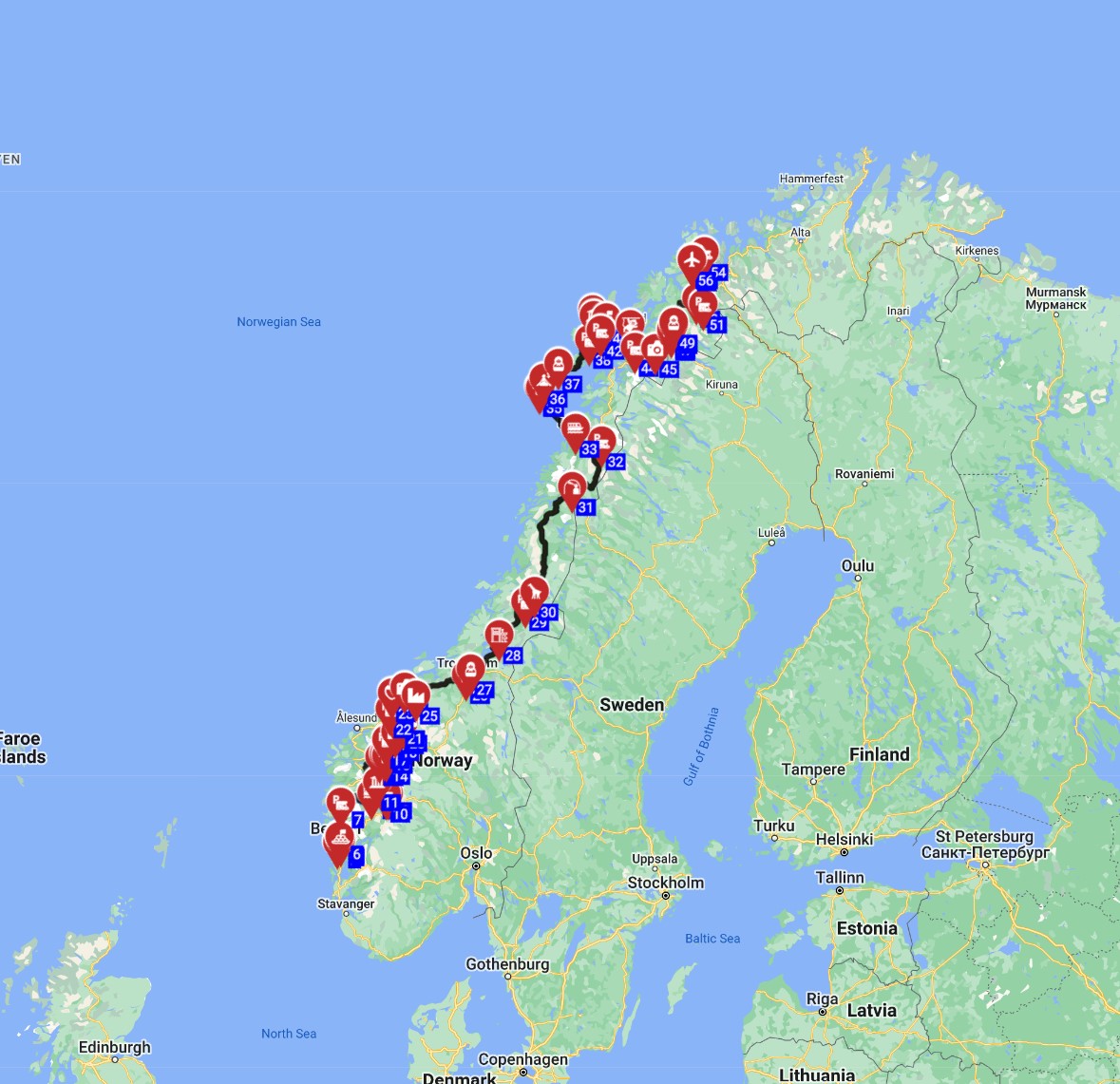 Bergen to Tromso - Norwegian Coastal Odyssey
 - **Visit KODE Art Museums and Composer Homes:** Immerse yourself in Bergen's rich cultural scene with a visit to KODE, one of Scandinavia's largest museums for art, craft, design, and music, including the homes of Edvard Grieg and Ole Bull.
- **Experience the Fish Market (Fisketorget):** Sample fresh local seafood, from traditional Norwegian salmon to king crab, at Bergen's bustling outdoor fish market. It’s an authentic taste of local life, perfect for a long term rv rental traveler.
- **Take a Coastal Expedition North:** For an extended exploration, consider the "
" (18 days, 2781.6 km), featuring two aquariums, two scenic routes, and three museums along its extensive itinerary.
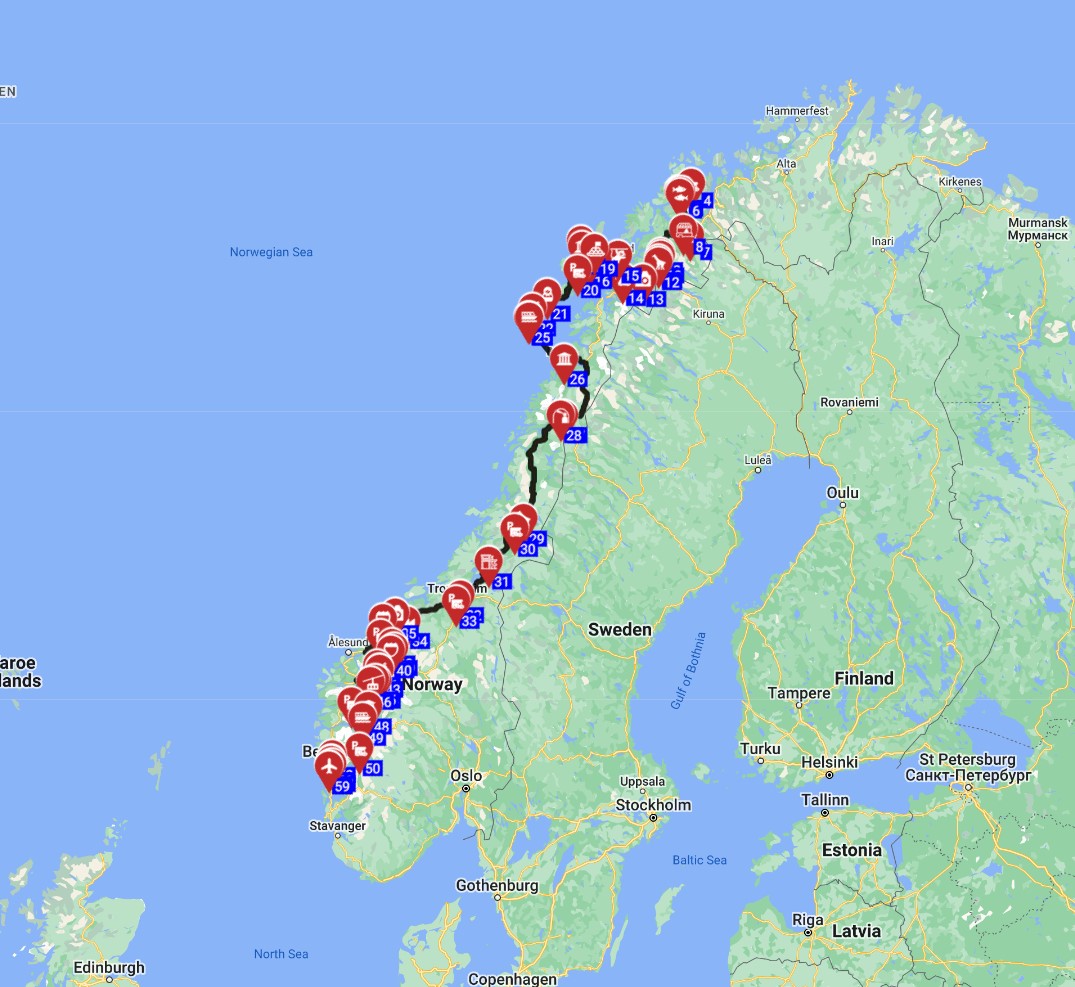 Tromsø to Bergen - Norwegian Coastal Expedition
Looking for expert insights from Avi Bandana?
🎬 Video coming soon
Top 5 Adventures - recommendations from Avi Bandana
Final Thoughts
Embarking on a long term rv rental journey in Bergen is more than just a vacation; it's an opportunity to create lasting memories, whether you're a family seeking adventure, a couple on a romantic getaway, or a group of friends exploring Norway’s coastal wonders. With careful planning and the right vehicle, the dramatic fjords, charming towns, and majestic mountains of the Bergen region are yours to discover at your own pace. Remember our commitment to supporting you before, during, and after your booking, ensuring a seamless experience from your first click to your confirmed reservation. Travel slowly, max 100-150 km per day on average, and take time to feel the place, connect to the culture, the food, and the scenery. We handle the details, you live the journey! Find Motorhome Rentals in BergenOn the routes offered through RV PLANET routes, you can itemize and track every expense along the way for easy budgeting.