In This Guide
- Best Oslo RV Itinerary for cheap rv rental - Overview
- 7-Day Classic Route in Oslo
- 14-Day Extended Journey in Oslo
- Recommended RVPlan Trip for Oslo
- Must-See Stops Along the Way (Avi Bandana Picks)
- Daily Driving Distances & Drive Times in Oslo
- Best RV Class for This Itinerary - Couple & Family Picks
- Is Norway RV friendly?
- What is the most beautiful road trip in Norway?
- How much per day does it cost to rent a camper van in Norway?
- Can you park a motorhome anywhere in Norway?
- What to do in Oslo on a budget?
- Is Oslo cheap for tourists?
- Are fjords better in Oslo or Bergen?
Discovering Oslo and its surrounding natural beauty in a rented RV offers an unparalleled sense of freedom and the flexibility to explore at your own pace. For those seeking a cheap rv rental in Oslo, focusing on well-planned itineraries and mindful budgeting can unlock an incredible adventure in the Norwegian capital and beyond. For live availability and current prices, start with our RV Rental Oslo - Complete Guide 2026 guide. On the routes offered through RV PLANET routes, you can itemize and track every expense along the way for easy budgeting.
Best Oslo RV Itinerary for cheap rv rental - Overview
A minimum of 7 days is recommended for a local Oslo-centric tour, while 14 or more days allow for a broader Norwegian experience and exploration of the country's stunning landscapes. A shorter 7-day Oslofjord/Telemark loop covers approximately 600-700 km (370-430 miles), offering a perfect blend of coastal charm and inland history. The late spring (May-June) and early autumn (September-October) seasons typically provide milder weather, fewer crowds, and often more favorable rental prices compared to the peak summer months of July and August. Planning your adventure during these shoulder seasons can significantly reduce costs and enhance your enjoyment of Oslo's many attractions.7-Day Classic Route in Oslo
This 7-day itinerary provides a balanced experience, starting and ending in the city while venturing into the beautiful Oslofjord region.- Day 1: Oslo City & RV Pickup (0 km) – Upon picking up your rented campervan, explore Oslo's city center using public transport to visit iconic spots like Frogner Park with its Vigeland Sculpture Park, and the architectural marvel of the Opera House. Overnight parking is easily found at an RV-friendly campground near Oslo such as Ekeberg Camping, offering spectacular city views.
- Day 2: Oslo to Fredrikstad / Hvaler Islands (approx. 100-120 km) – Head south along the scenic Oslofjord. Explore Fredrikstad's remarkably preserved Old Town (Gamlebyen), a fortified city, or venture to the picturesque Hvaler archipelago. Spend the night at a local campground in Hvaler, enjoying the tranquil coastal atmosphere.
- Day 3: Hvaler to Kragerø (approx. 100 km) – Continue your journey along the coast to Kragerø, often hailed as the 'Pearl of the Coast' for its charming harbor and narrow, winding streets. Explore art galleries and quaint shops. Overnight at Kragerø Resort Camping, which provides excellent amenities.
- Day 4: Kragerø to Dalen (Telemark Canal) (approx. 100-120 km) – Turn inland towards the heart of Telemark. Experience a boat trip on the historic Telemark Canal, an engineering marvel, or admire the striking architecture of the Dalen Hotel. A convenient campsite near Dalen will be your resting spot.
- Day 5: Dalen to Kongsberg (approx. 80 km) – Journey to Kongsberg, Norway's former silver mining town. Visit the fascinating Silver Mines (Sølvgruvene) and the Norwegian Mining Museum for a dive into industrial history. Kongsberg Camping is a good choice for overnight parking.
- Day 6: Kongsberg to Drøbak (approx. 60-80 km) – Drive back towards the Oslofjord to the charming village of Drøbak, famous for its year-round Christmas House and beautiful fjord views. Enjoy a final evening by the fjord, perhaps having a delicious meal if you're making use of your RV's kitchen facilities. Park at Drøbak Camping, which is easily accessible. If you're looking for RV-friendly recipes, check out our RV-friendly recipes playlist on YouTube.
- Day 7: Drøbak to Oslo RV Drop-off (approx. 40-60 km) – A short drive brings you back to Oslo for your RV drop-off, leaving time for any last-minute city exploration before your departure.
14-Day Extended Journey in Oslo
This 14-day journey builds upon the classic route, extending your adventure into Norway's magnificent mountain and fjord regions further west, departing from Oslo.- Days 1-7: Follow the '7-Day Classic Route in Oslo' covering the Oslofjord coast and Telemark region, enjoying charming towns and the historic canal.
- Day 8: Dalen to Geilo (approx. 150 km) – From Telemark, head northwest to Geilo, a popular mountain resort town and gateway to the Hardangervidda plateau. Explore hiking trails or enjoy the crisp mountain air. Overnight at Geilo Hytter & Camping.
- Day 9: Geilo to Eidfjord / Hardangerfjord (approx. 100 km) – Descend into the stunning Hardangerfjord region. Visit the powerful Vøringsfossen waterfall, one of Norway's most famous, and the informative Hardangerfjord Nature Centre. Stay at a campsite in Eidfjord.
- Day 10: Eidfjord to Odda / Låtefossen (approx. 70 km) – Drive along the fjord, perhaps detouring to the picturesque village of Odda or witnessing the famous twin waterfall, Låtefossen. Overnight at Odda Camping. This route offers a taste of the truly iconic Norwegian fjords, a different experience than the Oslofjord.
- Day 11: Odda to Rjukan (Gaustatoppen) (approx. 150 km) – Journey back east through dramatic landscapes to Rjukan, a UNESCO World Heritage site known for its industrial heritage and the iconic Gaustatoppen mountain. Take the Gaustabanen for panoramic views from the summit (at 1,883 meters). Park at Rjukan Hytteby & Camping.
- Day 12: Rjukan to Hønefoss / Tyrifjorden (approx. 100 km) – Travel through scenic valleys to the Tyrifjorden lake area, enjoying the tranquil lakeside environment and local culture. Overnight at a campsite near Hønefoss, such as Åsa Camping & Hytter.
- Day 13: Hønefoss to Oslo (RV parking outside city) (approx. 50 km) – A short drive brings you to the outskirts of Oslo. Park your rented RV at a designated site or campground (like Bogstad Camping near Oslo's west side) and use public transport to explore the city without urban driving stress. Drive slowly and carefully, and you can drive almost anywhere without issues. No need to stress - just use common sense and pay attention.
- Day 14: Oslo (RV drop-off) – Spend a final morning exploring Oslo before returning your motorhome.
Recommended RVPlan Trip for Oslo
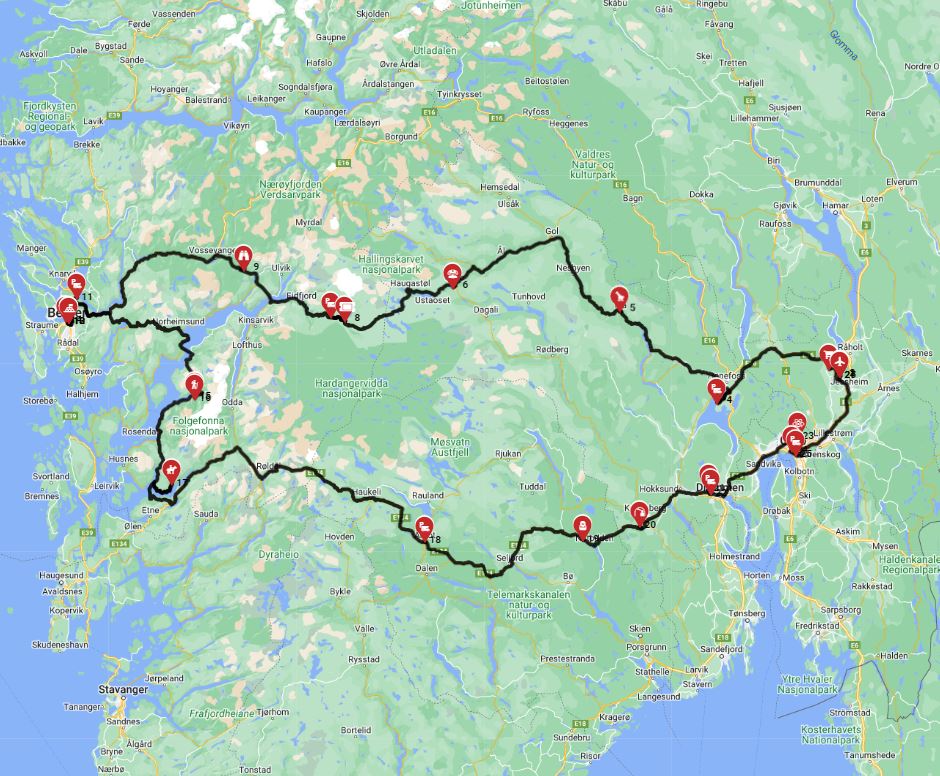
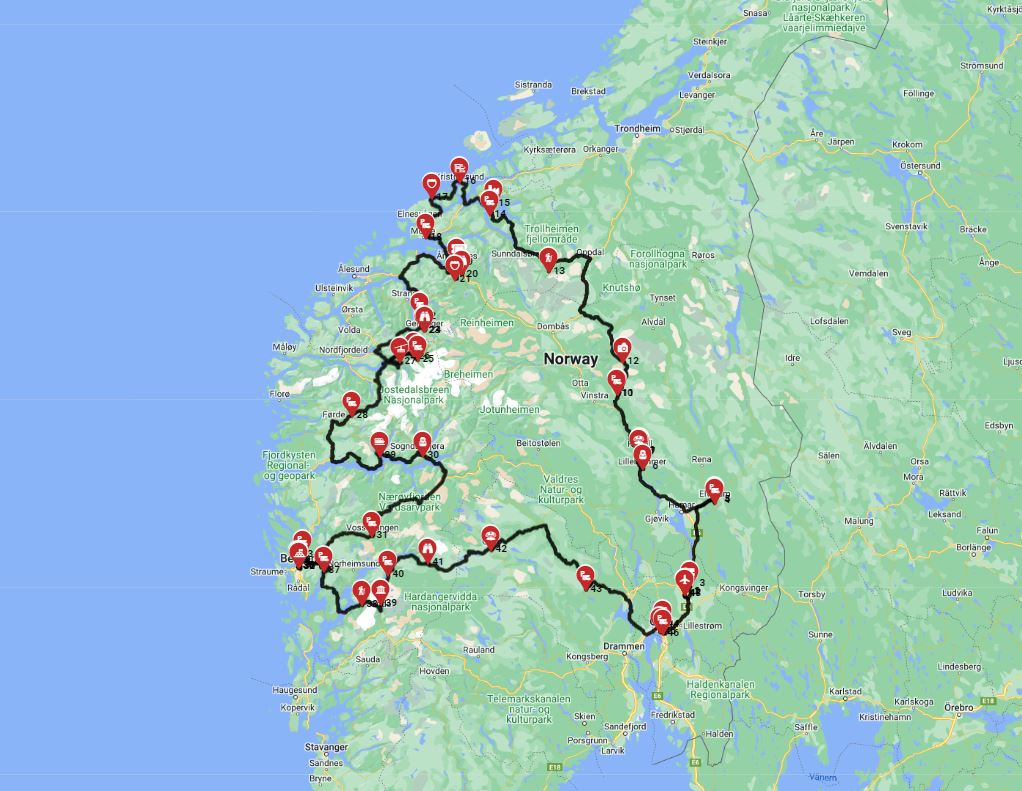
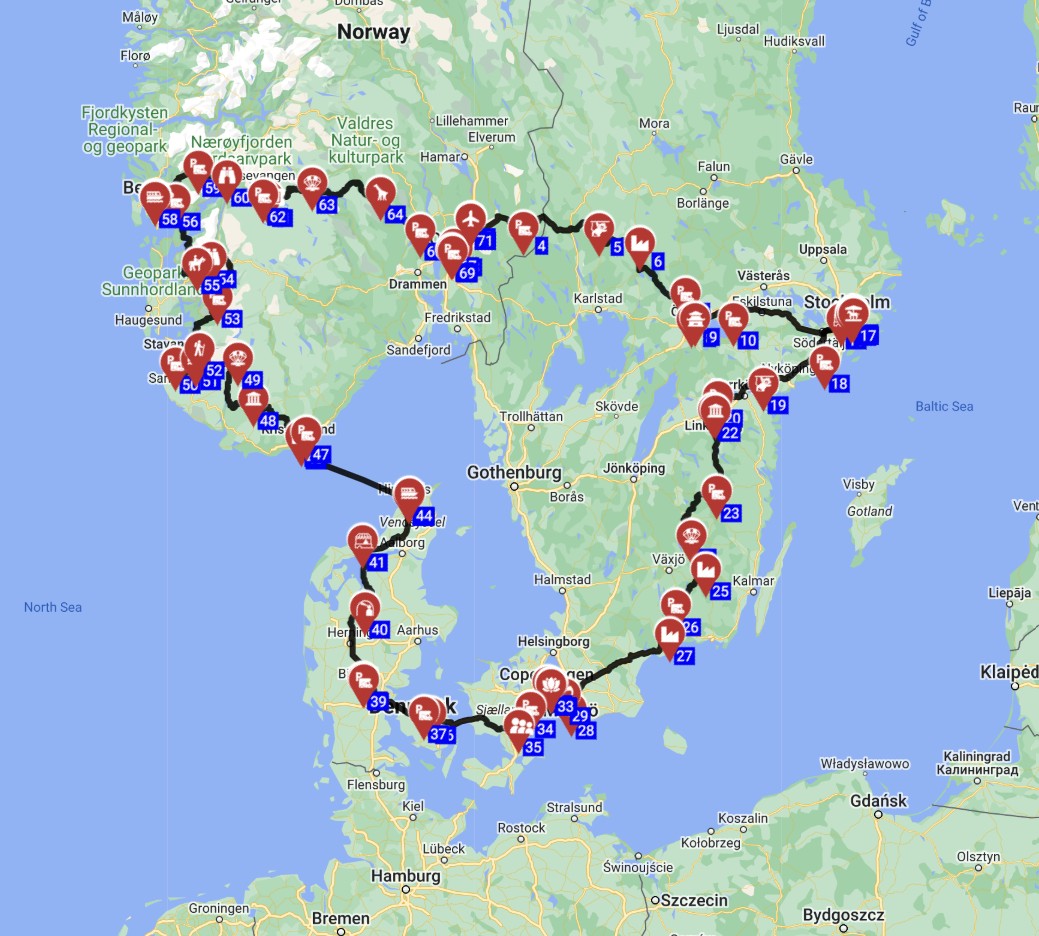
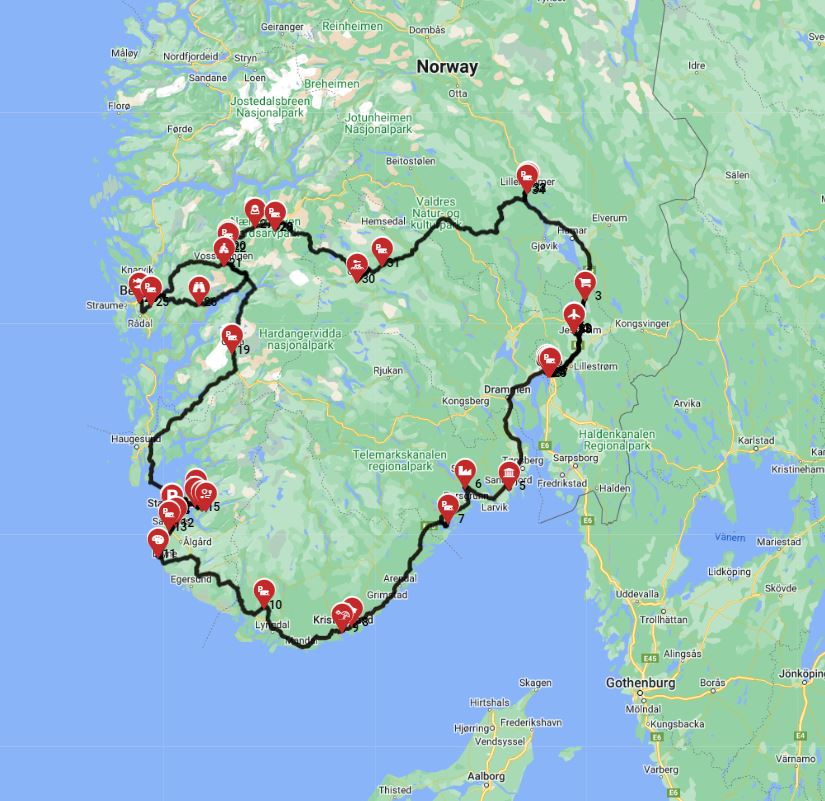
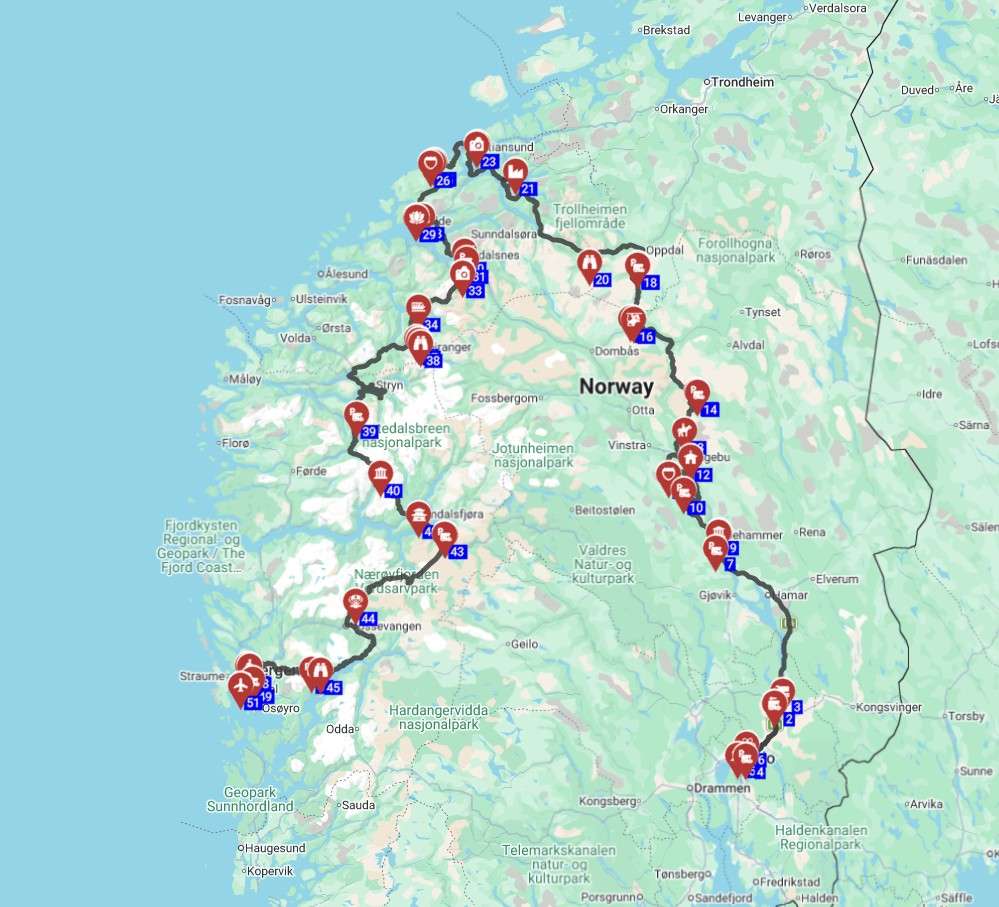
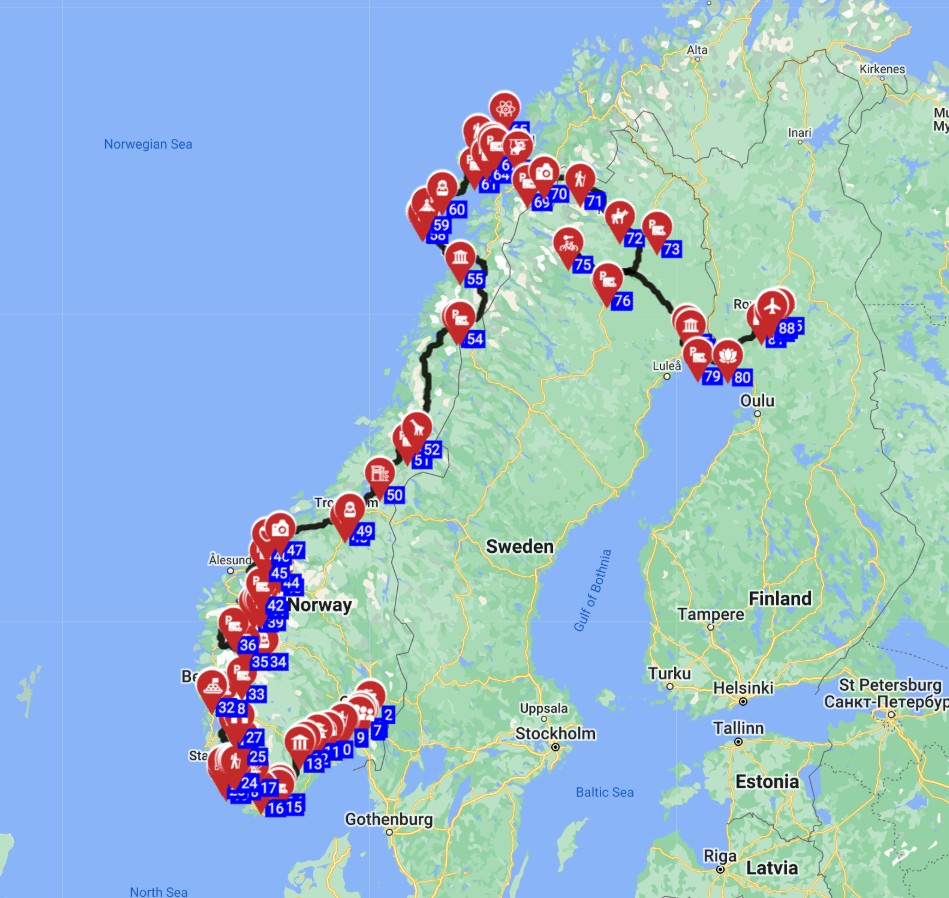
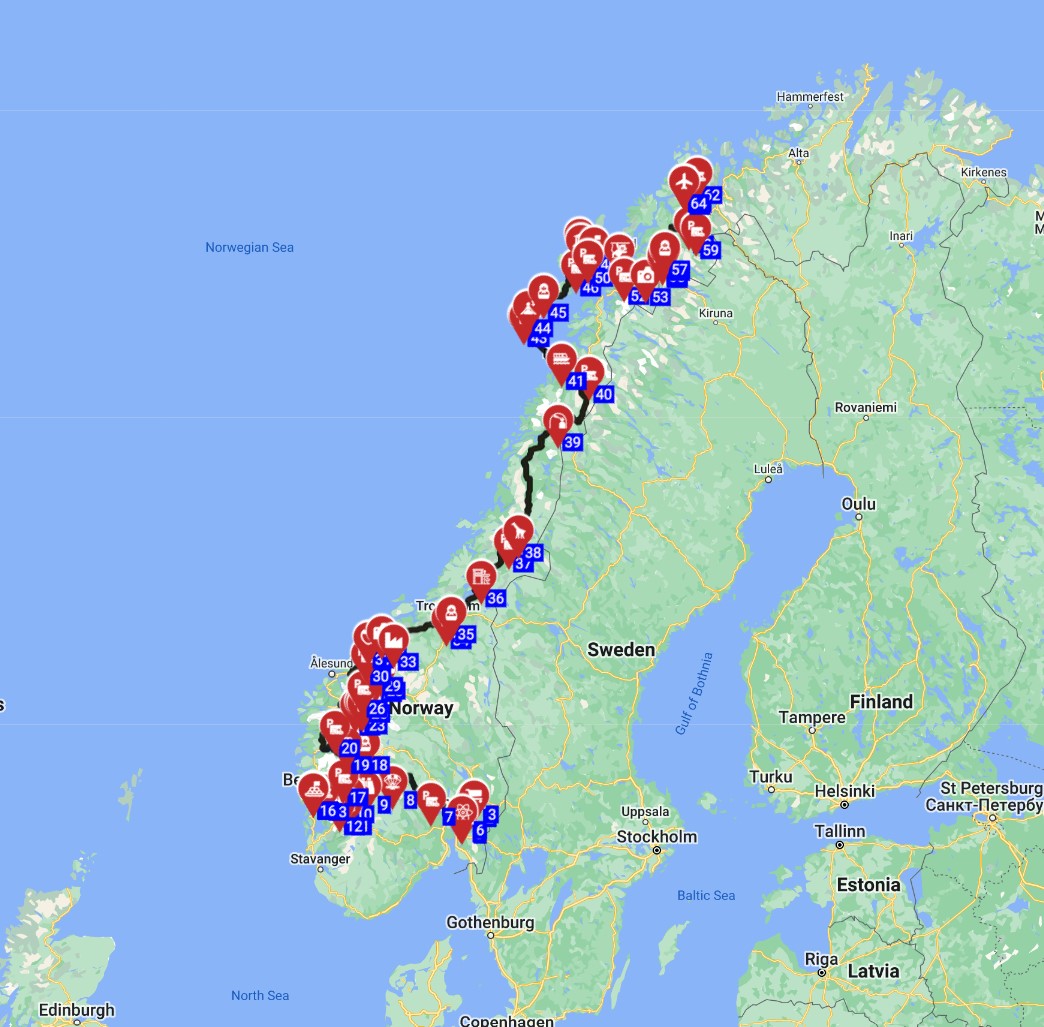
For those seeking an epic European RV adventure that concludes in the Norwegian capital, consider the 'Rovaniemi to Oslo one way - The Nordic Explorer’s Route'. This extensive 28-day journey covers over 5,014.9 km, starting in Rovaniemi, Finland, and traversing through stunning Nordic landscapes before ending in Oslo, Norway. It's a fantastic way to experience the vastness and diversity of the Nordic region with a rented campervan. You can itemize and track every expense along the way for easy budgeting with RV PLANET routes. Another excellent option for exploring the local area is the "Oslo Roundtrip" itinerary, a 13-day journey covering 2168.9 km that starts and ends in Oslo. This itinerary includes 1 Amusement Park, 1 Aquarium, 1 Art Gallery, 1 Beach, 1 Bike Rental, 1 Canoe / Kayak / Rafting, 2 Day Tour options, 1 hiking area, 1 Historical Site, 1 Horseback Riding opportunity, 1 Local Industry visit, 4 Museums, 2 Natural Features, 1 Tourist Attraction, 2 Traditional Markets, 1 Traditional Visit, and 1 Zoo. It's a diverse route that promises a rich exploration of the Oslo region. For those considering a northward journey, the "Oslo to Tromsø - Fjord & Peaks Discovery Drive" is a 20-day, 3443.5 km route that showcases incredible Norwegian scenery, featuring 1 Animals Show / Wildlife watch, 1 Aquarium, 1 Bike Rental, 2 Botanical gardens, 1 Cable Railway, 2 Canoe / Kayak / Rafting spots, 1 cave, 4 Cruise Terminal / Sailing opportunities, 1 Extreme Activity, 1 Family Activity, 2 hiking areas, 1 Local Industry, 2 Museums, 4 Natural Features, 2 Points Of Interest, 2 Scenic Routes, 1 Science Site, 1 Tourist Attraction, 2 Traditional Markets, 2 Traditional Restaurants / Fine Dining experiences, 4 Traditional Visits, 1 Water Park, and 2 Zoos. This comprehensive itinerary guarantees a deep dive into Norway’s diverse offerings. Conversely, the "
Tromsø to Oslo - Nordic Nature Escape
Must-See Stops Along the Way (Avi Bandana Picks)
Avi Bandana’s top picks from the 'Rovaniemi to Oslo one way - The Nordic Explorer’s Route' emphasize cultural immersion and unique local experiences for RV travelers. These recommendations help you connect deeply with the regions you visit.- Traditional Markets: Seek out local traditional markets (like the 3 available on the route) to experience authentic Nordic culture, sample regional produce, and find unique souvenirs. These offer a fantastic insight into daily life, and a great opportunity to stock your RV kitchen with fresh ingredients.
- Traditional Restaurants / Fine Dining: Indulge in traditional Norwegian cuisine at one of the Traditional Restaurant / Fine Dining spots (2 on the route). Savor local delicacies and experience the distinct flavors of the region.
- Local Industry Visits: Discover a Local Industry (1 on the route) to understand the craftsmanship and production that define Nordic communities. This provides a fascinating behind-the-scenes look at local heritage and provides unique learning experiences.
- Traditional Visits: Engage in Traditional Visit experiences (3 on the route) that offer deep dives into historical sites, cultural practices, or unique local customs, enriching your understanding of the regions you traverse.
Daily Driving Distances & Drive Times in Oslo
Avi Bandana recommends a maximum of 100 miles or 150 km per day on average to ensure a relaxed pace, allowing ample time for sightseeing and enjoying the journey rather than rushing through the stunning landscapes of Norway. Driving times in Norway can often be longer than expected due to winding roads, mountainous terrain, frequent ferry crossings, and lower speed limits, so plan accordingly.- Oslo to Lillehammer: Approximately 170 km (105 miles), taking around 2.5-3 hours of driving.
- Oslo to Fredrikstad: Approximately 90 km (56 miles), taking about 1.5 hours of driving.
- Oslo to Kongsberg: Approximately 80 km (50 miles), requiring about 1.5 hours of driving.
Best RV Class for This Itinerary - Couple & Family Picks
Choosing the right rented RV for your Oslo itinerary depends on your group size and desired comfort, and Bandana’s 'Rent&Plan' service can help match you with the perfect vehicle and a ready-made itinerary, simplifying your cheap RV rental in Oslo.- For Couples: Class B - Camper Van – Ideal for two adults, Bandana's fleet typically offers Class B Camper Vans with an average length of 5.8 meters and sleeping places for 3.2, comfortably accommodating 2.7 adults. These smaller motorhomes are easy to maneuver on Norway's narrower roads while offering efficient fuel consumption (around 10 Liters/100 Km). They are perfect for navigating the winding coastal roads and smaller towns along the Oslofjord.
- For Families: Class C - Alcove – For families traveling with children, Bandana's fleet typically features Class C Alcove models averaging 7.5 meters in length, providing ample space with sleeping places for 5.8 and comfortably fitting 4.4 adults. These motorhomes ensure a comfortable journey with dedicated sleeping areas for kids and an average fuel consumption of 10-12 Liters/100 km. Vehicles like the "cruise america rv rental example Explorer" with a 160/220cm bed over the cab and a 163/210cm double bed offer great family sleeping arrangements with a 75 Liter fuel tank and 82 Liter fresh water tank.
Is Norway RV friendly?
Norway is highly RV friendly, boasting breathtaking landscapes, well-maintained infrastructure, and a widespread network of campsites and facilities, although understanding local regulations for motorhomes is crucial.- Infrastructure: Norway offers numerous campgrounds equipped with electricity hookups, fresh water, and dump stations, particularly along popular tourist routes and near cities like Oslo. Designated RV parking spots are also common outside city centers, allowing for convenient access to public transport.
- Roads & Navigation: Roads are generally in excellent condition, but many scenic routes, especially in fjord regions, can be narrow and winding. Drive slowly and carefully, and you can drive almost anywhere without issues. No need to stress - just use common sense and pay attention. RVs should be mindful of vehicle dimensions.
- Wild Camping (Allemannsretten): While the 'Right to Roam' (allemannsretten) allows access to nature, it applies differently to motorhomes than tents. RVs are generally restricted from wild camping on private land, within 150 meters of inhabited buildings, or for more than two consecutive nights in one spot without explicit permission. Therefore, designated campsites remain the most reliable and recommended option for overnight stays.
What is the most beautiful road trip in Norway?
While beauty is subjective and Norway offers countless stunning drives, many enthusiasts consider the Western Fjords route, encompassing iconic drives like the Atlantic Ocean Road, Trollstigen, and parts of the National Tourist Routes, to be Norway’s most stunning RV road trip. This contrasts with the more gentle Oslofjord views.- Western Fjords: This region, more accessible from Bergen than Oslo, offers dramatic landscapes of deep blue fjords, towering mountains, and cascading waterfalls, providing the quintessential Norwegian experience.
- National Tourist Routes: Norway has 18 designated National Tourist Routes, each selected for its outstanding natural beauty and cultural significance, such as the Geiranger-Trollstigen and Hardanger routes. These routes are meticulously planned with viewpoints and facilities, making them ideal for a rented motorhome adventure.
- Atlantic Ocean Road (Atlanterhavsveien): Famous for its serpentine bridges connecting islets and skerries over 8.3 kilometers, this road offers a unique driving experience along the Norwegian Sea, often cited as one of the world's most beautiful drives. For a more detailed look at the costs involved in such a journey, see our "RV Rental in Oslo - Prices and Best Deals 2026" guide.
How much per day does it cost to rent a camper van in Norway?
The daily cost to rent a camper van in Norway typically ranges from €100-€250, but a comprehensive budget for RV travel must also account for additional expenses like tolls, ferries, fuel, and campground fees, all of which are crucial considerations for a cheap RV rental in Oslo.- Rental Costs: Prices fluctuate based on season (highest in July/August), RV class (smaller camper vans like a Category Van are generally cheaper), rental duration (longer rentals often have lower daily rates), and booking lead time. Booking several months ahead, for example, can secure better rates.
- Fuel: Norway has some of the highest fuel prices in Europe, so budget accordingly. A camper van typically consumes 10-12 Liters/100 km, so for a 600 km trip, you might expect around 60-72 liters of fuel.
- Tolls (AutoPASS): Norway has an extensive toll road network, and most RVs are automatically registered via the AutoPASS system, with bills sent to the rental company. Clarify toll payment procedures with your rental provider as these costs can accumulate significantly over an extended road trip.
- Ferries: Frequent car ferries are essential for navigating many fjord regions; costs vary by vehicle size and distance, so factor these into your daily budget. For example, a short ferry crossing could cost €10-€30, while longer ones can be more.
- Campground Fees: Expect to pay €30-€60 per night for a pitch with electricity at most Norwegian campgrounds, which are well-equipped with amenities. Many national parks also offer more basic sites that can be slightly cheaper. For finding campsites and campgrounds during your trip, we recommend using RV PLANET (rvplan.net) - a great resource for locating available spots along your route. You can also explore options for one-way journeys through our "One-Way RV Rental in Oslo - Price Guide 2026" to potentially optimize costs.
Can you park a motorhome anywhere in Norway?
No, while Norway’s liberal 'Right to Roam' (allemannsretten) provides significant access to nature for tents, motorhome parking in Oslo and other urban areas is subject to stricter rules, especially concerning proximity to dwellings, duration, and urban zones.- Allemannsretten for Motorhomes: Motorhomes are generally not covered by the same extensive wild camping rights as hikers with tents. Overnight parking is usually permitted only in designated areas, or on private land with the owner's explicit permission. This differs from remote wilderness areas where tent camping is broadly allowed.
- General Rules: When parking overnight with your rented RV, always maintain at least 150 meters distance from inhabited houses or cabins, avoid blocking access roads, and strictly respect 'No Camping' or 'No Overnight Parking' signs. Common sense and respect for local communities are paramount.
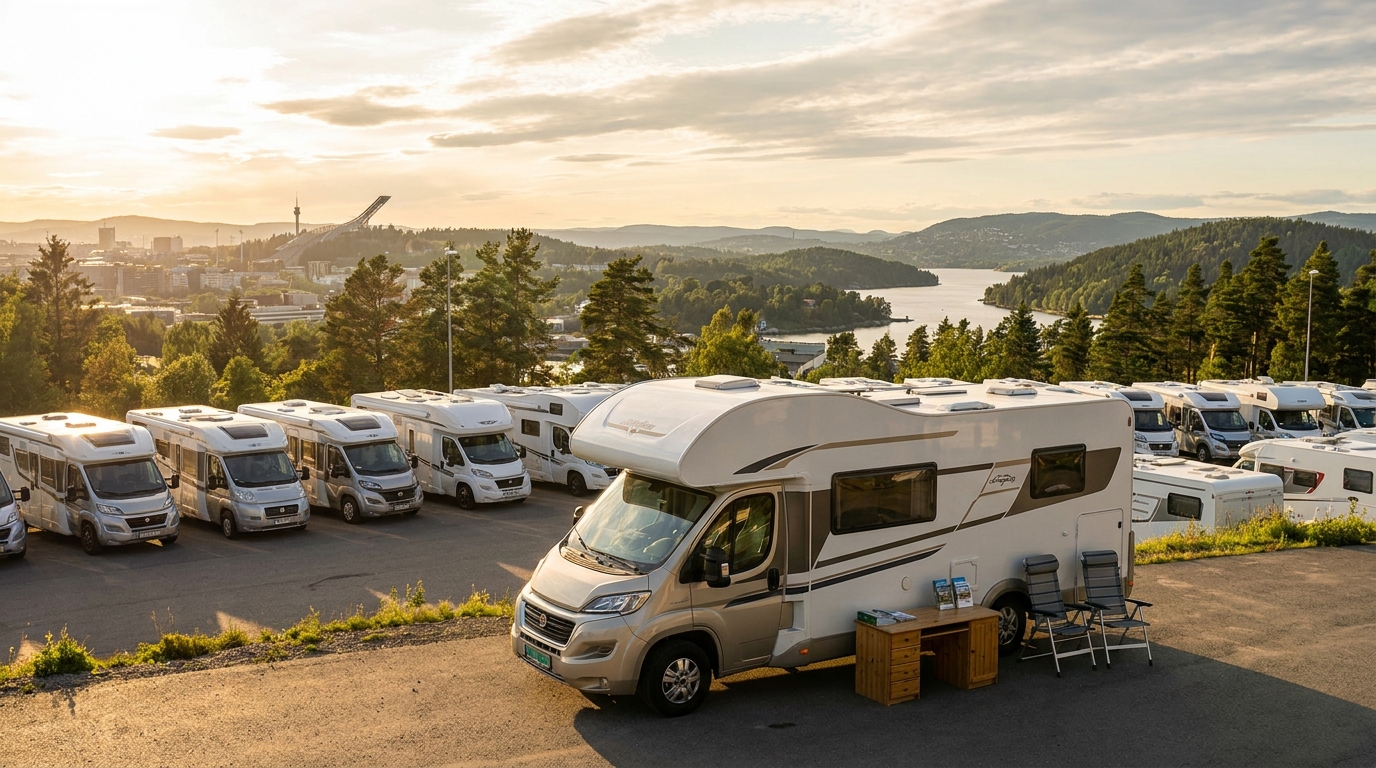
- Urban Areas (Oslo): In Oslo and other major cities, street parking for large RVs is extremely limited, often restricted, and can be very expensive. The best approach is to utilize designated RV parking lots or campgrounds located on the city outskirts, such as Ekeberg Camping or Bogstad Camping, and use public transport for city exploration. Trying to find parking in the city center for a motorhome can be challenging and is generally not recommended. For further advice on this, check out "Driving an RV in Oslo - Complete Guide 2026".
What to do in Oslo on a budget?
Exploring Oslo on a budget is highly achievable by leveraging numerous free attractions, self-catering with your rented RV, and utilizing the city's efficient public transport system after parking your campervan outside the central zone.- Free Attractions: Visit the magnificent Frogner Park, which houses the unique Vigeland Sculpture Park, offering hours of artistic and natural enjoyment for free. Walk on the iconic sloping roof of the Oslo Opera House for panoramic city and fjord views, explore the vibrant Aker Brygge waterfront, and hike in the beautiful Ekebergparken Sculpture Park, which also boasts ancient cultural heritage sites.
- Public Transport Integration: Park your RV at a campground slightly outside the city center, such as Ekeberg Camping (with stunning views over the Oslofjord) or Bogstad Camping. From there, purchase an Ruter ticket or an Oslo Pass for unlimited public transport access, allowing you to avoid expensive city parking fees and traffic. Public transport in Oslo is extensive and very reliable.
- Self-Catering: Utilize your RV's kitchen facilities by buying groceries from affordable supermarkets like Kiwi, Rema 1000, or Coop, which are significantly cheaper than dining out in Oslo. This allows you to prepare delicious meals on board, saving a substantial amount over the course of your trip.
Is Oslo cheap for tourists?
Oslo is widely considered one of the most expensive cities for tourists globally, with high costs for accommodation, dining, and alcohol, though strategic planning with a rented RV can help significantly mitigate these expenses.- High Costs: Expect higher prices for hotels, restaurant meals, and alcoholic beverages compared to many other European capitals. A typical restaurant meal can easily exceed €30-€50 per person, and even simple coffees are pricier.
- Budget Strategies for RV Travelers: Opting for a rented RV significantly reduces accommodation costs, which are often the largest expense in Oslo. By self-catering and preparing most of your meals in your RV, you can save substantially on food. Focusing on free attractions and efficiently using public transport from your campground also helps manage daily expenses effectively, making a cheap RV rental in Oslo a smart choice.
- Oslo Pass: Consider an Oslo Pass for free entry to many museums and unlimited public transport, which can offer good value if you plan extensive sightseeing across multiple paid attractions. This can be a worthwhile investment despite its upfront cost. For more budget-specific tips, explore our "Cheap RV Rental in Oslo - Budget Guide 2026".
Are fjords better in Oslo or Bergen?
The most dramatic and iconic fjords of Norway, such as the UNESCO-listed Nærøyfjord and the vast Sognefjord, are significantly more accessible and numerous from Bergen than from Oslo, which offers a more gentle fjord experience in the Oslofjord.- Oslofjord: While beautiful and easily accessible from the capital, the Oslofjord is broader and less dramatic, characterized by rolling hills, charming islands, and sandy beaches rather than the steep, towering cliffs and narrow channels found further west. It provides a lovely coastal experience, but not the epic fjord grandeur.
- Bergen as the 'Gateway to the Fjords': Bergen's location on Norway's west coast provides direct access to the famous Western Fjords, making it the ideal starting point for exploring the quintessential Norwegian fjord landscapes with their sheer cliffs, deep waters, and picturesque villages. If your primary goal is to see the most impressive fjords, an itinerary starting or passing through Bergen, perhaps as part of a "Luxury RV Rental in Oslo - Premium Prices 2026" package that includes wider travel, would be more suitable.
What You Shouldn't Miss
- **Explore Frogner Park and Vigeland Sculpture Park:** This enormous public park in Oslo is home to the unique and compelling sculptures by Gustav Vigeland, offering a fascinating and free cultural experience.
- **Walk the Roof of the Oslo Opera House:** Enjoy breathtaking panoramic views of the city, the harbor, and the Oslofjord by walking directly on the sloped roof of this stunning architectural masterpiece.
- **Visit the Viking Ship Museum (Temporarily Closed for Rebuilding):** While the original museum is closed, its fascinating collection of well-preserved Viking ships and artifacts will eventually be part of the new Museum of the Viking Age, a must-see for history enthusiasts.
- **Discover Ekebergparken Sculpture Park:** This art and cultural heritage park on a hillside offers incredible views of Oslo, contemporary sculptures, and ancient burial mounds dating back to the Bronze Age. You can park your RV at Ekeberg Camping nearby and take public transport down.
- **Experience the Telemark Canal:** For a unique historical and scenic journey, take a boat trip along parts of the Telemark Canal, an engineering marvel from the 19th century connecting the coast with the inland lakes of Telemark.