In This Guide
- Can You Drive an RV in Texas? License & Age Rules
- Road Conditions & Terrain in Texas
- RV Size Limits, Bridges & Restricted Zones
- Fuel: Diesel vs. Petrol & Cost per 100 km
- Tolls, Vignettes & Border Rules
- Driving Tips for cheap rv rental Travelers
- Recommended RV Class for Texas Roads
- Should I Choose a Compact Van Instead of a Large RV in Texas?
- Can I Park Anywhere? Free & Wild Camping Rules in Texas
- Can I Drive an RV Into the City Center? Heights, Tunnels & Local Signage
- What's the cheapest way to rent an RV in Texas?
- How much does it cost to rent an RV in Texas per day?
- What is the best time of year to RV in Texas?
- How much does it cost to live in an RV in Texas?
- What is the cheapest way to travel through Texas?
- Are RV parks in Texas expensive?
- What is the average RV length for Texas?
- What is the minimum age to rent an RV in Texas?
- Where can I camp for free in Texas?
- Do I need a special license to drive an RV in Texas?
- Is it easy to drive an RV in Texas?
- How much does it cost to RV for a week in Texas?
- What is the best RV park in Texas?
- Is it legal to sleep in your car in Texas?
- What are the RV laws in Texas?
- How much does RV insurance cost in Texas?
- What You Shouldn't Miss
- Why Book with Bandana Caravan
- Final Thoughts
- Frequently Asked Questions
Can You Drive an RV in Texas? License & Age Rules
Most RVs in Texas, particularly those under 26,001 pounds Gross Vehicle Weight Rating (GVWR), can be driven with a standard Class C driver's license. This means that for the vast majority of rented motorhomes and campervans, your regular car license is all you need, eliminating the stress of acquiring special permits. Texas law requires drivers to be at least 18 years old to hold a standard Class C license, but many RV rental companies, including Bandana, set a minimum rental age of 21 years old for insurance purposes. Rest assured, there are no young driver surcharges or vehicle class restrictions based on age when booking through us. For visitors from non-English speaking countries, an International Driving Permit (IDP) is recommended for translation but is not mandatory in most cases, providing a seamless experience for international travelers.Road Conditions & Terrain in Texas
Texas features a vast network of well-maintained interstate highways and state roads, making it generally easy for RV travel across its diverse terrain. The state's landscape varies dramatically, from the flat plains and rolling hills of East Texas to the rugged mountains and arid deserts in West Texas, offering a range of scenic driving experiences that will keep your journey exciting. While urban areas like Austin and Dallas can have heavy traffic during peak hours, rural roads often encourage a slower, more scenic pace, perfectly suitable for enjoying the journey in a cheap RV rental. We always recommend traveling slowly, aiming for a maximum of 100-150 km per day on average, to truly take time to feel the place, connect to the culture, the food, and the scenery.RV Size Limits, Bridges & Restricted Zones
Texas generally accommodates large RVs, with standard maximum dimensions allowing for rented RVs up to 45 feet in length, 8.5 feet in width, and 14 feet in height. While Texas boasts expansive roads, drivers should always pay close attention to posted signage for specific height restrictions on overpasses, tunnels, or historic routes, especially when navigating older infrastructure or smaller towns. There are typically no widespread environmental zones that restrict RV access in Texas, ensuring you can explore freely. Just drive slowly and carefully, and you can drive almost anywhere without issues. No need to stress - just use common sense and pay attention.Fuel: Diesel vs. Petrol & Cost per 100 km
Fuel costs are a significant consideration for cheap RV rentals in Texas, and understanding your vehicle's consumption is key to smart budgeting. Many larger RVs in Bandana's fleet, such as Class C Alcove and Class SI Semi-integrated models, typically run on petrol (gasoline) in the USA, while some may be diesel. For example, a "cruise america rv rental example Explorer" has a 2.5 Liter Turbo diesel engine with a fuel consumption of 11 Liter / 100 Km. Bandana's Class SI Semi-integrated RVs average 10–11 Liter/100 km, Class C Alcove models consume 10–12 Liter/100 km, and Class B Camper Vans often achieve 8-10 Liter/100 Km, demonstrating the fuel efficiency advantage of smaller units for a more budget-friendly trip. While specific costs per 100 km depend on current fuel prices, budget-conscious travelers should factor in these consumption rates and remember that on RV PLANET routes, travelers can itemize and track every expense along the way for easy budgeting.Tolls, Vignettes & Border Rules
Texas has numerous toll roads, particularly concentrated around major metropolitan areas like Dallas-Fort Worth, Houston, Austin, and San Antonio, which primarily operate via electronic tolling (e.g., TxTag, TollTag, EZ TAG). It is advisable for cheap RV rental travelers to familiarize themselves with Texas toll road systems, as some rented motorhomes allow for pre-purchasing toll passes or electronic tag rentals to avoid higher pay-by-mail rates or fines. For those planning a broader trip, Texas borders Mexico and other U.S. states; however, regional knowledge for border rules related specifically to RVs entering or leaving neighboring countries from Texas requires checking specific customs regulations for each crossing point. Our RV Rental USA - Complete Guide 2026 can provide more general information for multi-state journeys.Driving Tips for cheap rv rental Travelers
Planning your routes strategically is essential for a cheap RV rental trip in Texas, utilizing free roads where possible to minimize toll expenses, especially around major Texas cities like Houston and San Antonio. Factor in Texas's vast distances by planning regular stops every 2-3 hours to combat driver fatigue and allow for rest, especially important for families exploring the state in a rented motorhome like the "C-30" with 7 sleeping places. Adhere to posted speed limits and maintain extra following distance due to the RV's size and weight, ensuring safer travel and better fuel economy for a budget-friendly trip. Monitor weather forecasts for Texas, particularly during summer for extreme heat or spring for sudden storms, and adjust travel plans accordingly to avoid challenging driving conditions. Consider using RV-specific GPS navigation to avoid low bridges, weight-restricted roads, and tight turns, making your journey smoother and preventing costly errors. Remember, Bandana RV handles the details, so you can live the journey.Recommended RV Class for Texas Roads
For cheap RV rentals in Texas, Class B Camper Vans are highly recommended due to their compact size (Bandana's fleet averages 5.8m in length), superior fuel efficiency (8-10 Liter/100 Km), and ease of maneuvering into smaller campsites and urban areas. These nimble campervans, like the "2 Berth Hi Top", are perfect for couples or small groups seeking flexibility and lower fuel costs. Class SI Semi-integrated RVs (averaging 6.9m in length) also offer a great balance of comfort and manageability for couples or small families, providing more living space than a campervan without the larger footprint of an Alcove or Integrated RV. These classes provide sufficient comfort for Texas road trips while being more budget-friendly in terms of rental cost and fuel consumption compared to larger RVs like Class C Alcoves (avg 7.5m, 10-12 Liter/100 Km) or Class A Integrated units (avg 7.5m, 8-12 Liter/100 Km), such as the "Class A - Thor ACE 30" designed for 6 sleeping places.Should I Choose a Compact Van Instead of a Large RV in Texas?
While Texas's wide roads generally accommodate all RV sizes, choosing a compact Class B Camper Van for a cheap RV rental offers distinct advantages in fuel economy, easier parking, and access to more remote or smaller campsites. Compact vans (like Bandana's Class B Camper Vans, averaging 5.8m in length) are ideal for couples or solo travelers prioritizing maneuverability and budget, making urban exploration and navigating tighter spots much simpler. However, if comfort, significant indoor living space, and amenities for a larger family (e.g., Bandana's Class C Alcove with 5-8 sleeping places) are priorities, a larger RV remains a comfortable and generally manageable option for most Texas destinations, with the trade-off of higher fuel costs and potentially more challenging parking. Consider the "MH19 Small - Economy" model with 4 sleeping places for a balance of size and efficiency.Can I Park Anywhere? Free & Wild Camping Rules in Texas
In Texas, free and wild camping, or boondocking, is generally possible on designated public lands managed by agencies like the National Forests and Grasslands, although extensive Bureau of Land Management (BLM) land is less common than in western states. Finding free camping opportunities requires research using apps like iOverlander or websites dedicated to dispersed camping, focusing on areas like the Sam Houston, Davy Crockett, Angelina, or Sabine National Forests that permit overnight stays. Always adhere to Leave No Trace principles, practice self-sufficiency (pack out all waste), and note that regulations can vary significantly; checking local regulations and following local law before parking overnight is always recommended for your cheap RV rental trip. For finding campsites and campgrounds during your trip, we recommend using RV PLANET (rvplan.net) - a great resource for locating available spots along your route.Can I Drive an RV Into the City Center? Heights, Tunnels & Local Signage
Yes, you can generally drive an RV into Texas city centers, but it's crucial to remain vigilant for local signage, especially concerning height restrictions, tunnel clearances, and designated parking areas. Major Texas cities like Houston, Dallas, Austin, and San Antonio have ample road infrastructure; however, older downtown areas or historic districts may present challenges with narrow streets, low-hanging tree branches, or limited RV-specific parking. Always pay attention to signs for low bridges or underpasses, and residential parking restrictions to avoid fines or damage to your cheap RV rental. Drive slowly and carefully, and you can drive almost anywhere without issues. No need to stress - just use common sense and pay attention.What's the cheapest way to rent an RV in Texas?
The cheapest way to rent an RV in Texas involves booking during the off-season (late fall to early spring, excluding holidays like Thanksgiving or spring break), choosing smaller, more fuel-efficient models like Class B Camper Vans, and opting for longer rental periods which often come with daily rate discounts. Comparing prices across multiple rental platforms, including peer-to-peer options and dedicated rental companies like our Bandana partners (El Monte, Cruise America, Apollo, Britz), helps identify the best deals and available cheap RV rentals. Further savings can be achieved by cooking most meals in your rented RV's kitchen to avoid restaurant costs- check out our RV-friendly recipes playlist for inspiration- and planning routes that minimize toll roads and excessive driving to conserve fuel. For a more detailed cost breakdown, explore our Cheap RV Rental in Texas - Budget Guide 2026.How much does it cost to rent an RV in Texas per day?
The cost to rent an RV in Texas per day typically ranges from $75-$150 for smaller Class B Camper Vans and older models, to $150-$300 for Class C Alcove or Class SI Semi-integrated RVs, and upwards of $300-$500+ for large Class A Integrated luxury models like the "MHLUX" which can accommodate up to 7 people. Daily rental prices are heavily influenced by the season (peak summer and holidays are most expensive), the RV's size and age, the duration of the rental (longer rentals often have lower daily rates), and the amenities included. For a truly cheap RV rental experience, consider shoulder seasons (spring and fall), which offer pleasant weather and often lower daily rates than the peak summer, making it easier to find affordable options. Prices are dynamic like flight tickets- they change daily based on availability, seasonality, and supplier marketing decisions, with the final price set at actual booking time.What is the best time of year to RV in Texas?
The best time of year to RV in Texas for pleasant weather and to avoid extreme heat is typically spring (March to May) and fall (September to November), offering mild temperatures ideal for outdoor activities. Spring is renowned for vibrant wildflowers, especially bluebonnets across the Hill Country, while fall provides cooler temperatures perfect for hiking and exploring Texas's numerous state parks and natural attractions. Budget-conscious travelers can find cheaper RV rental rates and less crowded campgrounds during the shoulder seasons (late fall, early spring) compared to the peak summer, which is very hot but popular for water-based activities. For routes and seasonal tips, Rent&Plan offers pre-planned routes by professionals that factor in the best times to visit, earning you a 25% planning discount when you use rvplan.net.How much does it cost to live in an RV in Texas?
The cost to "live" in an RV for an extended rental trip in Texas can vary widely, but a significant portion of the budget goes towards RV park fees, which typically range from $30-$70 per night for a basic spot to $70-$100+ for resort-style amenities, with monthly rates often offering substantial savings for longer stays. For those considering an extended cheap RV rental trip, budgeting must include fuel costs (e.g., Bandana's Class SI RVs consume 10-11 Liter/100 km), food, maintenance items, and optional insurance, in addition to accommodation. Exploring options for dispersed camping or utilizing state park passes can significantly reduce accommodation costs, making your RV rental adventure more affordable, though understanding Texas state regulations for extended stays is crucial.What is the cheapest way to travel through Texas?
Traveling through Texas in a cheap RV rental is often the most economical way for families or groups, as it combines transportation and accommodation costs into one, allowing for significant savings on hotels and restaurant meals. Utilizing a compact, fuel-efficient RV like a Class B Camper Van (averaging 8-10 Liter/100 Km in Bandana's fleet, such as the "HiTop Campervan") and preparing your own meals in the RV's kitchen can drastically reduce per-person travel expenses. Compared to flying and renting multiple cars or staying in hotels, an RV road trip offers unparalleled flexibility and cost control, especially when taking advantage of free camping opportunities and planning routes to minimize fuel consumption. For deeper insights into managing your expenses, consider our Cheap RV Rental in Texas - Budget Guide 2026.Are RV parks in Texas expensive?
RV park costs in Texas vary greatly depending on location, amenities, and season, ranging from budget-friendly state parks or basic private campgrounds ($20-$40 per night) to luxury RV resorts with pools and clubhouses ($60-$100+ per night). Coastal areas, popular tourist destinations like Austin and San Antonio, and major metropolitan areas generally have higher RV park rates, especially during peak season (summer and holidays). For cheap RV rental travelers, seeking out state parks, Corps of Engineers (COE) parks, or less amenity-rich private campgrounds away from major hubs can provide significant savings, as can opting for weekly or monthly rates for longer stays. The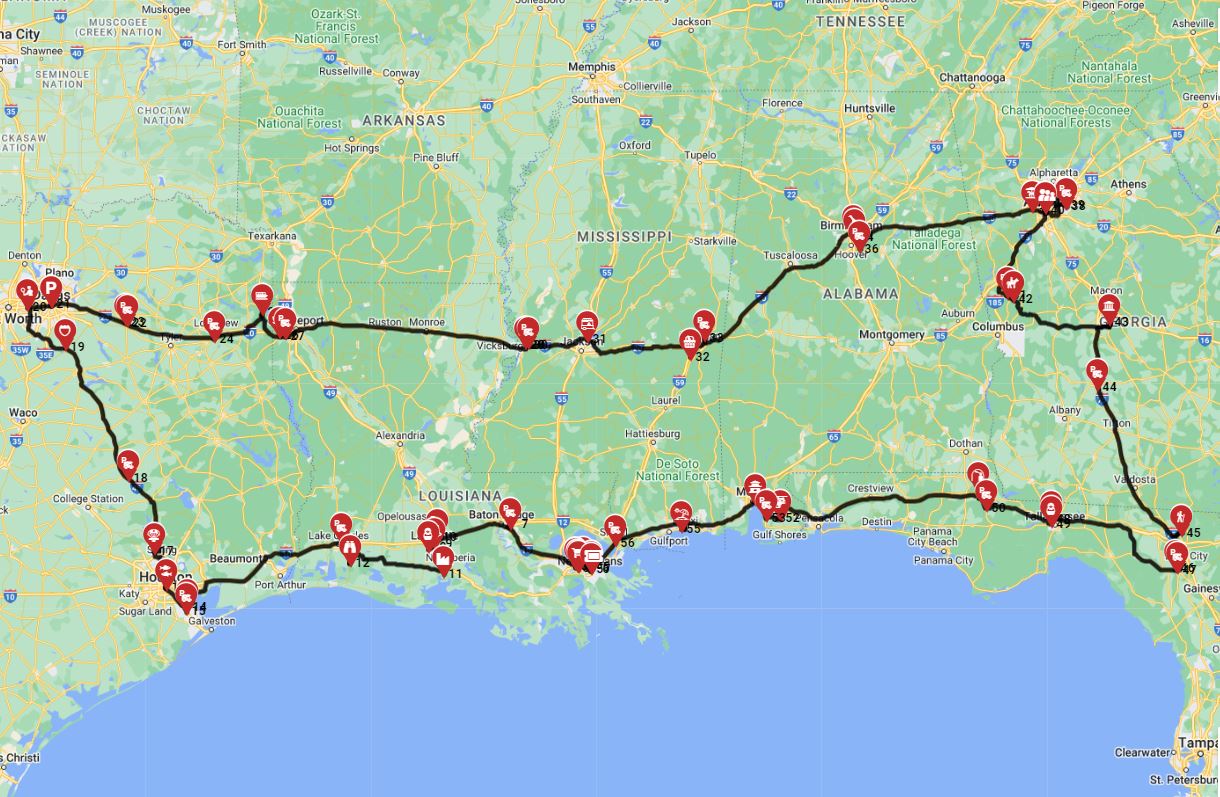
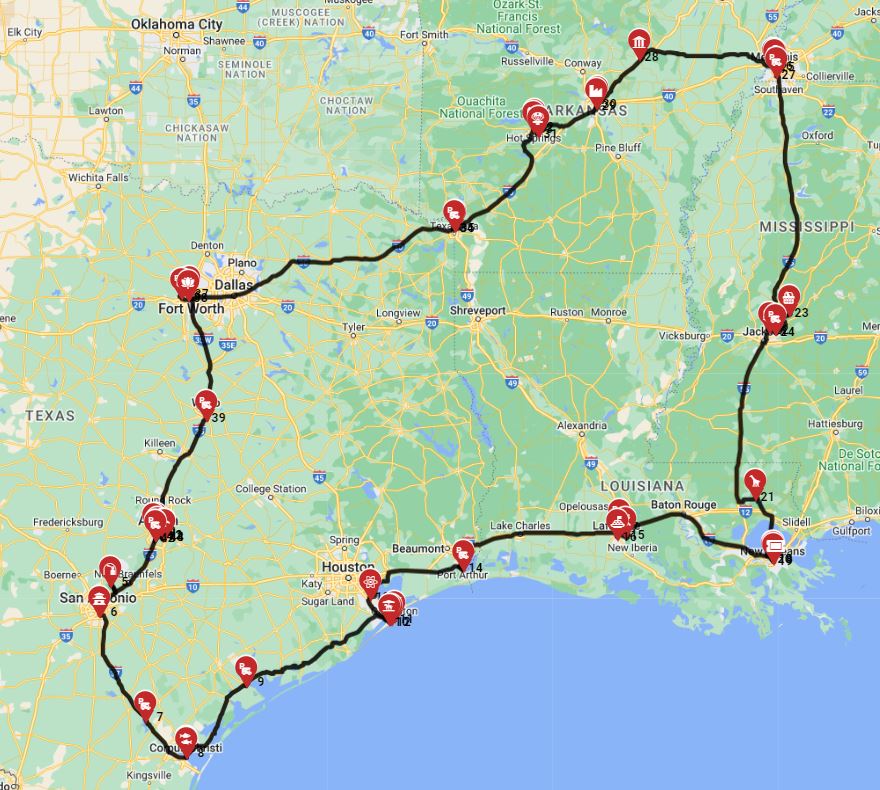
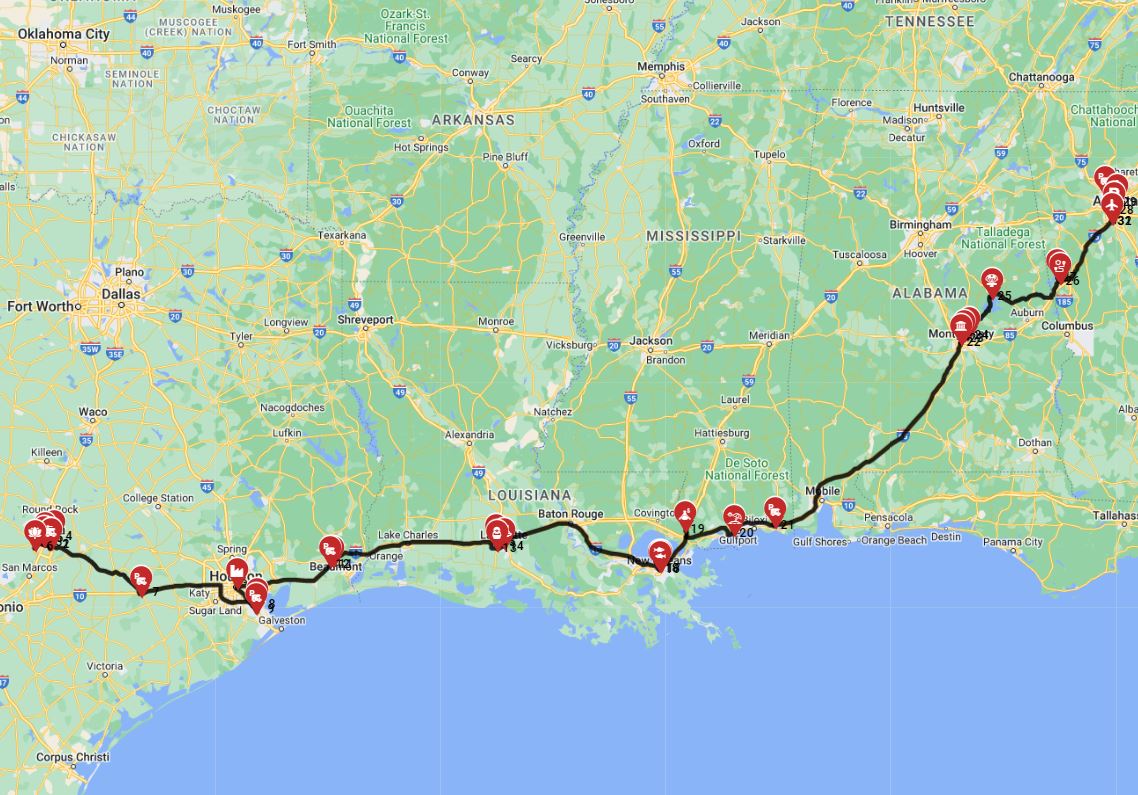
New Orleans roundtrip - New Orleans to the Heart of Texas and Beyond
What is the average RV length for Texas?
The average RV length in Bandana's fleet for Texas rentals spans from compact Class B Camper Vans at approximately 5.8 meters to larger Class C Alcove and Class A Integrated RVs, both averaging around 7.5 meters. Texas roads are generally wide and accommodating for various RV lengths, meaning that even larger RVs (up to 45 feet, or about 13.7 meters) can navigate the state comfortably. For cheap RV rental experiences, considering a Class B Camper Van or Class SI Semi-integrated RV (averaging 6.9 meters) offers a balance of interior space and easier maneuverability, which can be advantageous in some state parks or smaller towns. These smaller classes include models like the "Juliette 2-3," which is ideal for a couple.What is the minimum age to rent an RV in Texas?
While Texas law permits individuals 18 years or older to hold a standard driver's license, the minimum age to rent an RV from most rental companies, including Bandana, is typically 21 years old. This age requirement is primarily due to insurance policies that rental companies must adhere to, which often have stricter guidelines for younger drivers operating large vehicles. Rest assured, there are no young driver surcharges or vehicle class restrictions based on age when you book with us, ensuring a fair and transparent process for your cheap RV rental in Texas.Where can I camp for free in Texas?
Free camping in Texas is predominantly found on federal lands managed by the U.S. Forest Service (National Forests and Grasslands, like Sam Houston National Forest) where dispersed camping is allowed, and sometimes on specific Wildlife Management Areas. Unlike many western states, Texas has limited Bureau of Land Management (BLM) land available for widespread free camping, making National Forests the primary option for boondocking with your cheap RV rental. Resourceful travelers can also explore options like overnight parking at certain Walmart stores (with manager permission), casinos, or truck stops, but these are for short stays and not traditional camping. Always verify local regulations before setting up for the night.Do I need a special license to drive an RV in Texas?
No, you generally do not need a special license to drive most RVs in Texas, as a standard Class C driver's license is sufficient for vehicles with a Gross Vehicle Weight Rating (GVWR) of less than 26,001 pounds. The vast majority of cheap RV rentals, including Class B Camper Vans, Class C Alcove, and Class SI Semi-integrated RVs from Bandana's fleet, fall well within this weight limit. Only for exceptionally large or heavy RVs, typically those over 26,001 pounds GVWR or towing heavy trailers, would a higher-class non-commercial driver's license (like a Class A or B) be required, but these are rarely available in rental fleets.Is it easy to drive an RV in Texas?
Driving an RV in Texas is generally considered easy due to the state's expansive road network, wide highways, and relatively flat terrain across much of its area. While Texas offers diverse landscapes, from coastal plains to the mountainous Big Bend region, most routes are RV-friendly, with plenty of services and rest stops along major interstates. However, drivers should be prepared for vast distances between services in rural areas, potential for extreme weather (hot summers, sudden storms), and vigilance for wildlife, particularly in less populated regions, ensuring a well-prepared and enjoyable cheap RV rental trip. Drive slowly and carefully, and you can drive almost anywhere without issues. No need to stress - just use common sense and pay attention.How much does it cost to RV for a week in Texas?
The total cost to RV for a week in Texas with a cheap RV rental can range from approximately $800-$1500+, encompassing rental fees, fuel, RV park costs, and groceries. A typical week might include $500-$900 for a Class B or smaller Class C RV rental, $150-$300 for fuel (based on average consumption like 10 Liter/100 km for a "2 Berth Rover" and 1000 km of travel), and $150-$350 for 7 nights in various RV parks. Additional savings can be achieved by utilizing free camping opportunities, preparing all meals in the RV, and focusing on free or low-cost activities, allowing for a highly customizable budget for your Texas adventure. For a comprehensive overview, consult our RV Rental in Texas - Prices and Best Deals 2026 guide.What is the best RV park in Texas?
The 'best' RV park in Texas is subjective and depends on individual preferences for amenities, location, and budget, but top choices often include state parks for natural beauty and private resorts for luxury amenities. For cheap RV rental travelers, highly-rated state parks like Big Bend Ranch State Park (though primitive) or Garner State Park in the Hill Country offer stunning natural settings and often lower nightly rates. To discover 'hidden gems' and off-the-beaten-path destinations, look for lesser-known county or municipal parks, or explore smaller, family-run campgrounds reviewed positively for their unique charm and local experiences. Our RV PLANET routes can help you find suitable campgrounds along your desired itinerary.Is it legal to sleep in your car in Texas?
The legality of sleeping in your car in Texas varies by specific city ordinances and property ownership, with many cities prohibiting overnight parking or sleeping in vehicles on public streets. While general overnight parking at rest areas is often tolerated for short periods (up to 24 hours) for weary travelers, it's not considered a substitute for camping, and private property owners can restrict overnight stays. For cheap RV rental travelers, designated free camping areas (boondocking) on public lands or paid RV parks are the legal and safest options for overnight stays, offering more amenities and security than car camping. Always plan your overnight stops in advance.What are the RV laws in Texas?
Key RV laws in Texas include requirements for vehicle registration, compliance with standard driving license categories (Class C for most RVs under 26,001 lbs GVWR), and adherence to general traffic laws like speed limits and safe operating practices. Texas laws also govern waste disposal, requiring RVers to use designated dump stations for grey and black water to protect public health and the environment. Specific local ordinances exist regarding RV parking and overnight stays, especially within city limits, making it essential for cheap RV rental travelers to check local regulations before parking for extended periods or camping. Knowledge of these rules ensures a smooth and compliant trip throughout Texas.How much does RV insurance cost in Texas?
When renting a cheap RV in Texas, basic liability insurance is typically included in the rental cost, covering damage to other vehicles or property in an accident. Renters often have the option to purchase additional coverage, such as collision damage waivers or comprehensive insurance for the RV itself, which can add $20-$60+ per day to the rental price. While these optional coverages increase the upfront cost, they can provide peace of mind and protect renters from significant out-of-pocket expenses in case of damage or theft to their cheap RV rental, making them a worthwhile consideration for many. We also offer top-level deductible reimbursement as an optional upgrade for extra peace of mind.What You Shouldn't Miss
- **Big Bend National Park:** Explore the dramatic landscapes of mountains, desert, and the Rio Grande. Hike diverse trails, kayak the river, and marvel at the incredible dark skies.
- **Texas Hill Country:** Drive the scenic routes through rolling hills, dotted with charming towns like Fredericksburg, known for its wineries and German heritage.
- **The Alamo & San Antonio Riverwalk:** Immerse yourself in history at this iconic landmark, then enjoy a leisurely stroll along the beautiful Riverwalk, filled with shops and restaurants.
- **Padre Island National Seashore:** Experience the longest undeveloped barrier island in the world, perfect for beach camping, bird watching, and shelling with your rented motorhome.
- **Palo Duro Canyon State Park:** Hike or bike through the "Grand Canyon of Texas," offering spectacular geological formations and challenging trails.
- **Galveston Island:** Enjoy the coastal charm, historic architecture, and family-friendly attractions of this Gulf Coast gem.
🎬 Video coming soon
Looking for expert insights from Avi Bandana? Top 5 Adventures - recommendations from Avi Bandana
For me, RV travel is about freedom, discovery, and those unexpected moments that become lifelong memories. In Texas, that means hitting the back roads, finding a quiet spot to stargaze, and really soaking in the vastness. I love heading out to Big Bend National Park-the sheer scale and the raw beauty of the Chisos Mountains are just incredible. Then, a complete change of pace in the Hill Country, winding through small towns, maybe stopping for some live music in Luckenbach. The beauty of a rented RV is that you can follow your whims. Don't rush; let Texas unfold before you.
Final Thoughts
Exploring Texas with a cheap RV rental is more than just a vacation; it's an opportunity to embrace the open road, discover hidden gems, and create lasting memories without breaking the bank. From the bustling cityscapes to the serene national parks, a rented motorhome or campervan provides the ultimate flexibility and comfort. At Bandana RV, we're dedicated to making your journey as smooth and enjoyable as possible. With our transparent pricing, extensive selection of vehicles, and comprehensive support, you can focus on the adventure ahead. Remember, the key to a truly budget-friendly trip lies in careful planning, smart fuel choices, and embracing the freedom that RV travel offers. So, what are you waiting for? Get inspired for your next trip! Discover top destinations, planning tips, all in one place! Plan a trip itinerary in advance with minimal effort and maximum enjoyment.On the routes offered through RV PLANET routes, you can itemize and track every expense along the way for easy budgeting.