In This Guide
- Top 5 Tips for RV Rental in Paris
- Before You Book - Class, Dates, Insurance
- Pre-Trip Prep - Packing Checklist for Paris
- On the Road - Driving, Fueling, Navigation
- At the Campground - Setup, Hookups & Etiquette
- RV Rental-Specific Tips for Paris
- Common Mistakes to Avoid in Paris
- What are the new rules for motorhomes in France
- Is France motorhome friendly
- Do I need speed stickers on my motorhome in France
- What is the 3-3-3 rule when rving
- What is the 4-4-4 rule for rving
- How much does it cost to rent an RV in France
- What is the rule of 3 with an RV
Winter RV travel in Paris offers a unique and enchanting way to experience the City of Lights, often with fewer crowds and a magical atmosphere. Navigating an RV, motorhome, or campervan through France requires specific planning, especially when your route includes a bustling metropolis like Paris.
For live availability and current prices, start with our RV Rental Paris - Complete Guide 2026 guide. Bandana Caravan has been helping tens of thousands of travelers explore the world by RV since 2001, providing clear, honest advice and a wide range of rental options.
Top 5 Tips for RV Rental in Paris
Planning your RV rental in Paris requires attention to detail, especially regarding local regulations and logistics to ensure a smooth trip.
- Understand Paris's Crit'Air ZFE rules before driving near the city. Paris and its surrounding areas have Low Emission Zones (ZFEs) that restrict certain vehicles based on their Crit'Air vignette (emission sticker) during specific hours, typically Monday-Friday, 8 AM - 8 PM. Many rented diesel motorhomes, especially older models, may be prohibited from entering central Paris during these times. It's crucial to confirm your rented RV's Crit'Air class and plan to park at peripheral campsites or designated park-and-ride facilities outside the ZFE, then use public transportation like the RER (regional express train) or Metro to reach city attractions. This allows you to explore iconic sites like the Eiffel Tower and Notre Dame without worrying about driving restrictions.
- Book your RV and campsites well in advance, especially for peak season. While winter generally offers more availability, popular campgrounds near Paris, such as Camping Indigo Paris or Camping International de Maisons-Laffitte, can fill up, particularly during holiday periods. Early booking ensures you secure your preferred motorhome, potentially saving up to 15-20% on rental rates, and a convenient campsite location.
- Research peripheral campsites with good public transport links into Paris. Staying just outside the immediate city center is the most practical approach for RV travelers. Campsites like Camping Indigo Paris in Bois de Boulogne or Huttopia Versailles offer easy access to RER stations, allowing a stress-free commute into the heart of Paris in under 30-45 minutes.
- Familiarize yourself with mandatory French driving equipment like 'Angles Morts' stickers. All vehicles over 3.5 tonnes, including many Class C motorhomes, are legally required to display 'Angles Morts' (blind spot) stickers on their sides and rear. Additionally, all vehicles must carry a reflective safety vest for each occupant and a warning triangle. Ensure your rental supplier provides these or acquire them before you start your journey.
- Factor in additional costs like tolls, fuel, and specific RV parking fees. Beyond the initial RV rental cost for Paris, remember to budget for Autoroute (motorway) tolls, which can add €50-€100+ for a week-long trip depending on your route. Diesel fuel ('Gazole') averages around €1.80-€2.00 per liter in 2026. RV-specific parking, even outside the ZFE, can also incur daily fees, so integrating these into your travel budget is essential. RV PLANET routes offer an excellent way to itemize and track every expense along the way for easy budgeting.
Before You Book - Class, Dates, Insurance
Choosing the right motorhome and understanding your rental agreement are critical steps for a successful RV adventure in Paris.
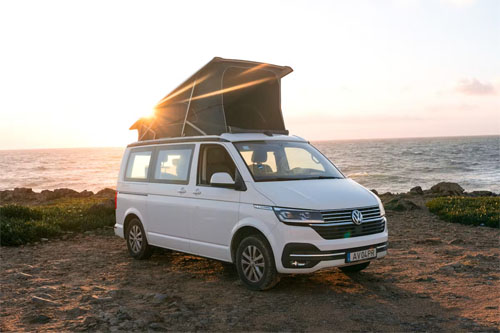
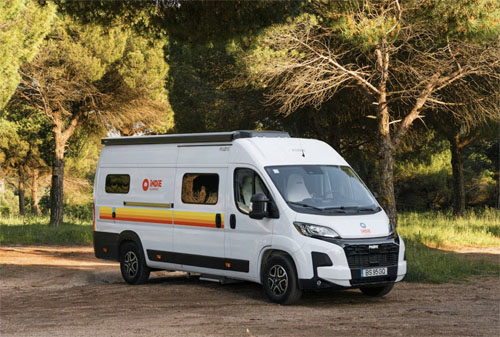
The type of rented motorhome you select significantly impacts your experience. A smaller campervan or Class B RV (like a "Category Van" or "Aero") offers excellent maneuverability on narrower French rural roads and is easier to park. These models typically sleep 2-4 people and consume less fuel, around 9-11 liters per 100 km. For families or larger groups of 4-6 people, a Class C (alcove) motorhome, such as a "Glamys 40" or "MH-C", provides more living space and separate sleeping areas, often with a double bed over the cab and additional rear beds. While larger, a Class C motorhome like the "24' Class C Motorhome" with a length of 7.46m offers a comfortable experience with a full kitchen and bathroom, and with careful driving, you can drive almost anywhere without issues. No need to stress - just use common sense and pay attention.
Secure your rental dates early, particularly for spring and summer, to ensure availability and better rates. During off-peak seasons, you might find more last-minute options, but booking 3-6 months in advance often results in savings up to 20% compared to booking closer to your travel date. Pricing for RV rentals, like flight tickets, is dynamic and changes daily based on availability, seasonality, and supplier marketing decisions. The final price is set at the actual booking time.
Basic insurance is always included with your motorhome rental. For complete peace of mind, you can upgrade to a top-level deductible for extra protection. When searching on Bandana Caravan, you can easily filter for options that include the most comprehensive coverage, ensuring full transparency with no hidden fees or surprises at pickup.
Pre-Trip Prep - Packing Checklist for Paris
A well-prepared packing list is essential for any RV trip, particularly for a winter adventure in Paris where comfort and practicality are key.
Clothing and Personal Items:
- Lightweight layers are crucial for adapting to varying temperatures, from cool mornings in Versailles to warm museum interiors in Paris.
- A rain jacket or umbrella is essential, as winter weather in Paris can be unpredictable with occasional rain showers.
- Comfortable walking shoes are a must for exploring Paris's many attractions on foot, especially navigating the extensive Metro system.
- Smart casual outfits are recommended for city dining experiences, ensuring you feel at ease in Parisian bistros.
Kitchen and Food Supplies:
- Reusable water bottles help reduce plastic waste and keep you hydrated while sightseeing.
- Coffee and tea supplies ensure you can enjoy warm beverages from your RV's kitchen, making chilly mornings more pleasant.
- Basic cooking spices allow you to prepare delicious meals in your motorhome, saving money and enjoying RV-friendly recipes playlist.
- A cooler bag is useful for day trips, keeping snacks and drinks fresh while you explore outside your campervan.
Safety and Navigation Gear:
- A comprehensive first-aid kit is always a smart addition to any travel gear.
- A GPS with RV-specific settings helps avoid low bridges and narrow streets, crucial when driving a larger vehicle like a Class C motorhome (e.g., "MHC28" with 7.3m length).
- Physical maps serve as a reliable backup, especially in areas with patchy mobile signal.
- High-visibility vests for all passengers are mandatory in France for roadside emergencies.
- A warning triangle is also legally required for all vehicles in France.
- A European travel adapter ensures all your devices stay charged.
Important Documents:
- Ensure you have your passport or ID readily accessible.
- An International Driving Permit (IDP) is recommended for visitors from non-English speaking countries, though not always mandatory. A standard car driver's license is sufficient for all motorhome classes.
- Keep a copy of your RV rental agreement handy.
- If applicable, ensure you have your Crit'Air vignette displayed correctly for Paris's Low Emission Zone.
- Travel insurance details and printed booking confirmations for campsites and attractions provide security and ease of access.
On the Road - Driving, Fueling, Navigation
Driving a rented RV in France offers incredible freedom, but understanding local driving customs and practicalities is key to a smooth journey.
Adapt your driving style to French roads, which can range from fast Autoroutes (tolls apply) to winding rural routes (Routes Nationales and Départementales). Autoroutes offer efficient travel with speed limits typically 130 km/h (110 km/h in wet weather) but involve péages (tolls). For a more scenic, often toll-free drive, choose the Routes Nationales or Départementales. Remember that speed limits on these roads are generally lower, allowing you to travel slowly, max 100-150 km per day on average, taking time to feel the place, connect to the culture, the food, and the scenery around Paris. On the routes offered through RV PLANET routes, you can itemize and track every expense along the way for easy budgeting.
Most RVs run on diesel fuel ('Gazole'), which is widely available at service stations. Plan your fuel stops in advance, as some smaller or rural stations may close on Sundays or public holidays. For longer journeys, consider a Liber-t tag for automatic toll payments, making travel on Autoroutes much more convenient. Alternatively, ensure you have a credit card accepted in Europe or cash for manual toll booths.
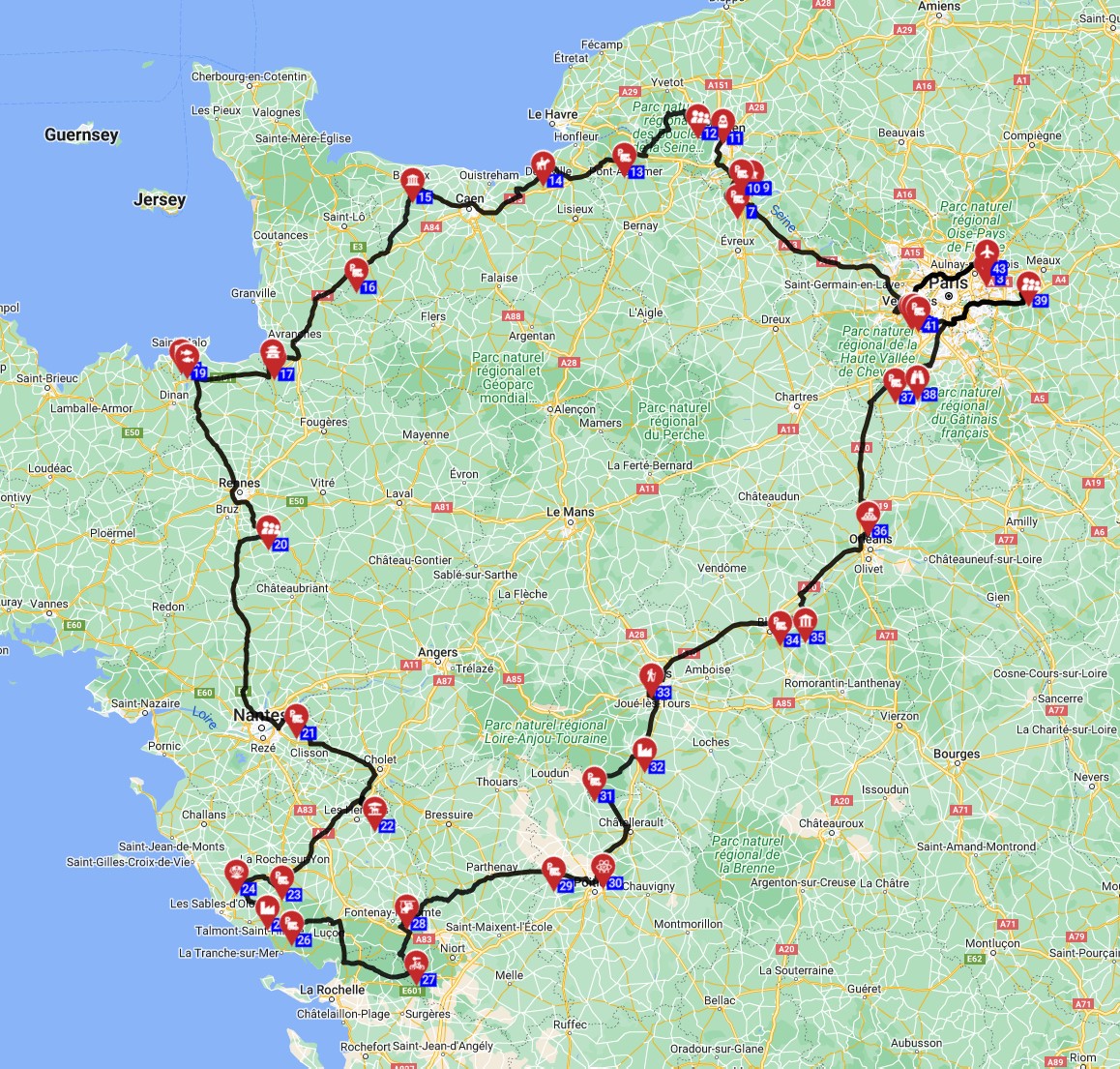
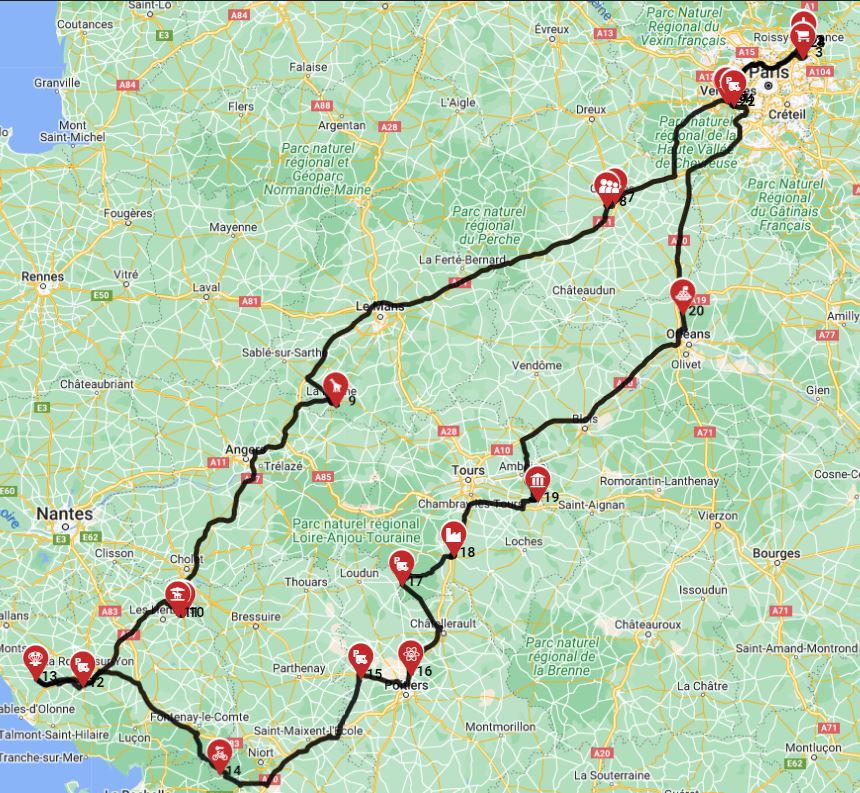
Utilize a GPS system with RV-specific dimensions input to avoid low bridges or narrow streets, particularly when navigating smaller towns or areas outside the major highways. Tools like Google Maps or dedicated RV navigation apps can help you locate campsites and Aires de Camping-Car, ensuring your journey around Paris is seamless. Remember, for finding campsites and campgrounds during your trip, we recommend using RV PLANET (rvplan.net) - a great resource for locating available spots along your route.
The "
At the Campground - Setup, Hookups & Etiquette
Setting up your RV at a French campground is straightforward, but understanding the local etiquette will enhance your experience.
Upon arrival at a campsite near Paris, such as Camping Huttopia Versailles, always check in at reception first to collect your site number and any necessary access codes. Familiarize yourself with the campground map to locate amenities like restrooms, showers, and service points for your motorhome. Many campgrounds offer pitches with electricity and water hookups, providing the comforts of home.
When connecting hookups, follow the standard order: first, connect your electricity cable to the power pedestal and your RV. Next, attach your fresh water hose. Then, connect your grey water hose (for sink/shower water) to the drain. Finally, for black water (toilet waste), ensure proper disposal at designated dump stations, usually marked "Vidange Eaux Noires."
Observe quiet hours, typically from late evening (around 10 PM) to early morning (around 7 AM), and respect your neighbors' personal space. Keep your rented RV pitch tidy and dispose of all waste, including recycling, properly in the designated areas. A standard 6-berth motorhome, like the "Euro Deluxe," typically has sufficient waste water tanks, often around 100-120 liters, to last a few days between dump stations.
RV Rental-Specific Tips for Paris
Tailoring your RV trip to Paris depends on your travel group and preferences, offering a variety of experiences.
For Families:
When renting a motorhome in Paris with kids, choose campsites located outside the city center but with playgrounds and excellent access to public transport for sightseeing. Camping Indigo Paris in Bois de Boulogne, for instance, offers a natural setting and direct RER access to central Paris, making it ideal for a family of 2+2 in a comfortable Class C RV like a "Category Family 5". This setup allows children space to play while providing convenient transport to Parisian landmarks. Our "RV Travel Guide to Paris - Tips and Top Spots 2026" offers more family-friendly advice.
For Seniors:
For a relaxed trip, opt for an ergonomic RV class, such as a smaller Class A (integrated) or a semi-integrated motorhome, often equipped with automatic transmission for easier driving. Consider booking campsites with paved, accessible pitches and modern facilities. Many "Luxury RV Rental in Paris - Premium Prices 2026" options provide features like automatic leveling and larger bathrooms, enhancing comfort and accessibility.
For Budget Travelers:
Utilize France's extensive 'Aires de Camping-Car' network for affordable or free overnight stops. These dedicated motorhome service areas are prevalent across France, offering water and waste disposal. However, be prepared to budget for city parking costs when visiting attractions. For deals, check out our "Cheap RV Rental in Paris - Budget Guide 2026" to find cost-effective options, perhaps a "Budget Camper" campervan for a compact and economical choice. Remember, "Weekly RV Rental in Paris - Pricing 2026" can also offer better value.
For Luxury Seekers:
Explore premium campsites offering amenities like swimming pools, gourmet restaurants, and concierge services. Consider luxury RV add-ons, such as larger, more exclusive Class A motorhomes like an "Exclusive First" with enhanced living spaces and upgraded interiors. These options ensure a high level of comfort and convenience for your extended road trip around Paris and beyond.
Visiting Paris:
The most effective strategy is to park your rented RV at designated park-and-ride facilities on the outskirts of Paris, such as those near the Pont de Sèvres or Porte de Saint-Cloud. From there, use the city's excellent public transport system (RER, Metro) to reach attractions. This avoids the strict Crit'Air restrictions in central Paris and the challenge of finding RV parking in the dense urban environment. For more information on parking, consider "RV Rental Near Paris Airport - Pickup Pricing 2026" as many pickup locations are near major transport hubs.
Common Mistakes to Avoid in Paris
Being aware of potential pitfalls can save you time and stress during your RV rental adventure in Paris.
- Ignoring Crit'Air Rules: A common mistake is not understanding Paris's Low Emission Zone (ZFE) regulations. Instead, obtain your Crit'Air vignette well in advance and understand that many diesel RVs are restricted from central Paris on weekdays. Planning to use public transport from peripheral parking areas (e.g., Parc Relais Stade de France) is the best approach.
- Driving an RV into Central Paris: Attempting to drive your motorhome into the very heart of Paris is challenging and often illegal due to ZFE restrictions and extremely limited parking. Instead, park at a peripheral campsite like Camping International de Maisons-Laffitte or a dedicated park-and-ride and rely on the efficient Metro and RER system for city access. Drive slowly and carefully, and you can drive almost anywhere without issues. No need to stress - just use common sense and pay attention.
- Not Booking Campsites Ahead: Especially during warmer months or school holidays, campsites near Paris, like Camping de Paris, fill up quickly. Instead, reserve your spots well in advance to avoid disappointment and ensure a convenient base for your explorations.
- Underestimating Tolls and Fuel Costs: French Autoroute tolls (péages) and diesel ('Gazole') prices can add up. Instead, budget realistically for these ancillary costs. For example, a trip from Paris to the Loire Valley could incur €20-€30 in tolls.
- Overpacking: RVs have limited storage and weight capacity. Instead, pack efficiently with layers suitable for varying weather, bringing essentials and leaving unnecessary items at home. A compact campervan, like a "Juliette 2-3", benefits greatly from mindful packing.
- Forgetting Mandatory Equipment: French law requires specific in-vehicle equipment, such as reflective safety vests for all occupants and a warning triangle. Vehicles over 3.5 tonnes must also display 'Angles Morts' stickers. Instead, ensure your rental includes these or purchase them before your trip to avoid fines. Our "RV Rental Deals in Paris - Latest Offers 2026" can sometimes include equipment packages.
What are the new rules for motorhomes in France?
The most significant recent rule affecting motorhomes in France is the Low Emission Zone (ZFE) implementation, particularly within Paris, which requires vehicles to display a Crit'Air vignette.
This color-coded sticker indicates your RV's emission class, and certain categories are restricted from driving in designated ZFEs on weekdays (Monday-Friday, 8 AM - 8 PM). For example, older diesel motorhomes (Crit'Air 4 or 5) may be banned entirely from the Paris ZFE. It is crucial for renters to confirm their RV's Crit'Air class and ensure the correct sticker is acquired before entering these zones. Without it, you could face fines starting from €68. Bandana Caravan ensures full transparency on vehicle details so you can plan accordingly.
Additionally, all vehicles over 3.5 tonnes, including many Class C motorhomes (e.g., a "Ford Zefiro 675" with a length around 7m), are legally required to display 'Angles Morts' (blind spot) stickers on their sides and rear. This regulation helps improve safety for cyclists and pedestrians, especially in urban environments like the areas surrounding Paris. Always check with your rental supplier, like El Monte, Cruise America, Apollo, or Britz, that these stickers are correctly fitted. A standard car driver's license is sufficient for ALL motorhome classes in France; no special license or CDL is required.
To visit Paris without issues, consider parking your RV at campsites outside the ZFE, such as those in Maisons-Laffitte or near Eurodisney, or at designated park-and-ride facilities on the outskirts. From these locations, the efficient public transport system (RER and Metro) provides easy access to the city's attractions like the Louvre and Montmartre.
Is France motorhome friendly?
France is widely considered highly motorhome-friendly, offering an extensive network of dedicated facilities and a culture that generally welcomes RV travelers.
One of the key reasons for France's RV-friendly reputation is its thousands of 'Aires de Camping-Car'. These designated service areas or overnight parking spots specifically for motorhomes are found across the country, often providing essential services like water, waste disposal (for grey and black water), and sometimes electricity, with many being free or low-cost (typically under €15). These Aires are invaluable for extended road trips and demonstrate a national commitment to supporting RV tourism.
The country's diverse landscapes, from the coastal roads of Brittany to the mountain passes of the Alps and the charming rural villages of Provence, are exceptionally well-suited for RV exploration. France's road network is extensive; while Autoroutes offer fast travel (with tolls), the extensive network of national and departmental roads provides scenic, often toll-free alternatives. Traveling on these roads allows you to travel slowly, max 100-150 km per day on average, and truly connect with the local culture and scenery, whether you're in a compact "Class B - Camper Van" or a larger "Comfort Family" motorhome.
However, major cities like Paris do present challenges due to Low Emission Zone (ZFE) rules and limited RV parking. This necessitates strategic planning, such as utilizing peripheral park-and-ride facilities and relying on public transport for city exploration, as discussed in our RV Rental Paris - Complete Guide 2026. For finding campsites and campgrounds during your trip, rvplan.net is a fantastic resource, featuring 1,300+ pre-planned routes across 5 continents, including many options for France.
Do I need speed stickers on my motorhome in France?
Yes, if your motorhome's Gross Vehicle Weight (GVW) exceeds 3.5 tonnes, you are legally required to display 'Angles Morts' (blind spot) stickers in specific locations on the vehicle in France.
The 'Angles Morts' requirement applies to all heavy vehicles over 3.5 tonnes, regardless of whether they are commercial or recreational. These stickers, indicating blind spots, must be clearly visible on the rear and both sides of your rented RV. Many Class C and Class A motorhomes fall into this category (e.g., a "Jayco Conquest Royale 6" which is a large Class C). Your rental provider should equip your vehicle with these; always confirm this before starting your trip from a Paris pickup location.
In addition to 'Angles Morts' stickers, all vehicles in France must carry a reflective safety vest for each occupant and a warning triangle for roadside emergencies. While disposable breathalyzers were previously mandatory, this requirement was repealed, but it's still a common misconception. Ensuring your motorhome is equipped with these essential safety items is part of responsible RV travel in France and helps avoid potential fines from local authorities.
This rule, combined with the Crit'Air vignette system for Low Emission Zones, emphasizes the importance of being fully informed about French driving regulations before you embark on your RV adventure. For current pricing, check out "RV Rental in Paris - Prices and Best Deals 2026" to find the right vehicle that meets these requirements.
What is the 3-3-3 rule when rving?
The 3-3-3 rule for RVing suggests driving no more than 300 miles (approximately 480 kilometers) in a day, stopping by 3 PM, and staying at least 3 nights in one location.
This rule is a fantastic guideline for planning a relaxed and enjoyable motorhome trip, especially in a region as rich in culture and scenery as France. Limiting daily mileage, like driving 100-150 km per day, helps prevent driver fatigue and allows for a more immersive travel experience, making the journey itself as important as the destination. Imagine leisurely driving through the French countryside near Paris, stopping at charming villages and local markets.
Arriving at your destination by 3 PM provides ample time to set up your rented motorhome or campervan, connect hookups, and explore the immediate area or relax before dinner. This avoids the stress of late-night arrivals and ensures you get the most out of your chosen campground or Aire de Camping-Car. Spending at least three nights in one spot encourages deeper exploration of the local area, reduces the frequency of packing and unpacking, and provides a more restful pace to your extended road trip.
Applying the 3-3-3 rule in France can help you discover hidden gems, connect with local culture, and truly savor the experience of RV travel without feeling rushed. This approach works well for exploring regions around Paris, giving you time to visit historical sites, enjoy local cuisine, and simply relax.
What is the 4-4-4 rule for rving?
The 4-4-4 rule for RVing is a variation of the 3-3-3 rule, advising to drive no more than 400 miles (or kilometers) in a day, stopping by 4 PM, and staying at least 4 nights in one location.
This rule offers a slightly more extended daily driving allowance compared to the 3-3-3 rule, suitable for those who prefer to cover a bit more ground or have longer itineraries, yet still prioritize a relaxed pace. For example, a "Discovery - 5 berth motorhome with rear U-lounge" might encourage slightly longer drives due to its comfort, but the 4-4-4 rule helps prevent burnout.
Similar to the 3-3-3 rule, the 4-4-4 rule promotes a slower travel pace, reduces stress associated with constant relocation, and encourages more immersive local experiences. Arriving by 4 PM still provides ample daylight for setting up your motorhome and familiarizing yourself with the campground or Aire de Camping-Car before it gets dark, which is especially beneficial during shorter winter days in France.
When planning an RV trip around Paris and France, applying either the 3-3-3 or 4-4-4 rule can help create a balanced itinerary. This flexibility allows you to explore multiple regions without feeling rushed, whether you're heading south from Paris to the vineyards or east towards Alsace. Bandana Caravan, with its partnerships with over 50 leading RV suppliers worldwide, helps you find the right motorhome to match your preferred travel pace.
How much does it cost to rent an RV in France?
The cost to rent an RV in France typically ranges from €70 per day for smaller campervans during off-peak seasons to over €250 per day for larger, luxury motorhomes during peak season, not including additional expenses.
Rental rates are heavily influenced by the RV's size and class (e.g., campervan, Class B, Class C), the time of year, and the duration of the rental. For instance, a compact "Active Classic" campervan for two might average €80-€120 per day in shoulder season, while a spacious 6-berth "Euro Deluxe" motorhome for a family of 4-6 can range from €150-€250+ per day during peak summer. Prices are dynamic and change daily based on availability, seasonality, and supplier marketing decisions, so booking early (3-6 months ahead) can secure better deals. To compare final prices across suppliers, what you see is what you pay, with no surprise fees at pickup, thanks to Bandana Caravan's full transparency.
Beyond the base rental price, several ancillary costs contribute to your total trip budget. Fuel costs for diesel ('Gazole'), which most RVs use, average around €1.80-€2.00 per liter in 2026, with consumption typically ranging from 8-15 liters per 100 km depending on the vehicle. Tolls (péages) on major French Autoroutes can accumulate quickly, potentially adding €50-€100+ for a week-long trip from Paris, depending on your route.
Campsite fees vary widely: 'Aires de Camping-Car' can be free to €15, municipal campsites €15-€30, and private campsites (e.g., Camping Indigo Paris) €30-€60+ per night. Parking near Paris attractions is challenging and often expensive; utilizing peripheral park-and-ride facilities can incur fees of €10-€20 per day. While basic insurance is included, opting for comprehensive coverage to reduce excess liability, which is an optional upgrade, will increase the daily rental cost. For a detailed breakdown of costs, refer to "RV Rental in Paris - Prices and Best Deals 2026" and "Cheap RV Rental in Paris - Budget Guide 2026".
What is the rule of 3 with an RV?
The 'rule of 3 with an RV' commonly refers to the 3-3-3 rule, which is a popular guideline for planning a relaxed and enjoyable motorhome trip: driving no more than 300 miles, stopping by 3 PM, and staying at least 3 nights in each location.
This rule aims to prevent travel fatigue and encourage a deeper engagement with each destination, rather than rushing through locations. It promotes slow travel, suggesting you average no more than 100-150 km per day. By adhering to this rule, RVers can allow ample time for sightseeing, cooking in their rented motorhome's kitchen, relaxing, and dealing with any unforeseen issues, making the overall experience less stressful and more fulfilling.
For example, following this rule on a week-long trip from Paris might mean spending three nights exploring the Loire Valley, allowing two full days for châteaux visits and wine tasting, rather than rushing through multiple stops. This approach is particularly beneficial for families with kids or retired couples seeking a leisurely pace. For more details on practical applications, refer to our section 'What is the 3-3-3 rule when RVing' above. Bandana Caravan supports this philosophy by offering a transparent booking process and dedicated support before and after your trip, ensuring you have all the information to make the most of your adventure.
What You Shouldn't Miss
- Explore the Latin Quarter's bookstores and cafes: Wander through the historic streets, discover Shakespeare and Company bookstore, and enjoy a traditional Parisian coffee at a quaint cafe near the Pantheon.
- A leisurely boat trip on the Seine River: See iconic landmarks like the Eiffel Tower, Notre Dame Cathedral, and the Louvre from a different perspective, especially magical during the evening with the city lights.
- Day trip to Versailles Palace: Park your RV at a nearby campsite like Huttopia Versailles and spend a full day exploring the opulent palace, its stunning gardens, and the Grand Trianon.
- Discover the charm of Montmartre: Stroll through artistic streets, visit the Sacré-Cœur Basilica for panoramic city views, and immerse yourself in the vibrant atmosphere of Place du Tertre.
- Indulge in French pastries at a local boulangerie: Start your day with a fresh croissant or pain au chocolat from a Parisian bakery, a simple yet quintessential experience.
- Wander the Christmas markets (winter only): If traveling in winter, explore the enchanting festive markets, such as those near Notre Dame or along the Champs-Élysées, for unique gifts and seasonal treats.
Looking for expert insights from Avi Bandana? Top 5 Adventures - recommendations from Avi Bandana
🎬 Video coming soon
Final Thoughts
Embarking on an RV adventure in Paris, even in winter, promises an unforgettable experience filled with freedom and discovery. By preparing for local regulations like Crit'Air zones and understanding the nuances of driving and parking your rented motorhome, you can navigate the City of Lights and its enchanting surroundings with ease. Remember to embrace slow travel, allowing yourself to truly soak in the rich culture and stunning scenery that France offers.
Whether you're exploring the bustling streets of Paris from a comfortable base camp or venturing further afield into the French countryside, an RV provides the perfect mobile headquarters. With full transparency and supportive service from Bandana Caravan, your journey is set to be smooth and enjoyable. Get inspired for your next trip! Discover top destinations, planning tips, all in one place!
So, why wait? Plan a trip itinerary in advance with minimal effort and maximum enjoyment. Your Parisian RV rental adventure awaits!
Find Motorhome Rentals in Paris