In This Guide
- Best Paris RV Itinerary for rv rental - Overview
- 7-Day Classic Route in Paris
- 14-Day Extended Journey in Paris
- Recommended RVPlan Trip for Paris
- Must-See Stops Along the Way (Avi Bandana Picks)
- Daily Driving Distances & Drive Times in Paris
- Best RV Class for This Itinerary - Couple & Family Picks
- Is France motorhome friendly?
- Are D-roads in France suitable for motorhomes?
- How difficult is it for an American to drive in Paris?
- What is the 4-4-4 rule for rving?
- What is the most scenic route through France?
- What are some scenic day trips from Paris?
- What is the most popular day trip from Paris?
- Is $1000 enough for a week in Paris?
- What is frowned upon in Paris?
Best Paris RV Itinerary for rv rental - Overview
Exploring France beyond the Parisian city center with a rented RV offers unparalleled freedom and a deep dive into culture and scenery. A minimum duration of 7 days is recommended for a comfortable RV adventure, with longer trips, such as a two-week journey, ideal for comprehensive excursions into regions like Normandy and Brittany. The total journey can range approximately from 800 km to 1800 km, depending on the chosen route length and the number of detailed stops. Spring (April-June) and early autumn (September-October) are generally considered the best seasons for RV travel in France, providing pleasant weather and fewer crowds than the busy summer months. For live availability and current prices, start with our RV Rental Paris - Complete Guide 2026 guide.7-Day Classic Route in Paris
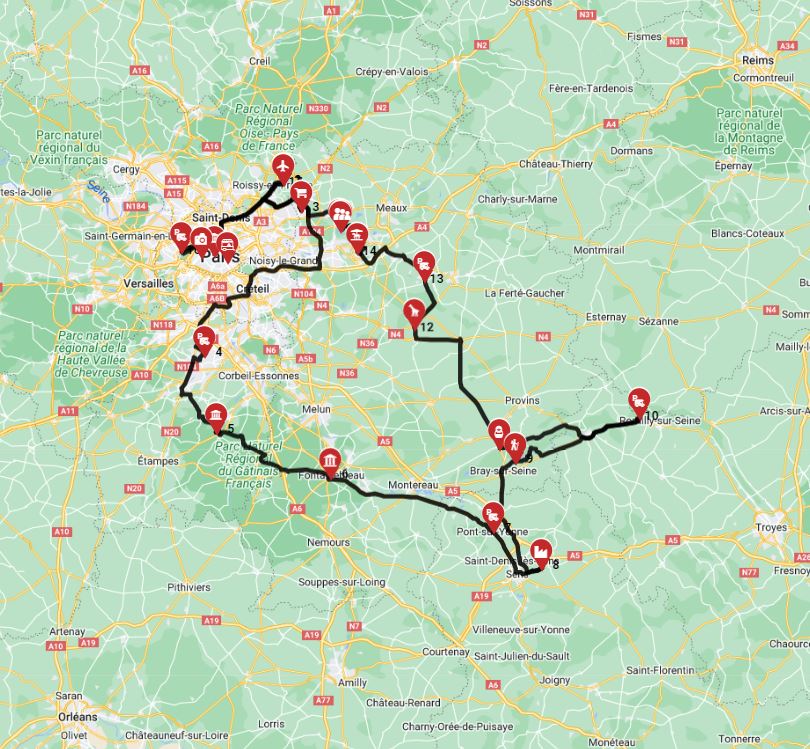
A captivating 7-day classic RV itinerary from Paris allows travelers to experience historic sites and beautiful landscapes, covering approximately 70-140 km per day. On Day 1, pick up your motorhome near Paris, then head to Auvers-sur-Oise (Van Gogh's last home) and settle into a campground within the Parc Naturel Régional du Vexin Français, covering about 70 km. Day 2 involves a picturesque 120 km drive to Rouen, famous for its cathedral, before continuing to the charming port town of Honfleur. The third day, a shorter 70 km, explores the stunning Alabaster Coast from Honfleur to Étretat's cliffs and Fécamp's Benedictine Palace. Day 4 is a 140 km journey to Bayeux, immersing visitors in WWII history and the Bayeux Tapestry. On Day 5, travel approximately 130 km to Giverny for Monet's Garden, then to Les Andelys with views of Château Gaillard. Day 6 covers around 100 km, visiting the magnificent Palace of Versailles (park at a nearby campground and use public transport for access) before concluding in Chartres, known for its majestic cathedral. Finally, on Day 7, enjoy the last views of the French countryside on a 90 km drive back for your RV drop-off in the Paris area.14-Day Extended Journey in Paris
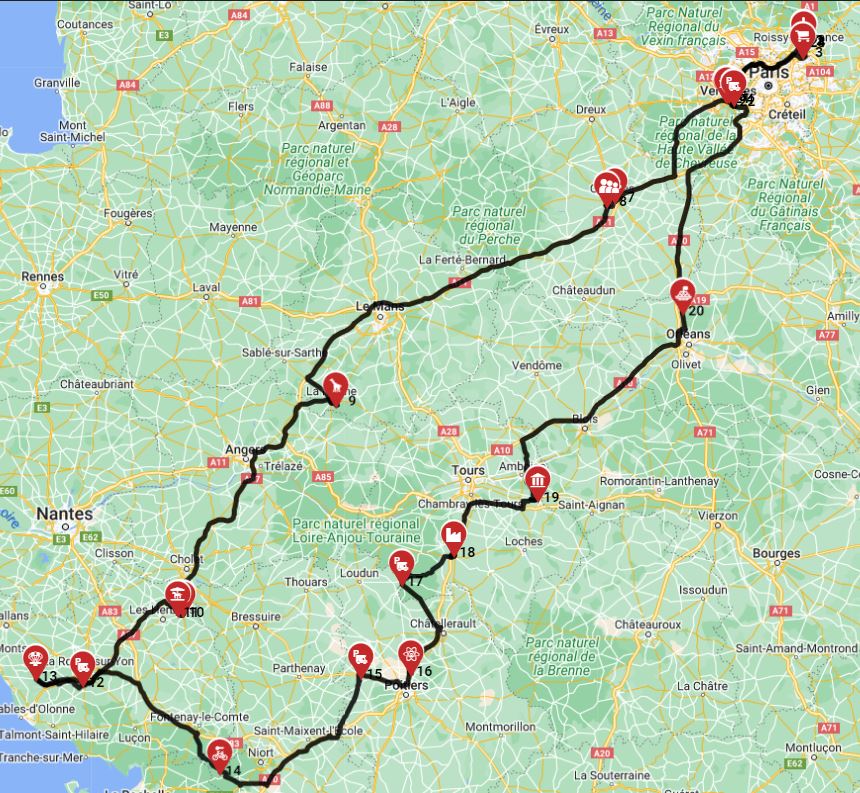
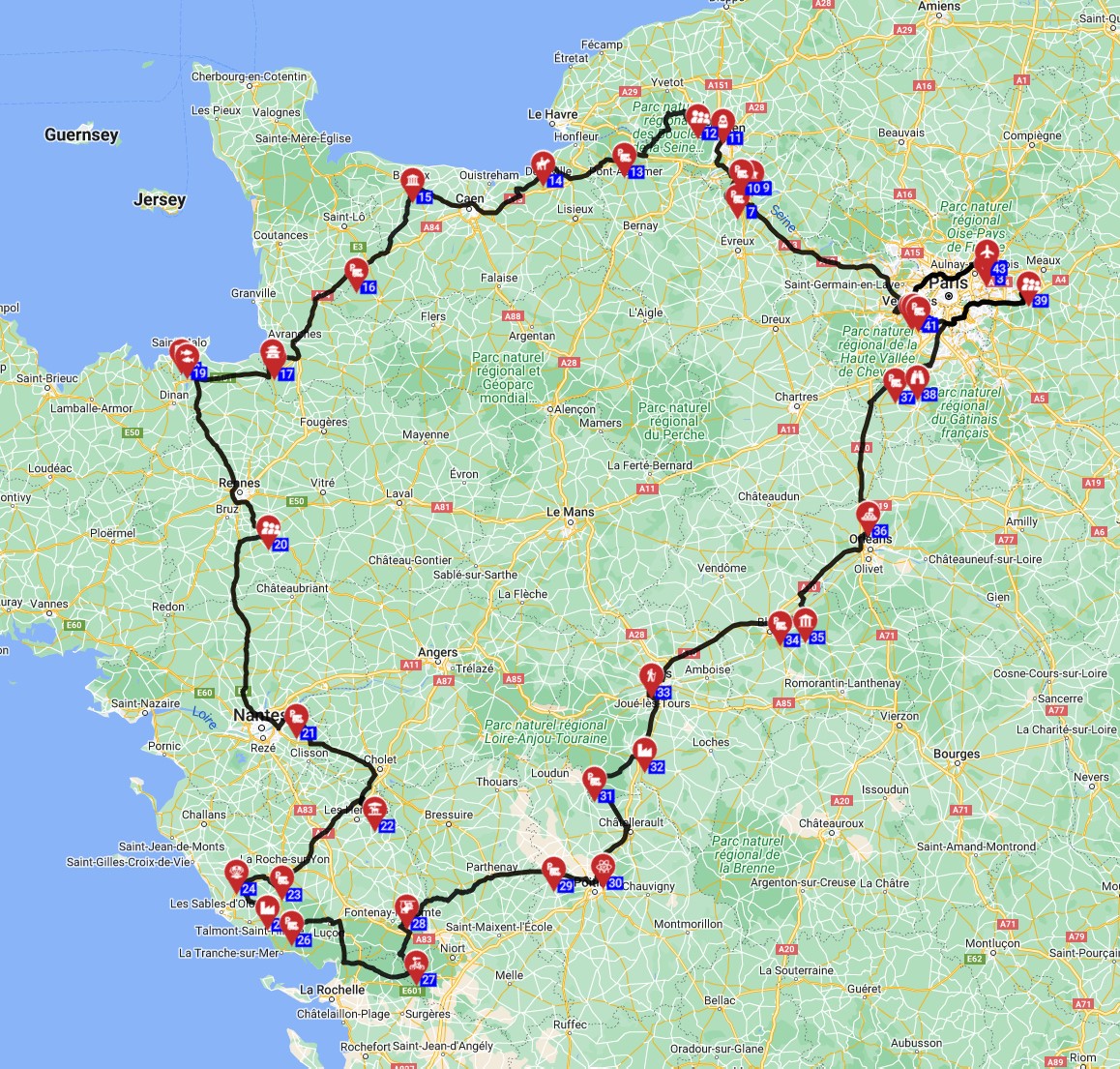
For a more comprehensive exploration of France from Paris, an extended 14-day journey can take you through Normandy, Brittany, and the Loire Valley. This itinerary mirrors the popular 'Paris Round trip - Normandy, Brittany, Loire valley' route plan available on rvplan.net, offering diverse experiences over 1774 km. The first 7 days focus on Normandy and Brittany, starting with Normandy's historical sites, like the D-Day beaches near Bayeux, and its picturesque coastlines. Continuing west, you'll discover the rugged beauty of Brittany, visiting charming coastal towns such as Saint-Malo and the iconic Mont Saint-Michel, and savoring local seafood. Days 8-14 transition south to the enchanting Loire Valley, famous for its magnificent châteaux like Château de Chambord, expansive vineyards, and tranquil rivers. Here, you can immerse yourself in local culture by visiting traditional markets, enjoying meals at traditional restaurants, and perhaps exploring a botanical garden, before your return journey back towards the Paris area.🎬 Video coming soon
Recommended RVPlan Trip for Paris
For a truly well-structured and comprehensive motorhome adventure around Paris and its iconic regions, Avi Bandana recommends the "Paris Round trip - Normandy, Brittany, Loire valley" itinerary available on rvplan.net. This expertly curated route plan covers a total of 1774 km over 15 days, thoughtfully beginning and ending in Paris. It ensures ample time to explore diverse regions including Normandy, Brittany, and the enchanting Loire Valley, encompassing historical sites, scenic coastlines, and cultural experiences. This specific plan includes visits to a botanical garden, a traditional market, and a traditional restaurant, showcasing a blend of natural beauty, history, and local flavor. You can find detailed information and visualize your journey through the trip's dedicated page.
Explore this route
Must-See Stops Along the Way (Avi Bandana Picks)
Avi Bandana's personal picks from the "Paris Round trip - Normandy, Brittany, Loire valley" itinerary highlight authentic French experiences, ensuring your rented RV adventure is filled with memorable moments. First, the majestic Château de Chambord in the Loire Valley offers a traditional visit to a magnificent example of French Renaissance architecture, providing a captivating glimpse into royal history and grandeur. Second, Mont Saint-Michel, while a historical site, is a truly traditional must-see tidal island monastery that beautifully blends natural wonder with breathtaking medieval architecture. Third, immerse yourself in local life by seeking out the numerous traditional markets, such as those near Notre-Dame, to sample regional produce and find unique souvenirs. To savor authentic French cuisine, indulge in a meal at a traditional restaurant like La Folie De Finfarine or Crêperie Mam Goz, focusing on Brittany's specialty crepes. Finally, explore local industries like cheese production at places such as Les Fromages d'Angel to truly understand the region's culinary heritage and taste artisanal products directly from the source. For more inspiration, check out our RV Travel Guide to Paris - Tips and Top Spots 2026.Daily Driving Distances & Drive Times in Paris
Avi Bandana, our founder, strongly recommends limiting your daily driving to a maximum of 100 miles (approximately 160 km) or 150 km per day on average when RVing in France. This slow travel approach is designed to allow you and your family ample time to truly experience the picturesque landscapes, charming villages, and local culture without feeling rushed. For instance, the drive from the Paris area to Giverny is approximately 80 km (50 miles), taking about 1.5 hours. A longer leg, such as from Honfleur to Mont Saint-Michel, is approximately 170 km (105 miles), which would take 2.5-3 hours, ideally split over two shorter driving days or as part of a longer multi-day plan. Driving from Tours in the Loire Valley to Chartres covers about 150 km (93 miles) in roughly 2 hours. Adhering to these limits minimizes driver fatigue and maximizes enjoyment, transforming the journey itself into an integral part of your well-deserved vacation.Best RV Class for This Itinerary - Couple & Family Picks
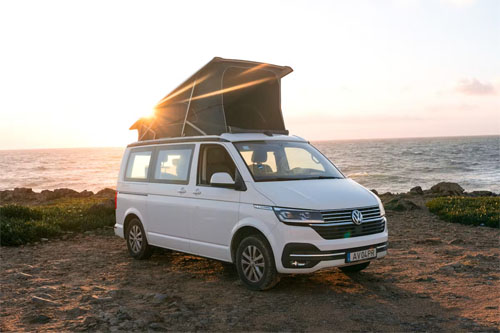
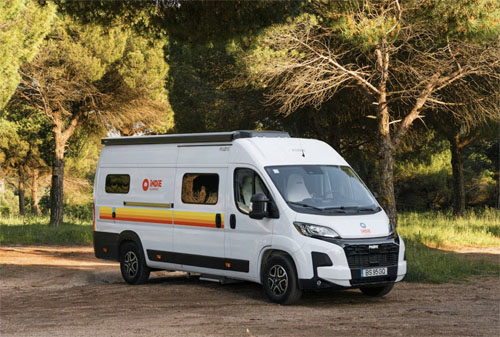
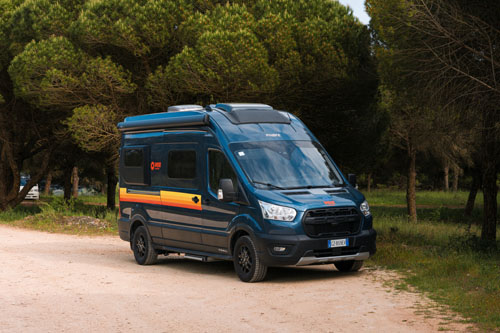
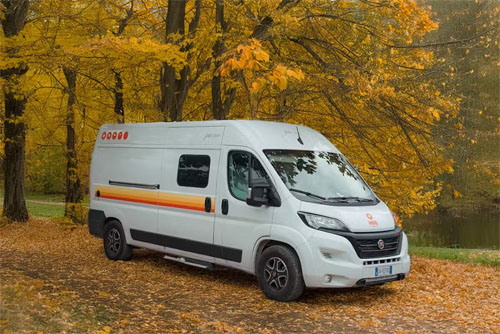
Choosing the right motorhome size is key to enjoying your Paris-region adventure. For couples, Avi Bandana highly recommends a Class B - Camper Van due to its compact size and superior maneuverability. These vehicles, such as a "luxury rv rentals example Carthago Malibu 600" or a "V3" model, which are approximately 5.99 meters in length, are ideal for navigating France's diverse roads, including narrower country lanes and quaint village streets. Camper vans typically offer comfortable sleeping places for around 2-3 people and an average load capacity of around 37 kg. Their smaller footprint makes parking significantly easier and offers better fuel efficiency, often consuming about 10 Liters/100 km, perfect for intimate road trips without the bulk. For families, the Class C - Alcove RV is an excellent choice, providing more generous living space and sleeping capacity without being overly large or complex to drive. Models like the "C-30" or "Group G" are typically around 7-9 meters long, accommodating approximately 5-7 sleeping places and 4-6 adults comfortably, with an average load capacity around 42-50 kg. This class often features a dedicated over-cab sleeping area, making it very popular for families seeking comfort and separate sleeping zones. Bandana’s Rent&Plan service simplifies your trip even further, combining your RV rental with a ready-made itinerary crafted by travel professionals and accessible via full trip-planning software, eliminating any planning headaches. Whether you opt for a compact campervan or a spacious Class C motorhome, you can upgrade to a top-level deductible for extra peace of mind during your adventure.Is France motorhome friendly?
Yes, France is exceptionally motorhome friendly, providing an extensive network of "aires de services" for convenient overnight parking and essential facilities, alongside numerous well-equipped campgrounds. Navigating urban areas like Paris with a rented RV requires specific strategies; most RVers wisely opt for park-and-ride facilities on the city's outskirts, such as those accessible via the P+R system, and use efficient public transport to reach the bustling city center. It's crucial to be aware that many French cities, including Paris, operate low-emission zones (Zones à Faibles Émissions - ZFE), which require your RV to display a Crit'Air vignette (sticker) corresponding to its emission class. This sticker must be purchased in advance to avoid potential fines. France also actively encourages sustainable RV travel through designated waste disposal points (vidange) at aires and campgrounds, readily available recycling facilities, and a strong emphasis on respecting natural sites by adhering to 'leave no trace' principles.Are D-roads in France suitable for motorhomes?
Yes, France's "D-roads" (routes départementales) are generally suitable and often preferred for motorhomes, offering a more scenic and authentic travel experience compared to the busier A-roads (autoroutes). These roads provide direct access to smaller, charming villages, local markets, and hidden gems, frequently passing through stunning natural landscapes. While generally well-maintained, D-roads can present some nuances for larger RVs. For example, a larger Class A motorhome or a bigger Class C might find some D-roads, particularly in mountainous regions (like the Massif Central or parts of the Alps) or within very old, narrow village centers, challenging due to steep grades, sharp bends, or limited clearance under bridges. It is always wise to pay close attention to road signs for height, width, and weight restrictions, and to use an RV-specific GPS that can factor in your vehicle's dimensions to help avoid unsuitable routes. Drive slowly and carefully, and you can drive almost anywhere without issues. No need to stress - just use common sense and pay attention.How difficult is it for an American to drive in Paris?
Driving a rented RV directly within central Paris is exceptionally difficult and generally not recommended for anyone, especially American drivers unfamiliar with European city driving customs, due to dense traffic, complex one-way systems, narrow streets, and strict low-emission zones. American drivers will encounter different road signs, which use more symbolic representations than those in the U.S.; familiarity with European signs, particularly 'no entry,' 'no parking,' and 'priority to the right' at unmarked intersections, is crucial. France has numerous roundabouts where the general rule is to yield to traffic already in the roundabout, a practice that requires some adaptation. Many rental RVs in France are equipped with manual transmissions, which can be a significant hurdle if you are accustomed to automatics, so always confirm the transmission type when booking. Furthermore, ensure your rental agreement includes comprehensive insurance for foreign drivers and covers travel throughout France, potentially opting for a top-level deductible for extra coverage. Many historic towns and villages around Paris have extremely narrow streets, often pedestrianized or restricted to small vehicles, making RV navigation impractical or impossible; parking outside and using local transport is the advised approach.What is the 4-4-4 rule for rving?
The "4-4-4 rule" for RVing is a widely recommended guideline for safe and enjoyable travel, and it's especially relevant for planning an RV itinerary in Paris and beyond. This rule suggests you should drive no more than 4 hours a day, stop driving by 4 PM, and stay at least 4 nights in one location. Integrating this rule with French travel realities is practical, especially with the abundant "aires de services" (motorhome stops) and excellent campgrounds available throughout the country, making the driving and stopping aspects easier to adhere to. Balancing this rule means finding suitable rest stops or "aires" well before fatigue sets in and securing safe, legal overnight parking or campgrounds well before dark, particularly around popular tourist areas where spaces can fill quickly. Staying longer in one location, fulfilling the "4 nights" part, allows for deeper exploration of regions like Normandy or the Loire Valley, reducing daily setup and pack-up time and maximizing your enjoyment of local culture and sights.What is the most scenic route through France?
Defining the 'most scenic route' through France is truly subjective, as the country offers an incredible variety of landscapes, but for RV travelers starting from Paris, popular and highly scenic itineraries often include the diverse historical landscapes of Normandy, the rugged, dramatic coastlines of Brittany, and the enchanting, château-dotted Loire Valley. The "Paris Round trip - Normandy, Brittany, Loire valley" RVPlan trip, for example, covers 1774 km over 15 days, providing an excellent blend of highly scenic and varied experiences. Other iconic scenic drives across France, while requiring a different starting point or a much longer overall itinerary, include the breathtaking Route des Grandes Alpes, the picturesque D-roads winding through Provence's vibrant lavender fields, or the historic Alsace Wine Route. Remember, with a rented motorhome, you have the flexibility to discover your own favorite scenic routes.What are some scenic day trips from Paris?
While direct RV access into central Paris is generally limited, several incredibly scenic day trips from the capital are highly accessible by RV, provided you plan for parking. For these excursions, it's often best to use park-and-ride options or find campgrounds near your chosen destination outside the city. First, the Palace of Versailles is a must-see, where you can park your RV at a designated campsite or a large park-and-ride facility near Versailles, then easily use public transport to reach the Palace and its magnificent Gardens. Second, Giverny, home to Claude Monet's iconic house and gardens, offers vibrant floral displays that inspired his famous water lily paintings and is easily accessible by RV with ample parking options in the town. Third, Chartres boasts a stunning Gothic cathedral, a UNESCO World Heritage site, with RV parking typically available on the outskirts, allowing for a pleasant walk into the historic center. Finally, explore the magnificent Château de Fontainebleau and the nearby artistic village of Barbizon, surrounded by the beautiful Fontainebleau Forest, ideal for walks and immersing yourself in nature and history.What is the most popular day trip from Paris?
The most popular day trip from Paris is undoubtedly the opulent Palace of Versailles, a UNESCO World Heritage site renowned for its extravagant palace, sprawling gardens, and the iconic Hall of Mirrors. For RV travelers, accessing Versailles is entirely feasible by strategically parking your motorhome at one of the dedicated campsites or large park-and-ride facilities situated on the outskirts of the town, such as Camping Huttopia Versailles. From there, you can conveniently utilize local public transportation, like a bus or train, for a short and stress-free journey directly to the palace entrance, ensuring you make the most of your day exploring this magnificent landmark. This approach allows you to enjoy the grandeur of Versailles without the challenges of driving a larger vehicle in crowded historical areas.Is $1000 enough for a week in Paris?
While $1000 might cover basic expenses for a single person staying in budget accommodation in Paris for a week, it is generally insufficient for a comfortable RV rental trip for a week in France, especially when factoring in all necessary costs. A more realistic budget for a comfortable RV trip for two in France for a week, excluding international flights, would typically be closer to $1500-$2500+. Here's a breakdown of typical ancillary costs: * **RV Rental:** A week's RV rental can range from $700-$1500+, depending on the season, vehicle class (like a "Class B - Camper Van" or "Class C - Alcove"), and comprehensive insurance. Prices are dynamic and can change daily. * **Fuel (Diesel):** Expect to spend $200-$400 for a week, varying by distance and the fuel efficiency of your chosen RV; for example, Bandana's global fleet average for a Class B is 10 Liters/100 km. * **Tolls (Péages):** French motorways often have tolls. Budget $50-$150, depending on your specific route. * **Crit'Air Sticker:** Mandatory for low-emission zones, a one-time cost of around $4.50 (excluding shipping). * **Campground Fees:** Nightly fees range from $25-$60+ for a serviced pitch, totaling $175-$420+ for a week. * **Food & Activities:** Groceries from local markets can save money, but dining out at traditional restaurants and attraction entry fees will add up. Budget an additional $300-$700+. * **Miscellaneous:** This includes waste disposal (often free at aires, but some private sites charge), LPG refills, laundry, etc. For easy budgeting and tracking every expense along the way, we highly recommend planning your trip using RV PLANET routes. We offer full transparency, so what you see is what you pay, with no surprise fees at pickup. For detailed pricing information for various vehicle types, explore "Weekly RV Rental in Paris - Pricing 2026" and "RV Rental in Paris - Prices and Best Deals 2026".What is frowned upon in Paris?
In Paris and throughout France, certain behaviors are generally frowned upon, and being aware of cultural etiquette can significantly enhance your RV travel experience and interactions with locals. For RV travelers specifically, it is crucial to be mindful of noise levels, especially at campgrounds or "aires de services," particularly during designated 'quiet hours,' which are often observed during midday and overnight. Avoid loud music, late-night gatherings, or running generators excessively. Always use designated waste disposal points for all waste, including grey and black water. Do not litter or dispose of any waste improperly, as respecting the environment and public spaces is highly valued. It is also important to respect the privacy of fellow campers and residents; avoid peering into other RVs or private properties. When interacting with locals, always initiate greetings with a polite "Bonjour" (or "Bonsoir" in the evening) before asking questions or making requests. A simple "Merci" (thank you) and "Au revoir" (goodbye) upon leaving is also expected and appreciated. During dining experiences, avoid loud conversations or overly casual dress, especially in more traditional establishments. While tipping is appreciated for good service, it is not mandatory as a service charge is already included in most bills; usually, rounding up or leaving a few Euros is sufficient. By observing these customs, RV travelers can foster positive interactions and show respect for the rich French culture, making your adventure even more rewarding.What You Shouldn't Miss
- Stroll through **Montmartre and Sacré-Cœur Basilica**: Wander the charming cobblestone streets, enjoy street artists, and take in panoramic views of Paris.
- Explore the **Palace of Versailles**: Dedicate a full day to its opulent interiors, Hall of Mirrors, and vast, intricate gardens.
- Visit **Claude Monet's Garden in Giverny**: Immerse yourself in the vibrant landscapes that inspired the Impressionist master's most famous works.
- Discover the history of the **D-Day Landing Beaches in Normandy**: A powerful and poignant experience, combining scenic coastal drives with profound historical significance.
- Marvel at **Mont Saint-Michel**: This iconic tidal island, with its stunning abbey, is a true architectural and natural wonder.
- Indulge in **Loire Valley Wine Tasting**: Experience local culture and flavors at vineyards and traditional markets.
- Looking for expert insights from Avi Bandana? Top 5 Adventures - recommendations from Avi Bandana.
Final Thoughts
Embarking on an RV adventure in Paris and its surrounding regions, especially with a carefully planned Winter RV Itinerary in Paris - Cold-Weather Routes 2026, promises an unforgettable journey filled with culture, history, and stunning scenery. Remember to embrace the slow travel philosophy, allowing yourself to truly connect with each destination, whether it's a grand château or a charming local market. With the right planning and support from experienced RV specialists, your motorhome rental experience will be smooth and rewarding. Don't let the details overwhelm you; we're here to help you every step of the way, ensuring full transparency and peace of mind before, during, and after your booking. Discover top destinations, planning tips, all in one place! Find Motorhome Rentals in ParisFor ideas you can prep on the road, watch our RV-friendly recipes playlist on YouTube.
On the routes offered through RV PLANET routes, you can itemize and track every expense along the way for easy budgeting.