In This Guide
- Can You Drive an RV in Tokyo - Airport? License & Age Rules
- Road Conditions & Terrain in Tokyo - Airport
- RV Size Limits, Bridges & Restricted Zones
- Fuel: Diesel vs. Petrol & Cost per 100 km
- Tolls, Vignettes & Border Rules
- Driving Tips for Winter RV Rental Travelers
- Recommended RV Class for Tokyo - Airport Roads
- Should I Choose a Compact Van Instead of a Large RV in Tokyo - Airport?
- Can I Park Anywhere? Free & Wild Camping Rules in Tokyo - Airport
- Can I Drive an RV Into the City Center? Heights, Tunnels & Local Signage
- How Much Does an RV Trip in Japan Cost Beyond Rental Fees?
- What are Michi-no-Eki and How Do RVers Use Them in Japan?
- What Cultural Etiquette Should Foreign RVers Know in Japan?
- How Do I Navigate and Understand Road Signs While RVing in Japan?
- What are Good Winter RV Itineraries Near Tokyo and Narita Airport?
Can You Drive an RV in Tokyo - Airport? License & Age Rules
Foreigners can indeed drive a rented RV in Tokyo - Airport and across Japan, provided they possess a valid International Driving Permit (IDP) issued under the 1949 Geneva Convention, along with their home country license and passport. This IDP is a mandatory document for non-Japanese residents and must be secured in your home country before your travels, as it cannot be issued within Japan. Most rental RVs, including Class B campervans and Class C motorhomes, fall under the standard passenger vehicle license category, typically requiring a minimum driver age of 21 years by rental companies in Tokyo - Airport. There are no young driver surcharges or vehicle class restrictions based on age with Bandana's partners. For live availability and current prices, start with our RV Rental Tokyo - Airport - Complete Guide 2026 guide to find the perfect winter RV for your adventure. You might also want to consult "RV Rental Japan - Complete Guide 2026" for broader insights into Japanese RV travel regulations.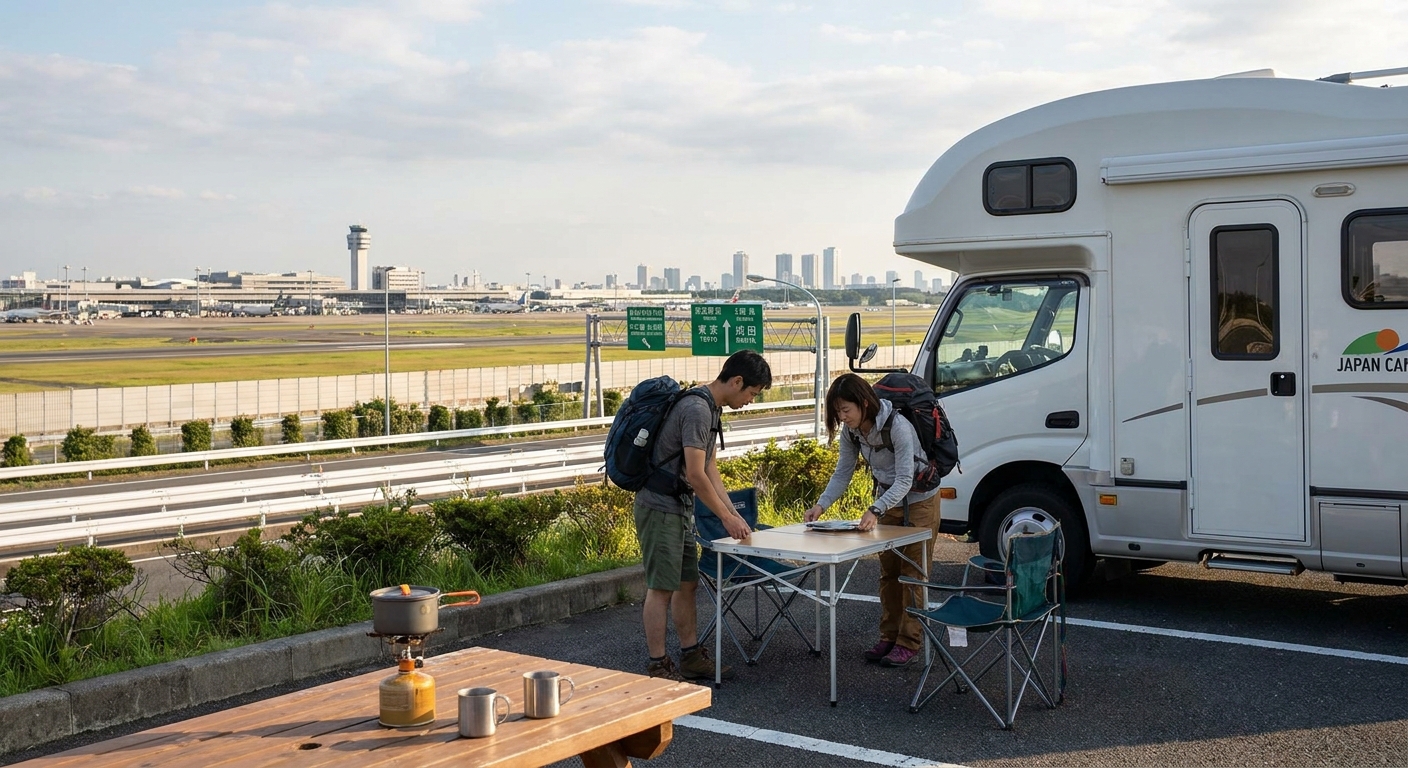
Road Conditions & Terrain in Tokyo - Airport
Road conditions in and around Tokyo and its airports (Narita, Haneda) are generally excellent, boasting well-maintained, modern infrastructure that holds up well even in winter. While urban areas are largely flat, venturing out from Tokyo can quickly lead to mountainous terrain, especially when you're seeking winter activities like skiing or visiting hot springs, necessitating careful driving. Expect dense urban traffic near the airports and within Tokyo itself, but major highways are generally efficient for longer distances. Rural roads can be narrower but are typically well-paved, encouraging slow, scenic driving, which is particularly advisable in snowy or icy conditions during winter.RV Size Limits, Bridges & Restricted Zones
While specific legal RV size limits in Japan generally accommodate most rental motorhomes, drivers should be highly aware of potential height and width restrictions on older roads, tunnels, and especially parking garages around Tokyo - Airport. Standard Japanese roads and bridges are typically built to accommodate common vehicle sizes, but navigating narrow streets in historical districts or multi-story parking facilities may indeed be challenging for larger RVs. Japan does not have widespread environmental zones restricting RVs like some European cities, but drivers should always check for local signage indicating height, weight, or length restrictions before proceeding, particularly near attractions or in residential areas. Drive slowly and carefully, and you can drive almost anywhere without issues. No need to stress - just use common sense and pay attention.Fuel: Diesel vs. Petrol & Cost per 100 km
In Japan, most RVs run on either petrol (gasoline) or diesel, with petrol being more common for smaller models and diesel for larger ones. For example, Bandana's fleet typically shows Class SI (Semi-integrated) RVs consuming 10-11 Liters/100 km and Class C (Alcove) RVs consuming 10-12 Liters/100 km, while Class B (Camper Van) RVs average around 8-10 Liters/100 km. Fuel prices in Japan are comparable to many Western countries, and while specific costs vary, budgeting for approximately ¥150-¥180 per liter is a realistic estimate for 2026, meaning a Class SI RV might cost around ¥1,500-¥2,000 per 100 km in fuel. This is an important consideration when planning your total trip cost for your winter RV rental in Tokyo - Airport.Tolls, Vignettes & Border Rules
Japan utilizes an extensive network of toll roads (expressways) which are common for inter-city travel, but the country does not use a vignette system. Toll fees can be substantial; most RVs are categorized as 'ordinary vehicles' or 'medium-sized vehicles' which typically incur higher charges than passenger cars. Many rental RVs in Japan come equipped with an Electronic Toll Collection (ETC) card reader, allowing for seamless payment and often discounted rates, which is highly recommended to avoid fines and streamline travel. Since Japan is an island nation, there are no border rules relevant to RV travel. When planning your route, be sure to factor these toll costs into your budget, just as you would with other ancillary expenses. For detailed budgeting tools that help itemize every expense, check out RV PLANET routes.Driving Tips for Winter RV Rental Travelers
Prioritize safety and winter preparedness by always ensuring your rented RV is equipped with winter tires or chains when traveling to snowy or icy regions around Tokyo - Airport, especially considering potential mountain passes. Utilize navigation apps with Japanese language support; while main road signs are often bilingual (Japanese and English), a GPS with English voice guidance or Google Maps is essential for navigating complex junctions and understanding local instructions, like those near Narita Airport. For families, plan regular stops every 2-3 hours at Michi-no-Eki or service areas to stretch, use facilities, and allow for warm-up breaks, which are particularly important during a winter RV trip. Budget for tolls and parking, as pre-purchasing an ETC card with your rental RV will save time and potentially money on Japan's extensive toll road network, and always account for city parking fees, such as those in central Tokyo. Embrace the ease of automatic transmission, as most rental RVs in Japan feature them, simplifying driving in urban traffic and on winding mountain roads. Remember to travel slowly, averaging a maximum of 100-150 km per day, allowing you to truly feel the place, connect to the culture, the food, and the scenery.🎬 Video coming soon
Recommended RV Class for Tokyo - Airport Roads
For navigating Tokyo - Airport roads and beyond in Japan, a Class B (Camper Van) or a smaller Class SI (Semi-integrated) RV is generally recommended due to their balanced size and maneuverability. Class B Camper Vans, such as the `rv rental denver example Category Van` or `hire campervan example Paradise S/T`, with an average length of 5.8 meters according to Bandana's global fleet, offer excellent agility for city driving and parking, making them ideal for exploring both urban and natural winter destinations. Class SI Semi-integrated RVs, averaging 6.9 meters in length (like the `2 Berth Tamar`), provide a good compromise of interior space and manageable dimensions, offering more comfort for winter camping without being overly cumbersome on Japan's roads. If you're looking for something more luxurious, our guide "Luxury RV Rental in Tokyo - Airport - Premium Prices 2026" might provide further options.Should I Choose a Compact Van Instead of a Large RV in Tokyo - Airport?
While a compact van offers superior maneuverability and ease of parking in densely populated areas like Tokyo, most standard-sized rental motorhomes (like Class SI or C) do not present significant issues on major Japanese roads. Choosing a compact van genuinely helps when planning to extensively navigate very tight historic village centers or extremely narrow mountain passes, where every centimeter of width and length counts. However, for a winter RV rental, the comfort, insulation, and additional indoor space offered by a larger RV often provide a better trade-off for staying warm, storing winter gear, and enjoying a more relaxed week-long trip, even if it means slightly more careful navigation and parking. Drive slowly and carefully, and you can drive almost anywhere without issues. No need to stress - just use common sense and pay attention.Can I Park Anywhere? Free & Wild Camping Rules in Tokyo - Airport
In Japan, free camping or 'wild camping' in a rented RV is generally not permitted outside of designated areas and can result in fines. Overnight parking is often tolerated at specific locations like 'Michi-no-Eki' (roadside stations) for short periods, which offer facilities and restrooms, but they are intended for rest, not full-fledged camping. To legally and comfortably park overnight near Tokyo and its airports, rely on paid campgrounds, which offer proper facilities and a safe environment for your motorhome; rules vary by region — always check local regulations and follow local law before parking overnight. Many national and state parks reserve only 25-30% of their spots, with the rest available on a first-come, first-served basis. You'll find a spot; if not at the first campground, then the next one. It's always a good idea to call ahead before driving.Can I Drive an RV Into the City Center? Heights, Tunnels & Local Signage
Yes, you can drive a rented RV into the city center of Tokyo, but it requires careful attention to signage, particularly for height and width restrictions. Be highly vigilant for local signage indicating height limits on tunnels, underpasses, and multi-story parking garages, as well as potential low bridges, especially around busy areas like Shinjuku or Shibuya. Japan has excellent road signage, but familiarity with common Japanese road signs and symbols, especially those related to vehicle restrictions, is crucial to avoid issues in dense urban areas and residents-only streets. Drive slowly and carefully, and you can drive almost anywhere without issues. No need to stress - just use common sense and pay attention. For more practical advice, refer to "RV Travel Guide to Tokyo - Airport - Tips and Top Spots 2026".How Much Does an RV Trip in Japan Cost Beyond Rental Fees?
The realistic cost of an RV trip in Japan extends beyond rental fees to include substantial expenses for tolls, gasoline, parking fees, and occasional campground fees. Tolls on expressways are a significant cost, often adding several thousand yen per long drive between cities like Tokyo and Osaka, making an ETC card essential for managing these expenses efficiently. Expect to budget for parking fees, especially in urban areas like Tokyo and near popular attractions, which can range from a few hundred to several thousand yen per day. This is alongside gasoline costs, which are estimated at approximately ¥150-¥180 per liter for 2026, and optional campground fees that typically range from ¥3,000 to ¥6,000 per night. For comprehensive route plans that itemize and track every expense for easy budgeting, explore the RV PLANET routes.What are Michi-no-Eki and How Do RVers Use Them in Japan?
Michi-no-Eki are government-designated roadside stations across Japan that provide essential facilities like clean restrooms, local product shops, and often restaurants, serving as popular rest stops for all drivers, including RVers. While not traditional campgrounds, many Michi-no-Eki permit overnight parking for RVs, making them practical for a single night's rest, especially when traditional campgrounds are unavailable or fully booked. RVers should treat Michi-no-Eki as rest areas, respecting local rules by keeping noise levels low, refraining from setting up full camp (e.g., awnings, tables), and utilizing waste disposal facilities responsibly, ensuring a pleasant experience for everyone. They are an invaluable resource for travelers using a rented campervan in Japan.What Cultural Etiquette Should Foreign RVers Know in Japan?
Foreign RVers in Japan should prioritize cleanliness and quiet, as cultural etiquette profoundly emphasizes respect for public spaces and other people's peace. Proper waste disposal is paramount; separate trash meticulously into burnable, non-burnable, plastics, and recyclable categories, and use designated disposal points rather than public bins, as there are strict local rules. When using public facilities like Michi-no-Eki or onsen (hot springs), maintain low noise levels, avoid prolonged idling of your rented motorhome, and understand common customs for public baths (e.g., showering thoroughly before entering the main bath). Being mindful of these practices will ensure a harmonious and respectful travel experience in your rental RV. If you're planning a trip with unique challenges, our "Last-Minute RV Rental in Tokyo - Airport - What to Expect 2026" guide offers practical solutions.How Do I Navigate and Understand Road Signs While RVing in Japan?
To effectively navigate Japan's roads in a rented RV, utilizing a reliable GPS system with English language support is crucial, as many signs primarily feature Japanese characters. While major highways and tourist routes often have bilingual signage (Japanese and English), understanding common Japanese road signs and symbols, especially those indicating turns, destinations, and speed limits, will significantly improve your driving experience. Familiarize yourself with basic visual cues for road rules, like 'Stop' signs (often a red inverted triangle with '止まれ' or 'STOP'), and be particularly attentive to signs denoting height or width restrictions for your motorhome. Google Maps is a reliable option, and for complex routes or points of interest around Tokyo - Airport, consider integrating rvplan.net into your planning.What are Good Winter RV Itineraries Near Tokyo and Narita Airport?
For a rewarding winter RV itinerary near Tokyo and Narita Airport, consider a 3-5 day trip combining urban exploration with natural hot springs and snow activities. One popular route plan is to head towards Hakone and the Fuji Five Lakes region, easily accessible from Tokyo, for stunning winter views of Mount Fuji, relaxing in onsen, and enjoying winter hikes. For those seeking more snow-focused activities, destinations like Karuizawa or even further north to parts of Nagano (e.g., Shiga Kogen for skiing) offer excellent winter sports and scenic drives, though these require greater preparedness for snowy conditions in your rented campervan. Remember to travel slowly, max 100-150 km per day on average, to fully immerse yourself in the culture and scenery. If you’re preparing meals in your RV, don't forget to check out our RV-friendly recipes playlist for delicious ideas. This kind of flexibility is perfect for families, as detailed in "Family RV Rental in Tokyo - Airport - Pricing Guide 2026".What You Shouldn't Miss
- **Mount Fuji's Winter Majesty:** Drive your rented motorhome to one of the Fuji Five Lakes, like Lake Kawaguchiko, for breathtaking, snow-capped views of Mount Fuji.
- **Hakone Onsen Resorts:** Experience a traditional hot spring bath (onsen) in Hakone, a mountainous town offering scenic drives, art museums, and warming waters, just a short drive from Tokyo.
- **Illuminations in Tokyo:** During winter, Tokyo lights up with spectacular illuminations; park your RV on the outskirts and take public transport to witness sites like Shiodome or Shibuya.
- **Winter Hiking at Takao-san:** Enjoy a winter hike up Mount Takao, an accessible mountain near Tokyo, offering stunning city views and crisp winter air.
- **Karuizawa Ski Resorts:** Head to the popular resort town of Karuizawa, where you can enjoy skiing or snowboarding, easily reachable with a well-equipped RV.
- **Looking for expert insights from Avi Bandana? Top 5 Adventures - recommendations from Avi Bandana** (This will auto-link to relevant content).
Final Thoughts
Embarking on a winter RV adventure in Tokyo - Airport and throughout Japan is an unforgettable experience, combining stunning scenery with rich cultural immersion. From navigating well-maintained roads to discovering the unique hospitality of Michi-no-Eki, your rented motorhome provides the ultimate flexibility. Remember to plan your route, understand local etiquette, and embrace slow travel to truly savor every moment. We at Bandana Caravan are here to support your journey, offering transparent pricing and expert advice every step of the way. Imagine yourself on a picturesque route, stopping at a charming hot spring, and then enjoying a warm meal in your cozy RV as snow falls gently outside. Your winter RV trip to Tokyo - Airport awaits! Find Motorhome Rentals in Tokyo - AirportOn the routes offered through RV PLANET routes, you can itemize and track every expense along the way for easy budgeting.