In This Guide
- Can You Drive an RV in Japan? License & Age Rules
- Road Conditions & Terrain in Japan
- RV Size Limits, Bridges & Restricted Zones
- Fuel: Diesel vs. Petrol & Cost per 100 km
- Tolls, Vignettes & Border Rules
- Driving Tips for Winter RV Rental Travelers
- Recommended RV Class for Japan Roads
- Should I Choose a Compact Van Instead of a Large RV in Japan?
- Can I Park Anywhere? Free & Wild Camping Rules in Japan
- Can I Drive an RV Into the City Center? Heights, Tunnels & Local Signage
- What is the best month to RV in Japan?
- Is RVing popular in Japan?
- Where can I park an RV in Japan?
- Can I sleep in my car anywhere in Japan?
- Do RVs have toilets in Japan?
- How much does it cost to rent an RV in Japan?
- How do I rent an RV in Japan?
- RV-Enabled Culinary Adventures in Japan
- Emergency Preparedness & Safety for Japan RV Travel
Imagine yourself on a winter adventure, navigating the breathtaking snowy landscapes of Japan from the warmth and comfort of your own rented motorhome. Winter RV driving in Japan offers an unparalleled blend of freedom and discovery, taking you from world-class ski slopes to tranquil onsen towns, all at your own pace. With Bandana RV, your journey into the heart of Japan's winter wonderland is designed to be seamless and inspiring. We believe in full transparency, which means no hidden fees and no surprises, so you can focus on the incredible experience ahead. For live availability and current prices, start with our RV Rental Japan - Complete Guide 2026.
Can You Drive an RV in Japan? License & Age Rules
Yes, foreign visitors can drive an RV in Japan, provided they hold a valid International Driving Permit (IDP) alongside their original national driver's license. This dual document requirement is crucial, as the IDP acts as an official translation and endorsement of your driving qualifications. Most standard RVs and campervans for rent in Japan fall under the Class B equivalent license category, meaning a regular car driver's license is sufficient; no special permits are needed, making RV travel highly accessible. The minimum driver age for most rental suppliers in Japan is typically 21 years old, and Bandana RV proudly offers rentals without any young driver surcharges or vehicle class restrictions based on age, ensuring everyone over 21 can embark on their adventure. Remember to obtain your IDP before arriving in Japan, as it cannot be issued upon arrival.
Road Conditions & Terrain in Japan
Japan boasts excellent, well-maintained road infrastructure, ranging from efficient multi-lane expressways to intricate rural routes, but RVers will encounter diverse terrain across the archipelago. During winter RV travel in Japan, particularly in northern regions like Hokkaido, the Tohoku region, or the Japan Alps around Nagano and Kai Yamanashi, drivers must be prepared for potential snow, ice, and reduced visibility. Rental motorhomes provided by Bandana RV partners for winter travel usually come equipped with appropriate winter tires or snow chains, which are essential for safe navigation in these conditions. Drivers unfamiliar with left-hand traffic will need to adjust, practicing caution and paying extra attention, especially when traversing mountainous routes with winding roads or navigating narrower city streets in areas like Kyoto or Osaka. Speed limits are generally 80-100 km/h on expressways and 40-60 km/h on general roads; driving slowly and carefully is always the best approach, and you can drive almost anywhere without issues. No need to stress- just use common sense and pay attention.
RV Size Limits, Bridges & Restricted Zones
While most RVs and campervans can comfortably navigate Japan's well-maintained road network, drivers must remain aware of specific height, width, and weight restrictions, particularly when encountering older infrastructure, tunnels, or urban parking facilities. Common height restrictions for underpasses and tunnels often hover around 3.8 meters, which the majority of standard rental motorhomes can clear; however, it is always crucial to check posted signage carefully. Furthermore, certain historic or highly pedestrianized districts in cities such as Tokyo or Nagoya might have environmental zones or restricted access areas, often indicated by clear signage in Japanese and sometimes English, requiring prior research. To avoid surprises, always pay attention to signs and consider using a GPS system that allows you to input your RV's dimensions. Bandana RV offers a range of motorhomes from compact campervans like the "Active Small" to larger Class C "Comfort Family 5" options, ensuring you can choose a vehicle that fits your travel style and route.
Fuel: Diesel vs. Petrol & Cost per 100 km
Both petrol (gasoline) and diesel are widely available at service stations across Japan, making it easy to refuel your rented RV. Bandana RV's global fleet vehicles typically consume 10-12 Liters/100 km for common RV classes. Specifically, Class SI Semi-integrated RVs, such as the "K3E" or "Discovery - 5 berth motorhome", generally consume around 10-11 Liters/100 km. Larger Class C Alcove models like the "Euro Deluxe" or "6 Berth Discovery" typically range from 10-12 Liters/100 km. Compact Class B Camper Vans, like the "Active Small" or "Hi5 Camper", are often more fuel-efficient, achieving 8-10 Liters/100 km. Fuel costs in Japan can be higher than in many Western countries, so careful budgeting for this expense is essential. Look for 'レギュラー' (Regular) for petrol and '軽油' (Keiyu) for diesel at service stations. For tracking these and all other trip expenses efficiently, RV PLANET routes allow travelers to itemize and track every cost along the way. On the routes offered through RV PLANET routes, you can itemize and track every expense along the way for easy budgeting.
Tolls, Vignettes & Border Rules
Japan's extensive highway network operates on a comprehensive toll-based system, which makes an Electronic Toll Collection (ETC) card highly recommended for convenient and efficient RV travel. Rent-motorhome vehicles sometimes offer pre-purchased ETC cards or passes as an add-on, which can save considerable time at toll gates and may even provide access to specific discounts for smoother passage. There are no vignettes required or border crossing rules to neighboring countries for RV travel in Japan, as it is an island nation, simplifying international logistics. When planning your route, be aware that tolls can accumulate, especially on longer journeys, so factoring this into your budget is a smart move. You can research estimated toll costs using online route planners or RV PLANET, which can help in your preparation for an RV Rental Japan - Complete Guide 2026 adventure.
Driving Tips for Winter RV Rental Travelers
For a successful and safe winter RV trip in Japan, prioritizing preparedness is paramount. Always ensure your rental motorhome is equipped with proper winter tires or chains if you plan to visit snowy regions like Hokkaido, Nagano, or areas around Takamatsu-Kagawa; check with your supplier like Apollo or Britz if these are included or available as an add-on. Adhering to lower speed limits and understanding local road signs, often translated into English on major routes, will significantly enhance safety. Familiarize yourself with left-hand driving and be extra cautious on narrow roads, particularly in rural or older city areas such as those found in Izumisano or Hiratuska Kanagawa. Leveraging Michi-no-Eki (roadside stations) for safe breaks is highly recommended; these facilities offer restrooms, local produce, and sometimes even onsen, but remember to follow cultural etiquette regarding noise levels and waste disposal. Utilize reliable GPS navigation, potentially with a translation app, to overcome language barriers and ensure you're aware of any height or width restrictions on your planned route. Plan your daily driving to cover a maximum of 100-150 km on average, allowing ample time for stops and adjusting to winter conditions, and call ahead to campgrounds for availability before driving long distances.
Recommended RV Class for Japan Roads
For navigating Japan's diverse road network while balancing interior comfort and agile maneuverability, a Class B Camper Van or a Class SI Semi-integrated RV is generally recommended. Class B Camper Vans, averaging 5.8m in length with sleeping for 3.2 people, offer excellent agility for city driving and tighter rural roads, while still providing essential amenities. Examples include the "Acer" or "Happy 2" model, which are ideal for couples or small families. Class SI Semi-integrated RVs, at an average length of 6.9m with sleeping for 3.8 people, provide more interior space and amenities suitable for longer week-long trips or small families, without being excessively cumbersome for most Japanese roads. Models like the "Koru Star 4 Freedom" or "Euro Quest" offer a good balance of space and handling. While larger Class C Alcove motorhomes are available and comfortable, their increased length and height (e.g., "Euro Deluxe" at 7.4m with sleeping for 6) might present more challenges in tight urban spaces or very narrow mountain passes. Our partners like El Monte and Cruise America offer various options to compare, ensuring you find the perfect fit for your winter RV rental in Japan.
Should I Choose a Compact Van Instead of a Large RV in Japan?
While Japan's main roads and most infrastructure are generally accommodating for a wide range of RV sizes, opting for a compact van like a Class B Camper Van might offer marginal advantages in exceptionally narrow historic centers, very tight mountain passes, or crowded urban parking areas, albeit often at the expense of indoor comfort and amenities. Vehicles such as the "Koru 2 Freedom" or a "Juliette 2-3" are designed for maximum agility. For winter RV travel in Japan, however, the increased living space, superior insulation, and comprehensive onboard facilities of a larger RV, such as a Class SI Semi-integrated (e.g., "Duo Plus" at 6.3m) or a mid-sized Class C Alcove (e.g., "4 Berth Adventurer" at 7.4m), often provide significantly greater comfort and convenience. These larger models offer more storage for bulky winter gear, dedicated cooking facilities for warm meals, and a cozier interior for overnight stays, outweighing minor maneuverability differences on typical routes. The decision balances the desire for ultimate agility in niche situations against the practical benefits of enhanced comfort and utility for an extended road trip.
Can I Park Anywhere? Free & Wild Camping Rules in Japan
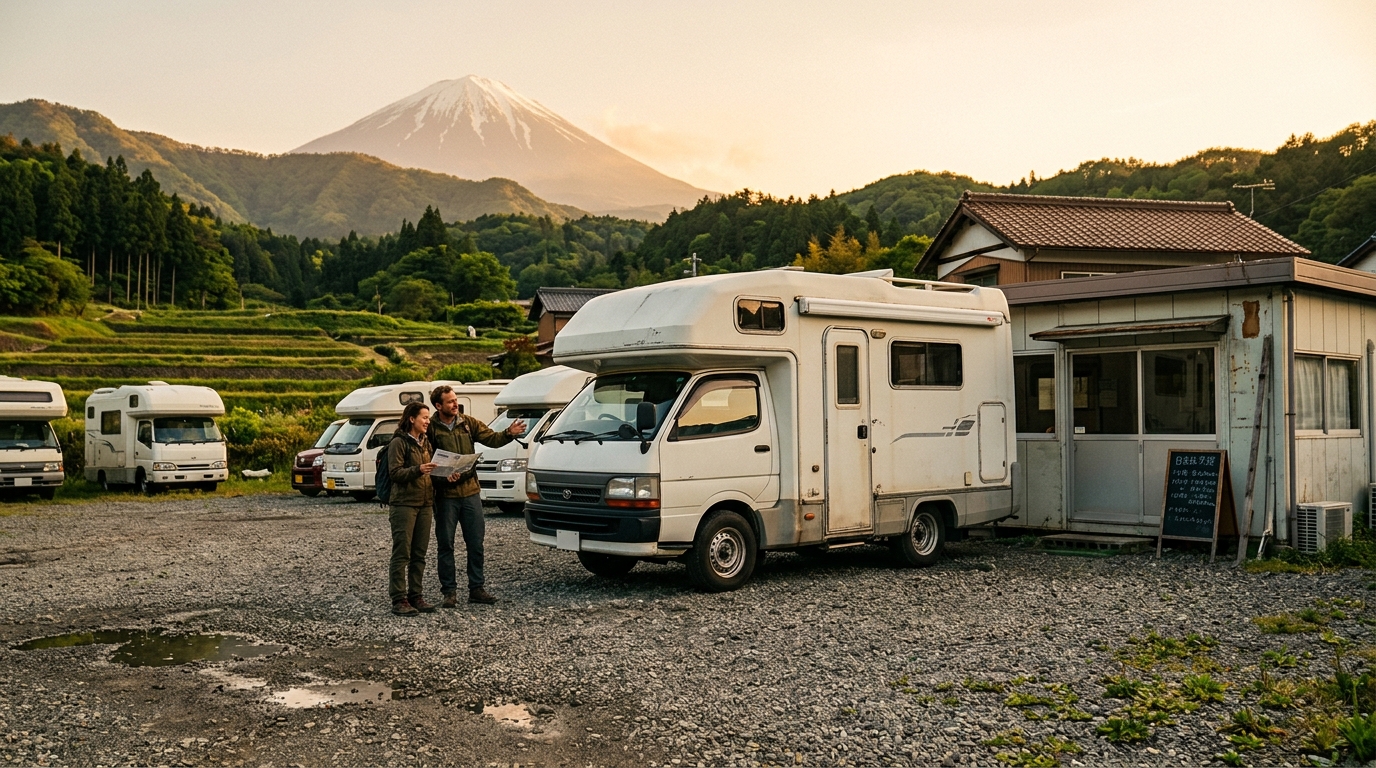
Wild camping, or parking overnight "anywhere," is generally prohibited in Japan due to local regulations and strong cultural norms regarding public and private land use. However, designated 'Michi-no-Eki' (roadside stations), which number over 1,200 across Japan, and official campsites offer legal, safe, and often amenity-rich options for overnight RV parking. Michi-no-Eki are comprehensive roadside facilities that typically provide clean restrooms, local produce markets, restaurants, and sometimes even onsen (hot springs), greatly enhancing the RV experience. When utilizing Michi-no-Eki for overnight stays, it's essential to observe cultural etiquette: avoid setting up outdoor furniture, keep noise levels low, and ensure all waste is properly disposed of. Rules regarding specific overnight parking vary by region and individual facility, so always check local signage and adhere to local law. RV PLANET (rvplan.net) is an excellent resource for finding campsites and campgrounds during your trip, helping you locate available spots along your route and plan your overnight stops with ease.
Can I Drive an RV Into the City Center? Heights, Tunnels & Local Signage
Yes, you can generally drive a rented RV into most Japanese city centers, including bustling areas like Tokyo, Kyoto, Osaka, or Nagoya. Modern city infrastructure is largely built to accommodate standard vehicle dimensions. However, drivers must remain vigilant for specific local signage indicating height restrictions (often around 3.8 meters), low tunnels, and restricted environmental or residents-only zones, especially in older or more congested districts such as Takamatsu-Kagawa. Always pay close attention to Japanese road signs, which are frequently translated into English on major routes, and utilize GPS navigation that allows for vehicle dimensions to avoid unexpected restrictions. Drive slowly and carefully, and you can drive almost anywhere without issues. No need to stress - just use common sense and pay attention. For instance, when exploring a city like Hiratuska Kanagawa, you might find ample parking at larger commercial facilities or designated RV parks on the outskirts, requiring only a short public transport ride into the heart of the city.
What is the best month to RV in Japan?
For a unique 'winter RV rental' experience in Japan, December through March offers exceptional opportunities, particularly in prime snowy regions like Hokkaido, Nagano, and the Japan Alps. This period allows travelers to access world-class ski resorts, enjoy stunning snowy landscapes, and relax in rejuvenating onsen (hot springs), often with fewer crowds compared to the bustling spring cherry blossom or autumn foliage seasons. While RVing is enjoyable year-round in Japan, specific regional itineraries for winter should focus on areas known for heavy snowfall and winter sports, requiring careful planning for road conditions and RV amenities tailored for cold weather. Beyond winter, shoulder seasons like late autumn (October-November) or early spring (April-May) can also be excellent for RV travel, offering milder weather and beautiful scenery with fewer tourists than peak summer or holiday periods, providing a comprehensive RV Rental Asia - Complete Guide 2026 experience.
Is RVing popular in Japan?
RVing, known in Japan as 'campers' (キャンピングカー), is experiencing a significant surge in popularity, reflecting a growing national interest in domestic travel, outdoor activities, and mobile lifestyles. Japanese RV culture often emphasizes compact, versatile models, like the "Active Bunk" or "Happy 1" campervans, that are well-suited to the country's road network and tight spaces. However, larger Class C motorhomes and even Class A models are also becoming increasingly common, especially for families. This trend has led to the expansion of RV-friendly infrastructure, including a robust network of over 1,200 Michi-no-Eki (roadside stations), catering to the evolving needs of both local and international RV travelers. The flexibility of a rented RV allows travelers to truly immerse themselves in Japan's natural beauty and rich culture, contributing to the rising enthusiasm for this travel style.
Where can I park an RV in Japan?
RVs can be legally and conveniently parked overnight at numerous designated 'Michi-no-Eki' (roadside stations) and official campgrounds spread across Japan, providing safe and amenity-rich stopping points. There are over 1,200 Michi-no-Eki available, which are well-equipped roadside facilities offering restrooms, local produce markets, restaurants, and sometimes even onsen, greatly enhancing the RV experience. These stations are not formal campgrounds, so while overnight rest is permitted, proper cultural etiquette should be observed: keep noise levels low, avoid setting up outdoor living spaces, and ensure all waste is properly disposed of. Additionally, traditional campgrounds and RV parks, often found near popular attractions or national parks, offer more extensive facilities like electrical hookups and dump stations for longer stays. Cities like Tokyo, Osaka, Kyoto, and Nagano also have various parking options, including large commercial lots or designated RV parking areas on the outskirts. For finding the best spots, RV PLANET (rvplan.net) is an invaluable resource for locating available campsites and parking along your route.
Can I sleep in my car anywhere in Japan?
No, sleeping in your rented RV or car "anywhere" in Japan is generally not permitted outside of designated areas, due to local regulations and deep-rooted cultural norms. While the concept of a 'car nap' (kuruma-chu) is accepted at designated rest stops for long-distance drivers, it does not equate to wild camping. Respect for private property and public spaces is paramount in Japan; overnight parking in residential areas, small business parking lots, or other undesignated public spaces is typically discouraged and can lead to issues with local authorities. Adhering to designated RV parking spots, such as the numerous Michi-no-Eki or official campgrounds, ensures a respectful and hassle-free travel experience, aligning with Japanese etiquette for peaceful co-existence. Always seek out official or explicitly permitted overnight parking locations to avoid any misunderstandings or fines.
Do RVs have toilets in Japan?
Yes, most modern RVs available for rental in Japan, particularly larger classes like Class SI Semi-integrated (e.g., "Euro Quest") and Class C Alcove models (e.g., "4 Berth Adventurer"), come equipped with onboard toilets and often showers, offering significant convenience. These facilities are especially beneficial for winter RV travel in Japan, providing warmth and privacy without needing to venture outside into cold weather. Even many larger campervans like the "Koru Star 4 Freedom" or "Camper Van Plus - V600" often include compact shower and toilet facilities. Waste disposal options for RV toilets, including grey and black water tanks, are readily available at most official campgrounds and some larger Michi-no-Eki, ensuring proper sanitation throughout your journey. This self-contained aspect of motorhome travel greatly enhances comfort and flexibility, allowing you to explore more remote regions with peace of mind. Compare Motorhome Prices for Japan to see which vehicles offer these essential amenities.
How much does it cost to rent an RV in Japan?
The cost to rent an RV in Japan varies significantly based on factors such as the RV class, rental duration, season (winter rentals can sometimes be more affordable during off-peak periods compared to spring or autumn), and the specific supplier. A compact campervan might start from around $100-$150 per day in the low season, while a larger, more luxurious Class C motorhome could range from $200-$350+ per day. Beyond the base rental fee, detailed budgeting should account for ancillary expenses like fuel costs (refer to 8-12 Liters/100 km for common RVs), highway tolls (optimized with an ETC card), and campground fees (typically ¥2,000-¥5,000 per night for a powered site). For instance, a week-long trip in a Class C motorhome for a family of four could have a base rental cost of $1400-$2450. When comparing total travel costs, RVing in Japan can offer excellent value against trains and hotels, especially for groups or families seeking flexibility, kitchen access for groceries, and unique experiences like visiting public bathhouses (onsen). For the most accurate and transparent pricing, Bandana RV allows you to compare final prices across 50+ suppliers-what you see is what you pay, with no surprise fees at pickup.
How do I rent an RV in Japan?
Renting an RV in Japan typically involves a straightforward online booking process through reputable comparison platforms like Bandana RV. First, you select your desired RV class (Campervan, Class C, or Class A), preferred pickup/drop-off locations (such as Tokyo, Osaka, Kyoto, or Sapporo), and your travel dates. Key requirements for international travelers include possessing an International Driving Permit (IDP) along with your original national driver's license, a valid passport, and meeting the minimum age requirement, which is usually 21 years old. It is advisable to book well in advance, especially for popular winter seasons or specific RV classes like the "Euro Deluxe" or "4x4 Camper B - TYR", though many national and state parks reserve a percentage of spots for first-come-first-serve arrivals, so don't be afraid to travel spontaneously. You'll find a spot. If not at the first campground, then the next one. Call ahead before driving. Remember to thoroughly understand the rental terms, insurance options (you can upgrade to a top-level deductible for extra peace of mind), and any available add-ons like ETC cards or winter equipment. We compare final prices across 50+ suppliers so you don't have to, ensuring full transparency in your booking experience.
RV-Enabled Culinary Adventures in Japan
An RV rental in Japan truly unlocks unique culinary adventures, allowing travelers to move beyond traditional restaurants and engage with local food culture in a deeply personal way. Imagine exploring vibrant local markets, stopping at quaint roadside eateries, and then returning to your motorhome to cook with fresh, regional ingredients on the go-a distinct advantage over fixed accommodations. For instance, you can purchase Hokkaido's famous seafood or fresh vegetables near a Michi-no-Eki and prepare a gourmet meal right in your RV's kitchen. Leverage stops at Michi-no-Eki, which often feature local farmer's markets, to acquire seasonal produce and specialty items, enabling you to prepare authentic Japanese meals. Winter RV travel specifically allows for experiencing regional winter delicacies like nabe (hot pot) and enjoying warm, homemade meals in your cozy RV after a day of snowy exploration. For some inspiration on what to whip up on the road, check out our RV-friendly recipes playlist. This flexibility to combine exploration with home-cooked comfort is a cornerstone of the RV travel experience.
Emergency Preparedness & Safety for Japan RV Travel
Prioritizing emergency preparedness and understanding local safety protocols is crucial for a secure RV journey in Japan, especially during winter. Familiarize yourself with Japan's emergency numbers: 110 for Police and 119 for Fire/Ambulance. While Bandana provides pre-booking comparison, booking support, and post-booking coordination, for roadside assistance during your trip, consider options like the Japan Automobile Federation (JAF), or rely on your rental company's support services. It's essential to be aware of potential natural phenomena, such as heavy snow warnings in winter or rare seismic activity, and stay updated with local weather forecasts and safety advisories through apps or local news. Ensure your rented RV is equipped with a basic first-aid kit, emergency supplies, and a fully charged phone. Remember to plan your route carefully during winter, checking road closures and conditions in advance, particularly when traveling to mountainous regions or areas prone to heavy snowfall like Izumisano or Nagano.
What You Shouldn't Miss
- Skiing and Onsen Hopping in Hokkaido: Drive your rented RV through the pristine snows of Hokkaido, enjoying world-class ski resorts like Niseko, followed by relaxing soaks in natural onsens. This region is perfect for winter RV Rental Deals in Japan - Latest Offers 2026.
- Exploring Historic Towns and Temples: Journey to Kyoto, Nara, or Takamatsu-Kagawa, parking your motorhome at a nearby campsite and using public transport to explore ancient temples, serene gardens, and traditional architecture.
- Mount Fuji and Lake Kawaguchiko: Witness the iconic, snow-capped Mount Fuji from various viewpoints around Lake Kawaguchiko, especially stunning in winter. Book your Luxury RV Rental in Japan - Premium Prices 2026 to see this magnificent sight.
- Michi-no-Eki Discoveries: Make frequent stops at Japan's unique Michi-no-Eki (roadside stations) to sample local produce, enjoy regional delicacies, and discover hidden gems, sometimes even with attached hot springs. Many are perfect for a Cheap RV Rental in Japan - Budget Guide 2026.
- Looking for expert insights from Avi Bandana? Top 5 Adventures - recommendations from Avi Bandana: "Embrace the tranquility of winter travel. Drive slowly through the snow-laden villages, discover a cozy local ramen shop, and let the onsen melt away your worries. Japan in an RV is a journey for the soul."
- Coastal Drives and Seafood Feasts: Venture along Japan's coastlines, especially in winter, to find fresh seafood markets and enjoy the contrast of snow-covered mountains meeting the sea. This is ideal for a Weekly RV Rental in Japan - Pricing 2026 itinerary.
Final Thoughts
Embarking on a winter RV adventure in Japan is an experience unlike any other, offering a unique blend of cultural immersion, breathtaking natural beauty, and the unparalleled freedom of the open road. From navigating snow-dusted mountain passes to unwinding in serene onsen towns, a rented motorhome provides the perfect base for your exploration. Remember to embrace slow travel, allowing yourself the time to truly feel the place, connect with the local culture, savor the incredible food, and soak in the magnificent scenery.
With Bandana RV, you're not just renting a vehicle; you're gaining a trusted partner dedicated to ensuring your trip is as transparent, enjoyable, and well-supported as possible. Our expertise in RV rentals across 50+ countries means you have access to the best vehicles and most reliable services, all without hidden fees. So, gather your loved ones, pack your winter gear, and get ready to discover the magic of Japan in a way most tourists only dream of.
Are you ready to discover Japan's winter magic on your own terms? Find winter RV Rentals in Japan now and start planning an unforgettable journey that promises both comfort and exhilarating adventure!