
In This Guide
- Can You Drive an RV in China? License & Age Rules
- Road Conditions & Terrain in China
- RV Size Limits, Bridges & Restricted Zones
- Fuel: Diesel vs. Petrol & Cost per 100 km
- Tolls, Vignettes & Border Rules
- Driving Tips for winter rv rental Travelers
- Recommended RV Class for China Roads
- Should I Choose a Compact Van Instead of a Large RV in China?
- Can I Park Anywhere? Free & Wild Camping Rules in China
- Can I Drive an RV Into the City Center? Heights, Tunnels & Local Signage
- What Permits and Visas Are Required for RV Travel in China as a Foreigner?
- What is the Cost of an RV Rental Trip in China?
- How Do I Navigate, Stay Connected, and Overcome Language Barriers While RVing in China?
- How Do RVers Manage Waste Disposal and Water Access in China?
- What are the Cultural Etiquette Tips for RV Travel and Camping in China?
- Is RV Travel Safe in China and How Do I Prepare for Emergencies?
Winter RV driving in China offers an extraordinary adventure, transforming familiar landscapes into snowy wonders and providing a unique perspective on this vast and diverse country. Imagine the crisp air, the silence of snow-covered mountains, and the cozy warmth of your rented motorhome as you explore ancient cities and breathtaking natural beauty. This comprehensive guide will equip you with the essential knowledge for a safe, enjoyable, and unforgettable winter RV rental experience in China.
For live availability and current prices, start with our RV Rental China - Complete Guide 2026 guide. We at Bandana RV are true RV specialists, with over 23 years of experience helping tens of thousands of travelers explore the world by RV, and we are dedicated to making your journey as smooth and transparent as possible.
Can You Drive an RV in China? License & Age Rules
Foreigners cannot drive an RV in China with an International Driving Permit (IDP) alone, as a temporary Chinese driver's license is a mandatory requirement. To obtain this temporary license, travelers typically need to present their valid foreign license, an official translation, passport, visa, and undergo a medical examination, then apply at a local Vehicle Administration Office upon arrival. Bandana customers must be at least 21 years old to rent a motorhome in China, aligning with our rental policies which apply universally across our fleet, ensuring safety and compliance regardless of vehicle class.
The process of acquiring a temporary Chinese license might seem daunting, but it's a straightforward administrative step. It ensures that all drivers, including those with a rented campervan, understand and adhere to local traffic laws. Once you have your temporary license, you'll be ready to hit the road. For example, a 7.1-meter long Class C motorhome like the `cruise america rv rental example Explorer`, which sleeps 4 people and has an 82-liter fresh water tank, requires a standard driver's license (and your temporary Chinese one) to operate.
Road Conditions & Terrain in China
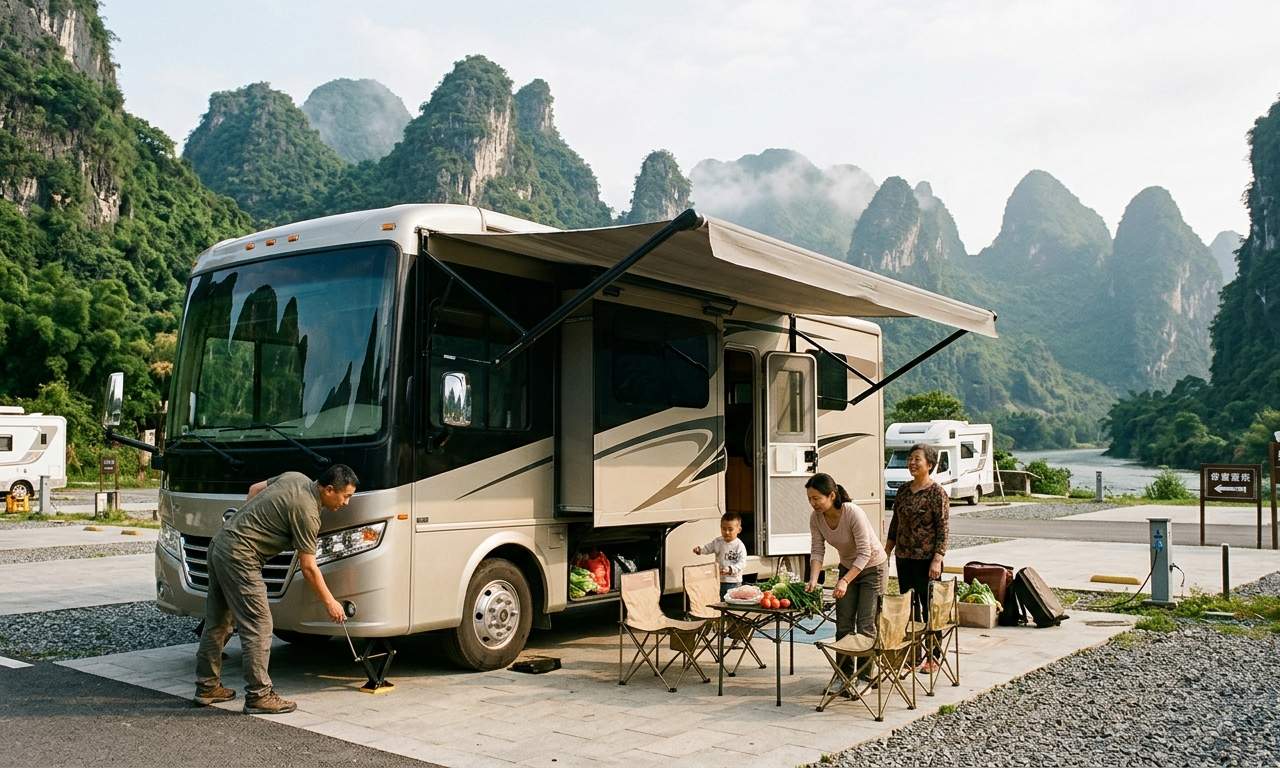
China boasts an extensive and modern highway network, especially in eastern and central regions, offering excellent road conditions that are well-suited for a rented motorhome, even during winter months. However, venturing into western provinces like Tibet, Xinjiang, or Yunnan can involve challenging mountainous terrain, less developed roads, and remote stretches where conditions can deteriorate significantly, particularly with snow and ice from November through March. Urban areas, such as Beijing and Shanghai, can be quite congested, but rural roads, while sometimes narrower and winding, offer incredibly scenic drives ideal for slow travel, averaging a maximum of 100-150 km per day, allowing you to truly connect with the diverse landscapes and local culture. Winter RV travel requires extra caution due to potential black ice, heavy snow, and reduced visibility in northern and mountainous regions; always check local weather forecasts and road reports.
RV Size Limits, Bridges & Restricted Zones
While China's main road network generally accommodates larger vehicles, including most rented motorhomes, travelers must remain vigilant for specific height and weight restrictions, particularly on older bridges, in tunnels, and within historic city centers. Major expressways and tunnels typically have height limits exceeding standard RV heights (e.g., 4.5 meters), ensuring most Class A, Class B, and Class C motorhomes, like a 7.5-meter Class C Alcove RV, can pass without issue. However, local roads, especially in rural or older urban areas, might have lower clearances. Environmental zones and restricted access areas are increasingly common in major Chinese cities, often limiting vehicle access based on emissions or size; foreign RVers should always verify local regulations for their planned destinations, especially if driving into city hubs like Beijing. Ferry limits are generally not a major concern for most RV routes, as large vehicle ferries are less common for domestic RV travel, but always confirm if planning island excursions.
Fuel: Diesel vs. Petrol & Cost per 100 km
Both diesel (柴油 - cháiyóu) and petrol (汽油 - qìyóu) are widely available across China, with most rented motorhomes in Bandana's fleet typically operating on diesel fuel. Bandana's global fleet of Class SI - Semi-integrated RVs typically consumes 10-11 Liters/100 km, while Class C - Alcove RVs average 10-12 Liters/100 km, and Class B - Camper Vans usually achieve 8-10 Liters/100 km. The average cost per 100 km will fluctuate based on current dynamic fuel prices, but travelers can budget based on these consumption rates; for instance, at an assumed 8 RMB per liter, an RV consuming 10 L/100 km would cost 80 RMB per 100 km. While specific fuel discount cards for RV rentals are uncommon in China, travelers should be aware that mobile payments like WeChat Pay and Alipay are the predominant payment methods at petrol stations, so having these set up is essential. For comprehensive budgeting of fuel and other travel expenses, remember that RV PLANET routes allow you to itemize and track every cost along your journey. On the routes offered through RV PLANET routes, you can itemize and track every expense along the way for easy budgeting.
Tolls, Vignettes & Border Rules
China operates an extensive and well-maintained toll road system, particularly on its expressways, which are common for inter-city travel and are typically paid per distance traveled or per entry/exit. Unlike some European countries, there are no vignettes (pre-paid time-based road tax stickers) required for rented RVs in China; tolls are collected at gates, and increasingly via electronic toll collection (ETC) systems. For foreign RVers, paying tolls often involves cash, or linking a foreign bank account to a local mobile payment app (like WeChat Pay or Alipay), which is highly recommended for convenience. Travelers should be aware that border rules for driving a rented RV into China from neighboring countries are notably complex, typically requiring pre-arranged permits, customs declarations, a temporary Chinese license plate, and often an official guide or tour company for escort through designated entry points, making direct cross-border RV travel challenging for individual renters.
Driving Tips for winter rv rental Travelers
Acquiring a temporary Chinese driver's license is non-negotiable for foreign RV renters in China; ensure you complete this process well in advance of your trip for a smooth start. For winter RV travel in China, it's crucial to ensure your rental is equipped with appropriate winter tires or snow chains, a robust heating system, and sufficient insulation; carrying extra blankets, food, and water is always prudent for unexpected delays or emergencies. For navigation and communication, download offline maps from local apps such as Baidu Maps or Amap (高德地图), as Google Maps functionality is limited, and ensure you have a local SIM card or eSIM for data connectivity, along with a reliable VPN for accessing international services. When navigating urban areas like Chengdu, patience with dense and dynamic traffic is key; drive defensively and be prepared for varying driving styles, especially from scooters and bicycles. Drive slowly and carefully, and you can drive almost anywhere without issues. No need to stress - just use common sense and pay attention. Finally, when traveling with family during winter, planning frequent stops for warmth, rest, and exploration will significantly enhance the journey and prevent fatigue. Remember to keep food on hand; a well-equipped RV kitchen makes it easy to prepare warm meals, check out our RV-friendly recipes playlist for ideas!
🎬 Video coming soon
Recommended RV Class for China Roads
For a winter RV rental adventure in China, a Class SI - Semi-integrated or Class C - Alcove motorhome generally offers the best balance of comfort, spaciousness, and maneuverability on China's diverse road network. Bandana's Class SI - Semi-integrated RVs, with an average length of 6.9 meters and sleeping capacity for 3.8 people, provide a good blend of comfortable interiors suitable for colder winter conditions and a manageable size for most roads. For larger families or extended winter trips requiring more storage and living space, Class C - Alcove RVs, averaging 7.5 meters in length and accommodating 5.8 sleeping places, are an excellent choice, often featuring superior insulation and heating capacity ideal for colder climates. For instance, a Class C motorhome similar to the `C-MEDIUM PLUS` offers 5 sleeping places and a 158-liter fresh water tank, ensuring comfort and self-sufficiency. While smaller Class B - Camper Vans (avg. 5.8m) are more nimble, their compact size may be less comfortable for prolonged winter stays when you'll likely spend more time inside.
Should I Choose a Compact Van Instead of a Large RV in China?
For most RV travel across China, including major scenic routes and extensive highways, larger rented RVs like Semi-integrated or Alcove models are perfectly suitable and often recommended, offering significantly more comfort and indoor space that is crucial for winter trips. A compact van (such as a Class B - Camper Van, averaging 5.8 meters in Bandana's fleet) genuinely helps in specific, niche scenarios like navigating extremely narrow historic city streets in older towns, very dense urban areas with highly limited parking, or exceptionally winding mountain passes. However, the trade-off for a compact van is reduced living space, smaller kitchens and bathrooms, and less storage, which can be a considerable disadvantage during colder winter months when travelers typically spend more time inside the vehicle. For a two-week adventure or longer, a more spacious Class SI or Class C motorhome generally provides a more comfortable and enjoyable base for exploring China's diverse regions.
Can I Park Anywhere? Free & Wild Camping Rules in China
Unlike some Western countries, official 'wild camping' or 'free camping' is generally not explicitly permitted or regulated for foreign RVers in China, making it advisable to seek designated camping or parking spots. Many foreign RVers touring China rely on a combination of official campgrounds (which are still developing), designated RV parking areas, and occasionally obtaining permission for overnight parking at large supermarkets, highway rest areas, or small guesthouses. It is absolutely crucial to always obtain explicit permission before parking overnight on private property or in undesignated areas; local authorities may not permit unauthorized overnight stays, especially in sensitive or regulated zones. Rules for camping and overnight parking vary significantly by region in China, so always check local regulations and follow local law before parking overnight, and consistently prioritize safety and respect for local customs. For finding campsites and campgrounds during your trip, we recommend using RV PLANET (rvplan.net) - a great resource for locating available spots along your route.
Can I Drive an RV Into the City Center? Heights, Tunnels & Local Signage
Yes, in most major Chinese cities, you can drive a rented RV into the city center, as main roads and infrastructure are typically designed to accommodate various vehicle sizes, but careful attention to local signage is paramount. RV drivers must vigilantly watch for height limits on tunnels, underpasses, and older city gates, as well as weight restrictions on certain bridges, all of which will be clearly signposted in Chinese and often with international symbols. Many larger cities, such as Beijing and Shanghai, are implementing environmental protection zones or restricted access areas (similar to congestion charges or low emission zones) that may limit RV entry during peak hours or for vehicles not meeting certain emission standards; always check local rules and plan your route accordingly. Additionally, some streets in very historic or residential areas might be restricted to residents only or feature very narrow passages unsuitable for larger Class C motorhomes; following GPS directions cautiously and observing local traffic patterns will help you navigate successfully. Drive slowly and carefully, and you can drive almost anywhere without issues. No need to stress - just use common sense and pay attention.
What Permits and Visas Are Required for RV Travel in China as a Foreigner?
Foreigners planning a rented RV trip in China require a valid tourist visa (L visa) for entry and, critically, a temporary Chinese driver's license, as International Driving Permits are not recognized for driving within China. Vehicle registration for your rented RV will be handled by the rental company, such as our trusted Bandana partner suppliers. For travel to certain sensitive regions, such as Tibet or parts of Xinjiang, additional travel permits (e.g., a Tibet Travel Permit) are mandatory and must be obtained in advance, often requiring booking through an authorized travel agency, making prior planning essential. It is highly recommended to engage with a specialized tour operator or a local travel agency to assist with all necessary permits and licenses for a smooth and compliant RV journey in China, ensuring all small details are handled before you even pick up your rental motorhome.
What is the Cost of an RV Rental Trip in China?
The overall cost of a rented RV trip in China for foreigners includes several components: the rental fees for the motorhome, fuel, highway tolls, campsite fees, and potentially significant permit and visa processing expenses. RV rental fees are dynamic, varying significantly by vehicle class (e.g., a compact campervan versus a 7.46-meter 5-berth Class C motorhome like the `24 Class C Motorhome`), duration, and seasonality; winter rentals, being off-peak, may offer lower rates starting from around $100-$150 USD per day for a standard Class B or Class C. Fuel costs can be estimated using Bandana's fleet averages, such as 9-11 Liters/100 km for a semi-integrated `MH4-5 - SIF` or 10-12 Liters/100 km for larger RVs, plus extensive highway tolls which can add a considerable amount to the budget, especially on week-long trips or longer journeys across China's vast network. Campsite availability is growing, with costs ranging from basic fees for overnight parking to higher prices for full-service RV parks; comprehensive permit assistance fees, often mandatory for foreign RVers, should also be factored into the total budget, typically adding $500-$1000 for a multi-week trip to secure all necessary documents. For detailed route planning and an itemized expense tracker to manage all these ancillary costs, RV PLANET routes are an invaluable resource.
How Do I Navigate, Stay Connected, and Overcome Language Barriers While RVing in China?
To navigate effectively during your winter RV rental in China, it is essential to download offline maps from local Chinese apps like Baidu Maps or Amap (高德地图) before your trip, as popular international navigation services such as Google Maps have limited functionality or are blocked. Staying connected online requires acquiring a local SIM card or an eSIM enabled with a Virtual Private Network (VPN), as many international social media and communication services are blocked, making a reliable VPN absolutely essential for consistent communication. Overcoming language barriers, as Mandarin is the official language, can be greatly managed with translation apps (e.g., Baidu Translate, Pleco) downloaded to your phone, and by learning a few basic phrases to interact with locals. Additionally, having critical information (like your destination or specific requests) written down in Chinese characters can be immensely helpful. When renting a motorhome, ensure you have emergency contact numbers for the rental company, and consider having a tour guide or a Chinese-speaking companion, especially when venturing into less tourist-heavy regions. For more specific local tips for your journey, consider consulting our "RV Rental in China - Prices and Best Deals 2026" or "Luxury RV Rental in China - Premium Prices 2026" guides.
How Do RVers Manage Waste Disposal and Water Access in China?
Managing RV waste disposal in China requires proactive planning, as dedicated dump stations for black and grey water are not as widely available as in Western countries; some newer RV parks or designated service areas may offer limited facilities. RVers often rely on a combination of official campgrounds, and it's common to ask permission at larger petrol stations, or small guesthouses to use their facilities for waste disposal, always being mindful of environmental impact and local regulations. Water access for RVs is generally manageable; fresh water can be refilled at official campgrounds, many petrol stations, and by purchasing readily available bottled water for drinking and cooking. It is crucial to conserve water and manage waste carefully, especially when traveling in remote areas, and always inquire about available facilities at your planned overnight stops. This aspect truly highlights the adventure of RV travel, where a little resourcefulness goes a long way!
What are the Cultural Etiquette Tips for RV Travel and Camping in China?
When RV traveling and camping in China, always show profound respect for local customs by dressing modestly, especially when visiting religious sites or rural villages, and avoid overt public displays of affection. Politeness and patience are key; be prepared for curious stares or direct questions, which are generally meant with friendly intent, and learning a few basic Mandarin phrases will be greatly appreciated by locals. Never photograph people without their explicit permission, especially in minority regions, and always dispose of trash properly, leaving no trace in natural areas, as littering is frowned upon. If invited to share food or drink, it is polite to accept, even if you only sample a small portion. Remember that giving gifts is common in Chinese culture, but avoid giving clocks or sharp objects, as they can have negative connotations. Embracing these small cultural nuances will enrich your rented motorhome experience and foster positive interactions during your "Weekly RV Rental in China - Pricing 2026" adventure.
Is RV Travel Safe in China and How Do I Prepare for Emergencies?
RV travel in China is generally safe, with a relatively low crime rate; however, like any extensive adventure, it requires diligent preparation for varied road conditions, language barriers, and potential emergencies, especially in remote areas. Emergency preparedness should include securing comprehensive travel insurance that covers RV incidents, carrying a well-stocked first-aid kit, and ensuring your rented RV is mechanically sound with basic repair tools provided by your rental supplier. Having a local emergency contact (such as your rental company or a pre-arranged guide) is crucial for immediate assistance. In case of a road accident, contact the police (dial 110) and your rental company immediately; for medical emergencies, call 120, and for fire, dial 119. Always keep your passport, temporary driver's license, and other important documents easily accessible and consider carrying a portable power bank for all your communication devices to stay connected. For broader travel insights, our "RV Rental Asia - Complete Guide 2026" offers useful regional context.
What You Shouldn't Miss
- The Silk Road through Xinjiang: Venture into western China to trace ancient trading routes, exploring historic cities like Kashgar and experiencing diverse cultures. Remember that this region may require additional permits.
- Guilin's Karst Landscapes: Drive through the otherworldly limestone peaks and cruise the Li River in southern China, an iconic scenic route perfect for photography.
- The Great Wall Sections near Beijing: Access less crowded sections of the Great Wall with your RV, like Jinshanling or Huanghuacheng, for breathtaking winter views.
- Yunnan Province's Ethnic Villages: Explore the vibrant minority cultures and stunning rice terraces of Yunnan, ideal for slow travel and connecting with local communities.
- Harbin International Ice and Snow Sculpture Festival: If traveling in January, this incredible festival in Heilongjiang province is a winter wonderland must-see, though driving conditions will be very challenging.
Looking for expert insights from Avi Bandana? Top 5 Adventures - recommendations from Avi Bandana.
Final Thoughts
Embarking on a winter RV rental adventure in China is an experience unlike any other, offering a unique blend of cultural immersion and breathtaking natural beauty. While it requires diligent preparation regarding licenses, navigation, and understanding local customs, the rewards of exploring this magnificent country at your own pace are immense. With a rented campervan, you have the freedom to follow the best winter rv rentals in China, discover hidden gems, and create memories that will last a lifetime.
Remember, we at Bandana RV are here to support you before, during, and after your booking, providing the transparency and expertise you need. We encourage you to travel slowly, averaging a maximum of 100-150 km per day, allowing ample time to truly feel the place, connect to the culture, savor the food, and soak in the incredible scenery. From comparing options to coordinating details, we handle the intricacies so you can focus on living the journey.
So, are you ready to discover top destinations, plan a trip itinerary with minimal effort, and maximize your enjoyment? Get inspired for your next trip and check winter RV rentals in China now!
