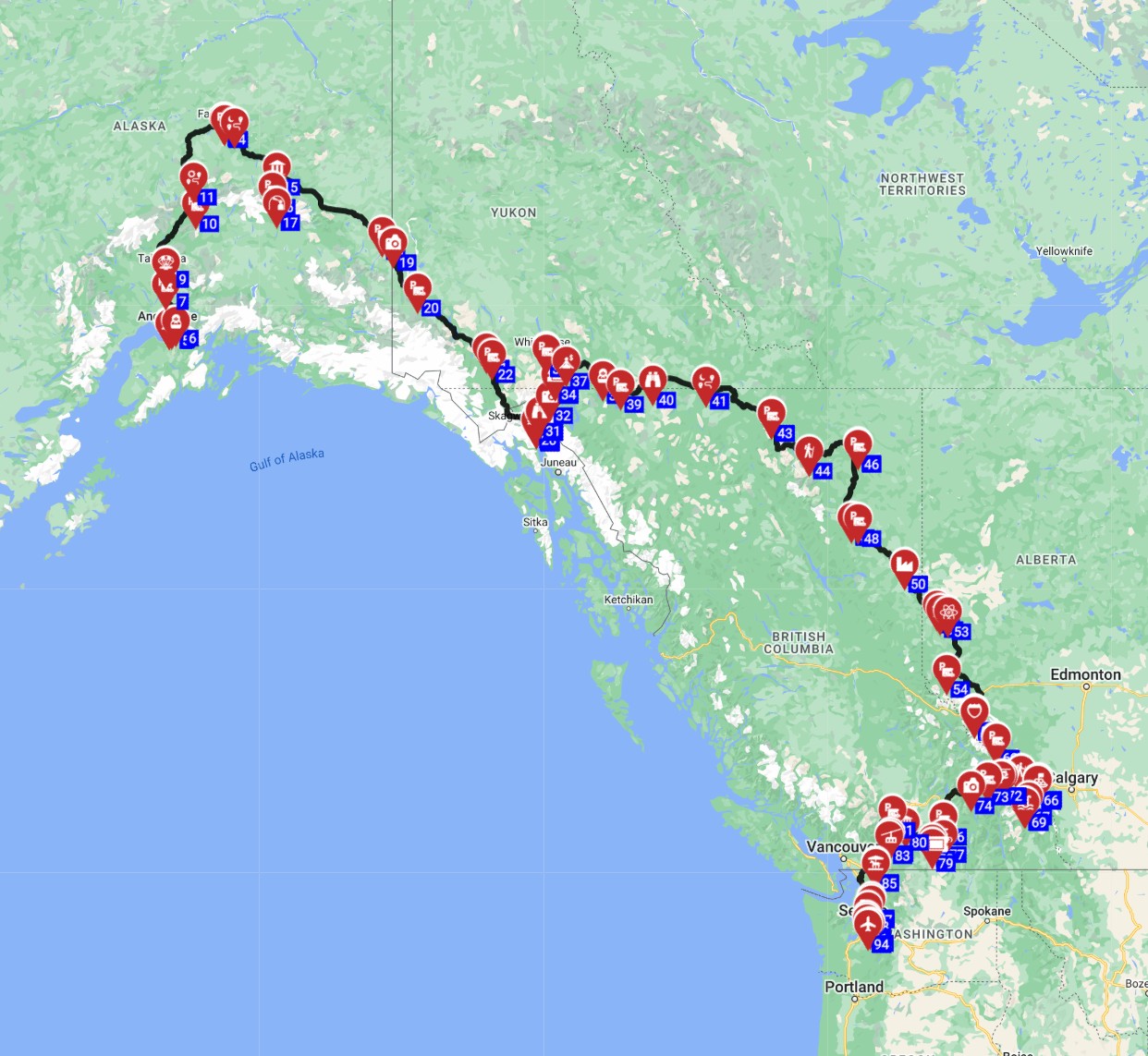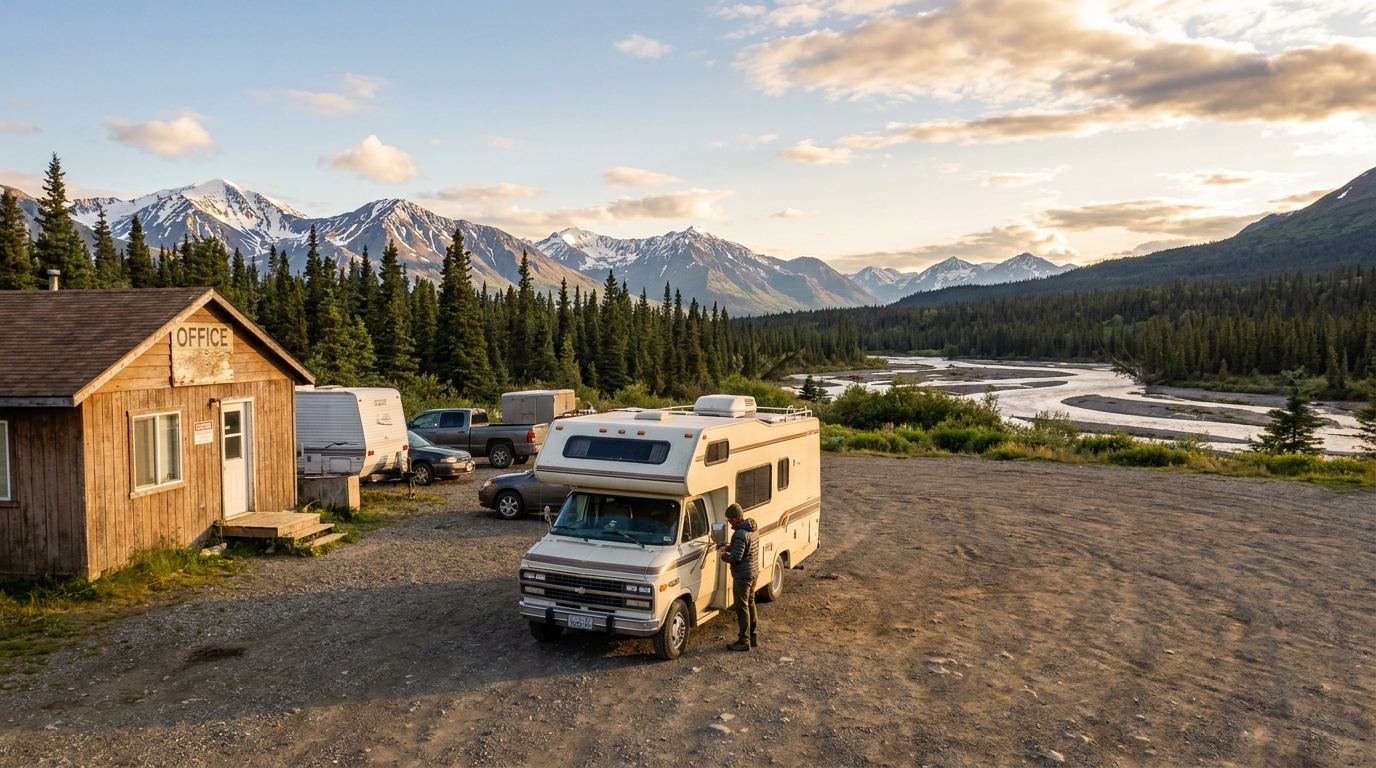
For live availability and current prices, start with our RV Rental Alaska - Complete Guide 2026 guide.
In This Guide
- Do you need a special license to drive an RV in Alaska? And for a 30 ft RV?
- Road Conditions & Terrain in Alaska
- RV Size Limits, Bridges & Restricted Zones
- Fuel: Diesel vs. Petrol & Cost per 100 km
- Tolls, Vignettes & Border Rules
- Driving Tips for rv rental Travelers
- Recommended RV Class for Alaska Roads
- Should I Choose a Compact Van Instead of a Large RV in Alaska?
- Can I park my RV anywhere in Alaska? Free & Wild Camping Rules
- Can I Drive an RV Into the City Center? Heights, Tunnels & Local Signage
- Can I drive my RV to Alaska?
- What is the 3-3-3 rule for RV living?
- Can you sleep in an RV while driving in the USA?
- Can you turn left on a red light in Alaska?
Exploring the vast, rugged beauty of Alaska in a rented motorhome offers unparalleled freedom and immersion into nature. Whether you dream of glaciers, wildlife, or the charm of remote towns, understanding the unique aspects of RV travel here is key to a smooth adventure. Our comprehensive RV Rental Alaska - Complete Guide 2024 is your starting point for live availability and current prices, ensuring you're well-prepared for the journey of a lifetime.
Do you need a special license to drive an RV in Alaska? And for a 30 ft RV?
In Alaska, a standard Class D driver's license is typically sufficient to drive most motorhomes, including those up to 30 feet in length, as long as the vehicle's Gross Vehicle Weight Rating (GVWR) is under 26,000 pounds (11,793 kg).
A Commercial Driver's License (CDL) is generally only required for RVs exceeding 26,000 pounds GVWR or for towing heavier trailers, which is uncommon for rental motorhomes. The minimum age to rent and drive an RV in Alaska is usually 21 years old, and you won't encounter young driver surcharges or vehicle class restrictions based on age through our partners. For visitors from non-English-speaking countries, an International Driving Permit (IDP) is highly recommended for translation purposes, although it is not legally mandated by Alaska law in most cases. Before you hit the road, ensure you have all necessary documents, including your valid driver's license and rental agreement, which are essential for a hassle-free pickup and journey.
Road Conditions & Terrain in Alaska
Alaska's road conditions vary significantly, from well-maintained paved highways to gravel roads in more remote areas, often featuring frost heaves, potholes, and dramatic elevation changes.
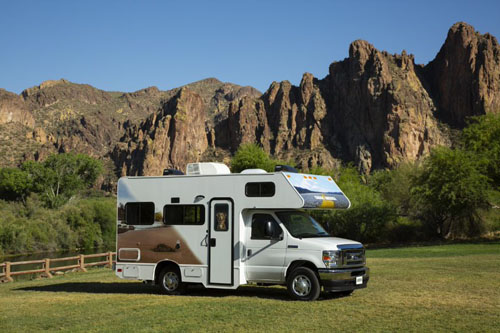
Travelers should expect long stretches of road with limited services and be prepared for rapidly changing weather conditions, even during the summer. Driving a rented RV in Alaska often means navigating winding mountain passes and unpaved sections; we encourage slow, scenic driving to fully appreciate the stunning landscape and ensure your safety. Particular attention should be paid to tire condition, as gravel and punctures are common, and consider undercarriage protection when venturing onto unpaved routes like the famous Denali Highway. Managing dust or mud is also a key consideration, especially on these less-developed roads. Our partners prioritize your safety by ensuring their fleet, including popular models like the "cruise america rv rental example Explorer" (7.1m length), is well-maintained to handle these varied conditions.
🎬 Video coming soon
RV Size Limits, Bridges & Restricted Zones
While Alaska's main highways are generally accommodating to larger motorhomes, travelers should be mindful of specific size restrictions primarily on the Alaska Marine Highway System (AMHS) ferries.
Length and height restrictions for vehicles apply when booking ferry passages; always confirm your rented RV's dimensions against the AMHS requirements well in advance. Unlike some other regions, Alaska does not typically have widespread low bridges or environmental zones that restrict standard RV travel on primary routes, but always observe local signage. Some backcountry roads or private campgrounds may have their own vehicle size recommendations or limitations, which is why research is always a good idea. For those seeking one-way rentals, our "One-Way RV Rental in Alaska - Price Guide 2024" can help you plan logistics and potential fees.
Fuel: Diesel vs. Petrol & Cost per 100 km
Both diesel and petrol are widely available in Alaska, though gas stations can be sparse in remote regions, requiring careful trip planning to avoid running low.
Based on Bandana's global fleet averages, a Class SI - Semi-integrated RV typically consumes 10-11 Liters/100 km, while a Class C - Alcove averages 10-12 Liters/100 km. Class B - Camper Vans, such as the "Active Classic" (5.99m length), are more fuel-efficient at around 8-10 Liters/100 km, and Class A - Integrated RVs typically range from 8-12 Liters/100 km. Fuel costs in Alaska are generally higher than the Lower 48 states, especially in very remote areas, making budgeting for fuel a significant consideration for your trip. For easy budgeting and tracking every expense, explore RV PLANET routes, which allow you to itemize all costs including fuel along your chosen itinerary. Consider checking our "RV Rental in Alaska - Prices and Best Deals 2024" for a clearer picture of overall trip costs. On the routes offered through RV PLANET routes, you can itemize and track every expense along the way for easy budgeting.
Tolls, Vignettes & Border Rules
Alaska has no state-wide tolls or vignettes for its road system, meaning RV travelers will not encounter toll booths within the state.
This simplifies budgeting, as you won't need to account for unexpected road fees during your journey. For those driving a rented motorhome to Alaska through Canada, standard border crossing procedures apply, requiring a valid passport, vehicle registration (or rental agreement from Bandana), and a declaration of goods. Be aware of Canadian laws regarding firearms, cannabis, and other restricted items when crossing the border to ensure a smooth passage. Rest assured, with Bandana RV, there are no hidden fees or surprises for your rental, allowing you to focus on the adventure ahead.
Driving Tips for rv rental Travelers
Always be alert for wildlife like moose, caribou, and bears, especially at dawn, dusk, and blind curves; slow down and give them ample space when driving a rented RV in Alaska.
Plan your route carefully to account for long distances between towns and limited services, ensuring you have enough fuel, water, and food for every leg of your journey. Utilize designated pullouts for scenic views and photography, avoiding sudden stops on the main road, which can be hazardous. Reduce your speed significantly on gravel roads to prevent dust clouds and minimize stone damage to your vehicle, maintaining a safe distance from other vehicles. Carrying an emergency kit, a satellite communication device (as cell service can be spotty), and basic tools for minor repairs is crucial, especially when venturing into remote areas. For more comprehensive insights, consider our "RV Travel Guide to Alaska - Tips and Top Spots 2024" which provides valuable local advice.
Recommended RV Class for Alaska Roads
For a balance of comfort and maneuverability on Alaska's diverse roads, a Class SI - Semi-integrated or Class C - Alcove motorhome is often recommended for rental travelers.
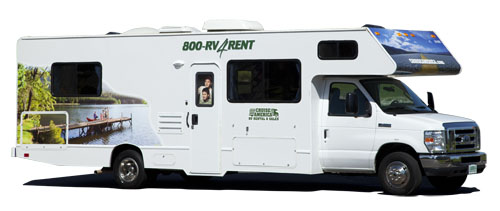
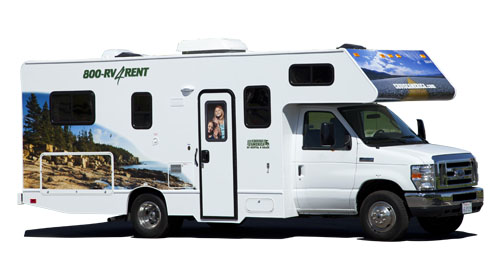
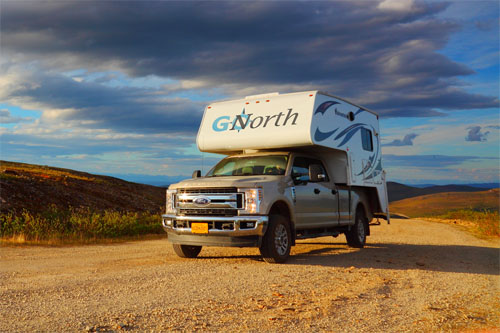
Class SI RVs, such as the "2 Berth Tamar" (avg. length 6.9m, ideal for 2 adults) or "Active Standard Select" (medium RV, sleeps 2 adults and 2 kids), offer good amenities while remaining manageable on varied terrain. Class C RVs, like the "24' Class C Motorhome" (avg. length 7.5m, ideal for 4 adults and 4 kids) provide more interior space and comfort, suitable for families on extended trips. For more rugged adventures or access to unpaved roads, a Class TC - Truck Camper (avg. length 5.5m, ideal for 2 adults) offers excellent ground clearance and flexibility. All these classes from Bandana's global fleet are well-suited for typical Alaskan road conditions and offer adequate comfort, making your trip a joy. We are true RV specialists, ready to help you compare final prices across 50+ suppliers to find the perfect vehicle for your Alaskan journey.
Should I Choose a Compact Van Instead of a Large RV in Alaska?
While Alaska's main roads are generally accommodating to all RV sizes, choosing a compact van (Class B - Camper Van) over a large RV depends entirely on your priorities and travel style.
Compact vans, such as the "2 Berth Hi Top" (avg. length 5.8m, sleeps 2 adults), offer better fuel efficiency, easier parking in towns, and greater agility for navigating narrower paths or booking ferry travel. However, larger motorhomes provide significantly more living space, enhanced amenities, and greater comfort for extended stays, which can be invaluable given Alaska's unpredictable weather and remote locations. Ultimately, most of Alaska's popular routes can be traversed by any RV size; the choice often boils down to balancing desired comfort levels with a slight gain in maneuverability or fuel savings. No need to stress about size - just use common sense and pay attention. For weekly RV rental options in Alaska, explore vehicles across all classes to find your ideal fit.
Can I park my RV anywhere in Alaska? Free & Wild Camping Rules
No, you cannot park your rented RV just anywhere in Alaska; specific regulations govern where you can legally camp for free or boondock.
Free camping is generally permitted on public lands managed by the Bureau of Land Management (BLM) and in National Forests, provided there are no posted restrictions and you adhere to Leave No Trace principles. Overnight parking is typically prohibited in National Parks, on private lands without explicit permission, and often within city limits unless in designated RV parks or permitted areas. Always practice bear-aware camping by properly storing food and waste, and check local ordinances or Forest Service/BLM offices for specific rules in the areas you plan to visit, as regulations can vary significantly. For finding campsites and campgrounds during your trip, we recommend using RV PLANET (rvplan.net) - a great resource for locating available spots along your route.
Can I Drive an RV Into the City Center? Heights, Tunnels & Local Signage
Yes, you can generally drive a rented RV into city centers in Alaska, as cities like Anchorage and Fairbanks are accustomed to large vehicles and typically feature wide main thoroughfares.
However, always pay close attention to local signage for any specific height restrictions, low bridge warnings, or parking regulations, especially in older downtown areas. While significant tunnels or environmental zones restricting RVs are not common in Alaskan cities, careful navigation is always advised when maneuvering larger vehicles in urban settings. Parking can be a greater challenge than driving, with limited oversized parking spots; consider parking on the outskirts and using public transport or smaller vehicles for city exploration. Drive slowly and carefully, and you can drive almost anywhere without issues. No need to stress - just use common sense and pay attention.
Can I drive my RV to Alaska?
Yes, you can drive your rented RV to Alaska, typically via the Alaska Highway (ALCAN), which traverses through Canada and offers an epic road trip experience.
The journey requires careful planning, including ensuring all necessary Canadian entry documents (valid passport, vehicle registration, and proof of insurance) are in order, and that your RV is prepared for long distances and varied road conditions. Alternatively, you can transport your RV via the Alaska Marine Highway System (AMHS) ferry, which offers routes from Bellingham, Washington, or Prince Rupert, British Columbia, allowing you to bypass some or all of the overland drive. Budgeting for extended fuel stops, potential repair costs, and ferry fares (if applicable) is crucial for a successful trip to Alaska. For more detailed pricing on such longer trips, you might want to consult our "RV Rental Near Alaska Airport - Pickup Pricing 2024" which covers various rental scenarios.
What is the 3-3-3 rule for RV living?
The '3-3-3 rule' for RV travel is a popular guideline suggesting travelers drive no more than 300 miles (approximately 480 km) in a day, arrive at their destination by 3 PM, and stay at least 3 nights.
While not a strict regulation, this rule promotes a more relaxed and enjoyable RV experience, allowing ample time for sightseeing, setting up camp comfortably, and avoiding rushed driving. For an Alaska RV trip, adhering to a slower pace like the 3-3-3 rule is particularly beneficial given the vast distances, unpredictable road conditions, and numerous scenic stops along the way. Implementing this approach helps prevent driver fatigue, allows for better exploration of attractions, and increases the chances of securing preferred campsites, especially during peak season. Remember, we always recommend slow travel, averaging max 100-150 km per day, to truly connect with the culture, food, and scenery.
Can you sleep in an RV while driving in the USA?
No, it is neither safe nor legal to sleep in the living area of a rented RV while the vehicle is in motion anywhere in the USA, including Alaska.
All passengers must be seated in designated seats with seatbelts properly fastened while the RV is being driven, adhering to state-specific seatbelt laws. Sleeping or moving about in the back of a moving RV poses significant safety risks in the event of sudden stops, collisions, or sharp turns, even on smooth Alaskan highways. The RV's living quarters are designed for use only when the vehicle is stationary and safely parked in a legal location. Ensure everyone is buckled up for a safe journey.
Can you turn left on a red light in Alaska?
In Alaska, like most U.S. states, turning left on a red light is generally prohibited unless explicitly permitted by a dedicated signal or signage.
The primary exception is turning left from a one-way street onto another one-way street, provided there are no signs prohibiting the turn and you come to a complete stop first. For RV drivers, it is safest to assume that left turns on red are not allowed unless clearly indicated, ensuring compliance with local traffic laws. Always come to a complete stop before making any turn on a red light, even when permitted, and yield to all pedestrians and oncoming traffic for maximum safety. Navigating traffic laws is part of being a responsible traveler, and Bandana RV helps make your planning seamless and transparent.
What You Shouldn't Miss
Alaska is a land of incredible natural wonders and unique experiences. Here are some adventures you absolutely shouldn't miss during your RV rental journey:
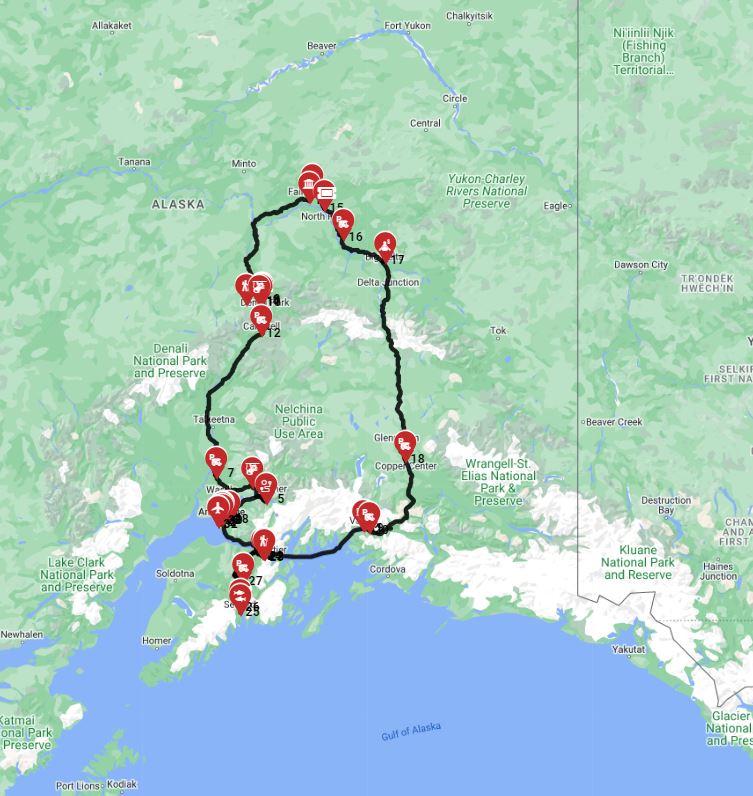
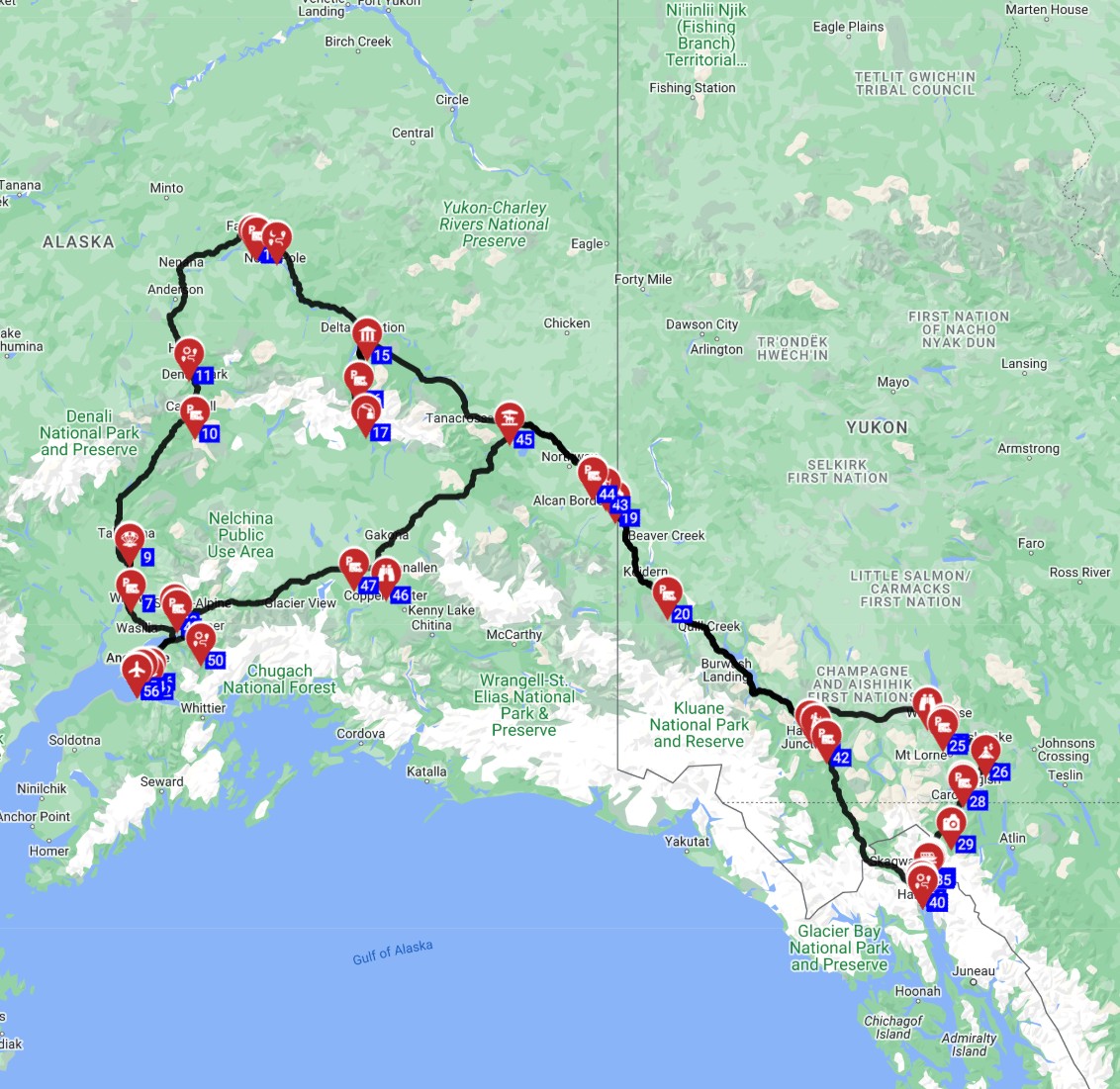
- Explore the vast interiors on a multi-week expedition: Imagine embarking on the
, a 23-day, 3539.2 km route that immerses you in diverse experiences. This extensive itinerary covers 1 amusement park, 1 botanical garden, thrilling canoe/kayak/rafting excursions, 1 cave, 3 cruise terminal/sailing opportunities, 3 day tours, 1 extreme activity, 1 family activity, 1 heritage site, 3 hiking areas, 1 historical site, 3 museums, 2 natural features, 1 night tour, 1 park, 3 points of interest, 1 science site, 1 tourist attraction, 1 traditional restaurant/fine dining, and 1 traditional visit. It’s an epic journey designed for deep exploration.
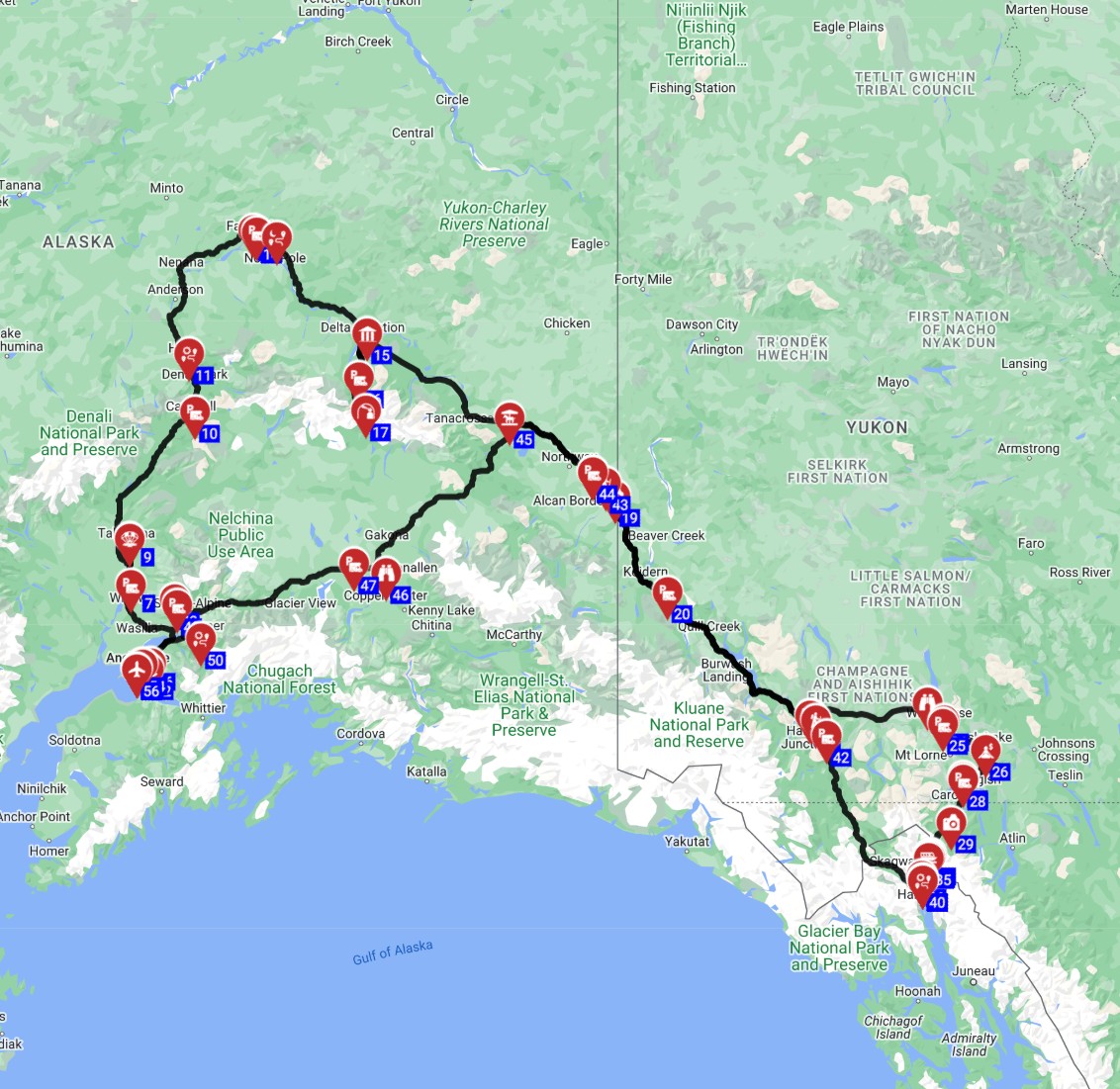 Anchorage Round Trip - Alaska-Yukon Discovery Trail
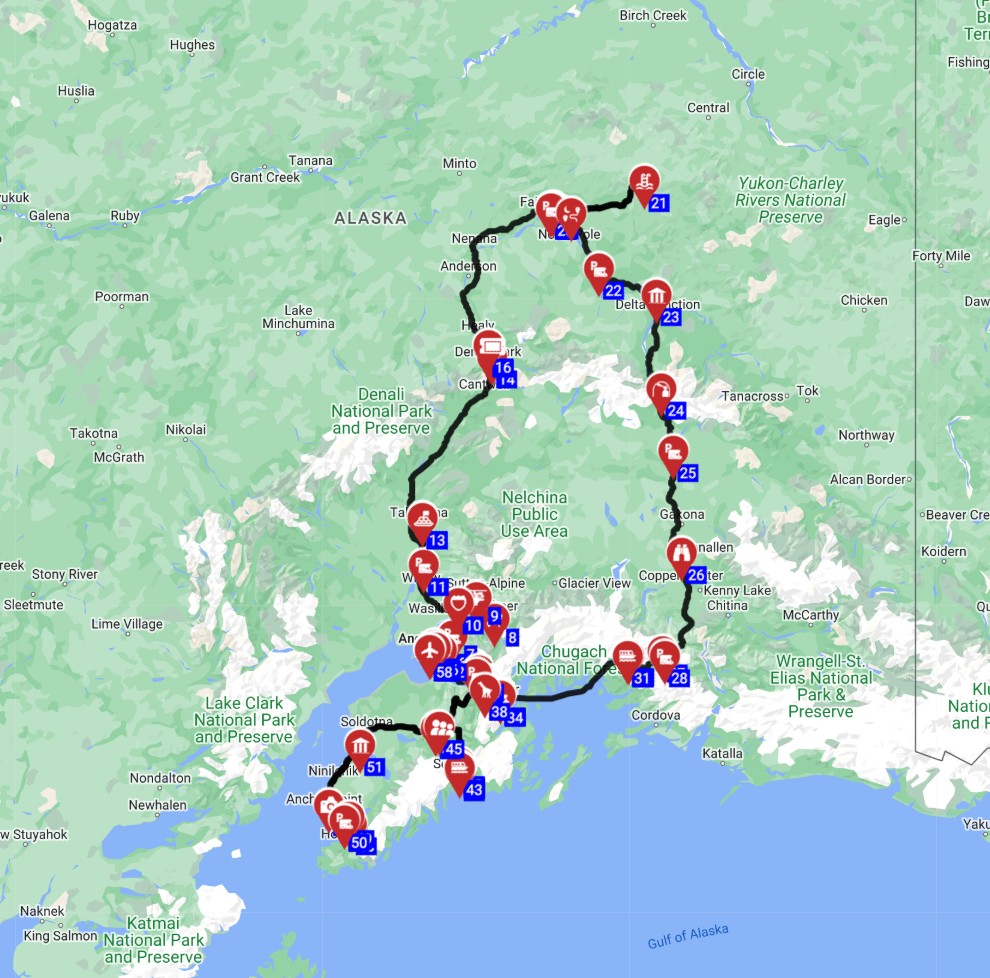
 - Witness majestic wildlife and stunning landscapes: The
, an 11-day, 1928.5 km journey, is perfect for those focused on nature. This route includes 2 animal shows/wildlife watch opportunities, 1 aquarium visit, a canoe/kayak/rafting adventure, 2 cruise terminal/sailing experiences, 3 day tours, 2 hiking areas, 1 local industry highlight, 1 museum, 1 point of interest, and 3 tourist attractions, plus a traditional visit. It's a fantastic way to capture the essence of Alaskan wilderness.
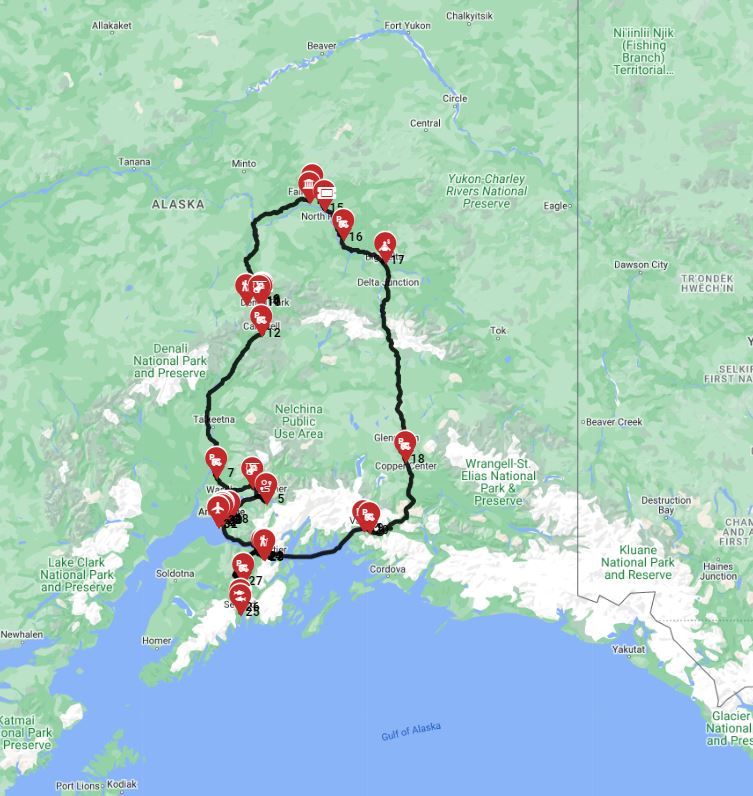 Anchorage Roundtrip - Alaska
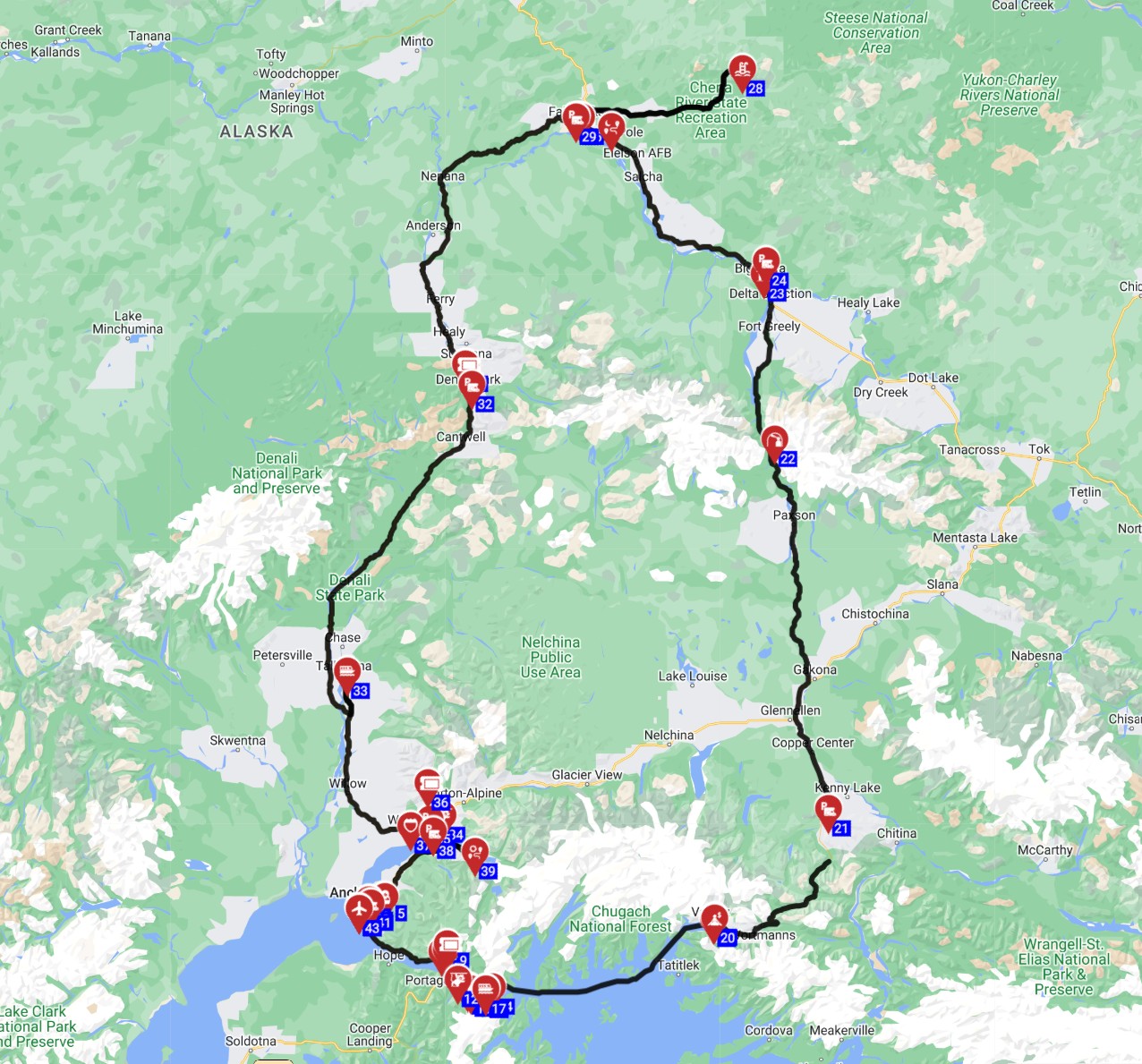
 - Embark on a true wilderness road trip: The
offers a 15-day, 1929.9 km adventure. This route is packed with 2 animal shows/wildlife watch, 1 cable railway, 1 canoe/kayak/rafting, 1 cave, 3 cruise terminal/sailing, 1 day tour, 1 extreme activity, 2 hiking areas, 1 historical site, 2 museums, 1 night tour, 1 scenic route, 1 swimming spot, 4 tourist attractions, 1 traditional restaurant/fine dining, and 1 traditional visit. Imagine cooking delicious meals in your RV kitchen after a day of adventure; for delicious meal ideas on the go, check out our RV-friendly recipes playlist.
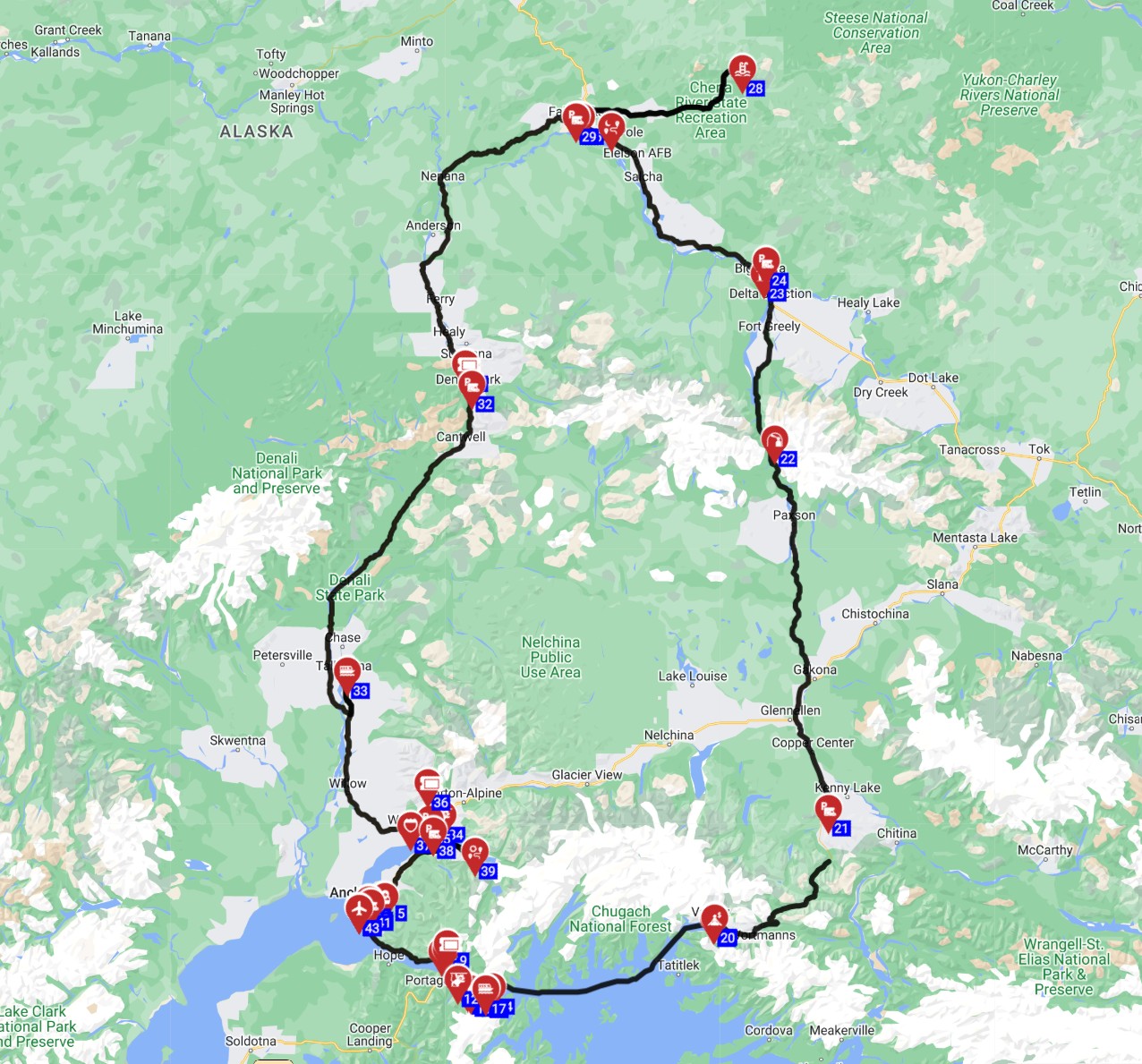 Anchorage Roundtrip Heading North - The Great Alaskan Wilderness Road Trip
Looking for expert insights from Avi Bandana? Top 5 Adventures - recommendations from Avi Bandana
As a seasoned RV traveler and founder of Bandana Caravan, Avi's personal recommendations are designed to elevate your Alaskan adventure. From hidden gems to iconic must-sees, his curated list ensures you experience the best of the Last Frontier. Discover routes that blend breathtaking scenery with rich cultural encounters, all from the comfort of your rented motorhome.
Final Thoughts
An RV adventure through Alaska is an experience like no other, promising breathtaking scenery, encounters with incredible wildlife, and the freedom to explore at your own pace. By understanding the unique aspects of driving and camping in this magnificent state, you’re setting yourself up for an unforgettable journey.
With Bandana RV, you’re not just booking a vehicle; you’re gaining a partner dedicated to transparency, support, and helping you craft the perfect itinerary. We're here to ensure your planning process is smooth and your trip is filled with joy, not stress. So, pack your bags, prepare for wonder, and get ready to discover the magic of Alaska from the comfort of your rented motorhome or campervan.
Discover top destinations and planning tips, all in one place! Check Alaska RV Rental Prices Now and start planning your incredible adventure.