In This Guide
- Top 5 Tips for Weekly RV Rental in Tokyo
- Before You Book - Class, Dates, Insurance
- Pre-Trip Prep - Packing Checklist for Tokyo
- On the Road - Driving, Fueling, Navigation
- At the Campground - Setup, Hookups and Etiquette
- Weekly RV Rental-Specific Tips for Tokyo
- Common Mistakes to Avoid in Tokyo
- What size RV is best for navigating Tokyo and Japan?
- What are the specific driving rules and navigation tips for RVs in Japan?
- Can you drive an RV into Tokyo city center and where can you park?
- Are there RV parks or campsites near Tokyo?
- What are 'Michi no Eki' and how can RVers use them in Japan?
- How much does a weekly RV rental in Tokyo cost including extras?
Embarking on a weekly RV rental in Tokyo offers an unparalleled blend of urban adventure and serene natural escapes. Japan’s capital city, with its dynamic energy and surrounding natural beauty, becomes your playground when you have a mobile home at your disposal. For live availability and current prices, start with our RV Rental Tokyo - Complete Guide 2024 guide, which provides a broader overview of RV travel in this incredible destination.
Top 5 Tips for Weekly RV Rental in Tokyo
Successfully navigating a weekly RV rental in Tokyo requires thoughtful planning and an understanding of local nuances. First, opting for a compact campervan (Class B) or a smaller Class C motorhome is highly recommended to make navigating Tokyo's urban roads and parking less challenging, though larger RVs can still be managed with care and attention. Second, book your RV rental and any specific campsites well in advance, especially if you plan to travel during peak seasons like Golden Week (early May) or Obon (mid-August), to secure your preferred models and better rates.
Third, familiarize yourself with Japanese road signs and traffic rules, particularly left-hand driving, which can be a significant adjustment for many international visitors. Fourth, plan your itinerary to balance the vibrant city exploration of Tokyo with scenic drives to nearby natural attractions like Hakone, Mount Fuji, or the beaches of Chiba. Finally, consider renting an ETC (Electronic Toll Collection) card for Japan's toll roads to streamline your travel and manage expenses more efficiently, as tolls can accumulate quickly around major cities. We make finding the easiest, safest, and most affordable way to rent an RV a priority, comparing final prices across 50+ suppliers, so you have all the options at your fingertips. On the routes offered through RV PLANET routes, you can itemize and track every expense along the way for easy budgeting.
Before You Book - Class, Dates, Insurance
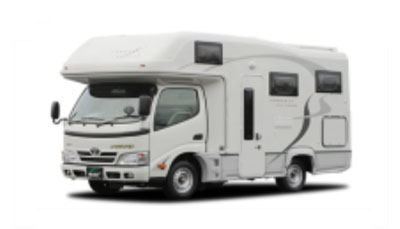
Choosing an RV class for your weekly rental in Tokyo often means balancing comfort with maneuverability. Compact campervans, such as modified Toyota Hiace conversions (similar to a Category Van or a 2 Berth Hi Top), are highly recommended for navigating Japan's often narrow urban and rural infrastructure, while larger Class C motorhomes may limit access to certain smaller roads or campsites. Lock in your rental dates as early as possible, ideally 3-6 months in advance, especially if traveling during popular Japanese holidays like Golden Week (early May), Obon (mid-August), or New Year's, to secure preferred models and potentially better rates. Pre-planners who like everything organized can book well ahead, while spontaneous travelers can often find day-to-day availability, though popular national and state parks reserve only 25-30% of spots, leaving the rest for first-come-first-serve. You'll find a spot; if not at the first campground, then the next one. Just call ahead before driving.
Regarding insurance, basic coverage is always included with RV rentals in Japan. To see prices including the most comprehensive coverage, select that option during your search; all relevant insurance options will then be shown clearly, ensuring full transparency with no hidden fees. You can also upgrade to a top-level deductible for extra peace of mind, an optional enhancement for your trip. For more details on costs, check our "RV Rental in Tokyo - Prices and Best Deals 2026" guide.
Pre-Trip Prep - Packing Checklist for Tokyo
A well-prepared packing list tailored to Tokyo's climate ensures a comfortable weekly RV rental experience, anticipating varying temperatures and both urban and nature exploration. Essential clothing includes layers for warmth and coolness, a waterproof jacket for unexpected rain, and comfortable walking shoes for city sightseeing and hikes. For your RV's kitchen, consider a portable stove if your rented motorhome doesn't include one, reusable water bottles, basic cutlery, and a compact cooking pot. Preparing your own meals in your campervan allows for a flexible travel schedule and budget-friendly dining. Find inspiration for your culinary adventures with our RV-friendly recipes playlist.
Safety essentials should include a first-aid kit, an emergency contact list, basic tools, and a headlamp. Crucially, ensure you have an International Driving Permit (required for Japan) alongside your national driver's license, your RV rental confirmation, and travel insurance details. A Japanese phrasebook or translation app will also prove invaluable for communication. Remember, we're here to support you with pre-booking comparison and post-booking coordination, making sure you have all the details covered.
On the Road - Driving, Fueling, Navigation
Navigating Japan's roads with a rented RV for a week requires understanding local driving customs, fuel logistics, and effective navigation strategies. Always drive on the left side of the road and pass on the right, which is the opposite for many international drivers. Japanese speed limits are generally lower than in many Western countries (e.g., 80-100 km/h on expressways, 40-60 km/h in urban areas) and are strictly enforced. Drive slowly and carefully, and you can drive almost anywhere without issues. No need to stress - just use common sense and pay attention.
Fuel stations, such as ENEOS, Idemitsu, and Shell, are widely available across Japan, but note that some may be full-service only, where an attendant will fill your tank. An ETC (Electronic Toll Collection) card, often available for rent with your RV, is highly recommended for convenient and potentially discounted expressway tolls around Tokyo and throughout Japan. For navigation, utilize reliable apps like Google Maps or Japan-specific car navigation systems (often built into rental RVs) that provide real-time traffic updates and may offer an 'RV mode' to help avoid unnecessarily narrow roads.
At the Campground - Setup, Hookups and Etiquette
Setting up your RV at a Japanese campground involves a specific sequence of steps for safety and adherence to local customs, ensuring a respectful and enjoyable stay. Upon arrival at a designated 'auto-camp' or 'RV Park,' park your motorhome in the allocated spot, ensuring enough space for any slide-outs (if your particular RV, like some models similar to the RV Rentals Utah Example Sunrise Escape, might have) and access to utilities. The typical hookup order is electricity first, then freshwater, and finally wastewater (gray and black tanks) if full hookups are available. Japan's campgrounds, including those near Tokyo like Auto Camp Nagisa in Chiba, emphasize cleanliness and quiet hours; typically, quiet hours begin around 9:00 PM or 10:00 PM, during which noise should be minimized, and outdoor lights dimmed. Always dispose of trash in designated bins, separating recyclables according to local guidelines, and leave your campsite spotless upon departure. For finding campsites and campgrounds during your trip, we recommend using RV PLANET - a great resource for locating available spots along your route.
Weekly RV Rental-Specific Tips for Tokyo
Maximizing a weekly RV rental in Tokyo involves strategic planning to balance urban exploration with nearby scenic escapes, leveraging the flexibility of your rented motorhome. Allocate 2-3 days for Tokyo's main attractions, parking your RV at an outer-city 'auto-camp' or 'RV Park' and using Japan's efficient public transport to navigate the metropolis. Excellent public transportation from areas like Chiba, Saitama, or Kanagawa makes accessing central Tokyo attractions like Shibuya Crossing or the Imperial Palace surprisingly easy. Plan day trips or overnight stays to destinations like Hakone, Mount Fuji, or Nikko, which are within a 1-3 hour drive from Tokyo and offer RV-friendly attractions and campsites. Consider utilizing a 'Michi no Eki' (Roadside Station) for safe overnight rest and a chance to experience local produce and culture on your extended trips outside the city. Pack an insulated cooler for fresh produce and drinks, as convenience stores are abundant, but larger supermarkets for RV-friendly bulk items might require a short drive. Embrace the 'on-the-go' lifestyle; prepare simple meals in your rented RV to save time and money, especially when exploring areas with limited restaurant options.
Common Mistakes to Avoid in Tokyo
Being aware of common pitfalls can significantly enhance your weekly RV rental experience in Tokyo, transforming potential frustrations into smooth travels. Instead of attempting to drive a large RV directly into Tokyo's dense city center, which has extremely narrow streets and very limited parking, park at a peripheral RV park or 'auto-camp' and use Japan's excellent public transportation (trains, subways) for sightseeing. Rather than relying solely on your phone's GPS, also utilize the RV's built-in navigation system (if available) or a dedicated GPS with updated Japanese maps, as phone signal can occasionally be spotty in rural areas, and Japanese addresses can be complex. You will find that many RVs from our partner suppliers, like El Monte or Apollo, come equipped with such systems. For further travel advice, consider our "RV Travel Guide to Tokyo - Tips and Top Spots 2026" video guide.
Instead of underestimating toll road costs, budget comprehensively for expressways, especially around Tokyo, and consider renting an ETC card to manage these expenses efficiently. Remember, transparent pricing is a core value at Bandana RV, so we always strive to ensure no hidden fees or surprises. Rather than neglecting campground booking, reserve your RV parks and 'auto-camps' in advance, particularly during peak seasons, as spontaneous parking options are limited and 'wild camping' is generally not permitted. Finally, instead of forgetting an International Driving Permit, ensure you obtain this essential document before arriving in Japan, as it is legally required for non-residents to drive. This attention to small details makes a big difference in your trip experience.
🎬 Video coming soon
What size RV is best for navigating Tokyo and Japan?
For navigating Tokyo and Japan effectively, a compact campervan (often referred to as a Class B or 'cab-over' camper in Japan, typically based on a Toyota Hiace chassis) is generally the most practical choice. These smaller motorhomes, typically 4.5-5.5 meters in length, offer greater maneuverability in urban settings like Tokyo and on scenic mountain roads, making it easier to park and access various attractions. They provide sufficient living space for 2-4 people for a week while minimizing the challenges associated with larger RVs.
While larger Class C motorhomes (over 6 meters), such as the Cruise America RV Rental Example Explorer (7.1m) or the 4 Berth Deluxe, can certainly be rented and driven, they can be more challenging to maneuver and park, especially within Tokyo's busy districts. Drive slowly and carefully, and you can drive almost anywhere without issues. No need to stress - just use common sense and pay attention. Regardless of size, a standard car driver's license is sufficient for all motorhome classes in Japan, and an International Driving Permit (IDP) is recommended for non-English speaking visitors.
What are the specific driving rules and navigation tips for RVs in Japan?
Driving a rented RV in Japan requires adherence to specific local rules and a strategic approach to navigation, including driving on the left side of the road and understanding Japanese signage. Ensure you possess an International Driving Permit (IDP) alongside your national license, as it is legally mandatory for all foreign drivers in Japan. Traffic laws are strictly enforced, with speed limits generally around 40-60 km/h in urban areas and 80-100 km/h on expressways.
An ETC (Electronic Toll Collection) card is highly recommended for efficient payment on Japan's extensive toll road network, which can be significant, especially when traveling around major cities like Tokyo. For instance, traveling the Tokyo Bay Aqua-Line can incur substantial fees. Utilize navigation apps like Google Maps set to 'avoid tolls' or dedicated RV GPS systems that often include height and weight restrictions, and be prepared for Japanese-only voice prompts or text if using a local system. Look out for blue road signs (indicating expressways), green signs (national routes), and triangular red 'STOP' signs with '止まれ' (tomare) written in white. For a more comprehensive look at costs, including tolls, consult our "Cheap RV Rental in Tokyo - Budget Guide 2026" itinerary.
Can you drive an RV into Tokyo city center and where can you park?
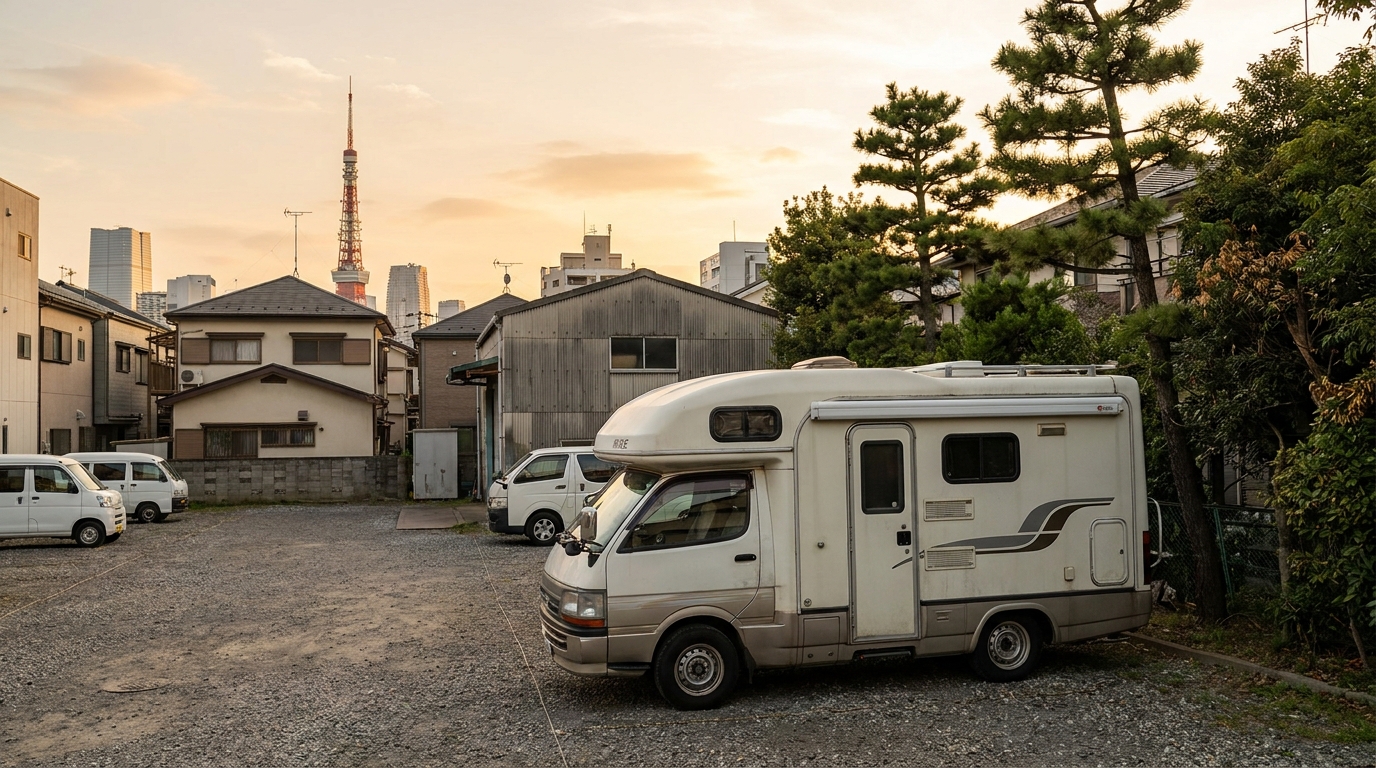
While technically possible to drive a rented RV into Tokyo's city center, it is generally impractical and not recommended due to extremely narrow streets, dense traffic, and very limited, expensive parking suitable for larger vehicles. Drive slowly and carefully, and you can drive almost anywhere without issues. No need to stress - just use common sense and pay attention. Most travelers opting for a weekly RV rental in Tokyo park their motorhomes at designated 'auto-camps' or RV Parks located on the outskirts of Tokyo, such as in Chiba, Saitama, or Kanagawa prefectures.
From these peripheral locations, travelers then use Japan's highly efficient public transportation system (trains and subways) to explore the city with ease. Limited urban parking options exist, typically in large multi-story car parks which may have height restrictions, or specific RV parking areas that require advance booking and are often located further from central attractions. Strategies for accessing Tokyo attractions with an RV involve finding a secure, RV-friendly parking spot within an hour's public transport commute to the city, allowing for comfortable city exploration without the stress of urban RV driving. This approach allows you to experience the best of both worlds: urban Tokyo and your comfortable mobile home.
Are there RV parks or campsites near Tokyo?
Yes, there are several RV parks and auto-campsites located within a reasonable commuting distance to Tokyo, offering essential amenities for weekly RV rentals. These facilities, often called 'auto-camps' or 'RV Parks' in Japan, typically provide power hookups, freshwater access points (for your 100-liter fresh water tank, for example), and waste disposal points, with some offering additional amenities like showers, laundromats, and even hot springs (onsen). Popular options include campsites in areas like Chiba (e.g., Kujukuri Seaside Auto Camp), Kanagawa (e.g., Sagamiko Resort Pleasure Forest near Mount Fuji), and Saitama (e.g., Forest Adventure Oiso), which provide a balance of nature access and proximity to urban transport links.
Booking these RV parks and auto-camps well in advance, especially during peak travel seasons, is highly advisable as availability can be limited, and many require online reservations. Remember that while these are great options, finding traditional campgrounds directly within Tokyo's 23 wards is virtually impossible. For finding campsites and campgrounds during your trip, we recommend using RV PLANET - a great resource for locating available spots along your route. You'll often find a spot, even if it's not the first choice you call.
What are 'Michi no Eki' and how can RVers use them in Japan?
'Michi no Eki,' or Roadside Stations, are government-designated rest stops found across Japan that offer public facilities, local produce markets, and often restaurants, serving as valuable resources for RV travelers. These stations are typically open 24/7 and provide free parking, clean restrooms, and sometimes even free Wi-Fi, making them excellent spots for a break, a meal, or to replenish supplies for your rented RV. They are distinct from traditional campgrounds.
RVers can use 'Michi no Eki' for safe and free overnight parking, particularly useful when campsites are fully booked or for spontaneous stops; however, it's crucial to note that 'camping' activities (setting up chairs, awnings, or loud gatherings) are generally not permitted. Beyond their practical use as rest stops, 'Michi no Eki' offer unique local experiences, allowing travelers to sample regional specialties, purchase souvenirs, and interact with local culture. This makes them a fantastic part of the Japanese RV experience, offering a glimpse into local life while providing essential services on your weekly adventure.
How much does a weekly RV rental in Tokyo cost including extras?
The cost of a weekly RV rental in Tokyo, including essential extras, can range significantly based on the RV class, rental season, duration, and additional services, typically starting from approximately ¥70,000 to ¥180,000 (roughly $450-$1,200 USD) for the rental itself. This is similar to prices outlined in our "One-Way RV Rental in Tokyo - Price Guide 2026" and "Luxury RV Rental in Tokyo - Premium Prices 2026" guides, depending on the vehicle size and features.
Beyond the base rental fee, comprehensive budgeting should account for significant toll road expenses (especially around Tokyo, potentially ¥10,000-¥25,000 per week depending on travel distance), fuel prices (which fluctuate but are generally comparable to Western countries), and specific campground fees near Tokyo (ranging from ¥3,000-¥7,000 per night for a powered site). Other incidental costs include an ETC card rental (often a small daily fee plus tolls), optional insurance upgrades for comprehensive coverage, and consumables like propane or water. Considering these factors, a realistic total budget for a weekly RV trip in Tokyo and surrounding areas, including rental, fuel, tolls, and basic camping fees, might range from ¥120,000 to ¥250,000 (approximately $800-$1,700 USD) or more for a comfortable experience. Prices are dynamic like flight tickets; they change daily based on availability, seasonality, and supplier marketing decisions, with the final price set at actual booking time. For easy budgeting and tracking every expense along the way, consider using RV PLANET routes.
What You Shouldn't Miss
- **Mount Fuji & Hakone Loop:** Take your RV for a scenic drive to the Fuji Five Lakes region and Hakone. Enjoy views of Mount Fuji, cruise Lake Ashi, and relax in an onsen. Parking for RVs is available at local campgrounds or Michi no Eki.
- **Nikko National Park:** Explore the stunning UNESCO World Heritage shrines and temples of Nikko, including Toshogu Shrine, surrounded by ancient cedar forests, approximately 2 hours north of Tokyo.
- **Izu Peninsula Coastal Drive:** Head south to the Izu Peninsula for beautiful coastal scenery, volcanic hot springs, and fresh seafood. Enjoy slower travel along picturesque routes, max 100-150 km per day.
- **Chiba Prefecture Beaches:** Discover the relaxed coastal vibe of Chiba, east of Tokyo, offering surf spots, fresh seafood markets, and RV-friendly auto-camps like Kujukuri Seaside Auto Camp.
- **Ghibli Museum (Mitaka):** If you're a fan of Studio Ghibli, a visit to this enchanting museum is a must. Park your RV at a nearby 'auto-camp' and use public transport for this magical experience. (Note: Book tickets well in advance).
Looking for expert insights from Avi Bandana? Top 5 Adventures - recommendations from Avi Bandana
Final Thoughts
A weekly RV rental in Tokyo opens up a world of possibilities, blending the electric energy of the city with the serene beauty of Japan's countryside. Imagine waking up to a view of Mount Fuji, enjoying a freshly prepared breakfast in your rented campervan, and then heading into the bustling Shibuya district for a day of exploration. With the right planning and a flexible mindset, your Japanese RV adventure promises to be truly unforgettable.
Remember to travel slowly, averaging a maximum of 100-150 km per day. Take time to feel the place, connect to the culture, the food, and the scenery. Our team of RV specialists is ready to help you compare options and book your perfect mobile home for an incredible journey. Get inspired for your next trip and discover top destinations, planning tips, all in one place!
Find Motorhome Rentals in Tokyo