In This Guide
- The 5 RV Families Compared for Alaska
- Class A (Integrated) - Best For
- Price Comparison by RV Class in Alaska
- Pricing Estimates for Weekly RV Rental in Alaska
- Class SI (Semi-Integrated) - Best For
- Class C (Alcove) - Best For
- Class B (Campervan) - Best For
- Class TC (Truck Camper) - Best For
- Side-by-Side Comparison Table
- Our Recommendation for rv rental Travelers in Alaska
- What is the best company to rent an RV from?
- Is RV share or Outdoorsy better?
- How much does it cost to rent an RV in Alaska?
- Is it cheaper to rent an RV or stay in a hotel?
- What RV is best for Alaska?
- Navigating Challenging Road Conditions and Driving Tips in Alaska
- Wildlife and Safety Protocols for RV Travel in Alaska
- Seasonality and Weather Impacts on RV Trips in Alaska
- Connectivity and Off-Grid Living in Alaska RVs
- Unique Alaskan Experiences for RV Travelers
- What You Shouldn't Miss
- Why Book with Bandana Caravan
- Final Thoughts
- Frequently Asked Questions
Imagine embarking on an unforgettable adventure through the vast, untamed wilderness of Alaska, where towering mountains meet ancient glaciers and abundant wildlife roams free. A rented motorhome offers the ultimate freedom to explore this magnificent state at your own pace, turning every scenic overlook into a potential campsite and every winding road into a new discovery. Here at Bandana RV, we've been helping tens of thousands of travelers discover the world by RV since 2001, and we know Alaska is a dream destination for many. For live availability and current prices, start with our RV Rental Alaska - Complete Guide 2026 guide.
With a spacious camper or a nimble campervan, you can truly immerse yourself in the natural beauty, diverse culture, and unique experiences that only Alaska can provide. Our goal is to make your RV trip planning seamless, offering full transparency with no hidden fees and a dedicated team of true RV specialists who are passionate about helping you craft the perfect adventure. Let's dive into comparing weekly RV rental options and suppliers for your incredible Alaskan journey.
The 5 RV Families Compared for Alaska
Choosing the right RV family is a critical decision that significantly impacts your comfort, maneuverability, and overall cost for an Alaskan adventure. Your trip length, group size, and desired amenities should all be considered when selecting an RV class for exploring Alaska's diverse terrain and climate. From luxurious Class A motorhomes designed for comfort on paved highways to rugged Class TC (Truck Camper) units built for off-grid exploration, understanding the differences will help you make an informed choice.
Bandana RV, with direct partnerships with over 50 leading RV suppliers worldwide including El Monte and Cruise America, offers a wide selection to fit every traveler’s needs. We believe in providing you with all the details up front, so you can compare final prices across suppliers and choose the perfect rented motorhome without any surprises.
Class A (Integrated) - Best For
Class A motorhomes, typically averaging 7.5 meters in length and comfortably sleeping 4-6 people (often listed as 4.4 average sleeping capacity), are best suited for large groups or families seeking maximum comfort, space, and extensive amenities on paved Alaskan highways. These impressive rented mobile homes, represented by models like the "Elite Traveller" or "AF-34 Premier W," offer a luxurious home-away-from-home experience.
Bandana’s fleet shows these integrated RVs often offer the highest average load capacity, around 209.5 kg, which is ideal for extended trips with lots of gear for fishing, hiking, or wildlife photography. Their fuel consumption, typically between 11-12 Liters/100 km, means fuel will be a significant consideration for long distances across Alaska's vast landscapes. While they provide unparalleled living space and features such as large kitchens with multiple burners and microwaves, and spacious bathrooms, their size can limit maneuverability on narrower roads or in smaller, more rustic campgrounds. Drive slowly and carefully, and you can drive almost anywhere without issues. No need to stress - just use common sense and pay attention. Despite potential trade-offs in agility and higher rental costs, Class A motorhomes are perfect for those who prioritize comfort and ample living space for their grand Alaskan adventure.
Price Comparison by RV Class in Alaska
RV rental pricing in Alaska is dynamic, meaning it fluctuates based on demand, seasonality, and supplier marketing decisions, similar to flight tickets. Therefore, any prices provided are always estimates. For example, during peak summer season (June-August), you can expect daily rates to be higher than in the shoulder seasons (May, September). Factors like RV size, specific amenities (e.g., generator, winterization kits), and rental duration also influence the final price. Our platform is designed for full transparency, so what you see is what you pay, with no surprise fees at pickup.
To find the most current and accurate rates for your specific travel dates and preferred RV class in Alaska, using our comparison platform is essential. We help you easily navigate options from various suppliers, ensuring you find the best value for your week-long trip or extended road trip. For a closer look at options, explore resources like "RV Rental in Alaska - Prices and Best Deals 2026" or "Weekly RV Rental in Alaska - Pricing 2026."
Pricing Estimates for Weekly RV Rental in Alaska
Weekly RV rental prices in Alaska vary dynamically, depending on the RV class, time of year, and booking lead time. For instance, a compact Class B campervan might range from $105-$250 per night, totaling $735-$1,750 for a week, while a larger Class C motorhome could cost $150-$400+ per night, equating to $1,050-$2,800+ for a 7-day trip. Premium Class A motorhomes often start from $250-$500+ per night, potentially reaching $1,750-$3,500+ for a week.
These figures are general estimates, and actual prices update daily based on real-time factors like availability and current promotions. For the most current rates and to secure the best deals, always use our search function at the top of the page. Booking 3-6 months in advance often results in significant savings, sometimes up to 25% or more, especially for peak season travel. When planning your budget, remember to factor in additional costs like fuel, campground fees, propane, and groceries. On the routes offered through RV PLANET routes, travelers can itemize and track every expense along the way for easy budgeting. On the routes offered through RV PLANET routes, you can itemize and track every expense along the way for easy budgeting.
Class SI (Semi-Integrated) - Best For
Class SI (Semi-integrated) motorhomes, with an average length of 6.9 meters and sleeping 3-4 people (typically 3.8 average sleeping capacity), offer a balanced choice for travelers to Alaska seeking comfort, decent amenities, and better maneuverability than larger Class A units. These rented mobile homes, like a "2 Berth Rover" or "Exclusive Classic," are popular in Bandana's fleet for couples or small families, providing a comfortable base for exploration. They typically accommodate 3.4 adults and have an average load capacity of 72.2 kg, suitable for a week-long trip with moderate gear.
Their fuel consumption generally ranges from 10-11 Liters/100 km, offering a good compromise between interior space and fuel efficiency compared to their larger counterparts. Class SI motorhomes often outperform larger Class A units in accessing smaller campgrounds and offer more comfort than Class B campervans, making them versatile for exploring Alaska's diverse landscapes. You'll appreciate the enclosed shower and toilet facilities, which are standard in this class. To explore more about pricing for this class, refer to "RV Rental in Alaska - Prices and Best Deals 2026."
Class C (Alcove) - Best For
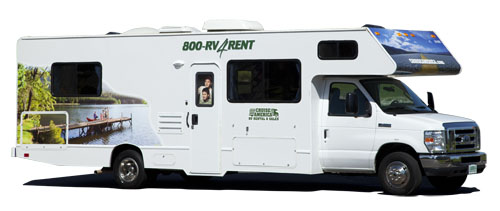
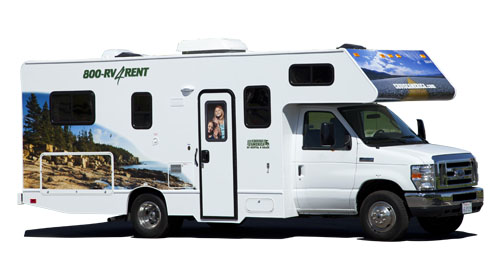
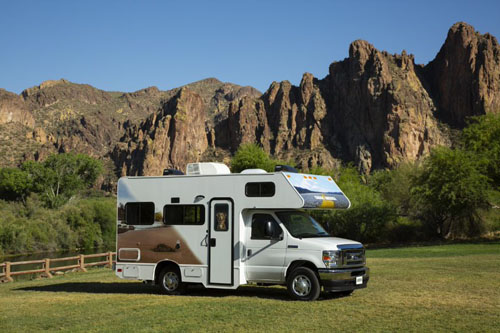
Class C (Alcove) motorhomes, averaging 7.5 meters in length and sleeping 4-6 people (typically 5.8 average sleeping capacity), are ideal for families or larger groups exploring Alaska due to their cost-efficiency and ample sleeping capacity. Models such as the "24' Class C Motorhome" or "Glamys 265" are popular choices, featuring an over-cab sleeping area that provides extra beds without significantly increasing the vehicle's footprint beyond larger vans. This makes them a robust and practical option well-suited for Alaska's varied road conditions and longer journeys.
With an average load capacity of 42.4 kg and fuel consumption typically between 10-12 Liters/100 km, Class C motorhomes strike an excellent balance between spaciousness and practicality. Their design often balances comfort with relative ease of driving, making them a popular choice for first-time RVers in remote areas. For instance, a "C-Medium Plus" model offers a 158-liter fresh water tank and a 208-liter fuel tank, perfect for longer stretches between towns. Drive slowly and carefully, and you can drive almost anywhere without issues. No need to stress - just use common sense and pay attention. Many of our trusted partners, like El Monte and Cruise America, offer a fantastic selection of Class C RVs for your Alaskan adventure. For inspiration, check out our RV-friendly recipes playlist to prepare delicious meals right in your mobile kitchen.
Class B (Campervan) - Best For
Class B (Campervan) models, with an average length of 5.8 meters and sleeping 2-3 people (typically 3.2 average sleeping capacity), are perfectly suited for nimble adventurers, solo travelers, or couples prioritizing maneuverability, fuel economy, and accessibility in Alaska. These compact RVs, such as the "Active Standard" or "Aero - Campervan," typically accommodating 2.7 adults, boast excellent fuel economy, often around 10 Liters/100 km, which is crucial for Alaska's long distances and fluctuating fuel prices.
Their smaller size allows access to more remote campsites, easier parking in towns, and confident navigation on narrower or unpaved roads where larger RVs might struggle. While offering fewer amenities and smaller interior space than larger classes, they provide a comfortable and efficient base for active travelers looking to maximize exploration. For example, a model like the "Active Bunk Auto" might offer a shower and toilet, alongside a practical kitchen space, ensuring essential comforts are covered. If you're looking for last-minute opportunities, our "RV Rental Deals in Alaska - Latest Offers 2026" might feature some campervan options due to their higher availability.
Class TC (Truck Camper) - Best For
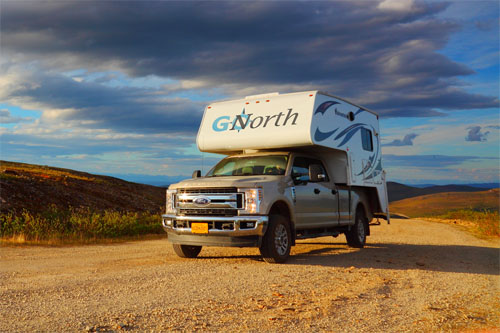
Class TC (Truck Camper) units, averaging 5.5 meters in length and sleeping 2-3 people (typically 2.4 average sleeping capacity), are an excellent option for truly adventurous travelers seeking robust capabilities and flexibility for their Alaska trip. These unique rented mobile homes, exemplified by models like the "4x4 Scout Adventure Truck Camper Gold" or "Maverick 4WD," typically accommodate 2.1 adults and are built on truck chassis, offering higher ground clearance and often 4x4 potential for accessing rugged terrain inaccessible to other RV types, perfect for fishing or hunting expeditions.
While fuel consumption is generally higher, around 12-17 Liters/100 km, their sturdy build and off-road capability make them ideal for unpaved roads and remote wilderness access where typical motorhomes might hesitate. They offer a blend of vehicle capability and essential living amenities, such as a compact kitchen with a 2-burner gas stove and a small refrigerator, catering to those who prioritize authentic Alaskan adventure over spacious luxury. Many truck camper models, such as the "T17 Truck Camper," also come with generators, crucial for power in remote areas.
Side-by-Side Comparison Table
To help you quickly identify the ideal rental motorhome for your Alaskan journey, this table provides a concise overview of key specifications and recommended uses for each RV family available. Use this comparison to align RV features with your group size, travel style, and desired Alaskan adventure.
| RV Class | Average Length (meters) | Average Sleeping Capacity | Fuel Consumption (Liters/100 km) | Key Advantages for Alaska | Ideal For |
|---|---|---|---|---|---|
| Class A (Integrated) | 7.5 | 4-6 (4.4 adults) | 11-12 | Maximum comfort, spacious amenities, large tanks | Large families/groups, luxury travelers, paved highway tours |
| Class SI (Semi-Integrated) | 6.9 | 3-4 (3.4 adults) | 10-11 | Balance of comfort and maneuverability, good amenities | Couples, small families, versatile travel on paved and some gravel roads |
| Class C (Alcove) | 7.5 | 4-6 (5.8 adults) | 10-12 | Ample sleeping, cost-efficient, robust build, popular choice | Families, larger groups, varied road conditions, first-time RVers |
| Class B (Campervan) | 5.8 | 2-3 (3.2 adults) | ~10 | Nimble, fuel-efficient, easy parking, access to remote sites | Solo travelers, couples, agile adventurers, budget-conscious trips |
| Class TC (Truck Camper) | 5.5 | 2-3 (2.4 adults) | 12-17 | 4x4 capability, high ground clearance, rugged exploration | Adventurous couples/solo travelers, off-grid camping, remote access |
Our Recommendation for rv rental Travelers in Alaska
For most RV rental travelers in Alaska, especially families or small groups seeking a balance of comfort, space, and relative maneuverability, the Class C (Alcove) motorhome is our primary recommendation. Its generous sleeping capacity, averaging 5.8 people, and robust build make it well-suited for longer journeys and varied road conditions across Alaska's vast landscapes, offering good value and widespread availability. This class often provides features like a large refrigerator and ample storage, making longer trips more comfortable.
A strong runner-up, particularly for couples or solo adventurers prioritizing flexibility and fuel efficiency, is the Class B (Campervan). Its compact size ensures easy access to more remote areas and improved fuel economy, perfect for a more agile exploration of Alaska's natural wonders. For instance, the "rv rental denver example Category Van" highlights features like shower and toilet in a small RV size, ideal for a couple. These smaller rental mobile homes are also typically easier to navigate and park in tighter spots, whether in towns or smaller campgrounds. Ultimately, the best rented RV for your trip hinges on your personal travel style, group size, and desired level of adventure, but both Class C and Class B are excellent choices for Alaska.
What is the best company to rent an RV from?
The best company to rent an RV from in Alaska truly depends on your specific priorities, but Bandana emerges as a top choice for its wide selection of private RVs and competitive, fully transparent pricing. We provide access to a diverse global fleet, including many locally owned units in Alaska from reputable suppliers like El Monte and Cruise America, offering exceptional flexibility, comprehensive insurance options, and reliable customer support throughout the booking process for a seamless rental experience. With over 20 years of experience, we pride ourselves on being true RV specialists.
Other reputable options include peer-to-peer platforms like Outdoorsy and RVshare for unique owner-provided vehicles, which can sometimes offer a wider variety of specialized or unique RVs. Traditional rental companies such as Apollo or Britz also offer standardized fleet options, often with multiple pickup locations. When choosing, consider factors like mileage inclusions, generator hours, roadside assistance packages, and cancellation policies. Our platform allows you to compare final prices across these 50+ suppliers, ensuring no hidden fees or surprises.
Is RV share or Outdoorsy better?
For RV rentals in Alaska, neither RVshare nor Outdoorsy is definitively 'better' than the other; both are leading peer-to-peer platforms offering unique advantages depending on traveler preferences. Outdoorsy often boasts a slightly larger inventory and greater market presence, potentially providing more options for specific RV types or locations in Alaska. RVshare can sometimes offer more competitive pricing due to its different fee structure, and it provides a strong community feel with detailed owner profiles and reviews.
Bandana, as a direct alternative, curates a professional global fleet that balances the variety of peer-to-peer platforms with the reliability of established rental operations, often simplifying the booking process and ensuring vehicle quality for an Alaskan adventure. We focus exclusively on RV travel, offering unmatched personal experience and attention to the smallest details. Our customers benefit from full transparency in pricing, ensuring that what you see is what you pay. For example, when comparing a "Patagonia Camper 4x4 double cab" you might find on a peer-to-peer site against a similar Class TC unit from one of our partners, we ensure all costs are clear.
How much does it cost to rent an RV in Alaska?
The average cost to rent an RV in Alaska can range from $150-$400+ per night, but the overall trip cost extends far beyond just rental fees, encompassing fuel, campground fees, food, and activities. A comprehensive Alaska RV trip budget for a 7-day journey could easily total $2,500-$5,000+, including approximately $1,000-$2,800 for the RV rental itself (depending on class and season), $500-$1,000 for fuel, $200-$400 for campgrounds, and $500-$800+ for food and other activities. This gives you a realistic overview of total expenses for a week-long rental.
Factors significantly impacting rental prices include RV class (campervans generally being cheaper, Class A being most expensive), rental duration, time of year (peak summer is most costly), and specific amenities like generators or 4x4 capabilities. For instance, a basic "hire campervan example Paradise S/T" might be on the lower end, while a "rv rentals example Comfort Class" would be higher. Budgeting for additional costs like national park passes, excursions, and unexpected repairs is crucial for a stress-free Alaskan adventure. Remember to check out our "RV Rental in Alaska - Prices and Best Deals 2026" page for more detailed cost breakdowns.
Is it cheaper to rent an RV or stay in a hotel?
Renting an RV in Alaska can often be cheaper than staying in hotels, especially for families or longer trips (one week or more), when considering the combined costs of accommodation, transportation, and food preparation. While an RV rental might have a higher upfront daily cost than a single hotel room, it consolidates lodging and travel expenses into one, and the ability to prepare your own meals significantly reduces dining costs compared to eating out nightly in Alaska's often-pricy restaurants. Preparing meals in your rented motorhome also allows for more personalized menus, which you can find inspiration for in our RV-friendly recipes playlist.
However, when factoring in fuel, campground fees (averaging $30-$70 per night), and potential mileage charges, a very short trip for a solo traveler might sometimes be comparable to budget hotel stays. The primary cost-saving benefit of a rented RV truly emerges with multi-person groups and extended itineraries, offering both value and unparalleled flexibility for exploring the vast Alaskan wilderness. Plus, the experience of waking up surrounded by nature, rather than in a hotel room, is priceless.
What RV is best for Alaska?
The best RV for Alaska is typically a reliable Class C or Class SI motorhome, or a Class B campervan, chosen for its balance of comfort, durability, and practical features suitable for the state's unique conditions. For Alaskan travel, prioritize RVs with good ground clearance and robust suspension for variable road conditions (including gravel), and adequate heating systems for unpredictable weather, even in summer. The "cruise america rv rental example Explorer" with its 2.5 Liter Turbo diesel engine and 7.1-meter length is a solid Class C option.
Essential features for Alaska include a powerful generator for boondocking opportunities, substantial fresh water (e.g., 100-liter minimum) and waste tank capacities for remote areas, and ample storage for outdoor gear. While 4x4 options are not standard for most rental RVs, their availability in some Class B or Truck Camper units, such as a "2 Person 4WD Camper" or "4x4 Jimny," can be a significant advantage for exploring truly off-pavement locations. However, most popular routes are accessible without them, so do not feel limited if a 4x4 is not available for your chosen dates.
Navigating Challenging Road Conditions and Driving Tips in Alaska
Driving an RV in Alaska requires awareness of variable road conditions, including long stretches of unpaved highway, gravel sections, and potential potholes, especially on routes like the Denali Highway or parts of the Dalton Highway. Always maintain a safe speed, increase following distance, and be prepared for sudden changes in road surfaces; slow down significantly on gravel to prevent rock chips and maintain control. Drive slowly and carefully, and you can drive almost anywhere without issues. No need to stress - just use common sense and pay attention.
Key driving tips for Alaska include topping off your fuel tank whenever possible due to sparse gas stations in remote areas, checking tire pressure regularly, and carrying a spare tire and basic repair kit. Be extra vigilant for wildlife, such as moose, caribou, and bears, particularly at dawn and dusk, by scanning the roadsides and reducing speed in wildlife-prone areas. For detailed insights on routes, consider our "RV Travel Guide to Alaska - Tips and Top Spots 2026."
Wildlife and Safety Protocols for RV Travel in Alaska
RV travel in Alaska necessitates strict adherence to wildlife and wilderness safety protocols to ensure a safe and respectful experience for both you and the animals. Bear safety is paramount: store all food and scented items inside your RV or in bear-proof containers, never feed wildlife, and carry bear spray (and know how to use it) when hiking. This is not a luxury, it's common sense for safety.
For encounters with moose on roads, slow down and give them ample space; avoid honking or approaching, as they can be unpredictable and aggressive, especially cows with calves. General wilderness safety includes informing someone of your itinerary, carrying emergency supplies, dressing in layers, and being prepared for rapid weather changes, even when staying primarily within your rented motorhome at campgrounds. Many national and state parks offer rangers and visitor centers with up-to-date local safety information.
Seasonality and Weather Impacts on RV Trips in Alaska
Alaska's distinct seasons profoundly impact RV travel, with summer (June-August) offering the warmest temperatures (averaging 15-20°C/60-70°F) and maximum daylight (up to 24 hours) but also peak prices and crowds. Spring (May) and Fall (September) provide fewer crowds and potentially lower prices, but with cooler temperatures, shorter daylight hours, and the risk of early snow or ice, especially in higher elevations. For instance, the Denali Park Road typically closes to private vehicles by mid-September.
Be prepared for rapidly changing weather conditions at any time of year; pack layers of clothing, rain gear, and extra blankets, as temperatures can drop quickly, even in July. Road closures due to snow or construction are common outside of peak summer; always check Alaska 511 for current road conditions before embarking on a journey, particularly if traveling earlier or later in the season. Consider a "Winter Ready" tagged RV for shoulder season trips if available, as they often include better insulation and heating systems for cooler nights.
Connectivity and Off-Grid Living in Alaska RVs
Connectivity in Alaska can be sparse outside of major towns and cities like Anchorage and Fairbanks, making preparation for off-grid living a crucial aspect of RV travel. Cell service is generally reliable along major corridors like the Parks Highway, but drops off quickly in national parks, remote wilderness areas, and smaller communities. Many campers leverage the solitude of disconnecting, while still being able to navigate with offline maps.
Consider renting an RV equipped with a generator for power in non-electric campsites (often called boondocking or dry camping) and utilize satellite communication devices or personal Wi-Fi hotspots for essential connectivity in remote areas. Dispersed camping is widely available on public lands (e.g., National Forests, BLM land) in Alaska, but always check local regulations for specific areas, practice Leave No Trace principles, and conserve water/power diligently. Many of the pre-planned routes from RV PLANET offer detailed suggestions for both developed campgrounds and dispersed camping opportunities.
Unique Alaskan Experiences for RV Travelers
RV travel in Alaska unlocks unparalleled opportunities for local cultural immersion and unique experiences, far beyond what typical hotel stays offer. You're not just observing; you're participating in the Alaskan way of life. Engage with local communities by visiting farmers' markets, attending indigenous cultural centers and festivals (like the Golden Days festival in Fairbanks), or participating in small-town events that reveal the authentic Alaskan spirit.
A rented motorhome allows spontaneous access to wildlife viewing (e.g., pulling over for moose, bears, or eagles), fishing hot spots, and trailheads for hiking or glacier viewing. Seek out unique activities like gold panning in Fairbanks, halibut fishing in Homer, flightseeing tours from Talkeetna with views of Denali, or glacier kayaking in Valdez, all made more accessible and flexible with your own mobile accommodation. Traveling slowly, averaging 100-150 km per day, allows you to truly feel the place, connect to the culture, the food, and the scenery.
What You Shouldn't Miss
- **Explore Denali National Park & Preserve:** Venture into the heart of Alaska's wilderness, experiencing incredible wildlife viewing (bears, moose, caribou, wolves) and breathtaking views of North America's tallest peak. Remember to use the park's shuttle buses beyond Mile 15 for deep exploration.
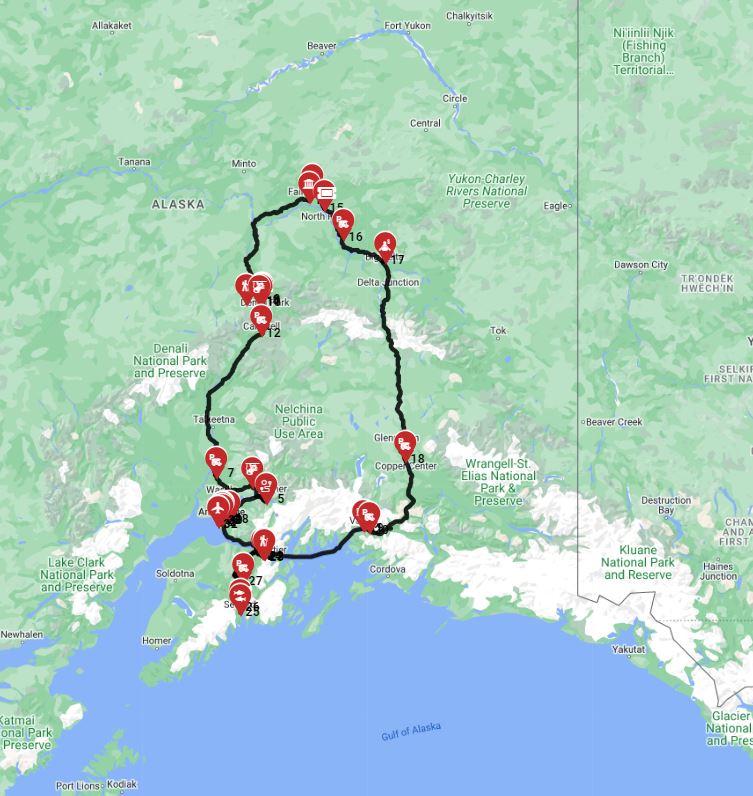
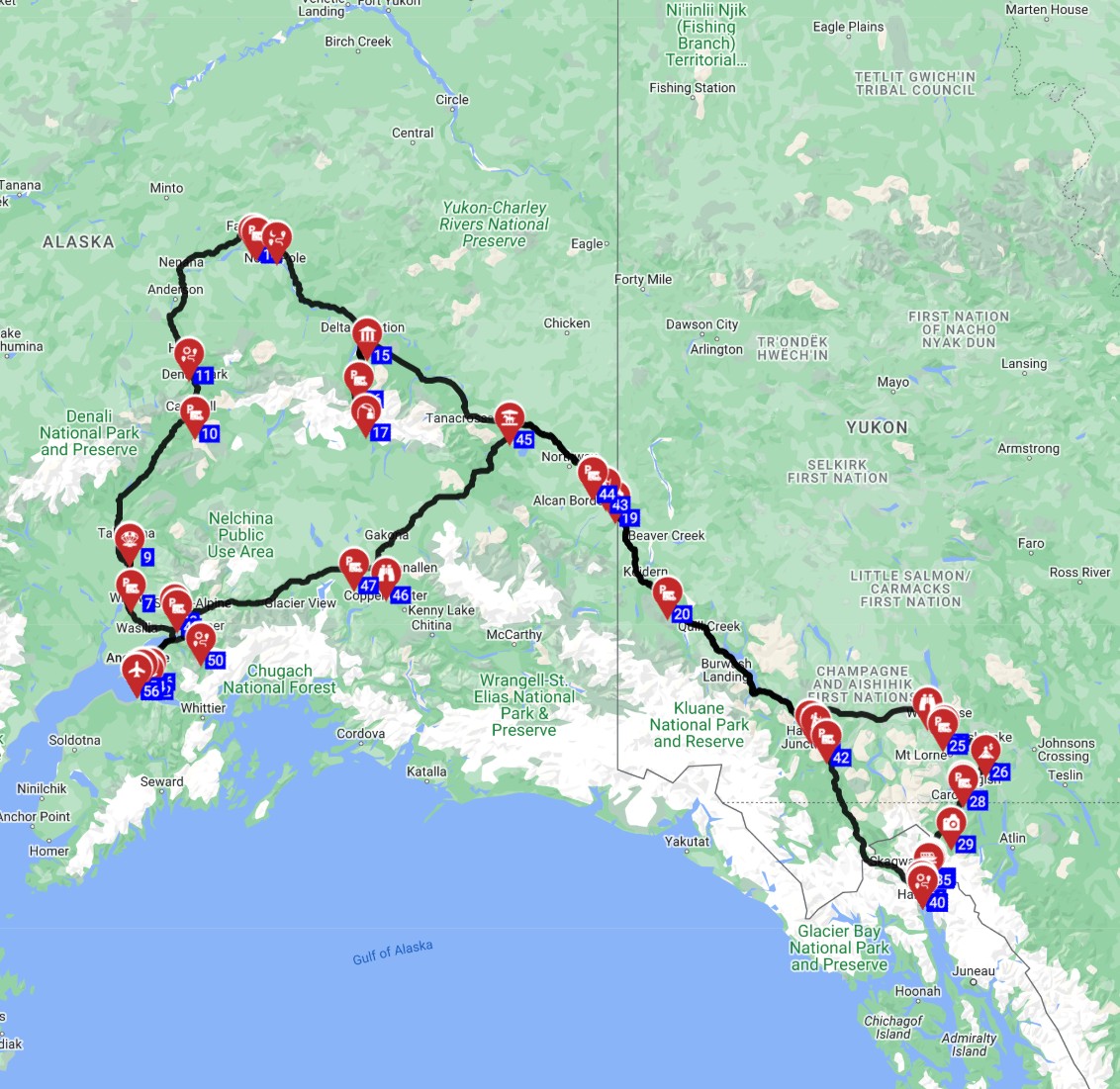
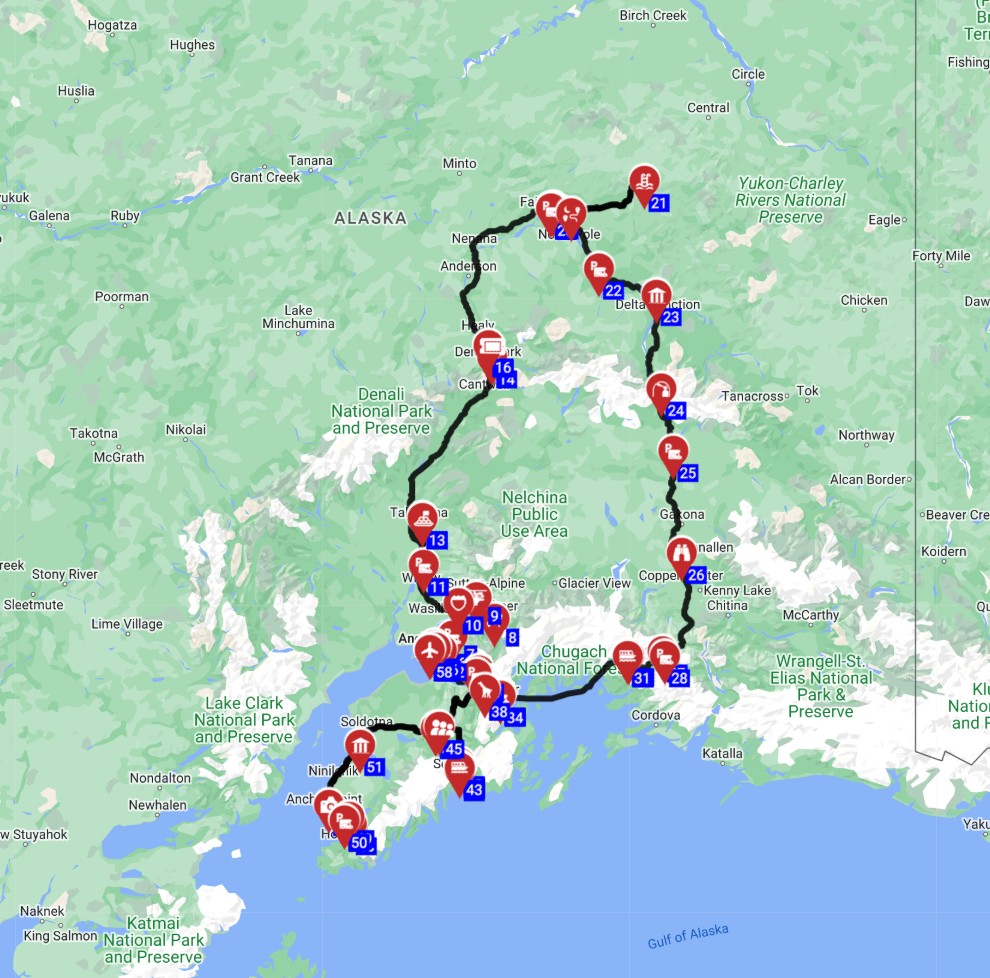
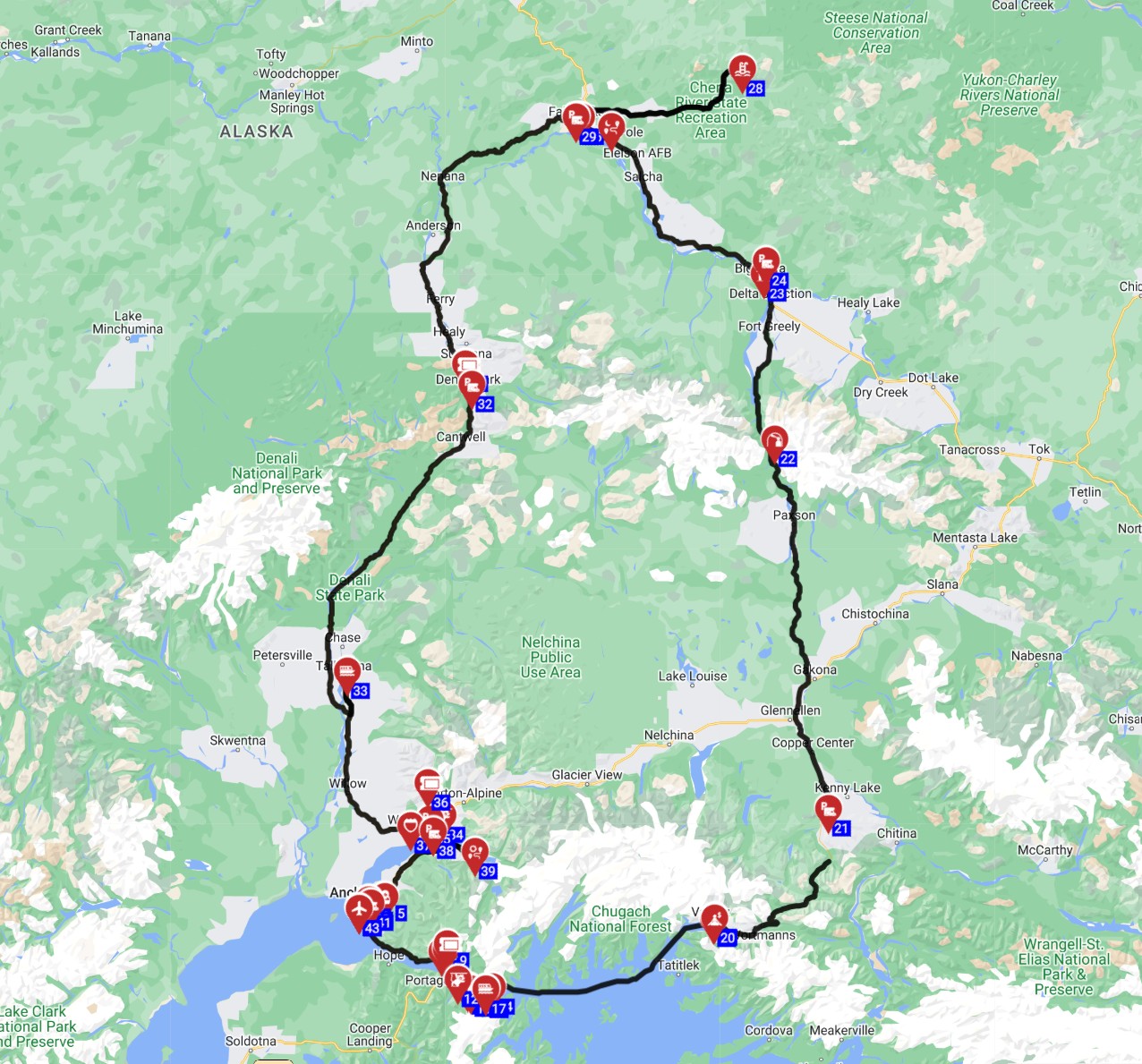
- **Drive the Seward Highway:** This 200-kilometer scenic byway from Anchorage to Seward offers stunning coastal views, glacier vistas, and opportunities for wildlife spotting. Our "
" route plan covers this and more, including 2 wildlife watch spots.
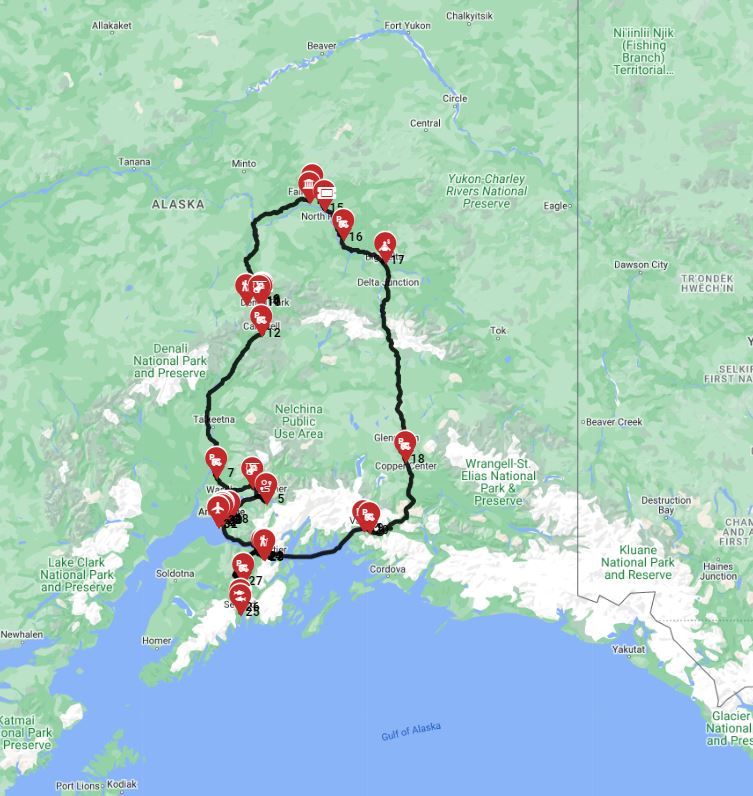 Anchorage Roundtrip - Alaska
 - **Visit Homer, the 'Halibut Fishing Capital of the World':** Enjoy deep-sea fishing charters, explore the quirky Homer Spit, and soak in the vibrant arts scene of this picturesque Kachemak Bay town.
- **Experience a Glacier Cruise in Kenai Fjords National Park:** From Seward, take a boat tour to witness massive tidewater glaciers calving into the ocean, and spot marine wildlife like whales, puffins, and sea otters. The "Anchorage Roundtrip - Alaska" route plan includes 2 cruise terminal experiences.
- **Discover Fairbanks and the Aurora Borealis:** Journey north to the "Golden Heart City" for gold panning, riverboat tours, and, in the darker months, unparalleled opportunities to witness the magical Northern Lights.
- **Hike to Matanuska Glacier:** Located just a few hours northeast of Anchorage, this accessible glacier offers guided walking tours right onto the ice, a truly unique Alaskan experience.
Looking for expert insights from Avi Bandana? Top 5 Adventures - recommendations from Avi Bandana
Final Thoughts
Exploring Alaska with a rented motorhome or campervan truly offers an unparalleled journey into the wild heart of North America. It’s an adventure that promises breathtaking scenery, unforgettable wildlife encounters, and the freedom to create your own schedule. From the rugged beauty of Denali to the serene fjords, having your mobile home gives you the flexibility to chase the midnight sun or the dancing Northern Lights.
We are here to support you in crafting that perfect escape. With our commitment to full transparency, expert advice, and a wide selection of vehicles, your Alaskan RV dream is well within reach. Don't just dream about it – start planning your grand Alaskan road trip today. Discover top destinations and planning tips, all in one place, and prepare for the journey of a lifetime.
🎬 Video coming soon
Compare Motorhome Prices for Alaska and begin your epic journey with confidence and excitement!