For live availability and current prices, start with our RV Rental Canada - Complete Guide 2026 guide.
In This Guide
- Best Canada RV Itinerary for weekly rv rental — Overview
- 7-Day Classic Route in Canada
- 14-Day Extended Journey in Canada
- Recommended RVPlan Trip for Canada
- Daily Driving Distances & Drive Times in Canada
- Best RV Class for This Itinerary — Couple & Family Picks
- How much does it cost to rent an RV for a week in Canada?
- What is the best time of year to RV in Canada?
- Is Canada good for RVing?
- What do you need for an RV trip to Canada?
- Where can I RV for free in Canada?
- What are the best RV routes in Canada?
- Can you cross the Canadian border in an RV?
- Is it hard to drive an RV in Canada?
- Can you live in an RV in Canada?
Best Canada RV Itinerary for weekly rv rental — Overview
A weekly RV rental in Canada offers an unparalleled opportunity to immerse yourself in the country's vast and diverse landscapes. This nation, renowned for its stunning natural beauty and extensive road networks, is a dream destination for motorhome adventurers. A 7-day RV trip allows for a focused exploration of a specific region, covering approximately 700 to 1,050 kilometers (435 to 650 miles), ensuring you maximize your discovery without feeling rushed. For an optimal experience, the best seasons for travel are typically late spring (May to June), summer (July to August), and early fall (September to early October), offering pleasant weather and accessible routes. By concentrating on a particular area, such as the Canadian Rockies or the scenic Maritimes, you can truly appreciate the unique character and attractions of each region.
7-Day Classic Route in Canada
The Canadian Rockies offer a spectacular setting for a 7-day RV itinerary, allowing for deep exploration with manageable daily driving distances. This classic route, starting and ending in Calgary, Alberta, provides a fantastic introduction to the majestic mountain landscapes. Here's a potential plan:
Day 1: Calgary, AB → Canmore, AB (approx. 100 km / 62 miles) Begin your journey by picking up your rented RV in Calgary and heading west towards Canmore. This charming mountain town offers stunning views and a relaxed atmosphere, perfect for settling into your RV adventure.
Day 2: Canmore, AB → Banff, AB (approx. 30 km / 19 miles) A short drive brings you to Banff National Park, Canada's first national park. Explore the townsite, take the Banff Gondola for panoramic views, or cruise the scenic Lake Minnewanka loop.
Day 3: Banff, AB → Lake Louise, AB (approx. 60 km / 37 miles) Continue along the Bow Valley Parkway to the iconic Lake Louise. Marvel at the turquoise waters and consider a hike to the Lake Agnes Tea House. Many campgrounds in Banff offer excellent facilities for RVs.
Day 4: Lake Louise, AB → Waterfowl Lakes, AB (Icefields Parkway) (approx. 60 km / 37 miles) Embark on the legendary Icefields Parkway, a road renowned for its breathtaking glaciers, lakes, and waterfalls. Waterfowl Lakes offers a picturesque stop for an overnight stay.
Day 5: Waterfowl Lakes, AB → Columbia Icefield, AB (approx. 50 km / 31 miles) Drive further north to the Columbia Icefield, where you can experience the Athabasca Glacier via an Ice Explorer tour. The sheer scale of the icefield is awe-inspiring.
Day 6: Columbia Icefield, AB → Jasper, AB (approx. 100 km / 62 miles) Your journey continues to Jasper National Park, known for its abundant wildlife and stunning mountain scenery. Explore Maligne Canyon or take the Jasper SkyTram for incredible vistas.
Day 7: Explore Jasper, AB & RV drop-off Spend the morning exploring Jasper before making your way back towards Calgary for your RV drop-off, or arrange for a one-way rental to Jasper if available. This itinerary averages around 400 km (250 miles) of driving, allowing ample time for sightseeing and activities.
14-Day Extended Journey in Canada
For those with more time, a two-week RV trip offers a more relaxed pace and the chance to delve deeper into the Canadian Rockies and surrounding Kootenay region. This extended journey builds upon the classic route, adding more exploration time and diverse landscapes.
Days 1-2: Calgary & Canmore: Pick up your RV in Calgary, then head to Canmore. Spend your first day exploring Canmore and perhaps enjoying a hike to Grassi Lakes. Day two can be dedicated to the Kananaskis Country, a vast wilderness area west of Calgary.
Days 3-5: Banff National Park: Dedicate these days to fully experiencing Banff. Consider the Banff Gondola, a cruise on Lake Minnewanka, a hike through Johnston Canyon, and time at the stunning Lake Louise and Moraine Lake. Many excellent campgrounds are available within the park, offering full or partial hookups.
Days 6-8: Icefields Parkway (South Segment): Travel north on the Icefields Parkway, stopping at Bow Lake and Peyto Lake for iconic photo opportunities. Dedicate a day to the Columbia Icefield Adventure, including the Glacier Skywalk and an Ice Explorer tour on the Athabasca Glacier.
Days 9-10: Jasper National Park: Continue to Jasper. Explore attractions like the Jasper SkyTram, Maligne Canyon, and Maligne Lake. The vastness of Jasper allows for numerous hiking and wildlife viewing opportunities.
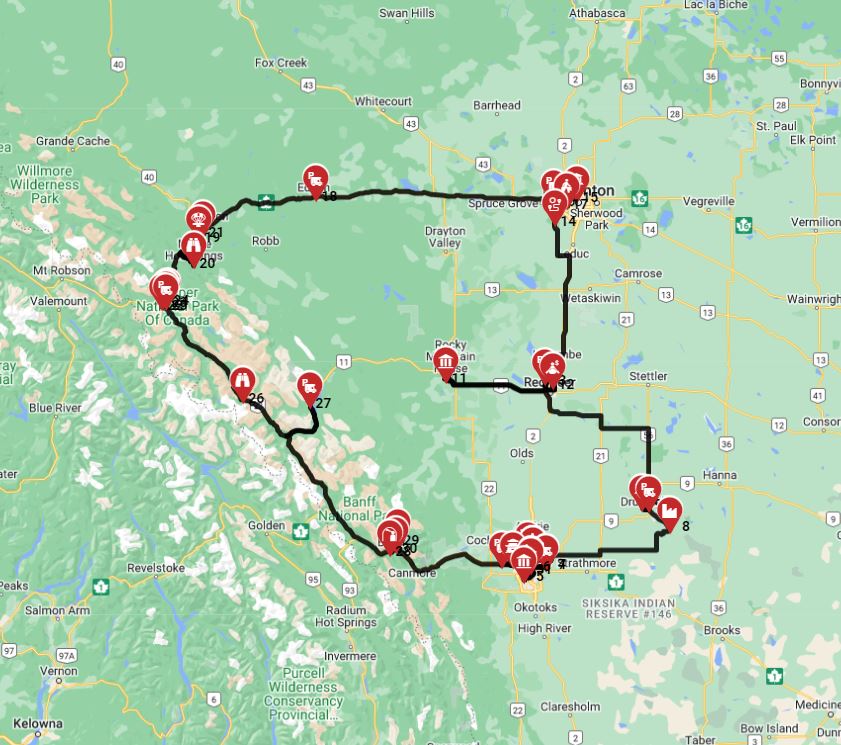
Days 11-14: Return Loop to Calgary (via David Thompson Highway): For your return journey, consider taking the scenic David Thompson Highway (Highway 11) back towards Calgary. This route offers incredible views, including Abraham Lake and stops at Rocky Mountain House. You can break up the drive with an overnight in Red Deer before reaching Calgary for your RV drop-off.
This extended itinerary covers roughly 1,000 km (620 miles) and allows for more in-depth exploration of each park.
Recommended RVPlan Trip for Canada
For those seeking a truly monumental cross-country Canadian adventure, RVPlan offers a comprehensive itinerary: "Halifax to Whitehorse - Exploring Canada’s Heartland in a Motorhome." This epic journey spans 37 days and covers an impressive 9,199.1 km (5,716 miles), showcasing the incredible diversity of Canada's landscapes from coast to coast.
While this extensive trip highlights Canada's vastness, RVPlan also features numerous other tailored itineraries perfect for shorter weekly or bi-weekly rentals, allowing you to discover different regions at your own pace.
Daily Driving Distances & Drive Times in Canada
To truly savor the Canadian RV experience, Avi Bandana recommends a relaxed pace, averaging no more than 100 miles or 150 km per day. This approach ensures you have ample time for sightseeing, spontaneous stops, hiking, and simply enjoying the scenery without feeling rushed.
For instance, driving from Banff, Alberta, to Lake Louise, Alberta (approximately 60 km), typically takes about 1 hour of pure driving. However, this scenic stretch on the Bow Valley Parkway is dotted with viewpoints and points of interest, often turning the journey into a 3-4 hour experience.
Similarly, the iconic Icefields Parkway, a drive from Lake Louise to the Columbia Icefield (around 100 km), involves about 1.5 to 2 hours of driving. With numerous viewpoints, short hikes, and glacier access points, this section can easily become a 4-6 hour, or even a full-day, adventure. Planning your daily drives with these scenic pauses in mind is key to an enjoyable RV trip in Canada.
Best RV Class for This Itinerary — Couple & Family Picks
Choosing the right RV class is crucial for a comfortable and enjoyable trip. For couples seeking agility and ease of handling, the Class B - Camper Van is an excellent choice. These typically average around 5.8 meters (19 feet) in length, sleep approximately 2-3 adults, and offer fuel efficiency, with common consumption of 8-10 liters per 100 km.
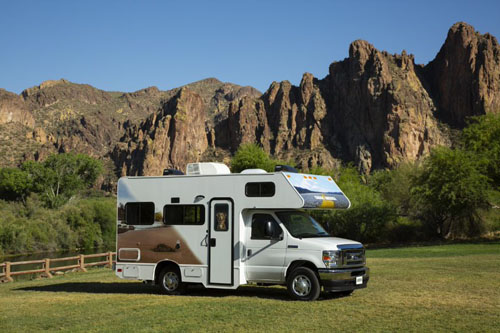
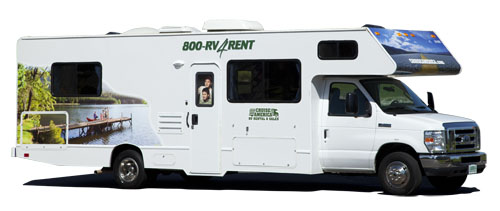
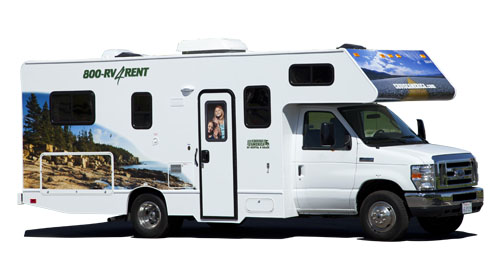
For families or small groups, the Class C - Alcove motorhome is often ideal. Averaging around 7.5 meters (25 feet) in length, these RVs comfortably sleep 4-6 adults and provide more living and sleeping space. Their typical fuel consumption is around 10-12 liters per 100 km, making them a practical choice for family adventures.
To simplify your decision, Bandana's "Rent & Plan" service is invaluable. It allows you to pair your chosen RV rental with a pre-planned, expert-crafted itinerary, ensuring a seamless and stress-free trip.
How much does it cost to rent an RV for a week in Canada?
The cost to rent an RV for a week in Canada can range significantly, generally from approximately CAD $1,000 to $3,500+, depending heavily on the RV class, the time of year, and the specific amenities included. Booking in advance, especially for peak season (July-August), is recommended to secure better rates and availability.
Beyond the rental cost, budget for essential ancillary expenses. Fuel costs are a major consideration; a Class C motorhome, for example, might average 10-12 liters per 100 km, and fuel prices vary by province, being typically higher in British Columbia and lower in Alberta. Campground fees can range from CAD $30-$80 per night for sites with full hookups, with national park permits also adding to the daily expenses (around CAD $10.50 per person, per day). Factor in costs for groceries, activities, and potential propane refills to get a realistic total trip cost. On the routes offered through RV PLANET routes, you can itemize and track every expense along the way for easy budgeting.
For detailed budgeting and expense tracking for your chosen route, explore RV PLANET routes, where you can itemize and manage all your travel costs.
What is the best time of year to RV in Canada?
The most popular and generally best time of year to RV in Canada is from late May through early October. This period offers the most favorable weather conditions across the country, with July and August typically providing the warmest temperatures and full accessibility to most attractions and campgrounds.
The shoulder seasons – May to June and September to early October – also present excellent opportunities for RV travel. You can experience the beauty of Canada's spring blossoms or witness spectacular fall foliage, often with fewer crowds and potentially more favorable rental rates. These periods provide a more tranquil RVing experience.
Winter RVing in Canada is a distinct challenge and typically requires a specialized, winterized RV. Many campgrounds and services are closed during the colder months, and extreme cold necessitates careful planning for heating and power. While possible in certain regions, it's generally considered an advanced RVing pursuit.
Is Canada good for RVing?
Canada is exceptionally good for RVing, offering a vast and varied landscape that is perfectly suited for motorhome exploration. The country boasts well-maintained highway networks, including the expansive Trans-Canada Highway, and a wide array of campgrounds, from basic provincial parks to full-service resorts with amenities like electrical hookups.
RVers will find endless opportunities for outdoor activities within Canada's extensive national and provincial park systems, making it an ideal road trip destination. However, it’s important to be prepared for the unique Canadian geography, which includes challenging mountain passes in the west and potentially remote areas where cell connectivity can be spotty. Planning for these aspects, such as booking ferries in advance for certain routes, will enhance your travel experience.
What do you need for an RV trip to Canada?
Essential items for a successful RV trip to Canada include all necessary travel documents, such as valid passports for all occupants and driver's licenses. If your license isn't in English or French, an International Driving Permit (IDP) is recommended, although not always mandatory. Comprehensive travel insurance is also crucial.
For safety, especially when venturing into wilderness areas, an emergency kit with first-aid supplies is vital. In bear country, carrying bear spray is a wise precaution. Depending on your planned routes into remote regions, satellite communication devices can provide an added layer of safety. It's also highly recommended to research local customs and regulations, such as provincial laws on alcohol consumption in public spaces and specific campground rules for waste disposal. Ensure you have a plan for reliable internet and cell connectivity, particularly for areas where basic service may be unavailable, as these can be critical for navigation and communication.
Where can I RV for free in Canada?
Free RV camping, often referred to as 'boondocking' or 'dispersed camping,' is possible in Canada, primarily on Crown land. These public lands, often accessed via forest service roads or undeveloped sites outside of protected areas and major cities, offer a way to camp without charge.
It's essential to research and adhere to local municipal and provincial regulations, as restrictions on overnight parking or camping can vary. Always respect 'no overnight parking' signs and strictly follow Leave No Trace principles to preserve these areas. While some large retail stores may permit overnight parking for self-contained RVs, this is at the discretion of store management and varies by location, so it’s always best to ask permission.
What are the best RV routes in Canada?
Canada offers numerous spectacular RV routes, each showcasing a different facet of its diverse geography. Among the most celebrated are Alberta's Icefields Parkway, Nova Scotia's Cabot Trail, and British Columbia's Sea-to-Sky Highway.
For those planning their journey, our detailed itinerary suggestions provide structured plans. The "7-Day Classic Route" and "14-Day Extended Journey" sections above offer excellent frameworks for exploring the Canadian Rockies. For broader regional discovery, consider itineraries like the "Halifax to Whitehorse - Exploring Canada’s Heartland in a Motorhome" offered through RVPlan. These routes are designed to be enjoyed at a leisurely pace, allowing you to fully immerse yourself in Canada's stunning landscapes and unique attractions.
Can you cross the Canadian border in an RV?
Yes, crossing the Canadian border in an RV is a common and permissible practice, provided all occupants have valid passports and the necessary travel documentation. The RV itself must also meet Canadian importation and safety standards.
It is crucial to declare all goods upon entry, especially food items, alcohol, and firearms, as specific restrictions, duties, and outright prohibitions apply to certain items. Familiarizing yourself with Canada Border Services Agency (CBSA) regulations prior to your trip will ensure a smooth crossing. If you plan to stay longer than the typical tourist limits, usually six months, it’s advisable to research potential visa implications and any required reporting procedures.
Is it hard to drive an RV in Canada?
Driving an RV in Canada is generally manageable, particularly on the country's well-maintained highways. The ease of driving largely depends on the size of the RV and the driver's experience, but overall, it’s an accessible way to explore.
Smaller camper vans, like Class B models (averaging 5.8 meters), are quite easy to maneuver, comparable to driving a large car. Larger Class A (averaging 7.5 meters) or Class C motorhomes require more caution, especially on winding mountain passes, in busy city traffic, or when parking. RVers should practice wider turns, be mindful of overhead clearances at gas stations and bridges, and be aware that some remote areas might feature unpaved roads. With a standard driver's license and careful attention, navigating Canada in a rented RV is a rewarding experience.
Can you live in an RV in Canada?
While it's technically possible to travel long-term in an RV in Canada, establishing permanent residency or 'living' in an RV full-time presents significant legal and practical challenges. An RV is typically not recognized as a permanent domicile for legal purposes.
Most long-term RV travelers in Canada operate as tourists, adhering to visa regulations (most visitors are limited to a six-month stay) and moving between designated campgrounds or permissible boondocking sites. Year-round RV parks that accommodate long-term residents are limited, especially in winter, and careful planning is necessary for managing mail, accessing healthcare, and handling vehicle registration and insurance.
What You Shouldn't Miss
- Explore the Canadian Rockies: Drive the Icefields Parkway, hike in Banff and Jasper National Parks, and witness the stunning beauty of Lake Louise and Moraine Lake.
- Experience the Cabot Trail: On Nova Scotia's Cape Breton Island, this scenic highway offers breathtaking coastal views, charming fishing villages, and traditional Celtic culture.
- Discover British Columbia's Coast: Drive the Sea-to-Sky Highway from Vancouver to Whistler, enjoying the coastal mountains and the vibrant city of Vancouver itself.
- Venture into the Maritimes: Explore Prince Edward Island's red shores, New Brunswick's Bay of Fundy tides, and Nova Scotia's historic Halifax.
- Go Stargazing in Jasper: Experience unparalleled stargazing in Jasper National Park, a designated Dark-Sky Preserve, offering crystal-clear views of the night sky from your RV.
- Embrace Indigenous Culture: Visit sites like the Micmac Interpretation Site in Gespeg, Quebec, to gain profound cultural insights into Canada's Indigenous heritage.
Final Thoughts
Embarking on a week-long RV adventure in Canada is an incredible way to experience the country's vast natural beauty and diverse culture. From the towering peaks of the Rockies to the scenic coastlines of the Maritimes, a rented RV offers unparalleled freedom and flexibility.
Remember to plan your route, book your RV in advance, and pack wisely. With Bandana Caravan, you get more than just a rental; you gain a partner dedicated to making your Canadian RV journey unforgettable. Get inspired for your next trip and discover top destinations and planning tips with ease!
Ready to plan your ultimate Canadian RV road trip? Compare RV rental prices and find the perfect vehicle for your adventure today!
For ideas you can prep on the road, watch our RV-friendly recipes playlist on YouTube.