In This Guide
- Best Poland RV Itinerary for weekend rv rental - Overview
- 7-Day Classic Route in Poland
- 14-Day Extended Journey in Poland
- Recommended RVPlan Trip for Poland
- Must-See Stops Along the Way (Avi Bandana Picks)
- Daily Driving Distances & Drive Times in Poland
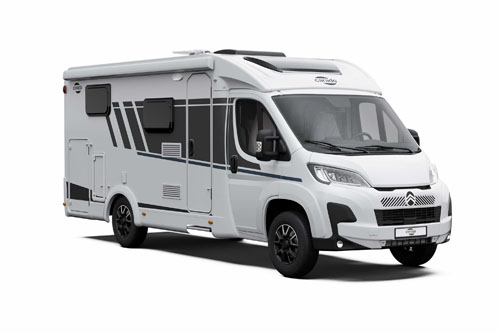
- Best RV Class for This Itinerary - Couple & Family Picks
- What is the best time of year to RV in Poland?
- How much does it cost to rent an RV in Poland?
- Is it safe to RV in Poland?
- Where can I park an RV in Poland?
- What are the road rules for RVs in Poland?
- Do I need a special license to drive an RV in Poland?
- Are there specific apps for RV travel in Poland?
- How do I dump my RV waste in Poland?
- What are some cultural tips for RVers in Poland?
Best Poland RV Itinerary for weekend rv rental - Overview
While a quick weekend RV rental in Poland might seem appealing, a minimum trip duration of 7 days is truly recommended to experience the country's diverse landscapes and rich culture without feeling rushed. Poland offers a blend of historic cities, natural beauty, and cultural experiences that are best savored with a slower pace. Our itineraries often outline routes typically spanning 1,000 to 2,000 km, optimally enjoyed from late spring to early autumn (May to September) for the best weather and campsite accessibility. For live availability and current prices for longer trips, start with our RV Rental Poland - Complete Guide 2026 guide. This comprehensive resource helps you find the perfect mobile home for your adventure, ensuring you can travel slowly, averaging a maximum of 100-150 km per day. This allows you to truly feel the place, connect to the culture, the food, and the stunning scenery that Poland has to offer.7-Day Classic Route in Poland
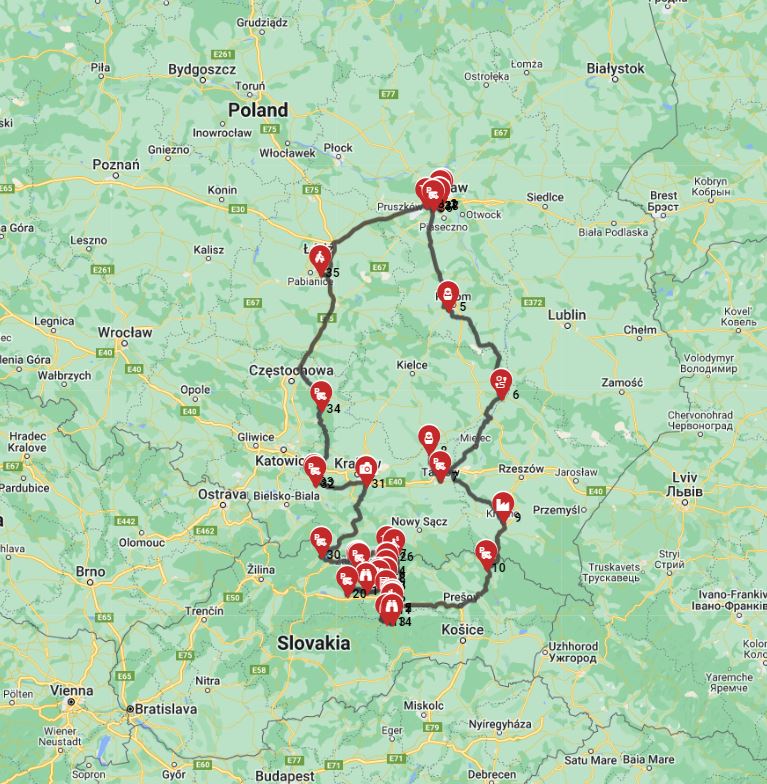
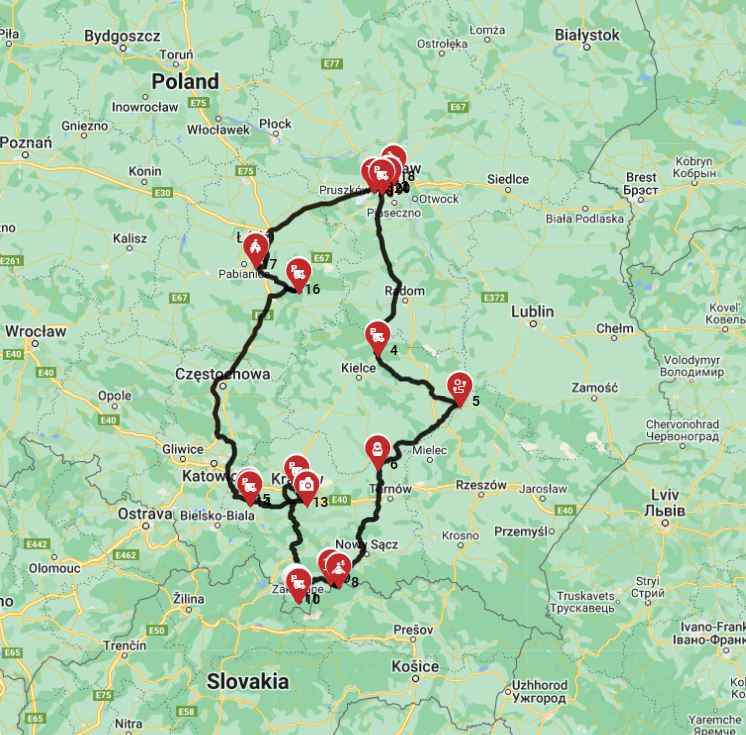
This 7-day itinerary focuses on Southern Poland, balancing cultural exploration with natural escapes, keeping daily drives to approximately 100-150 km for a relaxed pace. Imagine picking up your rented RV in Krakow, Poland's cultural heart, and immediately feeling the freedom of the open road.- Day 1: Krakow Arrival & Exploration - Pick up your motorhome rental in Krakow, settle into a campsite near the city like Camping Smok. Explore the historic Wawel Castle and the bustling Main Market Square. Sleep: Krakow area campsite.
- Day 2: Krakow to Wieliczka Salt Mine - Drive a short 15 km (approx. 20 min) to visit the incredible Wieliczka Salt Mine, a UNESCO World Heritage site known for its underground chapels and sculptures. Return to Krakow or find a local campsite near Wieliczka. Sleep: Wieliczka area campsite.
- Day 3: Wieliczka to Zakopane (Tatra Mountains) - Journey south about 100 km (approx. 1.5-2 hrs) to the scenic Tatra Mountains. Explore Zakopane's unique wooden architecture and vibrant Krupówki Street, a perfect spot for local crafts and dining. Sleep: Zakopane area campsite.
- Day 4: Tatra Mountains Exploration - Dedicate a full day to nature. Enjoy hiking trails, take a cable car ride to Kasprowy Wierch for panoramic views, or enjoy a leisurely walk around Morskie Oko lake. Be sure to cook up some hearty RV-friendly meals to fuel your adventures from our RV-friendly recipes playlist. Sleep: Zakopane area campsite.
- Day 5: Zakopane to Oświęcim (Auschwitz-Birkenau) - Drive approximately 120 km (approx. 2 hrs). This is a somber but essential visit to the Auschwitz-Birkenau Memorial and Museum. Plan for several hours here. Sleep: Oświęcim/Krakow area campsite.
- Day 6: Oświęcim to Energylandia (Zator) / Return to Krakow Vicinity - Drive 30 km (approx. 30 min) to Energylandia, Poland's largest amusement park, for family fun, or head back towards Krakow for final sightseeing or relaxation before returning your rented RV. Sleep: Zator/Krakow area campsite.
- Day 7: Krakow Departure - Enjoy a final Polish breakfast, then return your RV in Krakow, concluding your memorable week-long trip.
14-Day Extended Journey in Poland
For a truly immersive experience, this 14-day route combines Southern Poland's highlights with the historic cities and Baltic coast of the north, with daily drives respecting the recommended 100-150 km average. This extended journey allows you to delve deeper into Poland's diverse regions and create lasting memories.- Days 1-5: Southern Poland (Krakow, Wieliczka, Zakopane, Oświęcim) - Follow the 7-day itinerary for Southern Poland, taking your time to explore each location more deeply. Spend extra time hiking in the Tatras or revisiting Krakow's hidden gems like the Jewish Quarter. Sleep: various campsites in these regions.
- Day 6: Oświęcim to Wrocław - Drive 170 km (approx. 2.5 hrs). Head west to Wrocław, a vibrant city known for its stunning Market Square, Gothic architecture, and charming dwarf statues scattered throughout the city. Sleep: Wrocław area campsite.
- Day 7: Wrocław Exploration - Explore Wrocław's Old Town, Cathedral Island (Ostrów Tumski), and enjoy a traditional Polish meal in one of its many inviting restaurants. Sleep: Wrocław area campsite.
- Day 8: Wrocław to Toruń - Drive 240 km (approx. 3.5 hrs). Journey north to Toruń, a UNESCO World Heritage city famous as the birthplace of Copernicus and for its delicious gingerbread. Explore its medieval architecture and charming streets. Sleep: Toruń area campsite.
- Day 9: Toruń to Gdańsk - Drive 170 km (approx. 2.5 hrs). Continue to Gdańsk on the Baltic coast, a city rich in maritime history, famous for the Solidarity movement, and its beautiful reconstructed Old Town. Sleep: Gdańsk area campsite.
- Day 10: Gdańsk, Sopot, Gdynia (Tricity) - Explore the Tricity area. Wander along Gdańsk's iconic Long Market, stroll out on Sopot's longest wooden pier in Europe, and discover Gdynia's modern port and maritime museum. Sleep: Gdańsk area campsite.
- Day 11: Gdańsk to Malbork Castle - Drive 60 km (approx. 1 hr). Visit the magnificent Malbork Castle, the largest brick castle in the world and another UNESCO World Heritage site, offering a fascinating glimpse into Teutonic Knights history. Return to Gdańsk or find a campsite near Malbork. Sleep: Malbork area campsite.
- Day 12: Malbork to Warsaw - Drive 240 km (approx. 3.5 hrs). Head inland to Poland's capital, Warsaw, a city famously rebuilt from wartime devastation, symbolizing resilience and rebirth. Sleep: Warsaw area campsite.
- Day 13: Warsaw Exploration - Discover Warsaw's meticulously rebuilt Old Town, the Royal Castle, and the tranquil Łazienki Park. Learn about its complex history at the Warsaw Uprising Museum. Sleep: Warsaw area campsite.
- Day 14: Warsaw Departure - Return your rented motorhome in Warsaw, concluding your grand Polish adventure, filled with memories of history, nature, and culture.
Recommended RVPlan Trip for Poland
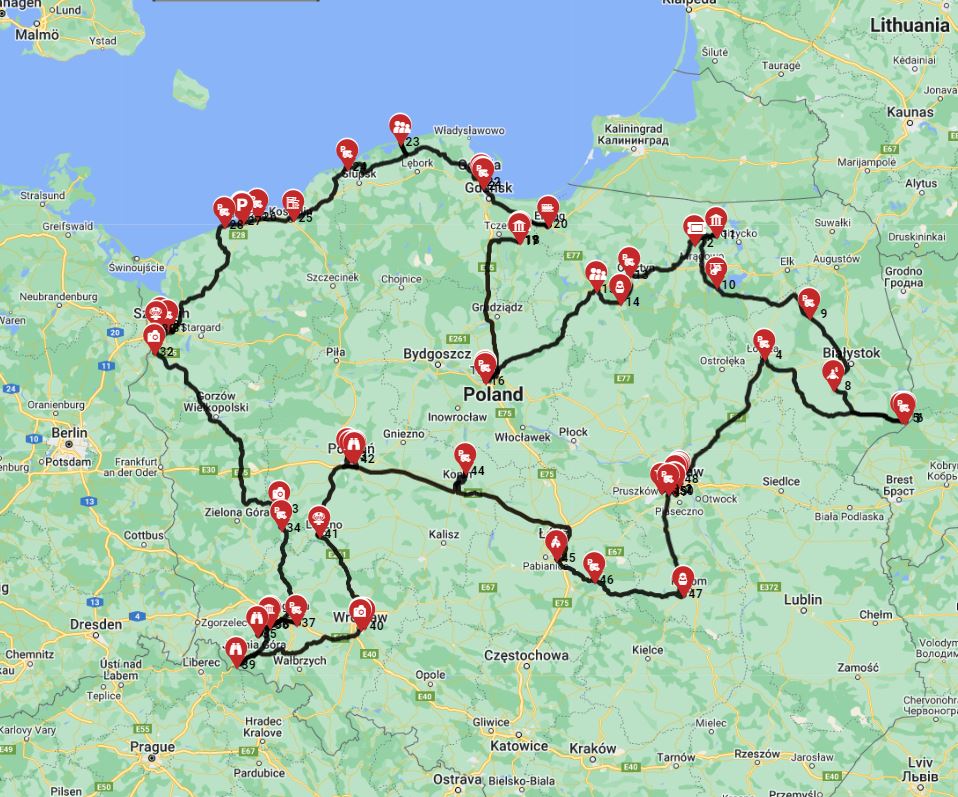
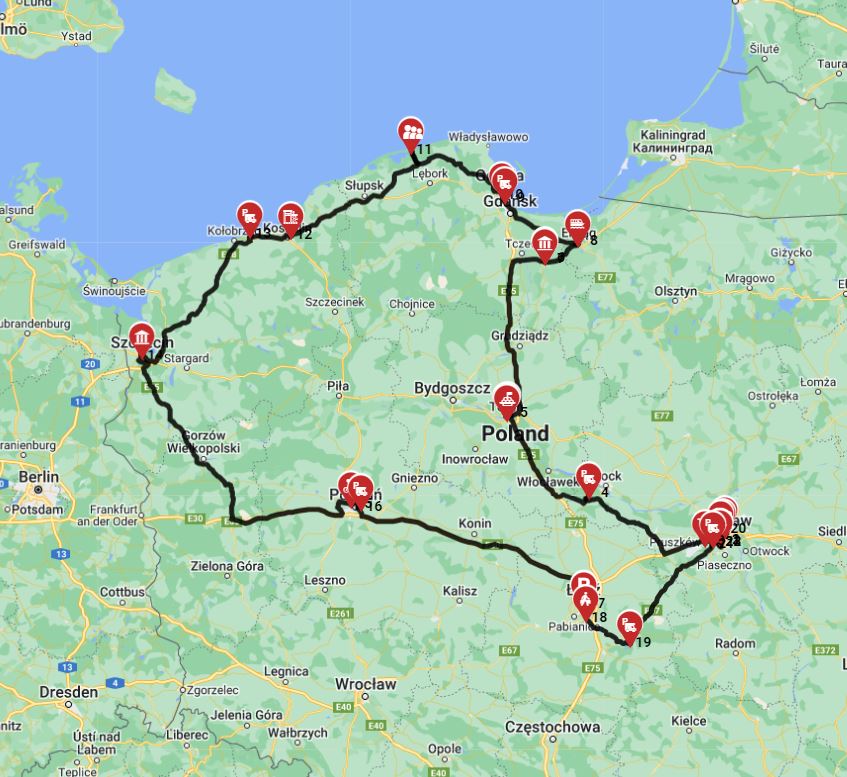
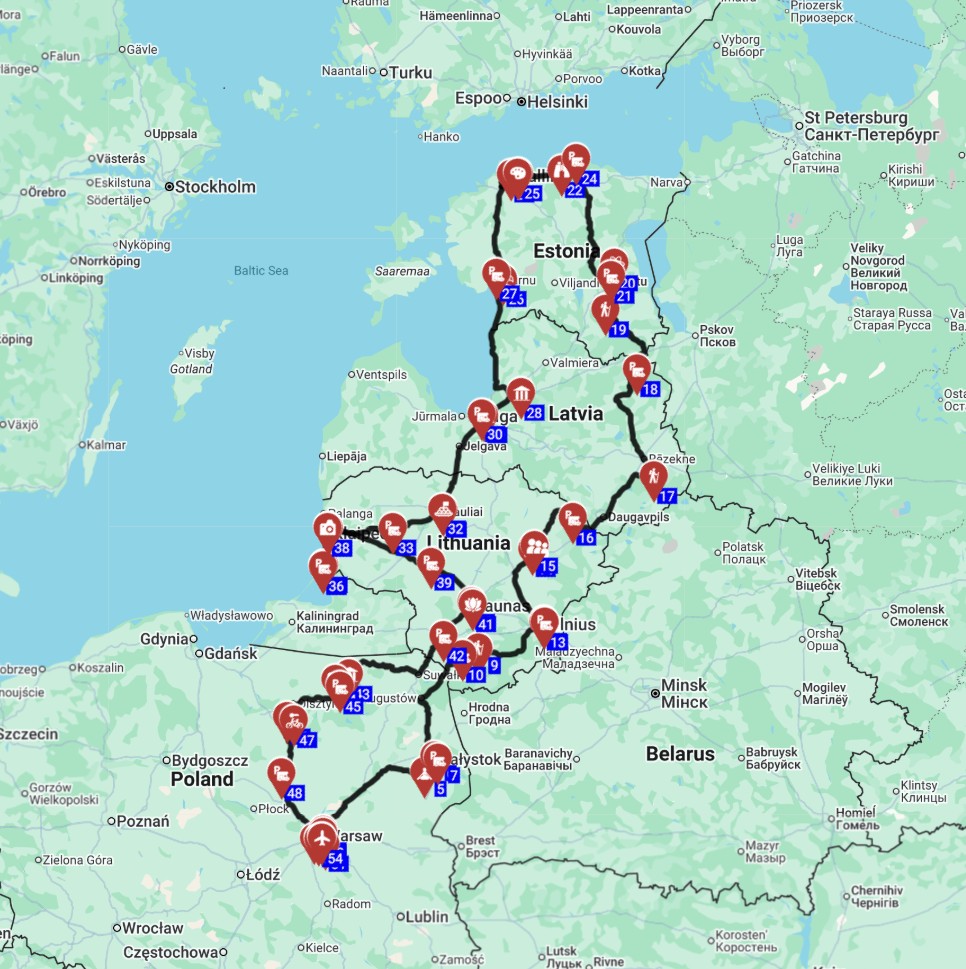
For a comprehensive and expertly planned journey through Poland's northern regions, consider the 'Warsaw Roundtrip - Poland North' trip available on RV PLANET (rvplan.net). This meticulously designed route covers a total of 3188 km over 22 days, starting and ending in Warsaw, offering an in-depth exploration of diverse attractions including 2 wildlife watch opportunities, 1 cave visit, 4 historical sites, and 3 traditional restaurants. This specific itinerary provides full access to trip-planning software, eliminating planning headaches, and ensures a well-paced journey through the country, highlighting its natural features and cultural richness.
Explore this route
Another fantastic option is the "

Warsaw Roundtrip - Poland north Short
Must-See Stops Along the Way (Avi Bandana Picks)
Avi Bandana's top picks for an authentic Polish RV experience focus on cultural immersion and local flavors, encouraging you to go beyond typical tourist traps. With a rented RV, you have the flexibility to discover these hidden gems.- Traditional Markets: Seek out vibrant traditional markets, especially those found in smaller towns or dedicated sections of larger cities like Krakow's Stary Kleparz. These are perfect for experiencing local life, sampling regional produce, and finding unique souvenirs, offering a true taste of local culture.
- Traditional Restaurants / Fine Dining: Make sure to stop at traditional Polish restaurants to savor local cuisine. Look for establishments offering regional specialties like pierogi, barszcz (beetroot soup), bigos (hunter's stew), and regional cheeses in places like Zakopane. These culinary stops enrich your travel experience significantly.
- Traditional Visits: Engage in 'traditional visits' to heritage sites or community centers that offer insights into local customs, crafts, or historical ways of life. For instance, consider a folk art workshop in a Tatra village or a visit to an amber workshop along the Baltic coast. These often provide a more personal and enriching experience than major tourist attractions, connecting you deeper with the local culture.
Daily Driving Distances & Drive Times in Poland
Avi Bandana, our founder, recommends maintaining a maximum of 100-150 km per day on average to fully enjoy your RV rental journey through Poland, allowing ample time for unexpected stops and scenic detours. This relaxed pace, which translates to roughly 1.5 to 2.5 hours of driving, enables travelers to explore charming towns, relax at picturesque campsites, and avoid the fatigue of long, rushed drives, thereby enhancing the overall RV experience. For instance, driving from Krakow to Zakopane (approximately 100 km) typically takes around 1.5 to 2 hours, allowing for a leisurely morning departure and plenty of afternoon exploration. Longer stretches, such as from Warsaw to Gdańsk (approximately 340 km), are ideally split over two days or broken up with significant stops in cities like Toruń, adhering to the principle of slow travel to fully absorb the surroundings.Best RV Class for This Itinerary - Couple & Family Picks
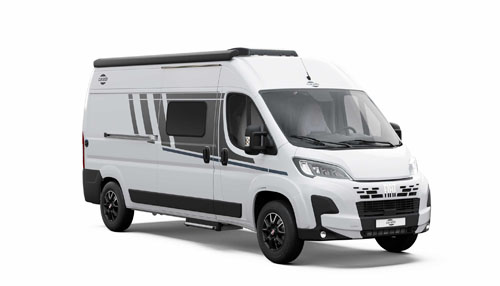
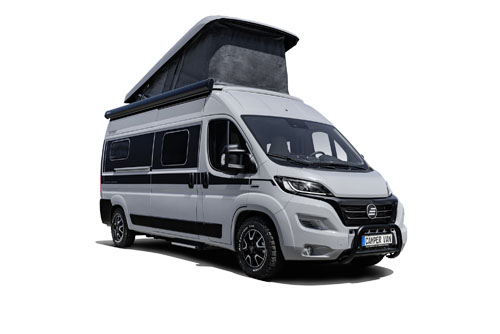
Choosing the right RV rental for your Polish adventure depends on your travel companions and desired comfort levels, with options available for every group size in Bandana's diverse fleet.- For Couples: The Class B - Camper Van is an excellent choice for two, offering agility and ease of parking, ideal for navigating both city outskirts and scenic routes. For example, a model like the "Active Pop Top" is roughly 5.99 meters long, has a 90 Liter fresh water tank, and features a compact kitchen with a 90 liter refrigerator. Bandana's camper vans typically feature an average length of 5.8 meters, 3.2 sleeping places, comfortably accommodating around 2.7 adults, with an average fuel consumption of 8-10 Liters/100 km. This makes them perfect for couples seeking flexibility and intimacy on their rented motorhome trip.
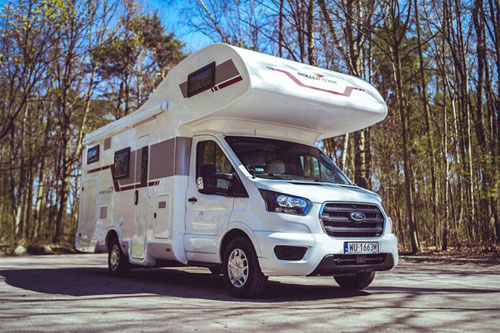
- For Families: The Class C - Alcove motorhome provides ample space and sleeping capacity, making it perfect for families with children. These RVs from Bandana's global fleet average 7.5 meters in length, offering 5.8 sleeping places and suitable for about 4.4 adults, with a common fuel consumption of 10-12 Liters/100 km. A model like the "MHC24" provides 6 sleeping places, 6 seat belts, a 160 Liter fresh water tank, and a 283 liter refrigerator, making it highly suitable for larger groups. Our 'Rent & Plan' service, exclusive to Bandana, combines RV rental with a ready-made itinerary crafted by travel experts, providing full access to trip-planning software on rvplan.net to eliminate planning headaches for families.
What is the best time of year to RV in Poland?
The best time of year to RV in Poland is generally from late spring to early autumn (May to September), offering the most favorable weather conditions for travel and outdoor activities. Spring (May-June) provides pleasant temperatures averaging 15-20°C, blossoming landscapes, and fewer crowds, though some mountain roads might still have residual snow early in the season. Summer (July-August) is peak season with warm weather, averaging 20-25°C, numerous festivals, and full campsite availability, but also means more tourists and potentially higher prices. Autumn (September) offers stunning fall foliage, cooler temperatures perfect for hiking, and a return to quieter roads and attractions, with average temperatures around 10-18°C. Beyond basic weather, consider specific seasonal events like summer music festivals in Gdańsk or autumn harvest festivals (dożynki) in rural areas for cultural immersion. Be aware that winter RVing (October-April) presents challenges such as snow-covered roads, limited campsite openings, and the need for winterized RVs (e.g., adequate heating systems, winter tires), though opportunities like charming Christmas markets exist.How much does it cost to rent an RV in Poland?
The cost to rent an RV in Poland typically ranges from €70 to €150 per day for smaller campervans, and up to €200+ per day for larger motorhomes, depending on the season, RV class, and rental duration. Factors influencing rental prices include vehicle size, age, included amenities, and insurance options. For instance, a basic Class B campervan might start at €70 in the shoulder season, while a spacious 6-berth Class C motorhome could be over €200 daily during peak summer. A comprehensive budget should include not just rental fees and campsite fees (averaging €15-€40 per night for a powered site), but also fuel estimation. Bandana's fleet averages 8-12 Liters/100 km, so for a 1000 km trip, expect 80-120 liters of fuel, costing approximately €120-€180 at current prices around €1.50/liter. Potential tolls on motorways like A1, A2, and A4 use a mix of electronic payment via the eToll app/device and manual payments; budget €0.10-€0.20/km, so a 1000 km trip could incur €100-€200 in tolls. For precise budgeting and to itemize every expense along the way, we recommend using RV PLANET routes. Food expenses (groceries for cooking can save significantly over eating out), attraction fees, unforeseen repairs or roadside assistance memberships, and specific costs for dump stations/water refills (some campsites include, others charge €5-€15) are also part of the total trip cost. Knowing current currency exchange rates for Polish Zloty (PLN) to your home currency is vital to manage daily spending effectively.Is it safe to RV in Poland?
Poland is generally considered a safe country for RV travel, with low crime rates and a welcoming attitude towards tourists, but standard precautions should always be observed to ensure a worry-free journey. Like any travel destination, awareness of your surroundings and securing your valuables are key to a trouble-free trip. While general safety is high, RV-specific concerns include securing your vehicle by locking all doors and windows, especially at isolated spots or rest areas; using additional locks or alarms can deter opportunistic break-ins. It's advisable to have emergency contacts tailored for RVers, such as your rental company's roadside assistance for larger vehicles, in addition to local emergency services (112). Familiarize yourself with local laws regarding carrying specific safety equipment, which in Poland typically includes a reflective vest (for exiting the vehicle on a road) and a first-aid kit.Where can I park an RV in Poland?
In Poland, RVs can primarily be parked at designated campsites, which are widely available across the country and offer essential amenities like electricity, fresh water, and waste disposal. These sites provide a secure and convenient base for your travels, whether you're staying for a night or an extended period. Beyond just campgrounds, parking challenges vary significantly depending on your RV rental size; compact campervans (e.g., Class B, averaging 5.8m in length) are generally easier to navigate and park in city centers or smaller towns compared to larger motorhomes (e.g., Class A, averaging 7.5m). Many larger cities like Warsaw and Krakow have designated RV parking areas outside the strict city centers, often near public transport links to facilitate city exploration. Wild camping (boondocking) is generally tolerated in some rural areas, particularly away from national parks and private property, but always seek permission from landowners or observe local signage to avoid issues. Consider using apps like Park4Night or Campercontact to find suitable parking and service points, noting that accessibility and suitability for different RV sizes impact where you can comfortably stop or park.What are the road rules for RVs in Poland?
Road rules for RVs in Poland generally follow standard European regulations, including driving on the right side of the road, mandatory headlights 24/7, and specific speed limits that differ for vehicles over 3.5 tonnes. For motorhomes over 3.5t, speed limits are typically lower: 70 km/h on single carriageways and 80 km/h on dual carriageways and motorways, compared to 90/120/140 km/h for cars. It's crucial to be aware of your rented vehicle's height and weight restrictions, especially when navigating underpasses in older towns or narrow city gates. Drive slowly and carefully, and you can drive almost anywhere without issues. No need to stress - just use common sense and pay attention. While major highways are generally excellent, secondary roads can be narrower or have less smooth surfaces, requiring extra caution for larger vehicles. Poland has a specific electronic toll system (eToll app/device) on major motorways like A1, A2, and A4; ensure your RV is registered or you have the correct payment method installed. Specific fuel types and availability for RVs, such as widely available diesel and LPG for cooking/heating at many petrol stations, should be noted. Finally, adhere to rules for driving through national parks, where off-road driving is strictly prohibited, and certain roads might be restricted or require permits for larger vehicles.Do I need a special license to drive an RV in Poland?
Most standard RVs (under 3.5 tonnes maximum authorized mass) can be driven in Poland with a regular Category B driving license, which is the same license required for cars. This means that for virtually all our rental motorhomes and campervans, your existing car license is sufficient. For larger motorhomes exceeding 3.5 tonnes, you would need a Category C1 (up to 7.5 tonnes) or Category C (over 7.5 tonnes) license, depending on the vehicle's specific weight, but these are rarely part of a standard rental fleet. An International Driving Permit (IDP) is highly recommended alongside your national license if your license is not in Polish or an easily verifiable language like English, as it provides a translation and can simplify interactions with local authorities, though it is not strictly mandatory in all cases. The minimum rental age for any motorhome in Poland is 21, and there are no young driver surcharges or vehicle class restrictions based on age.Are there specific apps for RV travel in Poland?
Yes, several apps significantly enhance RV travel in Poland, offering essential tools for navigation, campsite information, and access to services for a smooth and efficient trip. Popular choices include Park4Night and Campercontact, which are invaluable for locating RV-friendly parking, campsites (with user reviews and amenity lists), dump stations, and fresh water refills across the country. For reliable navigation apps specifically designed for RVs, Google Maps and Waze are popular for general directions, but consider dedicated RV navigation apps (e.g., Sygic Truck & RV Navigation) that account for your vehicle's size and weight to avoid unsuitable narrow roads or low underpasses. Regarding internet access, purchasing a local SIM card from major providers like Orange, T-Mobile, or Play upon arrival is highly recommended for affordable and consistent data plans. While many campsites offer Wi-Fi, its reliability and speed can vary; having a local SIM ensures consistent internet access while on the road or at less equipped campgrounds.How do I dump my RV waste in Poland?
In Poland, RV waste, including both greywater (from sinks and showers) and blackwater (from the toilet), must be disposed of at designated dump stations, which are primarily found at official campsites and some dedicated service points. It is both illegal and environmentally harmful to dump waste in unauthorized locations, making it essential to plan your route with waste disposal stops in mind. Beyond just campgrounds, it is crucial to know where to find specific RV services like dump stations and fresh water refills across Poland; apps like Park4Night and Campercontact are invaluable for locating these facilities and often provide up-to-date information on their availability and cost. Propane/LPG exchanges for cooking and heating are available at many larger petrol stations, typically indicated by an 'LPG' sign. While specialized RV mechanics or parts stores might be concentrated near larger cities like Warsaw or Krakow, general car service centers can often assist with basic vehicle issues, but it's always wise to have comprehensive roadside assistance coverage as part of your RV rental for major repairs, providing peace of mind during your adventure.What are some cultural tips for RVers in Poland?
Engaging respectfully with Polish culture can greatly enrich your RV trip, and knowing basic etiquette along with a few Polish phrases will significantly enhance your interactions with locals. Politeness and respect are highly valued in Poland; a simple 'Dzień dobry' (good morning), 'Dziękuję' (thank you), or 'Przepraszam' (excuse me/I'm sorry) goes a long way. When interacting with locals at campgrounds, a friendly nod, a smile, or an attempt at conversation (even with limited Polish) can be genuinely appreciated and often leads to warmer interactions. Understanding Polish hospitality means being prepared for generosity, especially in rural areas; if offered food or drink, it's polite to accept. Learning basic language phrases for RV-specific situations, such as 'Gdzie jest kemping?' (Where is the campsite?), 'Ile kosztuje tankowanie?' (How much is fuel?), or 'Potrzebuję wody' (I need water), will prove very helpful. Actively seek opportunities to participate in local events or visit markets accessible by RV, as these provide authentic cultural experiences and a chance to meet local artisans and vendors, fostering a deeper connection with the communities you visit.🎬 Video coming soon