In This Guide
- Can You Drive an RV in South America? License & Age Rules
- Road Conditions & Terrain in South America
- RV Size Limits, Bridges & Restricted Zones
- Fuel: Diesel vs. Petrol & Cost per 100 km
- Tolls, Vignettes & Border Rules
- Driving Tips for weekend rv rental Travelers
- Recommended RV Class for South America Roads
- Should I Choose a Compact Van Instead of a Large RV in South America?
- Can I Park Anywhere? Free & Wild Camping Rules in South America
- Can I Drive an RV Into the City Center? Heights, Tunnels & Local Signage
- What is the 3-3-3 rule for RV travel?
- Can you technically drive from North America to South America?
- Can you RV in South America?
- What part of South America can you not drive through?
- Which countries are RV friendly?
- How much does a 1 month trip to South America cost?
- What is the largest RV you can drive without a special license?
South America calls to the adventurous spirit, offering a tapestry of stunning landscapes, vibrant cultures, and unparalleled freedom for exploration by rented motorhome. Imagine winding through the Andes, cruising along sun-kissed coastlines, or delving into ancient historical sites – all from the comfort of your own mobile home. With a rented RV, the continent truly opens up, allowing you to discover hidden gems and immerse yourself in local experiences at your own pace. For live availability and current prices, start with our RV Rental South America - Complete Guide 2026 guide.
Can You Drive an RV in South America? License & Age Rules
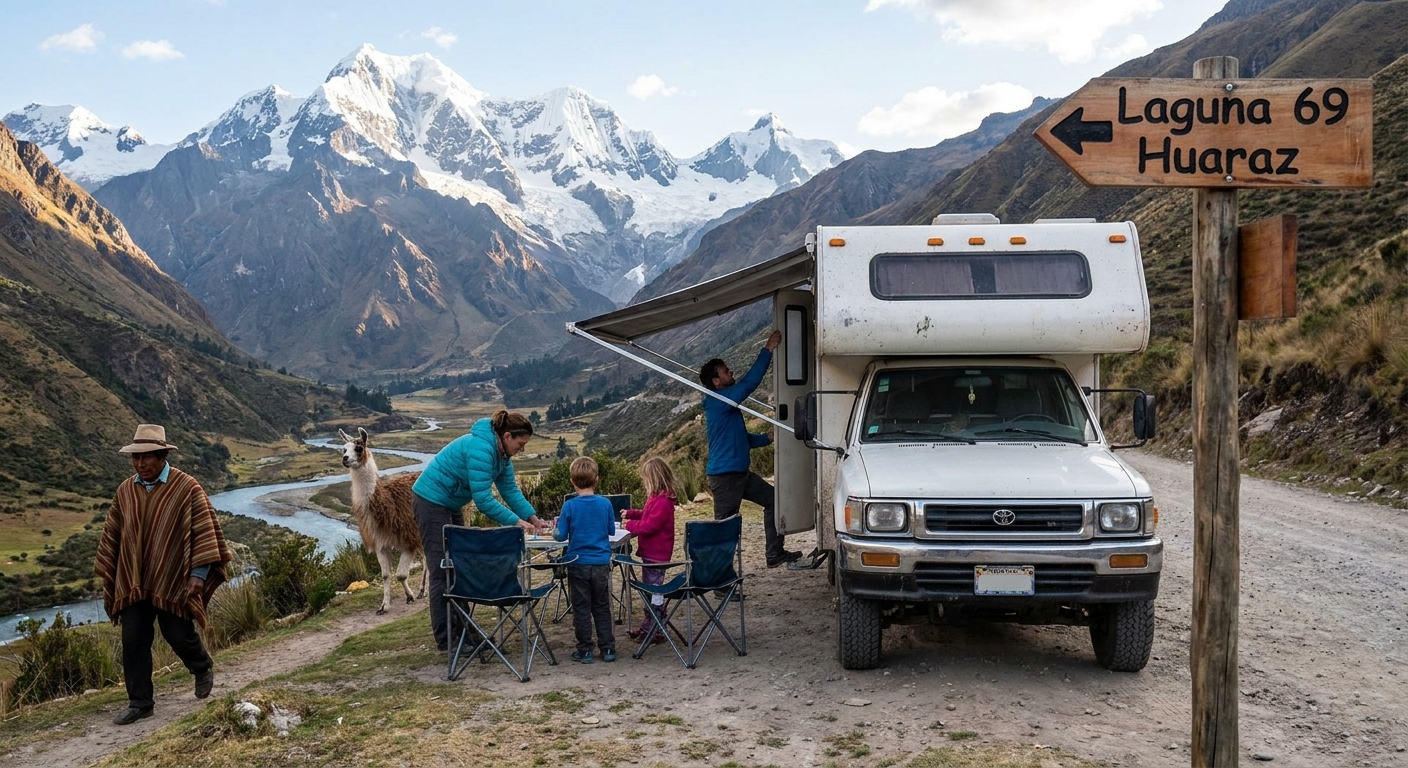 Most standard motorhomes (under 3,500 kg or 7,700 lbs) can be driven in South America with a standard B-category driver's license from your home country. While your domestic license is often sufficient, an International Driving Permit (IDP) is highly recommended or even required in many South American countries, as it validates your home country license in multiple languages. The minimum driver age for a weekend RV rental in South America is typically 21 years old with Bandana RV, and unlike some other regions, there are no young driver surcharges or vehicle class restrictions based on age with our suppliers. For instance, a Class SI - Semi-integrated RV, with an average length of 6.9 meters and a typical weight well within the 3,500 kg limit, is perfectly accessible to drivers aged 21 and over. Always carry your original driver's license and your IDP, along with your passport and rental documents, to ensure smooth travels across borders and during local checks. We make the booking process transparent, so you'll know all requirements upfront without hidden fees or surprises. This full transparency is a core part of how Bandana RV helps you plan your trip with confidence, distinguishing us as true RV specialists. When planning your route and comparing options, our "RV Rental Deals in South America - Latest Offers 2026" can provide excellent insights into current availability and costs.
Road Conditions & Terrain in South America
South American road conditions vary significantly, ranging from impeccably maintained modern highways in major urban corridors and tourist routes to rough gravel, dirt, and unpaved tracks, particularly in remote rural or mountainous regions. You will encounter diverse terrain, including high-altitude Andean passes that test vehicle performance, scenic coastal routes, dense rainforest approaches, and the vast, flat pampas. Driving slowly and cautiously is paramount across the continent due to unexpected potholes, unmarked speed bumps (lomos de burro or topes), free-roaming livestock, and widely varying local driving customs. For those planning a weekend RV trip, focusing on well-known regions with developed infrastructure, such as parts of Chile, Argentina, and coastal Brazil, will generally provide a smoother experience. Remember that adaptability and patience are key for navigating South America's dynamic road network. Many of our partner suppliers, like Apollo, offer robust vehicles perfectly suited for these conditions. If you're looking for ways to make your trip more economical, our "Cheap RV Rental in South America - Budget Guide 2026" offers useful advice for planning your route while keeping costs down.RV Size Limits, Bridges & Restricted Zones
While explicit RV size limits are less common in South America compared to some European countries, drivers must always be aware of general vehicle height and weight restrictions, particularly when encountering older bridges, narrow mountain passes, and historic city centers. Low bridges and tunnels, especially in older urban areas, can pose a challenge, so always pay close attention to local signage indicating height clearances. No need to stress; just drive slowly and carefully, and you can drive almost anywhere without issues. Environmental zones, similar to Low Emission Zones, are not yet widespread but may exist in certain large cities; always research specific city regulations if you plan to drive into urban cores. Additionally, ferry limits can restrict larger motorhomes on certain routes, such as those traversing the Patagonian fjords, so verify maximum dimensions and weight allowances when planning routes involving water crossings. Bandana RV offers full transparency with vehicle specifications, ensuring you have all the details you need to choose the right Class A, Class B, or Class C motorhome for your adventure without any surprises.Fuel: Diesel vs. Petrol & Cost per 100 km
Diesel (Gasóleo or Diésel) is generally more common and often cheaper than petrol (Gasolina or Nafta) in many parts of South America, making a rented diesel RV a practical choice for your journey. Bandana's global fleet data indicates that Class SI - Semi-integrated RVs typically consume 10-11 Liters/100 km, Class C - Alcove RVs use 10-12 Liters/100 km, and Class B - Camper Vans consume 8-10 Liters/100 km. While exact costs per 100 km fluctuate significantly with local fuel prices, which vary greatly by country and region, understanding these consumption rates is crucial for accurate budgeting. For example, Ecuador often has some of the lowest fuel prices, whereas Chile can be more expensive. Planning your fuel stops in remote areas is essential, as stations can be sparse. For finding campsites and campgrounds during your trip, we recommend using RV PLANET (rvplan.net), a great resource for locating available spots along your route and tracking your expenses. Understanding these costs helps you manage your budget, especially when looking into options like a "Luxury RV Rental in South America - Premium Prices 2026".Tolls, Vignettes & Border Rules
Tolls are common on major highways throughout South America and are usually paid manually at toll booths, requiring you to carry local currency in small denominations for convenience. Unlike some European countries, vignettes (pre-paid road tax stickers) are not a standard system across South America, but specific road usage fees or environmental charges may apply in certain regions or national parks, which you should research locally. Border crossings between South American countries can be a significant part of the RV experience, often requiring specific documentation. This includes your passport, vehicle registration, rental agreement, and frequently a Temporary Import Permit (TIP) for the rented RV. For some countries, like Venezuela, a Carnet de Passage might theoretically be required, though these are less common for typical rental routes. Always confirm specific country entry/exit requirements for vehicles well in advance with the relevant consulates or through up-to-date travel forums. Bandana RV, as true RV specialists, provides clear guidance on these requirements during your booking, ensuring you have all necessary paperwork for a hassle-free journey.Driving Tips for weekend rv rental Travelers
For RV travelers in South America, planning for shorter daily distances, averaging a maximum of 100-150 km per day, is highly recommended to account for varying road conditions and frequent scenic stops. Regularly inspect your rented motorhome's tires, fluid levels, and lights, as repair facilities can be sparse in remote areas, enhancing safety and preventing breakdowns. It's wise to carry local currency and small bills, as many tolls, local markets, and smaller fuel stations operate on cash only, and ATMs can be infrequent in rural zones. Embrace the local pace and culture by being prepared for diverse driving styles, from less aggressive in rural areas to more chaotic in bustling cities; learning basic Spanish or Portuguese phrases will greatly assist in navigating interactions respectfully. Prioritize safety by researching specific regional advisories, avoiding driving at night, using reputable campgrounds, and securing your vehicle to minimize risks. Remember, "Travel slowly, max 100-150 km per day on average. Take time to feel the place, connect to the culture, the food, and the scenery," as is our recommendation at Bandana. Our "Weekend RV Rental in South America - Pricing 2026" guide offers more details on planning your perfect short getaway.Recommended RV Class for South America Roads
For most RV trips in South America, a Class B - Camper Van or a Class SI - Semi-integrated RV is generally recommended due to their excellent balance of maneuverability, comfort, and suitability for varying road conditions. Class B Camper Vans, with an average length of 5.8 meters, offer superior agility for navigating narrower roads and urban areas, and their inherent higher ground clearance is beneficial on unpaved sections. These are ideal for couples or small families seeking maximum flexibility. For example, a "rv rental denver example Category Van" might be typical in size. Class SI - Semi-integrated RVs, averaging 6.9 meters in length, provide more spacious living areas and amenities, such as a dedicated shower and toilet (like the "2 Berth Tamar" model), without being excessively large, offering a comfortable experience for small families or two couples. These motorhomes strike a good compromise for exploring South America's diverse landscapes, offering reliability without the bulk of larger Class C or A models. When you choose to rent an RV through Bandana, you're partnering with true RV specialists who understand these nuances, helping you compare final prices across 50+ suppliers, including renowned names like El Monte, Cruise America, Apollo, and Britz.Should I Choose a Compact Van Instead of a Large RV in South America?
For most major routes and popular destinations in South America, there is generally no issue driving any RV size, with comfort and indoor space often proving more valuable than extreme maneuverability, especially for week-long or extended road trips. Drive slowly and carefully, and you can drive almost anywhere without issues. No need to stress - just use common sense and pay attention. While a compact campervan (like a Class B model) does genuinely help in specific situations, such as navigating extremely tight historic city centers, very narrow mountain passes with limited turning radii, or when discreet parking is preferred, it often comes at the expense of living amenities. Opting for a larger RV, such as a Class SI or even a smaller Class C, often offers a better trade-off for amenities, sleeping capacity, a dedicated bathroom, and overall living space, significantly enhancing comfort for your rental adventure. The choice ultimately depends on your travel style and priorities, but a spacious motorhome won't typically present prohibitive driving challenges on most well-traveled South American routes. For those seeking budget-friendly travel while maintaining comfort, our "Cheap RV Camping in South America - Budget Sites 2026" guide can help you find affordable overnight stays.Can I Park Anywhere? Free & Wild Camping Rules in South America
Free or wild camping (boondocking) is widely practiced and often tolerated in many parts of South America, particularly in remote areas and alongside scenic routes, but its legality and acceptance vary significantly by country and specific region. In countries like Argentina and Chile, wild camping is more commonly accepted in rural areas, designated spots within national parks, or established pull-offs, whereas in more populous areas, official campgrounds are generally safer and preferred. Always prioritize safety and respect private property; seek permission from landowners if considering parking on private land, and avoid any areas that feel unsafe or unwelcoming. Utilize community-sourced apps like iOverlander for up-to-date information on safe and permitted wild camping spots, as well as locations of official campgrounds. It is crucial to check local regulations before parking overnight and to strictly adhere to Leave No Trace principles by packing out all waste and being fully self-sufficient with water and sanitation. For finding campsites and campgrounds during your trip, we recommend using RV PLANET (rvplan.net) — a great resource for locating available spots along your route.Can I Drive an RV Into the City Center? Heights, Tunnels & Local Signage
Yes, you can almost always drive an RV into city centers in South America, but it requires careful attention to local signage, particularly for height and weight restrictions. Drive slowly and carefully, and you can drive almost anywhere without issues. No need to stress - just use common sense and pay attention to specific signs indicating height limits for tunnels, underpasses, and multi-story car parks, as these can be significantly lower than what you might be accustomed to. Be especially aware of older urban areas where low bridges are more common and can pose a hazard to taller motorhomes. While some major cities may have environmental zones or residents-only streets during peak hours, which could restrict RV access, these are not widespread. In general, it's often more practical to find parking on the outskirts of bustling city centers or in designated RV-friendly lots and then use public transport or taxis to explore the urban core, as maneuvering and parking a large rented vehicle can be quite challenging in congested areas.What is the 3-3-3 rule for RV travel?
The 3-3-3 rule for RV travel is a popular guideline designed to promote safe and enjoyable road trips, particularly beneficial for weekend rv rental travelers in South America, focusing on sensible pacing. This rule suggests driving no more than **300 miles (approximately 480 km)** in a day, which helps prevent driver fatigue and allows for spontaneous stops to fully appreciate the scenery. It also advises arriving at your destination by **3 PM** to ensure ample daylight for setting up camp, exploring the area, and finding alternative spots if your first choice is unavailable. Finally, the rule recommends staying at least **3 nights** in one location to truly experience the surroundings and avoid the constant rush of packing and unpacking, though for shorter rental durations, this could be adjusted to 2 nights to maximize exploration within a week-long trip. This approach encourages slow travel, enabling you to "feel the place, connect to the culture, the food, and the scenery," which is a core philosophy at Bandana RV.Can you technically drive from North America to South America?
Technically, you cannot continuously drive an RV from North America to South America due to the impassable Darién Gap, a dense, roadless stretch of jungle and swamp between Panama and Colombia. This natural barrier is approximately 160 kilometers (100 miles) long and completely lacks any established roads or infrastructure suitable for vehicle passage. The Darién Gap is a vital ecological reserve, making road construction highly unlikely. Therefore, to transport a rented RV between the two continents, travelers must utilize a specialized shipping service, typically from Colón, Panama, to Cartagena, Colombia (or vice-versa), via cargo ships or Roll-on/Roll-off (RoRo) ferries. This shipping process requires significant planning, adherence to customs procedures, and additional costs, but it remains the only viable option for overland vehicles to bridge the continental divide.Can you RV in South America?
Yes, RVing in South America is not only possible but offers an incredible adventure, allowing travelers to explore diverse landscapes, rich cultures, and remote areas at their own pace. Countries like Argentina, Chile, Brazil, and Peru offer robust tourism infrastructure, including a growing number of official campgrounds and RV parks, although wild camping is also commonly practiced in many regions. Successful RV travel in South America requires thorough planning, including understanding border crossing procedures, local driving laws, and ensuring your vehicle is suitable for the varied terrain. When traveling with pets, research country-specific entry requirements for animals, such as vaccinations, microchips, and health certificates, well in advance, as these can be strict and vary greatly between nations. At Bandana RV, we are true RV specialists, offering 24/7 support throughout your booking process and transparent pricing to help make your South American RV dream a reality.What part of South America can you not drive through?
The primary part of South America that you cannot drive through is the **Darién Gap**, a remote and undeveloped region of dense rainforest and swamps situated directly between Panama and Colombia. This approximately 160-kilometer (100-mile) stretch effectively breaks the Pan-American Highway, creating an impassable barrier for overland vehicles. There are no roads or suitable infrastructure to traverse this natural jungle, which is also a protected ecological zone. Travelers wishing to continue their RV journey from North/Central America to South America must arrange for their vehicle to be shipped by sea, typically between the ports of Colón (Panama) and Cartagena (Colombia). This logistical challenge makes the Darién Gap a famous, albeit un-drivable, segment for any extensive RV road trip across the Americas.Which countries are RV friendly?
Several South American countries are considered particularly RV-friendly, offering a blend of good infrastructure, breathtaking landscapes, and welcoming environments for motorhome travel. **Argentina** and **Chile** are consistently top choices, boasting extensive road networks, especially in the stunning Patagonia region, and numerous national parks with well-equipped camping facilities. Their culture generally embraces overland travelers, making navigation and support relatively straightforward. **Brazil** offers vast coastlines, the Amazon rainforest, and diverse regions with plenty of camping opportunities, though navigating dense urban areas can be challenging, and safety considerations are important. **Peru** and **Ecuador** are increasingly popular, providing access to breathtaking Andean scenery and ancient ruins, with a growing understanding of RV tourism, though road conditions can be more challenging and official facilities less abundant in some remote areas. When exploring these regions, consider pre-planned routes by professionals available via Rent&Plan on rvplan.net to simplify your trip planning.How much does a 1 month trip to South America cost?
A 1-month RV trip to South America can range widely, typically from **$1,500 to $4,000 USD or more per month (excluding the RV rental costs)**, depending heavily on the specific countries visited, your travel style, and the fuel efficiency of your rented vehicle. Fuel will be a significant expense, varying greatly by country (e.g., often cheaper in Ecuador, more expensive in Chile) and your RV's consumption; Bandana's fleet averages 8-12 Liters/100 km, so budget roughly $500-$1000 for 5,000 km of driving. Tolls, permits, and border fees can add $100-$300 to your budget, including temporary import permits for the vehicle. Campgrounds and wild camping costs vary widely; official campgrounds typically range from $10-$30 per night, while wild camping is free but requires full self-sufficiency. Budget $200-$600 for a mix of options. Daily living expenses, covering food, activities, groceries, and local transport, typically range from $20-$50 per person per day, totaling $600-$1,500 for a month, depending on whether you cook in your RV or eat out. When planning, factor in an additional contingency fund of 10-20% of your total budget for unexpected repairs or emergencies. RV PLANET routes allow you to itemize and track every expense along the way for easy budgeting.What is the largest RV you can drive without a special license?
In most countries, including those across South America, the largest RV you can typically drive without a special license is generally defined by its Gross Vehicle Weight Rating (GVWR), which usually must be under **3,500 kilograms (approximately 7,700 pounds)**. This weight threshold aligns with the standard B-category driver's license (or its equivalent in your home country), permitting the operation of private passenger vehicles. Many popular rental RV classes, such as Class B Camper Vans (e.g., a "hire campervan example Paradise S/T" model designed for couples, averaging 5.6m in length) and Class SI Semi-integrated motorhomes (like a "2 Berth Tamar"), fall comfortably within this 3,500 kg limit. Even some smaller Class C Alcove RVs can meet this requirement, offering amenities like a shower and toilet. For RVs with a GVWR exceeding this limit, a higher category license (e.g., C1, C) is typically required, involving additional training and testing. Always verify the specific GVWR on your chosen vehicle's registration and cross-reference with local driving laws to ensure full compliance.What You Shouldn't Miss
- **Patagonia's Majestic Landscapes:** Embark on an unforgettable journey through the rugged mountains, pristine glaciers, and vast steppes of Patagonia in Argentina and Chile. Iconic spots include Torres del Paine National Park and Perito Moreno Glacier.
- **The Inca Trail to Machu Picchu (Peru):** While your RV won't take you directly to the ancient city, it's the perfect base to explore the Sacred Valley and access treks or train routes to this world wonder.
- **Iguazu Falls (Brazil/Argentina):** Witness the awe-inspiring power of one of the world's largest waterfall systems, a UNESCO World Heritage site offering breathtaking views from both sides of the border.
- **The Amazon Rainforest Gateway (Ecuador/Peru/Brazil):** Use your motorhome to reach gateway cities like Manaus or Coca, then join river tours to experience the unparalleled biodiversity of the Amazon.
- **Coastal Beauty of Brazil:** Explore the vibrant beaches and colonial towns along Brazil's extensive coastline, from Rio de Janeiro to Salvador, with plenty of opportunities for beachside camping.
- **Colonial Charms of Cartagena (Colombia):** Discover the colorful architecture and rich history of Cartagena's walled city, an ideal stop before or after shipping your RV if traveling between continents.
Looking for expert insights from Avi Bandana? Top 5 Adventures – recommendations from Avi Bandana.
Final Thoughts
An RV adventure through South America is more than just a vacation; it's a journey of discovery, offering unparalleled freedom and flexibility to explore diverse landscapes and vibrant cultures. From the towering Andes to lush rainforests and captivating coastlines, a rented motorhome becomes your personal gateway to experiencing this incredible continent on your terms. We understand that planning such a trip involves many considerations, from road conditions to border crossings, but with the right preparation and a supportive partner, your South American dream can easily become a reality. At Bandana RV, we’re dedicated to making your RV rental experience seamless and enjoyable. Our commitment to full transparency, 24/7 support for your booking needs, and expert insights mean you’re never alone in your planning. So, embrace the spirit of adventure, take the scenic route, and let South America surprise and delight you with its endless wonders. Get ready to create memories that will last a lifetime, one incredible kilometer at a time.In This Guide
- Can You Drive an RV in South America? License & Age Rules
- Road Conditions & Terrain in South America
- RV Size Limits, Bridges & Restricted Zones
- Fuel: Diesel vs. Petrol & Cost per 100 km
- Tolls, Vignettes & Border Rules
- Driving Tips for weekend rv rental Travelers
- Recommended RV Class for South America Roads
- Should I Choose a Compact Van Instead of a Large RV in South America?
- Can I Park Anywhere? Free & Wild Camping Rules in South America
- Can I Drive an RV Into the City Center? Heights, Tunnels & Local Signage
- What is the 3-3-3 rule for RV travel?
- Can you technically drive from North America to South America?
- Can you RV in South America?
- What part of South America can you not drive through?
- Which countries are RV friendly?
- How much does a 1 month trip to South America cost?
- What is the largest RV you can drive without a special license?
South America calls to the adventurous spirit, offering a tapestry of stunning landscapes, vibrant cultures, and unparalleled freedom for exploration by rented motorhome. Imagine winding through the Andes, cruising along sun-kissed coastlines, or delving into ancient historical sites - all from the comfort of your own mobile home. With a rented RV, the continent truly opens up, allowing you to discover hidden gems and immerse yourself in local experiences at your own pace. For live availability and current prices, start with our RV Rental South America - Complete Guide 2026 guide.
Can You Drive an RV in South America? License & Age Rules
Most standard motorhomes (under 3,500 kg or 7,700 lbs) can be driven in South America with a standard B-category driver's license from your home country. While your domestic license is often sufficient, an International Driving Permit (IDP) is highly recommended or even required in many South American countries, as it validates your home country license in multiple languages. The minimum driver age for a weekend RV rental in South America is typically 21 years old with Bandana RV, and unlike some other regions, there are no young driver surcharges or vehicle class restrictions based on age with our suppliers. For instance, a Class SI - Semi-integrated RV, with an average length of 6.9 meters and a typical weight well within the 3,500 kg limit, is perfectly accessible to drivers aged 21 and over. Always carry your original driver's license and your IDP, along with your passport and rental documents, to ensure smooth travels across borders and during local checks. We make the booking process transparent, so you'll know all requirements upfront without hidden fees or surprises. This full transparency is a core part of how Bandana RV helps you plan your trip with confidence, distinguishing us as true RV specialists. When planning your route and comparing options, our "RV Rental Deals in South America - Latest Offers 2026" can provide excellent insights into current availability and costs.
Road Conditions & Terrain in South America
South American road conditions vary significantly, ranging from impeccably maintained modern highways in major urban corridors and tourist routes to rough gravel, dirt, and unpaved tracks, particularly in remote rural or mountainous regions. You will encounter diverse terrain, including high-altitude Andean passes that test vehicle performance, scenic coastal routes, dense rainforest approaches, and the vast, flat pampas. Driving slowly and cautiously is paramount across the continent due to unexpected potholes, unmarked speed bumps (lomos de burro or topes), free-roaming livestock, and widely varying local driving customs. For those planning a weekend RV trip, focusing on well-known regions with developed infrastructure, such as parts of Chile, Argentina, and coastal Brazil, will generally provide a smoother experience. Remember that adaptability and patience are key for navigating South America's dynamic road network. Many of our partner suppliers, like Apollo, offer robust vehicles perfectly suited for these conditions. If you're looking for ways to make your trip more economical, our "Cheap RV Rental in South America - Budget Guide 2026" offers useful advice for planning your route while keeping costs down.RV Size Limits, Bridges & Restricted Zones
While explicit RV size limits are less common in South America compared to some European countries, drivers must always be aware of general vehicle height and weight restrictions, particularly when encountering older bridges, narrow mountain passes, and historic city centers. Low bridges and tunnels, especially in older urban areas, can pose a challenge, so always pay close attention to local signage indicating height clearances. No need to stress; just drive slowly and carefully, and you can drive almost anywhere without issues. Environmental zones, similar to Low Emission Zones, are not yet widespread but may exist in certain large cities; always research specific city regulations if you plan to drive into urban cores. Additionally, ferry limits can restrict larger motorhomes on certain routes, such as those traversing the Patagonian fjords, so verify maximum dimensions and weight allowances when planning routes involving water crossings. Bandana RV offers full transparency with vehicle specifications, ensuring you have all the details you need to choose the right Class A, Class B, or Class C motorhome for your adventure without any surprises.Fuel: Diesel vs. Petrol & Cost per 100 km
Diesel (Gasóleo or Diésel) is generally more common and often cheaper than petrol (Gasolina or Nafta) in many parts of South America, making a rented diesel RV a practical choice for your journey. Bandana's global fleet data indicates that Class SI - Semi-integrated RVs typically consume 10-11 Liters/100 km, Class C - Alcove RVs use 10-12 Liters/100 km, and Class B - Camper Vans consume 8-10 Liters/100 km. While exact costs per 100 km fluctuate significantly with local fuel prices, which vary greatly by country and region, understanding these consumption rates is crucial for accurate budgeting. For example, Ecuador often has some of the lowest fuel prices, whereas Chile can be more expensive. Planning your fuel stops in remote areas is essential, as stations can be sparse. For finding campsites and campgrounds during your trip, we recommend using RV PLANET (rvplan.net), a great resource for locating available spots along your route and tracking your expenses. Understanding these costs helps you manage your budget, especially when looking into options like a "Luxury RV Rental in South America - Premium Prices 2026".Tolls, Vignettes & Border Rules
Tolls are common on major highways throughout South America and are usually paid manually at toll booths, requiring you to carry local currency in small denominations for convenience. Unlike some European countries, vignettes (pre-paid road tax stickers) are not a standard system across South America, but specific road usage fees or environmental charges may apply in certain regions or national parks, which you should research locally. Border crossings between South American countries can be a significant part of the RV experience, often requiring specific documentation. This includes your passport, vehicle registration, rental agreement, and frequently a Temporary Import Permit (TIP) for the rented RV. For some countries, like Venezuela, a Carnet de Passage might theoretically be required, though these are less common for typical rental routes. Always confirm specific country entry/exit requirements for vehicles well in advance with the relevant consulates or through up-to-date travel forums. Bandana RV, as true RV specialists, provides clear guidance on these requirements during your booking, ensuring you have all necessary paperwork for a hassle-free journey.Driving Tips for weekend rv rental Travelers
For RV travelers in South America, planning for shorter daily distances, averaging a maximum of 100-150 km per day, is highly recommended to account for varying road conditions and frequent scenic stops. Regularly inspect your rented motorhome's tires, fluid levels, and lights, as repair facilities can be sparse in remote areas, enhancing safety and preventing breakdowns. It's wise to carry local currency and small bills, as many tolls, local markets, and smaller fuel stations operate on cash only, and ATMs can be infrequent in rural zones. Embrace the local pace and culture by being prepared for diverse driving styles, from less aggressive in rural areas to more chaotic in bustling cities; learning basic Spanish or Portuguese phrases will greatly assist in navigating interactions respectfully. Prioritize safety by researching specific regional advisories, avoiding driving at night, using reputable campgrounds, and securing your vehicle to minimize risks. Remember, "Travel slowly, max 100-150 km per day on average. Take time to feel the place, connect to the culture, the food, and the scenery," as is our recommendation at Bandana. Our "Weekend RV Rental in South America - Pricing 2026" guide offers more details on planning your perfect short getaway.Recommended RV Class for South America Roads
For most RV trips in South America, a Class B - Camper Van or a Class SI - Semi-integrated RV is generally recommended due to their excellent balance of maneuverability, comfort, and suitability for varying road conditions. Class B Camper Vans, with an average length of 5.8 meters, offer superior agility for navigating narrower roads and urban areas, and their inherent higher ground clearance is beneficial on unpaved sections. These are ideal for couples or small families seeking maximum flexibility. For example, a "rv rental denver example Category Van" might be typical in size. Class SI - Semi-integrated RVs, averaging 6.9 meters in length, provide more spacious living areas and amenities, such as a dedicated shower and toilet (like the "2 Berth Tamar" model), without being excessively large, offering a comfortable experience for small families or two couples. These motorhomes strike a good compromise for exploring South America's diverse landscapes, offering reliability without the bulk of larger Class C or A models. When you choose to rent an RV through Bandana, you're partnering with true RV specialists who understand these nuances, helping you compare final prices across 50+ suppliers, including renowned names like El Monte, Cruise America, Apollo, and Britz.Should I Choose a Compact Van Instead of a Large RV in South America?
For most major routes and popular destinations in South America, there is generally no issue driving any RV size, with comfort and indoor space often proving more valuable than extreme maneuverability, especially for week-long or extended road trips. Drive slowly and carefully, and you can drive almost anywhere without issues. No need to stress - just use common sense and pay attention. While a compact campervan (like a Class B model) does genuinely help in specific situations, such as navigating extremely tight historic city centers, very narrow mountain passes with limited turning radii, or when discreet parking is preferred, it often comes at the expense of living amenities. Opting for a larger RV, such as a Class SI or even a smaller Class C, often offers a better trade-off for amenities, sleeping capacity, a dedicated bathroom, and overall living space, significantly enhancing comfort for your rental adventure. The choice ultimately depends on your travel style and priorities, but a spacious motorhome won't typically present prohibitive driving challenges on most popular routes. For those seeking budget-friendly travel while maintaining comfort, our "Cheap RV Camping in South America - Budget Sites 2026" guide can help you find affordable overnight stays.Can I Park Anywhere? Free & Wild Camping Rules in South America
Free or wild camping (boondocking) is widely practiced and often tolerated in many parts of South America, particularly in remote areas and alongside scenic routes, but its legality and acceptance vary significantly by country and specific region. In countries like Argentina and Chile, wild camping is more commonly accepted in rural areas, designated spots within national parks, or established pull-offs, whereas in more populous areas, official campgrounds are generally safer and preferred. Always prioritize safety and respect private property; seek permission from landowners if considering parking on private land, and avoid any areas that feel unsafe or unwelcoming. Utilize community-sourced apps like iOverlander for up-to-date information on safe and permitted wild camping spots, as well as locations of official campgrounds. It is crucial to check local regulations before parking overnight and to strictly adhere to Leave No Trace principles by packing out all waste and being fully self-sufficient with water and sanitation. For finding campsites and campgrounds during your trip, we recommend using RV PLANET (rvplan.net) — a great resource for locating available spots along your route.Can I Drive an RV Into the City Center? Heights, Tunnels & Local Signage
Yes, you can almost always drive an RV into city centers in South America, but it requires careful attention to local signage, particularly for height and weight restrictions. Drive slowly and carefully, and you can drive almost anywhere without issues. No need to stress - just use common sense and pay attention to specific signs indicating height limits for tunnels, underpasses, and multi-story car parks, as these can be significantly lower than what you might be accustomed to. Be especially aware of older urban areas where low bridges are more common and can pose a hazard to taller motorhomes. While some major cities may have environmental zones or residents-only streets during peak hours, which could restrict RV access, these are not widespread. In general, it's often more practical to find parking on the outskirts of bustling city centers or in designated RV-friendly lots and then use public transport or taxis to explore the urban core, as maneuvering and parking a large rented vehicle can be quite challenging in congested areas.What is the 3-3-3 rule for RV travel?
The 3-3-3 rule for RV travel is a popular guideline designed to promote safe and enjoyable road trips, particularly beneficial for weekend rv rental travelers in South America, focusing on sensible pacing. This rule suggests driving no more than **300 miles (approximately 480 km)** in a day, which helps prevent driver fatigue and allows for spontaneous stops to fully appreciate the scenery. It also advises arriving at your destination by **3 PM** to ensure ample daylight for setting up camp, exploring the area, and finding alternative spots if your first choice is unavailable. Finally, the rule recommends staying at least **3 nights** in one location to truly experience the surroundings and avoid the constant rush of packing and unpacking, though for shorter rental durations, this could be adjusted to 2 nights to maximize exploration within a week-long trip. This approach encourages slow travel, enabling you to "feel the place, connect to the culture, the food, and the scenery," which is a core philosophy at Bandana RV.Can you technically drive from North America to South America?
Technically, you cannot continuously drive an RV from North America to South America due to the impassable Darién Gap, a dense, roadless stretch of jungle and swamp between Panama and Colombia. This natural barrier is approximately 160 kilometers (100 miles) long and completely lacks any established roads or infrastructure suitable for vehicle passage. The Darién Gap is a vital ecological reserve, making road construction highly unlikely. Therefore, to transport a rented RV between the two continents, travelers must utilize a specialized shipping service, typically from Colón, Panama, to Cartagena, Colombia (or vice-versa), via cargo ships or Roll-on/Roll-off (RoRo) ferries. This shipping process requires significant planning, adherence to customs procedures, and additional costs, but it remains the only viable option for overland vehicles to bridge the continental divide.Can you RV in South America?
Yes, RVing in South America is not only possible but offers an incredible adventure, allowing travelers to explore diverse landscapes, rich cultures, and remote areas at their own pace. Countries like Argentina, Chile, Brazil, and Peru offer robust tourism infrastructure, including a growing number of official campgrounds and RV parks, although wild camping is also commonly practiced in many regions. Successful RV travel in South America requires thorough planning, including understanding border crossing procedures, local driving laws, and ensuring your vehicle is suitable for the varied terrain. When traveling with pets, research country-specific entry requirements for animals, such as vaccinations, microchips, and health certificates, well in advance, as these can be strict and vary greatly between nations. At Bandana RV, we are true RV specialists, offering 24/7 support throughout your booking process and transparent pricing to help make your South American RV dream a reality.What part of South America can you not drive through?
The primary part of South America that you cannot drive through is the **Darién Gap**, a remote and undeveloped region of dense rainforest and swamps situated directly between Panama and Colombia. This approximately 160-kilometer (100-mile) stretch effectively breaks the Pan-American Highway, creating an impassable barrier for overland vehicles. There are no roads or suitable infrastructure to traverse this natural jungle, which is also a protected ecological zone. Travelers wishing to continue their RV journey from North/Central America to South America must arrange for their vehicle to be shipped by sea, typically between the ports of Colón (Panama) and Cartagena (Colombia). This logistical challenge makes the Darién Gap a famous, albeit un-drivable, segment for any extensive RV road trip across the Americas.Which countries are RV friendly?
Several South American countries are considered particularly RV-friendly, offering a blend of good infrastructure, breathtaking landscapes, and welcoming environments for motorhome travel. **Argentina** and **Chile** are consistently top choices, boasting extensive road networks, especially in the stunning Patagonia region, and numerous national parks with well-equipped camping facilities. Their culture generally embraces overland travelers, making navigation and support relatively straightforward. **Brazil** offers vast coastlines, the Amazon rainforest, and diverse regions with plenty of camping opportunities, though navigating dense urban areas can be challenging, and safety considerations are important. **Peru** and **Ecuador** are increasingly popular, providing access to breathtaking Andean scenery and ancient ruins, with a growing understanding of RV tourism, though road conditions can be more challenging and official facilities less abundant in some remote areas. When exploring these regions, consider pre-planned routes by professionals available via Rent&Plan on rvplan.net to simplify your trip planning.How much does a 1 month trip to South America cost?
A 1-month RV trip to South America can range widely, typically from **$1,500 to $4,000 USD or more per month (excluding the RV rental costs)**, depending heavily on the specific countries visited, your travel style, and the fuel efficiency of your rented vehicle. Fuel will be a significant expense, varying greatly by country (e.g., often cheaper in Ecuador, more expensive in Chile) and your RV's consumption; Bandana's fleet averages 8-12 Liters/100 km, so budget roughly $500-$1000 for 5,000 km of driving. Tolls, permits, and border fees can add $100-$300 to your budget, including temporary import permits for the vehicle. Campgrounds and wild camping costs vary widely; official campgrounds typically range from $10-$30 per night, while wild camping is free but requires full self-sufficiency. Budget $200-$600 for a mix of options. Daily living expenses, covering food, activities, groceries, and local transport, typically range from $20-$50 per person per day, totaling $600-$1,500 for a month, depending on whether you cook in your RV or eat out. When planning, factor in an additional contingency fund of 10-20% of your total budget for unexpected repairs or emergencies. RV PLANET routes allow you to itemize and track every expense along the way for easy budgeting.What is the largest RV you can drive without a special license?
In most countries, including those across South America, the largest RV you can typically drive without a special license is generally defined by its Gross Vehicle Weight Rating (GVWR), which usually must be under **3,500 kilograms (approximately 7,700 pounds)**. This weight threshold aligns with the standard B-category driver's license (or its equivalent in your home country), permitting the operation of private passenger vehicles. Many popular rental RV classes, such as Class B Camper Vans (e.g., a "hire campervan example Paradise S/T" model designed for couples, averaging 5.6m in length) and Class SI Semi-integrated motorhomes (like a "2 Berth Tamar"), fall comfortably within this 3,500 kg limit. Even some smaller Class C Alcove RVs can meet this requirement, offering amenities like a shower and toilet. For RVs with a GVWR exceeding this limit, a higher category license (e.g., C1, C) is typically required, involving additional training and testing. Always verify the specific GVWR on your chosen vehicle's registration and cross-reference with local driving laws to ensure full compliance.What You Shouldn't Miss
- **Patagonia's Majestic Landscapes:** Embark on an unforgettable journey through the rugged mountains, pristine glaciers, and vast steppes of Patagonia in Argentina and Chile. Iconic spots include Torres del Paine National Park and Perito Moreno Glacier.
- **The Inca Trail to Machu Picchu (Peru):** While your RV won't take you directly to the ancient city, it's the perfect base to explore the Sacred Valley and access treks or train routes to this world wonder.
- **Iguazu Falls (Brazil/Argentina):** Witness the awe-inspiring power of one of the world's largest waterfall systems, a UNESCO World Heritage site offering breathtaking views from both sides of the border.
- **The Amazon Rainforest Gateway (Ecuador/Peru/Brazil):** Use your motorhome to reach gateway cities like Manaus or Coca, then join river tours to experience the unparalleled biodiversity of the Amazon.
- **Coastal Beauty of Brazil:** Explore the vibrant beaches and colonial towns along Brazil's extensive coastline, from Rio de Janeiro to Salvador, with plenty of opportunities for beachside camping.
- **Colonial Charms of Cartagena (Colombia):** Discover the colorful architecture and rich history of Cartagena's walled city, an ideal stop before or after shipping your RV if traveling between continents.
Looking for expert insights from Avi Bandana? Top 5 Adventures – recommendations from Avi Bandana
Final Thoughts
An RV adventure through South America is more than just a vacation; it's a journey of discovery, offering unparalleled freedom and flexibility to explore diverse landscapes and vibrant cultures. From the towering Andes to lush rainforests and captivating coastlines, a rented motorhome becomes your personal gateway to experiencing this incredible continent on your terms. We understand that planning such a trip involves many considerations, from road conditions to border crossings, but with the right preparation and a supportive partner, your South American dream can easily become a reality. At Bandana RV, we’re dedicated to making your RV rental experience seamless and enjoyable. Our commitment to full transparency, 24/7 support for your booking needs, and expert insights mean you’re never alone in your planning. So, embrace the spirit of adventure, take the scenic route, and let South America surprise and delight you with its endless wonders. Get ready to create memories that will last a lifetime, one incredible kilometer at a time.For ideas you can prep on the road, watch our RV-friendly recipes playlist on YouTube.
On the routes offered through RV PLANET routes, you can itemize and track every expense along the way for easy budgeting.