In This Guide
- Can you RV in South America?
- Where to Camp in South America - Top Options
- Campground Types in South America (National, Private, Wild)
- Featured RV Park or Campground in South America
- Hookups & Amenities - What to Expect
- Booking Windows & Reservations in South America
- Nearby Supermarkets & Resupply Points
- Best RV Class for Camping in South America
- How to Save on Campgrounds in South America
- What is the 3-3-3 rule for RVs?
- What is the cheapest safe South American country to visit?
- Where can I park my RV without paying?
- What is the 10 year RV rule?
- Are there RV parks in the country of Panama?
Can you RV in South America?
Yes, RV travel in South America is absolutely possible and offers an incredibly immersive way to discover the continent's breathtaking landscapes at your own pace. While it certainly demands thorough planning, a suitable rental motorhome or campervan, and an adaptable mindset, the rewards of exploring diverse terrains from the Andes mountains to Patagonia's glaciers are unparalleled. You'll navigate varied road conditions, ranging from well-maintained highways to unpaved tracks, and encounter different fuel qualities and availabilities. For live availability and current prices, start with our RV Rental South America - Complete Guide 2026 guide to understand your options. We specialize as true RV specialists, not a general travel agency, ensuring you get accurate, tailored advice for your adventure. Drive slowly and carefully, and you can drive almost anywhere without issues. No need to stress - just use common sense and pay attention.🎬 Video coming soon
Where to Camp in South America - Top Options
South America offers diverse RV camping opportunities, from the rugged Patagonian landscapes in Argentina and Chile to the vibrant coastlines of Brazil and the Andean highlands of Peru and Ecuador. Popular regions for RV camping include the legendary Ruta 40 in Argentina and the Carretera Austral in Chile, both celebrated for breathtaking scenery and a mix of formal campgrounds and wild camping spots. You should also consider areas around national parks like Torres del Paine (Chile) or Iguazu Falls (Argentina/Brazil) for stunning natural beauty and often more developed camping infrastructure. For finding campsites and campgrounds during your trip, we recommend using RV PLANET (rvplan.net), a great resource for locating available spots along your route.Campground Types in South America (National, Private, Wild)
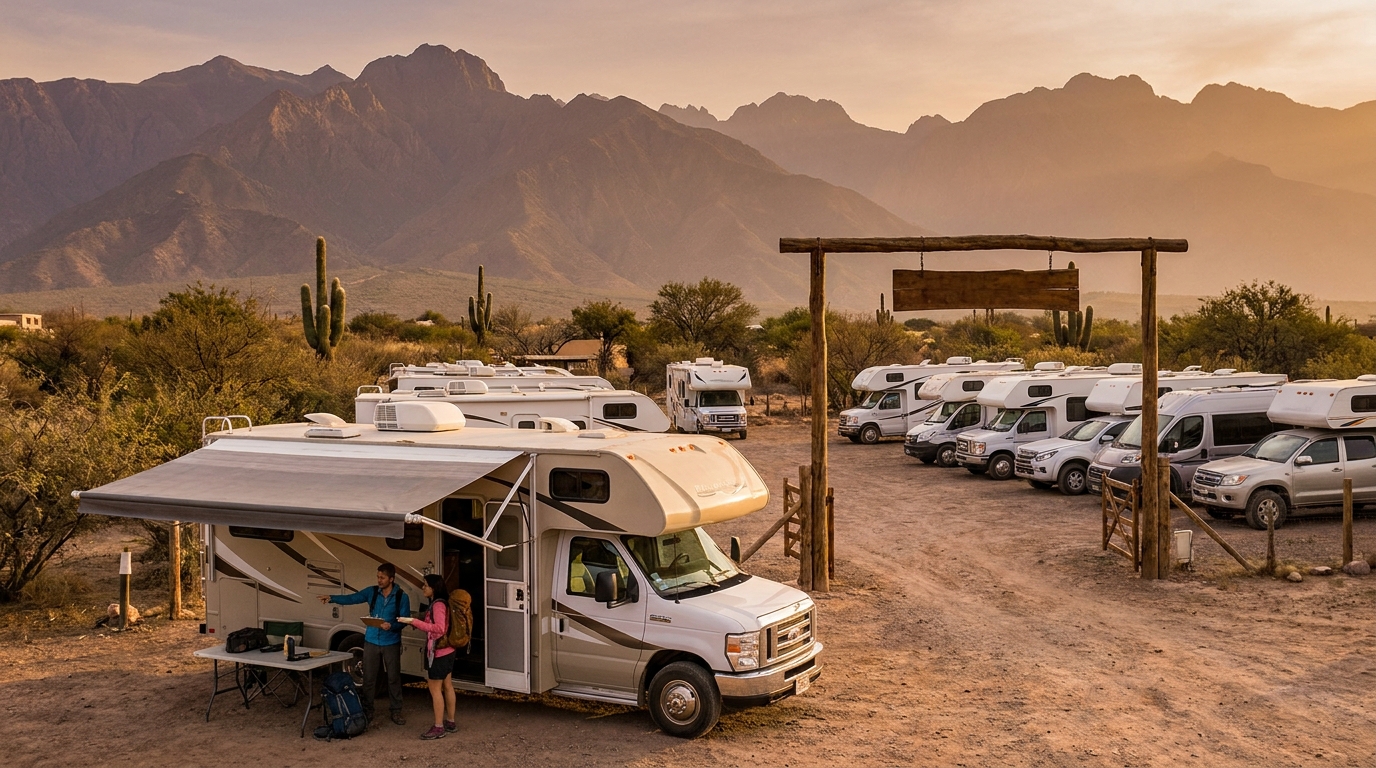
RV camping in South America offers a range of experiences across national park campgrounds, private RV parks, and wild camping, each with distinct features and regulations. National park campgrounds typically provide basic facilities, such as cold showers and pit toilets, set amidst spectacular natural settings, usually requiring an entrance fee and sometimes a separate camping fee. Private campgrounds, while less common than in North America, often near tourist hubs, offer more amenities like hot showers, electricity (typically 220V), and sometimes Wi-Fi. Wild camping, or boondocking, is widely practiced and generally tolerated in remote areas, especially in countries like Argentina and Chile, but it is crucial to prioritize safety, adhere strictly to "leave no trace" principles, and be aware that local regulations can vary significantly.Featured RV Park or Campground in South America
When selecting an RV park in South America, prioritize establishments that offer security, essential hookups, and consistently positive reviews regarding their amenities and location. An ideal RV park provides secure perimeter fencing and access to 220V electrical and water hookups, along with waste disposal facilities. Many travelers seek comfort and peace of mind, especially after a day of exploring. A strategically located park, often near local attractions or critical resupply points, offers convenient access to services while serving as a safe base for your adventures. Always remember that availability and quality can vary, so calling ahead for current conditions is a smart move.Hookups & Amenities - What to Expect
You can expect a wide range of hookup availability and amenities at campgrounds across South America, from very basic sites to those that are reasonably well-equipped. Electrical hookups are common in private campgrounds, typically supplying 220V power, so travelers from regions with different standards should bring appropriate European-style plug adapters. Most established RV parks offer water access and dump stations for grey and black water, though verifying potable water quality or bringing a filter is always a good idea. Wi-Fi can be unreliable or slow, particularly outside major urban centers, and conveniences like laundry facilities or hot showers are often considered amenities, not standard provisions, especially at national park sites.Booking Windows & Reservations in South America
For RV camping in South America, a balance between advance planning and spontaneity is often beneficial, with reservations generally recommended for peak season or popular national parks. Travelers who like to plan everything in advance should book campsites ahead, particularly for high-demand periods such such as national holidays or during the southern hemisphere's summer months (December-February). For spontaneous adventurers, many national park campgrounds, in countries like Argentina and Chile, operate with a significant portion (sometimes 70-75%) of their spots available on a first-come, first-served basis. This means you will almost certainly find a spot, even if it's not at your first choice. Always remember to call ahead to confirm availability and conditions, especially for smaller or more remote campgrounds, before embarking on long drives.Nearby Supermarkets & Resupply Points
Resupplying your rented RV in South America is generally straightforward due to a network of supermarkets and local markets found primarily in towns and cities. Major supermarket chains like Jumbo (Argentina, Chile), Coto (Argentina), Tottus (Chile, Peru), and Exito (Colombia) are reliable sources for groceries and essential household items. In smaller towns, local 'mercados' offer fresh produce, meats, and regional specialties, providing an authentic shopping experience, though the selection might be limited compared to larger stores. Strategic planning of your route to include stops in towns with larger supermarkets is crucial for maintaining provisions, as distances between resupply points can be considerable in remote areas. On RV PLANET routes, you can easily itemize and track every expense, including groceries, for seamless budgeting.Best RV Class for Camping in South America
For navigating South America's diverse road conditions and seeking cost-effective camping, smaller, more maneuverable RV classes like Class B Camper Vans or Class SI Semi-integrated vehicles are generally recommended. Bandana's Class B Camper Vans, averaging 5.8 meters in length and sleeping 3-4 people, are ideal for boondocking and handling rougher roads due to their compact size and superior fuel efficiency, typically consuming 8-10 Liters/100 km. Class SI Semi-integrated RVs, with an average length of 6.9 meters and sleeping 4-5 people, offer a good balance of comfort and agility for established campgrounds and some off-road excursions, consuming around 10-11 Liters/100 km. Larger rented RVs, such as Class C Alcove or Class A Integrated motorhomes, can be more challenging on narrow roads, mountain passes, and with fuel availability, making smaller classes more suitable for the adventurous traveler focused on flexible camping options.How to Save on Campgrounds in South America
To save money on RV camping in South America, wise travelers leverage discount programs, opt for off-peak travel, and choose economical campground types. Seek out specialized campground discount cards or memberships, sometimes available through rental agencies or local associations, which can provide significant savings at participating parks. Traveling during the shoulder season (e.g., spring or autumn in Patagonia) often translates to lower rates and fewer crowds, compared to the bustling peak summer months. Prioritize municipal or regional campgrounds over private resorts, as they are typically less expensive, and consider wild camping where safe and permissible to eliminate nightly fees entirely. Our article on "Cheap RV Rental in South America - Budget Guide 2026" offers more tips for budget-conscious travel.What is the 3-3-3 rule for RVs?
The 3-3-3 rule for RVs is a popular recommendation for safe and enjoyable road trips, suggesting you travel no more than 300 miles (approximately 480 km) in a day, stop driving by 3 PM, and stay at least 3 nights in one location. This guideline helps enhance safety by preventing late-night driving and reducing driver fatigue, which is particularly important on South America's sometimes challenging and unfamiliar roads. Adhering to the 3 PM stop time provides ample daylight for setting up camp and safely navigating new surroundings. Staying for three nights minimizes the constant packing and unpacking, contributing to a more relaxed travel experience and potentially reducing fuel costs associated with frequent movements. For more road safety advice, refer to "Winter RV Driving in South America - Safety Guide 2026".What is the cheapest safe South American country to visit?
While "cheapest" and "safest" are subjective and can fluctuate by region within a country, nations like Ecuador, Bolivia, and parts of Peru are frequently noted for offering lower travel costs in South America. Bolivia, in particular, is celebrated for its affordability concerning food, transportation, and accommodation, though it requires careful planning for safety, especially in larger cities. Conversely, Uruguay and Chile generally boast higher safety standards and better infrastructure, but often come with a higher price tag for RV travel, including increased fuel and campsite expenses. Thoroughly researching specific routes and current local conditions is essential before your trip, as safety and costs can vary, influencing the overall RV travel experience.Where can I park my RV without paying?
Parking your rented RV without paying in South America often involves wild camping, also known as boondocking, in remote or informally tolerated areas, though security should always be your primary concern. Common options include secluded spots along secondary roads, certain national park areas where wild camping is permitted (sometimes requiring a park entry fee), and occasionally spacious parking lots at gas stations or truck stops, always with permission. It is critical to prioritize safety by researching locations in advance, seeking recommendations from locals, and avoiding poorly lit or isolated urban areas. Always practice 'leave no trace' principles, respect private property, and be aware that specific laws regarding overnight parking can vary significantly by country and local municipality.What is the 10 year RV rule?
The '10-year RV rule' is an unofficial guideline, primarily applied by some private RV parks in North America, which restricts entry to recreational vehicles older than 10 years to maintain aesthetic standards, but this rule is rarely enforced in South America. In South America, the focus for RV travel shifts from a vehicle's age or aesthetics to its reliability, ruggedness, and mechanical soundness, given the demanding road conditions and potential for remote travel. Travelers across the continent are more concerned with a rented motorhome's ability to handle diverse terrains and its overall maintenance, rather than its manufacturing date. Therefore, an older, well-maintained rented RV is generally accepted at campgrounds throughout South America, making this 'rule' largely irrelevant for continental adventures.Are there RV parks in the country of Panama?
Yes, Panama does offer a limited number of RV parks, predominantly found along popular tourist routes and near major cities, serving as a crucial gateway for travelers moving between Central and South America. While not as extensive or numerous as the RV infrastructure found in North America, these parks typically provide essential services like hookups and security, catering to the needs of overlanders and RV enthusiasts. Key areas for RV parks often include locations close to the Panama Canal, along the Pacific coast, and within reach of major natural attractions. Travelers should thoroughly research specific locations and consider booking ahead, especially during peak travel seasons, as availability can be limited.What You Shouldn't Miss
- **Explore Patagonia's iconic routes:** Drive a rented campervan along Argentina's Ruta 40 or Chile's Carretera Austral, offering unparalleled access to glaciers, mountains, and wildlife.
- **Visit Iguazu Falls (Argentina/Brazil):** Camp near one of the world's most spectacular waterfalls, ensuring you have ample time to explore both the Argentine and Brazilian sides.
- **Discover the Atacama Desert (Chile):** Experience otherworldly landscapes, active geysers, and incredible stargazing from your rented motorhome in one of the driest places on Earth.
- **Hike in Torres del Paine National Park (Chile):** Base your RV in a nearby campground and embark on world-class treks around granite peaks and turquoise lakes.
- **Experience the Salar de Uyuni (Bolivia):** Drive across the world's largest salt flat, but be prepared for extreme conditions and ensure your rented vehicle is equipped for the unique environment.
- **Enjoy coastal drives in Brazil:** Explore the stunning beaches and vibrant towns of Brazil's coastline with your rented RV, offering a different flavor of South American adventure.
Final Thoughts
Embarking on a cheap RV camping adventure in South America is an incredible opportunity to connect with stunning natural beauty and vibrant cultures without breaking the bank. From the glacial fjords of Patagonia to the lush Amazon rainforest, a rented motorhome or campervan provides unmatched freedom and flexibility. Remember to plan slowly, savoring each stop for 3-5 days, and immerse yourself in the local experiences. With Bandana Caravan, you have a partner dedicated to full transparency and support before and after your booking, ensuring your journey is as smooth as possible. We provide the tools and expertise, so you can focus on making unforgettable memories. Whether you're a couple seeking a romantic RV driving route plan or a family with kids looking for a budget-friendly adventure, South America awaits. So, are you ready to hit the road? Explore your options for an affordable and amazing RV trip across South America. Discover top destinations, planning tips, all in one place!On the routes offered through RV PLANET routes, you can itemize and track every expense along the way for easy budgeting.