In This Guide
- Can You Drive an RV in Scandinavia? License & Age Rules
- Road Conditions & Terrain in Scandinavia
- RV Size Limits, Bridges & Restricted Zones
- Fuel: Diesel vs. Petrol & Cost per 100 km
- Tolls, Vignettes & Border Rules
- Driving Tips for RV Rental Travelers
- Recommended RV Class for Scandinavia Roads
- Should I Choose a Compact Van Instead of a Large RV in Scandinavia?
- Can I Park Anywhere? Free & Wild Camping Rules in Scandinavia
- Can I Drive an RV Into the City Center? Heights, Tunnels & Local Signage
- Is it legal to sleep in your car in Sweden?
- Is Norway RV friendly?
- Are Americans allowed to drive in Sweden?
- What is the hardest country in Europe to get a driver's license?
- What is the 3-3-3 rule for RV travel?
- What is the 333 rule for campervan?
- Is Sweden campervan friendly?
- What is the 3-3-3 rule for RV living?
- Can you get temporary RV insurance?
- Who has the least expensive RV insurance?
- What You Shouldn't Miss
- Why Book with Bandana Caravan
- Final Thoughts
- Frequently Asked Questions
Scandinavia, with its breathtaking fjords, serene forests, and vibrant cities, offers an unparalleled adventure for those who choose to explore it by motorhome. A shorter RV trip through this region means you can experience stunning landscapes and rich culture at your own pace, with the freedom to discover hidden gems. Whether you're planning a week-long journey or an extended road trip, navigating Scandinavia in a rented RV is an incredibly rewarding experience. For live availability and current prices, start with our RV Rental Scandinavia - Complete Guide 2026 guide.
Can You Drive an RV in Scandinavia? License & Age Rules
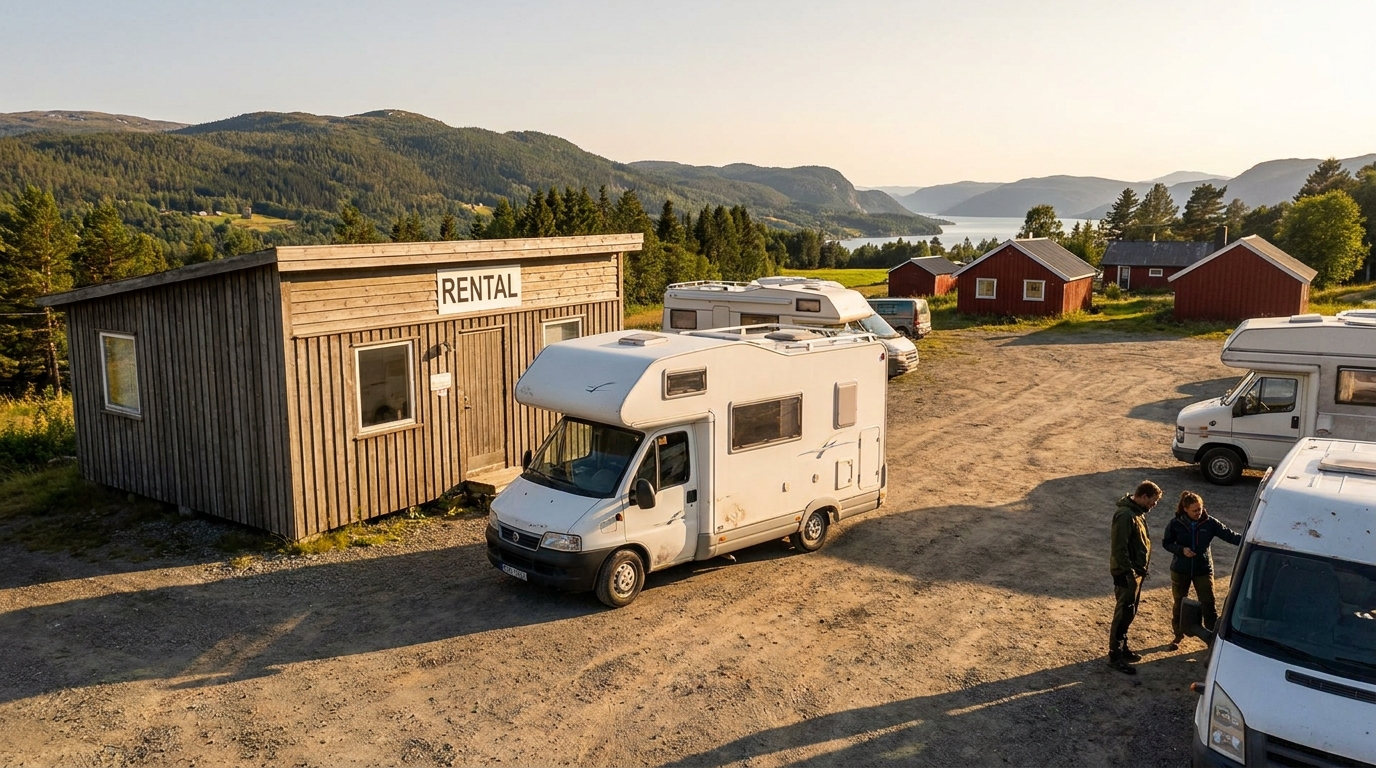
Most international travelers can drive a rented RV or campervan in Scandinavia, provided they hold a valid driver's license and meet minimum age requirements, typically 21 years old, with no young driver surcharges or vehicle class restrictions based on age. For RVs up to 3,500 kg (7,700 lbs) Gross Vehicle Weight Rating (GVWR), a standard B category (car) license is usually sufficient, which covers most rental campervans and smaller semi-integrated motorhomes, such as the "Active Classic" model. Larger RVs exceeding 3,500 kg GVWR, like some Class C Alcoves or Class A Integrated models, may require a C1 or C category license, so always check the specific rental RV's weight and your license category. Non-EU/EEA drivers, including Americans, should carry an International Driving Permit (IDP) alongside their national license, as it translates your license into multiple languages and is recommended in most Scandinavian countries, though not always mandatory. Ensure your driving license is valid for the entire rental period and that all listed drivers meet the rental company's age and experience criteria. Our team of true RV specialists is always here to help clarify any licensing questions before you book your adventure.
Road Conditions & Terrain in Scandinavia
Scandinavia boasts excellent road conditions, featuring well-maintained highways and incredibly scenic routes, although the terrain varies significantly from the flat Danish countryside to the mountainous Norwegian fjords and vast Swedish forests. Expect smooth asphalt on main routes, but be prepared for gravel roads in more remote or rural areas, particularly when accessing natural sights or some campsites. Mountain passes, especially in Norway, feature winding roads, steep inclines, and occasional narrow sections, requiring slower driving and careful attention, which is ideal for a scenic RV journey where the journey itself is the destination. Drive slowly and carefully, and you can drive almost anywhere without issues. No need to stress - just use common sense and pay attention. City driving is generally manageable, but can involve narrower streets and denser traffic; a shorter RV rental trip typically encourages exploring natural landscapes rather than focusing solely on urban centers. Winter travel, roughly from October to April, presents unique challenges, including snow, ice, and reduced daylight, necessitating proper winter tires (often studded) and vehicle preparation for heating systems.
RV Size Limits, Bridges & Restricted Zones
Scandinavia generally accommodates most RV sizes, but drivers should be mindful of vehicle dimensions for specific situations like ferry travel, city access, and some mountain passes. Standard rented RVs typically do not encounter issues with bridge height limits on major roads; however, older tunnels or multi-story car parks in city centers may have height restrictions, usually posted at 2.5m - 3.5m, so always observe signage. Environmental zones (Miljözoner/Miljøsoner) are present in major cities like Stockholm, Gothenburg, Oslo, and Bergen, potentially restricting older or higher-emission vehicles, though most modern rental RVs meet these standards. When planning ferry crossings, especially for Norway's fjords or island hopping, booking in advance is crucial, and providing accurate RV length and height ensures correct pricing and space allocation. Some smaller, historic town centers or very remote roads might be more comfortably navigated with a compact campervan, but main tourist routes are typically RV-friendly and welcoming to all motorhome sizes, as explored in our "RV Travel Guide to Scandinavia - Tips and Top Spots 2026" itinerary.
Fuel: Diesel vs. Petrol & Cost per 100 km
Most rental motorhomes and campervans in Scandinavia run on diesel fuel, which is widely available at service stations across the region. Based on Bandana's global fleet averages, a Class SI - Semi-integrated RV (like the "2 Berth Tamar") typically consumes 10-11 Liters/100 km, while a Class B - Camper Van (such as the "Combi Van") uses 8-10 Liters/100 km, and a larger Class C - Alcove or Class A - Integrated RV (like the "MHC28" with its 42 kg gas bottle) consumes around 10-12 Liters/100 km. Fuel prices in Scandinavia are among the highest in Europe; as of 2026, expect to pay significantly more per liter than in many other countries, impacting your overall RV rental budget. To estimate your fuel cost, multiply your expected distance by the average consumption (e.g., 10 L/100 km) and the current fuel price per liter, budgeting for around €15-€25 per 100 km depending on vehicle and fuel prices. While some RV rental companies may offer fuel discount cards or programs, inquire about these when booking your RV rental. For detailed budgeting across your entire trip, remember that RV PLANET routes allow you to itemize and track every expense. On the routes offered through RV PLANET routes, you can itemize and track every expense along the way for easy budgeting.
Tolls, Vignettes & Border Rules
Scandinavia does not use a traditional vignette system like some Central European countries; instead, tolls are common, particularly in Norway, and city congestion charges apply in major urban centers. Norway operates an extensive automatic toll system (AutoPASS), where tolls are registered electronically via a camera or a tag in the vehicle, with invoices often sent to the rental company or registered plate owner, reflecting full transparency in costs. Sweden imposes congestion charges (Trängselskatt) in Stockholm and Gothenburg, and Denmark has a congestion charge in Copenhagen, typically applying to vehicles entering or exiting designated zones during peak hours. Border crossings between Denmark, Sweden, and Norway are generally open and unstaffed due to the Schengen Agreement, allowing for seamless travel, though random customs checks can occur. Most Bandana partner suppliers, like El Monte, Cruise America, Apollo, and Britz, offer services like pre-purchased toll passes or handling of toll invoices, which can simplify your journey and help avoid potential fines for missed payments.
Driving Tips for RV Rental Travelers
When embarking on your shorter RV journey through Scandinavia, thoughtful planning can make all the difference. Even for a week-long trip, outline key destinations and potential overnight stops, especially if traveling with family, aiming for a relaxed pace of max 100-150 km per day and breaks every 2-3 hours. Remember that Scandinavia is known for higher costs; budget for elevated fuel prices, campsite fees (averaging €30-€60/night), and potential ferry costs. Understanding the local toll systems is crucial: familiarize yourself with Norway's AutoPASS and city congestion charges in Sweden and Denmark, and clarify how your rental company handles these payments to avoid unexpected bills. While the 'Allemansrätten' (Right to Roam) in Sweden, Norway, and Finland offers broad wild camping rights for tents, it does not generally extend to motorized vehicles like RVs; always use designated campsites or obtain explicit permission for private land to ensure you park legally and respectfully. Finally, prepare for the season: for summer, embrace the Midnight Sun and book popular campsites in advance, while for shoulder seasons, be ready for rapidly changing weather, shorter daylight hours, and potential need for winterization features like studded tires and heating systems.
Recommended RV Class for Scandinavia Roads
For a rewarding RV rental experience in Scandinavia, Class SI - Semi-integrated motorhomes or Class B - Camper Vans are highly recommended due to their excellent balance of comfort, maneuverability, and fuel efficiency. Class B - Camper Vans, with an average length of 5.8 meters from Bandana's fleet (e.g., "Active Pop Top"), offer a compact size ideal for navigating narrower roads, ferry boarding, and easier parking, while still providing sleeping for 2-3 adults. Class SI - Semi-integrated RVs, averaging 6.9 meters in length (e.g., "K3"), provide more interior space and amenities suitable for small families or couples seeking extra comfort without the bulk of larger models, making them versatile for Scandinavia's varied roads. While larger Class C - Alcove and Class A - Integrated RVs (averaging 7.5 meters, like the "MHC24") are also suitable for Scandinavia's main roads, their increased length and height can make maneuvering in smaller towns or some ferry docks more challenging. The ground clearance and robust build of most European rental RVs, including Semi-integrated and Camper Vans, are well-suited for both paved highways and occasional gravel roads found in scenic Scandinavian areas.
Should I Choose a Compact Van Instead of a Large RV in Scandinavia?
While a compact campervan can offer slightly easier maneuverability in tight urban centers or very narrow mountain passes, a larger RV generally presents no significant driving issues on most Scandinavian roads, with comfort and indoor space often outweighing minimal maneuverability benefits for your travel group. Drive slowly and carefully, and you can drive almost anywhere without issues. No need to stress - just use common sense and pay attention. Opting for a larger RV, such as a Semi-integrated or Alcove model, provides significantly more living space, a full bathroom, and a proper kitchen, enhancing comfort, especially during inclement weather or if you plan to self-cater frequently over your journey. For cooking delicious meals on board, check out our RV-friendly recipes playlist. Compact vans excel in fuel efficiency and fitting into standard parking spaces, which can be an advantage if your trip focuses heavily on city exploration or you anticipate frequent stops in smaller villages. However, for families or groups desiring separate sleeping areas, more storage, or the ability to comfortably spend extended time inside the vehicle, the amenities of a larger RV typically offer a more satisfying and less cramped travel experience across Scandinavia. Consider your travel style: if you prioritize nimble driving and minimalist living, a compact van is a good choice; if comfort, space, and full amenities are key for your journey, a larger RV remains highly suitable for Scandinavian travel, as detailed in "RV Rental Europe - Complete Guide 2026".
Can I Park Anywhere? Free & Wild Camping Rules in Scandinavia
No, you generally cannot park a rented RV anywhere for free overnight in Scandinavia; while the 'Allemansrätten' (Right of Public Access) allows wild camping for tents in Sweden, Norway, and Finland, this right generally does not extend to motorized vehicles like RVs and campervans for overnight stays. In Sweden and Norway, RVs are generally prohibited from parking overnight on private land without explicit permission from the landowner, and within sight of dwellings, even if the land is uncultivated. Designated public rest stops or car parks may allow short overnight stays if there are no 'no overnight parking' signs, but these are not considered wild camping and usually lack amenities. For legal and responsible overnight parking, RVers in Scandinavia should utilize official campsites, which are plentiful and well-equipped, offering facilities for waste disposal, fresh water, and electricity. Rules vary by region and municipality, so always check local regulations and follow local law before parking overnight, ensuring minimal environmental impact and respect for local communities.
Can I Drive an RV Into the City Center? Heights, Tunnels & Local Signage
Yes, you can almost always drive a rented RV into city centers in Scandinavia, but drivers must pay close attention to local signage regarding environmental zones, congestion charges, height limits, and residents-only streets. Major Scandinavian cities like Oslo, Stockholm, and Gothenburg implement environmental zones (Miljözoner/Miljøsoner) that may restrict older, higher-emission vehicles; however, most modern rental RVs typically meet current emission standards. Congestion charges are in effect in cities such as Oslo, Bergen, Stockholm, Gothenburg, and Copenhagen, which are usually billed automatically to the vehicle's license plate and managed by the rental company or an AutoPASS tag. While main routes generally accommodate RVs, be wary of older, lower tunnels, narrow streets in historic districts, and multi-story car parks which often have height restrictions (e.g., 2.2m to 3.5m), always obeying posted limits. Always observe local road signs, which clearly indicate restrictions such as 'no entry' for specific vehicle types, weight limits, height limits, or areas reserved for resident parking only, to ensure smooth navigation, just like you would on an extended trip using one of our RV PLANET routes.
Is it legal to sleep in your car in Sweden?
Sleeping in your car or a rented campervan in Sweden is generally permissible at designated rest areas, public car parks, or along public roads where there are no 'no overnight parking' or 'no camping' signs, provided you do not infringe on private property or local regulations. While Sweden's 'Allemansrätten' (Right of Public Access) broadly permits free access to nature, it primarily applies to non-motorized activities like walking and tenting and does not extend to parking or sleeping in motorized vehicles on private land without permission. It is crucial to be respectful of the environment, avoid disturbing residents, and ensure your vehicle is parked safely and legally, without blocking access or causing nuisance. For a comfortable and amenity-rich overnight stay, official campsites are recommended, offering facilities for waste disposal, fresh water, and electricity. Always double-check local signage and municipal rules, as specific areas, especially near popular tourist spots or residential zones, may have stricter overnight parking prohibitions, as discussed in our "RV Rental Deals in Scandinavia - Latest Offers 2026" guide.
Is Norway RV friendly?
Norway is highly RV friendly, boasting excellent road infrastructure, stunning scenic routes, and numerous well-equipped campsites, making it an ideal destination for an RV vacation. The country's extensive network of roads, including the famous National Tourist Routes, is designed for scenic driving and accommodates RVs of various sizes, though some mountain passes can be winding and narrow, requiring careful navigation. Norway has a vast array of campsites located in picturesque settings, from fjord-side locations to mountain valleys, providing essential services like electricity, water, waste disposal, and sanitary facilities. RV travelers should be aware of Norway's extensive automatic toll system (AutoPASS), which applies to many roads, bridges, and tunnels, and plan for ferry crossings that are often necessary to navigate the fjords. While 'Allemansrätten' permits short-term wild camping with tents, it does not generally apply to RVs in the same way; official campsites or designated parking spots are the legal and responsible choice for overnight stays, a topic often covered in our "Luxury RV Rental in Scandinavia - Premium Prices 2026" itineraries.
Are Americans allowed to drive in Sweden?
Yes, Americans are allowed to drive in Sweden, provided they carry a valid U.S. driver's license alongside an International Driving Permit (IDP). An IDP is a legal requirement for non-EU/EEA citizens driving in Sweden and should be obtained in your home country before departure. The U.S. driver's license alone is generally valid for up to one year from the date of entry into Sweden, but the IDP serves as an official translation and is essential for both legal compliance and ease of communication with authorities. Ensure your U.S. license is current and in good standing, as rental companies will verify this information, and be aware that the minimum age for RV rentals is typically 21 years old. It's also advisable to carry your passport with you while driving as identification.
What is the hardest country in Europe to get a driver's license?
While there's no single definitive 'hardest' country, Finland is often cited as one of the most challenging countries in Europe to obtain a driver's license due to its rigorous and extensive driving education system. Finnish driving courses involve a significant number of mandatory theory lessons, practical driving hours, and a special 'risk identification training' that focuses on hazard perception and driving in challenging conditions. The cost and time commitment for obtaining a license in Finland are also among the highest in Europe, contributing to its reputation for difficulty. However, this refers to *obtaining* a license as a resident, not *driving* with an existing foreign license; for visitors with valid international licenses, driving in Finland, like other Scandinavian countries, is straightforward and a standard car driver's license is sufficient for all motorhome classes. Scandinavia generally prioritizes high driving standards and road safety, which is reflected in their robust licensing processes for residents.
What is the 3-3-3 rule for RV travel?
The '3-3-3 rule' for RV travel is a widely adopted guideline that advises RVers to drive no more than 300 miles (approximately 480 kilometers) in a day, arrive at their destination by 3 PM, and stay for at least 3 nights. This rule is designed to promote a relaxed and enjoyable travel pace, preventing driver fatigue and allowing ample time to explore destinations without feeling rushed. Driving no more than 300 miles (or 300 km) ensures reasonable travel times, particularly for larger vehicles that move slower and require more frequent stops. Arriving by 3 PM provides sufficient daylight to set up camp, explore the immediate surroundings, and relax before dusk, especially useful in regions with varying daylight hours like Scandinavia. Staying for at least 3 nights encourages deeper engagement with a location, offering opportunities for local excursions, relaxing, and avoiding the constant packing and unpacking inherent in daily moves, aligning with our philosophy to "Travel slowly - max 100-150 km per day."
What is the 333 rule for campervan?
The '333 rule' for campervan travel is the same as the '3-3-3 rule' for RV travel, recommending driving no more than 300 miles (approximately 480 kilometers) daily, arriving at your campsite by 3 PM, and staying for a minimum of 3 nights at each stop. This guideline applies equally to campervans, promoting a more leisurely and less stressful travel experience by ensuring sufficient rest for the driver and ample time to enjoy each destination in Scandinavia. For a shorter campervan rental trip, the '333 rule' can be adapted: consider shorter daily distances (e.g., 100-200 km) given the trip duration, and perhaps aim to stay at least 2 nights at a primary destination. Adhering to the arrival by 3 PM aspect helps secure good spots at popular Scandinavian campsites, especially during peak season, and allows time for exploring local attractions. The 'stay for at least 3 nights' component, while flexible for a shorter journey, encourages minimizing constant movement to maximize relaxation and local immersion.
Is Sweden campervan friendly?
Sweden is very campervan friendly, offering excellent infrastructure for road trips, a comprehensive network of campsites, and breathtaking natural landscapes ideal for exploring by a rented campervan. The country boasts high-quality roads and plenty of scenic routes, including the iconic High Coast, which are well-suited for campervan travel, although some remote areas may feature gravel roads. Numerous well-maintained campsites across Sweden provide essential services for campervans, including electricity, fresh water, waste disposal, and often amenities like showers and cooking facilities. While Sweden's 'Allemansrätten' (Right of Public Access) allows for wild camping with tents, it generally does not extend to motorized vehicles; therefore, overnight parking in a campervan is usually restricted to designated campsites or legal overnight parking areas. Be aware of environmental zones in major cities like Stockholm and Gothenburg, which may apply restrictions to older vehicles, though most modern rental campervans are compliant, as explored in our "Cheap RV Rental in Scandinavia - Budget Guide 2026".
What is the 3-3-3 rule for RV living?
The '3-3-3 rule' for RV living is the same principle as for RV travel, advising long-term RVers to drive no more than 300 miles (approximately 480 kilometers) in a day, arrive at their next location by 3 PM, and stay for a minimum of 3 nights. This rule is particularly beneficial for RV living as it minimizes the stress and fatigue associated with constant moving, allowing for a more sustainable and enjoyable nomadic lifestyle. For those embracing long-term RV travel, adhering to the 300-mile limit helps manage fuel consumption and avoid excessive wear and tear on the vehicle. The 3 PM arrival time is crucial for securing preferred spots at campgrounds, setting up utilities, and having daylight to address any issues or simply relax in the new environment. Staying for at least 3 nights fosters a sense of community, provides opportunities to explore the local area in depth, and reduces the frequency of packing up and relocating, promoting a more settled routine for RV travel. Remember, Bandana RV specializes in rentals for vacations, not full-time RV living.
Can you get temporary RV insurance?
Yes, you can get temporary RV insurance, and it is typically included as part of your rental agreement when you rent a motorhome or campervan in Scandinavia. Most RV rental companies, including Bandana's direct partners like El Monte, Cruise America, Apollo, and Britz, provide basic third-party liability insurance as standard, which is legally required and covers damages to other vehicles or property in an accident. For additional protection and travel with peace of mind, rental companies usually offer optional supplementary insurance packages, such as collision damage waiver (CDW) or comprehensive coverage, which reduce your deductible (excess) in case of damage to the rental RV. You can upgrade to a top-level deductible for extra peace of mind. It is advisable to review the insurance terms thoroughly and consider purchasing additional coverage, especially if your personal car insurance or credit card does not extend to international RV rentals. For any RV rental duration, ensuring adequate insurance coverage is crucial for peace of mind, protecting against unforeseen incidents and potentially high repair costs.
Who has the least expensive RV insurance?
Determining who offers the 'least expensive' RV insurance is highly dependent on individual factors such as the driver's age, driving record, RV type, location, and desired coverage, making direct comparisons difficult. For a shorter RV rental in Scandinavia, the insurance cost is typically integrated into the overall rental price, with basic third-party liability included and optional collision damage waiver (CDW) available at an additional daily rate. When renting, compare the insurance options provided by different rental companies and check if your existing travel insurance, personal auto insurance, or credit card benefits offer any relevant coverage for RV rentals abroad. Focus on finding the *best value* insurance that adequately covers your risks, rather than solely the cheapest, as insufficient coverage can lead to significant out-of-pocket expenses in case of an accident. Always read the fine print regarding deductibles, exclusions, and what specific types of incidents are covered, especially for foreign travel.
What You Shouldn't Miss
- Norwegian Fjords: Drive the Atlantic Ocean Road or the Trollstigen, taking a ferry across the iconic fjords.
- Swedish Lapland: Experience the Midnight Sun or the Northern Lights, depending on the season, and immerse yourself in Sámi culture.
- Danish Coastlines: Explore charming coastal towns like Skagen and enjoy the flat, scenic cycling routes.
- Stockholm Archipelago: Take a boat trip or find an RV-friendly campsite on one of the thousands of islands.
- Avi Bandana's Top 5 Adventures: Looking for expert insights from Avi Bandana? For inspiration, check out the recommendations in our RV PLANET routes.
Final Thoughts
Scandinavia truly is a dream destination for a motorhome or campervan adventure. Imagine the freedom of waking up to a different stunning view each morning, whether it's a tranquil fjord, a dense forest, or a charming coastal village. With a rented RV, you're not just traveling; you're immersing yourself in the rich culture and breathtaking natural beauty that this unique region has to offer. We believe in slow travel, allowing you to connect deeply with the places you visit.
We're here to support you every step of the way, from comparing prices and finding the perfect motorhome for your needs to ensuring you have all the information for a smooth journey. Our commitment to full transparency and genuine support means you can plan your Scandinavian road trip with confidence, knowing there are no hidden fees and real people are behind your booking.
So, why wait? Start dreaming up your perfect itinerary for a memorable Scandinavian journey. The open roads and incredible sights of this Nordic wonderland are calling your name. Discover top destinations, planning tips, all in one place!
In This Guide
- Can You Drive an RV in Scandinavia? License & Age Rules
- Road Conditions & Terrain in Scandinavia
- RV Size Limits, Bridges & Restricted Zones
- Fuel: Diesel vs. Petrol & Cost per 100 km
- Tolls, Vignettes & Border Rules
- Driving Tips for RV Rental Travelers
- Recommended RV Class for Scandinavia Roads
- Should I Choose a Compact Van Instead of a Large RV in Scandinavia?
- Can I Park Anywhere? Free & Wild Camping Rules in Scandinavia
- Can I Drive an RV Into the City Center? Heights, Tunnels & Local Signage
- Is it legal to sleep in your car in Sweden?
- Is Norway RV friendly?
- Are Americans allowed to drive in Sweden?
- What is the hardest country in Europe to get a driver's license?
- What is the 3-3-3 rule for RV travel?
- What is the 333 rule for campervan?
- Is Sweden campervan friendly?
- What is the 3-3-3 rule for RV living?
- Can you get temporary RV insurance?
- Who has the least expensive RV insurance?
- What You Shouldn't Miss
- Why Book with Bandana Caravan
- Final Thoughts
- Frequently Asked Questions
Scandinavia, with its breathtaking fjords, serene forests, and vibrant cities, offers an unparalleled adventure for those who choose to explore it by motorhome. A shorter RV trip through this region means you can experience stunning landscapes and rich culture at your own pace, with the freedom to discover hidden gems. Whether you're planning a week-long journey or an extended road trip, navigating Scandinavia in a rented RV is an incredibly rewarding experience. For live availability and current prices, start with our RV Rental Scandinavia - Complete Guide 2026 guide.
Can You Drive an RV in Scandinavia? License & Age Rules
Most international travelers can drive a rented RV or campervan in Scandinavia, provided they hold a valid driver's license and meet minimum age requirements, typically 21 years old, with no young driver surcharges or vehicle class restrictions based on age. For RVs up to 3,500 kg (7,700 lbs) Gross Vehicle Weight Rating (GVWR), a standard B category (car) license is usually sufficient, which covers most rental campervans and smaller semi-integrated motorhomes, such as the "Active Classic" model. Larger RVs exceeding 3,500 kg GVWR, like some Class C Alcoves or Class A Integrated models, may require a C1 or C category license, so always check the specific rental RV's weight and your license category. Non-EU/EEA drivers, including Americans, should carry an International Driving Permit (IDP) alongside their national license, as it translates your license into multiple languages and is recommended in most Scandinavian countries, though not always mandatory. Ensure your driving license is valid for the entire rental period and that all listed drivers meet the rental company's age and experience criteria. Our team of true RV specialists is always here to help clarify any licensing questions before you book your adventure.
Road Conditions & Terrain in Scandinavia
Scandinavia boasts excellent road conditions, featuring well-maintained highways and incredibly scenic routes, although the terrain varies significantly from the flat Danish countryside to the mountainous Norwegian fjords and vast Swedish forests. Expect smooth asphalt on main routes, but be prepared for gravel roads in more remote or rural areas, particularly when accessing natural sights or some campsites. Mountain passes, especially in Norway, feature winding roads, steep inclines, and occasional narrow sections, requiring slower driving and careful attention, which is ideal for a scenic RV journey where the journey itself is the destination. Drive slowly and carefully, and you can drive almost anywhere without issues. No need to stress - just use common sense and pay attention. City driving is generally manageable, but can involve narrower streets and denser traffic; a shorter RV rental trip typically encourages exploring natural landscapes rather than focusing solely on urban centers. Winter travel, roughly from October to April, presents unique challenges, including snow, ice, and reduced daylight, necessitating proper winter tires (often studded) and vehicle preparation for heating systems.
RV Size Limits, Bridges & Restricted Zones
Scandinavia generally accommodates most RV sizes, but drivers should be mindful of vehicle dimensions for specific situations like ferry travel, city access, and some mountain passes. Standard rented RVs typically do not encounter issues with bridge height limits on major roads; however, older tunnels or multi-story car parks in city centers may have height restrictions, usually posted at 2.5m - 3.5m, so always observe signage. Environmental zones (Miljözoner/Miljøsoner) are present in major cities like Stockholm, Gothenburg, Oslo, and Bergen, potentially restricting older or higher-emission vehicles, though most modern rental RVs meet these standards. When planning ferry crossings, especially for Norway's fjords or island hopping, booking in advance is crucial, and providing accurate RV length and height ensures correct pricing and space allocation. Some smaller, historic town centers or very remote roads might be more comfortably navigated with a compact campervan, but main tourist routes are typically RV-friendly and welcoming to all motorhome sizes, as explored in our "RV Travel Guide to Scandinavia - Tips and Top Spots 2026" itinerary.
Fuel: Diesel vs. Petrol & Cost per 100 km
Most rental motorhomes and campervans in Scandinavia run on diesel fuel, which is widely available at service stations across the region. Based on Bandana's global fleet averages, a Class SI - Semi-integrated RV (like the "2 Berth Tamar") typically consumes 10-11 Liters/100 km, while a Class B - Camper Van (such as the "Combi Van") uses 8-10 Liters/100 km, and a larger Class C - Alcove or Class A - Integrated RV (like the "MHC28" with its 42 kg gas bottle) consumes around 10-12 Liters/100 km. Fuel prices in Scandinavia are among the highest in Europe; as of 2026, expect to pay significantly more per liter than in many other countries, impacting your overall RV rental budget. To estimate your fuel cost, multiply your expected distance by the average consumption (e.g., 10 L/100 km) and the current fuel price per liter, budgeting for around €15-€25 per 100 km depending on vehicle and fuel prices. While some RV rental companies may offer fuel discount cards or programs, inquire about these when booking your RV rental. For detailed budgeting across your entire trip, remember that RV PLANET routes allow you to itemize and track every expense.
Tolls, Vignettes & Border Rules
Scandinavia does not use a traditional vignette system like some Central European countries; instead, tolls are common, particularly in Norway, and city congestion charges apply in major urban centers. Norway operates an extensive automatic toll system (AutoPASS), where tolls are registered electronically via a camera or a tag in the vehicle, with invoices often sent to the rental company or registered plate owner, reflecting full transparency in costs. Sweden imposes congestion charges (Trängselskatt) in Stockholm and Gothenburg, and Denmark has a congestion charge in Copenhagen, typically applying to vehicles entering or exiting designated zones during peak hours. Border crossings between Denmark, Sweden, and Norway are generally open and unstaffed due to the Schengen Agreement, allowing for seamless travel, though random customs checks can occur. Most Bandana partner suppliers, like El Monte, Cruise America, Apollo, and Britz, offer services like pre-purchased toll passes or handling of toll invoices, which can simplify your journey and help avoid potential fines for missed payments.
Driving Tips for RV Rental Travelers
When embarking on your shorter RV journey through Scandinavia, thoughtful planning can make all the difference. Even for a week-long trip, outline key destinations and potential overnight stops, especially if traveling with family, aiming for a relaxed pace of max 100-150 km per day and breaks every 2-3 hours. Remember that Scandinavia is known for higher costs; factor in elevated fuel prices, campsite fees (averaging €30-€60/night), and potential ferry costs into your budget. Understanding the local toll systems is crucial: familiarize yourself with Norway's AutoPASS and city congestion charges in Sweden and Denmark, and clarify how your rental company handles these payments to avoid unexpected bills. While the 'Allemansrätten' (Right to Roam) in Sweden, Norway, and Finland offers broad wild camping rights for tents, it does not generally extend to motorized vehicles like RVs; always use designated campsites or obtain explicit permission for private land to ensure you park legally and respectfully. Finally, prepare for the season: for summer, embrace the Midnight Sun and book popular campsites in advance, while for shoulder seasons, be ready for rapidly changing weather, shorter daylight hours, and potential need for winterization features like studded tires and heating systems.
Recommended RV Class for Scandinavia Roads
For a rewarding RV rental experience in Scandinavia, Class SI - Semi-integrated motorhomes or Class B - Camper Vans are highly recommended due to their excellent balance of comfort, maneuverability, and fuel efficiency. Class B - Camper Vans, with an average length of 5.8 meters from Bandana's fleet (e.g., "Active Pop Top"), offer a compact size ideal for navigating narrower roads, ferry boarding, and easier parking, while still providing sleeping for 2-3 adults. Class SI - Semi-integrated RVs, averaging 6.9 meters in length (e.g., "K3"), provide more interior space and amenities suitable for small families or couples seeking extra comfort without the bulk of larger models, making them versatile for Scandinavia's varied roads. While larger Class C - Alcove and Class A - Integrated RVs (averaging 7.5 meters, like the "MHC24") are also suitable for Scandinavia's main roads, their increased length and height can make maneuvering in smaller towns or some ferry docks more challenging. The ground clearance and robust build of most European rental RVs, including Semi-integrated and Camper Vans, are well-suited for both paved highways and occasional gravel roads found in scenic Scandinavian areas.
Should I Choose a Compact Van Instead of a Large RV in Scandinavia?
While a compact campervan can offer slightly easier maneuverability in tight urban centers or very narrow mountain passes, a larger RV generally presents no significant driving issues on most Scandinavian roads, with comfort and indoor space often outweighing minimal maneuverability benefits for your travel group. Drive slowly and carefully, and you can drive almost anywhere without issues. No need to stress - just use common sense and pay attention. Opting for a larger RV, such as a Semi-integrated or Alcove model, provides significantly more living space, a full bathroom, and a proper kitchen, enhancing comfort, especially during inclement weather or if you plan to self-cater frequently over your journey. For cooking delicious meals on board, check out our RV-friendly recipes playlist. Compact vans excel in fuel efficiency and fitting into standard parking spaces, which can be an advantage if your trip focuses heavily on city exploration or you anticipate frequent stops in smaller villages. However, for families or groups desiring separate sleeping areas, more storage, or the ability to comfortably spend extended time inside the vehicle, the amenities of a larger RV typically offer a more satisfying and less cramped travel experience across Scandinavia. Consider your travel style: if you prioritize nimble driving and minimalist living, a compact van is a good choice; if comfort, space, and full amenities are key for your journey, a larger RV remains highly suitable for Scandinavian travel, as detailed in "RV Rental Europe - Complete Guide 2026".
Can I Park Anywhere? Free & Wild Camping Rules in Scandinavia
No, you generally cannot park a rented RV anywhere for free overnight in Scandinavia; while the 'Allemansrätten' (Right of Public Access) allows wild camping for tents in Sweden, Norway, and Finland, this right generally does not extend to motorized vehicles like RVs and campervans for overnight stays. In Sweden and Norway, RVs are generally prohibited from parking overnight on private land without explicit permission from the landowner, and within sight of dwellings, even if the land is uncultivated. Designated public rest stops or car parks may allow short overnight stays if there are no 'no overnight parking' signs, but these are not considered wild camping and usually lack amenities. For legal and responsible overnight parking, RVers in Scandinavia should utilize official campsites, which are plentiful and well-equipped, offering facilities for waste disposal, fresh water, and electricity. Rules vary by region and municipality, so always check local regulations and follow local law before parking overnight, ensuring minimal environmental impact and respect for local communities.
Can I Drive an RV Into the City Center? Heights, Tunnels & Local Signage
Yes, you can almost always drive a rented RV into city centers in Scandinavia, but drivers must pay close attention to local signage regarding environmental zones, congestion charges, height limits, and residents-only streets. Major Scandinavian cities like Oslo, Stockholm, and Gothenburg implement environmental zones (Miljözoner/Miljøsoner) that may restrict older, higher-emission vehicles; however, most modern rental RVs typically meet current emission standards. Congestion charges are in effect in cities such as Oslo, Bergen, Stockholm, Gothenburg, and Copenhagen, which are usually billed automatically to the vehicle's license plate and managed by the rental company or an AutoPASS tag. While main routes generally accommodate RVs, be wary of older, lower tunnels, narrow streets in historic districts, and multi-story car parks which often have height restrictions (e.g., 2.2m to 3.5m), always obeying posted limits. Always observe local road signs, which clearly indicate restrictions such as 'no entry' for specific vehicle types, weight limits, height limits, or areas reserved for resident parking only, to ensure smooth navigation, just like you would on an extended trip using one of our RV PLANET routes.
Is it legal to sleep in your car in Sweden?
Sleeping in your car or a rented campervan in Sweden is generally permissible at designated rest areas, public car parks, or along public roads where there are no 'no overnight parking' or 'no camping' signs, provided you do not infringe on private property or local regulations. While Sweden's 'Allemansrätten' (Right of Public Access) broadly permits free access to nature, it primarily applies to non-motorized activities like walking and tenting and does not extend to parking or sleeping in motorized vehicles on private land without permission. It is crucial to be respectful of the environment, avoid disturbing residents, and ensure your vehicle is parked safely and legally, without blocking access or causing nuisance. For a comfortable and amenity-rich overnight stay, official campsites are recommended, offering facilities for waste disposal, fresh water, and electricity. Always double-check local signage and municipal rules, as specific areas, especially near popular tourist spots or residential zones, may have stricter overnight parking prohibitions, as discussed in our "RV Rental Deals in Scandinavia - Latest Offers 2026" guide.
Is Norway RV friendly?
Norway is highly RV friendly, boasting excellent road infrastructure, stunning scenic routes, and numerous well-equipped campsites, making it an ideal destination for an RV vacation. The country's extensive network of roads, including the famous National Tourist Routes, is designed for scenic driving and accommodates RVs of various sizes, though some mountain passes can be winding and narrow, requiring careful navigation. Norway has a vast array of campsites located in picturesque settings, from fjord-side locations to mountain valleys, providing essential services like electricity, water, waste disposal, and sanitary facilities. RV travelers should be aware of Norway's extensive automatic toll system (AutoPASS), which applies to many roads, bridges, and tunnels, and plan for ferry crossings that are often necessary to navigate the fjords. While 'Allemansrätten' permits short-term wild camping with tents, it does not generally apply to RVs in the same way; official campsites or designated parking spots are the legal and responsible choice for overnight stays, a topic often covered in our "Luxury RV Rental in Scandinavia - Premium Prices 2026" itineraries.
Are Americans allowed to drive in Sweden?
Yes, Americans are allowed to drive in Sweden, provided they carry a valid U.S. driver's license alongside an International Driving Permit (IDP). An IDP is a legal requirement for non-EU/EEA citizens driving in Sweden and should be obtained in your home country before departure. The U.S. driver's license alone is generally valid for up to one year from the date of entry into Sweden, but the IDP serves as an official translation and is essential for both legal compliance and ease of communication with authorities. Ensure your U.S. license is current and in good standing, as rental companies will verify this information, and be aware that the minimum age for RV rentals is typically 21 years old. It's also advisable to carry your passport with you while driving as identification.
What is the hardest country in Europe to get a driver's license?
While there's no single definitive 'hardest' country, Finland is often cited as one of the most challenging countries in Europe to obtain a driver's license due to its rigorous and extensive driving education system. Finnish driving courses involve a significant number of mandatory theory lessons, practical driving hours, and a special 'risk identification training' that focuses on hazard perception and driving in challenging conditions. The cost and time commitment for obtaining a license in Finland are also among the highest in Europe, contributing to its reputation for difficulty. However, this refers to *obtaining* a license as a resident, not *driving* with an existing foreign license; for visitors with valid international licenses, driving in Finland, like other Scandinavian countries, is straightforward and a standard car driver's license is sufficient for all motorhome classes. Scandinavia generally prioritizes high driving standards and road safety, which is reflected in their robust licensing processes for residents.
What is the 3-3-3 rule for RV travel?
The '3-3-3 rule' for RV travel is a widely adopted guideline that advises RVers to drive no more than 300 miles (approximately 480 kilometers) in a day, arrive at their destination by 3 PM, and stay for at least 3 nights. This rule is designed to promote a relaxed and enjoyable travel pace, preventing driver fatigue and allowing ample time to explore destinations without feeling rushed. Driving no more than 300 miles (or 300 km) ensures reasonable travel times, particularly for larger vehicles that move slower and require more frequent stops. Arriving by 3 PM provides sufficient daylight to set up camp, explore the immediate surroundings, and relax before dusk, especially useful in regions with varying daylight hours like Scandinavia. Staying for at least 3 nights encourages deeper engagement with a location, offering opportunities for local excursions, relaxing, and avoiding the constant packing and unpacking inherent in daily moves, aligning with our philosophy to "Travel slowly - max 100-150 km per day."
What is the 333 rule for campervan?
The '333 rule' for campervan travel is the same as the '3-3-3 rule' for RV travel, recommending driving no more than 300 miles (approximately 480 kilometers) daily, arriving at your campsite by 3 PM, and staying for a minimum of 3 nights at each stop. This guideline applies equally to campervans, promoting a more leisurely and less stressful travel experience by ensuring sufficient rest for the driver and ample time to enjoy each destination in Scandinavia. For a shorter campervan rental trip, the '333 rule' can be adapted: consider shorter daily distances (e.g., 100-200 km) given the trip duration, and perhaps aim to stay at least 2 nights at a primary destination. Adhering to the arrival by 3 PM aspect helps secure good spots at popular Scandinavian campsites, especially during peak season, and allows time for exploring local attractions. The 'stay for at least 3 nights' component, while flexible for a shorter journey, encourages minimizing constant movement to maximize relaxation and local immersion.
Is Sweden campervan friendly?
Sweden is very campervan friendly, offering excellent infrastructure for road trips, a comprehensive network of campsites, and breathtaking natural landscapes ideal for exploring by a rented campervan. The country boasts high-quality roads and plenty of scenic routes, including the iconic High Coast, which are well-suited for campervan travel, although some remote areas may feature gravel roads. Numerous well-maintained campsites across Sweden provide essential services for campervans, including electricity, fresh water, waste disposal, and often amenities like showers and cooking facilities. While Sweden's 'Allemansrätten' (Right of Public Access) allows for wild camping with tents, it generally does not extend to motorized vehicles; therefore, overnight parking in a campervan is usually restricted to designated campsites or legal overnight parking areas. Be aware of environmental zones in major cities like Stockholm and Gothenburg, which may apply restrictions to older vehicles, though most modern rental campervans are compliant, as explored in our "Cheap RV Rental in Scandinavia - Budget Guide 2026".
What is the 3-3-3 rule for RV living?
The '3-3-3 rule' for RV living is the same principle as for RV travel, advising long-term RVers to drive no more than 300 miles (approximately 480 kilometers) in a day, arrive at their next location by 3 PM, and stay for a minimum of 3 nights. This rule is particularly beneficial for RV living as it minimizes the stress and fatigue associated with constant moving, allowing for a more sustainable and enjoyable nomadic lifestyle. For those embracing long-term RV travel, adhering to the 300-mile limit helps manage fuel consumption and avoid excessive wear and tear on the vehicle. The 3 PM arrival time is crucial for securing preferred spots at campgrounds, setting up utilities, and having daylight to address any issues or simply relax in the new environment. Staying for at least 3 nights fosters a sense of community, provides opportunities to explore the local area in depth, and reduces the frequency of packing up and relocating, promoting a more settled routine for RV travel. Remember, Bandana RV specializes in rentals for vacations, not full-time RV living.
Can you get temporary RV insurance?
Yes, you can get temporary RV insurance, and it is typically included as part of your rental agreement when you rent a motorhome or campervan in Scandinavia. Most RV rental companies, including Bandana's direct partners like El Monte, Cruise America, Apollo, and Britz, provide basic third-party liability insurance as standard, which is legally required and covers damages to other vehicles or property in an accident. For additional protection and travel with peace of mind, rental companies usually offer optional supplementary insurance packages, such as collision damage waiver (CDW) or comprehensive coverage, which reduce your deductible (excess) in case of damage to the rental RV. You can upgrade to a top-level deductible for extra peace of mind. It is advisable to review the insurance terms thoroughly and consider purchasing additional coverage, especially if your personal car insurance or credit card does not extend to international RV rentals. For any RV rental duration, ensuring adequate insurance coverage is crucial for peace of mind, protecting against unforeseen incidents and potentially high repair costs.
Who has the least expensive RV insurance?
Determining who offers the 'least expensive' RV insurance is highly dependent on individual factors such as the driver's age, driving record, RV type, location, and desired coverage, making direct comparisons difficult. For a shorter RV rental in Scandinavia, the insurance cost is typically integrated into the overall rental price, with basic third-party liability included and optional collision damage waiver (CDW) available at an additional daily rate. When renting, compare the insurance options provided by different rental companies and check if your existing travel insurance, personal auto insurance, or credit card benefits offer any relevant coverage for RV rentals abroad. Focus on finding the *best value* insurance that adequately covers your risks, rather than solely the cheapest, as insufficient coverage can lead to significant out-of-pocket expenses in case of an accident. Always read the fine print regarding deductibles, exclusions, and what specific types of incidents are covered, especially for foreign travel.
What You Shouldn't Miss
- Norwegian Fjords: Drive the Atlantic Ocean Road or the Trollstigen, taking a ferry across the iconic fjords.
- Swedish Lapland: Experience the Midnight Sun or the Northern Lights, depending on the season, and immerse yourself in Sámi culture.
- Danish Coastlines: Explore charming coastal towns like Skagen and enjoy the flat, scenic cycling routes.
- Stockholm Archipelago: Take a boat trip or find an RV-friendly campsite on one of the thousands of islands.
- Avi Bandana's Top 5 Adventures: Looking for expert insights from Avi Bandana? For inspiration, check out the recommendations in our RV PLANET routes.
Why Book with Bandana Caravan
Full Transparency
No hidden fees, no surprises. What you see is what you pay.
24/7 Support
Real people behind you, offering support before, during, and after your booking.
Top-Level Deductible Reimbursement
Travel with peace of mind by optionally upgrading your insurance.
Rent&Plan
Pre-planned routes and itineraries by professionals at rvplan.net.
True RV Specialists
We live and breathe RV travel, offering unmatched personal experience and attention to detail.
Since its founding in 2001, Bandana Caravan has been helping tens of thousands of travelers explore the world by RV. We maintain direct partnerships with over 50 leading RV suppliers worldwide, including trusted names like El Monte, Cruise America, Apollo, and Britz. Our sister company, RV PLANET (rvplan.net), offers over 1,300 pre-planned routes across 5 continents to inspire your journeys. With bookings available in more than 30 currencies and full price transparency, you'll never encounter hidden fees or conversion commissions. We offer comprehensive coverage across over 50 countries with local expertise and dedicated support to ensure your motorhome rental experience is seamless and enjoyable.
Final Thoughts
Scandinavia truly is a dream destination for a motorhome or campervan adventure. Imagine the freedom of waking up to a different stunning view each morning, whether it's a tranquil fjord, a dense forest, or a charming coastal village. With a rented RV, you're not just traveling; you're immersing yourself in the rich culture and breathtaking natural beauty that this unique region has to offer. We believe in slow travel, allowing you to connect deeply with the places you visit.
We're here to support you every step of the way, from comparing prices and finding the perfect motorhome for your needs to ensuring you have all the information for a smooth journey. Our commitment to full transparency and genuine support means you can plan your Scandinavian road trip with confidence, knowing there are no hidden fees and real people are behind your booking.
So, why wait? Start dreaming up your perfect itinerary for a memorable Scandinavian journey. The open roads and incredible sights of this Nordic wonderland are calling your name. Discover top destinations, planning tips, all in one place!