In This Guide
- Can You Drive an RV in Morocco? License & Age Rules
- Road Conditions & Terrain in Morocco
- RV Size Limits, Bridges & Restricted Zones
- Fuel: Diesel vs. Petrol & Cost per 100 km
- Tolls, Vignettes & Border Rules
- Ferry & Customs Logistics for RVs Entering Morocco
- Driving Tips for Weekend RV Rental Travelers
- RV Safety and Support in Morocco
- Recommended RV Class for Morocco Roads
- Should I Choose a Compact Van Instead of a Large RV in Morocco?
- Can I Park Anywhere? Free & Wild Camping Rules in Morocco
- RV Resource Management: Water, Waste, & Power in Morocco
- Can I Drive an RV Into the City Center? Heights, Tunnels & Local Signage
- Cultural Etiquette for RVers in Morocco
- Internet and Connectivity for RVers in Morocco
- Medical Preparedness and Health Tips for RVers in Morocco
- Sustainable RV Travel in Morocco
- Recommended RV Itineraries in Morocco
Exploring the vibrant landscapes of Morocco by rented RV offers an unparalleled sense of freedom, allowing you to immerse yourself in ancient cultures, bustling souks, and serene desert vistas at your own pace. For live availability and current prices, start with our RV Rental Morocco - Complete Guide 2026 guide. Imagine waking up to the sunrise over the Sahara, or enjoying a fresh mint tea overlooking the Atlas Mountains, all from the comfort of your mobile home. With Bandana Caravan, your journey is transparent, supported, and tailored to help you create unforgettable memories.
Can You Drive an RV in Morocco? License & Age Rules
Most standard driving licenses are accepted for RVs up to 3,500 kg in Morocco, but an International Driving Permit (IDP) is highly recommended for foreign drivers, as it translates your license into multiple languages. For larger motorhomes exceeding 3,500 kg (approximately 7,700 lbs), a higher license category (like C1 or equivalent) is typically required, depending on your home country's licensing system. The minimum driving age for RV rental in Morocco is generally 21 years, often accompanied by a requirement for at least 2 years of driving experience. Bandana Caravan always ensures full transparency on these requirements during the booking process, making sure you have no surprises.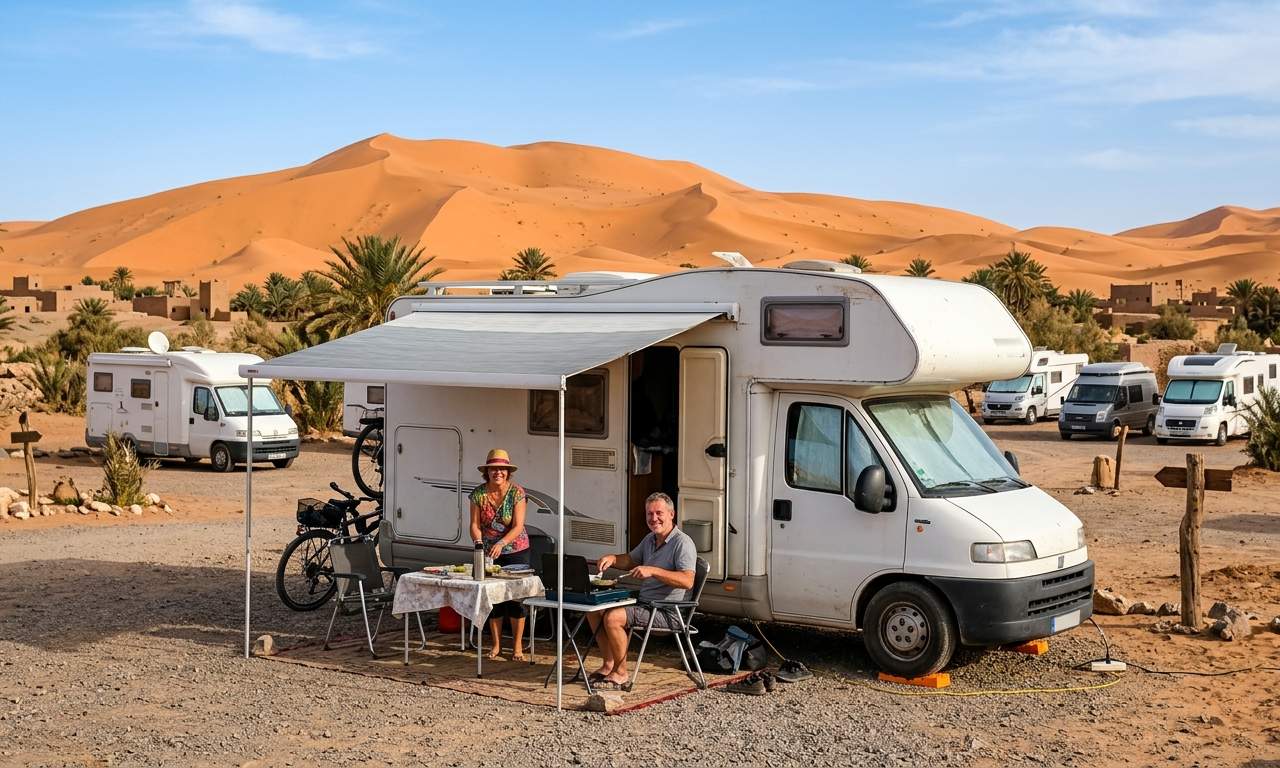
Road Conditions & Terrain in Morocco
Morocco offers a diverse range of road conditions, from well-maintained, modern highways (autoroutes) connecting major cities like Casablanca, Rabat, and Marrakech, to narrower, winding routes through the majestic Atlas Mountains and occasionally unpaved tracks leading to remote desert areas. Main roads are generally paved and in good condition, suitable for all motorhome classes, encouraging slow, scenic driving to appreciate the varied landscapes. When venturing off the main tourist routes or exploring rural villages and desert landscapes, expect some gravel roads, which might be more challenging for lower-clearance Class A motorhomes, though many Class C motorhomes and campervans handle them well. Remember to drive slowly and carefully, and you can drive almost anywhere without issues. No need to stress - just use common sense and pay attention.RV Size Limits, Bridges & Restricted Zones
While Morocco generally accommodates various RV sizes, travelers should be mindful of potential height restrictions for older city gates, low bridges, and some tunnels, especially when approaching historic medinas or smaller, ancient towns. Larger RVs, such as Class C Alcove models (often averaging 7.5m in length), may find maneuvering in very narrow village streets or specific ancient town centers more challenging. However, peripheral parking is usually available, allowing you to explore these areas on foot or with local transport. Currently, Morocco does not have widely enforced environmental zones or specific weight-based road restrictions comparable to some European countries, but local signage should always be observed. Your rented motorhome provides a comfortable base from which to explore, and flexibility in parking will make your trip smoother.Fuel: Diesel vs. Petrol & Cost per 100 km
Diesel is the predominant fuel type for motorhomes and campervans in Morocco and is widely available at service stations across the country, while petrol (gasoline) is also common, especially for smaller vehicles. Based on Bandana's global fleet averages, a Class SI Semi-integrated RV typically consumes 10-11 Liters/100 km, offering reasonable efficiency for your adventure. A compact Class B Camper Van, like the "rv rental denver example Category Van," uses even less, usually 8-10 Liters/100 km, making it an economical choice. The average cost per 100 km will vary with dynamic fuel prices, but diesel generally provides better fuel economy for larger rental RVs. When planning your budget, remember to factor in fuel expenses. Our RV PLANET routes allow travelers to itemize and track every expense along the way for easy budgeting.Tolls, Vignettes & Border Rules
Morocco has a network of modern toll roads, primarily connecting major cities like Casablanca, Rabat, Fes, and Marrakech, which are generally well-maintained and offer efficient travel. Payments are typically made in cash (Moroccan Dirham) or by card directly at toll booths, so it's wise to have small denominations of local currency handy. Specific toll rates or vignette requirements for Morocco are straightforward, focusing on point-to-point payments rather than a time-based vignette system common in some European countries. There are no special RV-specific vignette requirements beyond standard vehicle categories. When crossing borders, especially if planning an extended road trip into neighboring countries in Africa, always research current regulations thoroughly before your journey. This ensures smooth passage and helps avoid potential fines.Ferry & Customs Logistics for RVs Entering Morocco
Entering Morocco with a rented RV typically involves taking a ferry from Spain (e.g., Algeciras to Tangier Med or Tarifa to Tangier Ville) or occasionally from France, requiring advance booking, especially during peak seasons like summer and holidays. Ferry costs vary by vehicle size and season, so compare routes and times carefully for your specific motorhome, such as a large "Euro Deluxe" model. Customs processes for RVs in Morocco require specific documents beyond standard passports and vehicle registration, including temporary import declaration forms (often a D16ter or similar document that you fill out at the port) and specific vehicle insurance valid for Morocco, which may need to be purchased at the border upon arrival if your existing rental insurance doesn't cover it. Be prepared for potential delays at ferry terminals and border crossings; ensuring all original vehicle documents, passports, and necessary insurance papers are readily accessible for inspection will help streamline the process.Driving Tips for Weekend RV Rental Travelers
Driving a rented motorhome in Morocco is a rewarding experience, but it requires attentive and defensive driving. Moroccan roads can feature a mix of slow-moving vehicles, pedestrians, donkeys, and other livestock, especially outside urban areas and in rural regions. For families, planning frequent stops every 2-3 hours is crucial to allow children to stretch, use facilities, and explore, making the journey itself part of the adventure. Consider a rental RV with an automatic transmission, such as a "4 Berth Adventurer," for easier driving, especially in hilly terrain or when navigating city traffic, to reduce driver fatigue and enhance your enjoyment. Always maintain a sufficient distance from the vehicle in front, particularly on winding mountain roads, and be cautious of unexpected road hazards like potholes or unmarked speed bumps. When traveling on a budget for your extended road trip, cooking meals in your RV kitchen can significantly save on dining expenses. Remember, we also have an RV-friendly recipes playlist for inspiration!RV Safety and Support in Morocco
Ensuring safety while traveling by rented RV in Morocco means making informed choices for overnight parking and being aware of local interactions. Secure overnight parking is crucial; always opt for official campsites (many of which are well-equipped), designated 'aires de camping-cars' (RV parking areas), or guarded parking lots in towns and cities over random wild camping, especially in populated areas. Be prepared for potential interactions with touts, particularly in tourist-heavy areas like Fes or Marrakech; a polite but firm 'no, thank you' is usually sufficient, and avoid engaging in prolonged conversations if you're not interested. Always carry emergency contacts for your rental company, local breakdown assistance services (often provided by the rental supplier), and your embassy, alongside a basic understanding of key Moroccan Arabic or Berber phrases for essential communication. Ensure you have comprehensive travel insurance that covers vehicle breakdowns, medical emergencies, and any unexpected situations, and understand the procedures for obtaining reliable local support networks in case of issues. Bandana Caravan is with you before, during, and after your booking to assist with coordination and ensure peace of mind.Recommended RV Class for Morocco Roads
Choosing the right rental RV class can significantly enhance your Morocco road trip. For a balanced experience on Morocco's diverse roads, a Class SI Semi-integrated RV is often ideal, with models in Bandana's fleet averaging 6.9m in length, offering good maneuverability and comfortable living space for up to 3-4 adults. This size, like the "K4" model, is versatile enough for both highways and most secondary roads. A Class B Camper Van, such as the "Combi Van" or "Active Standard" models, averaging 5.8m in length, provides excellent agility for navigating narrower mountain passes and tighter urban centers while still offering essential amenities, perfect for solo travelers or couples. These vans offer easier parking in busy cities like Agadir or Essaouira. Consider the ground clearance of your chosen rented RV; smaller campervans and some semi-integrated models typically offer better clearance than larger integrated units, which is beneficial for unpaved sections or bumpy roads in the desert outskirts.Should I Choose a Compact Van Instead of a Large RV in Morocco?
For most major routes and destinations in Morocco, any RV size can be driven, and often, the enhanced comfort and indoor space of a larger RV like a Class C motorhome outweigh the slight maneuverability advantages of a compact van. A spacious model, like the "MHC28" or "6 Berth Discovery," offers more room for families or groups on longer trips. A compact van (such as Bandana's Class B Camper Van, averaging 5.8m in length) genuinely helps in very specific scenarios, such as navigating the extremely narrow streets of ancient medinas (where you'd typically park on the periphery anyway), or tackling exceptionally tight, winding mountain passes that might challenge a 7m+ vehicle. However, for families or those seeking more amenities like a separate shower, a larger kitchen, or dedicated sleeping areas for several adults (e.g., Bandana's Class C Alcove averaging 7.5m and accommodating 4-6 adults), the added space of a larger rented RV often provides a significantly more comfortable experience for an extended trip. Drive slowly and carefully, and you can drive almost anywhere without issues. No need to stress - just use common sense and pay attention.Can I Park Anywhere? Free & Wild Camping Rules in Morocco
While wild camping is technically tolerated in many remote areas of Morocco, particularly in the vast Sahara desert and the tranquil Atlas Mountains, it is not officially regulated and is generally not recommended without local knowledge or guidance. For safety, peace of mind, and proper resource management (water, waste disposal), it is always advisable to prioritize official campsites, designated 'aires de camping-cars' (RV parking areas often found near towns), or even secure, guarded parking lots in towns and cities. Morocco has a good network of these facilities, offering varying levels of amenities. When considering wild camping, especially near villages, it is crucial to seek permission from local authorities or landowners, demonstrate cultural respect, and adhere strictly to "leave no trace" principles by packing out all your waste. Remember that rules can vary by region-always check local regulations and follow local law before parking overnight.RV Resource Management: Water, Waste, & Power in Morocco
Effective resource management is key to a successful rented RV adventure in Morocco. Reliable sources for potable water can be found at established campsites, some petrol stations, and occasionally in larger towns, but carrying a water filter or purification tablets is advisable for backup, especially when venturing into remote areas. Grey and black water disposal (dumping stations) are primarily available at dedicated campsites; wild dumping is illegal and environmentally damaging, so plan your route around access to these facilities to stay compliant. Propane/gas refills can be challenging as Moroccan standards for gas canisters may differ from European ones; carrying adapters or checking with your rental provider about local refill options or exchange canisters is essential before you depart. Consistent electricity access is mainly guaranteed at campsites, many offering 220V hookups; for off-grid travel, solar panels (common on many modern RVs), efficient battery systems, and power banks are crucial for managing electricity needs.Can I Drive an RV Into the City Center? Heights, Tunnels & Local Signage
Generally, you can drive a rented RV into the outskirts and many parts of Moroccan city centers, allowing convenient access to urban attractions. However, access to the oldest parts, particularly historic medinas with their narrow, winding alleys, is often restricted to smaller vehicles or pedestrians. Always pay close attention to local signage indicating height limits (especially for ancient arches or underpasses), weight restrictions, one-way streets, residents-only zones, and specific parking regulations to avoid fines or getting stuck. While specific regional data on city center height limits or low tunnels in Morocco is not extensively documented, common sense dictates caution in older urban areas. It's often best to utilize peripheral parking and then walk or use local public transport or taxis for deep dives into medinas like those in Fes or Marrakech. Traffic congestion can be significant in larger urban hubs, so planning your city visits wisely will enhance your experience.Cultural Etiquette for RVers in Morocco
Respectful interactions with locals are paramount for a rewarding RV trip in Morocco. Always ask for permission before taking photographs of people, especially women and children, and be prepared for a polite refusal, which should be accepted graciously. When visiting villages, mosques, or private homes, modest dress is appropriate-cover shoulders and knees, and remove shoes before entering. When considering wild camping near communities, engage respectfully with villagers, perhaps offering small tokens or purchasing goods from local markets to contribute to the local economy. Always adhere strictly to "leave no trace" principles, ensuring your presence does not negatively impact the environment or local residents. Haggling is customary in souks and markets for goods and souvenirs, but maintain good humor and respect the vendor's livelihood; learning a few basic Arabic or Berber phrases, like "Salam Alaykum" (peace be upon you) or "Shukran" (thank you), can significantly enhance your interactions and create memorable connections.Internet and Connectivity for RVers in Morocco
To ensure reliable internet and connectivity during your rented RV trip in Morocco, purchasing a local Moroccan SIM card upon arrival is highly recommended for affordable data and calls. Major providers like Maroc Telecom, Orange Maroc, and Inwi offer various prepaid plans readily available at airports, major cities, and small shops. Mobile hotspots, either dedicated devices or using your smartphone's hotspot feature with a local SIM, can provide Wi-Fi for multiple devices in your RV, offering reliable internet in most populated areas. While major cities and popular tourist hubs generally have good 3G/4G coverage, expect patchy or non-existent signal when traveling through remote desert regions or deep in the Atlas Mountains. Many campsites and some cafes offer Wi-Fi, but its speed and reliability can vary significantly, so a local SIM remains your best bet.Medical Preparedness and Health Tips for RVers in Morocco
Being medically prepared is an essential part of any RV adventure in Morocco. Carry a well-stocked first-aid kit, including over-the-counter medications for common travel ailments like traveler's diarrhea, motion sickness (especially on mountain roads), pain relief, and any personal prescription medications, ensuring you have enough for your entire extended road trip. Research the locations of local clinics and pharmacies along your planned routes; pharmacies are generally well-supplied in towns and cities, but it's wise to have emergency contact numbers readily accessible. Stay hydrated by drinking plenty of bottled water, avoid tap water unless purified, and be cautious with street food to prevent digestive issues. Consider necessary vaccinations (such as Hepatitis A and Typhoid) and consult your doctor about preventative measures for common travel ailments well before your trip to Morocco. Having travel insurance that covers medical emergencies and evacuation is highly advisable for extra peace of mind.Sustainable RV Travel in Morocco
Embracing sustainable RV travel in Morocco means actively minimizing your environmental impact and supporting local communities. Always properly dispose of all waste at designated facilities, avoiding littering in natural or rural areas, and use eco-friendly products for cleaning your rented motorhome whenever possible. Support local communities ethically by purchasing goods and services directly from local vendors, eating at family-run establishments, and choosing local guides, which helps to ensure your tourist dollars directly benefit the people of Morocco. Adhere to "leave no trace" principles rigorously: pack out everything you pack in, respect wildlife and natural habitats, and avoid damaging natural formations or vegetation. Conserve water and electricity in your RV, especially when off-grid, and be mindful of your resource consumption to reduce your overall footprint. Traveling slowly, perhaps covering a maximum of 100-150 km per day on average, allows you to truly feel the place, connect to the culture, the food, and the scenery sustainably.Recommended RV Itineraries in Morocco
Morocco offers diverse route plans for your rented RV, catering to various interests. For a classic coastal and cultural tour, consider a week-long route from Casablanca down to Essaouira, with stops in the historic capital Rabat and the charming fortified city of El Jadida, offering a mix of history, beaches, and vibrant city life. An Atlas Mountain adventure can involve driving through the High Atlas to Ouarzazate, visiting the UNESCO World Heritage site of Ait Benhaddou, and exploring the dramatic Dades and Todra Gorges, best suited for RVs with good ground clearance or agile campervans. For desert explorations, an extended road trip from Marrakech to Merzouga (via the Dades Valley) allows for unforgettable overnight camel treks into the Erg Chebbi dunes, though the final approach to the desert may involve rougher tracks suitable for a "Patagonia Camper 4x4 double cab" or similar. Consider less-traveled spots like the picturesque blue city of Chefchaouen (accessible but challenging for large RVs due to winding mountain roads) or the ancient Roman ruins of Volubilis for a historical detour. For more detailed itineraries and route planning, remember to explore RV PLANET (rvplan.net), which offers a wide array of professionally crafted options.🎬 Video coming soon
What You Shouldn't Miss
- Marrakech's Djemaa el-Fna Square: Experience the sensory overload of storytellers, snake charmers, musicians, and food stalls that come alive at dusk.
- Blue City of Chefchaouen: Wander through the famously blue-painted streets and discover charming artisan shops and serene mountain views.
- Sahara Desert Excursion: Embark on a camel trek from Merzouga into the Erg Chebbi dunes and spend a night under a blanket of stars at a desert camp.
- Ait Benhaddou Ksar: Explore the ancient fortified village, a UNESCO World Heritage site, and a stunning example of Moroccan earthen architecture, often featured in films.
- Fes Tanneries: Witness the traditional, bustling Chouara Tannery in Fes, one of the oldest and largest leather tanneries in the world.
Looking for expert insights from Avi Bandana? Top 5 Adventures - recommendations from Avi Bandana
Final Thoughts
A rented RV adventure in Morocco is more than just a trip-it's an opportunity to discover a land of ancient wonders, stunning natural beauty, and warm hospitality at your own pace. With the right preparation and a spirit of adventure, you'll navigate bustling cities and serene desert landscapes with confidence. Remember our advice: drive slowly, embrace local culture, and make every kilometer count.
From the bustling souks of Marrakech to the peaceful dunes of the Sahara, a motorhome gives you the freedom to craft your perfect itinerary. At Bandana Caravan, we are dedicated to helping you find the ideal rental vehicle and supporting you every step of the way. Get inspired for your next trip and plan a truly unforgettable experience.
Discover top destinations, planning tips, all in one place! Compare Motorhome Prices for Morocco today and start your journey with full transparency and peace of mind.
On the routes offered through RV PLANET routes, you can itemize and track every expense along the way for easy budgeting.