For live availability and current prices, start with our RV Rental Scandinavia - Complete Guide 2026 guide.
In This Guide
- Can You Drive an RV in Scandinavia? License & Age Rules
- Road Conditions & Terrain in Scandinavia
- RV Size Limits, Bridges & Restricted Zones
- Fuel: Diesel vs. Petrol & Cost per 100 km
- Tolls, Vignettes & Border Rules
- Driving Tips for weekly rv rental Travelers
- Recommended RV Class for Scandinavia Roads
- Should I Choose a Compact Van Instead of a Large RV in Scandinavia?
- Can I Park Anywhere? Free & Wild Camping Rules in Scandinavia
- Can I Drive an RV into the City Center? Heights, Tunnels & Local Signage
- What is the 3-3-3 rule for RV travel?
- What are the rules for driving a camper van in Norway?
- Is it legal to sleep in your car in Sweden?
- Can you drive an RV in Europe?
- How long can you stay in Europe in a motorhome?
Can You Drive an RV in Scandinavia? License & Age Rules
Most visitors with a valid driver's license from their home country can drive an RV in Scandinavia, provided they meet age requirements and the vehicle's weight falls within their license category. A standard B-category license typically covers RVs up to 3,500 kg (7,700 lbs) Gross Vehicle Weight (GVW), which includes most rental Class B Camper Vans (averaging 5.8m) and Class SI Semi-integrated RVs (averaging 6.9m). For RVs exceeding 3,500 kg, such as some larger Class C Alcoves (averaging 7.5m) or Class A Integrated RVs (averaging 7.5m), a C1 license or equivalent may be required for vehicles up to 7,500 kg. Rental companies often set a minimum driver age of 21 or 25, which can vary depending on the RV class. Non-EU/EEA citizens might also need an International Driving Permit (IDP) in addition to their national license.
Road Conditions & Terrain in Scandinavia
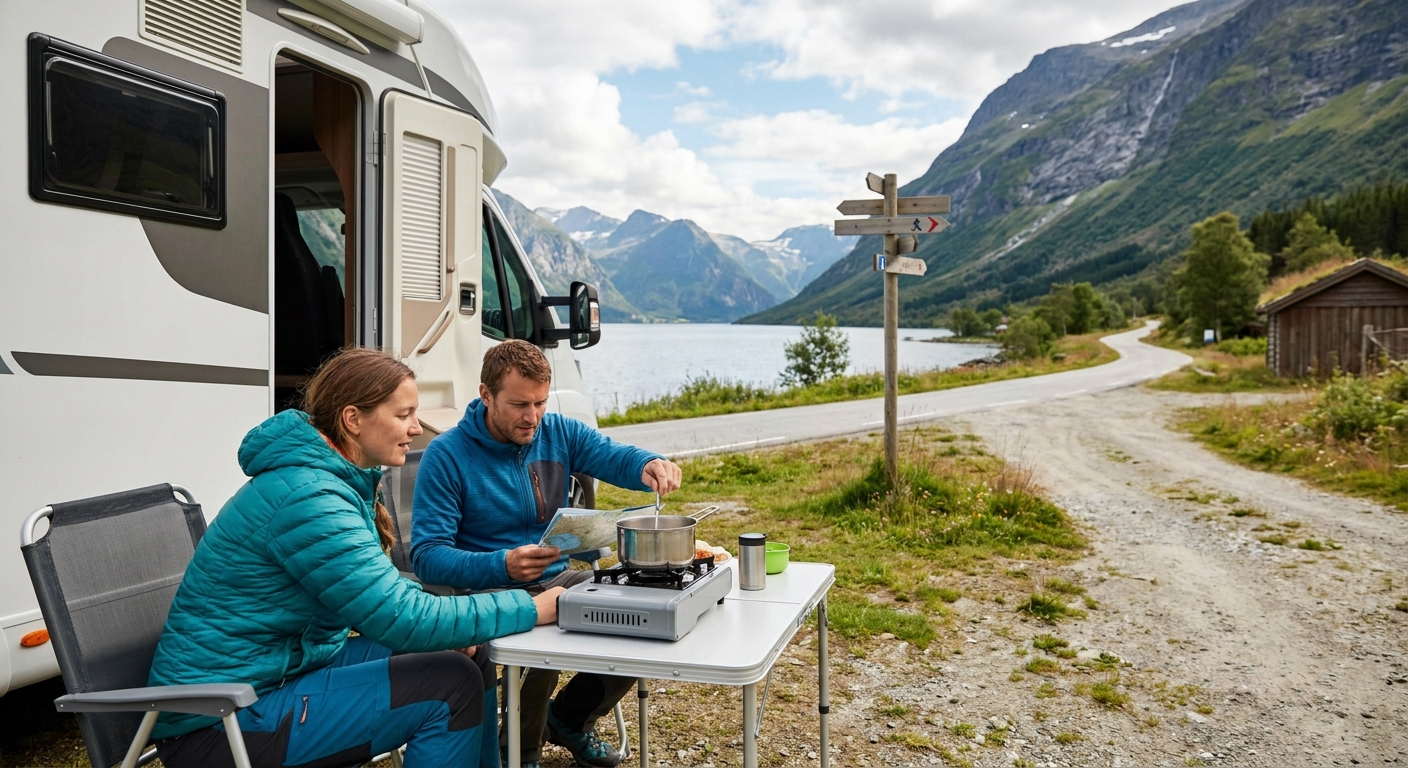
Scandinavian roads are generally well-maintained and excellent for RV travel, although the terrain varies considerably. You'll find flat coastal stretches alongside dramatic, often narrow and winding, mountain roads, particularly in Norway, which also features numerous fjord crossings and tunnels. Road quality is consistently high across Sweden and Finland, offering more expansive routes through forests and lakes, with clear signage often available in English. If you plan to travel between October and April, winter travel necessitates specific winter tires, which are typically provided by rental companies during this season, with studded tires being common. Slow, scenic driving is highly encouraged to fully experience the natural beauty and safely navigate the varied conditions. Be alert for wildlife, especially moose and reindeer, which are most active at dawn and dusk in rural areas.
RV Size Limits, Bridges & Restricted Zones
While most RVs can navigate Scandinavia without significant issue, drivers must be aware of potential height and weight restrictions, particularly on older bridges, certain ferry routes, and within urban environmental zones. Tunnel heights on main routes are generally sufficient for common rental RV sizes, but always observe signage for specific limits on secondary roads. Weight restrictions are more common on older, smaller bridges or for specific ferry services; it’s wise to check operator websites for detailed vehicle requirements. Some Scandinavian cities, like Oslo and Stockholm, have low-emission zones that may restrict older, more polluting vehicles. It’s crucial to verify that your rented RV complies with local emissions standards. Compact vans, such as Bandana's Class B Camper Van (averaging 5.8m), and semi-integrated RVs (Class SI averaging 6.9m), generally offer greater flexibility in navigating tighter spaces and restricted urban areas.
Fuel: Diesel vs. Petrol & Cost per 100 km
Diesel is the predominant fuel for RVs in Scandinavia, widely available at service stations. However, travelers should anticipate higher fuel costs compared to many other European regions. Most rental RVs, including Bandana's global fleet of Class SI, Class C, and Class B models, run on diesel. Expect average fuel consumption for a Class SI Semi-integrated RV to be around 10-11 Liters/100 km, while a Class B Camper Van typically averages 8-10 Liters/100 km. Fuel prices in Scandinavia are notably high; budgeting for approximately 15-20 EUR per 100 km is a realistic estimate. Some rental motorhomes may include fuel discount cards, which can help mitigate these expenses. It's always advisable to plan your fuel stops, as stations can be sparse in more remote areas of Norway and Finland. On the routes offered through RV PLANET routes, you can itemize and track every expense along the way for easy budgeting.
Tolls, Vignettes & Border Rules
Scandinavia primarily utilizes electronic toll systems, particularly in Norway, and does not require traditional vignettes for motorway use. Border crossings between Scandinavian countries are generally seamless. Norway operates an extensive automated toll system (AutoPass) where vehicles are registered by camera, and bills are typically sent to the rental company for subsequent payment by the renter. Sweden has tolls for specific bridges, such as the Øresund Bridge, and congestion charges apply in major cities like Stockholm and Gothenburg. Denmark also includes tolls for significant bridges, including the Storebælt Bridge and the Øresund Bridge. Finland generally has no road tolls. Border crossings between Norway, Sweden, Finland, and Denmark are typically open without passport checks for EU/Schengen citizens, but carrying identification is always recommended. Non-EU/Schengen citizens must be aware of Schengen visa regulations. Ferry costs, especially for fjord crossings in Norway, can be substantial and should be factored into your budget.
Driving Tips for weekly rv rental Travelers
For a weekly RV rental in Scandinavia, prioritize scenic routes, allow ample time for travel, and be prepared for varied road conditions and potentially high costs. Pace your journey to focus on a specific region, enabling spontaneous stops and opportunities to truly savor the scenery rather than rushing. Utilize up-to-date GPS navigation and be aware that some mountain roads may have seasonal closures. Drive cautiously due to the prevalence of wildlife, such as moose and reindeer, and strictly adhere to speed limits. Integrate ferry schedules into your planning, especially for Norway's fjords, and consider booking popular routes in advance. Ensure you have reliable internet connectivity, perhaps via an eSIM or a local SIM card, for navigation and real-time updates. Always park in designated areas. If considering wild camping, strictly follow Allemansrätten guidelines and local regulations, leaving no trace. Carry compulsory safety equipment, such as a reflective vest and warning triangle, which are required in many European countries.
Recommended RV Class for Scandinavia Roads
For a weekly RV rental in Scandinavia, Class B Camper Vans and Class SI Semi-integrated RVs offer an excellent balance of comfort, maneuverability, and fuel efficiency, making them highly suitable for the region's diverse roads. Class B Camper Vans, averaging 5.8m in length (as seen in Bandana's global fleet), are exceptionally maneuverable, ideal for navigating tighter fjord roads and charming villages, while also offering good fuel economy (typically 8-10 Liters/100 km). Class SI Semi-integrated RVs, averaging 6.9m in length (also in Bandana's fleet), provide more living space and amenities for smaller families (e.g., 3-4 people) while remaining relatively easy to drive, with fuel consumption typically around 10-11 Liters/100 km. While larger Class C Alcove or Class A Integrated RVs offer maximum space, the slightly more compact Class B and SI models present an optimal blend for Scandinavia's varied routes and camping options. Your best choice will ultimately depend on the number of travelers and your preference for indoor space versus agility.
Should I Choose a Compact Van Instead of a Large RV in Scandinavia?
While a compact van offers slightly more maneuverability in very tight urban centers or on extreme mountain passes, larger RVs are generally perfectly suitable for Scandinavian roads and often provide superior comfort and living space, making them a better choice for many travelers. Class B Camper Vans (averaging 5.8m) offer the highest maneuverability, making parking and navigating narrow streets marginally easier. Larger RVs like Class SI (averaging 6.9m), Class C (averaging 7.5m), or Class A (averaging 7.5m) provide significantly more headroom, dedicated sleeping areas, larger kitchens, and better bathroom facilities, which can greatly enhance comfort, especially during a weekly trip. Scandinavia's main roads are well-maintained and accommodate all common RV sizes; only very specific, minor routes or certain ferry access points might genuinely favor smaller vehicles. For a week-long rental, the enhanced comfort and amenities of a larger RV often outweigh the minimal gains in maneuverability offered by a compact van, unless your itinerary heavily focuses on extremely tight urban exploration.
Can I Park Anywhere? Free & Wild Camping Rules in Scandinavia
While Scandinavia is renowned for 'Everyman's Right' (Allemansrätten) in Sweden, Norway, and Finland, which permits public access to nature, specific rules apply to RVs and motorhomes concerning free and wild camping. Allemansrätten generally allows short stays (1-2 nights) on uncultivated land that is not too close to houses, provided no disturbance or damage is caused. However, this right is typically interpreted as applying to tents and non-motorized camping. For RVs/motorhomes, wild camping directly off public roads or in undesignated areas is generally not permitted. In Sweden, overnight parking for RVs is often tolerated on public land for one night if not explicitly prohibited and if it doesn't obstruct traffic, but driving off-road is not part of Allemansrätten. Norway's rules are similar, with RV wild camping generally tolerated on public land away from dwellings, but restrictions are increasing in popular tourist zones, so always check local municipal bylaws. Finland allows overnight parking at designated rest stops or unofficial spots if no 'No Overnight Parking' signs are present, though wild camping with RVs is more restricted than with tents. It's always best to use designated campsites for convenience, facilities, and legality, especially for stays longer than one night. Remember that rules can vary by region, so always check local regulations and adhere to local law before parking overnight.
Can I Drive an RV into the City Center? Heights, Tunnels & Local Signage
Yes, you can generally drive an RV into Scandinavian city centers, but it’s essential to pay close attention to local signage regarding height restrictions, tunnels, environmental zones, and parking limitations. Most main roads leading into and through cities are suitable for RVs of all common rental sizes. Be vigilant for signs indicating low bridges, tunnel entrances, or height restrictions, particularly in older city districts or for underground parking garages, which are typically too low for RVs. Many Scandinavian cities have low-emission zones (Miljözoner) that restrict older, more polluting vehicles; ensure your rental RV meets the required emission standards. Finding suitable RV parking in city centers can be challenging and expensive, so it's often best to seek designated RV parking on city outskirts or utilize park-and-ride facilities. Always adhere strictly to local road signs, which may indicate residents-only streets, one-way systems, or no-turn restrictions.
What is the 3-3-3 rule for RV travel?
The '3-3-3 rule' for RV travel is a widely adopted guideline suggesting driving no more than 300 miles (or 300 kilometers for European travel), arriving by 3 PM, and staying for at least 3 nights. This promotes a relaxed and enjoyable pace, which is particularly beneficial on unfamiliar Scandinavian roads. The '300 miles/km' component prevents driver fatigue and allows for spontaneous stops, reducing stress. Arriving 'by 3 PM' ensures ample daylight to set up camp, explore your surroundings, and secure a desirable spot at a campground or approved overnight parking location. Staying for 'at least 3 nights' encourages a more immersive travel experience, minimizes the effort of constant packing and unpacking, and allows for deeper exploration of a specific area, making it ideal for a weekly rental itinerary. This rule is especially valuable in Scandinavia, where scenic drives and outdoor activities are paramount, encouraging travelers to savor the journey.
What are the rules for driving a camper van in Norway?
Driving a camper van in Norway requires adherence to general European road rules, specific speed limits, an awareness of the toll system, and responsible parking practices. The country's well-maintained roads and stunning scenery make it highly RV-friendly. Speed limits are generally 80 km/h (50 mph) on open roads and 50 km/h (31 mph) in urban areas; some highways permit 90-110 km/h, though RVs over 3,500 kg may have lower limits. Norway utilizes an extensive automated toll system (AutoPass); rental vehicles are typically registered, with the renter billed post-trip via the rental company. Dipped headlights are mandatory at all times, even during daylight hours. It is compulsory to carry a reflective vest and warning triangle in your vehicle. While Norway is RV-friendly with numerous designated campsites, wild camping regulations are specific and often restricted in popular tourist areas, so always check local signage and rules. Expect narrow, winding mountain roads and numerous tunnels; allow extra time for travel to fully appreciate the dramatic landscapes and navigate safely.
Is it legal to sleep in your car in Sweden?
Yes, it is generally legal to sleep overnight in your car or camper van in Sweden, provided you park in a legal spot and adhere to local parking regulations and the principles of Allemansrätten (Everyman's Right). While Allemansrätten allows for short overnight stays in nature with a tent, its application to motorized vehicles like RVs is more restrictive and does not permit driving off-road or parking on private land without permission. You can typically park and sleep in your RV at public rest areas along major roads or in designated car parks for one night, as long as there are no explicit 'No Overnight Parking' or 'No Camping' signs. Parking or sleeping on private land without the landowner's explicit permission is prohibited. Many municipalities, particularly in popular tourist regions, have specific bylaws that prohibit or restrict overnight parking for RVs in certain locations, so always look for local signage. Regardless of where you park, always follow the 'leave no trace' principle: take all rubbish with you, do not disturb nature or local residents, and respect the environment.
Can you drive an RV in Europe?
Yes, you can drive an RV in Europe, which boasts well-developed infrastructure, diverse landscapes, and numerous campgrounds, making it a popular destination for motorhome travel. However, specific rules vary by country. Europe offers an excellent road network, including motorways, scenic routes, and local roads, suitable for RVs of various sizes. A valid national driver's license from your home country is generally sufficient, but an International Driving Permit (IDP) is recommended or required for non-EU/EEA citizens in some countries. Be aware of country-specific maximum vehicle dimensions and weight limits, particularly concerning tunnels, bridges, and city access. Many European countries utilize tolls or require a vignette (pre-paid sticker) for motorway use, while Scandinavia primarily employs electronic toll systems. Compulsory safety equipment, such as reflective vests, warning triangles, and first-aid kits, varies by country. A growing number of European cities have low-emission zones (LEZs) that may restrict access for older vehicles, so ensure your RV complies with local emission standards.
How long can you stay in Europe in a motorhome?
Non-EU citizens can generally stay in the Schengen Area, which includes Scandinavia, for up to 90 days within any 180-day period when traveling in a motorhome or any other means, without requiring a visa. This '90/180-day rule' applies across all countries within the Schengen zone, encompassing Norway, Sweden, Finland, and Denmark. This 180-day period is a rolling window, meaning you count back 180 days from any given day to ascertain your cumulative days spent in the Schengen Area. Citizens from countries like the USA, Canada, and Australia typically do not require a visa for short tourist stays under 90 days, while other nationalities may need to obtain a Schengen visa. For stays exceeding 90 days, a long-stay national visa (Type D) for a specific country or a residence permit is required and must be obtained before entering the Schengen Area. Always carry your passport, driver's license, vehicle registration, and insurance documents for border crossings and potential checks. Post-Brexit, UK citizens are also subject to the 90/180-day rule within the Schengen Area.
What You Shouldn't Miss
- Drive the Atlantic Road in Norway: A spectacular route featuring dramatic bridges and stunning coastal views, perfect for RV exploration.
- Explore Stockholm's Archipelago: Discover the charm of Sweden's islands by RV, with opportunities for coastal drives and scenic stops.
- Visit the Lofoten Islands: Experience Norway's iconic fjords and picturesque fishing villages, accessible via scenic RV routes.
- Experience the Swedish Lapland: Drive through vast forests and lakes, perhaps visiting the Icehotel or enjoying the unique landscapes.
- Hike in the Norwegian Fjords: Integrate scenic drives with hikes to viewpoints offering breathtaking panoramas of the fjords.
- Discover Finnish Lakeland: Explore thousands of lakes and forests via well-maintained roads, ideal for a peaceful RV journey.
Final Thoughts
Renting an RV for a week-long trip in Scandinavia offers an unparalleled way to experience the region's breathtaking natural beauty and unique cultures. With careful planning and by choosing the right vehicle for your needs, you can create an unforgettable adventure. Remember to book in advance, especially if traveling during peak season, to secure the best rates and availability.
By embracing the slow travel philosophy and allowing time to immerse yourself in the landscapes and local life, your Scandinavian RV journey will undoubtedly be a highlight. For finding campsites and campgrounds along your route, we recommend using RV PLANET (rvplan.net) – a great resource for locating available spots.
Get inspired for your next trip! Discover top destinations, planning tips, all in one place. Plan a trip itinerary in advance with minimal effort and maximum enjoyment.