For live availability and current prices, start with our RV Rental Philadelphia - Complete Guide 2026 guide.
In This Guide
- Can You Drive an RV in Philadelphia? License & Age Rules
- Road Conditions & Terrain in Philadelphia
- RV Size Limits, Bridges & Restricted Zones
- Fuel: Diesel vs. Petrol & Cost per 100 km
- Tolls, Vignettes & Border Rules
- Driving Tips for rv rental Travelers
- Recommended RV Class for Philadelphia Roads
- Should I Choose a Compact Van Instead of a Large RV in Philadelphia?
- Can I Park Anywhere? Free & Wild Camping Rules in Philadelphia
- Can I Drive an RV Into the City Center? Heights, Tunnels & Local Signage
- Do I need a special license to drive an RV in PA?
- What is the 4 4 4 rule for RVing?
- What license is required to drive an RV?
- What is the 3-3-3 rule for RV?
- Can you park overnight on the street in Philly?
- What license does an RV require?
- How much is RV insurance in PA?
- What is the average cost for RV insurance?
- Who has the best rates on RV insurance?
- How much is insurance on a $200,000 RV?
Can You Drive an RV in Philadelphia? License & Age Rules
For most recreational vehicles (RVs) under 26,001 pounds Gross Vehicle Weight Rating (GVWR), including common Class B, C, and many Semi-integrated (SI) models, a standard Pennsylvania Class C driver's license is sufficient for operation.
While Pennsylvania law permits licensed drivers as young as 16 to operate a Class C vehicle, most RV rental companies establish a higher minimum age, typically requiring drivers to be at least 21 or 25 years old, with some exceptions for larger Class A motorhomes potentially requiring a higher age limit.
Foreign drivers will need a valid license from their home country; while not strictly mandated by Pennsylvania law if the license is in English, an International Driving Permit (IDP) is strongly recommended to aid in translation and for smoother interactions with authorities.
A specialized, non-commercial Class A or B license in Pennsylvania is exclusively necessary for RVs with a GVWR exceeding 26,001 pounds, or for combination vehicles meeting specific weight thresholds and trailer size requirements, which are rarely encountered with standard rental RVs.
Road Conditions & Terrain in Philadelphia
Philadelphia's road conditions offer a mixed experience, with well-maintained interstate highways providing smooth access to the city, but urban streets can feature older surfaces with potential potholes or uneven sections, including some historic cobblestone areas.
The terrain immediately surrounding Philadelphia is generally flat to gently rolling, presenting no significant challenges like steep mountain passes that would typically be a concern for RV driving.
Navigating the dense urban environment demands heightened driver awareness due to heavy traffic, narrower lanes, frequent stops, and the possibility of low clearances; thus, slower, more cautious driving is essential for RVs.
When planning routes within the city, drivers should anticipate typical urban driving challenges such as tight turns, one-way streets, and shared road spaces with cyclists and pedestrians, all of which require careful attention.
RV Size Limits, Bridges & Restricted Zones
While there are no overarching RV size limits for general driving within Philadelphia, drivers must be exceptionally vigilant for specific posted height and weight restrictions, particularly on older infrastructure and bridges.
Numerous low-clearance bridges are present throughout the city and its approaches, especially underpasses along I-95 and historic routes, some with clearances as low as 12-14 feet; it is crucial to know your RV's exact height and plan routes accordingly to avoid them.
Philadelphia does not enforce broad environmental zones that restrict RV access based on emissions; however, always observe local signage for any temporary or permanent vehicle restrictions in specific areas or districts.
Weight limits on certain older bridges or smaller roads, particularly those leading to historic sites, can pose a concern for heavier RVs, making pre-trip route planning essential to ensure compliance and avoid restricted routes.
Fuel: Diesel vs. Petrol & Cost per 100 km
Most Bandana rental RVs, especially larger Class C (Alcove) and Class SI (Semi-integrated) models, typically operate on diesel fuel, which is widely available at service stations throughout Pennsylvania and the Philadelphia metropolitan area.
Smaller Class B (Camper Van) models are more commonly petrol (gasoline) powered, also readily accessible at most fuel stops.
Based on Bandana's global fleet averages, Class SI RVs typically consume 10-11 Liters/100 km, Class C models consume 10-12 Liters/100 km, and Class B Camper Vans consume 8-10 Liters/100 km.
Factoring in typical Pennsylvania fuel prices, which can range from approximately $0.90-$1.20 per liter for diesel or petrol, the average cost per 100 km for an RV consuming 10-12 Liters/100 km would roughly be $9-$15.
Tolls, Vignettes & Border Rules
RV travelers navigating around Philadelphia will primarily encounter tolls on major roadways like the Pennsylvania Turnpike (I-76) and other expressways, as the United States does not utilize a 'vignette' system for general road usage. On the routes offered through RV PLANET routes, you can itemize and track every expense along the way for easy budgeting.
The E-ZPass system is the most convenient method for electronic toll collection in Pennsylvania; some Bandana RVs may come equipped with integrated E-ZPass devices or offer options for pre-purchased toll passes to simplify travel and avoid higher "Toll-by-Plate" fees.
Many toll plazas in Pennsylvania operate on a cashless system, meaning physical cash payments are no longer accepted, making an E-ZPass or pre-registration for "Toll-by-Plate" essential for seamless travel.
There are no specific "border rules" when driving an RV between Pennsylvania and neighboring states such as New Jersey or Delaware, beyond strict adherence to each state's traffic laws and potentially different tolling systems.
Driving Tips for rv rental Travelers
Pre-Plan Your Route Carefully: Utilize RV-specific GPS or mapping applications to identify routes into and around Philadelphia that accurately account for your RV's height, weight, and avoid low bridges or overly narrow streets.
Practice Defensive Driving: Due to an RV's larger size and weight, always allow significantly more stopping distance, anticipate turns earlier, and consistently monitor your extensive blind spots using your large side mirrors.
Master Urban Parking Strategy: Research and identify designated oversized vehicle parking lots or RV-friendly campgrounds situated on the outskirts of Philadelphia, then leverage SEPTA (public transport) for city center exploration.
Mind the 3-3-3/4-4-4 Rules: To mitigate driver fatigue and enhance trip enjoyment, consider adhering to RV safety guidelines such as driving no more than 300-400 miles per day, aiming to arrive at your destination by 3-4 PM, and staying at least 3-4 nights at each location.
Utilize Public Transportation: After parking your RV at an appropriate facility outside the immediate downtown area, make the most of Philadelphia's robust public transportation network (trains, buses, trolleys) to easily access attractions and minimize urban driving stress.
Recommended RV Class for Philadelphia Roads
For navigating the urban environment of Philadelphia and its surrounding areas, a Class B Camper Van or a Class SI (Semi-integrated) RV is highly recommended due to their optimal balance of maneuverability and interior comfort.
Class B Camper Vans, averaging 5.8 meters in length across Bandana's global fleet, offer superior agility for navigating city streets, easier parking in standard-sized spots, and generally better fuel efficiency in stop-and-go traffic conditions.
Class SI (Semi-integrated) RVs, with an average length of 6.9 meters, provide a good compromise between interior living space and amenities while remaining relatively manageable for most city approaches and accessing suburban RV parks.
While larger Class C (Alcove) or Class A (Integrated) RVs (both averaging 7.5 meters in length) offer more expansive living space, their increased dimensions can make urban driving, navigating tight turns, and parking significantly more challenging in a dense city like Philadelphia.
Should I Choose a Compact Van Instead of a Large RV in Philadelphia?
Opting for a compact van, typically a Class B Camper Van, over a larger RV can significantly enhance your experience when primarily visiting Philadelphia's urban core, due to its superior maneuverability and ease of parking.
Compact vans are easier to navigate on Philadelphia's often narrow streets, can fit into more standard parking spaces, and generally offer better fuel economy for city driving conditions.
However, larger RVs (Class C, SI, or A) provide substantially more interior living space, dedicated sleeping areas, full bathrooms, and extensive kitchen facilities, which are highly valued for longer trips or when campsite comfort is a priority.
The ultimate choice hinges on your travel style: a compact van for maximum urban accessibility and flexibility, or a larger RV for enhanced comfort and amenities, acknowledging the need for more careful planning around Philadelphia's urban driving and parking challenges.
Can I Park Anywhere? Free & Wild Camping Rules in Philadelphia
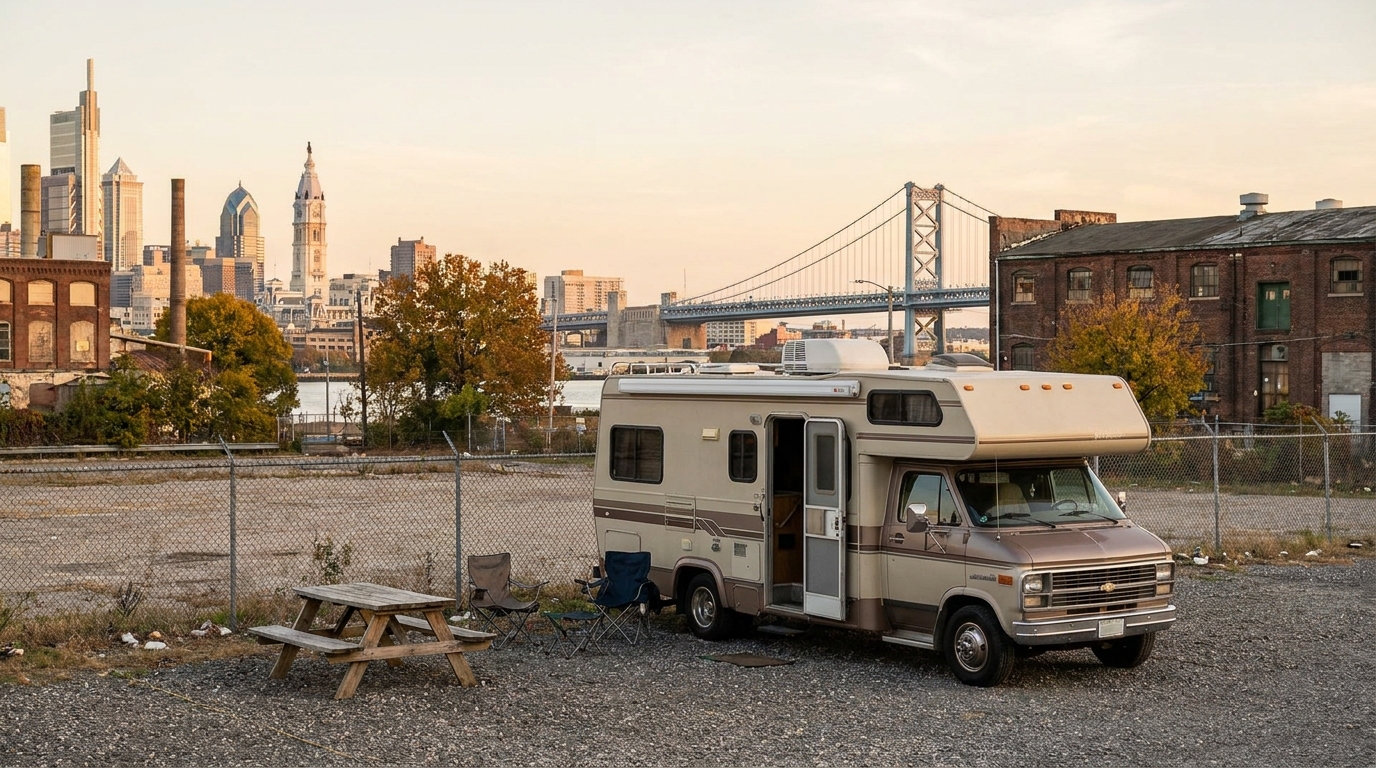
Free camping or "wild camping" (boondocking) is generally not permitted on city streets, in public parks, or on undeveloped land within Philadelphia city limits; attempting to do so is illegal and carries significant risks.
Overnight parking for RVs on Philadelphia streets is highly restricted by local ordinances, which typically prohibit oversized vehicles from parking in residential zones and often enforce strict time limits or require permits in other areas.
RV travelers should plan to utilize designated RV campgrounds, which are primarily located outside the immediate city center but within reasonable commuting distance, offering essential amenities like hookups and enhanced security.
Rules for parking and camping vary significantly by region, so always verify local regulations and strictly adhere to specific campground rules before parking overnight to avoid potential fines, towing, or other legal repercussions.
Can I Drive an RV Into the City Center? Heights, Tunnels & Local Signage
Yes, you can generally drive an RV into Philadelphia's city center, but it requires diligent attention to local signage, careful route planning, and a constant awareness of your vehicle's specific dimensions.
Drivers must pay close attention to posted height limits on tunnels, such as the I-676 Vine Street Expressway Tunnel, and many older bridges, which can have clearances significantly lower than those found on open highways.
Be vigilant for local street signs indicating weight restrictions, one-way streets, designated no-RV zones, or specific parking regulations, as these are common in historic urban areas and require strict adherence.
While there are no blanket "environmental zones" that restrict RV access, the city's narrow streets, heavy traffic, and limited parking availability make smaller RVs or utilizing park-and-ride options from outside the core highly advisable for a less stressful city exploration.
Do I need a special license to drive an RV in PA?
For the majority of RVs available for rent in Pennsylvania, including typical Class B Camper Vans, Class C Alcoves, and many Class SI Semi-integrated models, a standard Pennsylvania Class C driver's license is the only required certification.
A special non-commercial Class A or B license is mandated only if the RV's Gross Vehicle Weight Rating (GVWR) surpasses 26,001 pounds, or if towing a trailer where the combined GVWR exceeds this threshold and the trailer itself weighs over 10,000 pounds.
The vast majority of rental RVs fall well within the weight limits covered by a standard Class C license, making RV travel accessible to most legally licensed drivers.
It is imperative to verify the GVWR of your specific rental RV and confirm your license class is appropriate, especially if considering larger Class A integrated models or towing a significant load, to ensure full legal compliance.
What is the 4 4 4 rule for RVing?
The "4-4-4 rule" for RVing is a widely adopted guideline suggesting that travelers should aim to drive no more than 400 miles in a single day, stop driving by 4 PM, and ideally stay at least 4 nights at each destination.
This rule functions as a comprehensive safety and enjoyment strategy designed to prevent driver fatigue, allow ample time for campsite setup and relaxation, and encourage a more immersive travel pace.
Adhering to the 4-4-4 rule can significantly enhance the overall RV experience by reducing travel stress, minimizing the risk of accidents, and providing more opportunities for exploring local attractions at a comfortable pace.
For trips involving urban areas like Philadelphia, where driving and parking can be more demanding, observing this rule (or the similar 3-3-3 variant) for your approach and departure days is particularly beneficial for maintaining a positive travel experience.
What license is required to drive an RV?
As comprehensively detailed in the section "Do I need a special license to drive an RV in PA?", a standard Class C driver's license is typically the sole requirement for operating most rental RVs in Pennsylvania.
The necessity for a higher class of license is primarily determined by the RV's Gross Vehicle Weight Rating (GVWR); vehicles exceeding 26,001 pounds GVWR or specific combination vehicles will generally require a non-commercial Class B license, or Class A for certain towing scenarios.
It is crucial to consult with your rental provider and cross-reference with Pennsylvania's Department of Transportation (PennDOT) guidelines to confirm the precise licensing requirements for your chosen RV model.
For the vast majority of RV renters, if you are legally licensed to drive a typical passenger car, you are likely qualified to operate a rental RV in PA, provided it falls within the standard weight and size limits.
What is the 3-3-3 rule for RV?
The "3-3-3 rule" for RV travel is a widely adopted safety and enjoyment guideline that suggests drivers aim to drive no more than 300 miles per day, arrive at their destination by 3 PM, and stay for at least 3 nights.
Similar in principle to the 4-4-4 rule, its primary purpose is to prevent driver exhaustion, ensure sufficient daylight hours for campsite setup, and allow ample time for relaxation and local exploration rather than constant travel.
This guideline is particularly beneficial for new RVers or those seeking a more relaxed travel pace, as it builds in buffer time for unexpected delays, spontaneous stops, or potential adverse weather conditions.
Applying the 3-3-3 rule when planning your itinerary to Philadelphia can help manage the demanding aspects of driving a larger vehicle and ensure a more enjoyable, less rushed journey through the region.
Can you park overnight on the street in Philly?
Parking an RV overnight on Philadelphia streets is generally not permitted and is highly discouraged due to strict local ordinances, widespread parking restrictions, and the significant risk of incurring fines or vehicle towing.
Most residential and commercial streets within Philadelphia have specific parking regulations, which often include time limits, permit requirements, or outright prohibitions on oversized vehicle overnight parking.
For RV travelers, the safest, most legal, and most comfortable option for overnight stays is to book a spot at a dedicated RV campground, typically located outside the immediate city center but within reasonable driving distance.
These campgrounds offer essential amenities like electrical hookups, dump stations, and enhanced security, providing a far superior and stress-free experience compared to attempting unauthorized street parking within Philadelphia's urban core.
What license does an RV require?
Consistent with Pennsylvania state laws, most RVs available for rent typically require only a standard Class C driver's license, which is the same license used for operating a typical passenger car.
The specific license class required for an RV is primarily determined by its Gross Vehicle Weight Rating (GVWR); RVs exceeding 26,001 pounds GVWR or specific combination vehicles will necessitate a non-commercial Class B license, or Class A for certain towing configurations.
It is imperative to verify your chosen RV's GVWR and confirm your license class to ensure full legal compliance before commencing your rental journey.
How much is RV insurance in PA?
The cost of RV insurance in Pennsylvania varies significantly based on multiple factors, including the RV's class, age, declared value, frequency of use, the driver's history, and the specific coverage limits and deductibles selected.
For basic liability coverage on a typical rental RV, annual premiums could range from a few hundred dollars, while comprehensive policies offering higher liability limits can easily cost $1,000 to $3,000 or more annually.
Many rental companies include a baseline level of liability insurance within their rental fees, but they often offer optional additional coverage for collision, comprehensive damage, or higher liability limits.
It is advisable to check with your personal auto insurance provider, as your existing policy might offer some limited coverage for rental RVs, and to inquire about specialized rental RV insurance options available from dedicated providers.
What is the average cost for RV insurance?
Nationally, the average cost for RV insurance typically ranges from approximately $800 to $3,000 per year, though this figure is highly dependent on the RV type, its value, usage patterns, and the policyholder's individual circumstances.
Smaller, less expensive RVs like Class B Camper Vans or older models often fall on the lower end of this spectrum, while larger, luxury Class A integrated RVs will naturally command significantly higher insurance premiums.
Key influencing factors include geographic location (urban versus rural), the RV's primary storage location, the driver's claims history, and their credit score.
To obtain an accurate average cost for your specific situation, it is essential to solicit personalized quotes from multiple reputable insurance providers.
Who has the best rates on RV insurance?
Determining "who has the best rates" for RV insurance is highly subjective and depends entirely on individual circumstances, as rates are tailored to the specific RV, driver profile, and desired coverage levels.
Major insurance providers frequently cited for competitive RV rates include Progressive, National General, GEICO, and Farmers, but independent insurance agents can often provide personalized comparisons across a wider array of carriers.
To secure the most favorable rates, it is crucial to comparison shop by obtaining detailed quotes from at least three different insurance companies, ensuring you provide the exact same coverage details for each quote.
Factors that can help achieve better rates include maintaining a clean driving record, bundling RV insurance with other existing policies (like home or auto), installing safety and security devices on the RV, and considering higher deductibles.
How much is insurance on a $200,000 RV?
Insurance for a $200,000 RV, typically representing a high-end Class A or a large, well-appointed Class C model, will be considerably higher than for a standard RV, often ranging from $2,000 to $4,000 or more annually, heavily depending on comprehensive coverage and location.
The substantial value of the RV directly correlates with increased premiums due to the significantly higher cost of replacement or extensive repairs required in the event of an accident, theft, or other covered damages.
Factors such as the RV's age, whether it is new or used, the primary driver's experience with large vehicles, and the policy's chosen deductible and coverage limits will further influence the final insurance cost.
Owners of high-value RVs should strongly consider specialized policies that offer robust coverage for personal effects, comprehensive roadside assistance, and potentially full-time RV living options if applicable, ensuring adequate protection for their significant investment.
What You Shouldn't Miss
- Historic Charm and Iconic Landmarks: Explore Independence Hall, the Liberty Bell Center, and Elfreth's Alley, the nation's oldest continuously inhabited residential street, offering a deep dive into America's founding history.
- Culinary Delights: Indulge in Philly's famous cheesesteaks from iconic spots like Pat's King of Steaks or Geno's Steaks, and discover diverse culinary scenes in neighborhoods like Reading Terminal Market.
- Artistic Immersion: Climb the "Rocky Steps" at the Philadelphia Museum of Art, and explore the vibrant street art scene throughout the city, showcasing a dynamic blend of classical and contemporary art.
- Scenic Drives and Urban Nature: Take a drive through Wissahickon Valley Park, a stunning natural gorge within city limits, offering accessible trails and beautiful scenery perfect for a relaxed RV excursion.
- Revolutionary Trails and Parks: Visit Valley Forge National Historical Park just outside the city for expansive, RV-friendly parking and historical exploration of Washington's encampment.
- Unique Neighborhood Experiences: Wander through distinct neighborhoods like Old City for its colonial charm, or Fishtown for its trendy arts and dining scene, each offering a unique slice of Philadelphia life.
Final Thoughts
Renting an RV and exploring Philadelphia offers a unique blend of historical discovery and urban adventure. By understanding the driving nuances, choosing the right vehicle, and planning your routes wisely, you can unlock an unforgettable journey.
From the iconic streets of Old City to the natural beauty of Wissahickon Valley Park, Philadelphia provides a diverse backdrop for your RV exploration. Let Bandana Caravan help you plan your perfect trip.
Find Motorhome Rentals in PhiladelphiaFor ideas you can prep on the road, watch our RV-friendly recipes playlist on YouTube.